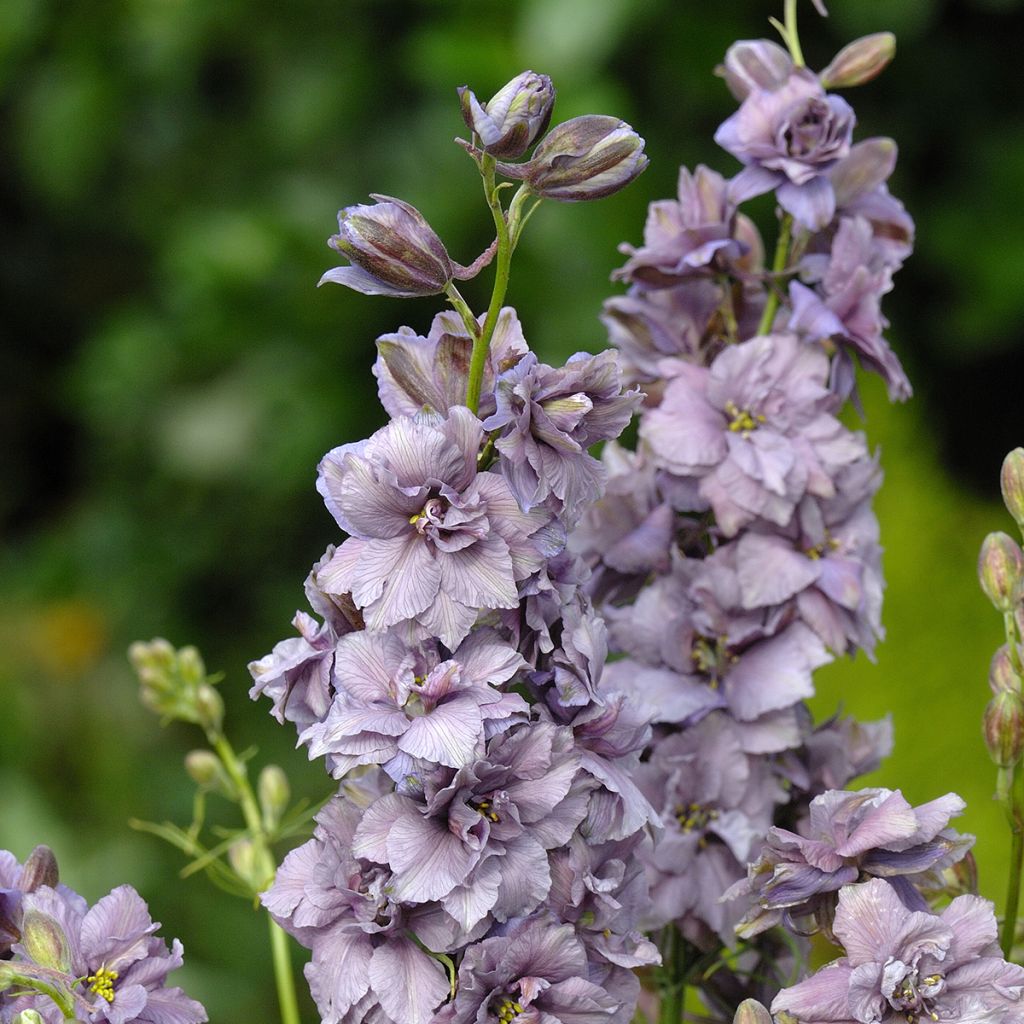
Delphinium consolida Misty Lavender - Forking Larkspur seeds
Delphinium consolida Misty Lavender - Forking Larkspur seeds
Delphinium consolida Misty Lavender
larkspur
Back-to-school special offer!
Get €10 off for every €50 you spend! And get up to €40 off on a single order.
How does it work?
1. Shop your favourites
Add your favourite plants to your basket. For every €50 you spend (excluding delivery charges, store credit and the plastic-free option), you’ll receive a €10 voucher.
€50 spent = €10 voucher
€100 spent = €20 voucher
€150 spent = €30 voucher
€200 spent = €40 voucher
2. Place your order
Once your basket reaches one of the spending thresholds, place your order. You can even choose your delivery date!
3. Receive your voucher
As soon as your order has been shipped, you’ll receive an email containing your personal voucher code and its value.
4. Use it on your next order
Your voucher is valid for 90 days from the date you receive it. It can be used once only, on a new order worth at least the value of the voucher, excluding delivery charges.
Please note: Vouchers can be combined with other offers, but cannot be split or refunded.
Home or relay delivery (depending on size and destination)
Important: You may be charged customs duties by your country’s customs authorities upon delivery.
Schedule delivery date,
and select date in basket
This plant carries a 6 months recovery warranty
More information
We guarantee the quality of our plants for a full growing cycle, and will replace at our expense any plant that fails to recover under normal climatic and planting conditions.
Would this plant suit my garden?
Set up your Plantfit profile →
Description
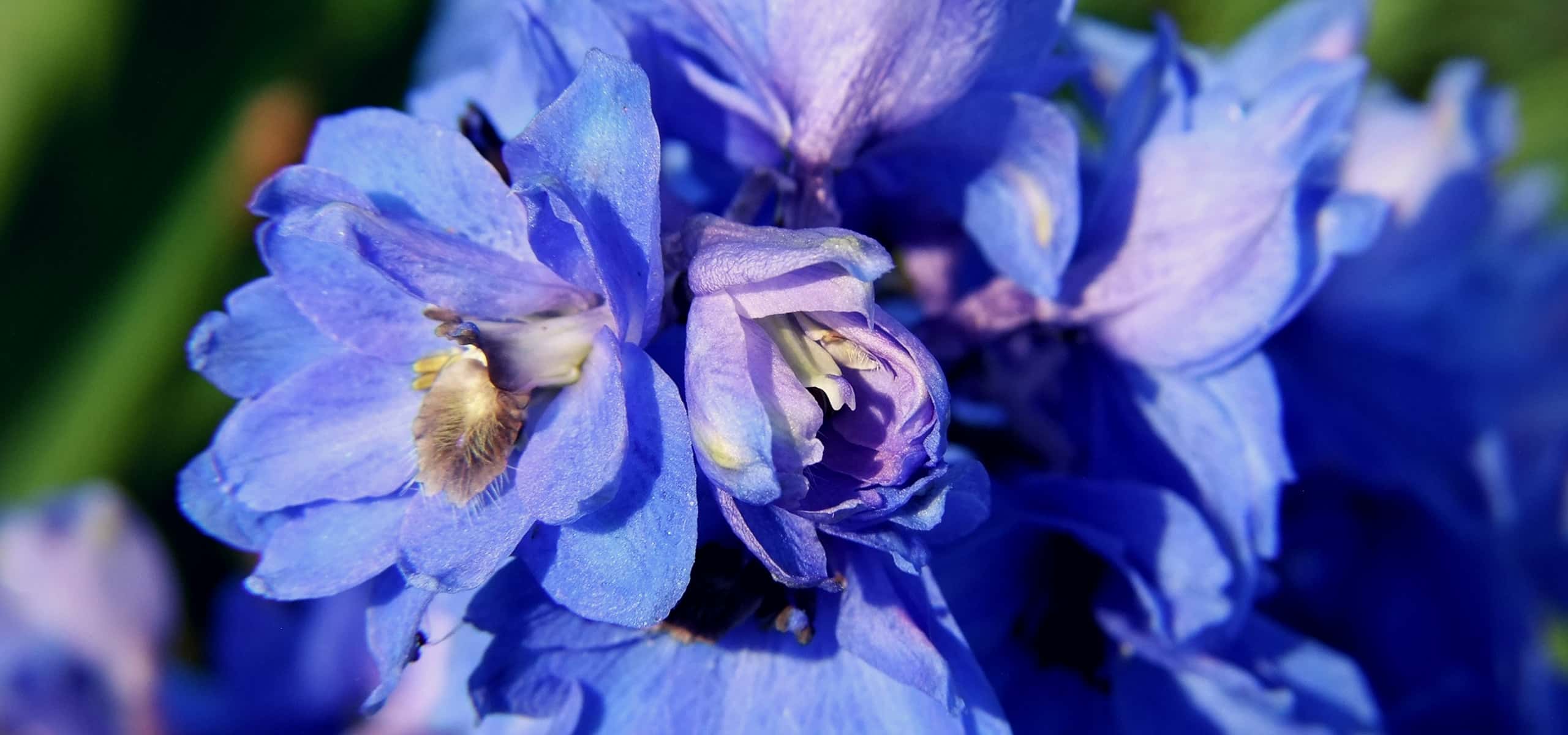
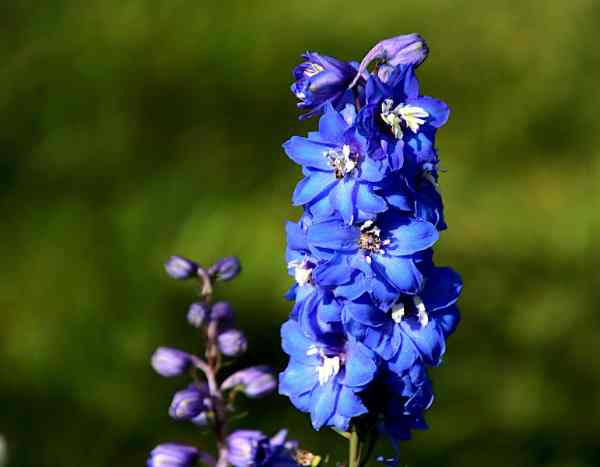
Delphinium consolida 'Misty Lavender' is an annual Larkspur of a rare, exceptional colour. Its double flowers, arranged in tight ranks on strong, upright stems, are a decidedly vintage lavender grey. While this colour may be a bit muted, it is not dull and allows for the creation of sumptuous colour combinations with plants of similar resonance. Annual delphiniums flower generously and for a long time, creating elegant, durable bouquets of fresh or dried flowers. Direct sow in rich, moist soil.
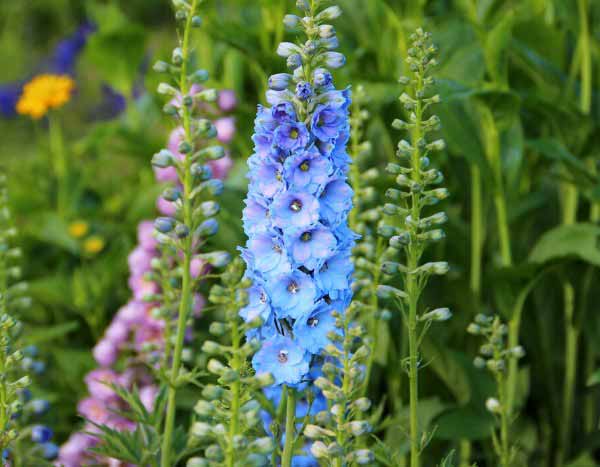
Delphinium consolida 'Misty Lavender' is one of the many hybrids obtained through cross-breeding D. consolida, an annual plant that prefers winter germination and grows in cereal crops on limestone soil. It is a hardy annual plant with rapid growth, forming a wide clump of 34 to 40 cm (13 to 16in), with finely divided palmate foliage in a tender green from which floral spikes of at least 80 cm (32in) high emerge in summer. Flowering takes place from June to September and is very attractive to pollinating insects. The cup-shaped flowers, gathered on tall upright spikes, display a wide range of colours depending on the cultivars. The plant develops from a woody rhizome that sinks vertically into the ground.
'Misty Lavender' reaches a height of 1.20 m (4ft) when in bloom. The erect and branched plant forms a basal clump of palmate leaves divided into linear, medium green leaflets. Dense spikes of astonishing pearly grey-lavender, double flowers succeed each other throughout the summer.
Delphiniums prefer moist, rich soils, but they do not like having their roots in heavy, waterlogged soil. They do not mind harsh winters and thrive in full sun. 'Misty Lavender' allows for the quick creation of a theatrical, yet elegant, composition by directly sowing it in the ground, in flower beds or borders. Pair it with romantic plants such as roses or peonies. Also consider other vertical flowers such as foxgloves. Take advantage of its exceptional, old-fashioned colour by associating it with old-fashioned poppies and annual flax. Create harmonious compositions with pale yellow and pastel pink flowers, as well as silver foliage. It is well-suited for cutting, as its flowers are particularly long-lasting in a vase and can even be dried. To do this, cut fully bloomed flowers into small bunches, hang the stems upside down, and store them in a dry, well-ventilated place away from direct sunlight.
Flowering
Foliage
Plant habit
Safety measures
Botanical data
Delphinium
consolida
Misty Lavender
Ranunculaceae
larkspur
Cultivar or hybrid
ingestion
Cette plante est toxique si elle est ingérée volontairement ou involontairement.
Ne la plantez pas là où de jeunes enfants peuvent évoluer, et lavez-vous les mains après l'avoir manipulée.
Pensez à conserver l'étiquette de la plante, à la photographier ou à noter son nom, afin de faciliter le travail des professionnels de santé.
Davantage d'informations sur https://plantes-risque.info
Planting and care
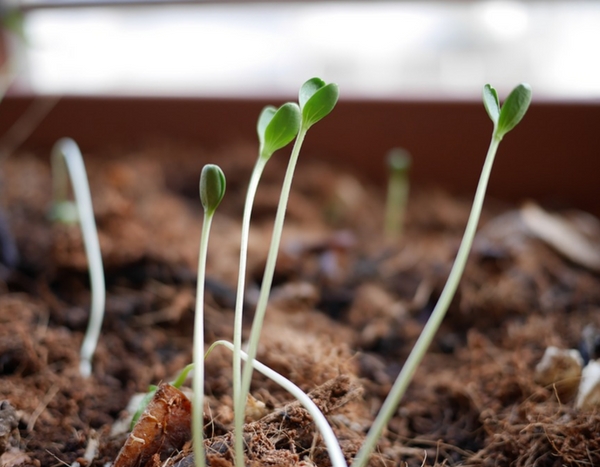
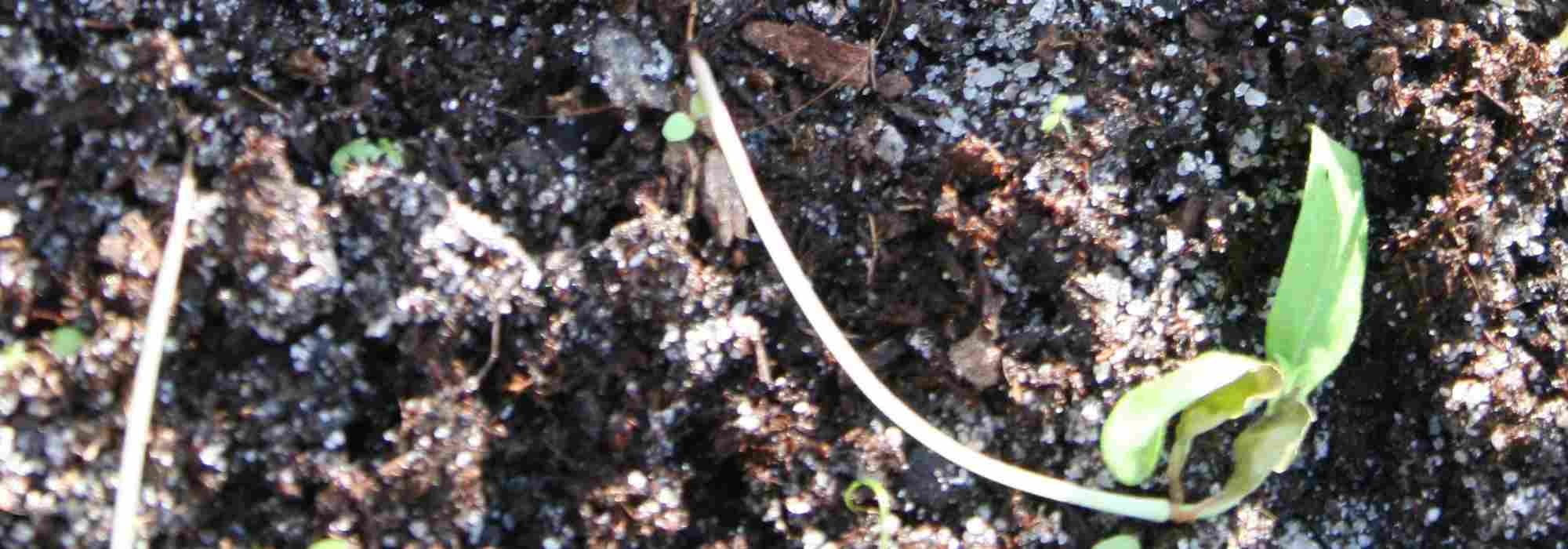
Sow Delphinium consolida seeds directly outdoors, from April to May, in full sun, in fertile, light, well-drained soil that has been well loosened beforehand. Bury the fine seeds to a depth of 6 mm (0in) in small holes spaced 30 cm (12in) apart. Keep the soil moist by watering regularly, especially during dry periods. Germination usually takes 14 to 21 days. When the seedlings are large enough to handle, thin them out by planting only one seedling every 15 cm (6in). For earlier flowering, sow Delphinium seeds from August to October in 7.5 cm (3in) pots filled with moist, good-quality compost. Place the pots in a propagator or inside a plastic bag at a temperature of 15-20 °C (59-68°F) until germination. Once the seedlings have developed, move them to a bright, but cooler location. Overwinter the plants in a cool, bright place, protected from frost, watering them sparingly. Transplant them to their final location the following spring. Water regularly until the plants are fully established. Place sturdy sticks among the tall plants, to will allow them to grow while being supported. You can also stake the plants with bamboo canes. Regularly remove faded flowers to encourage more. Delphiniums like sunny locations, sheltered from the wind, and fertile soil, rich in organic matter and well-drained.
Sowing period
Intended location
Planting & care advice
-
-
-
-
-
-

-
-
This item has not been reviewed yet - be the first to leave a review about it.
Recently viewed products
Haven't found what you were looking for?
Hardiness is the lowest winter temperature a plant can endure without suffering serious damage or even dying. However, hardiness is affected by location (a sheltered area, such as a patio), protection (winter cover) and soil type (hardiness is improved by well-drained soil).

The flowering period indicated on our website applies to countries and regions located in USDA zone 8 (France, the United Kingdom, Ireland, the Netherlands, etc.)
It will vary according to where you live:- In zones 9 to 10 (Italy, Spain, Greece, etc.), flowering will occur about 2 to 4 weeks earlier.
- In zones 6 to 7 (Germany, Poland, Slovenia, and lower mountainous regions), flowering will be delayed by 2 to 3 weeks.
- In zone 5 (Central Europe, Scandinavia), blooming will be delayed by 3 to 5 weeks.
In temperate climates, pruning of spring-flowering shrubs (forsythia, spireas, etc.) should be done just after flowering.
Pruning of summer-flowering shrubs (Indian Lilac, Perovskia, etc.) can be done in winter or spring.
In cold regions as well as with frost-sensitive plants, avoid pruning too early when severe frosts may still occur.
The planting period indicated on our website applies to countries and regions located in USDA zone 8 (France, United Kingdom, Ireland, Netherlands).
It will vary according to where you live:
- In Mediterranean zones (Marseille, Madrid, Milan, etc.), autumn and winter are the best planting periods.
- In continental zones (Strasbourg, Munich, Vienna, etc.), delay planting by 2 to 3 weeks in spring and bring it forward by 2 to 4 weeks in autumn.
- In mountainous regions (the Alps, Pyrenees, Carpathians, etc.), it is best to plant in late spring (May-June) or late summer (August-September).
The harvesting period indicated on our website applies to countries and regions in USDA zone 8 (France, England, Ireland, the Netherlands).
In colder areas (Scandinavia, Poland, Austria...) fruit and vegetable harvests are likely to be delayed by 3-4 weeks.
In warmer areas (Italy, Spain, Greece, etc.), harvesting will probably take place earlier, depending on weather conditions.
The sowing periods indicated on our website apply to countries and regions within USDA Zone 8 (France, UK, Ireland, Netherlands).
In colder areas (Scandinavia, Poland, Austria...), delay any outdoor sowing by 3-4 weeks, or sow under glass.
In warmer climes (Italy, Spain, Greece, etc.), bring outdoor sowing forward by a few weeks.
Shipping country and language
Your country of residence may be:
Your country of residence is:
For a better user experience on our website, you can select:
Your shipping country:
-
 Austria
-
 Belgium
-
 Bosnia & Herzegovina
-
 Bulgaria
-
 Croatia
-
 Cyprus
-
 Czechia
-
 Denmark
-
 Estonia
-
 Finland
-
 France
-
 Germany
-
 Greece
-
 Hungary
-
 Iceland
-
 Ireland
-
 Italy
Italy
-
 Latvia
-
 Liechtenstein
-
 Lithuania
-
 Luxembourg
-
 Malta
Malta
-
 Netherlands
-
 Poland
-
 Portugal
-
 Romania
-
 Serbia
-
 Slovakia
-
 Slovenia
-
 Spain
Spain
-
 Sweden
-
 Switzerland
Language:
-
French
-
 English
-
Spanish
-
Italian
-
German
-
Portuguese
-
Dutch
-
Finnish
My Account
Hello
My wish lists
My cart
Log in / Register
Existing customer?
This form is protected by reCAPTCHA - the Google Privacy Policy and Terms of Service apply.
New customer?
Create an account to track your orders, access our customer service and, if you wish, make the most of our upcoming offers.