
Lisianthus Cessna Vogue IV coated seeds - Eustoma russelianu

Lisianthus Cessna Vogue IV coated seeds - Eustoma russelianu
Lisianthus Cessna Vogue IV coated seeds - Eustoma russelianu
Lisianthus russellianus 'Cessna Vogue IV'
Lisianthius, Lisianthus, Prairie gentian
Back-to-school special offer!
Get €10 off for every €50 you spend! And get up to €40 off on a single order.
How does it work?
1. Shop your favourites
Add your favourite plants to your basket. For every €50 you spend (excluding delivery charges, store credit and the plastic-free option), you’ll receive a €10 voucher.
€50 spent = €10 voucher
€100 spent = €20 voucher
€150 spent = €30 voucher
€200 spent = €40 voucher
2. Place your order
Once your basket reaches one of the spending thresholds, place your order. You can even choose your delivery date!
3. Receive your voucher
As soon as your order has been shipped, you’ll receive an email containing your personal voucher code and its value.
4. Use it on your next order
Your voucher is valid for 90 days from the date you receive it. It can be used once only, on a new order worth at least the value of the voucher, excluding delivery charges.
Please note: Vouchers can be combined with other offers, but cannot be split or refunded.
Home or relay delivery (depending on size and destination)
Important: You may be charged customs duties by your country’s customs authorities upon delivery.
Schedule delivery date
and select date in basket
This plant carries a 6 months recovery warranty
More information
We guarantee the quality of our plants for a full growing cycle, and will replace at our expense any plant that fails to recover under normal climatic and planting conditions.
Would this plant suit my garden?
Set up your Plantfit profile →
Description
Eustoma russellianum F1 ‘Cessna Vogue IV’ is a cultivar of semi-double Lisianthus selected for cut flower production. It is distinguished by its white colour edged with cherry red and its long, regular, sturdy stems, ideal for summer bouquets, sunny borders and pots. It is a group IV variety: sown in spring, it flowers in the heart of summer.
The coated seeds are surrounded by a neutral coating that gives them volume. This allows for more precise sowing, makes handling easier, reduces losses and promotes more uniform germination.
A member of the Gentianaceae family, the botanical species is known under the synonyms Eustoma grandiflorum and Lisianthus russelianus. Its natural distribution range covers the Great Plains and the southern United States as far as northern Mexico. It is found there in meadows and open lands, on sandy and loamy soils, sometimes calcareous.
‘Cessna Vogue IV’ belongs to the professional Cessna series, recognised for its floriferousness, very uniform growth and vigorous rooting, which gives it good resistance. This F1 hybrid offers semi-double to double flowers of good size, long flower stems, and slightly later flowering than other 'Cessna' cultivars. The growing cycle is 11 to 16 weeks from transplanting to flowering.
The habit of this Lisianthus is upright; it develops one to several straight, sparsely branched stems. The foliage is glaucous and thick; the leaves are opposite and without a petiole, oblong to lanceolate. In open ground, the plant reaches 60 to 90 cm tall with a spread of 25 to 30 cm; in pots at least 20–30 cm deep, its height will be between 40 and 60 cm depending on the container volume and planting density.
The flowers are funnel-shaped with a satiny texture, measuring 5 to 7 cm in diameter; the white petals are edged with cherry red. Flowering extends from July to September. The fruits are dry capsules containing many fine seeds. The root system is clustered, dense and deep; it gives the plant good resistance to summer heat.
In the garden, plant ‘Cessna Vogue IV’ in a large sunny border or in the middle of a flower bed, in humus-rich, moist soil without excess water. In pots, choose a deep container, an airy substrate and water moderately; a bright exposure maximises stem length for cut flowers. Combine this variety with other Lisianthus in red, pink or white to create lovely combinations. In borders, pair it with plants with strong character: Phlox drummondii ‘Cherry Caramel’, cream to caramel and cherry pink, Cosmos ‘Rubenza’ whose ruby flowers evolve to old pink, Scabiosa atropurpurea 'Snowmaiden' with cream-white flower heads. Add Amaranthus caudatus ‘Coral Fountain’, its trailing coral garlands will add volume to the display.
Report an error about the product description
Lisianthus Cessna Vogue IV coated seeds - Eustoma russelianu in pictures

Flowering
Foliage
Plant habit
Botanical data
Lisianthus
russellianus
'Cessna Vogue IV'
Gentianaceae
Lisianthius, Lisianthus, Prairie gentian
Eustoma russellianum 'Cessna Vogue', Bilamista grandiflora 'Cessna Vogue'
Cultivar or hybrid
Planting and care
Sowing coated seeds of Lisianthus F1 Cessna Vogue IV:
In a bright, heated environment: from January to March for summer flowering; sow 12–13 weeks before planting. Sowing is possible from December for well-equipped amateurs; in professional, heated greenhouse production, an October-November sowing allows the season to be brought forward. In very mild climates, an end-of-summer sowing (August-September) under protection may be attempted for early planting in spring.
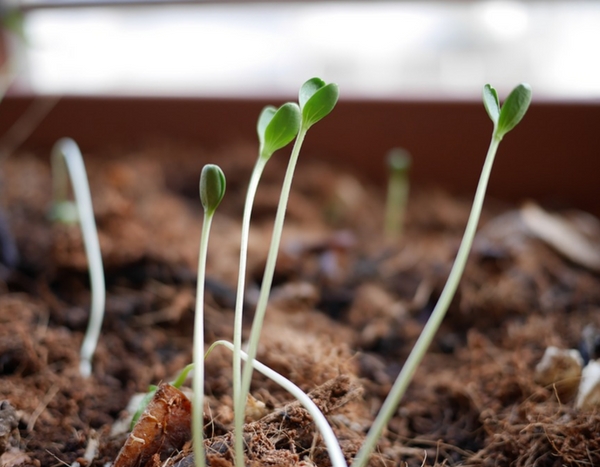
Sow on the surface, without covering the seeds, in a fine seed compost kept evenly moist (the seeds need light to germinate). Ideal temperatures: 20–22°C until emergence (10–15 days), under a lid/plastic film to maintain humidity; then 15–20°C with good ventilation and 14–16 hours of light. Water by capillary action and ensure the substrate never dries out during germination. Recommended pH 6.5–7.0 (6.3–6.8 is still acceptable).
Transplanting and hardening off: transplant at the 4 true leaves stage, handling the root ball carefully so as not to break the roots. Harden off your young plants for 10–14 days (more light and air) before planting out after the last frosts. Do not pinch out for cut flower production (this delays flowering and shortens the stems); if you wish to create decorative pots, pinch out your plants very early and accept the delay in flowering.
In the ground: full sun, well-drained, fertile soil, deeply cultivated; 15–20 cm spacing and support netting if the site is windy. Water regularly at the start, then space out when roots are established; use drip irrigation to protect the flowers. Monitor ventilation to limit Botrytis and damping off, and treat promptly against aphids and thrips.
In pots: use a container of at least 25–30 cm diameter, with drainage holes at the bottom, aerated substrate (compost + 20–30% perlite/volcanic rock). Water when the top 2 cm are dry, allow to drain, and feed every 2–3 weeks or use a slow-release fertiliser.
Growing temperatures after planting: aim for 16–18°C at night and 18–24°C during the day; avoid heat spikes, ventilate and limit watering on the flowers to prevent spotting.
Harvesting: harvest when one or more flowers are open (or buds well coloured), remove lower leaves, re-cut the stems and place them in clean water.
Sowing period
Intended location
Planting & care advice
-

-
-

-

-

-

-

-

This item has not been reviewed yet - be the first to leave a review about it.
Recently viewed products
Haven't found what you were looking for?
Hardiness is the lowest winter temperature a plant can endure without suffering serious damage or even dying. However, hardiness is affected by location (a sheltered area, such as a patio), protection (winter cover) and soil type (hardiness is improved by well-drained soil).

The flowering period indicated on our website applies to countries and regions located in USDA zone 8 (France, the United Kingdom, Ireland, the Netherlands, etc.)
It will vary according to where you live:- In zones 9 to 10 (Italy, Spain, Greece, etc.), flowering will occur about 2 to 4 weeks earlier.
- In zones 6 to 7 (Germany, Poland, Slovenia, and lower mountainous regions), flowering will be delayed by 2 to 3 weeks.
- In zone 5 (Central Europe, Scandinavia), blooming will be delayed by 3 to 5 weeks.
In temperate climates, pruning of spring-flowering shrubs (forsythia, spireas, etc.) should be done just after flowering.
Pruning of summer-flowering shrubs (Indian Lilac, Perovskia, etc.) can be done in winter or spring.
In cold regions as well as with frost-sensitive plants, avoid pruning too early when severe frosts may still occur.
The planting period indicated on our website applies to countries and regions located in USDA zone 8 (France, United Kingdom, Ireland, Netherlands).
It will vary according to where you live:
- In Mediterranean zones (Marseille, Madrid, Milan, etc.), autumn and winter are the best planting periods.
- In continental zones (Strasbourg, Munich, Vienna, etc.), delay planting by 2 to 3 weeks in spring and bring it forward by 2 to 4 weeks in autumn.
- In mountainous regions (the Alps, Pyrenees, Carpathians, etc.), it is best to plant in late spring (May-June) or late summer (August-September).
The harvesting period indicated on our website applies to countries and regions in USDA zone 8 (France, England, Ireland, the Netherlands).
In colder areas (Scandinavia, Poland, Austria...) fruit and vegetable harvests are likely to be delayed by 3-4 weeks.
In warmer areas (Italy, Spain, Greece, etc.), harvesting will probably take place earlier, depending on weather conditions.
The sowing periods indicated on our website apply to countries and regions within USDA Zone 8 (France, UK, Ireland, Netherlands).
In colder areas (Scandinavia, Poland, Austria...), delay any outdoor sowing by 3-4 weeks, or sow under glass.
In warmer climes (Italy, Spain, Greece, etc.), bring outdoor sowing forward by a few weeks.
Shipping country and language
Your country of residence may be:
Your country of residence is:
For a better user experience on our website, you can select:
Your shipping country:
-
 Austria
-
 Belgium
-
 Bosnia & Herzegovina
-
 Bulgaria
-
 Croatia
-
 Cyprus
-
 Czechia
-
 Denmark
-
 Estonia
-
 Finland
-
 France
-
 Germany
-
 Greece
-
 Hungary
-
 Iceland
-
 Ireland
-
 Italy
Italy
-
 Latvia
-
 Liechtenstein
-
 Lithuania
-
 Luxembourg
-
 Malta
Malta
-
 Netherlands
-
 Poland
-
 Portugal
-
 Romania
-
 Serbia
-
 Slovakia
-
 Slovenia
-
 Spain
Spain
-
 Sweden
-
 Switzerland
Language:
-
French
-
 English
-
Spanish
-
Italian
-
German
-
Portuguese
-
Dutch
-
Finnish
My Account
Hello
My wish lists
My cart
Log in / Register
Existing customer?
This form is protected by reCAPTCHA - the Google Privacy Policy and Terms of Service apply.
New customer?
Create an account to track your orders, access our customer service and, if you wish, make the most of our upcoming offers.