From 19 to 23 May 2026, the Chelsea Flower Show once again set the tone for tomorrow's garden trends in the grounds of the Royal Hospital Chelsea in London. The event organised by the Royal Horticultural Society (RHS) unveiled an edition centred on calm and wellbeing. Far from spectacular displays, the award-winning gardens favoured enveloping atmospheres, soft planting palettes, the omnipresence of water and shelter spaces. Health, biodiversity, knowledge transfer and adaptation to climate change were the guiding themes of the 2026 edition. Discover the gardens that impressed judges and public alike this year!
Gold medal and Chelsea Garden of the Year: The CPRE Garden: On the Edge
Overall winner of the 2026 edition, The Campaign to Protect Rural England Garden: 'On the Edge', created by Sarah Eberle, highlights neglected spaces on city fringes that are nonetheless vital for biodiversity. The emerges from planting, her hand touching a pool while her willow hair extends into a dry-stone wall. Around her spreads planting inspired by the British countryside, mixing hornbeam (Carpinus betulus), blackthorn (Prunus spinosa), dogwood (Cornus sanguinea) and holly (Ilex aquifolium). A poetic garden that recalls value of ordinary spaces often threatened by urbanisation.

Gold medal and Best Small Show Garden: Addleshaw Goddard: Flourish in the City
With Addleshaw Goddard: Flourish in the City, Joe and Laura Carey celebrate hidden green oases at heart of London. Inspired by #Humanise movement and capital's status as a "National Park City", this garden combines water features, Portland stone and recycled materials to imagine a more welcoming city. Planting mixes Saxifraga × urbium (London Pride), pines, plantains and mulleins in shades of purple, pink and lemon yellow. A concentrated set of ideas to reintroduce nature into urban landscape.
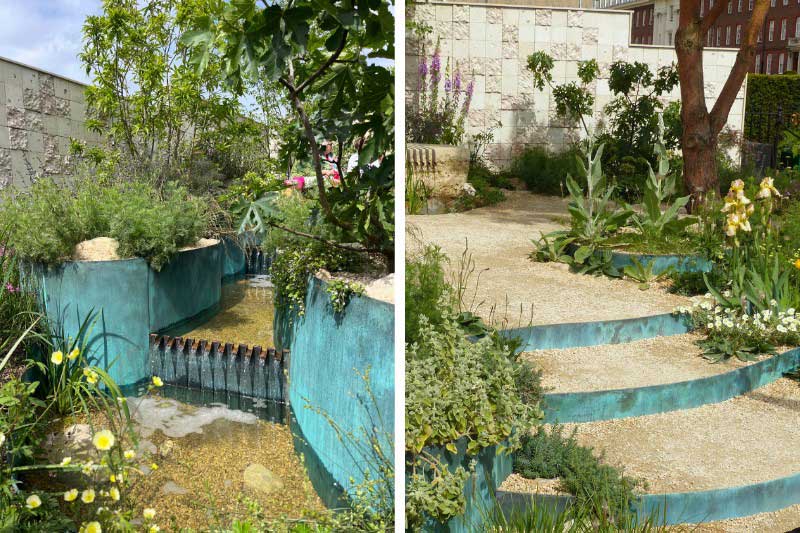
Silver medal and People's Choice Show Garden: Parkinson's UK - A Garden for Every Parkinson's Journey
Designed by Arit Anderson as place of respite for people with Parkinson's and their loved ones, Parkinson's UK - A Garden for Every Parkinson's Journey won visitors' hearts. A sculptural stream accompanies the route and provides sensory landmarks through movement and sound of water. Tulips, peonies, roses and white foxgloves (Digitalis purpurea 'Alba') mark different sequences of garden, designed around energy, rest and night.
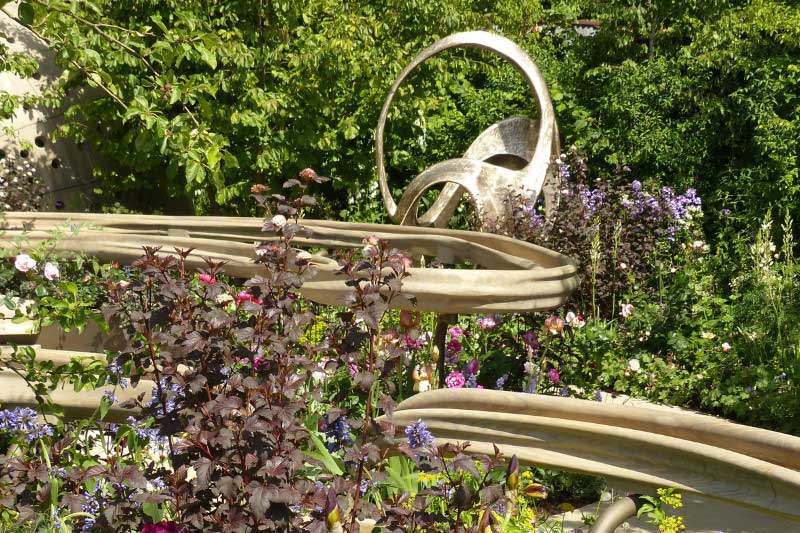
Silver medal and People's Choice Balcony Garden: Alzheimer's Society - Microbes and Minds Garden
Exploring links between gut microbiome and brain health: that is Tina Worboys' challenge with Alzheimer's Society's: Microbes and Minds Garden. Inspired by traditional English orchards, garden is organised around a central apple tree symbolising fermentation of cider vinegar. Forget-me-nots (Myosotis sylvatica), Roman chamomile (Chamaemelum nobile), cow parsley (Anthriscus sylvestris) and chives (Allium schoenoprasum) reinforce this gentle, natural atmosphere.
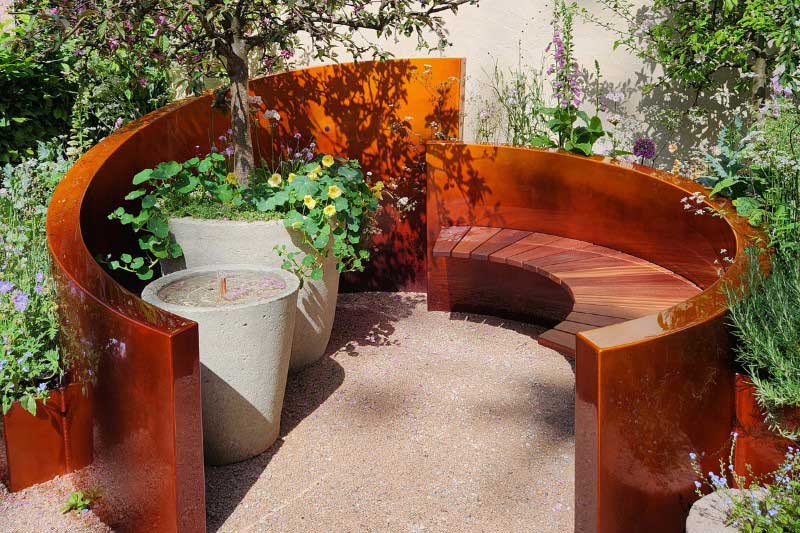
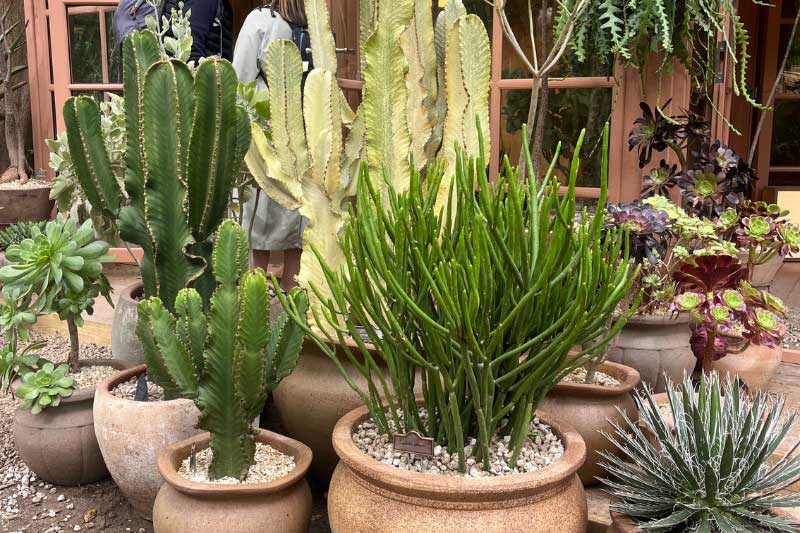
Gold medal and Best Houseplant Display: An Ode To Endurance
Impossible to ignore success of houseplants at Chelsea this year. With An Ode To Endurance, Natalia Drezek and Jinhyun Ahn pay tribute to species that survive in most hostile environments. Staged in discomfort of living room, Brachychiton rupestris, monkey tail cactus (Cleistocactus colademononis), Kalanchoe beharensis, Euphorbia ingens and Aeonium arboreum reveal sculptural beauty of arid-climate plants.
Our team's favourites
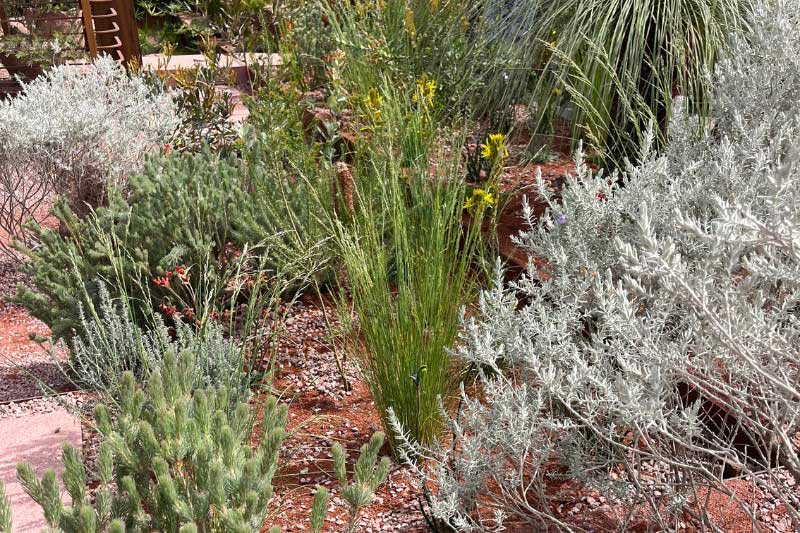
Heading to Australia with Journey Beyond the Tracks: From Adelaide to Perth, a small garden by Max Parker-Smith awarded a silver-gilt medal. Inspired by famous Indian Pacific train, it celebrates dramatic landscapes of South and Western Australia through planting of eucalypts, grevilleas, callistemons, hakeas and anigozanthos (kangaroo paws).
From 19 to 23 May 2026, the Chelsea Flower Show once again set the tone for tomorrow’s garden trends in the grounds of the Royal Hospital Chelsea in London. The event organised by the Royal Horticultural Society (RHS) unveiled an edition centred on calm and wellbeing. Far from spectacular displays, the award-winning gardens favoured enveloping […]
Every spring, Royal Horticultural Society grounds in heart of London become stage for finest horticultural innovations at Royal Horticultural Society, during the Chelsea Flower Show. Among event highlights, "Plant of the Year" prize recognises most remarkable new plants, selected for originality, garden merits and appeal to gardeners. Our team visited the show to see finalists and winners of the 2026 edition. Let’s discover the results!
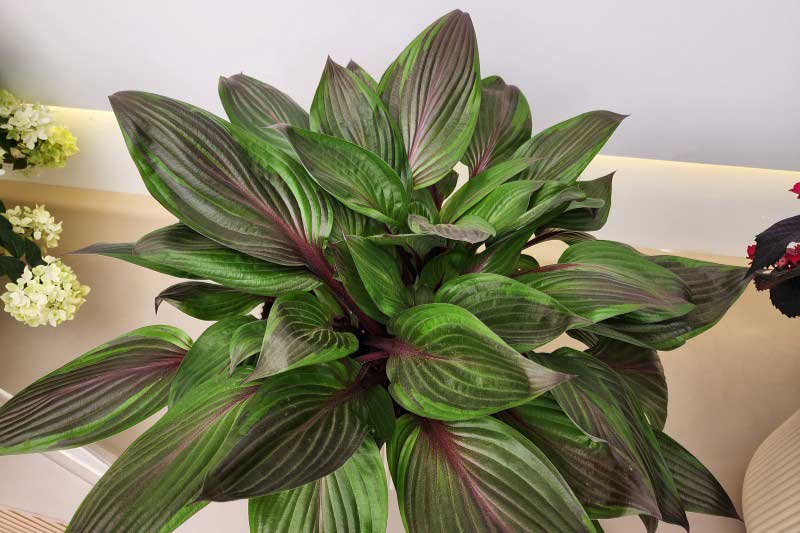
Plant of the Year 2026: Hosta 'Red Ninja'
This is a genuine little revolution in world of hostas! World's first red-variegated hosta, Hosta 'Red Ninja' was one of stars of Chelsea Flower Show 2026. Its large leaves show an intense crimson-red centre edged with dark green, a colouring unprecedented in this genus until now dominated by shades of green, blue and cream. Even more surprising, this spectacular hue does not fade after spring but persists through much of season. In late summer, delicate lavender flowers rise above foliage, adding to elegance of this compact perennial (35 cm height, about 50 cm spread) yet exceptional plant.
Another trait appreciated by judges: unlike many hostas, its colouring intensifies with a few hours of gentle sun.
Red hostas have long been breeder's dream and, for first time, a true red hosta whose colouring appears durable has been achieved. Jury was right: this is a genetic advance visible at a glance.
Our view: a bold creation likely to quickly win over collectors and enthusiasts of unusual foliage.
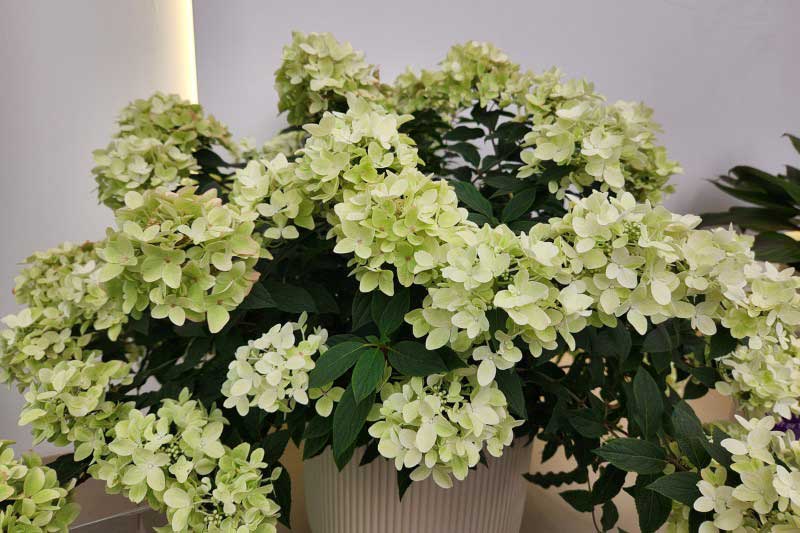
Second place: Hydrangea paniculata 'Groundbreaker Ruby'
Innovation also features in this hydrangea that breaks the mould. 'Groundbreaker Ruby' belongs to first series of Hydrangea paniculata that are truly groundcover. An unprecedented trait for panicle hydrangeas, usually upright. Its low, spreading habit forms a dense carpet about 40 cm high, covered for nearly 100 days with flowers that develop from white through pink to ruby red.
Easy to grow, undemanding in maintenance and particularly suited to small gardens, borders, banks or pot culture, it opens new uses for panicle hydrangeas. Our view: a plant set for a long-lasting career!
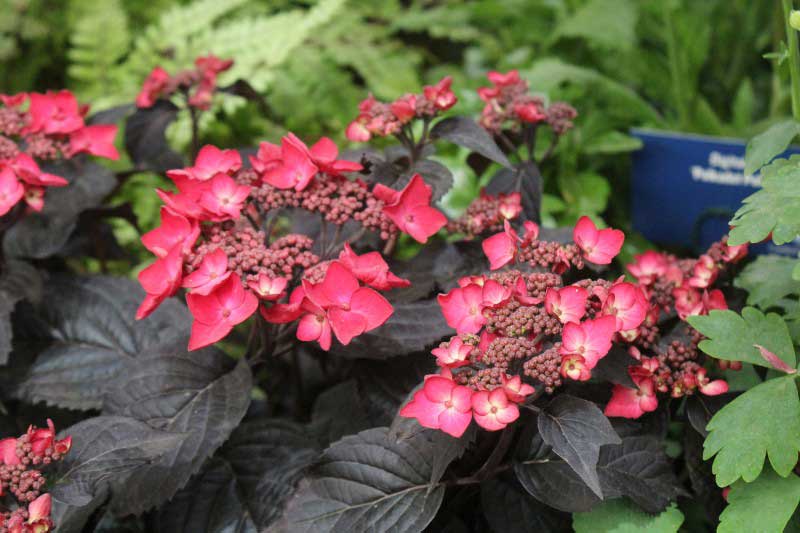
Third place: Hydrangea 'Velvet Night Red Lace'
A true drama queen of Chelsea Flower Show 2026, Hydrangea 'Velvet Night Red Lace' pairs almost velvety, near-black red foliage with lacy, bright carmine-red flowers. Result of long breeding work on more than 12,000 seedlings, 'Velvet Night Red Lace' stands out for a striking contrast rarely seen among hydrangeas. Its flat, delicately sculpted inflorescences shine against a dark, glossy foliage mass, offering a novel play of contrasts in hydrangeas.
Even out of flower, its dark foliage retains strong ornamental interest, providing presence in borders as well as in containers. A variety that perfectly illustrates current enthusiasm for coloured foliage and plants with high visual impact.
Our view: it has immediate theatrical appeal that makes stars on social media as well as in show gardens.
Team favourites
Beyond official winners, several new plants particularly caught our eye under the Grand Pavilion.
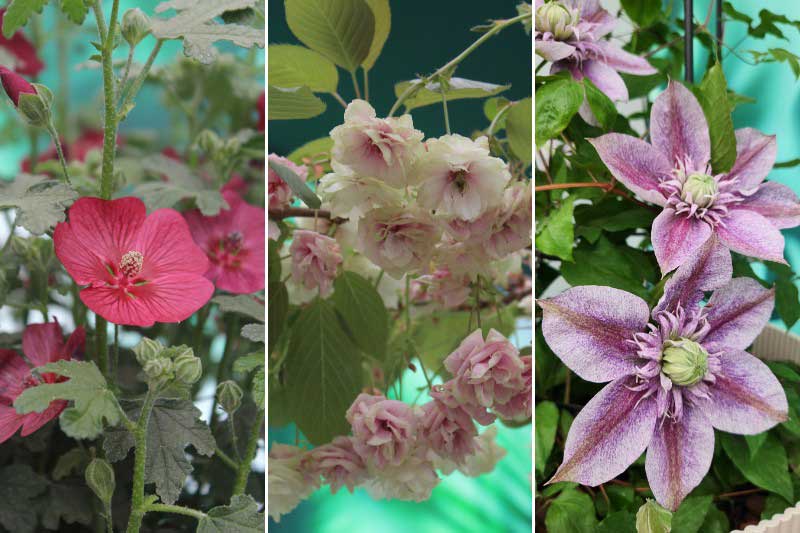
Anisodontea 'Carnival Lights Candy Apple' lit up the Grand Pavilion with its bright raspberry-red flowering, a colour still rare in anisodonteas. Its large, satiny flowers, finely veined, stand out against soft green, slightly velvety foliage. Its relaxed, bushy habit, covered in buds and blooms, promises a very long flowering season.
Prunus 'Sumaura Fugenzo' impressed with its absolutely irresistible display! We were won over by its pendulous clusters of very double flowers, with delicately crumpled petals. Initially cream with greenish tint, they develop to soft pink then deeper tones, evoking little pom-poms suspended from the branches. A variety both romantic and refined.
Clematis 'Minamo-no-Yousei' ranks among most beautiful new introductions seen this year. Its large star-shaped flowers, dusted with lavender, pink and silver, are enhanced by an untidy, almost anemone-like centre. A delicate, sophisticated bloom of great elegance. Japanese breeders continue to produce clematis of incredible finesse!
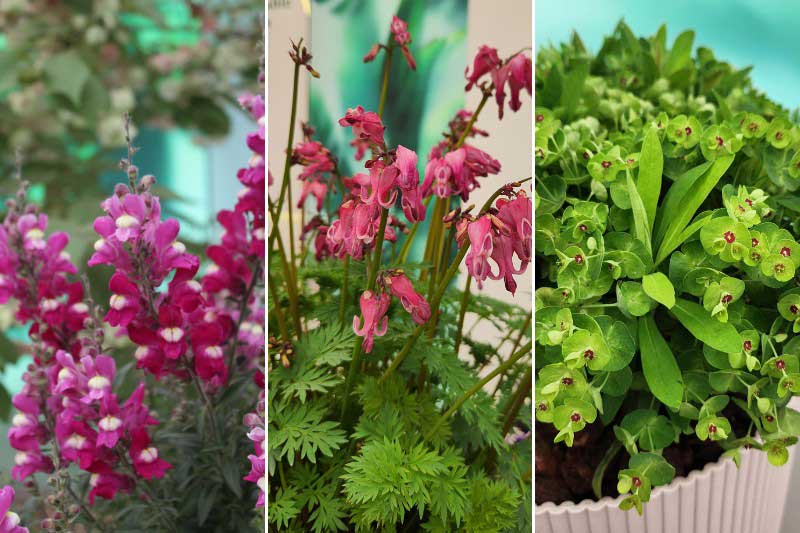
Antirrhinum 'Shiryu Kiss' reinvents snapdragon with generous flowering in a gradient of bright pinks. On the same spikes mix candy-pink, bubblegum-pink and fuchsia, all lit by a cream-white throat. A fresh, luminous variety that brings lightness to borders.
Other finalists
Among other new introductions noted by the jury were Dicentra 'Passion Hearts', clematis 'Nurse Queen', Euphorbia × martini 'Walberton's Little Treasure', Pittosporum 'Green Mound', as well as several promising roses such as 'Amirose' or 'Watford Forever'.
What the 2026 shortlist reveals
As every year, these selections reflect dynamism of international horticultural innovation and offer a good preview of plants likely to make an impact in gardens over coming seasons. According to our promesse de fleurs experts, there is some distancing from race for ever-bigger or more spectacular flowers. Breeders now seem to seek plants distinguished by foliage colour or novel habits, more versatile and interesting over extended periods. This is a trend observed for several years at Chelsea Flower Show and fits well with evolution of contemporary gardens.
Every spring, Royal Horticultural Society grounds in heart of London become stage for finest horticultural innovations at Royal Horticultural Society, during the Chelsea Flower Show. Among event highlights, “Plant of the Year” prize recognises most remarkable new plants, selected for originality, garden merits and appeal to gardeners. Our team visited the show to see finalists […]
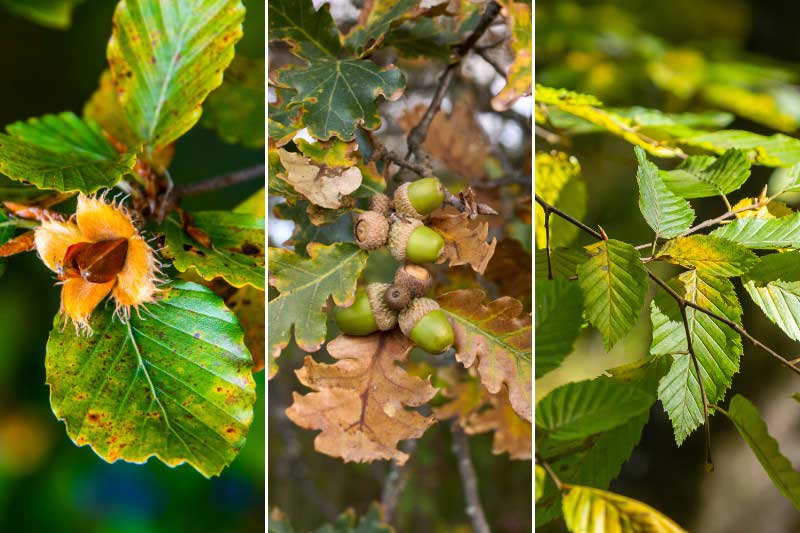
Beeches, oaks, but also hornbeams and chestnuts are already losing their leaves in summer well before autumn arrives, in August, but sometimes as early as mid‑July. This unusual phenomenon gives forests an early autumn appearance… and our gardens a prematurely autumnal look, with a carpet of dead leaves already covering the ground. Two heatwaves, a significant water deficit and parched soil have weakened these trees, causing premature leaf drop. A visible symptom of water stress and climate disruption, browning is now observed each summer with increasing frequency. Which species are most sensitive? Sun‑scorched leaves on trees, leaf yellowing in summer — does this early browning mean the tree will die? And above all, what can be done to mitigate these effects? We explain.
Why do tree leaves turn yellow in the middle of August?
August 2025 spared little vegetation. In many regions, notably Nouvelle‑Aquitaine, trees began to defoliate well ahead of time. This phenomenon is not due to an early season but to physiological stress caused by extreme climatic conditions.
In summer, foliage would normally display a deep green, fuelled by chlorophyll that captures solar energy and enables the tree to build reserves via photosynthesis. But repeated heatwaves, combined with ever drier soils, deeply disrupt this cycle.
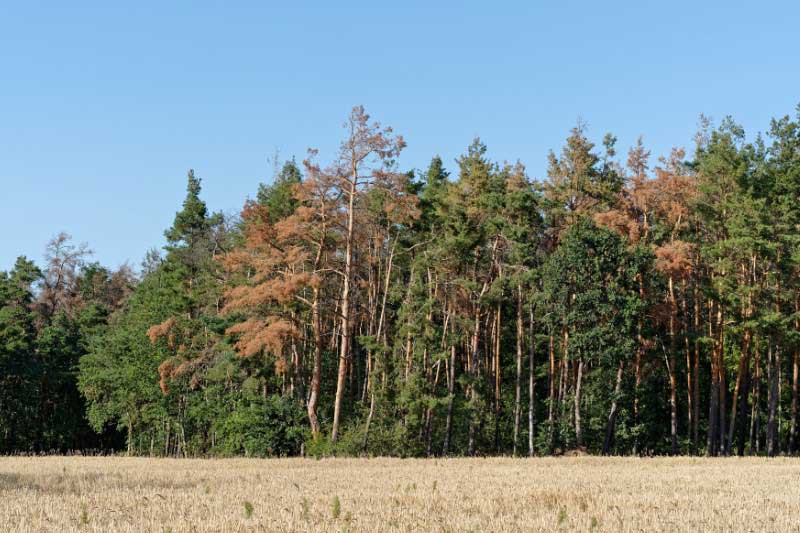
The figures are telling: over the 2021–2023 period, an estimated 8% of trees in French forests (living or standing dead for less than five years) were physiologically affected — some 186 million trees out of 2,270 million. This is not an isolated incident: IGN (National Institute of Geographic and Forest Information) also reports a 54% increase in tree mortality between 2012 and 2022.
And this is only the beginning. Projections indicate that by 2050, summer droughts will last on average two to four months, compared with two months currently, having more lasting effects on soils. If warming continues, some regions could face up to 39 additional drought days per year, and in the south soils could remain dry for seven to eight consecutive months.
In France, native species, adapted for millennia to a temperate climate, struggle to keep pace with this disruption. Some adapt partially, others show clear signs of exhaustion.
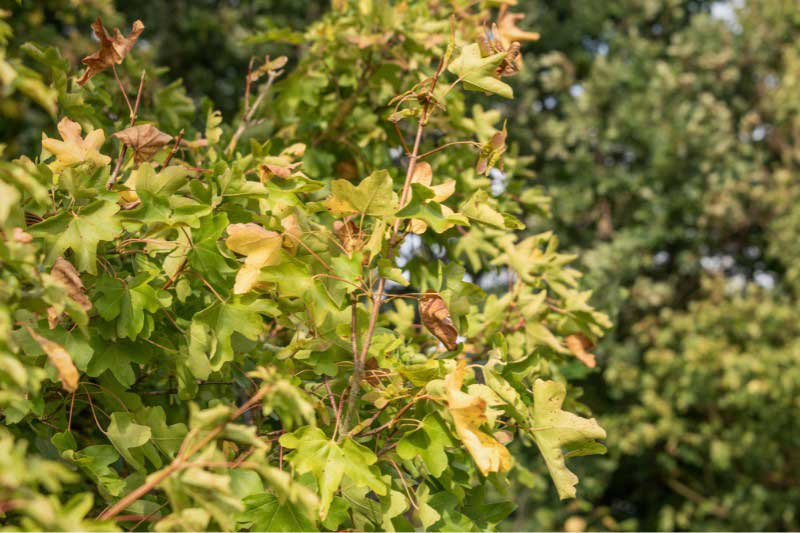
Lack of water, combined with very high temperatures, forces trees to close their stomata to limit water loss. This survival reflex halts photosynthesis and leads to a rapid loss of vigour. Leaves deprived of water and nutrients brown, dry out and fall. The phenomenon of leaves yellowing in summer is not natural: it is a defence mechanism to reduce evaporative surface area. This is known as water stress.
Certain species, such as beech, are particularly vulnerable: they suffer leaf scorch, bark lesions and even micro‑cracks that block sap rise or cause embolisms (air bubbles). All these troubles interrupt water functioning, compromise photosynthesis — and weaken the tree in the long term.

What happens after premature leaf drop?
When a tree loses its leaves as early as summer, it enters a kind of early dormancy, as if self‑protecting in a critical situation. This defence mechanism reduces its water and energy needs, but has medium‑ and long‑term consequences.
1. Photosynthesis stopped = reserves not replenished
Normally, leaves remain active until autumn to produce sugars via photosynthesis. These sugars reinforce root reserves, essential to survive winter and restart in spring. Summer defoliation prevents this process. The tree therefore enters the cold season with insufficient reserves, making it more vulnerable to disease, frost or pest attacks.
2. Growth halted
Without leaves, the tree can no longer grow in height or diameter. Over several successive seasons this results in slowed development, a thinner crown and a progressive decline in vitality.
3. Risk of long‑term weakening
If the stress episode is isolated, the tree can recover, especially if well established. But if stress recurs (as increasingly happens), the tree has no time to rebuild its reserves and weakens progressively. This process can take several years before leading to total decline.
4. Delayed consequences visible in spring
A tree that lost its leaves in August may appear alive in winter but fail to leaf out in the following spring, or do so only partially. This lack of foliage then reflects internal exhaustion, often irreversible.
Does this mean the tree will die?
Not necessarily, but it is worrying. Early browning and defoliation are signs of acute stress, not an irreversible sentence. However, if these episodes repeat year after year, they can cause lasting weakening, loss of carbon reserves, reduced resistance to pests and an increased risk of mortality.
Most sensitive species
Not all species respond the same way to these extreme climatic episodes. Some are more vulnerable than others:
- The beech (Fagus sylvatica): one of the most affected species. Native to humid, temperate climates, it quickly suffers from lack of water and heat stress. Browning of its foliage is common in summer, even in dense forest. Leaf deficit — the proportion of missing foliage compared with normal — rose from about 15% between 1997 and 2003 to nearly 35% between 2017 and 2023. This increase illustrates a worrying trend, even if the species sometimes shows the ability to recover when conditions improve.
- Oaks (Quercus robur, Q. petraea): among them, the pedunculate oak (Quercus robur) proves more sensitive to summer water stress, while the sessile oak and downy oak display better resistance. However, repeated weakening makes them more vulnerable to pests such as jewel beetles or certain pathogenic fungi. They account for nearly 25% of France’s forest area — a significant share.
- The hornbeam (Carpinus betulus) and the chestnut (Castanea sativa): these too show weakness from the end of summer, with premature leaf drop during prolonged drought.
- Conifers such as spruce: poorly adapted to dry summers, they suffer marked weakening, often exploited by pests such as bark beetles.
This reflects a general deterioration affecting all tree categories. It is estimated that one third of oaks (sessile and pedunculate), two thirds of beeches, 60% of firs at low and mid altitudes, and 90% of spruces may no longer be able to develop in their current zones by 2050.
What can be done?
Faced with this situation, several actions can be considered:
- Plant species better adapted to conditions
In the current context, it makes sense to rethink species choices without abandoning local vegetation. Some species show better tolerance to repeated summer droughts. It is advisable to favour resilient but diverse species, and adapt plantings to local pedoclimatic conditions: soil type, aspect, water‑holding capacity, altitude…
Among species better suited to dry conditions are downy oak, the Atlas cedar, and the European nettle tree, as well as Mediterranean species such as Aleppo pine or the holm oak. These species can resist heat when planted in suitable exposures and climates. Species such as Japanese pagoda tree (Styphnolobium japonicum) or the Siberian elm (Ulmus pumila) also show good adaptive capacity.
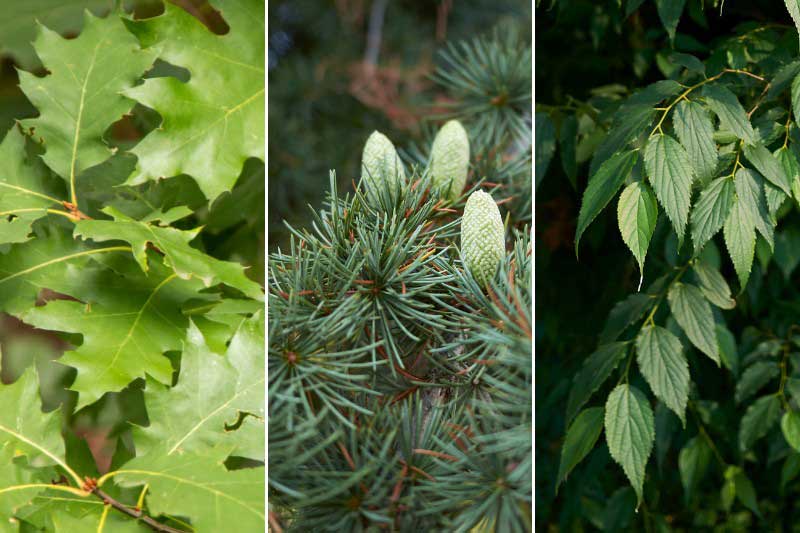
- Encourage plant biodiversity: diversifying species is an effective strategy to strengthen overall resilience. Mixed stands (species with different root systems and needs) cope better with climatic hazards.
- Preserve the soil: living soil rich in organic matter retains water better. Mulch, leave dead leaves in place and avoid soil compaction — simple but effective measures.
- Limit interventions during stress periods: avoid heavy pruning, transplanting or applications of nitrogenous fertilisers in mid‑summer. Do not rush to prune or fell a stressed tree: with time and improved conditions it can sometimes recover.
Beeches, oaks, but also hornbeams and chestnuts are already losing their leaves in summer well before autumn arrives, in August, but sometimes as early as mid‑July. This unusual phenomenon gives forests an early autumn appearance… and our gardens a prematurely autumnal look, with a carpet of dead leaves already covering the ground. Two heatwaves, a […]
Bali, the island of the Gods, is a unique place in the Indonesian archipelago. A paradisiacal vision of distant horizons, it has inspired many landscapers seeking exoticism and refinement in the garden. The Balinese garden is one of the current trends to explore for gardeners looking for paradise on earth!
By opting for plants that withstand climatic conditions of our northern-hemisphere gardens, the Balinese garden becomes an atypical inspiration to adapt at home, interesting for dedicated, sheltered areas. Let’s see how to deploy lush foliage that transports us to the ends of the earth, from water garden to enclosed garden and poolside areas.

Design codes of the Balinese garden: colours and decorative elements
Anyone who has visited Bali knows this tiny Hindu enclave within vast Indonesia gathers architectural and natural treasures that have made it an extremely popular destination in recent years.
It can be described as a concentrate of nature, impressive rice terraces, but also a pervasive mineral quality due to its volcanic character, and a spirituality combined with a unique aesthetic. Everything here is refinement, and gardens hide, behind lush greenery, stone statues, omnipresent deities receiving daily offerings. Decorative elements also come from dark stone, local basalt, and polished black pebbles. Water in ponds or fountains, wooden terraces, rattan, bamboo or exotic wood furniture, carved Indian doors are all invitations to simulate, at home, an entrance to a second imaginary garden. Lava stone and basalt can easily be replaced by slate, schist, or suitable ceramics. Large pots and basins punctuate the spaces, and where possible a canopy adds an Asian spirit. The contrast between green foliage and dark mineral is often enhanced by a brightly coloured Balinese parasol with fringes. Finally, a mobile evoking sound of local gamelan (traditional Balinese orchestra) completes the Balinese atmosphere.

The jungle garden
This garden, essentially made up of foliage, fits perfectly with Balinese garden where lush foliage takes precedence over flowering, which is present but remains secondary to plant abundance.
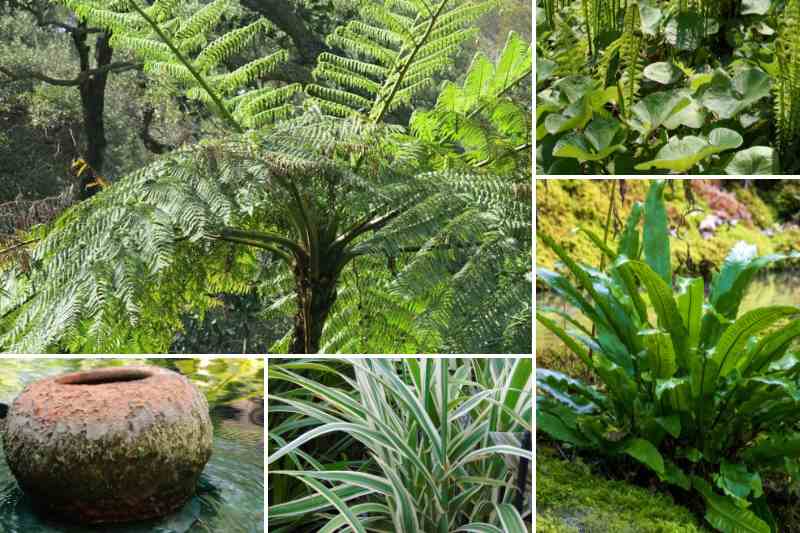
The Balinese garden integrates perfectly into an exotic or jungle garden: choose a sheltered part of the garden to transform into a Balinese green lounge, where hardy palm trees, giant ferns, Tetrapanax and other plants suited to our harsher climates will take place, planted en masse around a few perennials chosen for their XXL foliage or dissected leaves: evergreen ferns such as Asplenium scolopendrium and Matteuccia struthiopteris, Cyathea medullaris, variegated Arundo donax 'Variegata', and Petasites with large leaves. Here and there plant some Crinum asiaticum bulbs in damp soil to add delicate blooms.
Around a pool in a seaside garden
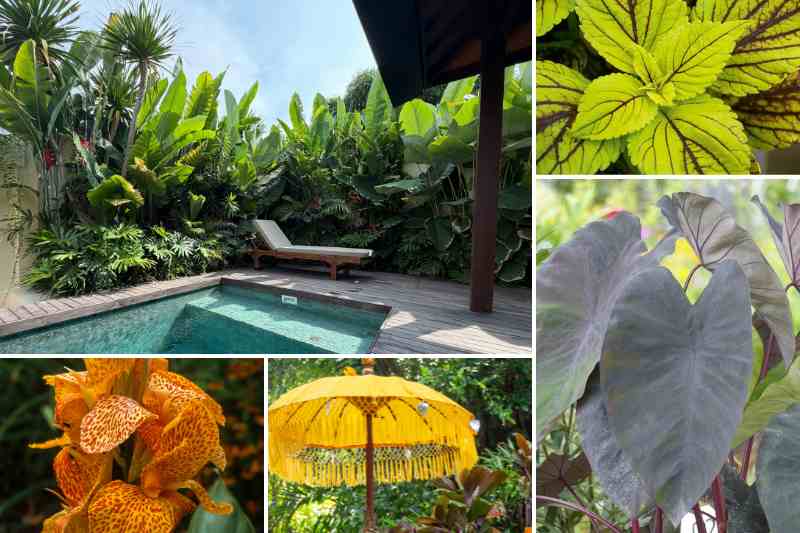
Framing a reserved garden area such as a pool is a great way to imagine being in Bali. Tropical plants from the island are too tender for our climate, so choose substitutes to recreate Balinese postcard. In our example, simplicity is expressed with evergreen plants required around pool, and splendid foliage.
Banana trees, cordylines, bamboo palm provide the structure, enhanced by Coleus in aniseed tones such as 'Copinto Caipirinha' or 'Margarita' and a black-leaved Colocasia.
Be sparing in contemporary layouts with three or four plants maximum and slightly more generous in a denser garden. Here, Balinese parasol and wooden sun lounger become must-have accessories for hot summer days.
In a sheltered garden with mild climate
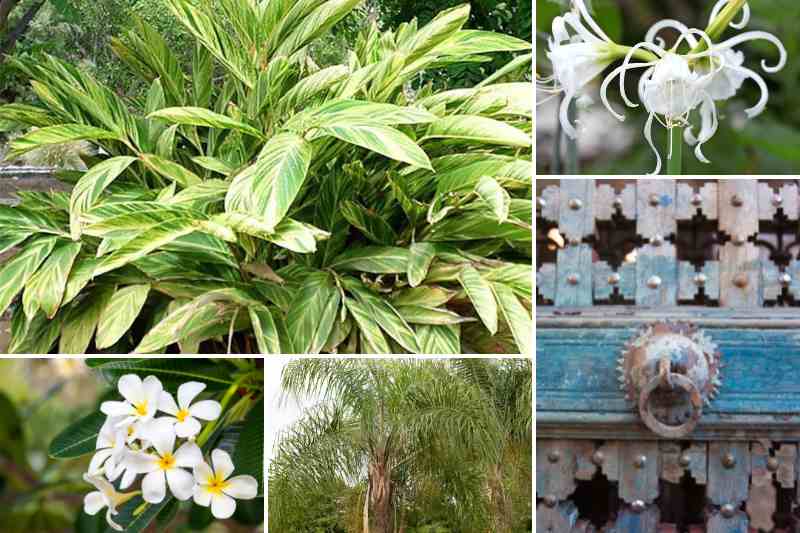
This is certainly the most suitable place to establish a Balinese garden, especially if you live on the Brittany and Atlantic coasts, benefiting from sufficient humidity to approach island’s humid tropical climate, or around the Mediterranean basin by adapting some plants. You can enjoy plants with beautiful foliage, a little tender but that will survive mild winters in these regions or that can be planted in large pots: Alpinia zerumbet 'Variegata', showy variegated gingers, replacing colours of local Cordylines. A queen palm (Syagrus romanzoffiana), a frangipani (Plumeria obtusa) chosen for its delicacy and intoxicating fragrance can join the scene.
In Mediterranean areas, a traveler's tree and tropical palm trees can even be considered! Also think of a beautiful exotic climber such as pink bignonia and some ismenes for an extra exotic touch.
By planting densely, you recover the jungle effect described above. Decorative elements complete scene such as an ornate door or a painted shutter, and a bamboo chime.
Water garden in the Balinese style
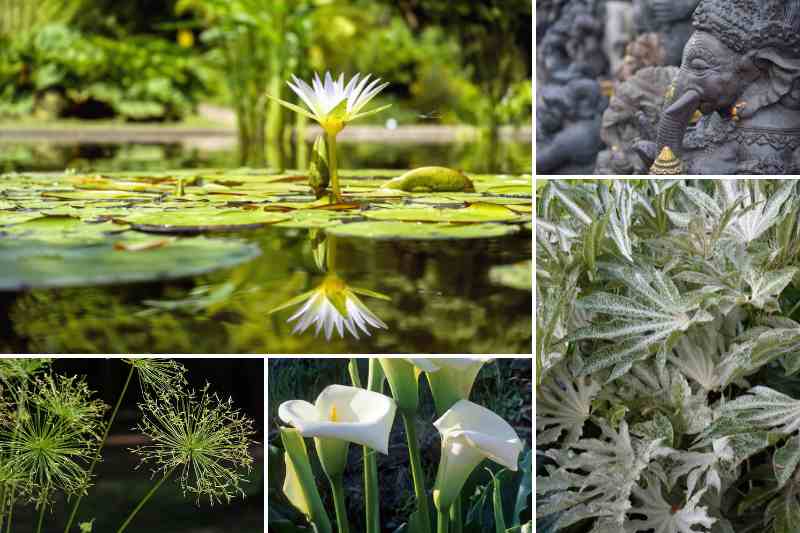
Water is omnipresent in Bali and in its finest gardens. You can easily imagine a Balinese garden centred on a water scene, whether a mini-pond or larger wet area. Plant species that like damp soil or can be partly submerged such as papyrus, lotus (Nelumbo nucifera) and water lilies are perfect. Arums, rodgersias and ligularias work well with their large foliage to infuse tropical atmosphere beyond their white or yellow blooms. For a larger area add a Gunnera, Brazilian rhubarb, impressive once established, or Astilboides tabularis. Here we like variegated foliage of Fatsia japonica 'Spider Web' near the water to add more exceptional foliage.
Decor is important here too: a single Hindu statuette, some pebbles or black paving and a rain chain are perfect!
Tropical escape in a courtyard, patio or walled garden
These very sheltered spots allow installation of plants that would not survive elsewhere. Presence of walls creates microclimate beneficial to Balinese garden. Selection below suits a sunny spot, and all these plants also grow well in pots and can be overwintered if necessary.
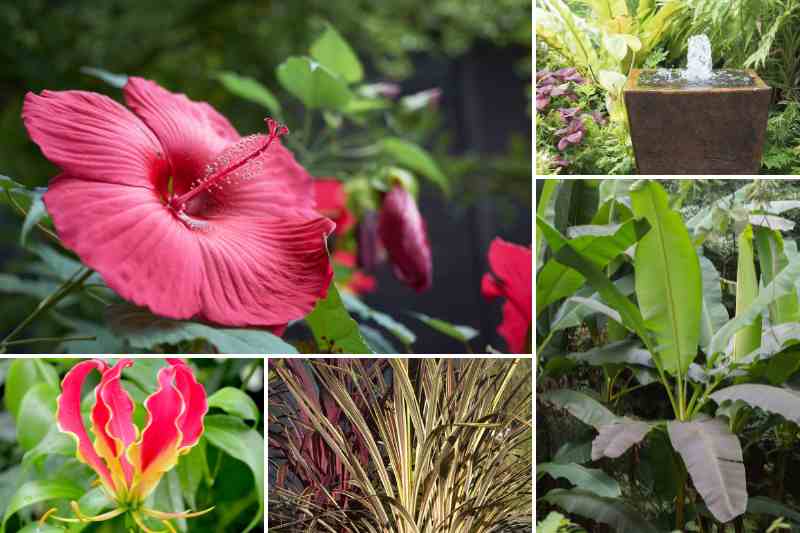
By replacing Cordyline fruticosa found in Bali with Cordyline banksii, equally colourful but hardier, you bring maximum colour, enhanced for example by bright red or pink of a common Rose mallow that performs well in a pot when substrate is kept moist. Beside them an essential banana, Musa 'Basjoo', interesting for cold tolerance and eventual size, or large unicolour cannas that also bring exotic feel. A compact climber can also slip in, such as Gloriosa rothschildiana. Bring out a Monstera or bird of paradise from the living room for summer and install a small temporary fountain to perfect tropical ambience.
Find Find our selection of plants suited to exotic spirit on our online nursery as well as our Balinese Garden inspiration page in our 2026 trend booklet !
Do you enjoy these lush, transporting atmospheres? Discover other inspiring scenes in these articles that address the theme:
- Design a garden inspired by Madeira, the island of flowers
- A banana tree in a small garden? our tips for integrating it well
- How to create a tropical atmosphere in a small garden?
- How to create a refreshing oasis in the garden or on the terrace?
And all our tips to create at home an atmosphere of exotic or tropical gardens:
Bali, the island of the Gods, is a unique place in the Indonesian archipelago. A paradisiacal vision of distant horizons, it has inspired many landscapers seeking exoticism and refinement in the garden. The Balinese garden is one of the current trends to explore for gardeners looking for paradise on earth!By opting for plants that withstand […]
Terraces, courtyards, patios and small bohemian balconies are the new stars of summer! This very colourful "boho" trend that has invaded our interiors and wardrobes also appears in our summer green retreats. It matches the sunny cheerfulness of a season when we spend a lot of time outdoors.
Let’s take inspiration from the gypsy world to prepare bright alcoves on balconies, terraces and inner courtyards from the first fine days, with planting ideas and decorative elements. We explore this Boho Patio in three scenes easy to recreate at home!
Boho Patio codes
The bohemian atmosphere dresses itself in vivid, deep and variegated colours that answer one another, but also in associations of warm tones in the blooms: intense reds, deep violets, Indian pinks and spicy oranges, not forgetting bicoloured flowers. Bluish, golden or purplish foliage helps to reinforce this playful mood, bringing red or variegated splashes.
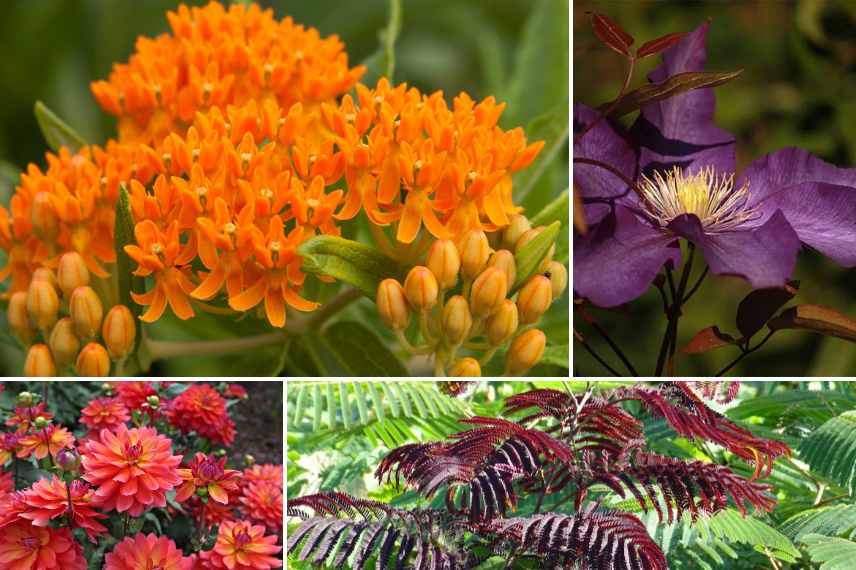
This mixed-up planting borrows from gypsy culture a festive, hybrid universe that laughs at convention and pairs a whole spectrum of colours, provided they are warm and bright.
This style is also based on improvisation, like manouche music, and on bold accents. This temperament appears in the garden in temporary scenes created especially for the summer months, and in the accumulation of mismatched small objects (side tables, stools, small cushions, etc.).
On the décor side, important for dining and relaxation areas, have fun with mismatched pairings: rustic furniture repainted turquoise or green, rattan chairs, fabric pouffes, Provençal floral and ethnic patterns juxtaposed with strong colours: turquoise, pink, orange and bright yellow. The advantage of this bohemian décor is that you can mix disparate objects and accessories, using what you already have at home or stored in the attic, to give them a second life: bring out granny’s lace and embroidery for the summer, macramé and trimmings, old rattan armchairs, baskets and fruit crates, airy curtains. In a joyful mix of materials, the décor is done!

On a sun-drenched terrace
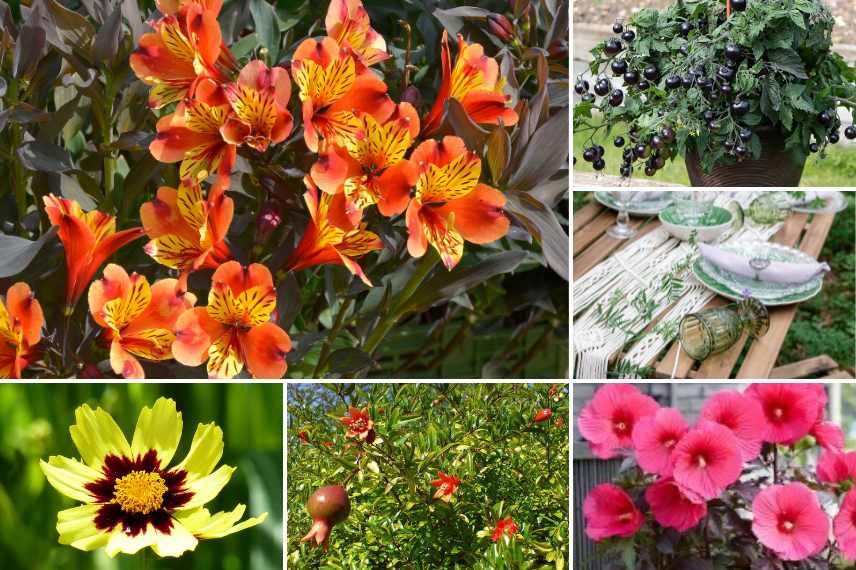
Terrace or balcony are often west- or south-facing. They can be radically transformed into an ultra-cheerful cocoon with sun-tolerant plants that do well in pots. Explore a plant colour palette ranging from saffron yellow to violet for a truly bohemian vibe.
Alstroemerias 'Indian Summer', orange and yellow contrasting against bronze foliage, will look stunning alongside Coreopsis 'Cosmic Eye', a bright yellow spotted with purple, or the pretty all-yellow 'Full Moon Madness'. Add other long-flowering plants such as a common Rose mallow 'Pink Passion' with giant flowers and dark purple foliage, and provide more foliage interest with a pomegranate that can be grown in a pot, such as Punica granatum 'Nana', whose brilliant flowers will pair beautifully with the other perennials. For snacking at aperitif time, invite, for example, the surprising cherry tomatoes 'Akoya', whose fruits turn almost black.
In a semi-shaded urban patio
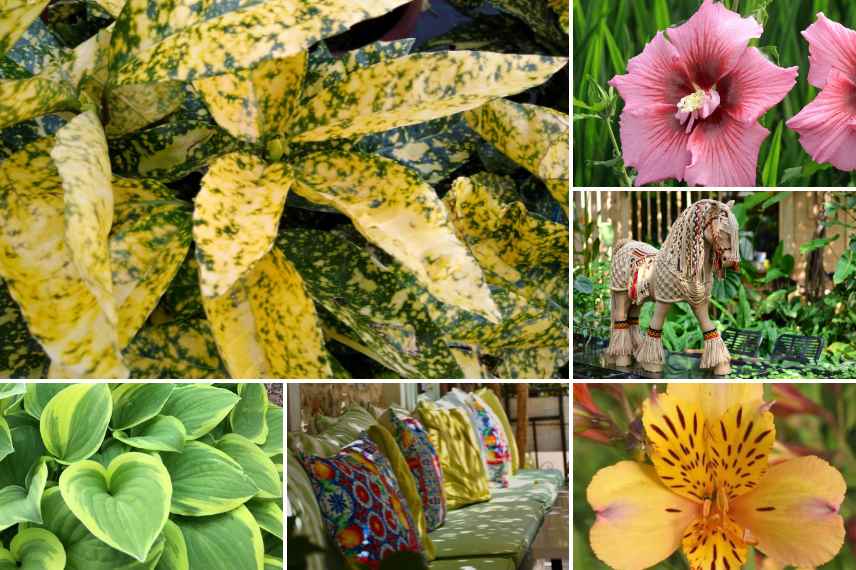
Small city courtyards benefit from focusing on colour and variegated or golden foliage to lift them out of the shade. In a semi-shaded patio receiving enough light and warmth in summer, opt for sunny flowers and a few "indestructibles":
Hosta 'The King', Hakonechloa macra and an Aucuba japonica 'Crotonifolia' for their golden and variegated foliage (Aucuba will reward you with pretty red berries a little earlier) together with the bold flowers of Hibiscus syriacus 'Hibisa rosada', and the Peruvian lily 'Duc d'Anjou'.
The bohemian spirit will also be present in accessories, essential in less bright areas and in smaller spaces.
Beyond plants, bring colour without fearing the boldest mixes. Dare genre-mixing: antique rug + Italian ceramics + small disparate or oversized objects and a cosy bench, etc. Here, the evening atmosphere will be especially worked on: lanterns, paper lanterns and candles, and don’t forget a crochet throw in these patios that are often cooler at night.
Garden refuge as an improvised alcove
This bohemian trend can also be expressed in a corner of the garden used as an improvised summer retreat.
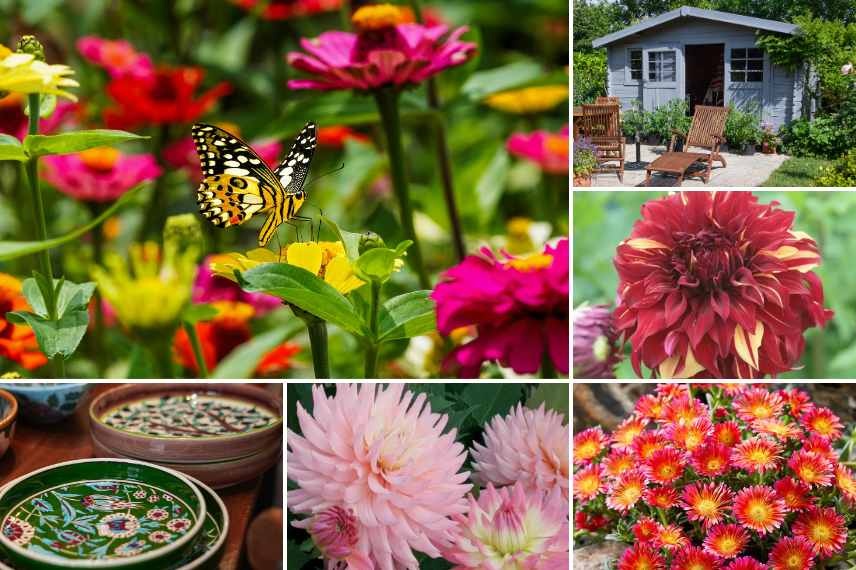
In front of a shed, garden shelter or at the foot of a fine tree from which a rattan chair is hung, set up a summer hideaway using bohemian codes. A temporary terrace, improvised with clip-together wooden decking tiles readily available from DIY stores, is easy to install. In summer it becomes a true green cocoon perfect for relaxing on a garden sofa made of a few stacked pallets or large pouffes, in a fairground style.
Here, a few colourful annuals join the party: multicoloured zinnias and orange calendulas (marigolds) sown in pots in spring, or beds of African marigold 'Mango Tango' around the area, as well as sun-loving perennials such as the charming Delosperma 'Ocean Sunset Orange Glow'. Count on two striking pots of dahlias with evocative names, the fiery 'Bohemian Spartacus' and the more restrained compact 'Melody Gipsy', for a long and remarkable display. Sunflowers 'Mongolian Giant' will bring pep and height, while a pot of basil 'Everleaf Emerald Tower' will be handy for salads at barbecues or sunny lunches.
Gather your most colourful pots, bring in lace, hangings, vintage crockery and cushions: job done!
Discover other plants ideal for composing this bohemian green décor on a terrace in our "Boho Patio" selection online and in our trend booklet!
Feeling the bohemian spirit? Find our advice on creating a bohemian garden, and our inspirational sequences: Catalane and Peach Raspberry.
This Boho Patio trend also draws on recycling second‑hand objects. Explore our topics to let your creativity run free: Decor idea: plants in unusual containers; How to make a planter from a pallet?; Recycling in the garden and How to use and properly integrate terracotta pots in the garden?
Terraces, courtyards, patios and small bohemian balconies are the new stars of summer! This very colourful “boho” trend that has invaded our interiors and wardrobes also appears in our summer green retreats. It matches the sunny cheerfulness of a season when we spend a lot of time outdoors. Let’s take inspiration from the gypsy world […]
Garden, rarely short of inspiration, suggests enticing colour trends each year to imagine new borders.
For romantics who favour softness and pastel tones in the garden, here is the Unicorn trend, a new hue devised by promesse de fleurs, blending graduated and iridescent shades from pink to straw-yellow.
What exactly is the Unicorn colour for the garden?
Inspired by the legendary white, pure animal, the "Unicorn in the garden" trend actually draws on the enchanted world of childhood, which associates pink and yellow hues, through to mauve, as if straight from a fairytale.
The garden introduces these fairy-like, very girly notes — powdered and old-rose tones, marshmallow to lavender, touched with very soft yellows — to create a decidedly romantic atmosphere. This garden universe aims to be both poetic and very feminine, approaching a "cotton candy" aesthetic but more subtle, with less acidity and more pastel nuances.
Among plants ticking all boxes of this subtle palette are many perennial plants and shrubs softly salmon, apricot and butter-fresh shaded, tones that catch the light and recall gentle spring colours.
We suggest some planting combination ideas for different garden styles and enticing borders!
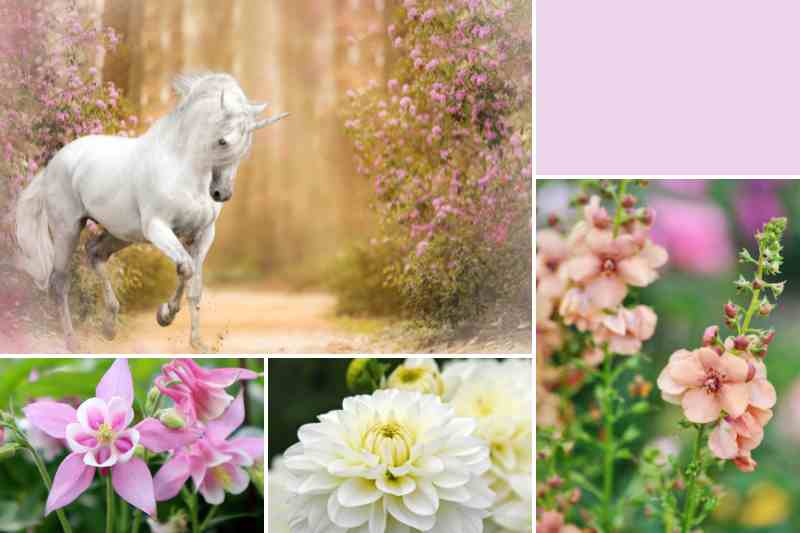
In a cottage garden
This border, both rustic and sophisticated, remains very natural thanks to soothing colours from pink to apricot, with a well-measured touch of yellow. It suits a south- or west-facing position.
Here we showcase an intersectional peony Scrumdidleyumptious, indispensable in a country garden for its elegance. As its flowering is fleeting, we surround it with some long-flowering perennials and shrubs: an old-fashioned rose such as the heirloom 'Pénélope', statices and apricot wallflowers. A large drift of Coreopsis 'Uptick Cream' adds further softness…
Also consider adding a few Verbascum 'Jackie' or 'Southern Charm' in a blotting-paper pink that will make you swoon! Also think of adding some olive-green or greyed foliage.
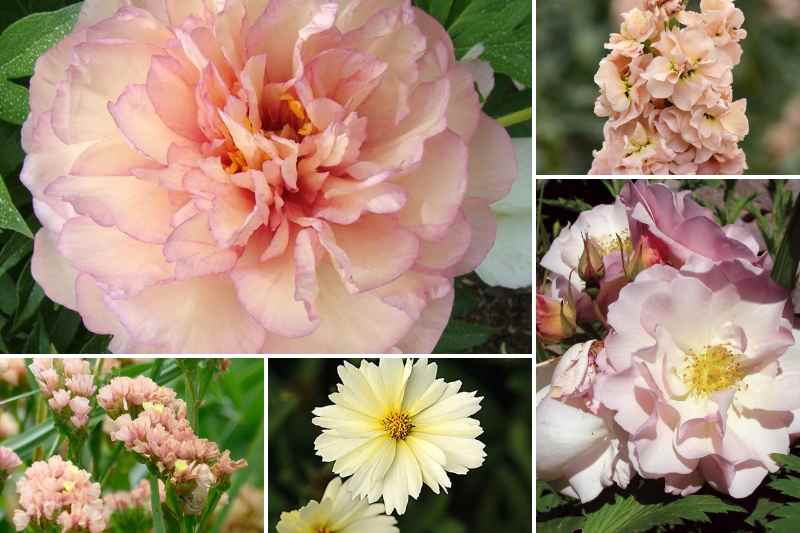
In a spring border
A gradient of soft colours will awaken garden in early fine days with these pastel blooms. Gather in a sunny or semi-shaded border a few favourites admired for their simplicity and grace: a Michelia 'Fairy Lime', a small magnolia with evergreen foliage and delicate cream-yellow flowers with a hint of pink, Astrantia 'Florence' for a mauve bloom a little later around June, and hardy geraniums as groundcover such as Geranium 'Katherine Adele', flowering for months from May, nicely veined with dark pink. Another charming small shrub, Japanese quince Chaenomeles 'Falconnet Charlet', will bring salmon tones in March–April alongside the Michelia. A silvery evergreen foliage, for example that of Santoline chamacyparissus if border is in full sun, is an essential complement to the soft ambience.
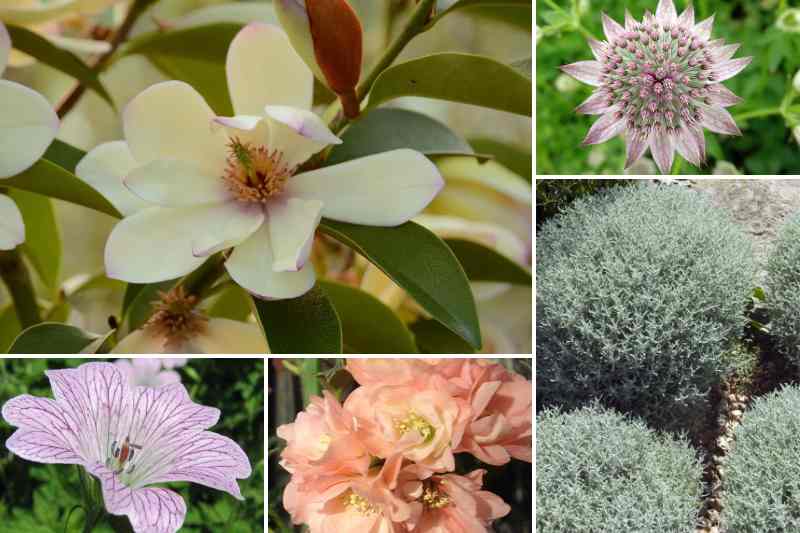
In a secret garden
In the intimate, often shadier setting of a secret garden, invite pale luminous yellow blooms to combine with a few pastel tones, from pearly pink to iridescent mauve.
Rely on a base of climbers to screen views and some supple ornamental grasses, perfect here: Chinese fountain grass orientale 'Karley Rose', a very fragrant yellow star jasmine (Trachelospermum asiaticum), Thalictrum delavayi 'Splendide', tall and lilac-pink, and two thoroughly voluble climbers: Akebia quinata chosen in a superb bicolour form 'Cream Form', and a persistent Holboellia latifolia. To enliven the base of climbers earlier in the season, plant in autumn a few bulbs of pink or pale-blue grape hyacinths like 'Baby's Breath', some miniature daffodils and Greek anemones 'Charmer'.
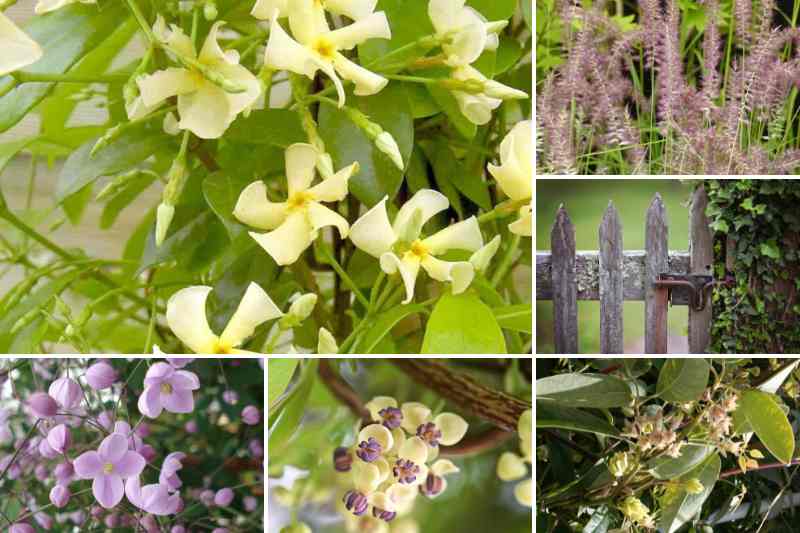
In a bohemian garden
The bohemian garden that explores a wide palette of plants also fits perfectly with the Unicorn garden universe. Ultra-soft, soothing colours will be gathered in the joyful mix and abundance of the bohemian garden! It's a garden that comes alive best in summer, in a profusion of flowers and foliage.
Here we've chosen sorbet tones, old-rose and vanilla-yellow to evoke the Unicorn trend. A honeysuckle skilfully blends pink and yellow, double-flowered hollyhocks 'Chater's Double' and a climbing rose 'Papi Delbard' play the apricot notes, delightful gladioli, 'Blue Tropic', and dwarf alstroemerias 'Pitchoune Lucas' reveal a desaturated mauve. In sun, add a few pom-pom dahlias 'Isa's Favorite', preceded in spring by late double tulips 'Charming Lady'. Add a base of foliage to bridge to summer, such as common sage and a dwarf abelia: charm guaranteed!
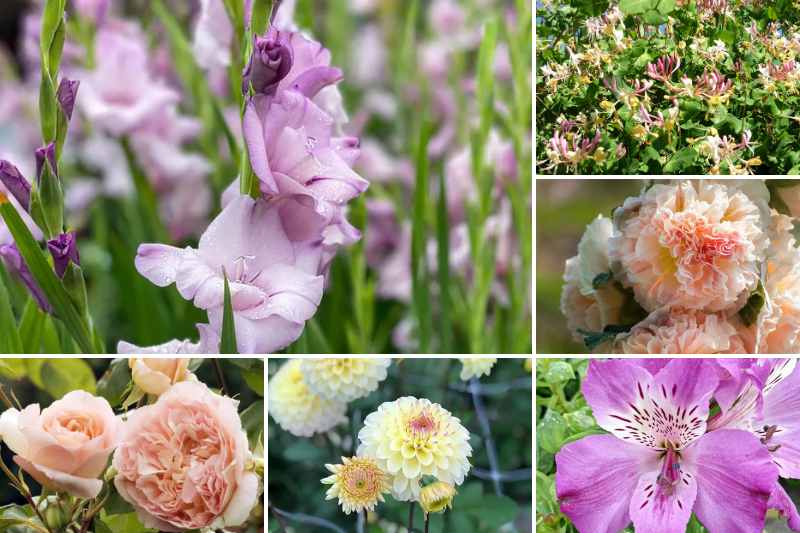
Find our selection of plants in the Unicorn spirit on our online nursery as well as our inspiration in the Trendbook 2026!
Do you love these very soft garden tones? Discover other inspirational scenes in these closely related colour universes:
- Peach Fuzz: Colour of the Year 2024
- Soft on-trend colour: how to lay out a nude garden?
- Pinkish Lemon: the new zesty garden trend
- "Coffee colour" inspiration
- and Rose and khaki inspiration for a soft, on-trend garden.
Garden, rarely short of inspiration, suggests enticing colour trends each year to imagine new borders.For romantics who favour softness and pastel tones in the garden, here is the Unicorn trend, a new hue devised by promesse de fleurs, blending graduated and iridescent shades from pink to straw-yellow. What exactly is the Unicorn colour for the […]
Discover exclusively our Garden Trends 2026 booklet identified by our experts! Green Generation, Retro Garden or Augmented Garden, we reveal five emerging trends that are reinventing garden practices and imaginations. Drawing on its monitoring, Promesse de fleurs shares a forward-looking perspective and field observations of tomorrow's garden.
Green generation
Millennials: new plant-loving tribe born on Instagram! Aged 28 to 44, often city-dwellers, they have turned houseplants into an art of living. Ficus lyrata, Calathea, Alocasia, Colocasia and Monstera – houseplants are becoming icons, iconic organic design pieces. Plants here become emotional, identity markers and graphic. This green frenzy is hyper-connected, Instagrammable, viral yet deeply emotional.
It’s called "Plant Parenting": 33% of Millennials talk to their plants, 19% give them a name, 29% consider them sentient beings.
People collect spectacular foliage (Monstera 'Thai Constellation', Caladium, Begonias 'Rex'), style interiors and share urban jungle on TikTok (#planttok) or Instagram (#urbanjungle, 8M posts).

Nostalgic Garden
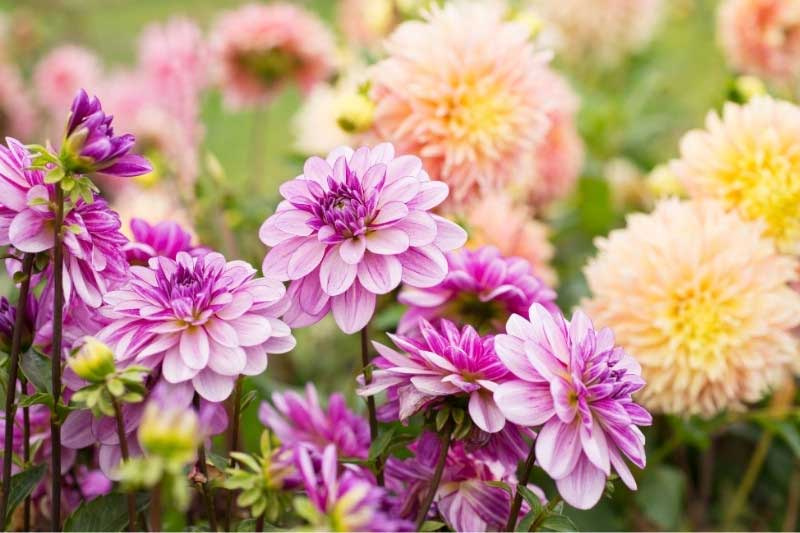
Here is a distinctly regressive, comforting gardening trend! In the face of global uncertainty and at a time when AI generates artificial worlds, the garden evokes a nostalgic vogue reflecting a deep desire for reassurance and tenderness. People sow, take cuttings, forage and arrange homemade bouquets. Retro flowers enjoy a second youth. Double ranunculus, gladioli but above all dahlias (+12% sales) and peonies (+37%) at Promesse de fleurs, which are exploding on social networks, are the star flowers of this vintage wave. The craze for seeds has sparked a revival of cut-flower varieties, straight from garden to vase! Statice, everlasting flowers, oxeye daisies, snapdragons and phlox are already part of our collection of over 1,500 varieties of flower seeds.
Nomadic Escapes
The garden becomes itinerant, mixed, adaptive, a mirror of a world on the move. 42% of recent landscaping projects draw direct inspiration from distant cultures. They combine a longing for elsewhere with climate-consciousness, are nomadic in their evocations, resilient in their choices and economical with water. Sales of hardy succulents have risen 45% in Europe since 2023, a sign that these plants from elsewhere resonate with very local concerns. Trends spotted include:
- Balinese Garden: tropical luxuriance and sacred lotus (85k posts #lotusgarden) inspired by tropical sanctuaries of Southeast Asia.
- Antipodean Garden: euphorbias, crassulas, aloes or senecios acclimatised to extremes evoke landscapes of southern Africa.
- Chaparral Garden: Dasylirion longissimum, Echinocactus grusonii, blue Mexican palm, Opuntia cacanapa 'Ellisiana'... Species from semi-desert areas of California or Mexico shape a graphic, sun-soaked and radically frugal garden.
- Sand Garden : on 20 cm of pure sand, Gypsophila 'Rosea', blue fescue, Lomandra 'White Sands', silver santolina or Salvia 'Caradonna' create carefree scenes with no watering or feeding. Inspired by Peter Korn and climate-resilient gardens, this new-generation dry garden combines lightness, robustness and modernity.

Sanctuary Garden
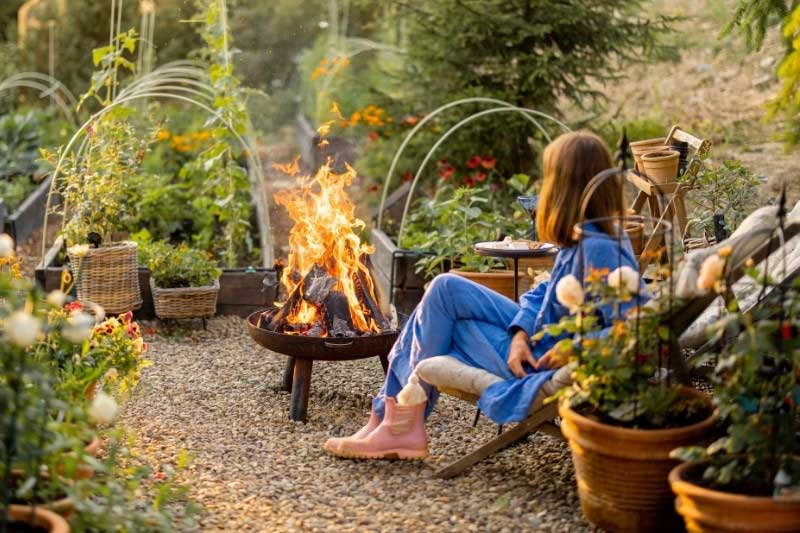
In response to hyperconnectivity, the garden becomes an emotional refuge, an open-air cocoon where people slow down, wrap themselves up and breathe. Throws, cushions, natural materials, deep seating… domestic comfort is transposed into a calming plant-filled setting.
- Japandi: fusion of Japanese minimalism and Scandinavian softness, inspiring sober, vegetal, meditative atmospheres. Japanese maple 'Bloodgood', black Ophiopogon, Pittosporum tobira 'Nana', Arisaema consanguineum, Clematis 'Pistachio' flourish within a contemplative, low-maintenance garden. (+160% searches for "Japandi garden" in 3 years).
- Chill Soft: soft design, velvety palette, flowing ornamental grasses such as Pennisetum 'Lumen Gold', Perovskia 'Prime Time', Panicum 'Hot Rod'… The garden becomes fluid, sensory and enveloping.
- Boho Patio : bohemian terraces, bright colours and gypsy spirit. Giant sunflowers, dahlias, purslanes, red popcorn maize, and black pomegranate settle in for a sunny, joyful garden for lazing and impromptu partying.
Augmented Garden
The garden is entering the era of assisted gardening: tutorials, apps, connected devices, AI…
Cordless tools are becoming mainstream, mini-greenhouses are appearing in cities, and social networks popularise gardening techniques.
Uninhibited and autonomous, the garden appeals to a new urban generation. 40% of urban households are already equipped with an intelligent device.
Our podcast Branché au jardin has accumulated 18,000 listens, and our Plantfit app has 80,000 users.

Colours 2026
Emotional hues, between mineral freshness, dark romanticism and pastel dream.
- Transformative Teal: between muted blue and aquatic green, this refined, mineral hue establishes itself as the colour of 2026. It evokes deep waters and is embodied by Eucalyptus ‘Baby Blue’, Agave americana, Senecio serpens 'Dwarf Blue', or Dasylirion glaucophyllum.
- Cloud Dancer : a vapoury, restful, almost silent white, crowned Pantone's colour of the year. A chromatic antidote to saturation, Agapanthus 'Ever White', Hydrangea 'FlowerWOW', Iris 'Glacier' and Clematis 'Guernsey Flute' soothe the eye.
- Dark Academia : dramatic romanticism with Victorian accents. Purple, garnet and misty mauve blooms and wine-coloured foliage create a dark, sophisticated atmosphere. Dianthus 'Sooty', Rose 'Charles de Mills', Poppy 'Lauren’s Grape' and Lupin 'Masterpiece' embody this poetic gloom.
- Unicorn: an iridescent pastel breath on the border of digital dream. Apricot sorbet, frosted lavender, sky blue or vanilla yellow compose a dreamlike, joyfully offbeat garden populated by Wallflower ‘Classic Apricot’, Delphinium ‘Misty Lavender’, Rose ‘Koko Loko’.

Discover exclusively our Garden Trends 2026 booklet identified by our experts! Green Generation, Retro Garden or Augmented Garden, we reveal five emerging trends that are reinventing garden practices and imaginations. Drawing on its monitoring, Promesse de fleurs shares a forward-looking perspective and field observations of tomorrow’s garden. Green generation Millennials: new plant-loving tribe born on […]
At the end of each year, it's an opportunity to reflect on the favourite plants of the editorial team, those that have marked our gardens, terraces, and interiors with their beauty, originality, or ease of cultivation. Behind each favourite, there is a gardener's story, a meeting with a plant that has found its place and transformed a patch of greenery into a true source of inspiration.
In this article, the editorial team shares its top plant picks for 2025, from characterful trees and shrubs to floriferous perennials, not forgetting the graphic houseplants and lesser-known species that deserve to be recognised. This selection is guided by a passion for gardening, a desire to share useful tips, and to help you find the plant that will make your heart race.
Ingrid: the Cercis canadensis 'Ruby Falls'
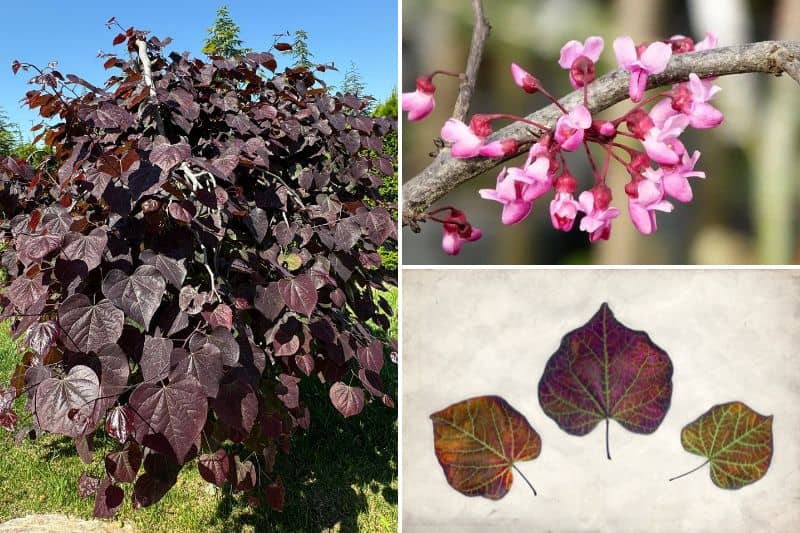
This year, my choice is the Cercis canadensis 'Ruby Falls', a dwarf weeping redbud that offers a poetic presence in my bordering terrace bed. Planted in partial shade, it boasts heart-shaped leaves of a deep purple mixed with green, which seem to cascade along its drooping branches. In spring, its violet-pink flowers emerge on the still bare wood, bringing unexpected colour before the young red leaves unfurl. In autumn, this foliage takes on bronze and copper hues before falling.
I particularly love the contrast of its purple foliage with that of the surrounding plants, especially the bright green and violet-blue flowers of a nearby Hardy geranium 'Rozanne'. Alongside them, my Greater celandine, more spontaneous, naturally brightens the base of the shrub with its light green foliage. A little further away, a Acer palmatum ‘Bloodgood’, with its reddish-brown foliage, echoes the Ruby Falls. This chromatic continuity, from the purple of the Cercis to the darker hue of the maple, gives a gentle coherence to the bed and creates a visual depth where the light catches differently depending on the seasons.
This little Canadian redbud easily finds its place in a garden, thanks to its weeping habit and compact size. Its good hardiness makes it simple to cultivate, as long as the soil retains some moisture in summer. At my place, it quickly integrated into the bed, bringing softness to this part of the garden without ever overshadowing the neighbouring perennials.
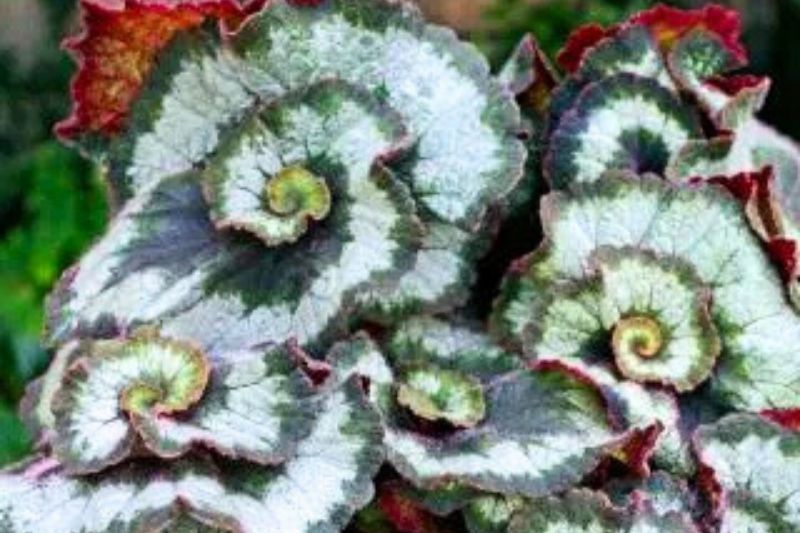
Virginie: the Begonia 'Rex Escargot'
My heart undoubtedly leans towards the Begonia 'Rex Escargot'. What makes it truly special? This variety lives up to its name: each leaf spirals and seems to form a small snail shell, hypnotic and wildly graphic. We love its artistic touch with its unique colour contrasts: a blend of greens, silver, and chocolate.
With its velvety foliage, spiralled patterns, and unprecedented colours, it marks the strong return of indoor begonias, which are increasingly appealing due to their original aesthetics and diverse foliage. Long relegated to grandmothers' balconies or forgotten greenhouses, begonias now rank among the top 5 most sought-after plants for our interiors. Right in line with the major trend of decorative begonias, this variety stands out as a vintage icon brought back to life. Easy to cultivate (as long as you respect its preference for ambient humidity and filtered light), it adapts perfectly to all our interiors.
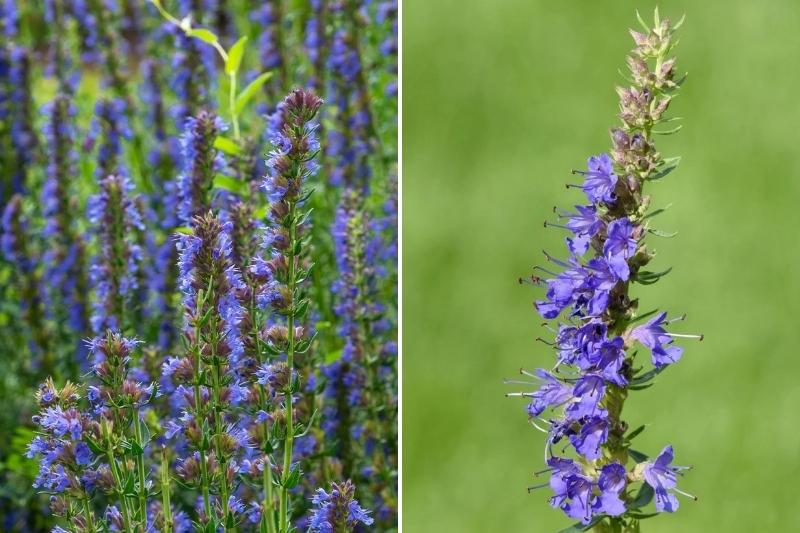
Olivier: the Hyssopus officinalis
"You, who are very sentimental, will surely appreciate this plant!" And bam! I was handed, without further ado, a clump of earth, from which only a few meagre green shoots emerged. Of course, I knew a bit about hyssop, as I have been passionate about medicinal plants since my studies. Moreover, it held a prominent place in medieval herb gardens. However, in my heavy soil, I remained… sceptical about its future. So, I decided to try it in a large container alongside my other Mediterranean plants, botanical cousins: thyme, sage, rosemary, and lavender.
Hyssopus officinalis is a dwarf undershrub (you can use that as a somewhat original insult), ideal for very sunny spots and dry or calcareous soils. And, in just one season, mine has thrived. I particularly love its flowers, a lovely violet-blue, which bloom from July to September and are highly appreciated by pollinating insects, including butterflies. Known as "sacred herb" by the ancient Greeks, this aromatic plant can reach up to 50 cm in height and has very fragrant leaves. It is cultivated for its medicinal properties (infusion for bronchial issues and digestion) and to flavour various dishes such as salads and soups. In short, if you have a spot left in your herb garden: give hyssop a try!
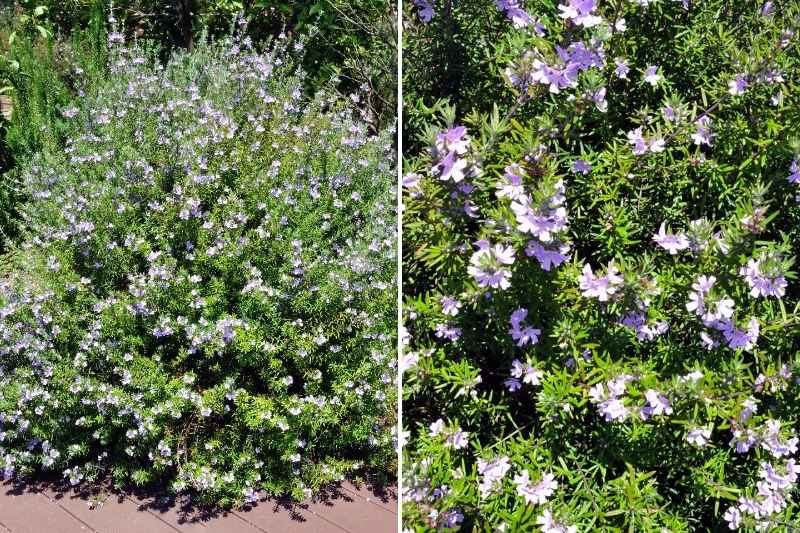
Sophie: the Westringia fruticosa
I have chosen the Westringia fruticosa, also known as Australian rosemary, as my plant pick for 2025, because it embodies the perfect companion plant, one that simplifies gardening! With its slight resemblance to rosemary, it has that familiar and sunny charm that immediately sets the tone. In my southern garden, amidst gauras, agapanthus, Leucophyllums, and lavender, it has settled in as if it has always belonged there. Its evergreen and silvery foliage captures the light, its naturally well-defined silhouette adds elegance, and its impressive resistance to heat, wind, and drought makes it a reliable choice, as I know it can thrive without any care. It tempers the exuberance of the blooms, highlights the volumes, and its light and delicate flowering brings just the right amount of freshness. What I love is its easy-going nature and its clean and bright appearance all year round.
With its 1 to 1.5 m in height and the same in spread, the Westringia fruticosa easily finds its place in the garden. Its delicate flowering extends from spring to autumn, returning in waves. It withstands light frosts down to -5 °C without flinching, sometimes even more in well-drained soil, making it perfectly suited for southern gardens, sheltered areas, and coastal climates. To thrive sustainably, it primarily requires a well-drained soil, preferably light, poor, and stony, where water never stagnates, an essential condition to preserve its longevity and natural vigour.
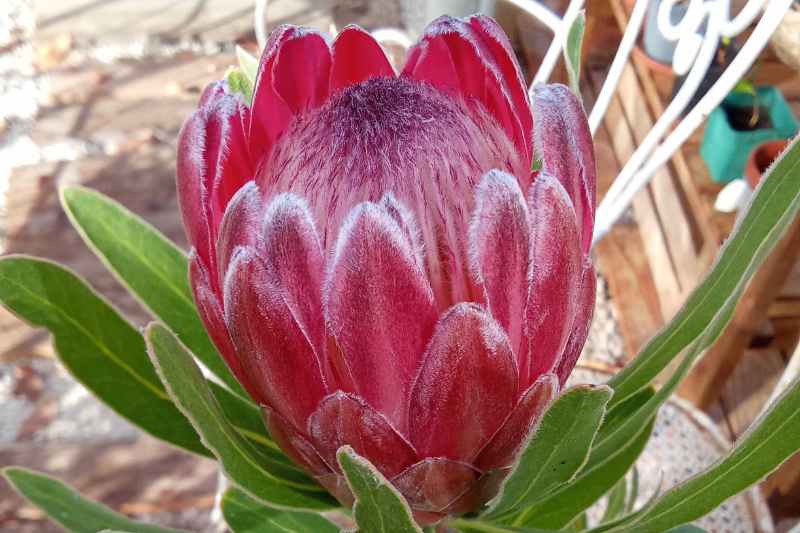
Gwenaëlle: the Protea 'Pink Ice'
Every year, when we choose our plant of the year to share with you, I always hesitate, as several plants in my garden could claim a spot on this podium. This year, there’s no hesitation… Drumroll… It’s my Protea 'Pink Ice', brought back from Madeira in 2022, that wins all the votes! The tiny plant I bought at the flower market in Funchal and lovingly planted has seen it all, and it’s the only one of the three plants to have survived. Growing it in a greenhouse and repotting it as it grew, it suffered, two years ago, from my carelessness as a gardener when, in the middle of summer, I forgot to ventilate the greenhouse. As a result, one of the two main branches completely cooked, throwing it somewhat off balance. But, with care, it continued to grow, forming new branches to my great satisfaction. What a surprise it was in September to see three buds appear, slowly but surely transforming into those sublime pink inflorescences I had been patiently waiting for in early November.
Proteas, native to South Africa, are considered delicate plants due to their very low hardiness. Of course, I protect it in winter, wrapping it up and watching it like a hawk. I also only water it with room temperature rainwater and have provided it with an acidic and light substrate. I’m not sure I’ll plant it in the garden for a few more years, in which case I’ll need to find it a particularly sheltered spot. The arrival of these large fluffy flowers is such a spectacle that I recommend it to all gardeners who love exotic plants, as this plant literally transports me elsewhere!
Pascale: the Sedum ‘Thunderhead’
I admit, I was long among the detractors of sedums. Perhaps because these plants always seemed a bit dull and unremarkable in the beds. And then, what’s the point of growing these succulent plants at home, in a region where drought was hardly an issue? Climate change has decided otherwise, and the heatwave has taken its toll on other plants I cherished… Not to mention the numerous cultivars of stonecrop that offer new cultivation perspectives.
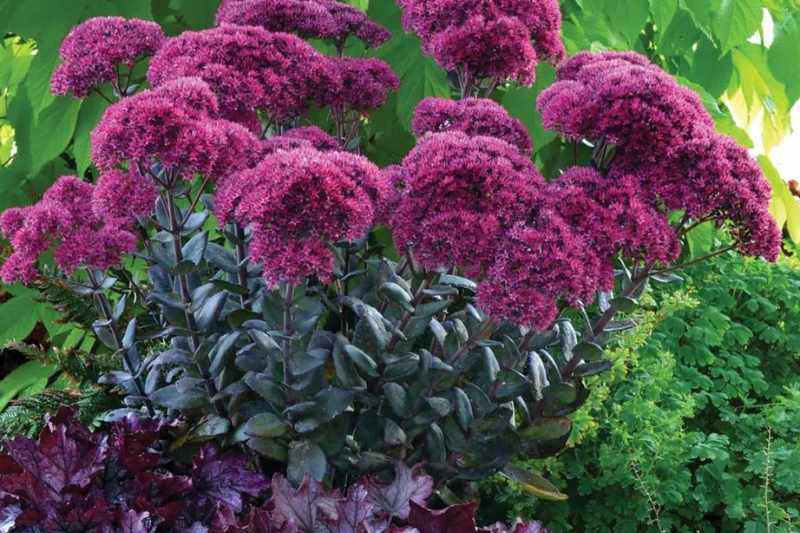
The Sedum ‘Thunderhead’ is one of the pleasant surprises. This variety has literally swept away my prejudices about sedums, thanks to its presence and vigour. From spring, its robust dark stems stand proudly, bearing very fleshy bluish-green foliage. But it’s at the end of summer that the magic happens: the dense and enormous flower heads bloom in a deep purplish-red, lasting until early winter. As these flowers, perched on purple stems, are highly melliferous and nectariferous, they attract swarms of pollinators.
And in winter, this sedum continues to put on a show with its dry inflorescences. I’ve even taken a few to enhance a bouquet of dried flowers and herbs. And already, the next spring shoots are emerging from the ground.
Paired with my beloved heucheras, this stonecrop has found its place in my semi-shaded bed. But elsewhere, it could bask in the sun all summer long.
Elisabeth: the Monstera deliciosa, 25 years of cohabitation with my "philo"
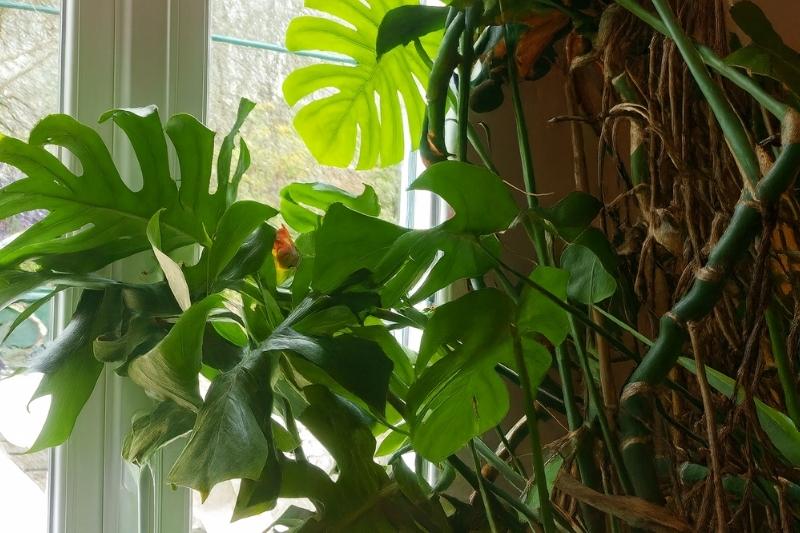
Some stories last, enduring through moves, neglect, and trends. The one I’m about to tell is that of my Monstera deliciosa, my big "philo". It’s 25 years old, and it’s a green giant, a delicious monster clinging to the wall of my living room like a reminder of beautiful holidays in Spain.
Embracing its kitsch nature, it’s a bit of a grandmother’s plant, a symbol of the 70s, the spirit of bygone interiors. One might find this Monstera outdated, with its veranda plant look and postcard charm. Yet, it’s precisely this slightly old-fashioned air that makes it endearing. It signifies comfort and nostalgia.
If this houseplant had a CV, the first line would read: "Survival Expert". I forget to water it for three weeks? No problem, it will halt its growth, and that’s that. A bit of drastic pruning in anticipation of a move? It will sulk, but it will recover. It’s the ideal green plant for busy (or lazy) people; I don’t judge, I’ve lived through both.
Despite its 25 springs, "philo" has never deigned to flower. Because yes, this plant is capable of flowering! And even fruiting! Apparently, its fruits are deliciously edible. It might be lacking some geranium fertiliser, or perhaps it sulks because my living room isn’t humid enough, or too warm. Unless it’s just being a diva. It’s a whimsical creature: its leaves, sometimes smooth, sometimes holey like Swiss cheese, tell the story of its moods. Its support, doubled with bamboo and securely fastened to the wall with a battalion of strings, has become an original element of my décor. Over time, the inhabitants of the house hardly notice it anymore. Visitors, however, never miss the opportunity to comment: “But it’s huge!” or “How old is this monster?” And I confess its age with barely concealed pride.
Why do I love it (and why you might adopt it too)? First, because it endures. Even cats can’t really kill it — at least not mine, despite its efforts and persistence. Secondly, because it’s terribly photogenic: its large, cut leaves and vines bring a little bit of South American jungle into the home. And it’s a true conversation starter. “Do you think it will flower one day?” “How do we give it a more classic shape?”… With it, we learn patience; I still hope it will flower.
My Monstera deliciosa is not “just a plant”. It’s a life companion, a silent witness to my troubles, joys, successes, and also my losses. It’s a rock, a stubborn presence you can count on. And that’s precisely why I love it.
Aurélien: the Winecup or Callirhoe involucrata
If you appreciate mallows, lavateras, and other Anisodontea, then you’ll surely fall for their perennial and ground-cover cousin, the winecup (Callirhoe involucrata)!
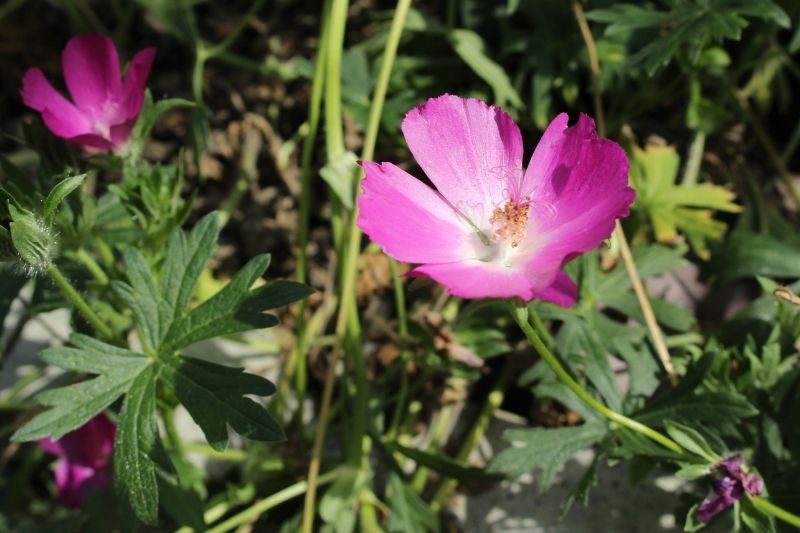
Far less common in gardens, this Mexican species produces fine creeping stems with deeply lobed leaves, which weave between neighbouring plants without bothering them in the least. It reaches about 60 cm in diameter and 20-30 cm in height. The plant can easily be forgotten until large corollas of saturated fuchsia pink appear throughout the summer. Despite their ultra-vibrant hue, they blend effortlessly, in joyful whimsy, with blues, purples, or grey foliage: shrubby sages, immortelles, and perennial verbenas, or even yuccas will make excellent companions to create a Mediterranean atmosphere or a garden that requires no watering.
Frugal, floriferous, and quite resistant to drought once established, the winecup has many qualities and will thrive in any well-drained soil, preferably calcareous. North of the Loire, a spot in a rock garden or a sloped bed facing south will make it happy, possibly with the addition of some coarse sand or gravel to improve water drainage. In good conditions, it can be expected to withstand, despite its Central American origins, temperatures down to about -12/-15°C. A lovely addition to your borders that you won’t see everywhere!
At the end of each year, it’s an opportunity to reflect on the favourite plants of the editorial team, those that have marked our gardens, terraces, and interiors with their beauty, originality, or ease of cultivation. Behind each favourite, there is a gardener’s story, a meeting with a plant that has found its place and […]
The French jury of the 2025 Saint-Fiacre Prize has made its decision, and its Coup de Cœur goes to 400 Plants You Won't See in Your Neighbour's Garden published by Ulmer. Our friendly colleague Aurélien Davroux presents a work that responds to a growing desire among gardeners: the urge to embrace diversity to transform their garden into a unique, personal, original, and resilient space.
Let’s embrace diversity!
As a reminder, the Saint-Fiacre Prize is a literary award given by horticultural journalists. Since 1971, it has recognised "a work in French addressing themes of gardening, gardens, or the plant world".
Aurélien Davroux's book, "The 400 Plants You Won't See in Your Neighbour's Garden", is a breath of fresh air that invites gardeners to break away from landscape uniformity by exploring less common varieties. Choosing diversity also creates a stronger garden: by varying species, it becomes naturally more resilient to diseases and climate change. Drawing on his experience, this horticultural engineer offers an inspiring and practical guide, encouraging the creation of surprising and ecologically stable gardens.
Although the 400 plants may not be the most common, they are perfectly accessible through specialised nurseries, turning their potential acquisition into a delightful "treasure hunt". The book also stands out for its light and humorous tone — notably illustrated by a hilarious "treatise on neighbourology" — which, combined with the author's botanical expertise, makes this book a true gem.
A few questions to the author

From the genesis of the book to the award
Receiving the "Coup de Cœur" from the Jury at the 2025 Saint-Fiacre Prize is a recognition of the quality of this work in horticultural publishing. Aurélien Davroux shares his reaction and the origin of this bold editorial idea.
Promesse de fleurs: Were you surprised to be nominated for the Saint-Fiacre Prize, and even more so to receive the Jury's "Coup de Cœur"?
Aurélien Davroux: I knew my book had been promoted by Ulmer, but it was still a lovely surprise and an immense pleasure.
Promesse de fleurs: A work that is both useful and surprising. Where did this original idea come from?
Aurélien Davroux: During discussions between Ulmer and Promesse de Fleurs, an idea was proposed by Pascal Griot, who said: "Why not talk about plants that you can't find at your neighbour's?" (editor's note: the very essence of our online nursery). Ulmer then chose me to write it, and from there, we tried to define the plants we wanted to present and how to organise them into three main parts, then into categories. The book discusses amazing plants, but none that are impossible to find or complicated — except for a few here and there: there has to be something for everyone, even the most passionate! It is certainly the opposite of an elitist book. However, it is also good to explain why we don't see them at our neighbour's: due to conformity, convenience, or ignorance. The average gardener cannot know all the botany and horticultural varieties. But we can present them. That is the purpose of my book.
Humour at the service of botany
Promesse de fleurs: The book also stands out for its light tone. Bringing a touch of humour to a gardening book is not common. Was this an initial intention of yours?
Aurélien Davroux: Very quickly, I had the ambition to introduce a quirky tone. Ulmer actually gave me free rein. The challenge was to integrate humour without risking offending anyone or going overboard. So, I sought a guiding thread to avoid monotony. Upon reflection, I remembered the "Memento for Comic Strip Artists" that Gotlib included in his Rubriques-à-brac, which presented the different archetypes of cartoonists. It made me laugh out loud! That’s why, in all modesty, I drew inspiration from it for my Treatise on Neighbourology: a carousel of neighbour archetypes (and we are all someone's neighbour!). Drawing from my own experiences and those of my friends, I wrote this little treatise, which I placed at the beginning of the book, establishing an analogy between the neighbour and the cultivation of a plant. My second source of absurd inspiration comes from Terry Pratchett, the British author of comic fantasy, who enjoyed adding humorous footnotes.
Why is this Guide to Original Plants an Ideal Gift?
Promesse de fleurs: For the end-of-year holidays, this could make a lovely gift. What are the strengths of your book?
Aurélien Davroux: Are you looking for a plant book that stands out from the ordinary, or do you want to convince a reluctant person who doesn't like encyclopaedias? Why not my book?
Promesse de fleurs: Any new works in preparation?
Aurélien Davroux: Not at the moment, but I am thinking about it.
The 2025 Saint-Fiacre Prize
As a reminder, the prestigious *2025 Saint-Fiacre Prize for adults was awarded to the work The Words of the Art of Gardening by Marie-Hélène Benetière and Alain Le Toquin, published by Delachaux & Niestlé. This prize, which annually honours reference works, confirms the horticultural and educational value of this title. Meanwhile, The Wild Square, by Anne-Hélène Dubray and Sarah Loulendo (Éditions L'agrume), won the Saint-Fiacre Youth Prize for its playful and educational approach.
*Awarded by the French Association of Garden and Horticulture Journalists (AJJH) and supported by Valhor (French interprofessional organisation for horticulture, floristry, and landscaping).
The French jury of the 2025 Saint-Fiacre Prize has made its decision, and its Coup de Cœur goes to 400 Plants You Won’t See in Your Neighbour’s Garden published by Ulmer. Our friendly colleague Aurélien Davroux presents a work that responds to a growing desire among gardeners: the urge to embrace diversity to transform their […]
The moon, a celestial body of all fantasies, has long been the subject of controversy regarding its effects on plants. There are those who swear by lunar calendars for sowing, planting, pruning, or mowing the lawn, and those who do not believe in it at all. We know the effects of the moon on our good old planet Earth, particularly its attraction on ocean currents with the tides. It is even said to have some effects on humans, their sleep, or their moods… but does it really affect our gardens, and if so, to what extent? The most reputable magazines include a lunar calendar in their pages, so… fact or fiction, myth or reality?
I wanted to get to the bottom of it and find out once and for all if the moon truly exerts a real influence on plants. To do this, I carried out sowing and planting on very different days to draw my own conclusions. Intrigued by the results? Here they are!

What do the moon's movements in the sky tell us?
Let’s start at the beginning, namely what books or popular belief tell us about the rotation and gravitational pull of the moon, and what is scientifically proven. While the moon is subject to controversy, it remains a fact that our only satellite moves in the sky. The fundamental principle of gardening in harmony with the moon is based on its position in the sky.
However, it can be confusing to distinguish between the waxing or ascending moon and other subtleties, and it is essential to understand three distinct factors:
The phases of the moon
Easy to spot with the naked eye, we can identify four main phases of the Moon (actually eight if we count the intermediate crescents), marked by the four quarters of the Moon. These phases are due to the relative positions of the Moon-Earth-Sun axis, which determines the portion of the Moon illuminated by the Sun as seen from Earth: the new moon, when it is not illuminated at all by the Sun and becomes almost invisible; the first quarter, in the shape of a crescent opening to the left; the full moon, when it is completely illuminated by the Sun; and the last quarter of the moon, where it forms a crescent opening to the right, before disappearing completely to restart the lunar cycle with the new moon. This lunar cycle lasts about 29.5 days.
These phases inform what is referred to as the waxing and waning moon in "lunar" language:
- Waxing moon: the period when the illuminated part of the moon we see increases, from the new moon to the full moon;
- Waning moon: the period when the illuminated part of the moon decreases: from the full moon to the new moon.
Scientifically speaking, we can assert that these phases influence the amount of nocturnal moonlight. Some gardeners believe that this increased light during the waxing moon stimulates the growth of the aerial parts of plants, while the diminishing light is favourable for root growth. To date, however, no scientific study has proven this.
The position of the Moon relative to the Earth: perigee and apogee
The Moon orbits the Earth in an elliptical path, meaning its distance from our planet varies. When it is closest to the Earth (about 357,000 km), it is referred to as perigee, and when it is farthest away (an additional 50,000 km or so), it is called apogee.
These variations in distance could influence the gravitational force exerted by the Moon on the Earth, and thus on plants, but certainly to a minimal extent… In the case of high tides, for example, there is a clear link with the phases of the full moon or new moon, and not with perigee or apogee. Note: perigee is considered detrimental in lunar gardening.
The ascending and descending movement of the Moon on the horizon
The ascending and descending movements of the Moon are due to its inclined orbit around the Earth. This time, we refer to what is called the tropic rhythm of the moon: the height of the lunar trajectory relative to the celestial equator differs. The human eye can distinguish this over several days, observing that the moon is higher or lower on the horizon.
These phases inform what is referred to as the ascending and descending moon:
- Ascending or rising moon: the period when the position of the Moon in the sky is higher each day compared to the horizon.
- Descending moon: the period when the Moon appears to descend lower in the sky each night.
The ascending moon, associated with rising sap, is said to be favourable for sowing, harvesting, and grafting, while the stronger growth during the descending moon, associated with descending sap, is said to be favourable for roots, soil work, planting, transplanting, and pruning.
Some see a correlation with zodiac constellations.
Some even see a link here with the moon's trajectory through the twelve zodiac constellations (where, from Gemini—the highest constellation—to Scorpio, the moon is descending), and attribute to each of the four elements related to the zodiac a correlation with flower days (air), leaf days (water), fruit days (fire), and root days (earth). Each type of day is thus said to favour the growth of a specific part of plants.
Again, there is no irrefutable proof, but biodynamics refers to this in its guidelines as a planning tool.

My experience with the Moon
On my part, I admit that before starting my little experiment, I had no preconceived notions. The Moon is, to me, a fascinating celestial body, particularly for its influence on tides and the luminous power it exerts when it approaches a perfect circle. However, I had not really delved into the subject, despite years of gardening experience. To avoid any influence, I carried out sowing, planting, and propagation at times that suited me, without consulting any calendar, but diligently noting all my actions in a small notebook for future reference.
What interested me most was to find out whether it was more beneficial to plant or sow during supposedly favourable lunar phases, or not.
I therefore carried out several sowings in spring, including various annual ornamental flowers (sweet peas, daisies, balsam, and poppies) and a few vegetables (lettuce, parsley, coriander, and Swiss chard). During this same period, I planted some perennials (lobelias, hostas, epimediums…) while meticulously noting the intervention dates. I then transplanted the same plants at different times to see if it affected their ability to thrive. Finally, to complete this little lunar test, I conducted a hydrangea propagation test this summer.
In terms of sowing, I encountered issues with a few flowers at the beginning, due to either the bad weather in March or the poor quality of the seeds, as some sowings did not take at all, like an initial batch of sweet peas.
This summer, as my various trials bore fruit (finally… their flowers), I consulted an online lunar calendar to find out when I had sown or planted, and I evaluated the success rate of each of my trials. I simply checked in detail my blind tests: whether the moon was ascending or descending, waxing or waning, and what type of day it was (fruit, root, leaf, or flower).
The verdict? Well… no lunar miracle on my part… my plants thrived regardless of the lunar phase, except for one failed sowing at the beginning, regardless of whether the moon was ascending, waxing, or not. Unfortunately, none of my blind sowings and plantings coincided with a "lunar node," so I cannot comment on that. Almost a disappointment, as all this was starting to intrigue me and make me want to believe…
And its influence on the weather?
The moon has often been mentioned in popular sayings associating it with weather forecasts, which were the only possible ones for centuries, alongside observations of clouds or animal behaviour, in a time not so long ago without screens!
Here are a few French sayings that I found to be the least far-fetched. Do they hold true?
"Mow your hay: when the moon comes into the water, in three days it will be fine"
"Ringed moon, assured rain"
"When the moon has its ring, water will fall"
or "Pale moon in the evening, in the morning it will rain well".
This is another topic for discussion, which I invite you to continue here, based on your own observations of the sky…
So, are you tempted to plan your gardening tasks using a lunar calendar or not? If we must consider the weather and the whims of the moon, one might say we can no longer garden. Ultimately, everyone has their own method, as long as we enjoy gardening, right? But sharing experiences in this area is always interesting. Please feel free to share your trials and experiences with us!
I’ll leave the final word to Olivier de Serres, who claimed in the 16th century that "a man who is too lunar [consulting the moon] fills not his basket with fruits"...
The moon, a celestial body of all fantasies, has long been the subject of controversy regarding its effects on plants. There are those who swear by lunar calendars for sowing, planting, pruning, or mowing the lawn, and those who do not believe in it at all. We know the effects of the moon on our […]