Paulownia, also known as the "empress tree" or "Kiri", is native to East Asia and is gaining increasing interest due to its exceptional qualities. Its rapid growth, disease resistance, and valuable wood make it an undeniable asset for timber production. However, its status as an invasive species in certain regions of the world raises questions about its environmental impact. What is the real situation?
The qualities of Paulownia
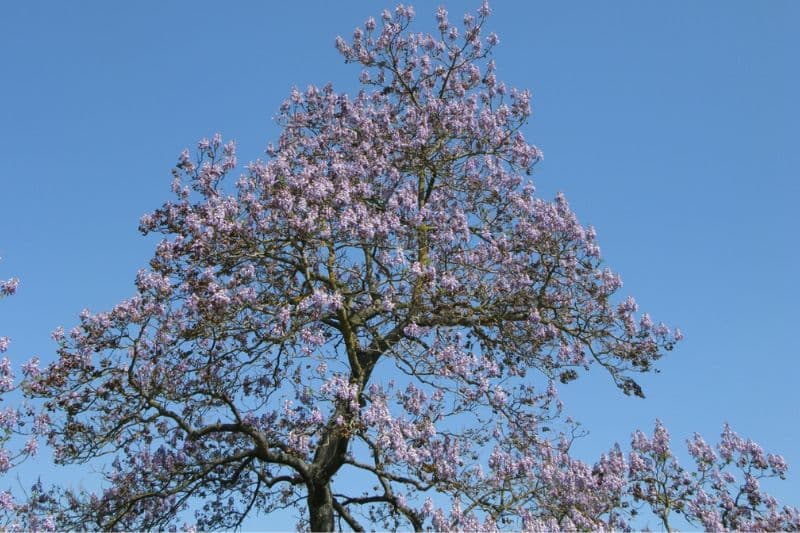
Paulownia possesses undeniable qualities: a lightweight and strong wood, rapid growth, making it an incredible choice for reforestation and agroforestry.
Its ability to thrive in poor soils or degraded land and its tolerance to pollution make it an ideal candidate for combating erosion and restoring soils.
Moreover, Paulownia absorbs a significant amount of carbon dioxide, thus contributing to the fight against climate change.
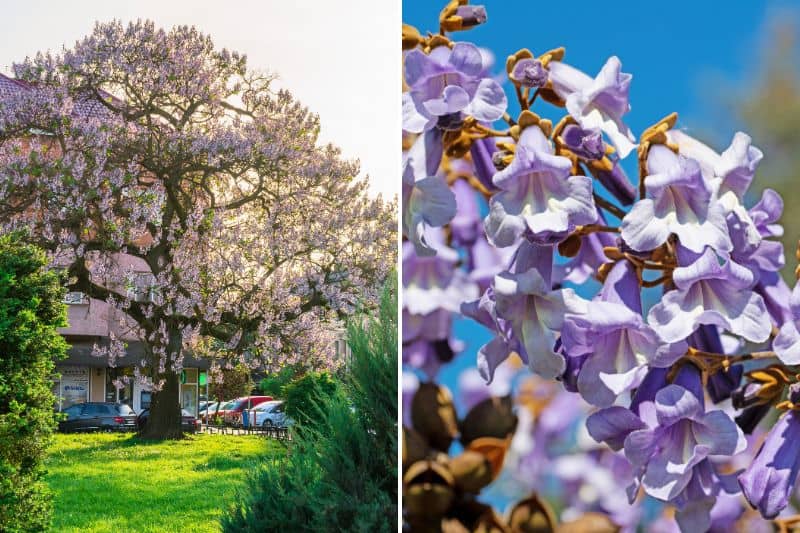
Finally, its giant heart-shaped leaves and purple flowers also make it a highly appreciated aesthetic choice for parks and gardens.
Is Paulownia a threat to ecosystems?
However, it is precisely the rapid growth and ability to reproduce effectively of the species type, Paulownia tomentosa, that have raised concerns about its potentially invasive nature. Indeed, this variety is considered a pioneer species, meaning it can establish itself first in a disturbed and poor area. As a result, it can supplant our native species, thereby altering the natural habitats of local wildlife. This risks reducing biodiversity, particularly in fragile ecosystems where endemic species may be threatened.
Furthermore, its reproduction by seeds and suckers facilitates its spread, making control difficult if it thrives and establishes itself in an environment.
However, its melliferous flowers are a food source for some pollinators, while its leaves help enrich soil quality as they decompose.
Currently, Paulownia is under study in Europe to assess its invasive potential. For now, it is not classified as an invasive species, but authorities and scientists are closely monitoring its impact on local ecosystems.
It is important to proceed with caution when introducing exotic species. These can lead to unexpected, sometimes adverse, consequences for native ecosystems. Promoting local species remains a wise practice, as they are generally better adapted and more beneficial for the ecological balance of the environment.
In light of these challenges, it is essential to adopt a reasoned management approach to Paulownia.
Choosing the variety: a measure to prevent Paulownia invasion
Some hybrid varieties have been created to reduce the invasive character of Paulownia. They may be less fertile, or even sterile, meaning they do not produce seeds, or produce non-viable seeds.
They may also have slower growth and lower seed production than non-hybrid species.
Here are some examples of less invasive Paulownia varieties:
- Paulownia 'Shan Tong': This variety is sterile and has rapid growth. It is well-suited to temperate climates.
- Paulownia 'Pao Tong': This variety is also sterile and has rapid growth. It is more drought-tolerant than Paulownia 'Shan Tong'.
- Paulownia 'Elongata': This variety is fertile but produces fewer seeds than non-hybrid species. It is well-suited to warm, humid climates.
- Paulownia 'Fortunei': This variety is also fertile but produces fewer seeds than non-hybrid species. It is well-suited to temperate and cold climates.
In addition to choosing a less invasive variety, it is important to plant Paulownia in an appropriate location. Avoid planting it near sensitive natural areas, such as riverbanks and cliffs.
Conclusion
Paulownia is not intrinsically "good" or "bad". Its impact depends on the species, context, and management. By using it thoughtfully and responsibly, this multi-benefit tree can contribute to sustainable timber production, environmental improvement, and biodiversity. Remember that it is wiser and more sustainable to prioritise local species, which are better adapted and more beneficial to the environment.
Paulownia, also known as the “empress tree” or “Kiri”, is native to East Asia and is gaining increasing interest due to its exceptional qualities. Its rapid growth, disease resistance, and valuable wood make it an undeniable asset for timber production. However, its status as an invasive species in certain regions of the world raises questions […]
In a world where climate change is an unavoidable reality, the search for sustainable solutions is more crucial than ever. Every action counts, including in our gardens. Among the many ways to attenuate the effects of climate change, tree planting plays a key role. Among them, a champion from Asia stands out: Paulownia, a tree with exceptional carbon capture properties.
What is Paulownia?
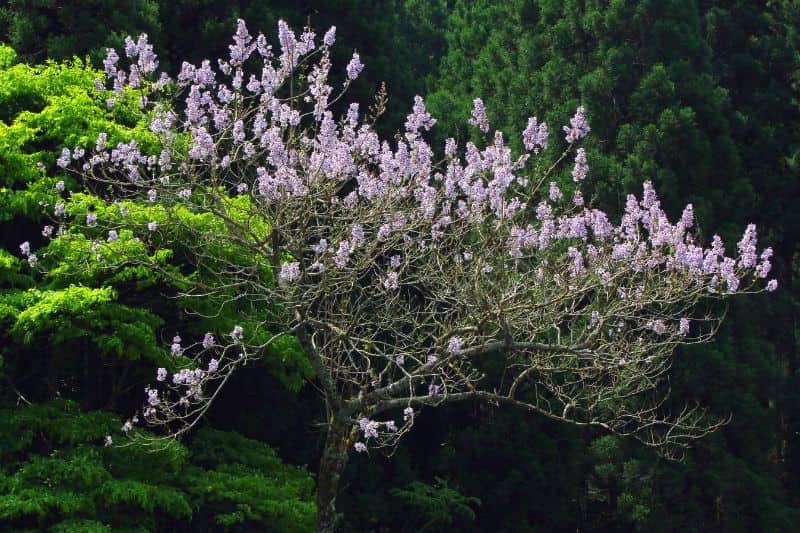
Paulownia is a deciduous tree distinguished by its large heart-shaped leaves and clusters of purple flowers. It can reach an impressive height of 10 to 25 metres in its natural habitat, making it a majestic addition to any landscape or large garden. Here in France, it will typically reach between 8 to 12 metres tall depending on the growing conditions.
It is native to Asia, particularly China and Japan, where it is known as "the emperor tree". Paulownia has been introduced to other parts of the world, including Europe and North America, where it has adapted well to various climatic conditions.
This tree is traditionally used for its wood, which is both lightweight and strong. Additionally, its ability to grow quickly makes it a popular choice for reforestation and ecological gardening projects. It is also used in traditional Asian medicine.
Note: the genus Paulownia includes six different species. However, the two most commonly cultivated species are Paulownia tomentosa and Paulownia fortunei.
The carbon capture properties of Paulownia
Paulownia is often referred to as the "carbon capture champion", and for good reason. According to scientific studies, this tree can sequester an impressive amount of carbon dioxide (CO2) from the atmosphere. In fact, an adult Paulownia can absorb up to 48 kilograms of CO2 per year, which is about 10 times more than most other trees commonly used in reforestation projects.
This exceptional capability is partly due to its rapid growth. Paulownia can reach maturity in 10 years, meaning it starts to have a positive impact on the environment much more quickly than other trees.
When compared to other trees like oak or pine, which are typically used in reforestation projects, Paulownia stands out significantly. For example, an oak can take up to 30 years to reach maturity and captures on average only 4 to 5 kilograms of CO2 per year. Pine, although faster growing than oak, captures on average 10 to 20 kg of CO2 per year, but it still does not reach the levels of Paulownia.
Finally, Paulownia is also noted for its ability to regenerate from its stump after cutting, an asset that can promote rapid new growth and continuous carbon capture. However, this capability varies greatly depending on soil conditions, climate, and forestry management practices.
Additional benefits of Paulownia
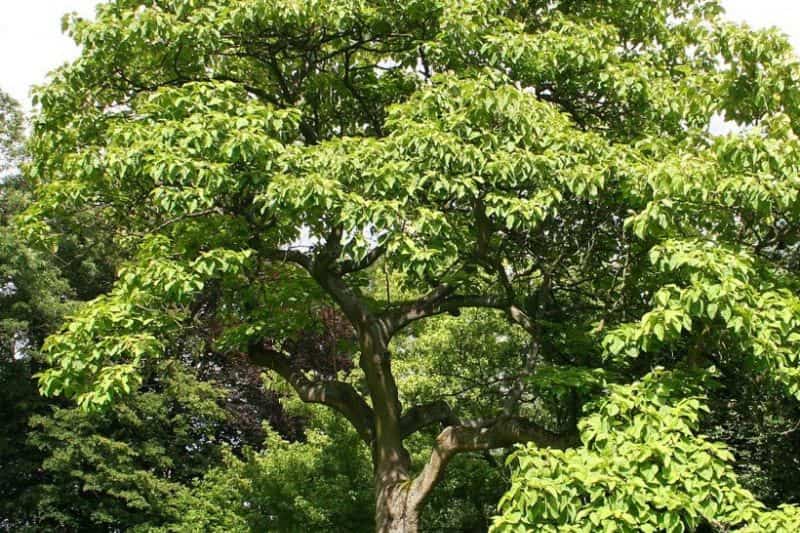
In winter, its large, nutrient-rich leaves decompose quickly and enrich the soil. This is an additional asset for mulching, composting, and permaculture.
Resilient, Paulownia is a robust tree that easily adapts to a wide range of climatic conditions and soil types. It is also resistant to diseases and pests, making it a sustainable choice for any garden or reforestation project.
Further reading
To learn more about this tree, read our sheet on Paulownia, Imperial Tree: planting, growing, and care.
In a world where climate change is an unavoidable reality, the search for sustainable solutions is more crucial than ever. Every action counts, including in our gardens. Among the many ways to attenuate the effects of climate change, tree planting plays a key role. Among them, a champion from Asia stands out: Paulownia, a tree […]
In an increasingly environmentally conscious world, efforts are being made to develop more sustainable agricultural systems. One of the ways we seek to achieve this goal is through permaculture - a holistic approach to agriculture that aims to work with nature rather than against it. Among the many questions that arise, one often comes up: what are the best trees to use in these systems? Among them, the Paulownia - a robust and fast-growing tree native to Asia - is of particular interest. Its resilience, ability to improve soil quality, and rapid growth indeed make Paulownia a promising candidate to become "the tree of the future" for permaculturists. But is this really the case? We will find out.
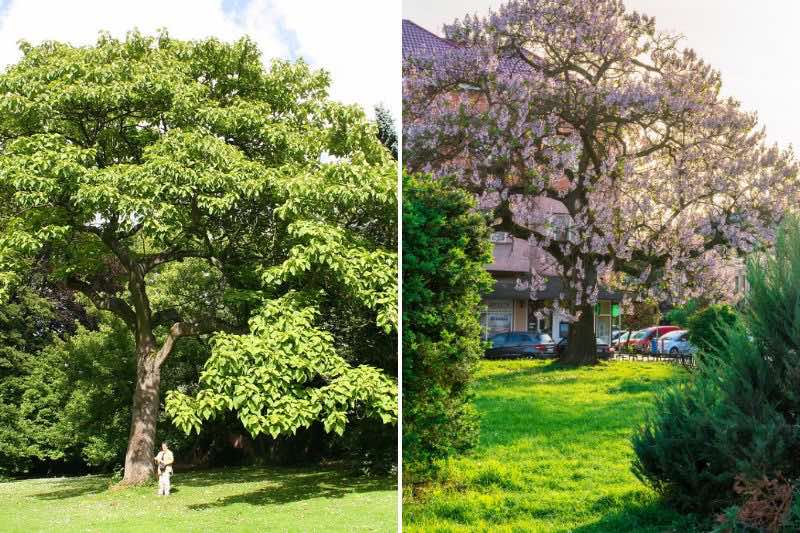
What is this tree?
The Paulownia tomentosa, often referred to as "the emperor tree", is a tree species native to Asia, known for its rapid growth and spectacular fragrant flowers. This giant, which can reach heights of 15 to 25 metres, not only has undeniable aesthetic appeal but also significant ecological value. Its ability to fix nitrogen in the soil, resist diseases and pests, and thrive in various soil and climate conditions has made it a popular choice for many reforestation and permaculture projects. Furthermore, Paulownia wood is lightweight, strong, and of high quality, making it a valuable resource for the timber industry. Therefore, Paulownia is increasingly recognised as a tree with immense potential to contribute to a more sustainable future.
Nota bene: there are 6 species in the genus Paulownia, but the most commonly cultivated are Paulownia tomentosa and Paulownia fortunei. The latter is distinguished from the Emperor Tree by its earlier flowering, but retains the same qualities.
Paulownia has many advantages
In the context of permaculture, Paulownia presents several notable advantages that make it interesting for sustainable agriculture projects:
- Rapid growth: Paulownia is one of the fastest-growing trees in the world. In just a few years, it can reach several metres in height, which is particularly interesting for reforestation and permaculture projects that seek to establish a forest cover quickly.
- Soil improvement: Paulownia has the ability to fix nitrogen, an essential element for plant growth, in the soil. This ability contributes to the improvement of soil quality and fertility, which is crucial in a permaculture system. The nutrient-rich leaves decompose quickly in the soil or compost, which is an additional asset.
- Resistance: These are robust trees that can withstand a wide range of climatic conditions and soil qualities. They are also resistant to diseases and pest attacks.
- High wood yield: Paulownia wood is lightweight, strong, and of high quality. It can be used for a variety of products, including furniture, musical instruments, and construction wood. It is also a species that can be used for biomass production due to its rapid growth.
- Carbon storage: Thanks to its rapid growth, Paulownia is capable of sequestering a large amount of CO2, making it an important asset in the fight against climate change.
- Shade tree and support for climbing plants: Paulownia quickly becomes an excellent shade tree, but its straight and sturdy stems can also serve as support for climbing plants. It is worth noting that the Emperor Tree is also excellent in a windbreak hedge.
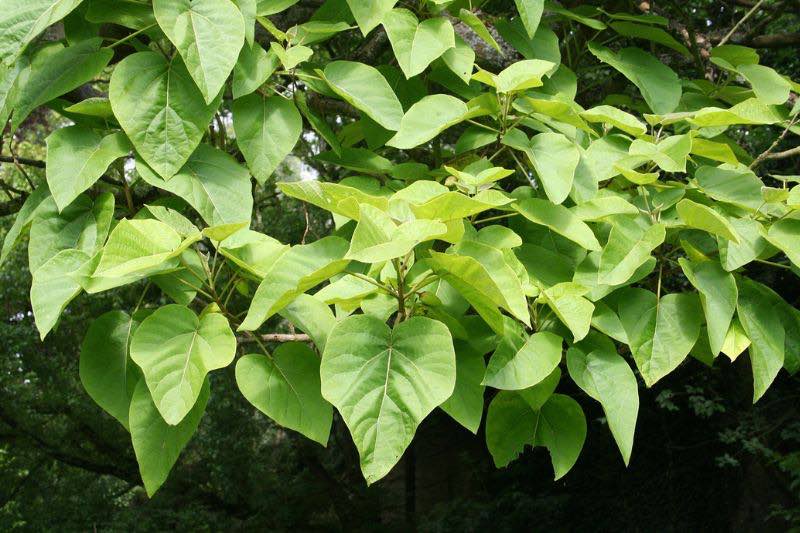
A concrete example of using Paulownia in permaculture
The use of Paulownia as a "windbreak" is one of the most common examples in permaculture. Due to its rapid growth, it can provide a protective barrier against strong winds for more delicate plants or livestock. Its dense foliage can help reduce soil erosion caused by wind while retaining more moisture in the soil, which is beneficial for other plants in the system.
Moreover, Paulownia produces a large amount of biomass in a short period, which can be useful for producing mulch or compost. Its leaves are nutrient-rich and can help improve soil quality when they fall and decompose.
Can Paulownia impact local biodiversity?
Paulownia is an exotic and pioneering species. Beware of its potentially invasive character!
Paulownia is indeed a fast-growing species, which can make it competitive with local species. If its spread is not controlled, it may eventually dominate a landscape, reducing the diversity of native tree species.
Furthermore, although Paulownia can provide habitat for certain species of insects, birds, or small mammals, it is not always suitable for local wildlife. Most insects, for example, have co-evolved with specific plant species. If Paulownia replaces these trees, these animals will lose their natural habitat.
That said, it is also possible that Paulownia may have beneficial effects on local biodiversity. Its flowers attract and nourish many pollinators, and its nutrient-rich leaves can improve soil fertility when they fall and decompose.
However, it is important to keep in mind that, in general, the introduction of non-native species should be done with caution, as they can have unforeseen and potentially negative impacts on local ecosystems. It is preferable to plant native species whenever possible, as they are often in harmony with local flora and fauna.
The particular case of pioneer trees
Paulownia tomentosa and Paulownia fortunei are not the only trees that multiply some of the advantages mentioned earlier. This is the case for many so-called pioneer trees, such as Aspen, birches, Pinus pinaster, Goat willow, or Black locust. Pioneer trees are tree species that are among the first to colonise disturbed or degraded lands. They play a crucial role in restoring ecosystems, as they help stabilise the soil, improve its fertility, and prepare the ground for the arrival of other plant species. Pioneer trees are generally characterised by rapid growth, a great ability to spread by seeds, and a capacity to tolerate difficult environmental conditions, such as poor soil or extreme temperature and humidity conditions.
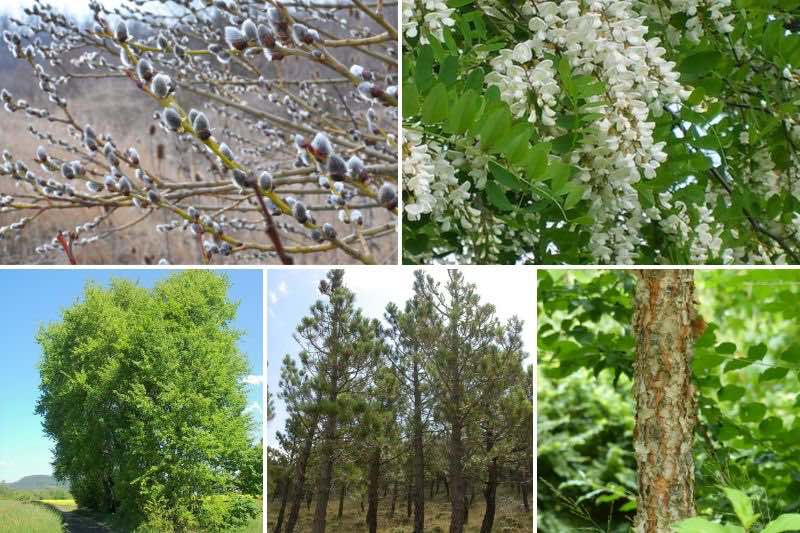
In an increasingly environmentally conscious world, efforts are being made to develop more sustainable agricultural systems. One of the ways we seek to achieve this goal is through permaculture – a holistic approach to agriculture that aims to work with nature rather than against it. Among the many questions that arise, one often comes up: […]