There are materials that do us good. Cork, from the tree that bears its name, is one of them, and it has been making a notable comeback in our lives for several years now. A renewable, 100% natural, ecological material, cork is not used only to seal our best vintages.
The possibilities offered by this natural material are many and its recycling concerns us all.

Cork: a bio-based, ancestral and innovative material
Cork comes from the bark of the cork oak (Quercus suber), a tree growing around the Mediterranean, mainly in Portugal, and also in Spain, Italy, France, Algeria and Morocco. It has been exploited primarily in Europe since the 17th century, but its qualities were known to the Romans and Greeks, who began making cork stoppers to better preserve wine or oil in amphorae (clay or resin stoppers having proved limited). It was Dom Pierre Pérignon, a Benedictine monk well known in the Champagne world, who is said to have popularised the use of cork.
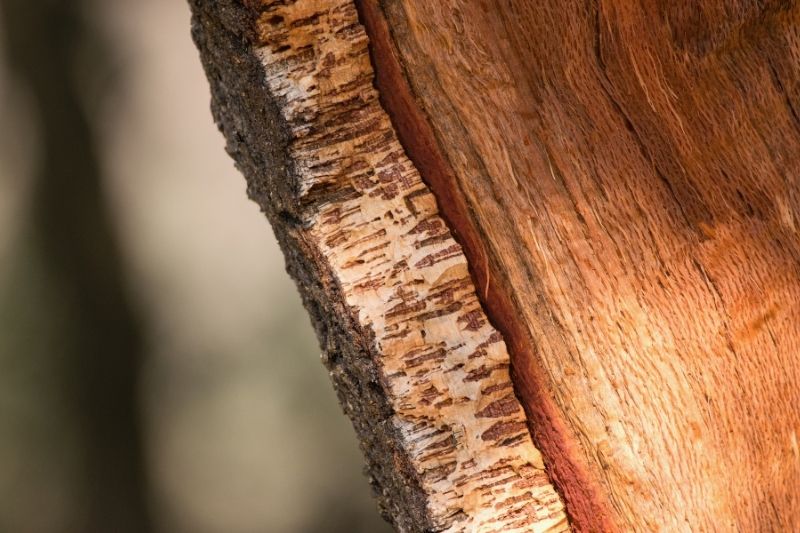
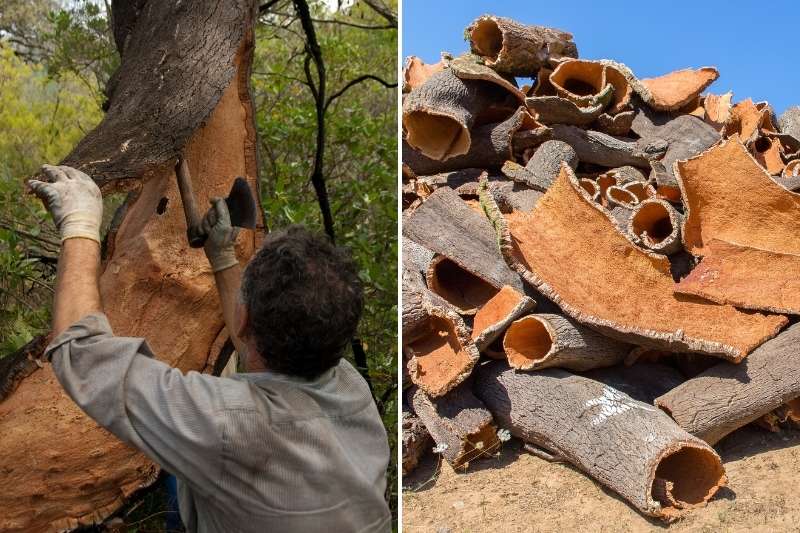
Only the bark – referred to as suberified bark – is harvested. The tree is not cut down; only its very thick cork bark, up to 25 cm thick, is removed using a special axe, without damaging the cambium (living tissue beneath the cork).
The tree therefore remains alive. The cork oak is able to regenerate its bark after each harvest, allowing sustainable exploitation over decades. It is also fire-resistant: after each fire, frequent in these Mediterranean regions, it reconstitutes its bark… like a vegetal phoenix or a Terminator of the forests!
Properties and uses of cork
Given all its qualities, cork has many uses beyond making stoppers. It is a technical material widely used in the marine sector for boat decks because of its rot-resistant properties, in leather goods to make soles, shoes and small items, and as an accessory for numerous decorative items, jewellery and furniture. Light yet flexible, impermeable and insulating, attractive and watertight, it has also become a material of choice for thermal and acoustic insulation. The construction industry also uses it as an effective moisture barrier, accounting for 14% of its use. The wine industry remains its main outlet, representing 69% of consumption. It uses the protective and breathable qualities of cork as well as its density to produce high-quality stoppers.

Production and extraction
Portugal, the world’s leading cork exporter, is the undisputed leader in production (50% of the total). Suberaies, the name given to cork oak forests, account for nearly a quarter of the country’s woodlands, with a strong concentration in the Alentejo region. Portuguese cork represents 50% of world production. Portugal and Spain alone cover more than half of the exploited areas.
France produces a smaller but high-quality quantity, in specific areas (Corsica, Pyrénées-Orientales, Var and Landes). The cork sector in France produces 3 billion cork stoppers per year, out of 14 billion worldwide.
It must be understood that cork forests and plantations in Portugal and other Mediterranean countries are ecosystems in their own right. Cork cultivation relies on patient, extensive management of natural areas.
Furthermore, knowing that one tonne of cork absorbs 2 tonnes of CO2, and that global production is 300,000 tonnes per year, there is no need to do the maths to grasp the ecological value of this resource.
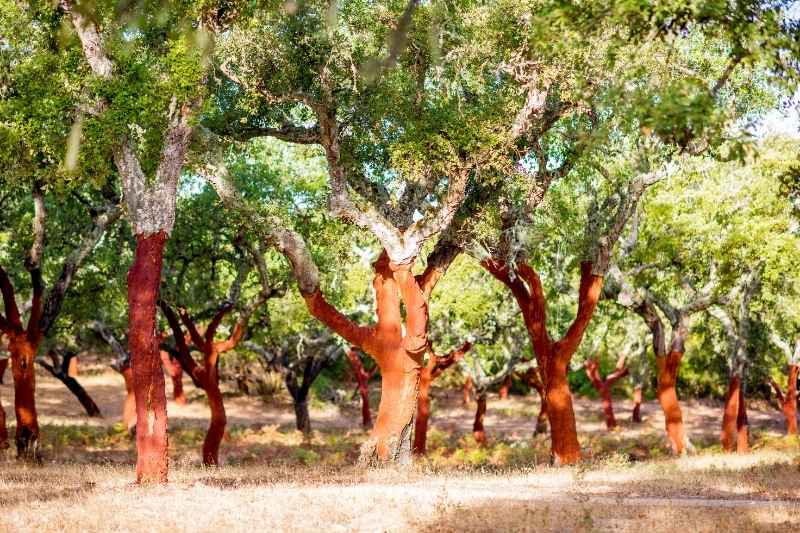
Extraction is done manually on the trunk when the tree is mature, at least 25 years old, by cutting or "lifting" the bark in large slabs. This is known as the debarking or lifting operation, carried out during the sap-rise period, from May to August. The first harvest produces so-called "male" cork, of lower quality, very thick and too hard, which will be sent for grinding. The bark renews naturally every 12 years approximately, on trees living on average 200 years. Each cork oak can thus be "scalped" around fifteen times in its life, producing so-called "female" cork, a noble, excellent-quality material. The cork slabs are air-dried for six months. Harvested cork has a very long shelf life, close to 100 years!
Cork recycling: an eco-friendly civic act within everyone's reach
France, as the world’s second-largest wine consumer, has a role to play.
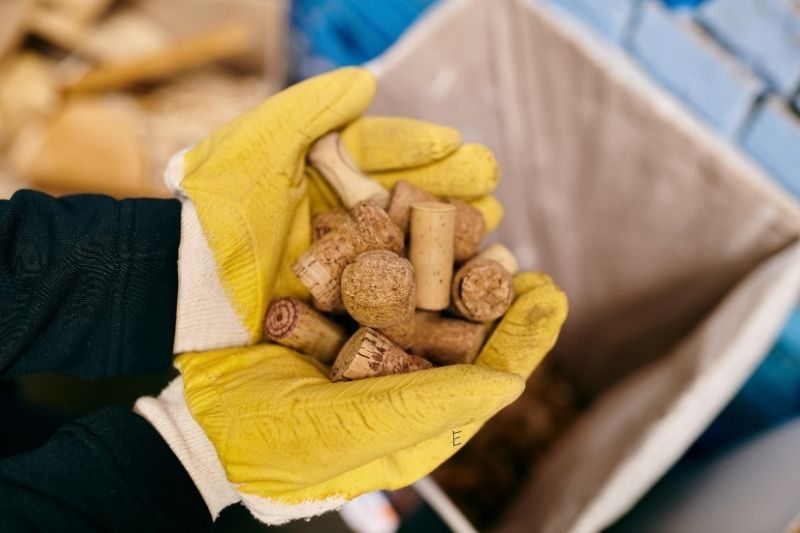
A 100% plant-based product, cork stoppers can be recycled, but they are not classed as packaging. They therefore cannot be put in the yellow recycling bin. They must be dropped off at a local collection point. Household waste centres, town halls, supermarkets, organic shops, wine merchants and sometimes schools are all places where precious stoppers can be returned.
Fewer people know that many local, regional and national associations take part in collections to support charitable causes.
Options in France include Recycliege France, Planetliege (site of the French Cork Federation), and regional waste management organisations such as Smitcom.
Once collected, stoppers are sent to specialised recycling plants where they receive specific treatment. Ground, they become granules, which are then turned into boards or blocks to make other objects, including new stoppers, or used for energy recovery.
Avoid putting cork stoppers in the compost. Although biodegradable, they decompose rather slowly and, in that case, should not be bonded with glue or plastic, as some new commercial stoppers are. These must be thrown in the household refuse bin.
Sorting cork: a well-established process
Each year more than 60 million cork stoppers are recycled in France out of a consumption of 3 billion cork-sealed bottles.
In this area, prevention and information are major issues for this circular economy in order to promote a reflex in our daily habits: collect cork stoppers together at home rather than throwing them one by one in the bin.
At European level, there is a recycling code for cork, FOR51. It identifies products made from natural cork without any agglomerate or synthetic substitute.
Be careful not to confuse 100% cork stoppers with cork-look stoppers, which are agglomerates of synthetic materials and glue: these must not go in the yellow recycling bin!
Cork in the garden: why not consider it?
An insulating material in summer and winter, therefore thermoregulating… Now, doesn't that sound good for our plants? Cork stoppers are indeed one of the original but proven recycling options for our potted plants. For drainage or insulation against the cold, once cut into small pieces (yes, you have to get your hands a little dirty), 100% cork stoppers prove to be precious and economical allies, replacing clay pebbles. Placed under pots, they protect those left on terraces and balconies in winter.
Our cork stoppers can also find a second life and be upcycled very prettily and easily for Christmas. The natural material and colour of cork pair perfectly with pine cones and wood to decorate the home for the festive season. Keep it in mind!

Further reading…
Cork is venturing into the space industry! Discover this surprising article on the aeronautical potential of cork from a small French company.
Two websites to consult: Planète Liège and the Mediterranean Cork Institute (IML), which provide much more information on their comprehensive sites.
This video shows the cork stopper manufacturing process in a Portuguese factory.
There are materials that do us good. Cork, from the tree that bears its name, is one of them, and it has been making a notable comeback in our lives for several years now. A renewable, 100% natural, ecological material, cork is not used only to seal our best vintages.The possibilities offered by this natural […]
Paulownia, also known as the "empress tree" or "Kiri", is native to East Asia and is gaining increasing interest due to its exceptional qualities. Its rapid growth, disease resistance, and valuable wood make it an undeniable asset for timber production. However, its status as an invasive species in certain regions of the world raises questions about its environmental impact. What is the real situation?
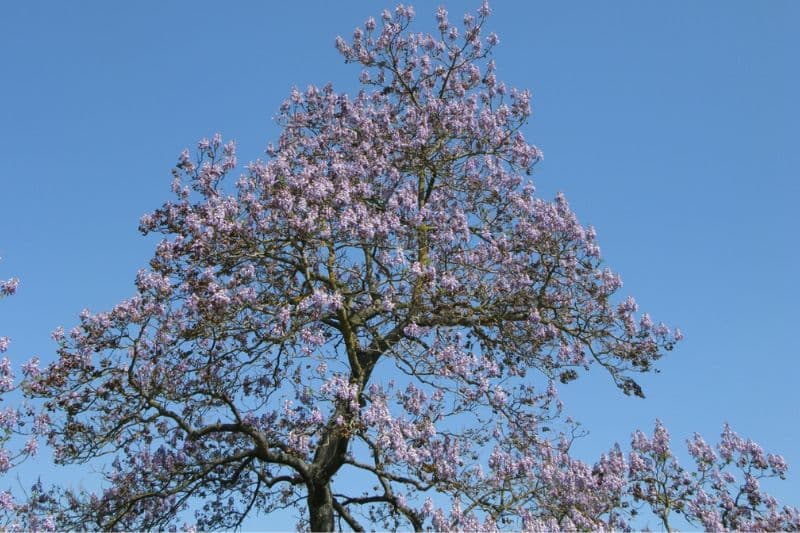
The qualities of Paulownia
Paulownia possesses undeniable qualities: a lightweight and strong wood, rapid growth, making it an incredible choice for reforestation and agroforestry.
Its ability to thrive in poor soils or degraded land and its tolerance to pollution make it an ideal candidate for combating erosion and restoring soils.
Moreover, Paulownia absorbs a significant amount of carbon dioxide, thus contributing to the fight against climate change.
Finally, its giant heart-shaped leaves and purple flowers also make it a highly appreciated aesthetic choice for parks and gardens.
Is Paulownia a threat to ecosystems?
However, it is precisely the rapid growth and ability to reproduce effectively of the species type, Paulownia tomentosa, that have raised concerns about its potentially invasive nature. Indeed, this variety is considered a pioneer species, meaning it can establish itself first in a disturbed and poor area. As a result, it can supplant our native species, thereby altering the natural habitats of local wildlife. This risks reducing biodiversity, particularly in fragile ecosystems where endemic species may be threatened.
Furthermore, its reproduction by seeds and suckers facilitates its spread, making control difficult if it thrives and establishes itself in an environment.
However, its melliferous flowers are a food source for some pollinators, while its leaves help enrich soil quality as they decompose.
Currently, Paulownia is under study in Europe to assess its invasive potential. For now, it is not classified as an invasive species, but authorities and scientists are closely monitoring its impact on local ecosystems.
It is important to proceed with caution when introducing exotic species. These can lead to unexpected, sometimes adverse, consequences for native ecosystems. Promoting local species remains a wise practice, as they are generally better adapted and more beneficial for the ecological balance of the environment.
In light of these challenges, it is essential to adopt a reasoned management approach to Paulownia.
Choosing the variety: a measure to prevent Paulownia invasion
Some hybrid varieties have been created to reduce the invasive character of Paulownia. They may be less fertile, or even sterile, meaning they do not produce seeds, or produce non-viable seeds.
They may also have slower growth and lower seed production than non-hybrid species.
Here are some examples of less invasive Paulownia varieties:
- Paulownia 'Shan Tong': This variety is sterile and has rapid growth. It is well-suited to temperate climates.
- Paulownia 'Pao Tong': This variety is also sterile and has rapid growth. It is more drought-tolerant than Paulownia 'Shan Tong'.
- Paulownia 'Elongata': This variety is fertile but produces fewer seeds than non-hybrid species. It is well-suited to warm, humid climates.
- Paulownia 'Fortunei': This variety is also fertile but produces fewer seeds than non-hybrid species. It is well-suited to temperate and cold climates.
In addition to choosing a less invasive variety, it is important to plant Paulownia in an appropriate location. Avoid planting it near sensitive natural areas, such as riverbanks and cliffs.
Conclusion
Paulownia is not intrinsically "good" or "bad". Its impact depends on the species, context, and management. By using it thoughtfully and responsibly, this multi-benefit tree can contribute to sustainable timber production, environmental improvement, and biodiversity. Remember that it is wiser and more sustainable to prioritise local species, which are better adapted and more beneficial to the environment.
Paulownia, also known as the “empress tree” or “Kiri”, is native to East Asia and is gaining increasing interest due to its exceptional qualities. Its rapid growth, disease resistance, and valuable wood make it an undeniable asset for timber production. However, its status as an invasive species in certain regions of the world raises questions […]
In a world where climate change is an unavoidable reality, the search for sustainable solutions is more crucial than ever. Every action counts, including in our gardens. Among the many ways to attenuate the effects of climate change, tree planting plays a key role. Among them, a champion from Asia stands out: Paulownia, a tree with exceptional carbon capture properties.
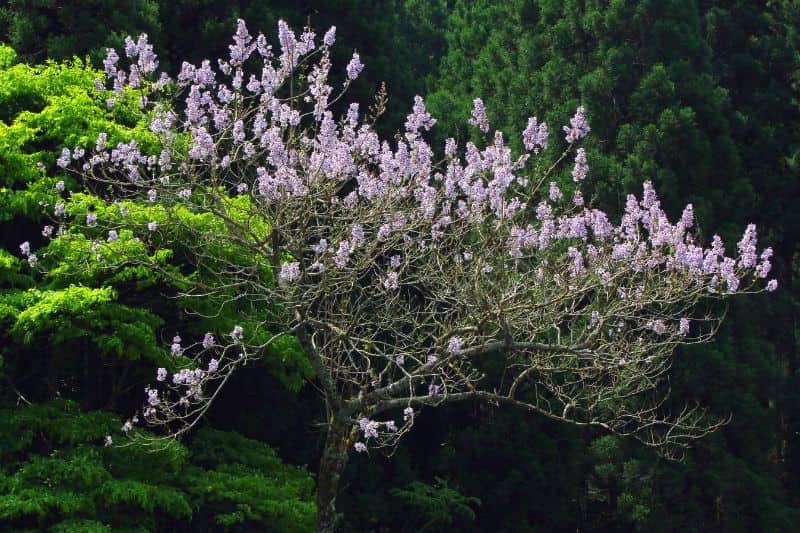
What is Paulownia?
Paulownia is a deciduous tree distinguished by its large heart-shaped leaves and clusters of purple flowers. It can reach an impressive height of 10 to 25 metres in its natural habitat, making it a majestic addition to any landscape or large garden. Here in France, it will typically reach between 8 to 12 metres tall depending on the growing conditions.
It is native to Asia, particularly China and Japan, where it is known as "the emperor tree". Paulownia has been introduced to other parts of the world, including Europe and North America, where it has adapted well to various climatic conditions.
This tree is traditionally used for its wood, which is both lightweight and strong. Additionally, its ability to grow quickly makes it a popular choice for reforestation and ecological gardening projects. It is also used in traditional Asian medicine.
Note: the genus Paulownia includes six different species. However, the two most commonly cultivated species are Paulownia tomentosa and Paulownia fortunei.
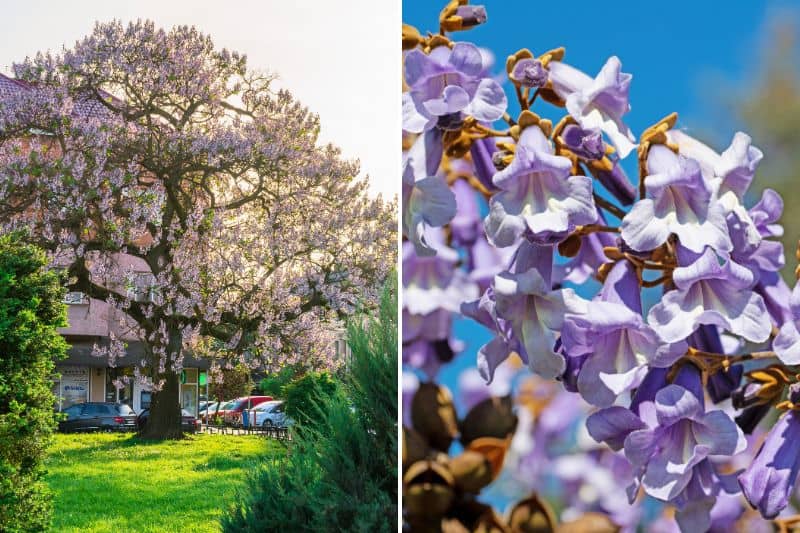
The carbon capture properties of Paulownia
Paulownia is often referred to as the "carbon capture champion", and for good reason. According to scientific studies, this tree can sequester an impressive amount of carbon dioxide (CO2) from the atmosphere. In fact, an adult Paulownia can absorb up to 48 kilograms of CO2 per year, which is about 10 times more than most other trees commonly used in reforestation projects.
This exceptional capability is partly due to its rapid growth. Paulownia can reach maturity in 10 years, meaning it starts to have a positive impact on the environment much more quickly than other trees.
When compared to other trees like oak or pine, which are typically used in reforestation projects, Paulownia stands out significantly. For example, an oak can take up to 30 years to reach maturity and captures on average only 4 to 5 kilograms of CO2 per year. Pine, although faster growing than oak, captures on average 10 to 20 kg of CO2 per year, but it still does not reach the levels of Paulownia.
Finally, Paulownia is also noted for its ability to regenerate from its stump after cutting, an asset that can promote rapid new growth and continuous carbon capture. However, this capability varies greatly depending on soil conditions, climate, and forestry management practices.
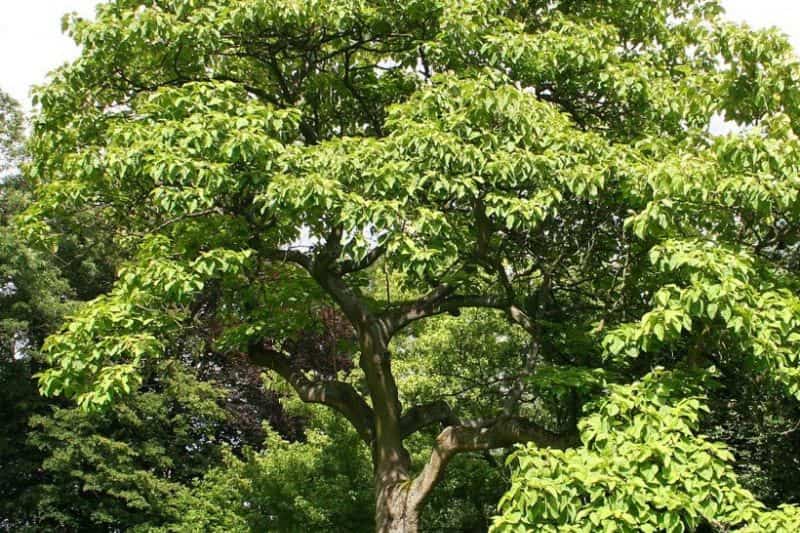
Additional benefits of Paulownia
In winter, its large, nutrient-rich leaves decompose quickly and enrich the soil. This is an additional asset for mulching, composting, and permaculture.
Resilient, Paulownia is a robust tree that easily adapts to a wide range of climatic conditions and soil types. It is also resistant to diseases and pests, making it a sustainable choice for any garden or reforestation project.
Further reading
To learn more about this tree, read our sheet on Paulownia, Imperial Tree: planting, growing, and care.
In a world where climate change is an unavoidable reality, the search for sustainable solutions is more crucial than ever. Every action counts, including in our gardens. Among the many ways to attenuate the effects of climate change, tree planting plays a key role. Among them, a champion from Asia stands out: Paulownia, a tree […]
In an increasingly environmentally conscious world, efforts are being made to develop more sustainable agricultural systems. One of the ways we seek to achieve this goal is through permaculture - a holistic approach to agriculture that aims to work with nature rather than against it. Among the many questions that arise, one often comes up: what are the best trees to use in these systems? Among them, the Paulownia - a robust and fast-growing tree native to Asia - is of particular interest. Its resilience, ability to improve soil quality, and rapid growth indeed make Paulownia a promising candidate to become "the tree of the future" for permaculturists. But is this really the case? We will find out.
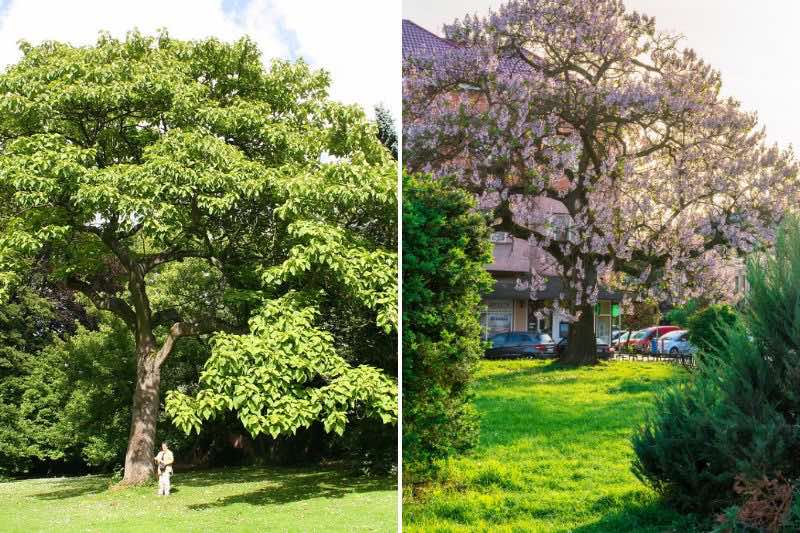
What is this tree?
The Paulownia tomentosa, often referred to as "the emperor tree", is a tree species native to Asia, known for its rapid growth and spectacular fragrant flowers. This giant, which can reach heights of 15 to 25 metres, not only has undeniable aesthetic appeal but also significant ecological value. Its ability to fix nitrogen in the soil, resist diseases and pests, and thrive in various soil and climate conditions has made it a popular choice for many reforestation and permaculture projects. Furthermore, Paulownia wood is lightweight, strong, and of high quality, making it a valuable resource for the timber industry. Therefore, Paulownia is increasingly recognised as a tree with immense potential to contribute to a more sustainable future.
Nota bene: there are 6 species in the genus Paulownia, but the most commonly cultivated are Paulownia tomentosa and Paulownia fortunei. The latter is distinguished from the Emperor Tree by its earlier flowering, but retains the same qualities.
Paulownia has many advantages
In the context of permaculture, Paulownia presents several notable advantages that make it interesting for sustainable agriculture projects:
- Rapid growth: Paulownia is one of the fastest-growing trees in the world. In just a few years, it can reach several metres in height, which is particularly interesting for reforestation and permaculture projects that seek to establish a forest cover quickly.
- Soil improvement: Paulownia has the ability to fix nitrogen, an essential element for plant growth, in the soil. This ability contributes to the improvement of soil quality and fertility, which is crucial in a permaculture system. The nutrient-rich leaves decompose quickly in the soil or compost, which is an additional asset.
- Resistance: These are robust trees that can withstand a wide range of climatic conditions and soil qualities. They are also resistant to diseases and pest attacks.
- High wood yield: Paulownia wood is lightweight, strong, and of high quality. It can be used for a variety of products, including furniture, musical instruments, and construction wood. It is also a species that can be used for biomass production due to its rapid growth.
- Carbon storage: Thanks to its rapid growth, Paulownia is capable of sequestering a large amount of CO2, making it an important asset in the fight against climate change.
- Shade tree and support for climbing plants: Paulownia quickly becomes an excellent shade tree, but its straight and sturdy stems can also serve as support for climbing plants. It is worth noting that the Emperor Tree is also excellent in a windbreak hedge.
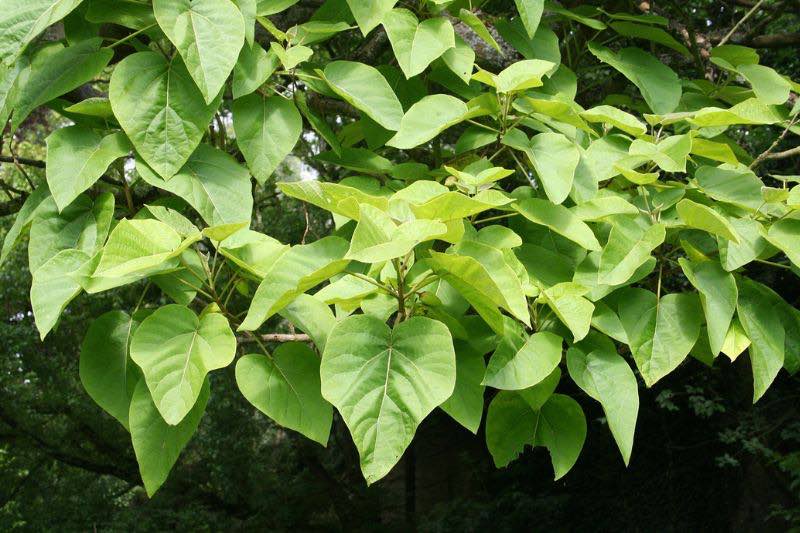
A concrete example of using Paulownia in permaculture
The use of Paulownia as a "windbreak" is one of the most common examples in permaculture. Due to its rapid growth, it can provide a protective barrier against strong winds for more delicate plants or livestock. Its dense foliage can help reduce soil erosion caused by wind while retaining more moisture in the soil, which is beneficial for other plants in the system.
Moreover, Paulownia produces a large amount of biomass in a short period, which can be useful for producing mulch or compost. Its leaves are nutrient-rich and can help improve soil quality when they fall and decompose.
Can Paulownia impact local biodiversity?
Paulownia is an exotic and pioneering species. Beware of its potentially invasive character!
Paulownia is indeed a fast-growing species, which can make it competitive with local species. If its spread is not controlled, it may eventually dominate a landscape, reducing the diversity of native tree species.
Furthermore, although Paulownia can provide habitat for certain species of insects, birds, or small mammals, it is not always suitable for local wildlife. Most insects, for example, have co-evolved with specific plant species. If Paulownia replaces these trees, these animals will lose their natural habitat.
That said, it is also possible that Paulownia may have beneficial effects on local biodiversity. Its flowers attract and nourish many pollinators, and its nutrient-rich leaves can improve soil fertility when they fall and decompose.
However, it is important to keep in mind that, in general, the introduction of non-native species should be done with caution, as they can have unforeseen and potentially negative impacts on local ecosystems. It is preferable to plant native species whenever possible, as they are often in harmony with local flora and fauna.
The particular case of pioneer trees
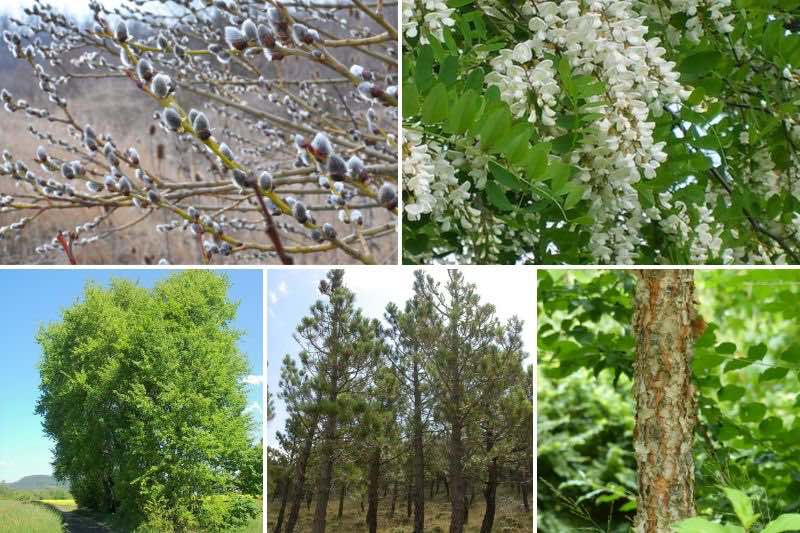
Paulownia tomentosa and Paulownia fortunei are not the only trees that multiply some of the advantages mentioned earlier. This is the case for many so-called pioneer trees, such as Aspen, birches, Pinus pinaster, Goat willow, or Black locust. Pioneer trees are tree species that are among the first to colonise disturbed or degraded lands. They play a crucial role in restoring ecosystems, as they help stabilise the soil, improve its fertility, and prepare the ground for the arrival of other plant species. Pioneer trees are generally characterised by rapid growth, a great ability to spread by seeds, and a capacity to tolerate difficult environmental conditions, such as poor soil or extreme temperature and humidity conditions.
In an increasingly environmentally conscious world, efforts are being made to develop more sustainable agricultural systems. One of the ways we seek to achieve this goal is through permaculture – a holistic approach to agriculture that aims to work with nature rather than against it. Among the many questions that arise, one often comes up: […]
Acacia dealbata, or wattle, is a small tree that dazzles with its ornamental qualities, the delicacy of its foliage, and its sunny and delightfully fragrant flowering at the end of winter. It also generates concerns, both rightly and wrongly. Let’s explore together the reasons behind these concerns and their foundations, as well as what it truly means for an individual in their garden who is questioning the possibility of planting a mimosa. Before delving into the heart of the matter, let’s clarify the confusion sometimes made regarding its name: wattle, or Acacia dealbata, should not be confused with the false acacia, or Robinia pseudoacacia, which is sometimes incorrectly referred to as Acacia.
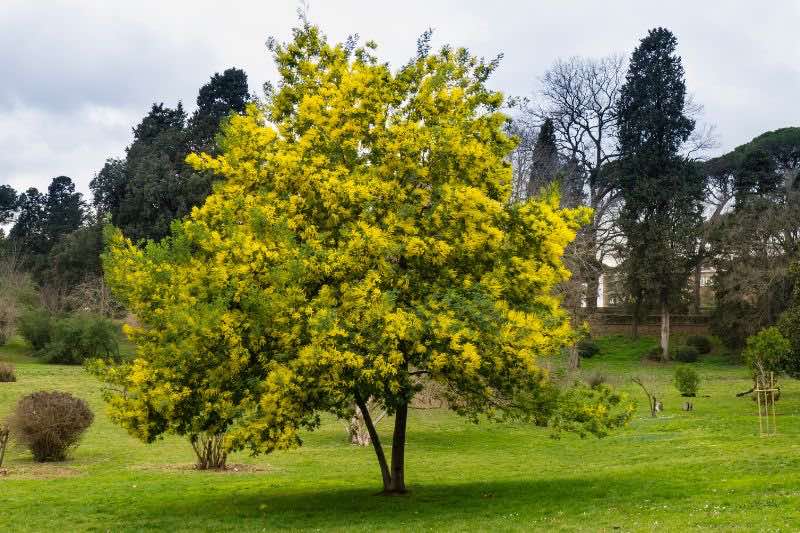
The wattle in France
Introduced to the Côte d'Azur in the early 19th century, Acacia dealbata was subsequently mass-planted after 1850 in this same region, which has a very favourable climate for it. It has thus naturalised thanks to these massive plantings and this climate, and it is now considered invasive in this same region. It is classified as an "Invasive exotic species." It is present throughout the Mediterranean region and can also be found along the Atlantic coast, particularly at the shoreline. It has become very prevalent in a large quarter of the south-west of the country, and it can be found as far as the English Channel. Its strong ability to sucker, especially after damage such as frost or intense fire, along with its capacity to produce shoots, explains its propensity to multiply rapidly. It also reproduces sexually through its numerous seeds, but the main mode of propagation in Europe is its vegetative reproduction. The mimosa can form dense stands that are impenetrable, thus preventing the development of other local and native species. It poses significant management issues in southern France, particularly in Provence and on the Côte d'Azur. Its proliferation in the natural environment is not controlled: it thus very directly threatens biodiversity, where it multiplies rapidly on its own. It is also considered invasive in Spain, Portugal, and Italy, to name a few nearby countries, as well as in other regions of the world. In some French regions, it is considered to be monitored (South Atlantic and Midi-Pyrénées), while in Pays de la Loire, it is classified as a potential invasive plant.
Moreover, this high concentration of a single species, which is necessarily detrimental to ecosystems, has a significant impact on water flow, drainage, and soil erosion. Finally, this species, as a member of the Fabaceae family, plays a role in nitrogen fixation, which increases its concentration in the soil, and it is this excessive presence that creates this imbalance.
The methods of control are therefore substantial: manual removal of young plants, removal of fallen seeds, and cutting of large specimens. In the latter case, it is also necessary to treat the stump mechanically or chemically to prevent shoots.
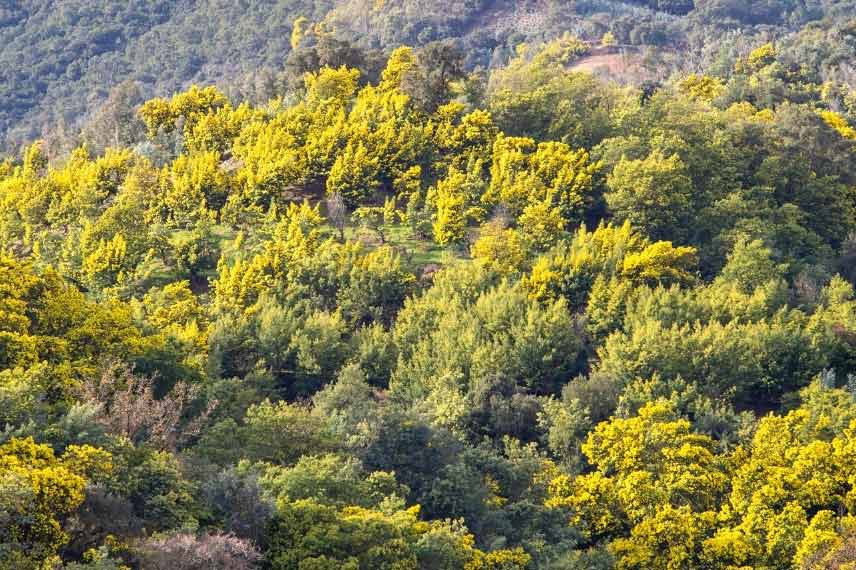
Are you concerned about the invasive nature of wattle in your garden?
In fact, no, because while the wattle we are discussing here, Acacia dealbata, does exhibit this characteristic of significant suckering, today we offer for sale grafted specimens onto another species of wattle, Acacia retinodes, which is less hardy but not very suckering. It is also more sensitive to cold.
Other aspects often mentioned regarding wattle
Wattle is sometimes blamed for its potential allergenic nature for those sensitive to pollen allergies or hay fever. Its contribution to these seasonal allergies, while not impossible, should be quite limited, as wattle is an entomophilous plant. Its pollen is dispersed by insects. The most allergenic plants have pollen that is wind-borne, which are anemophilous plants. Moreover, the pollen grains of wattle are grouped into small conglomerates: being heavier, they fall to the ground more quickly and, being denser, they are less likely to traverse the respiratory pathways. Measurements taken in Australia (where wattle originates) in 2008 found only 2.5% of pollen from Acacia dealbata in the total pollen of the surrounding air.
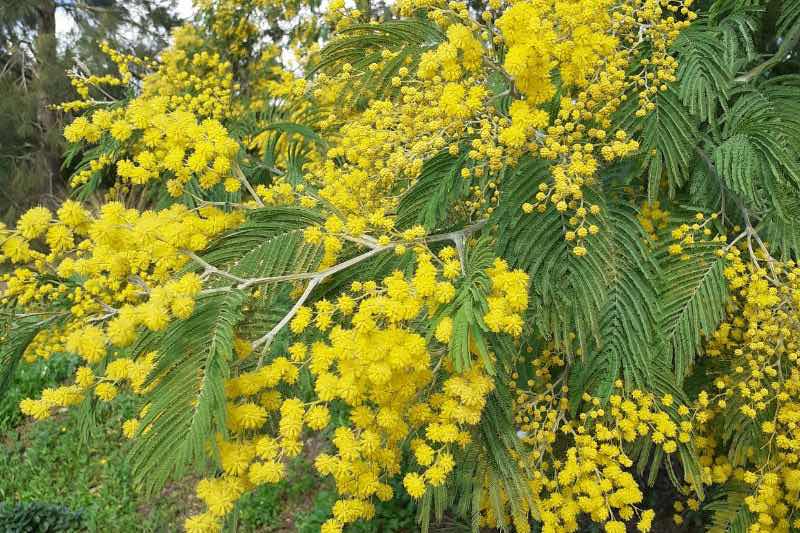
Another issue encountered is that Acacia dealbata has a significant and powerful root system that can cause damage to underground pipes, crack foundations, and lift flooring. Once again, to mitigate this risk, one chooses a grafted specimen on Acacia retinodes, also known as the four-season wattle.
Acacia retinodes as a rootstock also has the advantage of tolerating calcareous soils, whereas Acacia dealbata alone thrives only in acidic soil. The variety Acacia dealbata 'Gaulois Astier', which is also grafted onto Acacia retinodes, is also frequently encountered. Otherwise, discover other species of wattle, whose flowers are similar, grouped in racemes of yellow globules, but with different foliage, habit, and height.
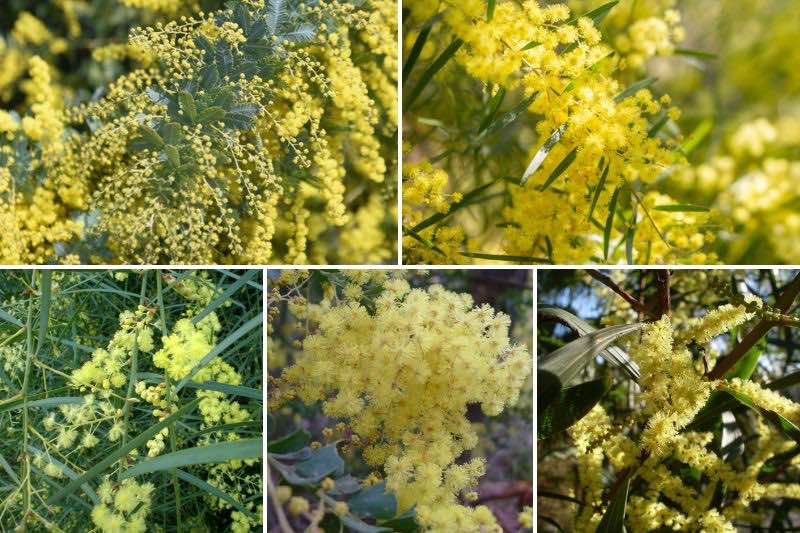
Finally, Acacia dealbata emits allelopathic substances through its leaves and flowers during the flowering period, so in this case, the rootstock does not change anything. Between January and March, these compounds negatively impact the development of multiple seeds in the soil, which is their germination period. Many plants are thus likely to struggle to grow under its canopy, while others will be indifferent to its presence. Grasses, spurges, periwinkle, are not likely to be bothered by its proximity, and surely many other plants as well.
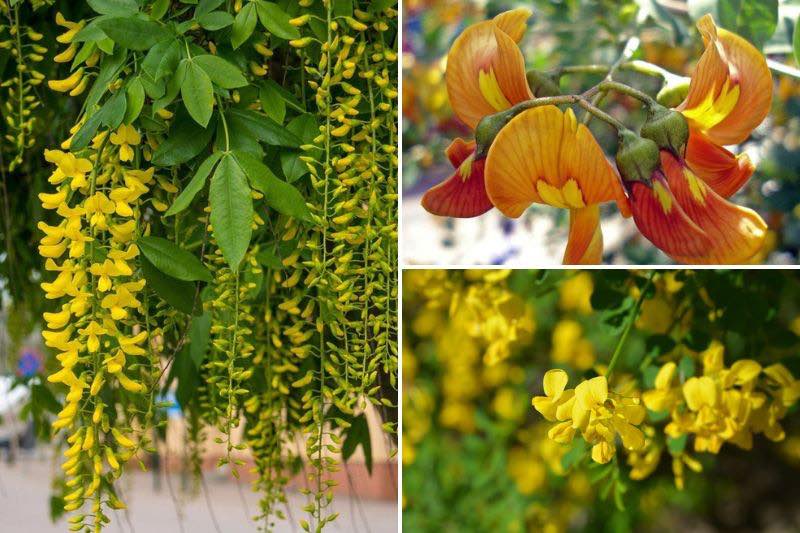
If this last reason makes you want to consider another choice, you can plant a beautiful Baguenaudier or Colutea arborescens instead of a wattle. Also consider Coronilla, a lovely shrub with wattle-like yellow flowers, or even Laburnum or cytisus.
Acacia dealbata, or wattle, is a small tree that dazzles with its ornamental qualities, the delicacy of its foliage, and its sunny and delightfully fragrant flowering at the end of winter. It also generates concerns, both rightly and wrongly. Let’s explore together the reasons behind these concerns and their foundations, as well as what it […]
We love variegated foliage... or not. But in any case, it never fails to leave gardeners indifferent. You can find perennials, trees or shrubs with variegated or marbled foliage in white, cream, yellow, or another colour... Sometimes simply marginate, sometimes almost entirely devoid of green... But the question we are asking today is: what causes this foliage or another part of the plant to become bicoloured or multicoloured?
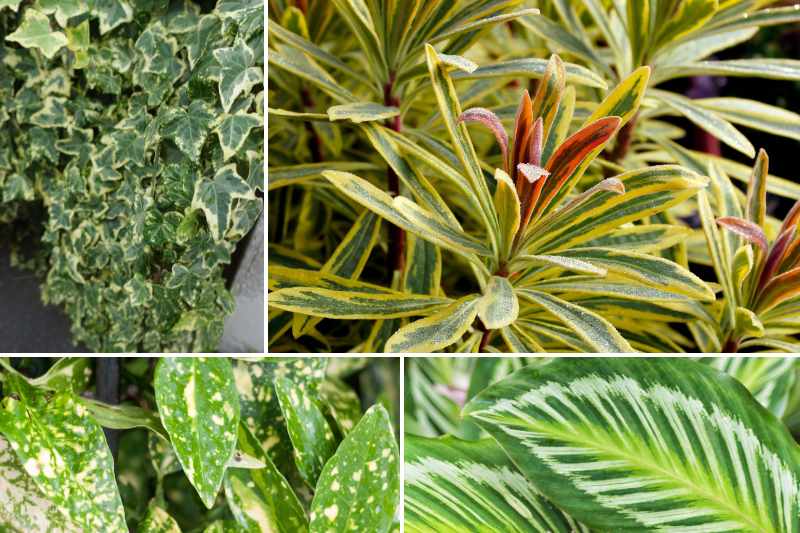
What is a variegated foliage?
We refer to variegation when a part of a leaf, flower, or even fruit appears "discoloured." These discoloured parts are completely or partially devoid of chlorophyll, the pigment that gives the green colour and enables photosynthesis.
It is important to know that a green leaf contains chlorophyll (we should even say chlorophylls, as there are several types), but also a certain amount of other pigments that are more or less hidden: carotin, xanthophyll, anthocyanin... When chlorophyll disappears, the other pigments become visible. This is what gives the yellow, orange, red, or brown colours of leaves in autumn when chlorophyll naturally fades. For variegations, it works on a similar principle, except that it is not the decrease in light that causes chlorophyll to disappear, but other reasons. When chlorophyll partially disappears, we end up with white, cream, yellow... and sometimes even pink or red spots.
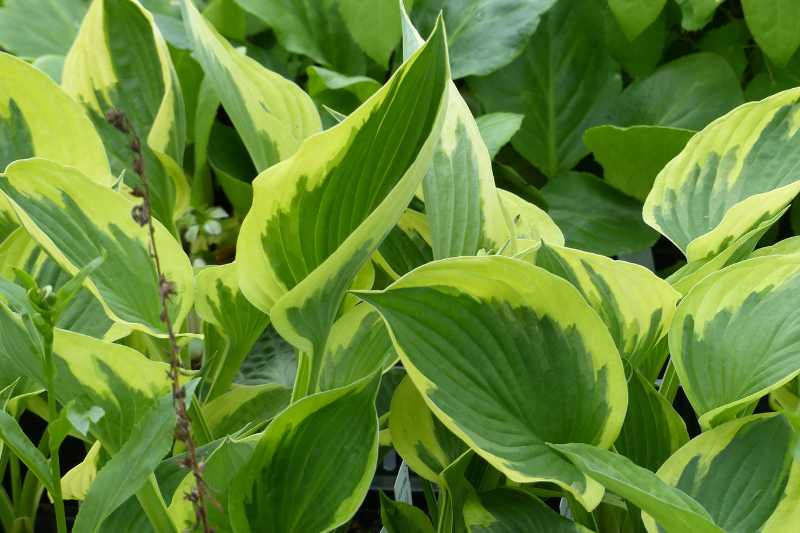
Where do these variegations come from?
Variegations in a leaf can arise from various causes:
The most common case is mutation-induced variegation. A young seedling or part of a plant mutates and suddenly becomes variegated. Since the variegation is not stable, and therefore not sexually reproducible, these plants should be propagated vegetatively (cuttings, layering, grafting). Be on the lookout for such mutations in your own garden. You never know, you might obtain a remarkable new variety.
Variegations can also be caused by a virus. This is rarer, but it does happen. A benign virus infects the plant, which in response produces variegated parts (leaves, flowers, fruits). This is the case with most variegated-leaved Hibiscus, such as Hibiscus 'Summer Ruffle', or with bicoloured tulip varieties;
Finally, some variegations are entirely natural. Indeed, certain plant species have evolved to develop variegated or punctate parts. Botanists do not have explanations for all these species. However, it can be said that the natural variegation of certain species is a defence mechanism, as seen in Hypoestes which produce leaves speckled with small dots or in Adelonema walisii which reveals very variegated leaves of yellow-cream. The former gives the illusion that the plant has already been eaten by an insect, while the latter is camouflaged in the decor to avoid being browsed by herbivores. Some species may also use variegations to more effectively attract pollinators, as seen in Euphorbia marginata.
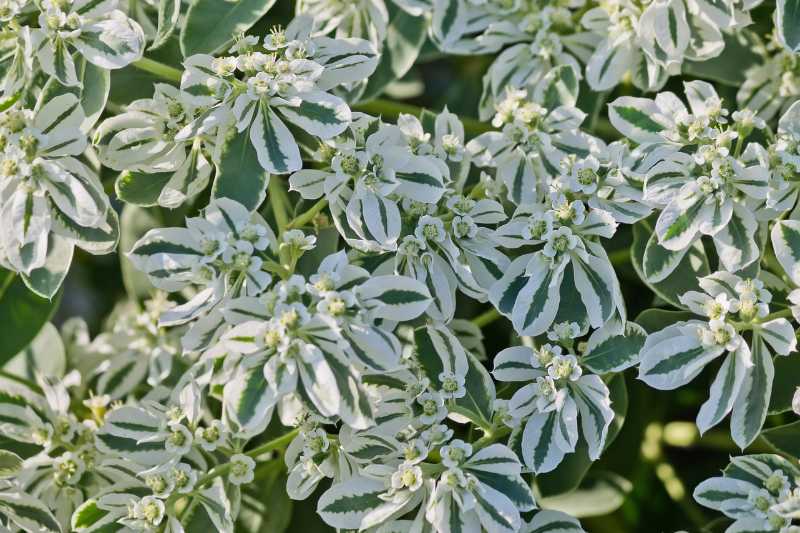
But is it serious, doctor?
As mentioned, even if variegation is caused by a virus, this virus is completely benign. However, having a low chlorophyll content within a leaf can lead to reduced vigour. In other words, a variegated variety will often grow a little slower than its green-leaved counterpart. But don’t let that stop you from planting them!
One small note, however: some variegated mutations are so low in chlorophyll that it would be impossible to propagate them by cuttings, as the cutting would not have enough energy to produce roots. These mutations are therefore propagated by grafting (which significantly increases the purchase price).
A bit of botany
We find Latin terminologies in some species names or the names of old variegated varieties such as: variegata, marginata, pulverulenta...
- Variegata for variegation: meaning variegated, as in Cornus controversa 'Variegata';
- Maculata: meaning maculate, thus a large coloured spot, as in Phlox maculata or Begonia maculata;
- Marginata: meaning marginate, thus bordered by a fine coloured band, as in Agave angustifolia 'Marginata';
- Striata : meaning striate or marbled, thus marked by coloured bands of varying widths, as in Bletilla striata;
- Punctata : meaning punctate, thus sprinkled with small coloured dots or spots, as in Lysimachia punctata;
- Pulverulenta : meaning it seems to have been sprinkled with a lighter substance, as in Catalpa speciosa 'Pulverulenta';
- Reticulata : which colouring follows the pattern of the veins, as in Iris reticulata;
- Crotonifolia : with Croton-like leaves (a famous houseplant - Codiaeum variegatum), thus exhibiting irregular discolouration, as in Aucuba japonica 'Crotonifolia'.

Did you know? Since 1956, breeders have not been able to use Latin to name new varieties and cultivars. The choice has mainly fallen on the English language, although exceptions exist. This is why we find words like 'Gold', 'Silver', 'Rainbow', 'Cream'... in the names of plant varieties featuring variegations.
We love variegated foliage… or not. But in any case, it never fails to leave gardeners indifferent. You can find perennials, trees or shrubs with variegated or marbled foliage in white, cream, yellow, or another colour… Sometimes simply marginate, sometimes almost entirely devoid of green… But the question we are asking today is: what causes […]
With climate change, we regularly hear about hot and dry summers that cause suffering to plants, including trees (and not just them!). However, we also forget that plants need a period of rest, winter. If this winter is not cold enough, it can lead to detrimental consequences for the health of trees and bushes. Let's take stock!
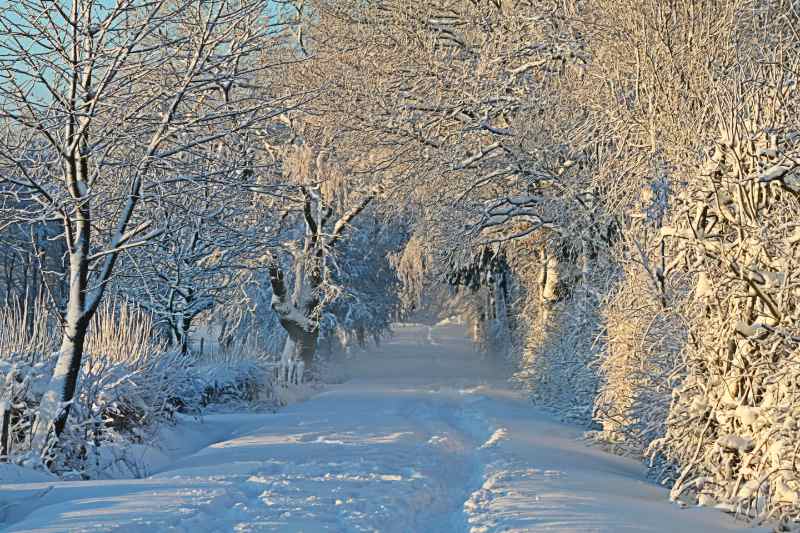
Meteorological observations
One year is not like another, especially in our time. However, it is now not uncommon to encounter temperatures well above seasonal averages, whether in the south or further north. What specialists sometimes refer to as "non-winters". And this is unlikely to improve, that much is certain. Indeed, throughout history, humans have experienced exceptional years, some with particularly mild winters. The problem is that the exceptional is becoming the norm and that practically every year winters are getting less and less cold. With climate change, the same ocean winds of the past are bringing more air, and this air is warmer because the ocean water is also warmer. Furthermore, the reduction in snow-covered areas will amplify the effect by no longer performing its cooling function. In other words, the effect will accelerate in the coming years.
Also read: researchers at CNRS have developed a method to determine whether an extreme weather event is due to climate change or not.
What consequences for trees?
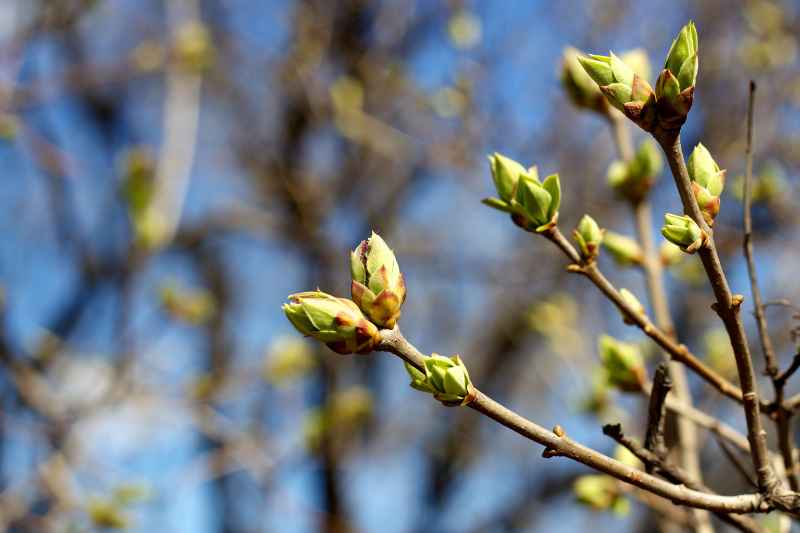
If temperatures are mild, sap will start to circulate again, some plants will come out of dormancy and begin to bud. This would not have such serious repercussions if a period of severe frost did not systematically follow in the weeks after. This frost will destroy the buds, flowers, and even part of the young foliage. No flowers, no fruits! And if the foliage is destroyed, the tree will exhaust itself trying to form another. Once is fine! Every year: hello damage! Note that some trees, bushes, or spring-flowering bulbs are adapted to winter cold, even late cold. For these, like the male dogwood or snowdrops: cold? Not a problem!
The tree's cycle can also be completely disrupted. Indeed, many plants need a period of cold to come out of dormancy, which is called vernalisation. This vernalisation will trigger a process of flower formation. It is the transition between the vegetative stage and the reproductive stage. However, if this cold period does not occur (or not at the right time), the tree will not produce flowers with all that this implies. For example: cherry trees need an average of just over 1000 hours at a temperature below 7°C to start flowering, while apple and pear trees need between 200 and 1400 hours.
Are we heading towards a fruit shortage within 100 years?
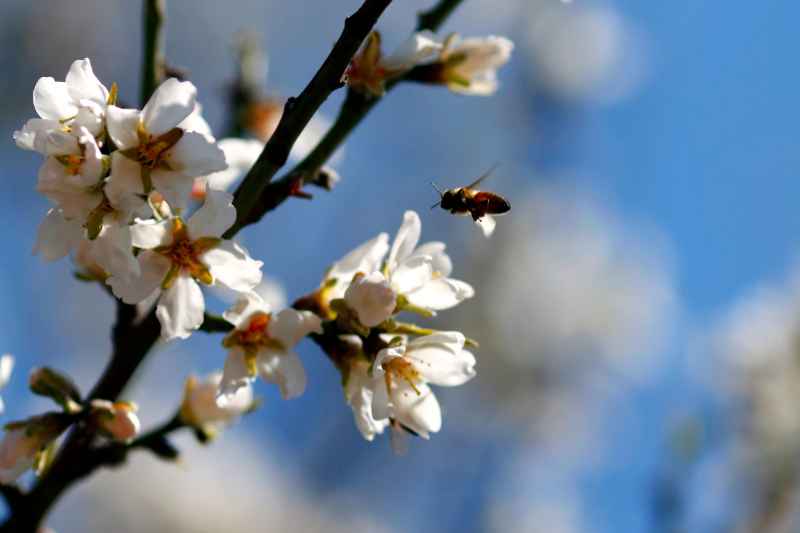
Hard to say... But this climate warming is acting so quickly that plants cannot evolve fast enough to cope with these changes. Fruit trees and bushes are indeed at risk of no longer being able to flower or producing stunted flowers that yield misshapen or small fruits. Additionally, pollinating insects are also affected. They often emerge too early at the end of winter, at a time when trees are not yet in bloom. When we know that a large majority of insects have co-evolved with specific plant species (in other words, a particular insect species is capable of pollinating a specific plant), these trees are doomed to disappear along with the insects that depend on them. In short: the future does not look bright...
With climate change, we regularly hear about hot and dry summers that cause suffering to plants, including trees (and not just them!). However, we also forget that plants need a period of rest, winter. If this winter is not cold enough, it can lead to detrimental consequences for the health of trees and bushes. Let’s […]
Trees or woody plants (which produce wood) are fascinating in many ways. So fascinating that they are even the subject of a science in its own right: dendrology. But what exactly is dendrology? What does a dendrologist study and why? Let's clarify in this short article.
Dendrology in a nutshell
Dendrology, from the Greek "dendron" meaning tree and "logos" meaning study, is the science that studies woody plants (trees, bushes, shrubs, and lianas). The term was coined in 1688 by an Italian naturalist Ulisse Aldrovandi. A person who studies this science is a dendrologist. They may work in forestry operations or wood processing, within government agencies or nature conservation organisations.
In France, there is the French Society of Dendrology and in Belgium, you can find the Belgian Society of Dendrology.

Dendrology is a multifaceted science
In dendrology, various species of trees are studied: botanical classification and species recognition by morphology, such as the shape of leaves for example (the classical classification known as Cronquist) or by common evolution among species (phylogenetic classification). The boundary between plant taxonomy and dendrology is relatively blurred, but dendrology also deals with many other areas beyond botanical classification.
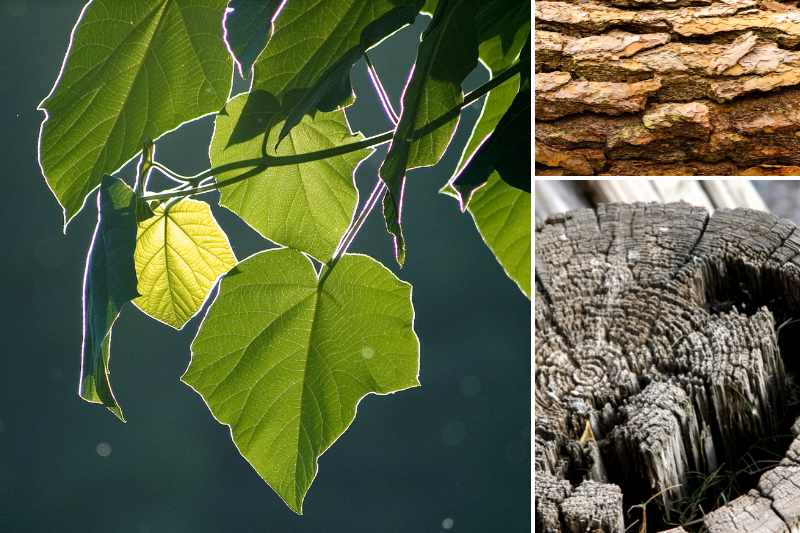
However, dendrology has several other branches (which is fitting when studying... trees): dendrochronology, which can determine the age of a tree or date a piece of wood using growth rings (or tree rings), and dendrometry, which allows for measuring the diameter, height, and volume of a tree, as well as its age or the thickness of its bark. There is also dendrogeomorphology, which studies geological and climatic processes through the observation of tree growth rings.
Nota bene: in archaeology, dendrochronology is often used to date an element, as well as xylology, a science that studies wood as a material and its physical and chemical properties. The two disciplines are complementary and help determine what type of wood was used, thus providing insights into the flora surrounding our ancestors. The science that studies fossilised wood is called paleoxylology.
What is the purpose of dendrology?
Dendrology, and especially dendrometry, serves various fields:
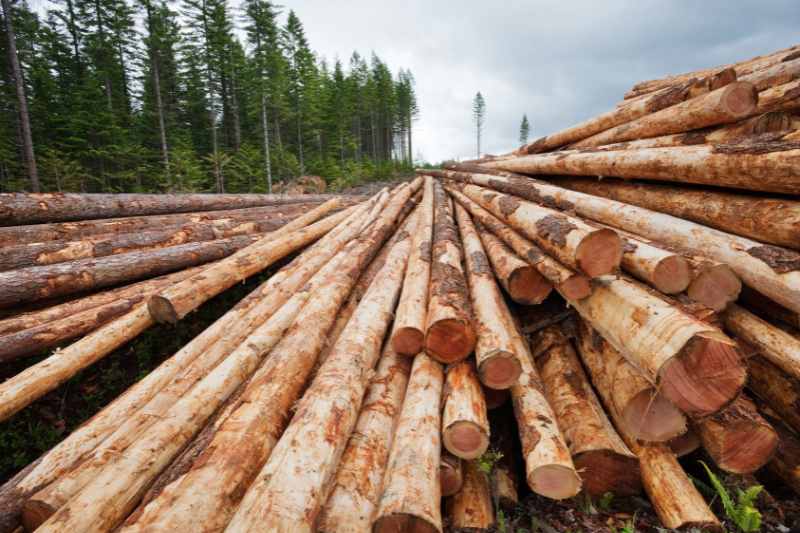
- Forestry (wood exploitation): calculating the size, age, shape... of cultivated trees (such as poplar plantations) and in forests, general tree management;
- Forest management and protection: combating diseases and wood-eating pests, protection against fires...;
- Wood industry: calculating volume (dendrometry) and studying the physical properties of wood;
- Ecology: studying the distribution and range of botanical species as well as the evolution of wooded environments, and also studying forest ecosystems and their evolution in the face of climate change;
- Archaeology: dating and determining the wood present at an excavation site, allowing for dating and gaining insights into the flora and lifestyle of people who once lived in that area;
- Customs: through the identification of a wood species in the context of combating deforestation and the importation of protected or prohibited species;
- Judicial: a (almost) personal anecdote, one of my botany professors was called in a homicide investigation (in the 1980s) to determine the exact species of a log that had been used to commit a murder. When we say that dendrology leads to everything... Nowadays, forensic police have botanical experts in their ranks.
Trees or woody plants (which produce wood) are fascinating in many ways. So fascinating that they are even the subject of a science in its own right: dendrology. But what exactly is dendrology? What does a dendrologist study and why? Let’s clarify in this short article. Dendrology in a nutshell Dendrology, from the Greek “dendron” […]
What’s new in the garden? Not much, really. My garden sits in the Lille region, and you have to admit that in the middle of February it’s a bit dull and dreary. A few Galanthus are showing their white and green bell-shaped flowers, the hellebores begin their lovely season, the wood dogwoods (the show goes on...) display their shimmering colours and... oh yes! What was I thinking? It’s the start of the ament season!

Nothing to do with our whiskered companions, but rather with the blooming of willows. But not just any willows! The first to bloom, and thus to produce these famous aments, are Asian willows. Our native willows (Salix alba, Salix viminalis, Salix fragilis, Salix caprea, Salix aurita…), for their part, are patiently waiting for their moment to flower. Which won’t be long, by the way.
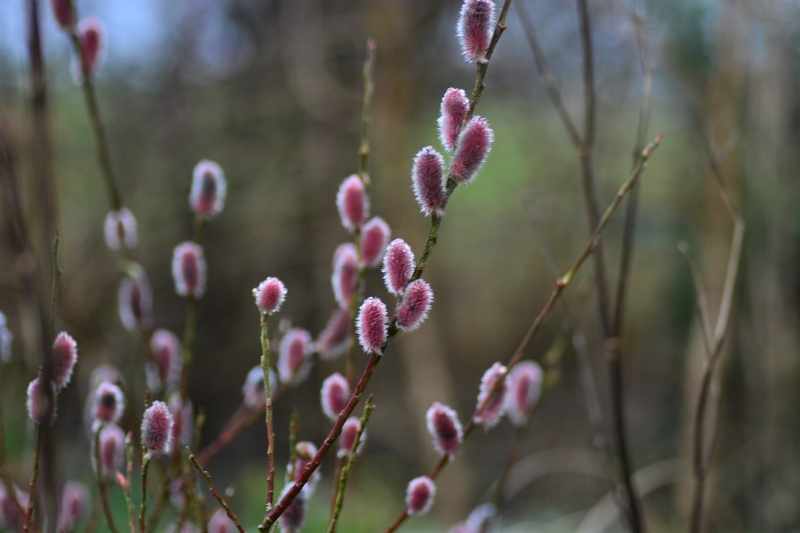
The willow 'Mount Aso'
The Salix chaenomeloides 'Mount Aso' is extraordinary in more ways than one! In season, it forms a handsome shrub about 2.5 m in all directions, in our climate. The green foliage is deciduous and hints at bright red new shoots in winter. But it’s at flowering time that it proves truly spectacular. From February onwards and for several weeks, large fluffy pink-red aments will emerge. It’s stunning both for the colour and for the shrub’s overall silhouette. And all this in a season when little else happens in the garden.
Willow 'Wolf's Claw'
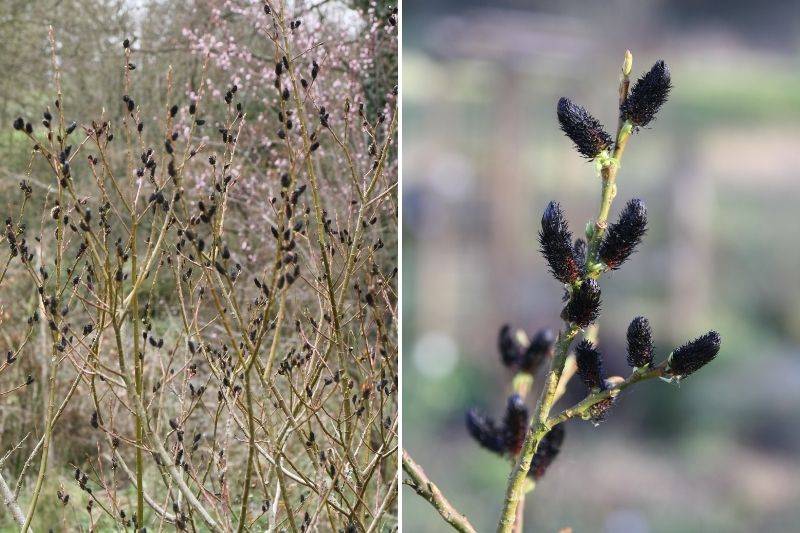
The Salix gracilistyla var. melanostachys (Bless you!) is a willow that looks unimpressive if you don’t pay attention. But if you look closer... I was given a cutting last year; the shrub is therefore still very young. But despite its young age, this willow 'Wolf's Claw' already rewards me with two aments... completely black. All this is borne on very red shoots. I leave you to imagine the beauty of the shrub when it reaches its mature size. I can’t wait to see that in two or three years.
Salix koriyanagi
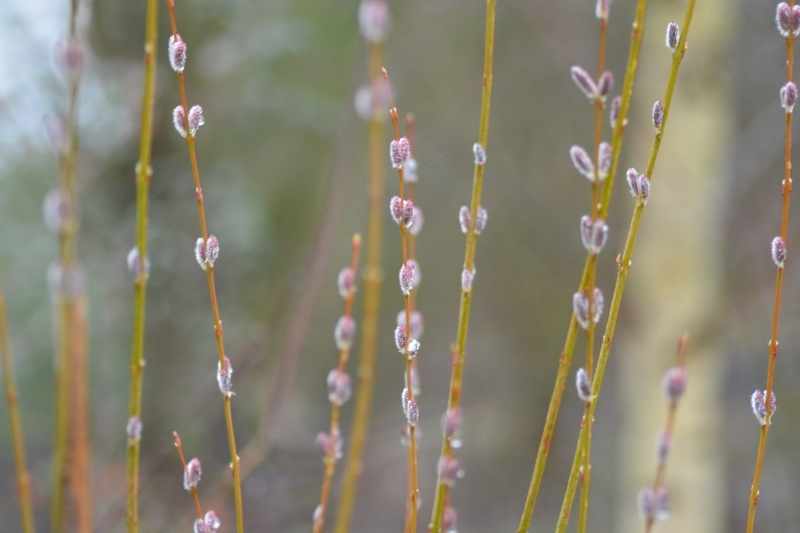
It’s a Korean willow (also found in China and Japan), little known and hard to obtain outside of a few specialist plant-collectors. I had the good idea to plant a very young specimen about two years ago. And I’m delighted! The young shoots look slender and upright like 'i's. They are used in basketry in Asia. And from February onwards, the shrub is covered with a multitude of mini female aments. A striking visual effect! The deciduous foliage resembles a bit the basket willow (Salix viminalis), but the leaves are smaller and orange at bud burst.
Growing conditions for these 3 willows
All three are very hardy: -15°C without any problem in winter. They require sun and soil that stays cool and moist all season. However, they prove to be quite drought-tolerant once well established. Ordinary soil suits them, regardless of pH. The soil can even be heavy and clayey: in fact, they absolutely love it! An occasional pruning after winter, if you feel the need. They are trouble-free shrubs with fast growth. In short, shrubs that deserve to be planted more widely!
Also discover beautiful aments in Virginie's garden.
February is often a rather dreary month in the garden. Nevertheless, some flowering has begun.
Failing to plant a tree is easier than it seems. Despite their general robustness compared to annuals or perennials, with a bit of know-how, you can manage it quite well. Follow our step-by-step advice and soon you too will be able to successfully mess up the planting of your trees and bushes!
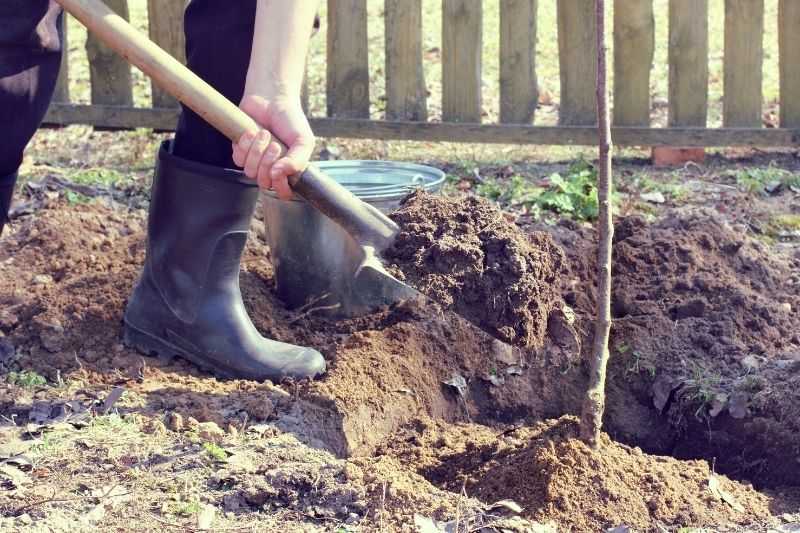
Lesson 1: Don't neglect the preparation of the planting hole
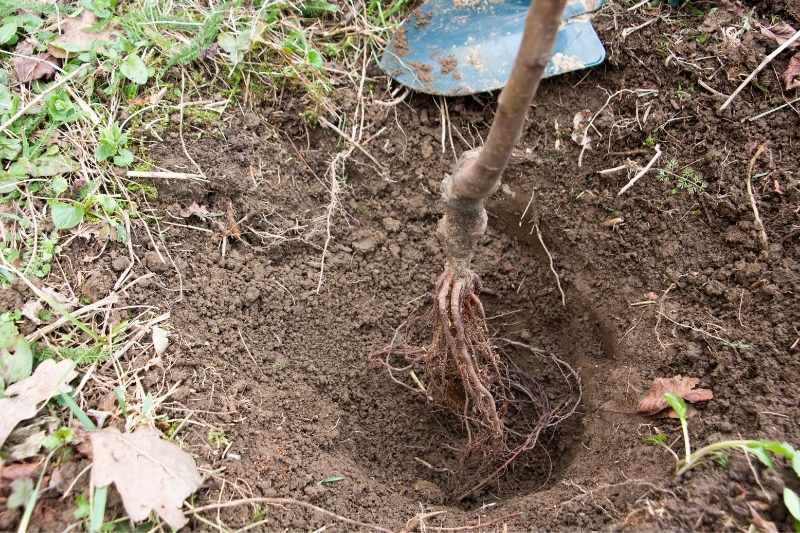
The purists of the spade and the hoe who succeed in their plantings recommend digging a hole 2 to 3 times larger than the root ball and adding compost, drainage materials and other permaculture tricks that promote root development. To mess up properly, here are the steps to follow:
- Dig a small hole in a hurry, using a pick, hoe, trowel, or even a teaspoon. As narrow and shallow as possible.
- Place the roots, which you will have previously left to dry in the open air and sun for a whole day. Form a compact mass and do not trim the damaged ends, as this is the best way for fungi to develop and parasitise your tree.
- VERY IMPORTANT: Bury the collar well! You know, that part that separates the roots from the trunk. This is the key gesture to successfully mess up your planting. Bury it more than 3-4 cm underground; the roots will no longer be able to breathe, and the tree will die more or less quickly in spring or during the summer. This method is especially reserved for large trees: oaks, beeches, birches, etc.
- If your soil is wet or poor, do not add drainage materials or compost, NEVER!
- Do not compact! And above all, do not water to keep as many air pockets in the soil as possible, thus suffocating the roots.
This is a method that has proven effective and that we recommend. A small planting hole is also the best technique for the roots to form a girdle and suffocate themselves. Guaranteed failure!
Lesson 2: plant anytime!
"At Saint Catherine, all wood takes root," is often heard from the mouths of French gardeners. And only they would put their hands in the soil at the end of November, when it’s grey and cold, while common sense tells us to stay warm under the duvet (or in front of the fire with a good book) all winter...
If you want to mess up with style, first plant when YOU feel like it. Starting with bare-root trees, which you will install in spring, just when they are producing their new roots and their branches are filled with sap. This will block their growth and surely make them wither.
Temperatures above 25°C and the sun shining? Put on your best shorts, flip-flops, and rush to the garden... And don’t forget to go on holiday right after, for at least three weeks. This is the express method to fail! You will indeed have the chance to have a tree that cannot acclimatise to your soil, nor take the time to root and seek water deeply. If by miracle the tree survives, then go directly to lesson 5.

Lesson 3: skip the staking!
Fanatical gardeners, obsessed with everything growing straight, may tell you that it is essential to stake any tree planted in the wind. These same eccentrics will also tell you that this stake must be sized according to the height of the tree. They will use strange terms, bordering on dialect, such as "oblique stakes", "bipod stakes", or even "tripod stakes". They will talk about a wild technique called "guying" that allows for strong anchoring of large trees.
To properly mess up the planting of trees exposed to wind or planted in loose soil, of course, banish any support. Dig, plant, and let nature take its course. With the first gusts, the tree will lean and eventually lie down. And for a lovely twisted growth, besides the absence of a stake, do not compact the soil during planting. What could be more charming than a tree that crawls on the ground after the first gust of wind?
Lesson 4: select any varieties!
"Consider your soil, climate, exposure, and know-how for successful planting," can be read on Plantfit, the new app that seasoned gardeners use without moderation.
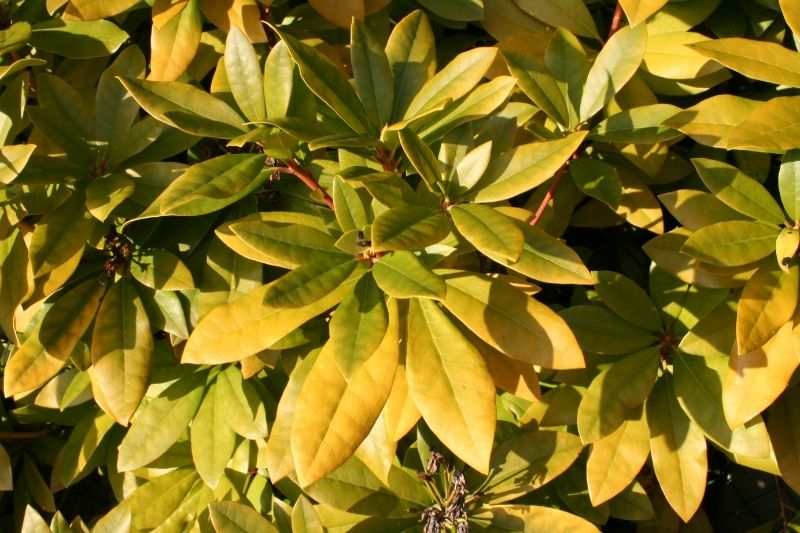
To mess up your plantings, plant what YOU want! Do you live in Strasbourg and think that this lovely azalea would look wonderful in your beds? Plant it! The foliage of this acid-soil shrub will yellow upon contact with alkaline soil and will eventually languish and die. Well done! Tired of growing Mediterranean climate plants in your beautiful city of Avignon? Succumb to the charm of tree ferns and plant them in spring, when the mistral is blowing. Their bright green foliage will quickly turn a lovely brown colour. Decorative effect guaranteed.
So when choosing your trees and shrubs, completely forget to "plant appropriately" according to your garden and know-how: this is the best way not to see them grow, or to have to rely heavily on fertilisers and other nutrients, which are oh so responsible!
Lesson 5: water from time to time, if you think of it!
If your tree is still alive, it’s because you’ve pampered it too much. The chlorophyll addicts who succeed in their plantings often quote excerpts from their esoteric literature. It can be read that the first year is crucial for the resumption of vegetation in trees: it is necessary to water regularly to develop their root system, create a planting basin around the root ball to create an essential water reserve, preventing the tree from suffering in summer, or even spread ramial chipped wood (known as RCW) at the base of your trees to keep the root ball cool during the summer period.
Forget all this! To mess up the planting, forget your tree! Let it live its life and fend for itself!
Good luck!
-> Find all our varieties of trees here.
Failing to plant a tree is easier than it seems. Despite their general robustness compared to annuals or perennials, with a bit of know-how, you can manage it quite well. Follow our step-by-step advice and soon you too will be able to successfully mess up the planting of your trees and bushes! Lesson 1: Don’t […]