Which southern plants can now be grown in the north?
Olive trees, oleanders, palms…
Contents
Strawberry tree, phillyrea, olive tree, oleander and many other Mediterranean plants can now find a place in our gardens in northern France. These plants appeal to gardeners facing hotter, drier summers caused by climate change. Their success in the garden depends just as much on their resistance to frost as on their tolerance of winter wet. Discover our selection, including their cold hardiness, growing requirements and the precautions to take to help them survive the winter.

The essentials
|
Why are more Mediterranean plants being planted in northern France?
The climate, whether in Europe, France or northern France, is changing! According to Météo-France, Hauts-de-France has warmed by +1.4 °C over the period 2016-2025, compared with 1976-2005. Soil droughts are also expected to become more frequent.
Gardeners are therefore looking for plants that can withstand dry summers once they are well established. Generally milder winters are opening up new possibilities, but without eliminating the risk of severe frosts. These species have not become hardier: the climatic conditions are changing.
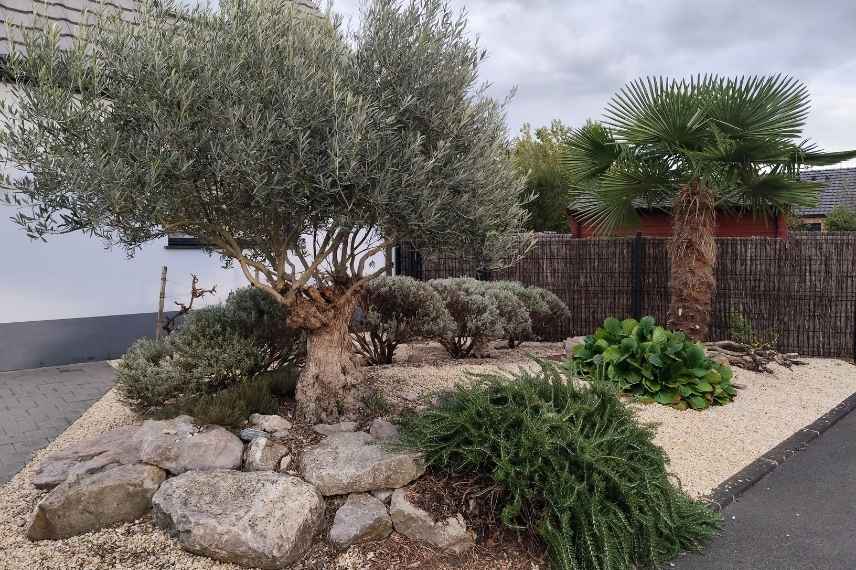
The garden of one of my neighbours in a town in northern France (59): lavender, olive tree, Chusan palm, creeping rosemary and elephant’s ears planted on a mound to prevent waterlogging.
Which Mediterranean plants can withstand the cold in northern France?
Strawberry tree, olive tree, flowering pomegranate, Chusan palm… Many Mediterranean plants, or plants with an exotic appearance, which we are used to seeing in gardens in the south of France, can now find a place in gardens in the north of France. Provided you choose them carefully! Here is our selection:
| Plant (mature height) | Indicative hardiness | Aspect | Soil type | Winter moisture | Winter protection |
|---|---|---|---|---|---|
| Holm oak (Quercus ilex) (12 to 20m and more) | −10 to −15 °C | Full sun to partial shade | Ordinary, even clay, but well drained | Tolerates moist soil, provided it is well drained | Mulch during the first winters in cold regions |
| Narrow-leaved mock privet (2 to 4m) | −10 to −15 °C | Full sun to partial shade | Well drained | Does not tolerate stagnant moisture | None in a favourable position |
| Strawberry tree (4 to 8m) | −10 to −15 °C | Full sun, sheltered | Ordinary, well drained | Tolerates moist soil, provided it is well drained | Fleece during severe frosts, especially after planting |
| Flowering pomegranate (2 to 4m) | −10 to −12 °C, depending on the variety | Full sun, sheltered | Ordinary, well drained | Does not tolerate stagnant moisture | Mulch around the base and use fleece in severe frosts |
| Silk tree (Albizia julibrissin) (4 to 8m) | −5 to −15 °C, depending on the variety | Full sun, sheltered | Light, well drained | Strongly dislikes stagnant moisture | Fleece in severe frosts, especially during the first few years |
| Chaste tree (Vitex agnus-castus) (2 to 4m) | −5 to −15 °C, depending on the variety | Full sun, sheltered | Light, well drained | Does not tolerate stagnant moisture | Mulch around the base and use fleece during severe frosts |
| Crape myrtle (2 to 4m for compact varieties) | −10 to −15 °C, depending on the variety | Full sun, sheltered | Fertile, well drained | Tolerates moist soil, provided it is well drained | Mulch around the base during the first winters |
| Hardy palms (particularly Trachycarpus fortunei) (5 to 10m) | −10 to −15 °C | Full sun to partial shade | Ordinary, well drained | Tolerates moist soil, provided it is well drained | Protect the crown during intense and prolonged frosts |
| Jerusalem sage (0.5 to 1.5m) | −10 to −15 °C | Full sun | Light, well drained | Does not tolerate stagnant moisture | None in well-drained soil |
| English lavender (0.4 to 0.8m) | −10 to −15 °C | Full sun | Light, well drained | Does not tolerate stagnant moisture | None in well-drained soil |
| Rosemary (0.5 to 1.5m) | −5 to −10 °C | Full sun | Light, well drained | Does not tolerate stagnant moisture | Fleece only in prolonged severe frosts |
| Rock rose (0.5 to 1m) | −5 to −10 °C | Full sun, sheltered | Poor, very well drained | Does not tolerate stagnant moisture | Fleece during severe frosts |
| Olive tree (4 to 8m) | −5 to −10 °C | Full sun, sheltered | Very well drained | Does not tolerate stagnant moisture | Fleece during severe frosts |
| Oleander (2 to 4m) | Around −5 °C to −10 °C, depending on the variety | Full sun, sheltered | Ordinary, well drained | Tolerates moist soil, provided it is well drained | Fleece during severe frosts; overwintering potted plants is recommended |
| Japanese banana (Musa basjoo) (2 to 4m) | Foliage destroyed by frost; crown hardy down to −10 to −15 °C under protection | Full sun, sheltered | Rich, moist and well drained | Does not tolerate stagnant water in winter and prefers moist soil in summer | Essential crown protection with a thick mulch |
NB: The temperatures given are approximate values for established plants grown in the open ground. They vary according to the variety, the duration of the frost, the aspect and soil moisture. The data has been cross-checked, in particular with the Royal Horticultural Society, the Société nationale d’horticulture de France and the horticultural information sheets from Promesse de Fleurs.
Did you know? A plant can withstand severe frosts perfectly well in well-drained soil, but prove much less hardy if its roots remain in waterlogged ground in winter. Cold combined with stagnant moisture can therefore make all the difference!
Our advice: also pay attention to your choice of varieties: some are more resistant to cold than others, particularly among oleanders, crape myrtles and silk trees.
The hardiest trees and shrubs
To bring a Mediterranean touch to the garden, narrow-leaved mock privet and strawberry tree are good candidates. Both have evergreen foliage and tolerate summer drought well once established. However, they prefer well-drained soil and full sun.
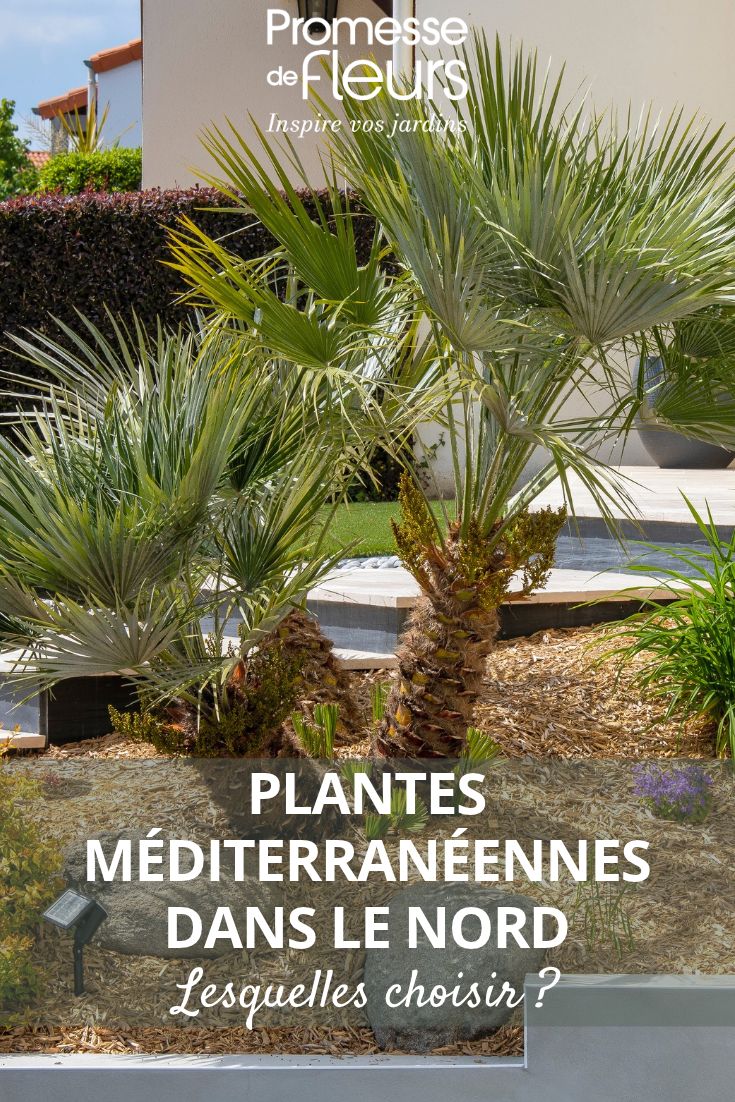
As for palms, the Chusan palm (Trachycarpus fortunei) is one of the species most resistant to cold. Be careful, not all palms are hardy! Discover our selection of cold-resistant palms.
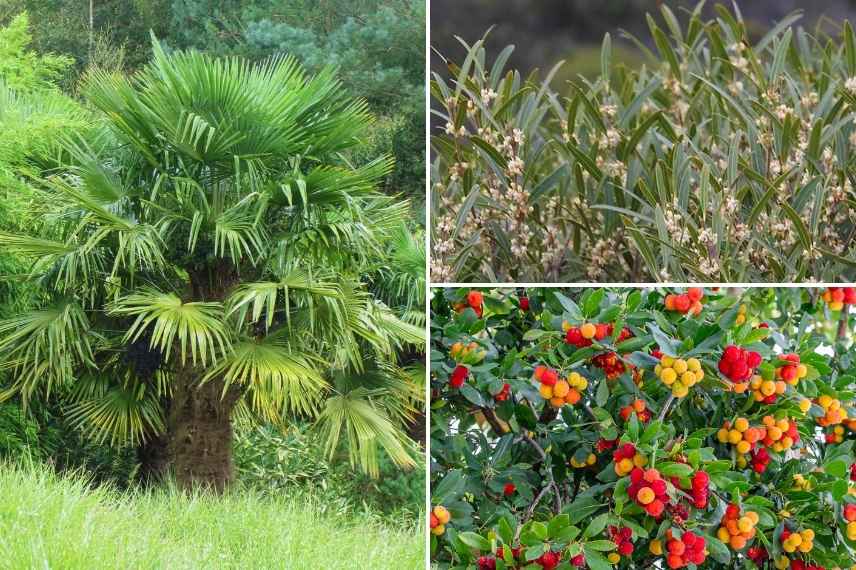
Chusan palm, narrow-leaved mock privet and strawberry tree
The plants best suited to moist soils and wet winters
Holm oak and crape myrtle tolerate soil that remains somewhat moist in winter, provided that water can drain away. The former is evergreen and drought-resistant, and is mainly suitable for large gardens. The latter appreciates hot summers, which encourage flowering.
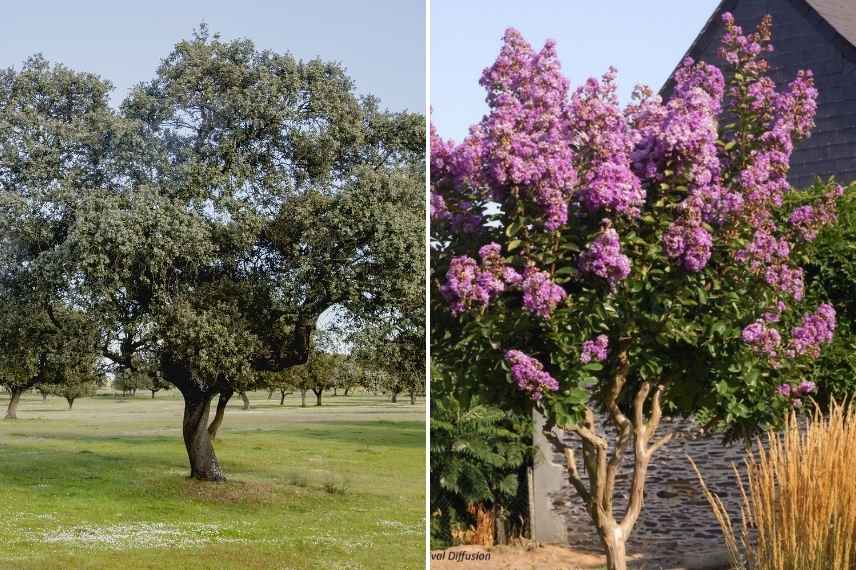
A holm oak and a crape myrtle
Mediterranean plants for small sunny gardens
English lavender, rosemary, Jerusalem sage and rock rose are perfect for creating Mediterranean-inspired beds, even in a small space. They enjoy full sun and tolerate dry periods well once established.
Their weak point? Stagnant moisture in winter. Plant them in a rock garden, on a slope or in a raised bed if your soil is heavy.
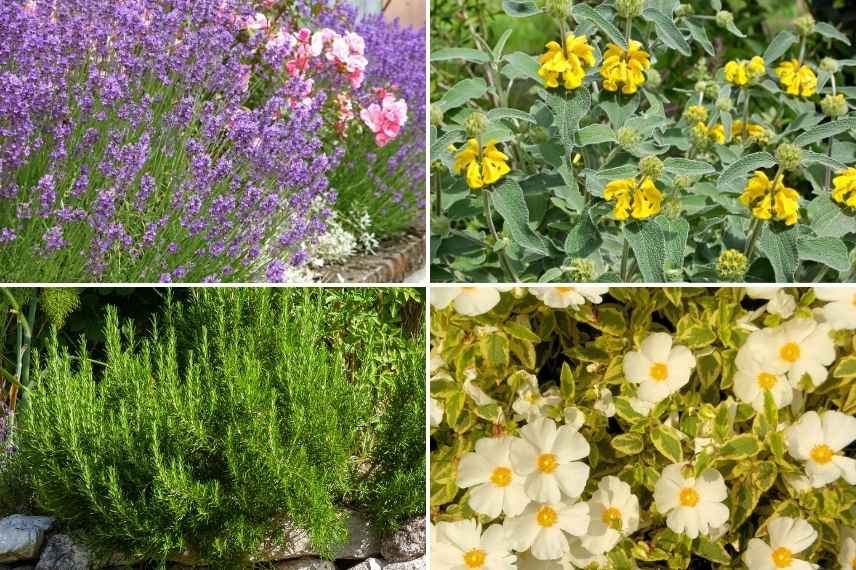
English lavender, rosemary, Jerusalem sage and rock rose
Plants to try in sheltered positions
Some plants once considered too tender are now finding their place in the open ground, in gardens benefiting from a favourable microclimate.
This is particularly true of oleander, whose sufficiently hardy varieties can form magnificent, highly floriferous shrubs against a sunny wall, sheltered from cold winds.
Flowering pomegranate provides spectacular flowering, while the silk tree (Albizia julibrissin) benefits from hot summers to flower. However, the latter dislikes waterlogged soil in winter. The chaste tree (Vitex agnus-castus), with its spikes of bluish flowers, also appreciates warm, sheltered positions.
Finally, the Japanese banana (Musa basjoo) brings a truly exotic touch. However, it needs watering in summer when there is no rain, along with good crown protection in winter.
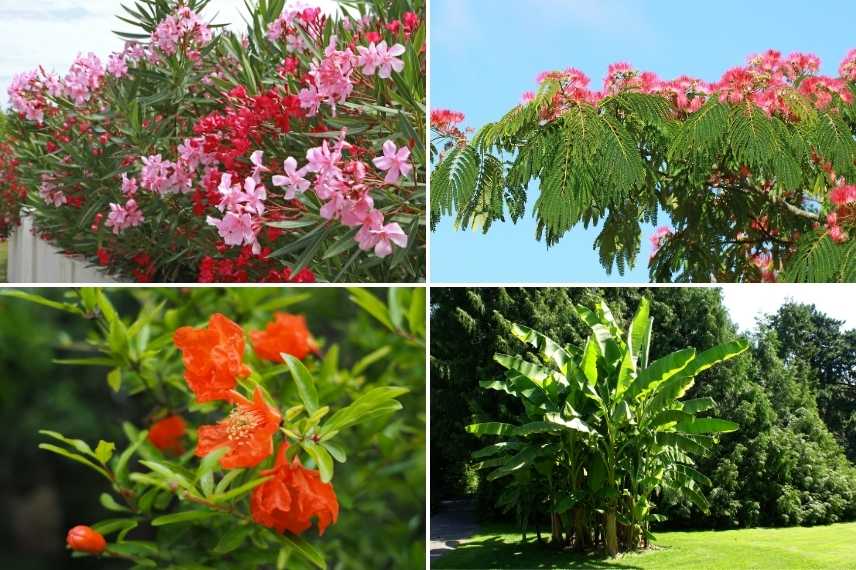
Oleander, flowering pomegranate, Albizia and banana
Can you now plant an olive tree in northern France?
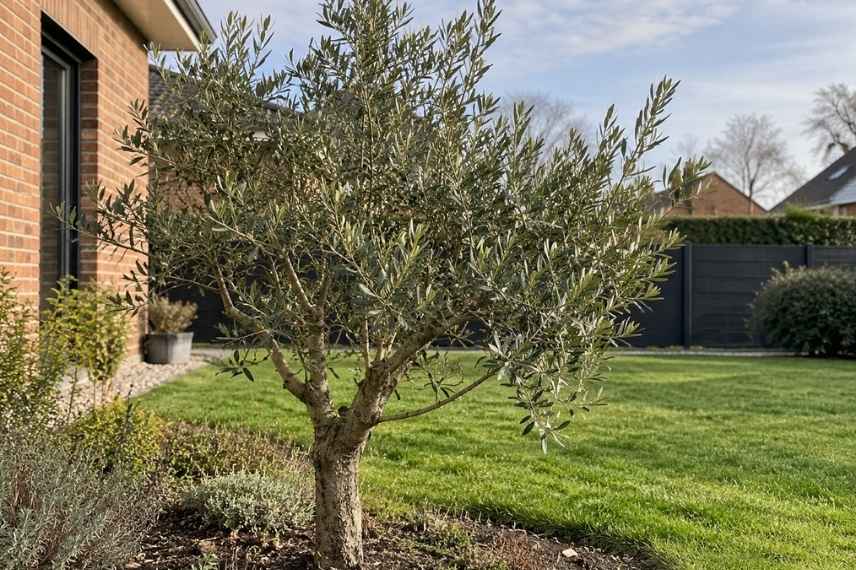
Yes, an olive tree can grow in the ground in some gardens in northern France, particularly in the most sheltered positions. But success is not guaranteed everywhere!
Choose a sunny position, ideally south-facing and sheltered from cold winds. Good soil drainage is important, as olive trees do not tolerate a combination of frost and waterlogged soil.
In particularly cold areas or in wet clay soil, growing it in a pot is still preferable.
Should Mediterranean plants be protected in winter?
It all depends on their hardiness, age and the conditions in your garden. Well-established lavender or phillyrea growing in well-drained soil generally needs no protection. However, a young olive tree or oleander may need fleece during severe frosts in its first few winters.
For the most tender species, choose spring planting, so that they have several months to establish roots before their first winter.
In heavy soil, plant on a mound to improve water drainage. Also remember to protect pots from frost and to install a thick mulch around the banana plant’s crown.
Read our articles:
- Banana plant: how to protect it from the cold in winter
- Overwintering potted plants to protect them from the cold
- Protecting plants from the cold and frost in winter
- How to install garden fleece
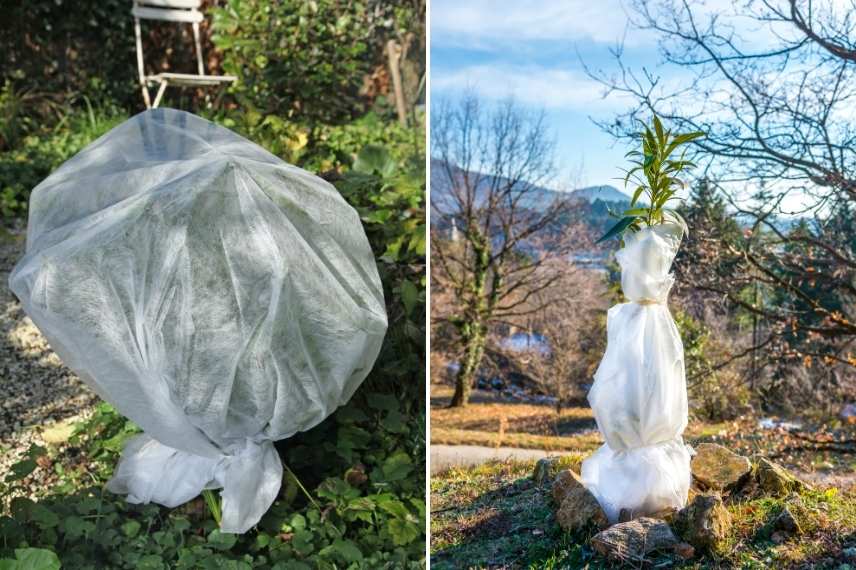
Fleece protects young Mediterranean plants from severe frosts.
My experience in northern France
Living in northern France, I have noticed this change in gardens too! For the past few years, I have been seeing more and more oleanders in full flower and large banana plants bringing an exotic touch to small gardens. I have even tried it at home, planting a large Albizia ‘Evey’s Pride’ in the ground, after taking care to improve the drainage of my soil. It just goes to show that, with a suitable position and a few precautions, it is becoming possible to try planting things we might not necessarily have considered a few years ago!
Frequently Asked Questions about Growing Mediterranean Plants in Northern France
Can Mediterranean plants be grown in clay soil?
Yes, provided it drains well enough. For species that are sensitive to waterlogged conditions, plant them on a mound or in a raised bed, mixing your garden soil with potting compost for Mediterranean plants.
When should you plant a Mediterranean plant in northern France?
Spring is the best time, after the last severe frosts. This gives plants several months to develop their roots before winter.
Does climate change mean that all plants from the south can be left outdoors?
No, severe frosts are still possible in northern France. Some species, such as oleander and olive trees, still need a sheltered position and sometimes winter protection, while others, such as agaves, will need to be overwintered under cover.
- Subscribe!
- Contents
This form is protected by reCAPTCHA - the Google Privacy Policy and Terms of Service apply.

































Comments