How to help soil retain water?
Drought-proofing techniques to increase the soil’s water-holding capacity
Contents
Improving a soil’s ability to retain water primarily means increasing the amount of water it can store and release to plants between two periods of rain or two waterings. This reserve depends on the soil’s texture and depth, as well as its structure, organic matter content and the rooting of plants. Not all soils therefore have the same capacity to build up this reserve, and, above all, not all the water contained in the soil is necessarily accessible to roots.
The aim is therefore not to retain as much water as possible in the soil, but to encourage a water reserve that plants can genuinely use, while maintaining soil that is sufficiently aerated and well drained.
The good news is that, although we cannot change the natural texture or depth of our soil, certain practices can improve how it functions and help make better use of the available water. Adding organic matter, improving soil structure, covering the soil and encouraging deep rooting are all measures within our reach.
What is the soil water reserve and how can it be increased? And how can we help plants make better use of this resource? Let’s take a closer look so we can cope better with dry periods!

What is the soil water reserve?
After rain or heavy watering, some of the water runs off across the surface, some infiltrates deep into the soil, while a certain amount remains held in the small spaces between soil particles, where it can be used by roots. This water stored in the soil forms a reserve for plants.
However, not all this water is necessarily available to plants. Some of it is held so tightly by the soil particles that roots can no longer absorb it. Conversely, when the soil is saturated, water occupies almost all the spaces normally filled with air, putting roots at risk of oxygen deprivation.
The term available water reserve is therefore used to describe, in simplified terms, the amount of water that the soil can retain and that plants can actually take up. When this reserve falls significantly, plants begin to suffer from water stress: leaves become limp or start wilting, growth slows down and flowering is less generous…
The aim is therefore not to have permanently wet soil, but soil capable of building up a water reserve that roots can access and that is released gradually.
This distinction is important: soil may appear damp and yet fail to provide a plant with enough water. Conversely, well-structured soil may look relatively dry at the surface while the deeper layers still retain moisture that roots can use.
What does a soil’s capacity to store water depend on?
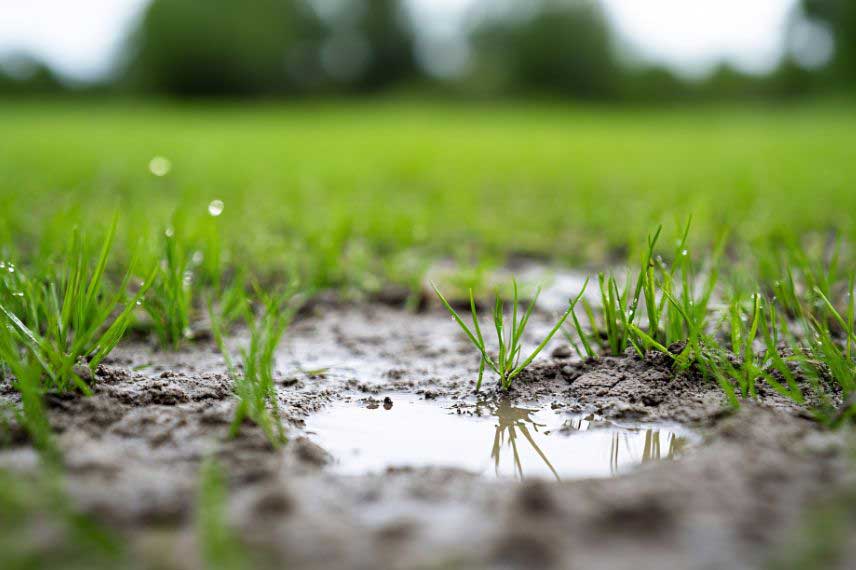
Not all soils have the same “reservoir”. Their ability to store water depends mainly on their texture, depth, structure and organic matter content.
Soil texture
The proportion of sand, silt and clay plays a major role:
- Sandy soils drain easily, but generally retain little water for plants to use.
- Clay soils, made up of much finer particles, can retain more water. However, some of this water is held tightly by the clay particles and is not always easily accessible to roots. When compacted, these soils can also be poorly aerated and difficult for roots to penetrate.
- Silty or clay-silt soils, when they have a good structure, often offer an interesting compromise between water storage, drainage and aeration.
Soil texture is a natural characteristic that is difficult to alter profoundly on a garden scale. It is therefore more realistic to improve how it functions than to try to change its nature.
To find out what type of soil you have, read our guide: “Determining your soil texture: clay, sandy or silty”.
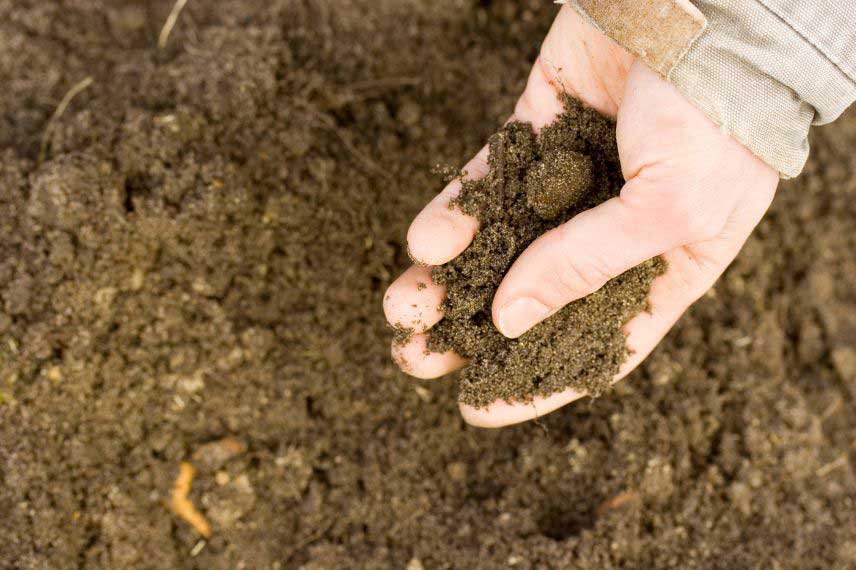
Soil texture plays an important role in the soil’s water retention. Sandy soils retain far less water than clay soils.
The depth of available soil
It is easy to overlook, but soil depth directly determines the volume of soil in which water can be stored and roots can draw it up.
Deep soil potentially provides a much larger reservoir than a layer of only a few dozen centimetres resting on rock, for example.
This is why gardens established on shallow or very stony soils can quickly suffer from drought, even when the soil has a relatively favourable texture.
Soil structure and aeration
The way soil is organised also affects its ability to retain water. Loose, crumbly soil contains small spaces between the clumps of soil. Some allow water to circulate, while others retain it and keep it available to roots.
Conversely, very compacted soil leaves less room for water and air. Water penetrates less easily and may remain on the surface or run off instead of being stored in the soil.
This compaction can be caused by repeated traffic, working soil when it is too wet, or the weight of heavy machinery.
Organic matter
Organic matter also plays an important role. Compost, plant residues, fallen leaves and decomposing roots feed soil organisms and help to form a stable structure.
Soil regularly enriched with organic matter generally absorbs water more effectively and retains it more efficiently, particularly when it is naturally light and free-draining.
However, this is not an immediate transformation: sustainably increasing a soil’s capacity to store water is a gradual process that develops over the seasons.
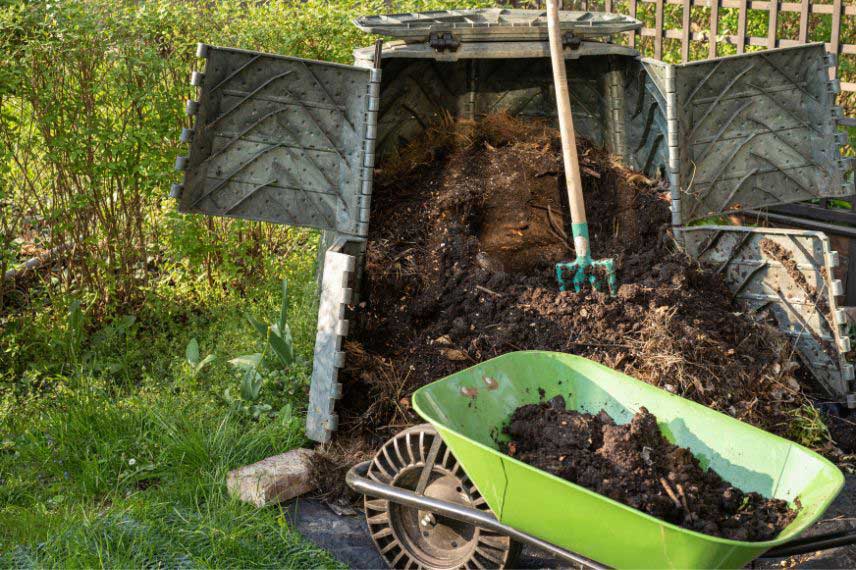
Adding organic matter improves the soil’s water retention capacity.
Is all the water held in the soil available to plants?
No. Only some of the water in the soil can be absorbed by roots.
After heavy rain, the soil contains a great deal of water. The excess gradually drains downwards, while some remains held in the soil and can be used by plants.
As the soil dries out, however, this water becomes more difficult to absorb. There comes a point when the soil still contains water, but the roots can no longer take it up. The plant then begins to wilt.
The amount of water that plants can actually draw from the soil is known as the available water reserve.
This is why a clay soil, even though it holds a great deal of water, does not necessarily make more of it available to plants: some remains tightly held in the soil. Conversely, sandy soil holds less water, but the water it contains is more easily accessible to roots.
Finally, root depth also plays an important role. A plant with deep roots can reach water in a greater volume of soil than a plant with shallow roots.
Read also
How to lay mulch properly?How can you increase the soil’s water-holding capacity in practical terms?
You cannot make a soil lying on rock deeper, nor turn sandy soil into clay soil. However, you can help the soil absorb rainwater more effectively and keep it available to plants for longer.
Gradually increase the organic matter
Adding mature compost, well-rotted manure or other amendments is one of the most effective ways of improving the soil’s ability to retain water, particularly in light, poor soils.
It is better to favour regular applications rather than adding a large quantity all at once. Spread on the surface, compost is gradually incorporated into the soil by earthworms and other soil organisms.
Fallen leaves, plant debris and organic mulches also enrich the soil as they decompose.
In sandy soil, organic matter helps retain more water and nutrients within reach of the roots. In heavy soil, it mainly improves the soil structure and helps water penetrate more effectively.
→ Find out more: How to enrich your soil naturally with organic amendments?
Avoid compacting the soil
To make good use of rainwater, the soil must remain loose enough for water to penetrate it. In compacted soil, the small spaces that allow water and air to circulate become narrower: water penetrates less easily and may run off across the surface.
So avoid walking on cultivated areas, especially when the soil is wet. In the vegetable garden, permanent paths allow you to move around without compacting the soil around the plants.
If the soil is already compacted, a broadfork or digging fork can loosen it without turning it over deeply. Work when the soil is neither waterlogged nor too dry.
Plant roots also help keep the soil loose and aerated.
Keep the soil covered
Mulch does not strictly speaking increase the depth of the reservoir formed by the soil, but it helps keep the water it contains for longer.
By protecting the soil from sunlight and wind, a layer of fallen leaves, straw, wood chippings (RCW) or other organic matter slows down drying. It also limits the formation of a surface crust caused by heavy rain.
Mulching is particularly useful during the summer, but ideally it should be applied to soil that is already moist, after rainfall or thorough watering.
As it decomposes, an organic mulch also helps enrich the soil. Its effect is therefore both immediate, by limiting water loss, and gradual, by improving the soil.
→ Find out more: “Which mulch for the vegetable garden?” and “The different organic mulches”
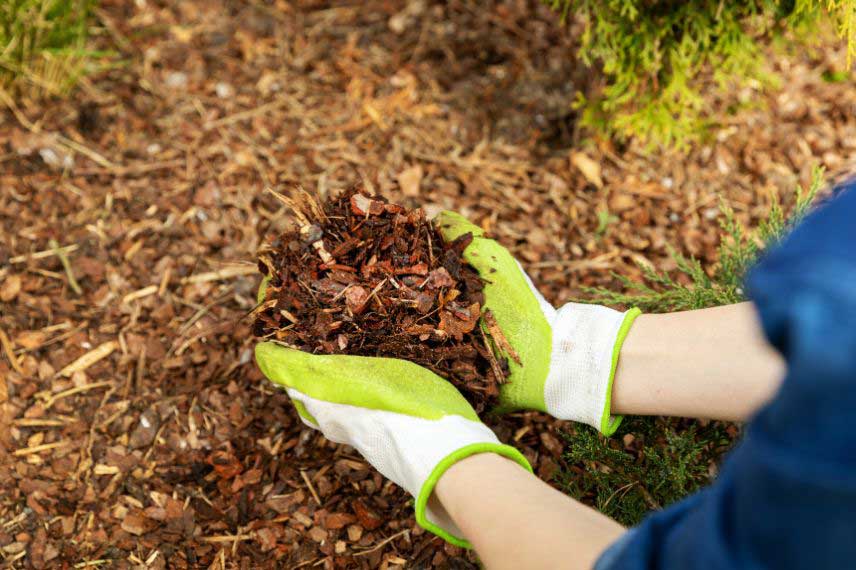
Mulching prevents the soil from drying out too quickly.
Encourage deep rooting
Increasing the amount of stored water is only part of the solution. You must also allow plants to explore as large a volume of soil as possible.
A plant whose roots remain concentrated in the first few centimetres of soil depends heavily on rainfall and regular watering, because this surface layer is the first to dry out.
Conversely, a well-developed root system can reach moisture retained deeper down.
When planting, take care to loosen the soil around the rootball without creating a simple pocket of potting compost isolated from the surrounding soil. The roots must be able to gradually colonise the garden soil.
Watering then plays an important role. Once the plant is established, when its species and the nature of the ground allow it, thorough, well-spaced watering encourages the roots to explore the soil more effectively than small, shallow daily applications.
Well-established trees, shrubs and perennials generally become more self-sufficient than recent plantings. However, the first two or three years remain crucial in allowing their root system to become properly established.
Sandy, stony or shallow soils: what are the limitations?
Certain characteristics of the site impose limitations that no soil amendment can completely overcome.
Very free-draining sandy soil will always retain less water than soil with a higher proportion of fine particles. Regular applications of organic matter and permanent cover can nevertheless significantly improve how it functions.
In very stony or shallow soil, the problem is different: the volume of soil capable of forming a reserve is reduced. Even when properly amended, a shallow layer of soil can quickly run short of water during dry periods.
In these situations, increasing the soil’s water reserve must therefore go hand in hand with choosing suitable plants. Lavenders, rock roses, spurges, cotton lavenders, certain sages, ornamental grasses or Mediterranean perennial plants are naturally able to cope with a limited water reserve, depending on the climate and the other characteristics of the site.
Conversely, planting plants that require constantly moist soil in very free-draining soil means having to compensate continuously through watering.
Improving the soil therefore has its limits: the most water-efficient garden is still one that combines well-maintained soil with plants suited to the conditions that are actually present.
- Subscribe!
- Contents
This form is protected by reCAPTCHA - the Google Privacy Policy and Terms of Service apply.

































Comments