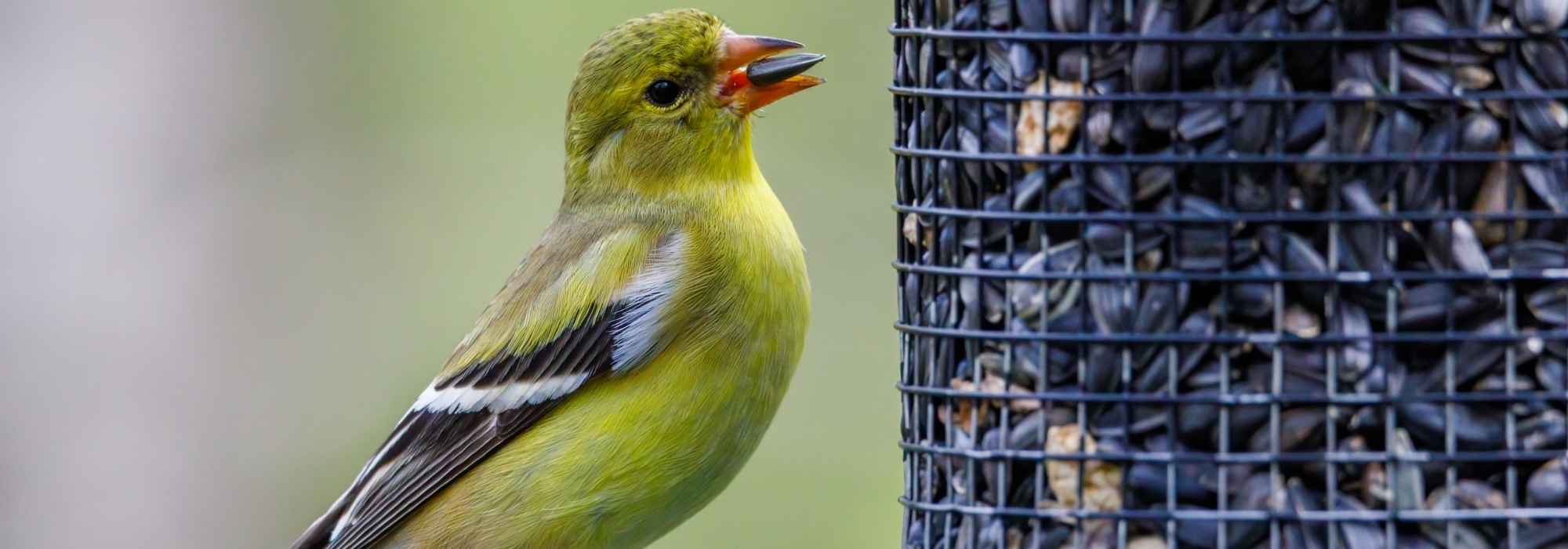
Which seeds for which garden birds?
Give them what they prefer to observe them more closely.
Contents
To help them get through winter in the best possible condition, we like to feed the birds that populate our gardens. If this seasonal activity benefits them, you need to know when to do it and which seeds they enjoy.
Tits, nuthatches and green woodpeckers, discover which seeds will attract specific bird species to your feeders and enjoy this magical spectacle of nature!
The birds' diet
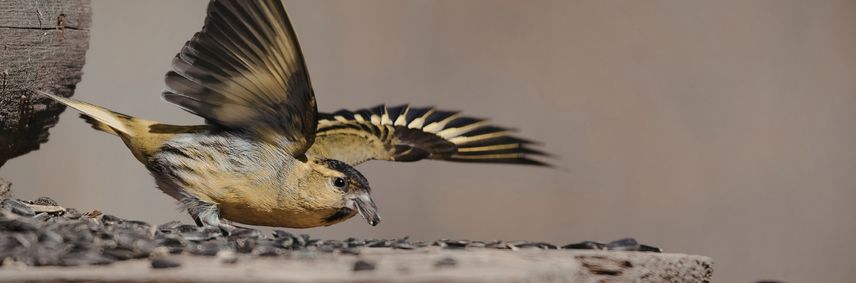
Throughout the year, the diet of garden birds consists of worms, insects, berries and seasonal fruit, varying according to the species. The seeds they find in different plants left in place are essential for their energy content. Seeds form the common basis of the diet of all birds known as seed-eaters.
In winter, you can offer them dried mealworms, sold in bags, which are particularly appreciated by robins and tits, as well as pied wagtails. You can also put out a few pieces of apple, cut into very small pieces. Always avoid grapes if you have a cat or a dog.
Finally, food is all very well, but hydration is essential, and of course you also need to think about this when you want to attract birds to your garden. During frosty weather, put out deep saucers with a large stone in them so that the birds can drink, and clean them regularly.
N.B.: Very beautiful birds such as the hoopoe and the green woodpecker are completely insectivorous. They have a slender, pointed beak, which may be long or short. For these birds, all that remains is to watch them from the warmth of the house. You never know! Others, such as the great spotted woodpecker, are insectivorous but become seed-eaters in winter.
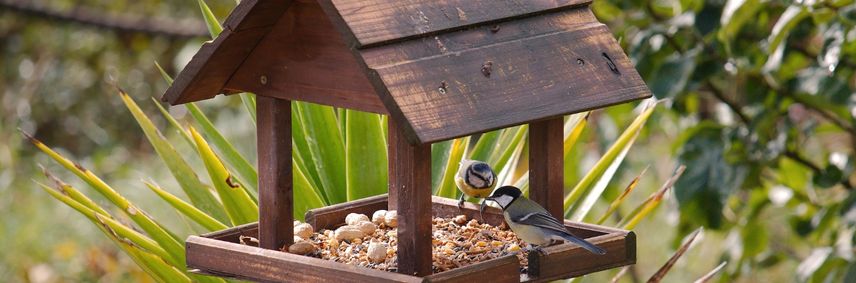
Birds’ favourite oil-yielding seeds
They are essential to their metabolism, as birds need more food in winter, especially when it is freezing and they cannot access it, to maintain their body heat. Some seeds are better suited to the shape of their beak, which may be finer, thicker or shorter. Many seed-eating birds, such as sparrows, chaffinches and goldfinches, have short, strong, often conical beaks adapted to eating seeds. Even so, they still have their own little preferences.
Black, striped or white sunflower seeds
These are the most common seeds, and yet almost all seed-eating birds are particularly fond of them.
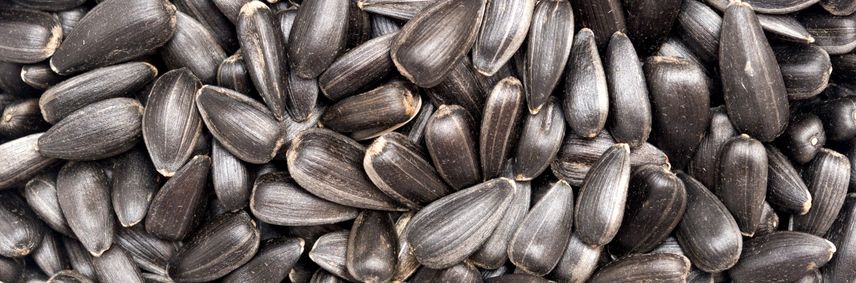
The convenient fat balls sold in shops for hanging up always contain black sunflower seeds. They provide all birds with the protein and amount of fat they need during the coldest months. White sunflower seeds are the same, but without their shells, which means birds use less energy to eat them. However, they contain less fat and fewer calories (but are also more expensive, so you can mix them!). Some birds, such as great spotted woodpeckers, are perfectly capable of splitting the shells.
N.B.: on a balcony, avoid unshelled seeds!
♥ Birds that like them most: tits, chaffinches, nuthatches and greenfinches.
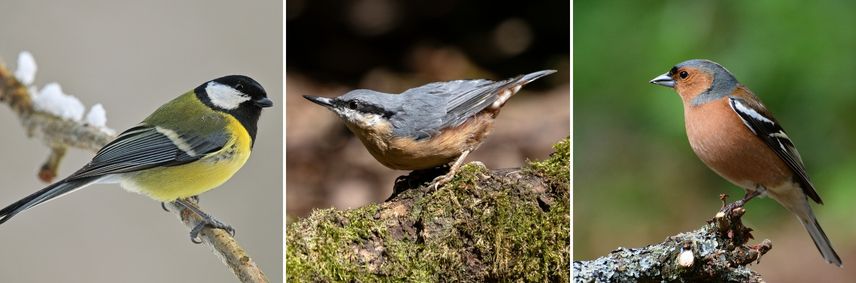
Great tits, nuthatches and chaffinches
Nyjer or niger seeds
Nyjer, also known as thistle seed, comes from Guizotia abyssinica, a daisy family plant originating from Ethiopia. The small black seeds are rich in fat (they are used to make oil in some countries, such as India and East Africa) and protein, making them highly nutritious. Place them in a silo feeder.
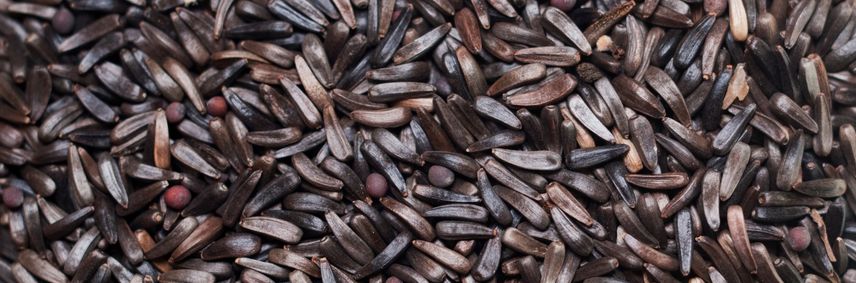
♥ Birds that like them most: chaffinches, European goldfinches, yellow goldfinches, siskins, European greenfinches, lesser redpolls and common redpolls.
Turnip rape seeds
Turnip rape (Brassica rapa) is a leafy vegetable in the cabbage family. Its young shoots are eaten, and it is also used as green manure or as a fodder crop. You can sow it to harvest the seeds contained in the dry pods. Known as food for canaries, it is found in some seed mixes because it is very rich in protein and carbohydrates.
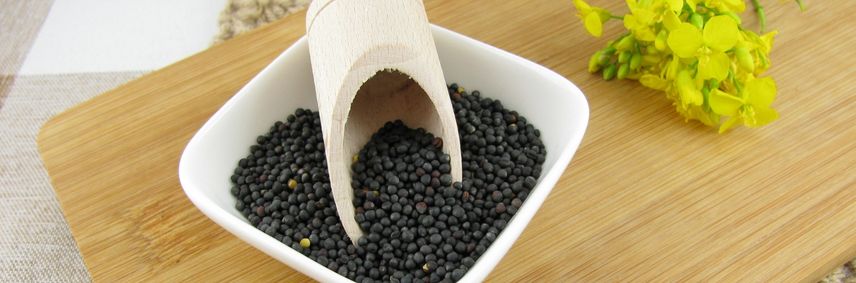
♥ Birds that like them most: European greenfinches, European goldfinches, dunnocks and chaffinches.
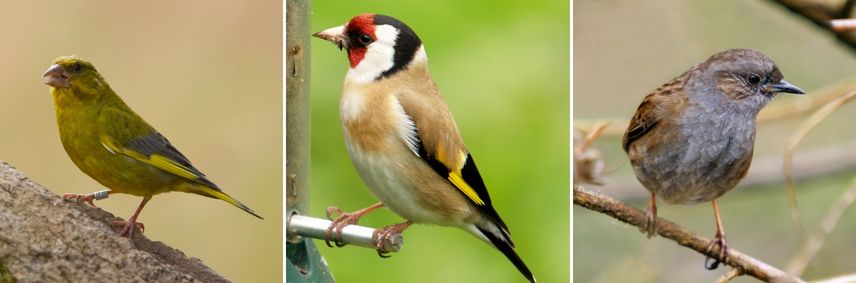
European greenfinch, European goldfinch and dunnock
Rapeseed
Like turnip rape, these seeds come from a herbaceous plant in the cabbage family (the brassicas). They contain 60% fat and are useful in the coldest part of winter for the energy they provide.
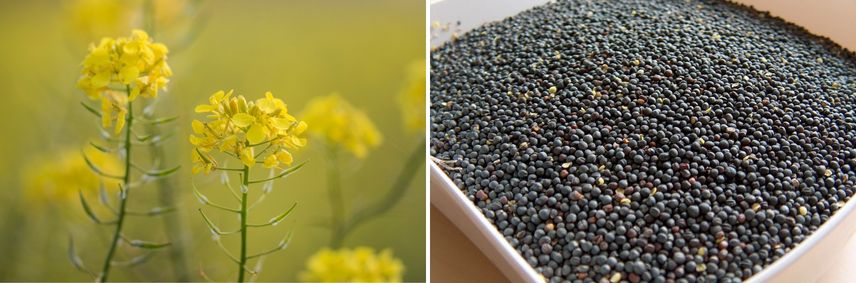
Photo of the seeds: Wikimedia Commons
They are a favourite of goldfinches, tits, collared doves and greenfinches.
Canary grass seeds
Canary grass (Phalaris canariensis) comes from a Mediterranean grass. Rich in protein, canary grass seeds are much appreciated by European goldfinches, European greenfinches, serins, chaffinches, siskins and bullfinches.
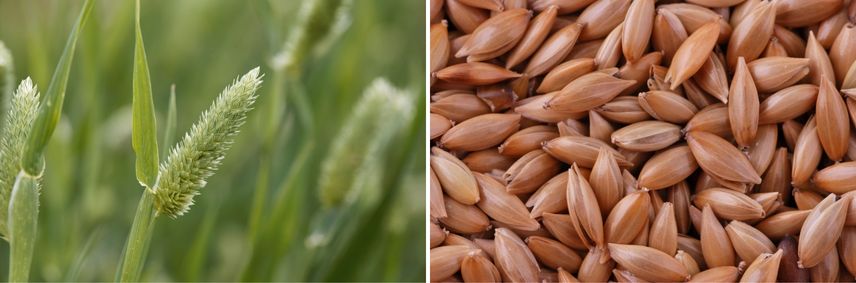
Hemp seeds
These are hemp seeds (Cannabis sativa), often reserved for anglers as bait. However, garden birds are very fond of them. They are generally found in small quantities in some commercial seed mixes.
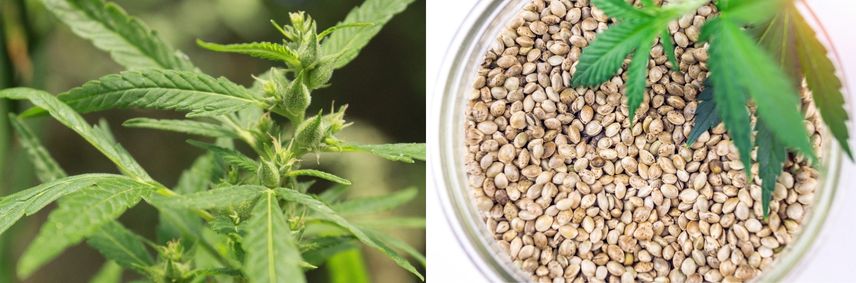
♥ Birds that eat them most: great tits, blue tits, doves, bullfinches, robins and greenfinches.
Millet seeds
These are small yellow seeds. They are particularly rich in carbohydrates (around 60%). If you use them, mix them with other seeds.
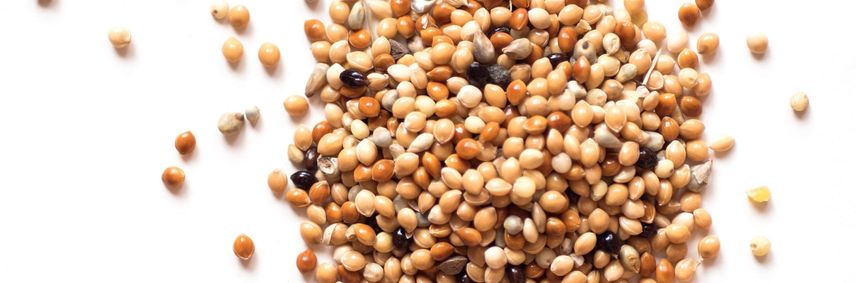
♥ Birds that like them most: sparrows, greenfinches, goldfinches, doves, dunnocks, siskins and buntings.
Peanuts
Finally, unsalted peanuts are the richest in fat. Tits, European greenfinches, European goldfinches, nuthatches, cardinals and chaffinches are particularly fond of them.
Whole, with their shells, which they enjoy removing, jays and woodpeckers relish them, and often bury them beneath the soil like squirrels. However, always choose shelled peanuts for a balcony to avoid waste.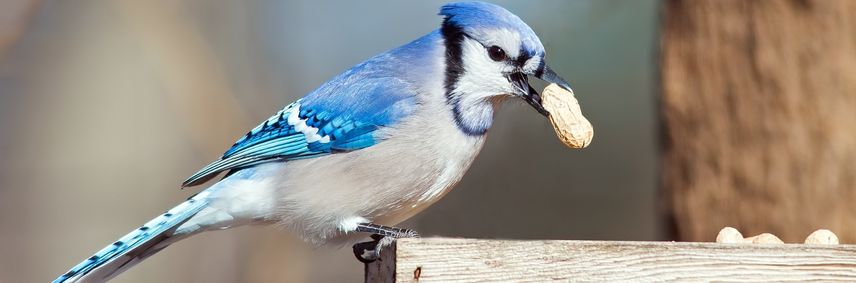
Worth knowing: flax seeds, which are very small, should be reserved for domestic birds such as budgies. They are rich in protein, but the French LPO does not recommend them for wild birds, highlighting their toxicity and the difficulty of ingesting them. If eaten in large quantities or if they become damp in the feeder, they can release cyanide (hydrocyanic acid). Take care with sorghum seeds too, sold under the name “dari”. Wild birds do not eat them, or leave them when other seeds are available, except for larger birds such as pigeons and blackbirds.
Other garden fruits for birds in winter
Shell fruits are also prized by certain birds, such as jays and great spotted woodpeckers, which are able to open the shells. If you have beech trees, oaks or hazels, there is no need to worry about them. You are likely to spot them one morning or another, busily eating beech-nuts, acorns and hazelnuts.
For birds that also eat fruit, such as song thrushes and blackbirds, leave the hips on your dog roses, and give them bletted medlars or small pieces of ripe apple. They will make a real feast of them.
Finally, the European spindle—or rather its berries, the arils—are much appreciated by thrushes, robins and blackbirds just before the severe frosts arrive.
Finally, wild teasel (Dipsacus fullonum), also known by the charming name of “teasel”, produces the dried inflorescence of choice for goldfinches, tits and wrens: don’t forget to include it in your spring sowings!
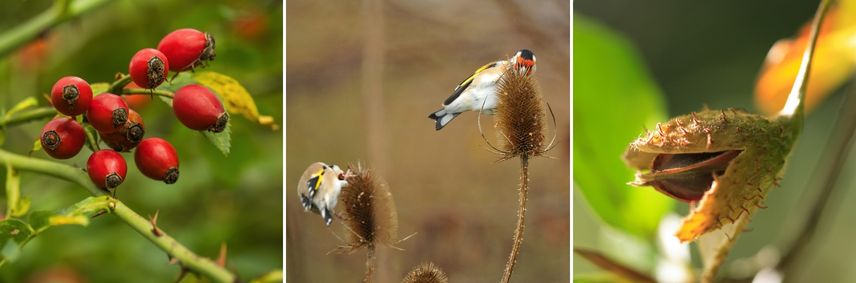
Rose hips, teasel and beech-nut
Some useful reminders for feeding birds in winter: timing, frequency and advice
- It is often said, but it is worth repeating: never feed birds before November, when food becomes scarcer for them as frost sets in, and gradually stop around March.
- For convenience, we often choose seed mixes or fat balls to provide birds with extra food in winter. Yet making your own seed mixes is often cheaper than buying ready-made products from the shops.
- The feeder is very important: the seeds must not become damp from the rain. Choose a feeder and a storage place that keep the seeds dry and free from mould, helping to prevent disease. Do not fill the feeder more than halfway.
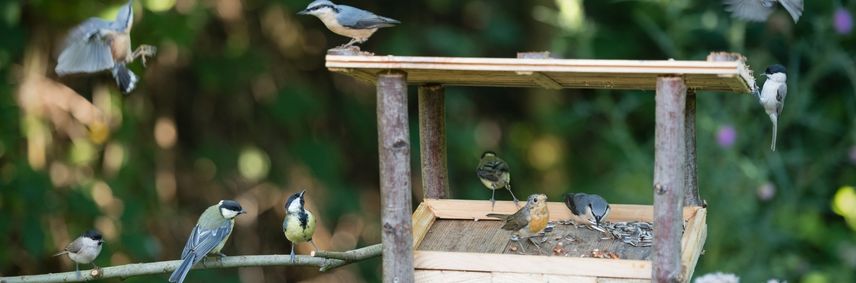
- How you distribute the seeds to birds is (almost) as important as the type of seed: silo feeders for fine seeds, or tray feeders for heavier ones, which are less likely to blow away (read our guide to choosing the right feeder). Scatter seeds on the ground for sparrows, turtle doves, finches, thrushes and robins. Birds feed in the morning and at the end of the day.
- Be careful: seeds have a fairly short shelf life. Do not store large quantities, and buy them each year.
- Vary the feeding locations to prevent certain diseases, such as trichomonosis, from appearing.
- Finally, apart from fat balls, which remain available for several days, seeds should be given little and often, and replaced every two days. Yes, it is our little winter chore.
- One final piece of advice: although feeding birds seeds is generally recommended during cold winters, the best option is still to provide them with food all year round through berries and plants in the garden. These also provide them with shelter, shade, as well as somewhere to hide and nest. It is also advisable to leave several plants to set seed. Unpruned ivy, whose berries they love, dried teasels and thistles, sunflowers left in place, mahonia, holly, hornbeam seeds, beech-nuts and conifer seeds are the best choices in the cold season…
Read also: The best berries for attracting and feeding birds in the garden.
Further reading…
Consult our section dedicated to birds: you will find detailed species profiles and plenty of advice on birdlife.
Are you passionate about wild birds? Visit the excellent Nos petites boules de plume forum, which I discovered myself while researching this subject. It brings together enthusiasts of garden birds, or wild birds, as they are also known, and will teach you a great deal about their behaviour, diet and identification.
The LPO website in France and the Ligue Royale Belge pour la Protection des oiseaux website in Belgium are also valuable sources of more general information about birds.
- Subscribe!
- Contents
This form is protected by reCAPTCHA - the Google Privacy Policy and Terms of Service apply.





























Comments