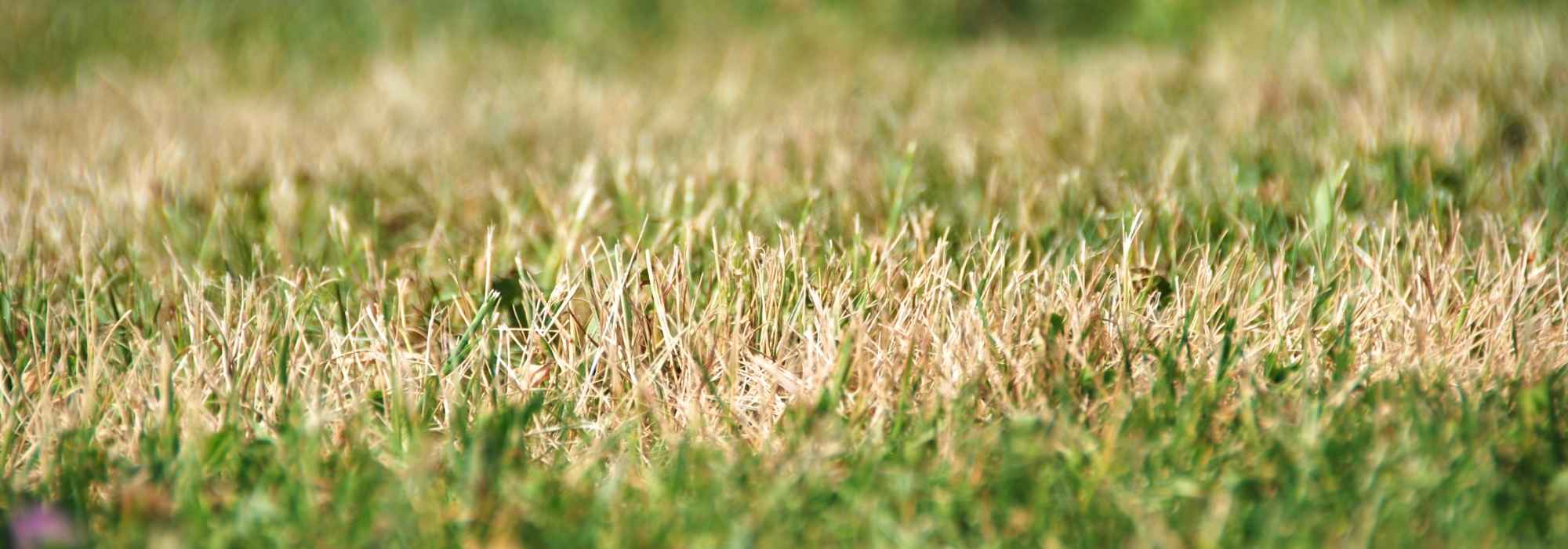
Heatwave: how to save your lawn in 3 steps (and avoid mistakes)
Revive your lawn after summer
Contents
After summer heatwaves and watering bans, the lawn often looks a shadow of its former self. Although looking very sorry for itself, the lawn generally recovers without difficulty when autumn rains return. But repeated heatwaves stress the lawn in their own way. What to do, and what not to do, to restore a lawn worthy of the name, and what care to give it? Here is an overview.

Lawn, a grass like any other
To begin, remember that a lawn, made up of a mix of grasses such as perennial ryegrass, meadow grass or fescues… remains a grass! It is perfectly normal that it turns yellow when not watered, even if many people cannot stand it in summer, insisting it must stay green and vigorous as in early spring.
All lawns, however, revive spontaneously in autumn as soon as rains return heavier and more regular. The dry, crunching doormat underfoot springs back to life… provided no mistakes are made in the meantime.
→ Find all our articles on lawn in our section Lawn.
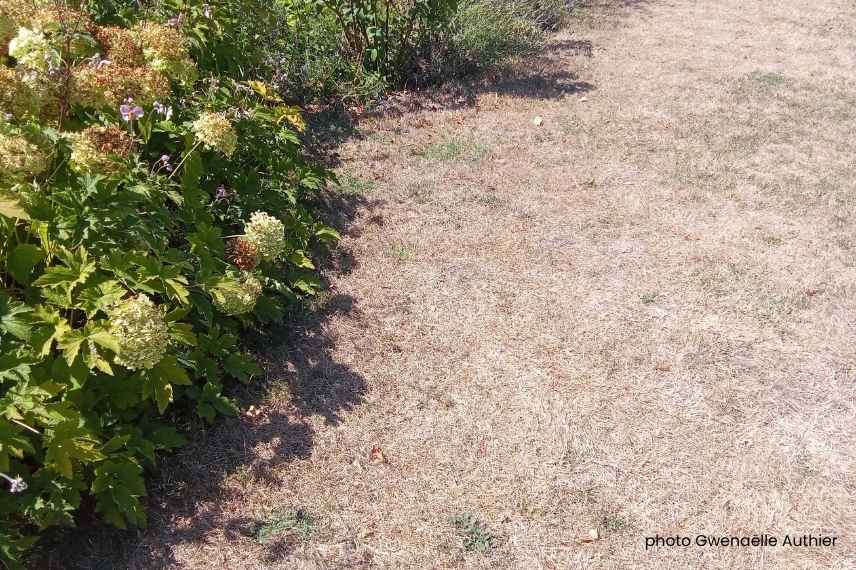
Almost not a blade of green left… It’s normal (photo Gwenaelle Authier)
Read also
How to look after the lawn in summer?Step 1: Diagnosis – and above all, do nothing too soon!
Yellowing, dry patches, compacted or bare soil in some places, presence of moss or weeds are all signs that lawn has suffered badly from summer and heatwaves. Two practical, visual tests help to understand better:
- Yellowing: if lawn is yellowed but roots hold (pull on a clump — if it resists, that’s a good sign), it will recover.
- Bare patches and/or moss: if soil is bare or covered in moss, it will need to be overseeded or scarified later.
That said, you should only act once all hot spells have passed, which is not easy to predict, as Indian summers and increasingly dry Septembers are becoming more common. Lawn needs rest. Wait for temperatures to drop and for rain to return before taking action. Patience, gardener’s foremost quality, is again essential for lawn care!
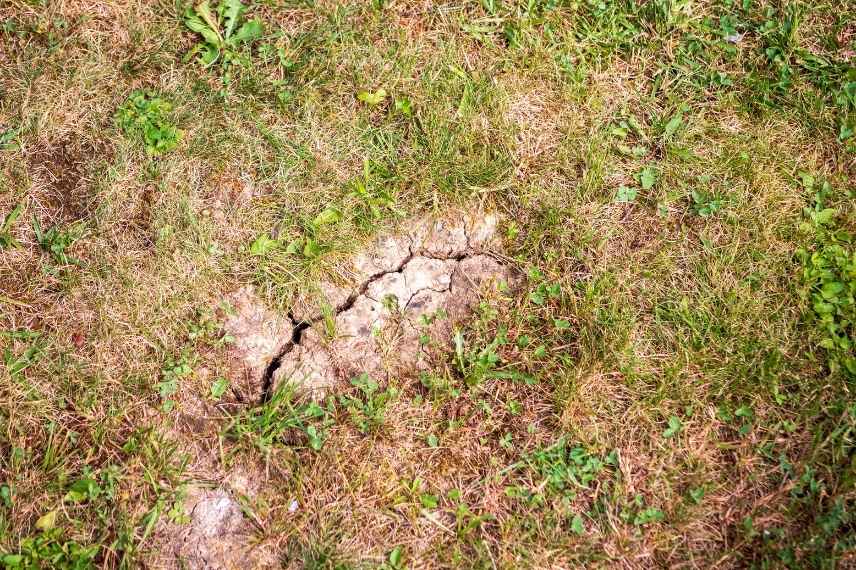
After severe droughts, lawn shows areas left bare, even cracked in clay soils
Step 2: act without damaging the lawn
You can still act in small doses even in summer, before autumn.
Mow, but sparingly
Mowing in summer — or rather managing it very sparingly — is something of the crux for lawn care. After a severe heatwave, lawn growth may stop completely, but weeds keep growing. In that specific case, mow mainly to remove flowering of adventive weeds before they set seed and spread it, as their seeds are highly airborne.
To make lawn more resilient to future heat spells, two essentials :
- Do not mow too short (ideally: 5–7 cm) to avoid further stressing lawn and to retain as much morning dew as possible.
- Mow in mulching mode — it is safe and can even help protect soil initially. Prefer it to the collection bag to avoid trampling an already stressed lawn. But if lawn is overrun with weeds, use a collection bag to avoid spreading their seeds (or, ideally, cut weeds beforehand, which is more tedious on large areas).
Mistakes to avoid
Rather than rushing to act, above all after a stressful heatwave, avoid further damaging lawn :
- Avoid collecting dead leaves that often accumulate on lawns in mid-summer, as trees enter survival mode and drop foliage early. This dry, lightweight leaf layer will protect the still-weakened lawn, retaining some moisture, providing a little shade and preventing compaction from footsteps. Rake away once lawn recovers (autumn) or before rain to avoid smothering, and keep leaves for free mulch ;
- Do not water in full sun : if you are among those who continue to water lawn in summer (local restrictions often forbid it during crises), do so only at the coolest hours ;
- Avoid walking on a stressed lawn : you will not avoid all foot traffic, of course, but create or concentrate routes to prevent worsening dry, compacted patches when hard paths are not present.
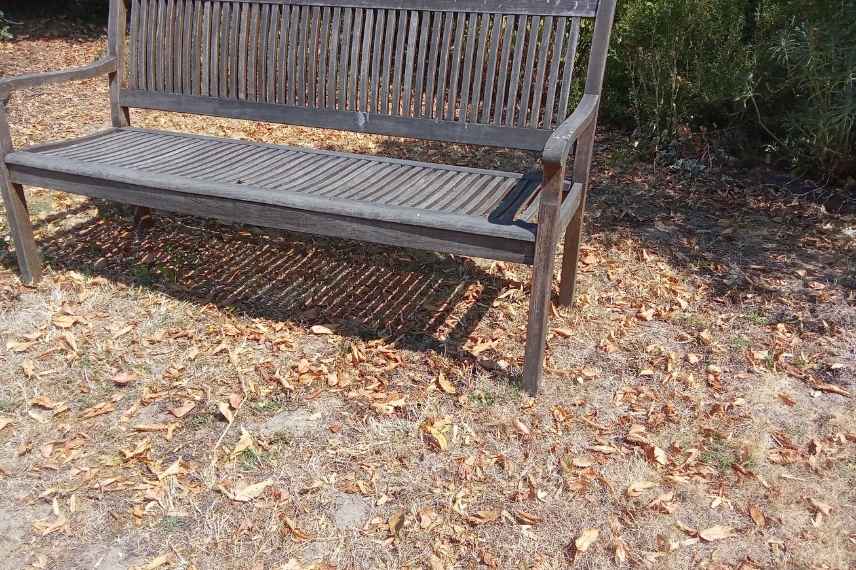
Leave dead leaves in place while waiting for temperatures to return to normal… and for rain (photo Gwenaëlle Authier)
Read also
Burnt lawn: what to do?Step 3: stimulate regrowth and help lawn recover
Once the heat has passed, it’s time to help your lawn recover :
- Apply a potassium-rich fertiliser in September (depending on weather and any residual drought) to strengthen roots. Always apply it to a watered lawn. Do not use fertilisers too high in nitrogen (N) during drought or immediately after a heatwave: they stimulate leaf growth at the expense of roots, which are already weakened. Prefer an organic fertiliser rich in potassium (K) (such as comfrey manure, horn meal, or an autumn lawn fertiliser) to strengthen roots and prepare for winter.
- If bare patches are extensive, sow a mix of drought-resistant seeds (kikuyu, tall fescues making up about 80% of the mix).
- Topdress the weakest areas too.
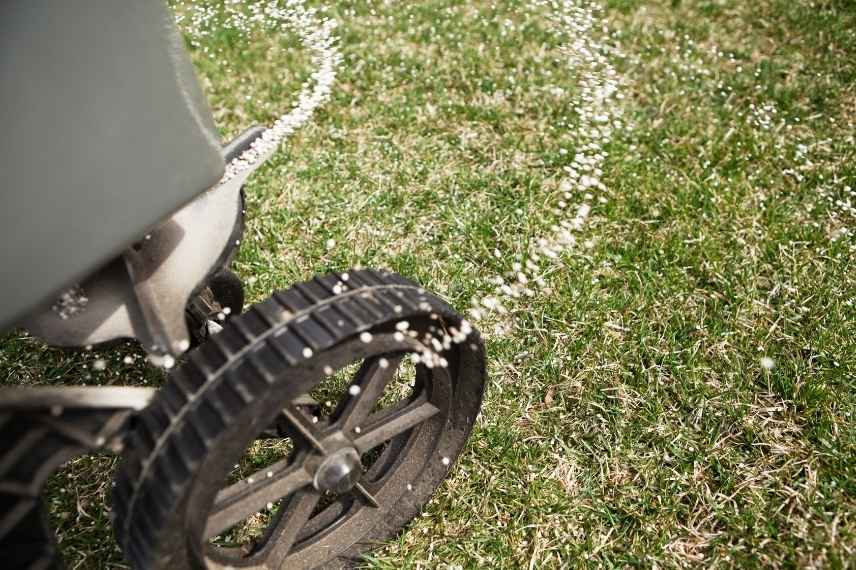
Fertilising should also wait for wetter days, when the lawn has regained a greener colour…
Alternatives to lawns
Had enough of a lawn that’s only a lawn in name every summer?
There’s growing discussion of alternatives to lawn, which has become increasingly difficult to manage with the repeated heatwaves we’ve seen in recent years. When you’re not satisfied with a lawn badly damaged by the sun, there are solutions to replace the green carpet with other plant mixes or low, groundcover perennials. Among the two options to consider :
- Steppe lawn
When you need to redo a lawn entirely or in part, opting for seeds resistant to dry or even arid conditions proves extremely useful. Alexandra covers this in detail in the steppe lawn. Made up of fescues, meadow-grasses and low aromatic herbs, it suits naturalistic gardens, poor sandy soils, and requires far less maintenance than a conventional lawn ; - Groundcover perennials much more resilient (Dichondra, Achillea crithmifolia, Lippia nodiflora, etc.) that prove practical and visually interesting for a few particularly exposed areas.
My tip: I personally recommend creating full-sun planting beds in the spots where the lawn suffers most each summer, to reduce its extent.
→ Learn more in our advice sheets: Alternatives to lawn: 10 groundcovers to replace the lawn ; Alternative to lawn: plant creeping Dichondra ; Lawn replacement: ideas and solutions.
Further reading
Read our article on water in the garden in times of crisis: Water restrictions and watering: how to manage the crisis in the garden?
Did your lawn survive the heatwave? Feel free to share your tips in the comments!
- Subscribe!
- Contents
This form is protected by reCAPTCHA - the Google Privacy Policy and Terms of Service apply.

































Comments