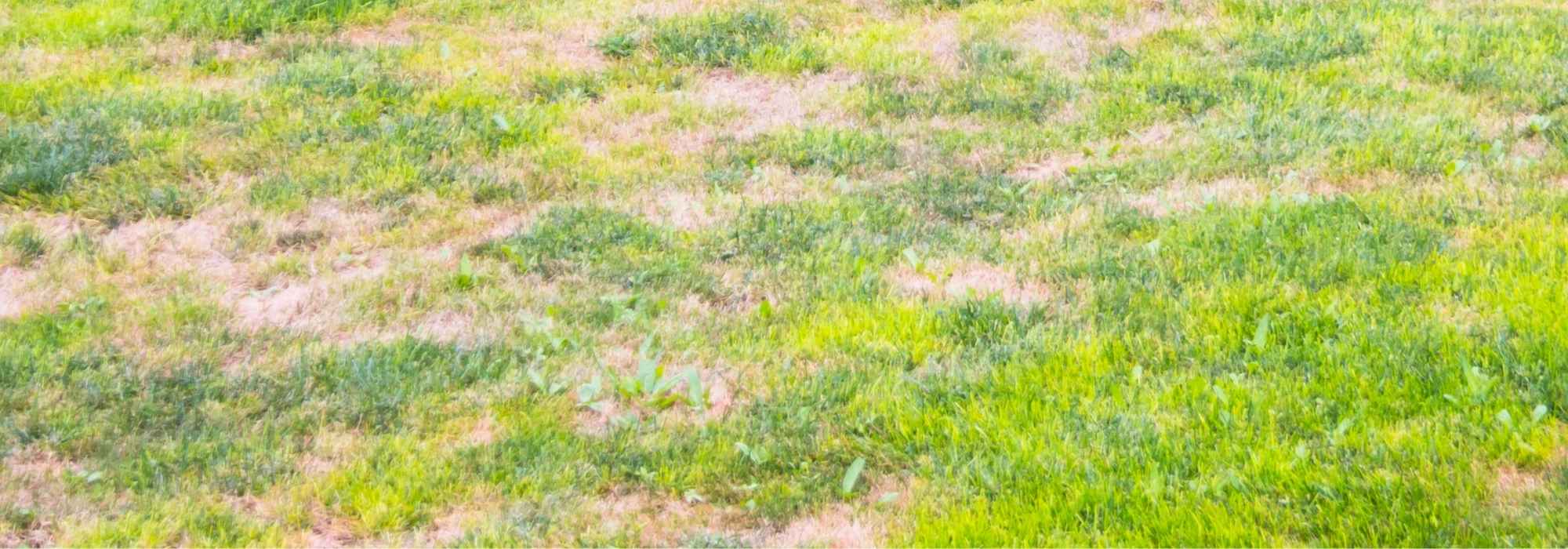
What to do about weeds taking over a sparse lawn?
Getting rid of weeds on a bare lawn in summer
Contents
Weeds in the lawn are something we have all had to deal with to some extent since the move towards zero pesticides. While some of us are happy to put up with them, other gardeners do not want to see these adventive plants colonising a lawn already badly affected in midsummer by repeated droughts.
How can you get rid of these unwelcome weeds when the lawn is already thin or patchy? Find our advice in this article!
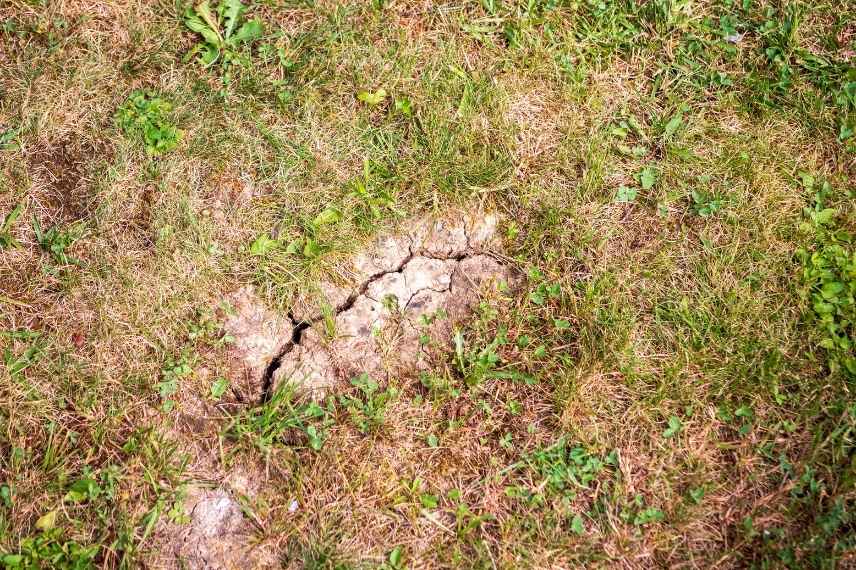
After a dry summer, several operations can save a lawn by making it less prone to being overrun by weeds

Why is my lawn full of weeds?
Even when a lawn has been sown and maintained according to best practice, it can be surprising to see the dreaded weeds appearing after a while. While moss is often caused by acidic soil, poor soil and poor drainage in shaded areas, or results from a combination of factors that can easily be corrected, the problem of weeds in a sparse lawn is more complicated.
The soil actually contains a large quantity of dormant seeds. Disturbances awaken them, as they can remain silent in the soil for decades. This is particularly true of dandelions and plantains, each of which can produce up to 10,000 seeds per year. Dizzying!
Each weed has its own particular way of spreading. They can generally be divided into two categories: creeping plants and those that self-seed (well, almost, with a little help from the wind, birds or… watering!).
- creeping plants, with stolons, rootstocks or running roots, such as couch grass, which can survive in the soil for 10 years, bindweed, nettles and horsetails…
- those that self-seed: typically dandelions, with their hundreds of flying achenes that land a little further away.
Their proliferation has several causes, primarily compacted soil, drought, which encourages bare patches, and mowing too short, which weakens the lawn and provides all those that are waiting to germinate with the light they need. They can also proliferate because the lawn was sown too sparsely, leaving them a clear path through empty spaces. Let us always remember: nature abhors a vacuum!
From this point onwards, a vicious circle begins. The lawn weakens and bare patches multiply, making water and light more accessible to all these seeds that are simply waiting to grow. They germinate, and their root system, whether deep or spreading, competes with the lawn…
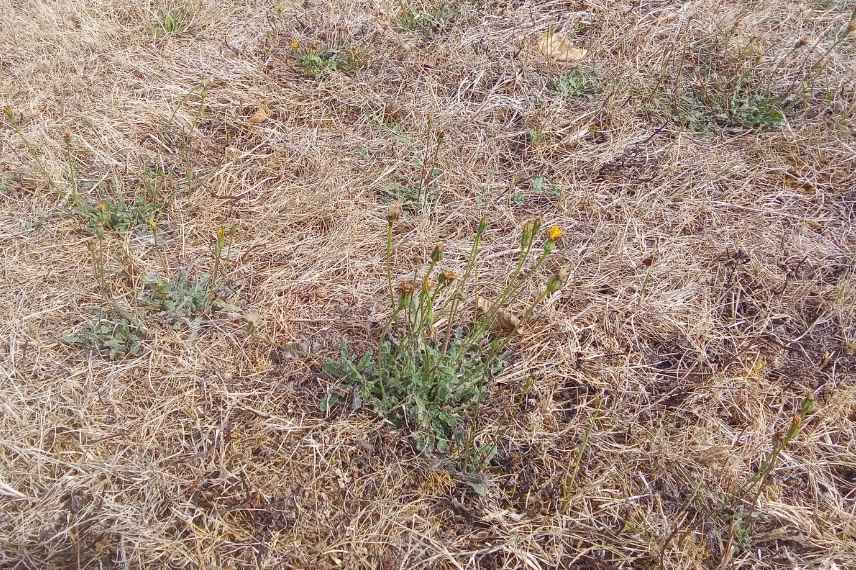
On a dry, impoverished and sparse lawn, weeds in summer are a sorry sight
Read also
How to look after the lawn in summer?What should you do about weeds in summer when your lawn is thin? Take action or resign yourself to it?
We’ve got the message: weeds shamelessly take hold in weakened lawns, leaving us helpless and perplexed about what to do. We’re not going to lie to you: if you no longer want to see these unwanted guests, you’ll have to put in some elbow grease, and the result may not necessarily live up to your expectations.
1- Cut off the seed heads
Particularly in summer, during heatwaves, the lawn hardly grows at all, so there is no longer any need to mow it. But the weeds continue to grow, with some flowering and quickly producing seeds in the sunshine and heat.
In this situation, there is only one solution: remove all these inflorescences, which have become white and fluffy and are full of seeds ready to spread by the hundred at the slightest gust of wind. Do this with a sharp pair of scissors or pruning shears, collecting them in a bucket so that you do not spread them even further. Otherwise, they will fall to the ground and become even more difficult to collect. You should also avoid leaving them there if a storm is forecast, as this is a radical way to encourage them to proliferate even more.
Obviously, all these little beauties will not be going into the compost, but it is worth saying so again here (and taking the opportunity to reread Pascale’s good advice: Which waste should not be put in the compost?).
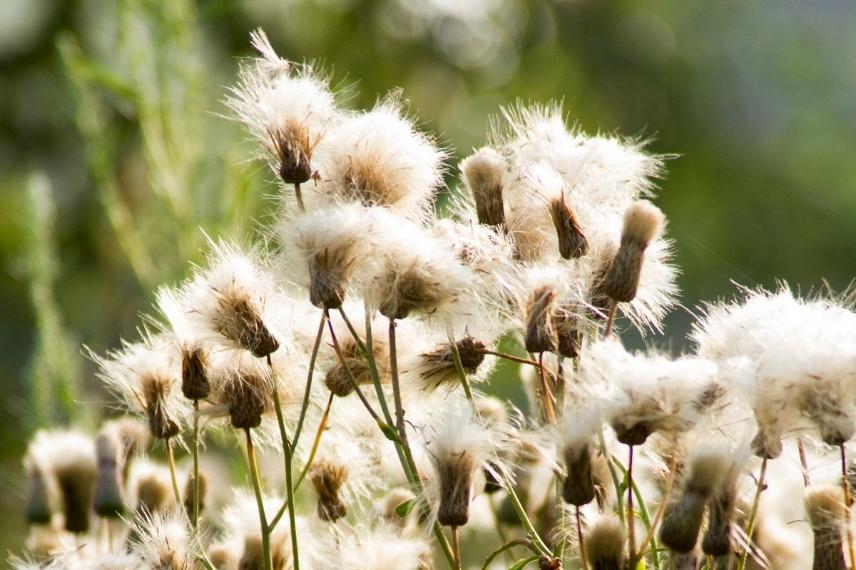
The seeds (achenes) of some weeds are blown away by the slightest breeze, so it is better to cut them
2- … resort to pulling them up
Removing weeds often has to be put off until later, or at least until after a good spell of rain, which makes it possible to pull out those with long roots that plunge deep into the ground completely. Pulling them up by hand with their roots is a tedious task in itself (thank goodness for the weeding gouge!), but it is necessary for anyone who cannot stand a single unwanted plant in their lawn.
3- and above all… strengthen your lawn
Weeds spreading by creeping stolons over or beneath the soil, as well as all the intruders with deep roots, such as sorrel and dandelions, are a tricky case: you will need to limit them by taking care of your lawn. Strengthening a lawn from the following autumn onwards helps to limit this type of weed. Otherwise, you may find yourself mowing more and more frequently, or even cutting the grass shorter, which you should not do, especially during the hottest months, as this brings you back to square one: a weakened lawn.
These three methods should therefore be accompanied by higher mowing (between 7-8 cm), which will eventually encourage deeper rooting and improve the lawn’s resistance in summer.
How can you strengthen your lawn? We explain it all in detail in the following paragraph!
The action plan: 5 essential steps to restore your lawn
Once you have removed as many weeds as possible, five operations are essential: aeration, scarification, overseeding, lawn top-dressing and fertilisation. Why? Quite simply because a lawn full of weeds needs to be loosened and fed. By supplying nutrients to the grasses that make up the lawn, you make it denser and more vigorous. A healthier lawn acts mechanically as a barrier against the establishment of unwanted plants.
Aeration is particularly important for compacted and heavily trodden soils. You can either core the lawn or walk over it wearing spiked overshoes.
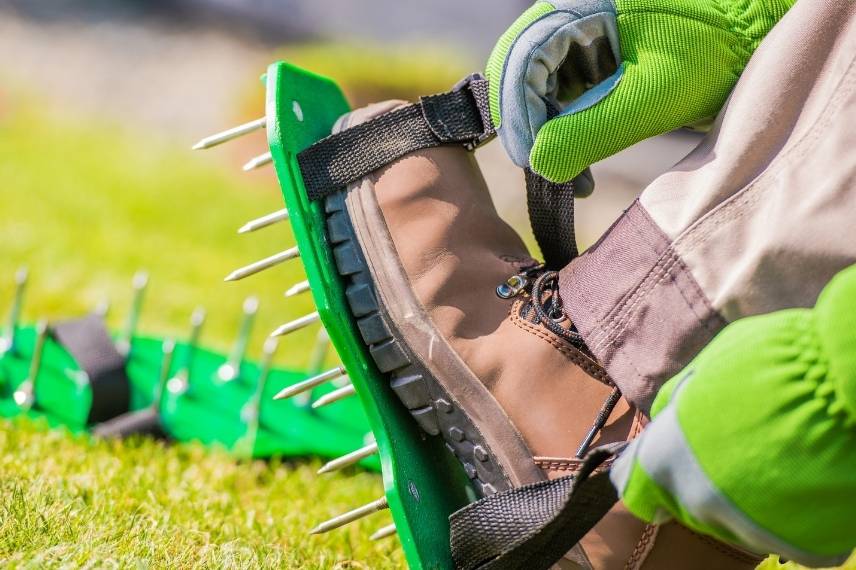
Scarification, which we discuss in greater detail here (How to scarify a lawn?), should of course be carried out only after all weeds have been removed before they set seed. It allows you to scratch the soil and remove the thatch, so that it is oxygenated and ready to benefit fully from the following treatments and care (a bit like exfoliating your skin!).
Top-dressing consists of supplying nutrients to the grasses in the lawn. By feeding it with a special lawn potting compost, you prevent weeds from returning in large numbers, as richer soil is less attractive to most unwanted plants, which generally grow in poor soil conditions.
Overseeding, carried out at the same time, fills in sparse or completely bare patches. If you leave the soil exposed, nothing will grow back, or rather, only weeds will. Do this at the end of summer or the beginning of autumn, when temperatures remain mild, using a lawn seed mix for renovation or overseeding, specially selected for its rapid growth. Virginie explains it in detail in her article Overseeding a lawn.
Autumn fertilisation also aims to make the lawn denser by strengthening the roots of the grasses at the right time. Apply it when the rains return and outdoor temperatures fluctuate between 12 and 22 °C, as for sowing a lawn. This competitive effect, at a time when weeds are losing vigour, is the final defence. Choose lawn fertilisers labelled “special autumn”, available from garden retailers from summer onwards, and rich in phosphorus and potassium (such as NPK 3-6-12 or 5-10-20), at a rate of 20 to 30 g/m².
Read also
Maintaining the lawn during a heatwaveLawn weeds: understanding the problem at source
Let us return to the different types of weeds, so we can tackle the problem before a lawn is literally colonised.
Weeds are more or less the same in every region, although they vary according to the type of soil. They grow freely, as we can clearly see, in the sun, the preferred site of our lawns. Knowing them well means understanding better why they establish themselves in such numbers, and this is an essential step towards taking targeted action on the lawn before the problem gets out of hand.
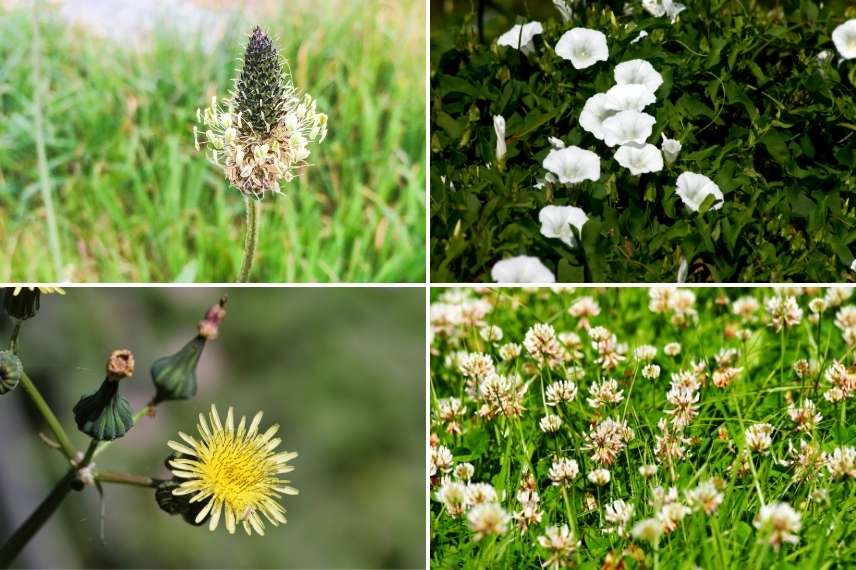
Flowers of plantain, bindweed, sow-thistle and clover
Here is a table summarising the main lawn weeds and the ways to control them:
| Weed | Cause, soil problem | Effects on the lawn | Type of spread | What to do? |
| Self-heal | Dry, poor soil, often chalky and in partial shade | Moderate but persistent competition | Seeds and stolons | Pull it out by hand, removing the root. Mow high to limit flowering, and fertilise to strengthen the lawn. |
| Couch grass |
Compacted, dry, often clay soil
|
Running roots smothering the lawn | Rootstocks (very resistant) |
Remove it completely, including the roots. Use a solarising sheet before reseeding. Natural weedkiller as a last resort. Along with bindweed, it is one of the hardest weeds to eradicate. |
| Sow-thistle | Light, sandy, dry soil | Grows quickly and competes for water | Seeds (wind) | Pull it out before flowering. Mow high to limit the light reaching it. |
| Bindweed | Poor, heavy soil, often at the edge of the lawn | Smothers the lawn with its creeping stolons | Stolons and seeds | Dig out the roots (up to 2m long!). Cover the area before reseeding. |
| Plantain | Compacted, damp, heavily trodden soil | Broad leaves smothering the lawn | Sticky seeds | Remove it with a weed extractor (deep taproot). Scarify to aerate the soil. Avoid walking on the lawn. |
| Dandelion | Poor, dry, often acidic soil | Yellow patches and strong competition | Seeds (wind, very prolific) | Cut off the flowers before they go to seed. Pull it out by the root (10–20cm taproot). Sow densely to fill bare patches. |
| White clover | Poor, dry soil lacking nitrogen | Green patches and sparse grass | Stolons and seeds | Pull it out by hand or mow high to weaken it. Fertilise to encourage the lawn. |
| Common sorrel | Acidic, low-calcareous soils | Broad leaves smothering the lawn and strong competition | Seeds and strong roots | Remove the taproot. Avoid excess nitrogen. Mow regularly to weaken it. |
| Creeping buttercup | Clay, heavy and compacted soils | Invasive running stolons smothering the lawn by forming dense carpets | Stolons and seeds | Pull it out by hand, removing all the stolons. Cover the area before reseeding. Mow high to weaken it. |
For further reading
To conclude, Olivier discusses organic indicator plants, some of which are common weeds growing in our lawns, in his article: How to diagnose your soil using organic indicator plants, and Pascale also discusses them in Organic indicator plants: what are they?
All the minor problems affecting our lawns are covered in our Lawn section.
You will find, among other things, these topics that raise many questions:
- Subscribe!
- Contents
This form is protected by reCAPTCHA - the Google Privacy Policy and Terms of Service apply.

































Comments