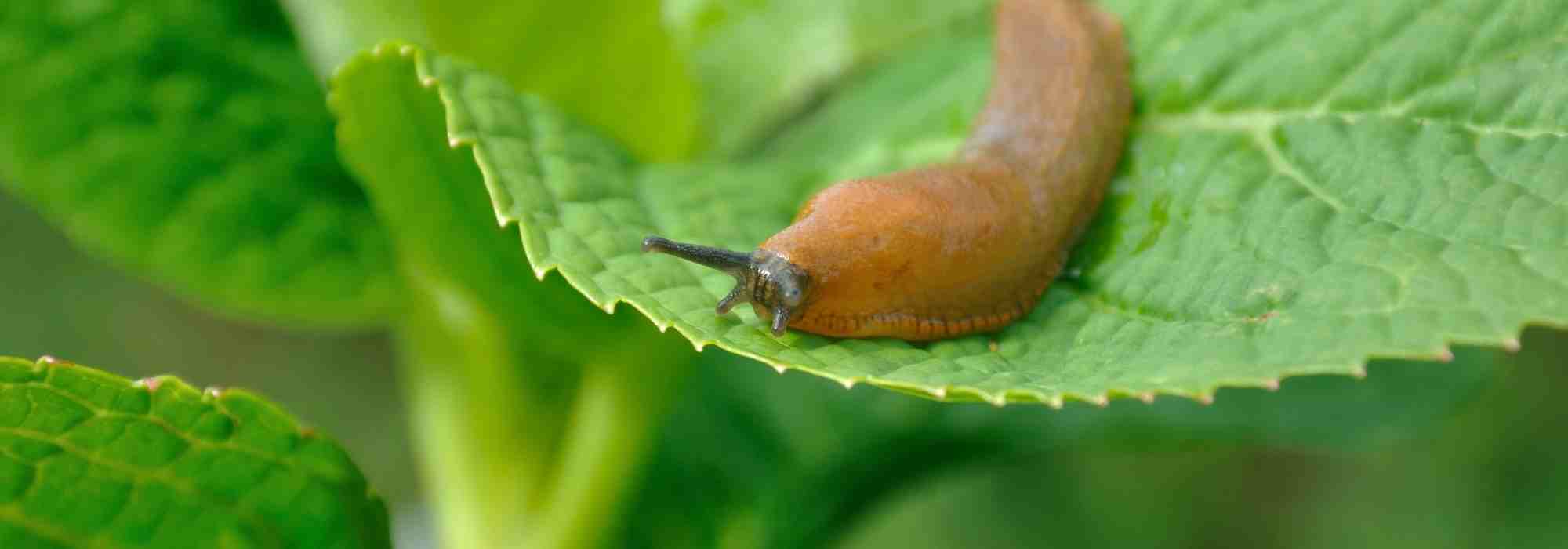
Where do slugs hide during the day? Their shelters finally revealed
Everything you need to know to find slugs in the garden during the day
Contents
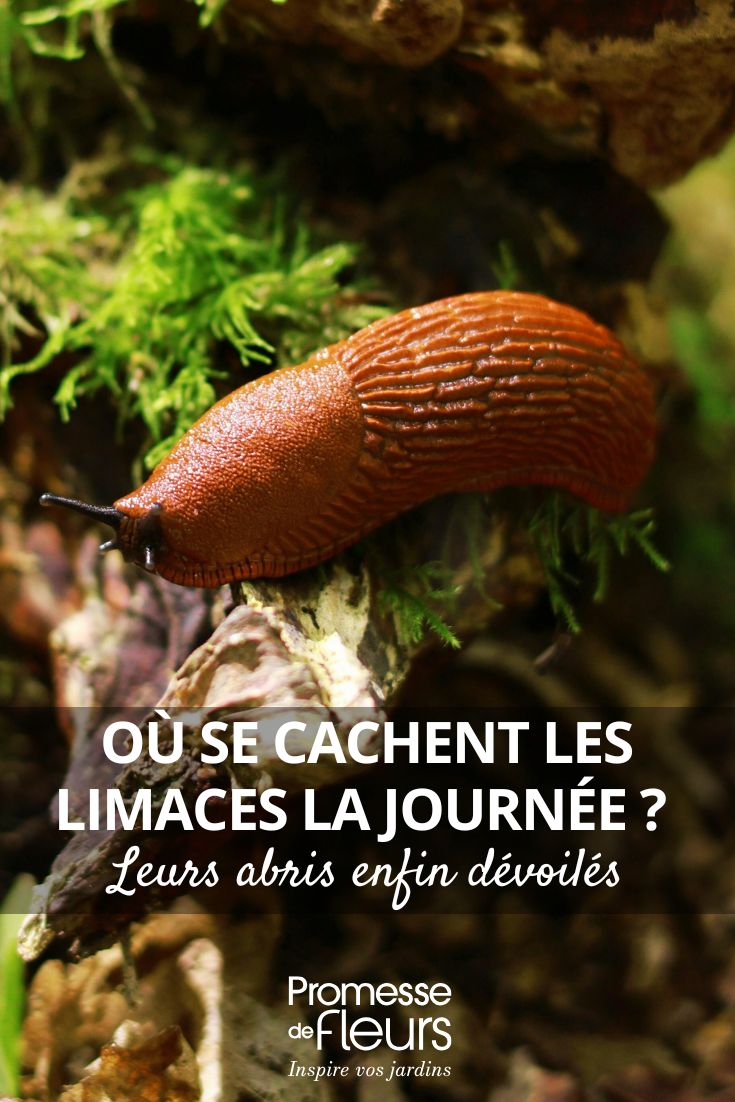
Young lettuce plants, freshly transplanted, devoured in a single night; radish, carrot and other beetroot sowings gone; not forgetting your handsome hosta with its fresh green young shoots completely nibbled. Admit it, it’s infuriating! And no sign of the attacker. Yet you have clearly identified the culprits. Slugs, the garden’s most discreet gastropods, which, once they’ve done their mischief, retreat to hiding places to spend the day keeping cool. So, pull on your wellies — we’re going to investigate to discover where slugs hide during the day.

Slugs, creatures of the night
Sometimes during the day, after a good rain, you may come across a slug gliding calmly across wet garden soil. But usually slugs are gastropods that prefer the cool of night to the heat of day. Quite simply because heat, direct sunlight and drought are their sworn enemies.
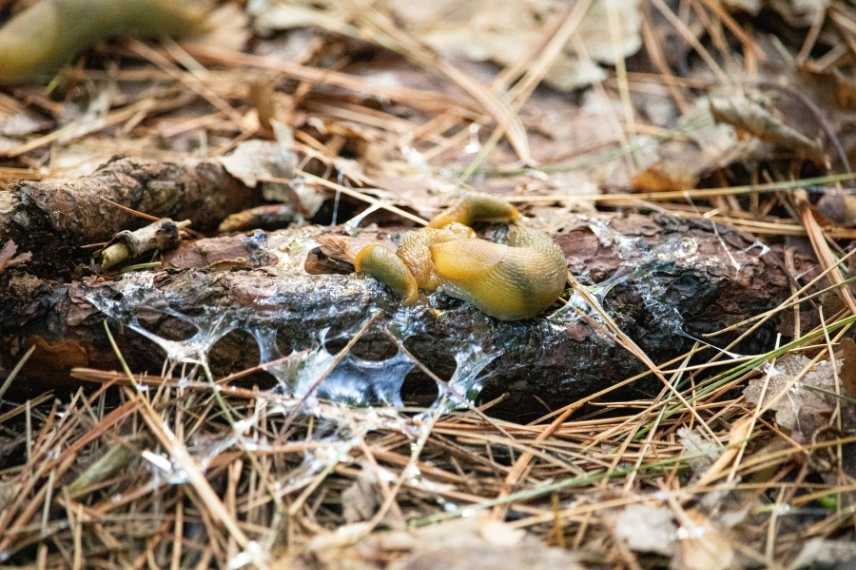
Heat, direct sunlight and drought are slugs’ sworn enemies.
Indeed, slugs are ectothermic animals, that is cold-blooded. Their activity depends strongly on temperature: optimal activity is around 18 °C, they become inactive at 0 °C, and generally die at −3 °C when they cannot burrow. Moreover, in absence of moisture, slugs cannot produce their mucus (the translucent slime they leave behind!), essential for locomotion and protection against dehydration: they shelter in soil while waiting for more favourable conditions.
Furthermore, slugs have a real aversion to direct light. Exposure to overly intense light, combined with heat, can trigger oxidative stress, damage tissues and impair mucus production.
So, as soon as day breaks, they hurry to hide in cool, dark, damp spots. They spend the day there. Their activity peaks at nightfall, especially in spring and autumn.
Les limaces recherchent avant tout des endroits frais, humides et sombres pour se cacher pendant la journée. Voici leurs cachettes préférées et quelques conseils pratiques : Cachettes courantes - Sous paillis épais (écorce, copeaux, feuilles mortes) où l'humidité est retenue. - Sous pierres, tuiles, planches, plaques ou pots renversés. - Dans tas de compost ou de matière organique en décomposition. - Dans les touffes de plantes à feuillage dense (hostas, fougères, jeunes salades, céleris) qui offrent abri et humidité. - Dans les fissures du sol, les bordures, les murets et les zones ombragées le long des haies. - Sous pots, bacs et plateaux de culture (surtout en serre ou sous abri). - Dans les souches, vieux bois ou amas de pierres où la chaleur et l'humidité sont stables. - Près des points d'arrosage, gouttières débordantes ou zones où l'eau stagne. Mesures simples pour réduire les cachettes - Réduire les abris : dégager pierres, planches et débris près des massifs. - Aérer le paillage : préférer un paillis plus grossier ou espacer l’épaisseur pour limiter l’humidité de surface, ou pailler plus tard dans la saison. - Arrosage ciblé : arroser le matin pour laisser le sol sécher en journée. - Pièges et collecte : poser planches/ardoises pour attirer les limaces et les ramasser le matin, ou faire des rondelles de bière comme piège. - Barrières : bandes de cuivre autour des pots/plate-bandes, ou gravier grossier comme bordure. - Contrôle biologique/produits : encourager hérissons, oiseaux et grenouilles ; utiliser granulés à base de phosphate de fer plutôt que métaldéhyde si nécessaire. - Protection des plants sensibles : barrières individuelles (colliers), culture sous tunnel ou voile anti-limaces. En résumé : en supprimant ou en modifiant leurs abris humides et en limitant l’humidité de surface, on réduit fortement la population et les dégâts.
Of course, even if unseen, slugs lurk in their shelters, out of gardeners’ sight but never far from lettuces. Shall we take a tour of the garden to uncover their favourite hiding places.
Beneath soil and mulch
Soil is their primary hiding place. Beneath a layer of mulch, they find the shade and moisture they love. They can also burrow slightly into the soil, especially if it is loose and rich in organic matter. Dead leaves and plant debris provide perfect shelter. And, as well as finding shelter, they find food!
Beneath garden objects
Slugs love little dark corners that we, gardeners, create without thinking. An overturned pot, a plank of wood placed between two beds to avoid treading the soil, a forgotten tile, a tarpaulin laid on the ground… all become cosy slug hideaways. By day, they hide there peacefully, safe from view and sun.
In shady, damp corners
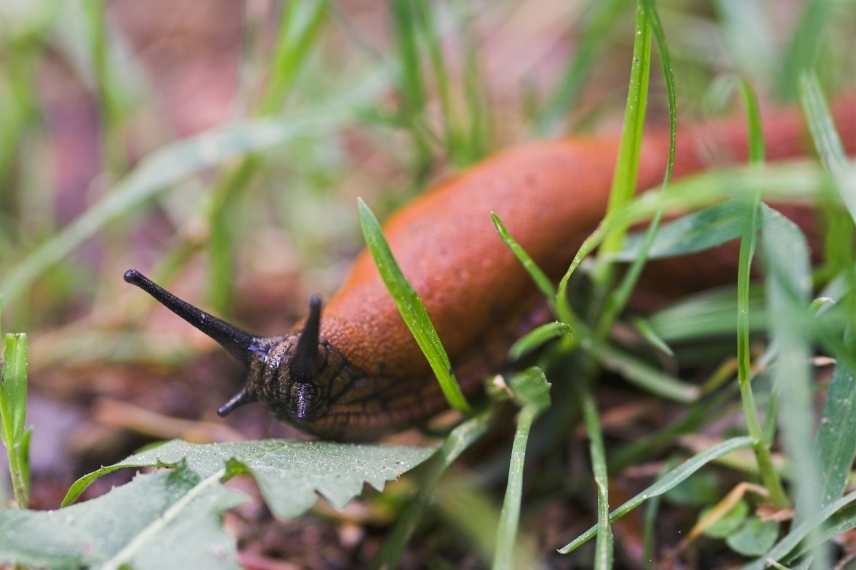
Slugs like damp grassy areas
By a north-facing wall, in the shade of a dense shrub, beneath thick foliage… so many natural hiding spots they appreciate. In my garden, they shamelessly even squat under lemon balm or mint foliage, plants nonetheless reputed for repelling many other insects. These places stay cool even in full daytime, allowing them to wait until nightfall. Compost heap, damp and warm, is also a favourite daytime spot.
In garden structures
Do not overlook garden sheds, greenhouses, edges of paving slabs or gaps between stones. A small crack in a wall is enough. Slugs are very adept at squeezing into the smallest crevices.
Why is it essential to know these hiding spots?
You have read everything on slug control. And night-time hunting with a torch is certainly the best method to get rid of these troublesome gastropods. But it is easy to understand that you’d rather spend the night in bed than in the garden stalking slugs.
Knowing where slugs hide is not just curiosity. It is the first step to control them and better protect your crops. Thus, it will be easier, in early morning or late afternoon, to inspect those spots and make the hunt worthwhile.
Spotting them for handpicking
Since they flee light and heat, slugs shelter in cool, damp corners as soon as day breaks. That is where they rest… and where you can flush them out! By checking these hideouts, for example under pots, planks, thick mulch, you can pick them up easily by hand, in broad daylight. No need to patrol the vegetable patch at midnight. You can even go further by deliberately offering them these hideouts to trap them better. And the most effective (from my experience as an avid slug hunter) is certainly an upturned tile with some crop debris underneath.
Set traps in the right places
Their love of humidity and darkness can be used to your advantage. For example, you can lay a damp board on the ground: slugs will come to hide there, and you only need to lift it in the morning to collect them. It is simple, non-toxic and extremely effective if the trap is placed near their natural hiding places. And a grooved plank, such as a decking board, works even better.
Avoid giving them inadvertent shelter
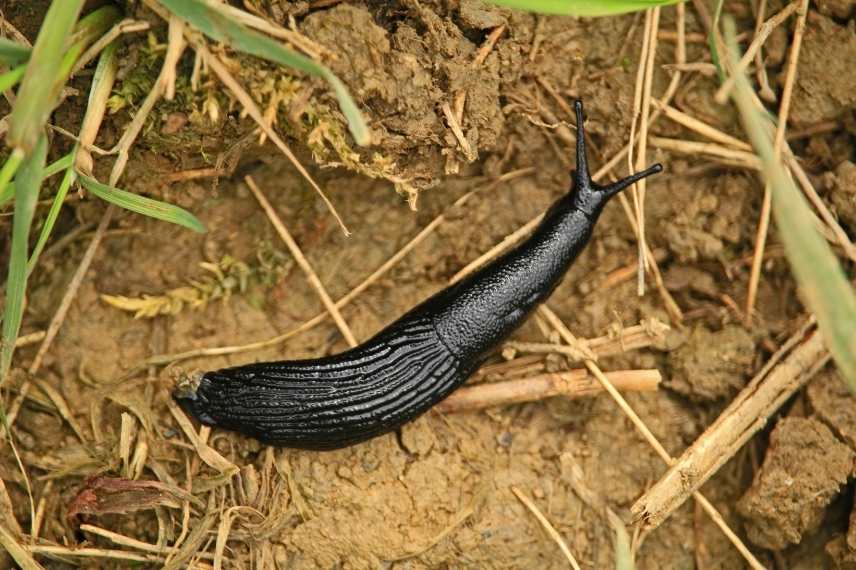
Knowing slugs’ hiding places helps control them better
An old abandoned pot, a patch of tall grass, a leafy plant… all these elements can become perfect refuges for slugs. By identifying and limiting these areas, you make the garden less welcoming to them, which reduces their presence without direct intervention.
Place natural barriers strategically
Slugs avoid dry, abrasive surfaces: wood ash, crushed eggshells, sand or copper strips. But be careful: these barriers are much more effective if you know where they start from. By tracing their “routes” from their hideouts to your young plants, you can place protections in the right spots.
What about compost and mulch?
Compost and mulch are perfect spots for slugs: warm, damp, full of plant waste for the compost… If you notice slugs sheltering in the compost bin, consider moving it a little away from the vegetable patch. You can also surround it with a dry zone or a natural border to limit night-time excursions.
Mulching is trickier. You can avoid mulching or remove it from certain crops that attract slugs. Try diverting them by applying mulch elsewhere, around less attractive plants. Once your lettuces have gained some vigour, mulch them again to retain soil moisture.
- Subscribe!
- Contents
This form is protected by reCAPTCHA - the Google Privacy Policy and Terms of Service apply.

































Comments