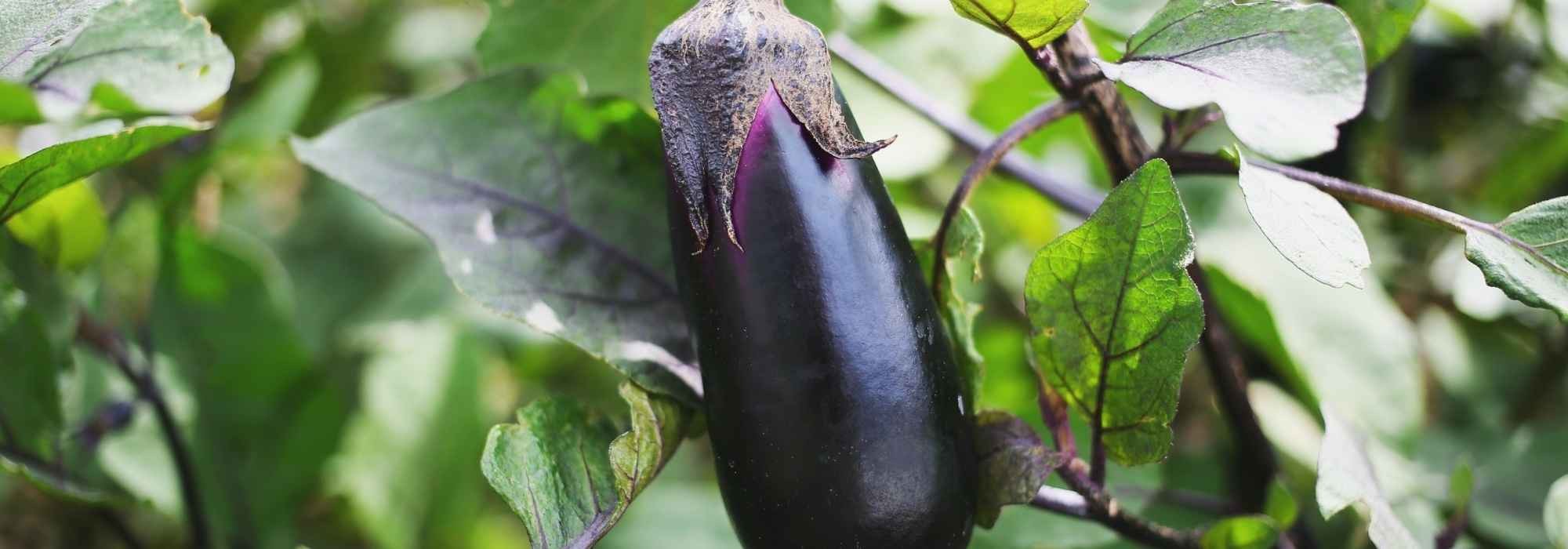
Why aren't young aubergine plants producing fruit?
Eggplant cultivation mistakes and solutions for better fruit set
Contents
If you like aubergines, growing them in a vegetable patch or on a balcony is a good idea. However, sometimes, despite lush foliage and a pretty flowering, no fruit sets. Or worse, they set but abort quickly. It must be said that this vegetable plant, belonging to the Solanaceae family, has a few particular requirements, whether physiological, environmental or climatic. Let’s try to understand why aubergines do not produce fruit so we can find the most appropriate solutions.

A question of temperatures being too cool
Understanding why your aubergine young plants fail to set fruit requires analysing several factors. Temperature management may be most important. Indeed, aubergine has tropical or subtropical origins, so it needs sun and warmth to set fruit. To develop properly and begin fruiting, it needs daytime temperatures ideally between 20 and 30 °C. Night temperatures must not be too cool. If temperatures fall to 10–12 °C at night, aubergine will slow down.
Under these conditions, flowers open but fertilization does not occur. As a result, flowers abort, yellow and drop before they can be pollinated.
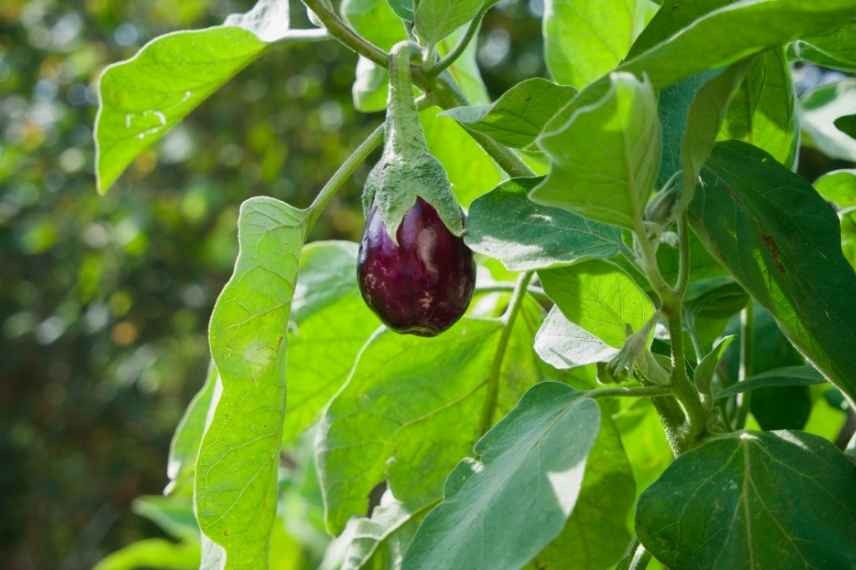
Aubergine prefers heat and sun; cool temperatures block pollination
What to do?
To remedy lack of fruiting caused by temperatures, and especially by nights that are too cool, several solutions can be implemented. Adjust according to region where you garden:
- Install thermal protection at night over aubergine young plants, such as fleece or low tunnels. They will help retain and then release heat stored in soil during the day
- Grow your aubergines in a greenhouse or under a cold frame in regions with consistently cool nights
- Mulch soil to reduce soil cooling at night
- Choose suitable varieties, preferably early ones such as aubergine de Barbentane.
Thermal blockage caused by a heatwave
Admittedly, aubergine likes warmth. But not too much! Temperatures that are too high are just as harmful as cool nights. During recurrent, prolonged periods of high temperatures, even heatwaves, when temperatures easily exceed 35 °C, pollen contained in the anthers of aubergine’s pretty purple flowers becomes completely sterile. In fact, excessive heat renders pollen non-viable. Flower buds develop, flowers open normally, but there is no fertilization. Fruit set does not occur, and the flower eventually withers and drops.
Moreover, during heatwaves, pollinating insects are noticeably less active than usual. This lack of pollinators can also impact the pollination of flowers.
At the same time, this heat-induced blockage also causes stagnation of small fruits already formed. It’s as if the high temperatures prevent them from growing. They remain stalled for the duration of the heatwave.
What to do?
Not much, except to wait for heatwaves to end so aubergine can resume a normal growth cycle. To lower temperatures, shading young aubergine plants is also possible, but if high temperatures persist this solution is insufficient.
Ineffective pollination
Regarding fertilization of flowers, another problem can occur, completely preventing their pollination. To begin with, aubergine is an autogamous plant, meaning it produces hermaphrodite flowers that contain both male and female organs. Aubergine flowers can therefore self-pollinate. Pollen transfer takes place within the same flower. It just needs a little help to fall onto the pistil! Namely a simple gust of wind, or more likely visiting pollinating insects, including the bumblebee, which, when landing on the flower, cause the pollen to fall. These insects are said to forage by resonance or vibration.
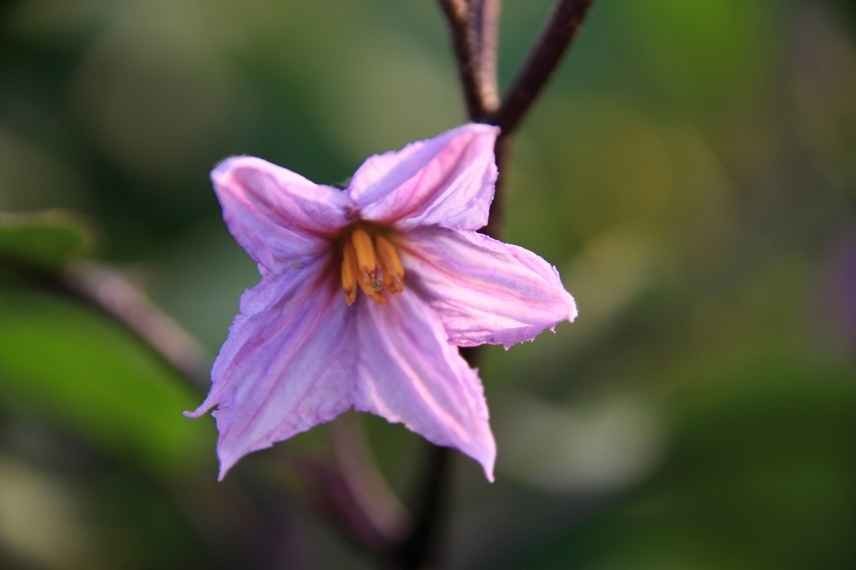
Flowers need movement from wind or pollinating insects to be pollinated
What to do?
So, to get aubergines when there is no wind or shaking from bees and bumblebees, it’s best to do this yourself! No need to don your finest bee costume or fetch the bellows… simply gently shake the flowers during the warmest hours of the day. Some gardeners even use electric toothbrushes, said to simulate the buzzing and flight of bumblebees or bees, placing them at the base of the flower… I’ll let you have a go!
Read also
Succeeding in growing auberginesExcess nitrogen caused by inappropriate fertilisation
Aubergine is a heavy feeder just like pepper. It therefore requires soil rich in organic matter, loose and deeply nourished. Fertilising the plant is therefore essential throughout growth. If you add no fertiliser, the plant will ensure its survival by concentrating all its energy into its stems and leaves, to the detriment of flowers and fruits.
While fertilisation is important, it must not be done at any time or in any old way! Indeed, the slightest nutrient imbalance will cause a real blockage. For example, if you add a fertiliser too rich in nitrogen (N), such as nettle manure or a commercial fertiliser, the foliage will be stimulated and develop. Admittedly, your young plants will be beautiful, dense and bushy, and above all very green, but not the flowers! So no fruits. To produce flowers and set fruit, aubergine needs phosphorus (P) and especially potassium (K). Potassium is the key element for flowering, fruit set and fruit enlargement, and a deficiency inevitably results in flowers aborting.
What to do?
To stimulate aubergine flowering, several solutions are possible :
- Thoroughly enrich soil at planting time with well-rotted compost or well-decomposed manure to obtain soil rich in organic matter
- As soon as flowers appear, stop applications of high-nitrogen fertilisers, such as nettle manure, and favour a fertiliser higher in phosphorus and potassium. Organic fertilisers for fruiting vegetables or tomatoes are perfect
- You can also add natural potash using wood ashes, but in moderation
- Add comfrey manure to your watering water; it is very rich in phosphorus and potassium and will encourage fruiting rather than mere foliage growth.
Careful watering management
Describing aubergine watering as “delicate” is entirely appropriate. Indeed, this vegetable plant dislikes both excess water and lack of water. The slightest water stress, even for two to three days, sends a signal to the plant: stop producing flowers and fruits and switch to survival mode! Even a short drought without regular water supply stops growth, causes flowers to drop and prevents fruit set.
Conversely, soil that is permanently waterlogged or watering that is too frequent and shallow suffocates the roots, favours the development of root rots and leaches essential nutrients such as nitrogen and potassium away from the plant.

Aubergine dislikes both excess water and lack of water
What to do?
Aubergines require regular, generous watering, preferably at the base and in the morning to avoid rapid evaporation and thermal shocks, taking care to maintain constant but not excessive moisture in the root zone. Water every 3 to 4 days in summer, at about 3 to 5 litres per plant. In case of drought or heatwave, increase watering to every 2 days, or even daily if necessary.
Similarly, applying a thick mulch is essential to keep soil sufficiently cool and prevent evaporation of applied water.
Presence of pests or cryptogamic diseases
Parasitic attacks and fungal diseases are major obstacles to fruiting. A young plant already weakened by climatic or nutritional stress becomes a prime target for pests such as aphids, which colonise young shoots and flower peduncles, or for red spider mites particularly active in hot, dry weather. By piercing foliage and stems to feed on sap, these mites exhaust the plant and cause a general weakening that prevents fruit from forming or persisting. Likewise, cryptogamic diseases such as powdery mildew or downy mildew can impair photosynthesis by covering leaves with a white powdery coating or by causing their necrosis, thereby depriving the whole plant of the vigour necessary to set and develop fruit production.
What to do?
Watch closely for even the slightest sign of pest attack or disease so you can act quickly to put things right!
Challenges of container gardening
If your aubergines are grown in pots on a balcony or terrace, they face an additional constraint: the confined volume of the container. Aubergines have a powerful root system that requires a considerable volume of soil to meet their high needs. A pot that is too small, containing less than 15 to 20 litres of potting compost per young plant, quickly leads to root-binding and root saturation. Roots become cramped, unable to take up sufficient water and nutrients to support the energy required for fruit formation. Young plants reach roughly normal size, produce a few flowers but never manage to set fruit.
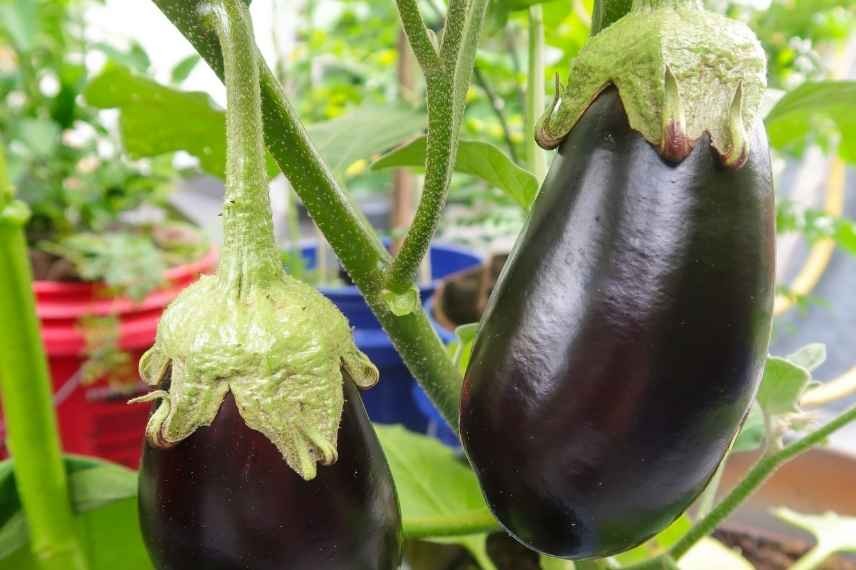
Aubergines grown in pots need a container of at least 20 to 30 litres
What to do?
- Choose a pot with a capacity of at least 20 to 30 litres to leave enough room for roots to develop
- Select a potting compost of good horticultural quality, mixed with one third garden soil and one third well-rotted compost
- Fertilise regularly with a potassium-rich fertiliser every two weeks.
- Subscribe!
- Contents
This form is protected by reCAPTCHA - the Google Privacy Policy and Terms of Service apply.

































Comments