
































With spring's arrival, activity is in full swing at the nursery. For several days, many gardeners have been asking us the following question: "My seedlings are becoming leggy — why?"
What is a leggy seedling?
Leggy seedlings show rapid, upward growth of seedlings. This is also described as etiolation. This etiolation appears as abnormally long, very thin and weak stems. Rather than standing upright, they may even flop over. Root system development is reduced, as are leaves, which may show discolouration.
Why are my seedlings leggy?
Leggy seedlings are a common problem when sowing indoors under warm conditions. Main cause: insufficient light combined with excessively high temperatures. Seedlings can also become leggy if sown too densely, not spacing seeds far enough apart.
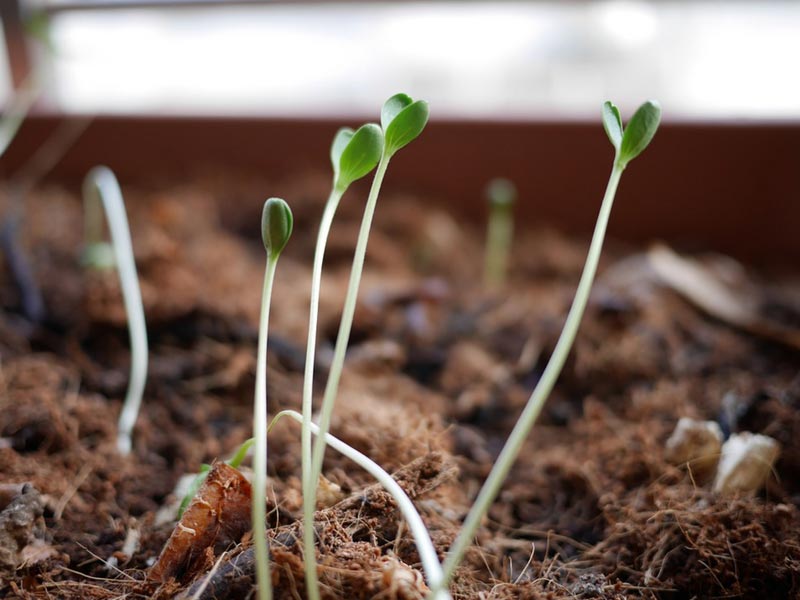
Searching for light, these young seedlings elongate their stems excessively
How to prevent this problem?
Put simply, in nature warm conditions occur in late spring or summer when days are long. If you reproduce those temperatures indoors, make sure light levels match.
To prevent seedlings becoming leggy, here are several practical solutions and tips:
- For plants that require relatively high temperatures to germinate (chillies, peppers, tomatoes), monitor germination closely. Once first leaves appear, move trays to a very bright but cooler spot (a windowsill). Also turn trays daily so all seedlings receive maximum sun.
- If that is not possible, provide supplemental horticultural lighting (available now at IKEA) to supply extra light to meet their needs.
- Don't coddle seedlings too much: do not sow indoors plants that germinate perfectly well at 10–15°C,
- space seeds well: overcrowded sowings create too much competition for light,
- If that all seems complicated, delay sowing by a few weeks. Lengthening days will provide more light and some sowings can even be done outdoors under cover.
What to do with leggy seedlings?
Most of the time, there is no miracle cure: you need to sow again because a leggy sowing rarely produces quality plants and any rescue attempts are long and tedious. For plants that are transplanted by burying part of the stem (Solanaceae), moderate etiolation is less serious because the too-long stem can be buried at transplanting. It will then develop into a well-established root system.
And you, do you have any tips to rescue a leggy seedling?

Comments