Rosemary is a perennial aromatic plant whose leaves can be harvested almost all year round, with peak fragrance just before or at the start of flowering. To retain its aroma for several months, it is recommended to dry it in the open air. Once thoroughly dry, rosemary will keep for up to a year in an airtight jar, away from light and moisture. Discover when to harvest rosemary, how to dry it step by step and the best methods to preserve all its flavour.
When and how to harvest rosemary?
Rosemary can be harvested almost year-round, but it is most fragrant just before or at the start of flowering, in spring or early summer. At this time the leaves contain the highest concentration of essential oils. The flowers, which are also edible, can be harvested and dried too, although the leaves are the part most used in cooking.
Prefer harvesting in the morning once the dew has evaporated. Using a pruning shear, take healthy sprigs about 15 centimetres long. Avoid removing more than one third of the foliage so as not to weaken the shrub.
Rosemary is pleasant to eat fresh, but a large harvest can easily be dried for use throughout the year.
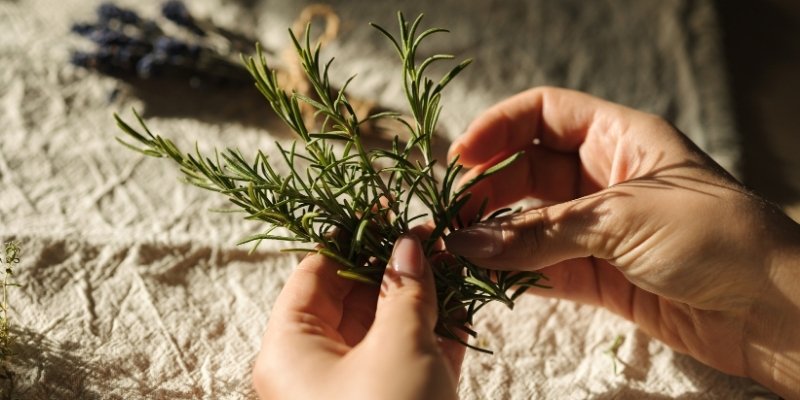
How to dry rosemary?
There are two ways to dry rosemary: air-drying, the simplest and the one that best preserves aroma, or using an oven if you want to speed up the process.
How to air-dry rosemary?
Natural drying suits rosemary particularly well thanks to its thick, low-moisture leaves. It is the method that best preserves its scent.
- Shake rosemary sprigs to remove dust and any insects. If necessary, wipe them gently with a damp cloth, without rinsing under water.
- Make small bunches of 5 to 10 stems and tie them with string.
- Hang the bunches upside down in a dry, warm, well-ventilated place out of direct sunlight.
- Leave to dry for one to two weeks, depending on temperature and humidity.
- When the leaves become brittle and come away easily from the stems, strip them off and store whole or crumbled in an airtight jar, away from light.

How to store dried rosemary?
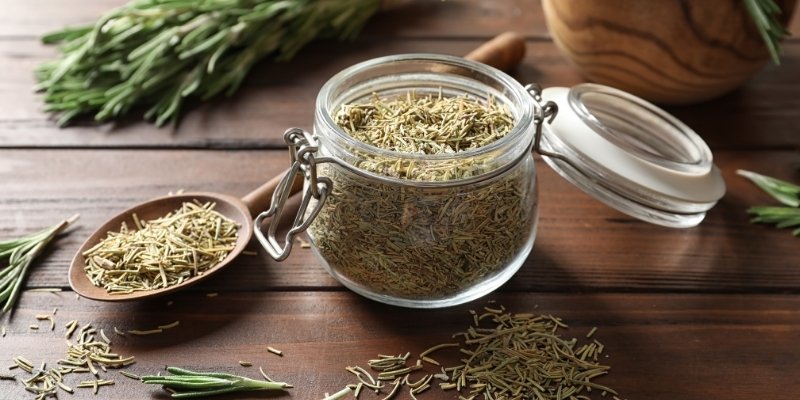
Once completely dry, rosemary should be stored away from light, heat and moisture to preserve its aroma.
The simplest option is to place it in an airtight glass jar. You can keep the sprigs whole or strip the leaves from the stems. It is preferable to keep the leaves whole and crumble them when using: they will retain more of their fragrance that way.
Dried rosemary can also be kept in a well-sealed metal tin, a paper bag (for short-term storage in a very dry place) or a fabric pouch, particularly if intended to scent wardrobes rather than for culinary use.
Under good storage conditions, it retains its aromatic qualities for about one year. After that it is still safe to use, but its fragrance gradually diminishes.
How to use dried rosemary?
Dried rosemary is at home both in the kitchen and around the house.
In cooking, it flavours barbecues, roasts, potatoes, oven-baked vegetables, marinades, sauces, focaccias or herb mixes such as herbes de Provence. Add it preferably at the start of cooking so it gradually releases its aroma, and remove the sprigs before serving if left whole.
Dried rosemary is also enjoyed as an infusion, alone or combined with other aromatic plants such as thyme or mint.
At home, sprigs can be slipped into wardrobes, drawers or linens to scent them pleasantly. Placed in small fabric sachets, rosemary also helps repel some insects, such as clothes moths, although its effectiveness is more variable than that of lavender.
Finally, it is used in potpourri, scented wreaths, decorative dried bouquets or fragranced sachets to naturally perfume a room.


































Comments