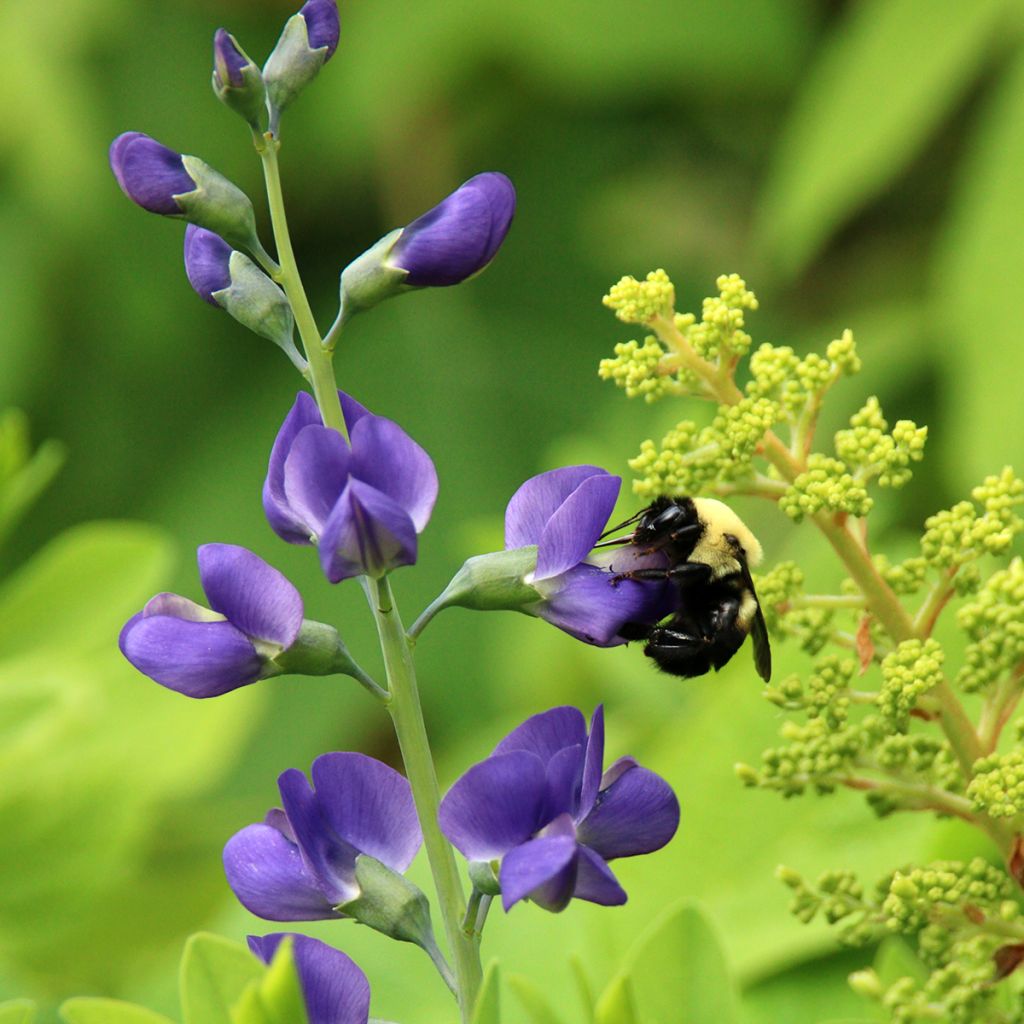
Baptisia abberans x alba Purple Smoke - Lupin indigo, Baptisie, Faux indigo, Podalyre

Baptisia abberans x alba Purple Smoke - Lupin indigo, Baptisie, Faux indigo, Podalyre
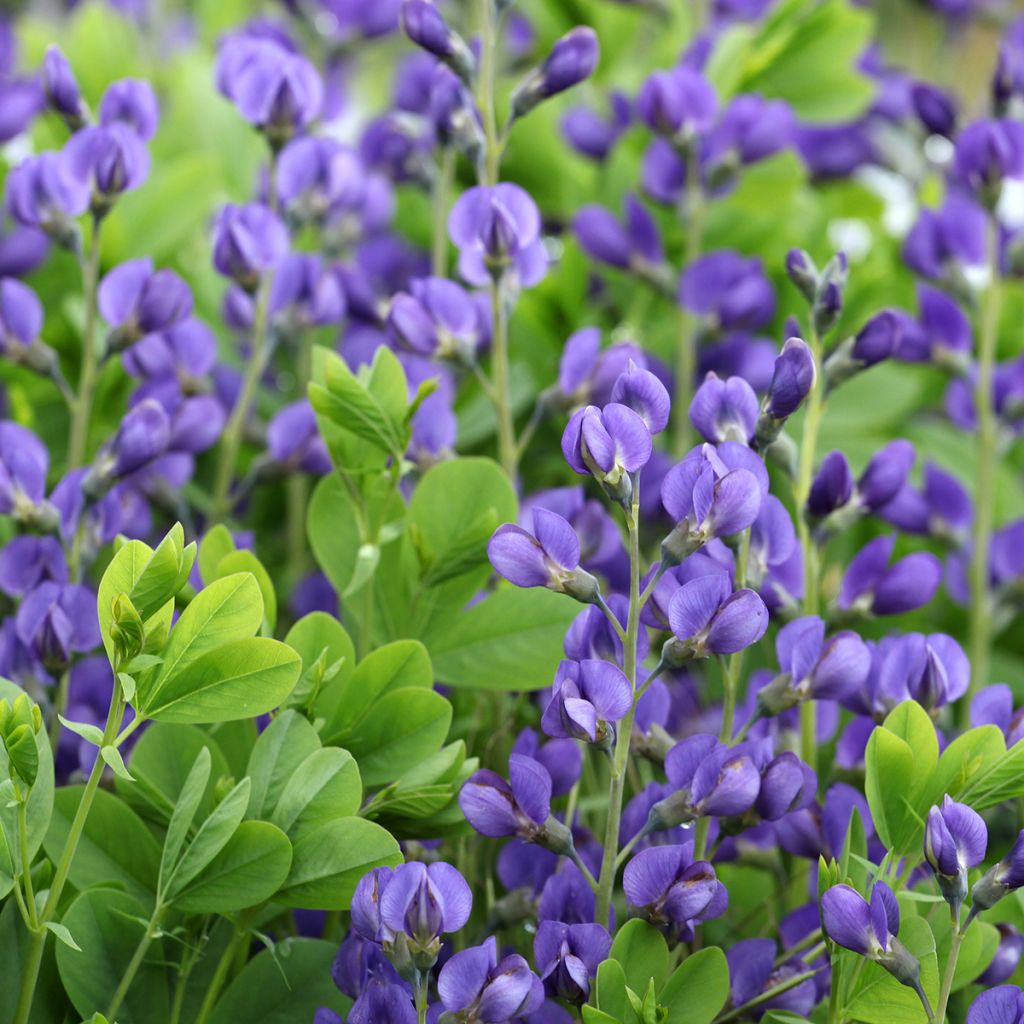
Baptisia abberans x alba Purple Smoke - Lupin indigo, Baptisie, Faux indigo, Podalyre
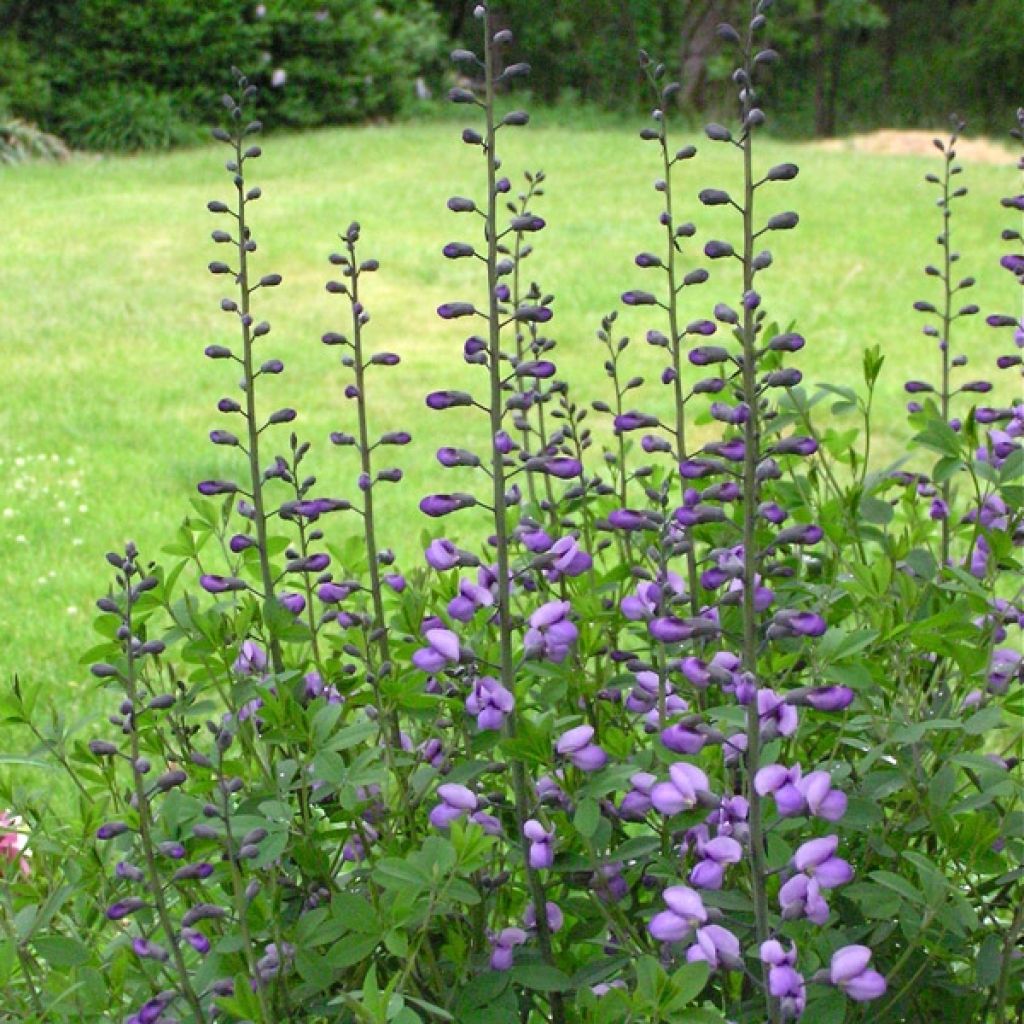
Baptisia abberans x alba Purple Smoke - Lupin indigo, Baptisie, Faux indigo, Podalyre
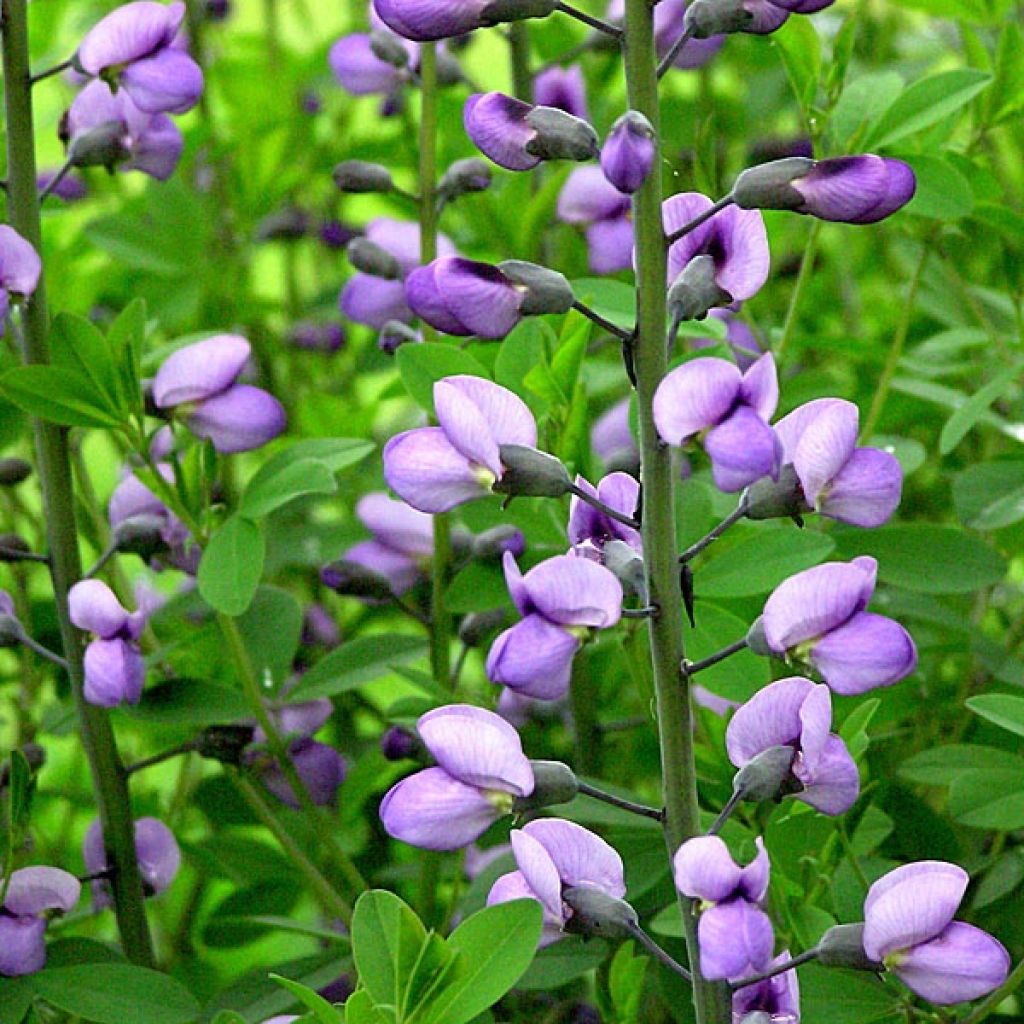
Baptisia abberans x alba Purple Smoke - Lupin indigo, Baptisie, Faux indigo, Podalyre
Baptisia abberans x alba Purple Smoke - Lupin indigo, Baptisie, Faux indigo, Podalyre
Baptisia abberans x alba Purple Smoke - Lupin indigo, Baptisie, Faux indigo, Podalyre
Baptisia abberans x alba Purple Smoke - Lupin indigo, Baptisie, Faux indigo, Podalyre
Baptisia abberans x alba Purple Smoke
young plant received without a stem, I can see a stump by scratching the compost. I thought the bucket was empty at first! Nearly £10 for a stump without a stem and without foliage, it's disappointing.
Monique, 27/03/2022
Back-to-school special offer!
Get €10 off for every €50 you spend! And get up to €40 off on a single order.
How does it work?
1. Shop your favourites
Add your favourite plants to your basket. For every €50 you spend (excluding delivery charges, store credit and the plastic-free option), you’ll receive a €10 voucher.
€50 spent = €10 voucher
€100 spent = €20 voucher
€150 spent = €30 voucher
€200 spent = €40 voucher
2. Place your order
Once your basket reaches one of the spending thresholds, place your order. You can even choose your delivery date!
3. Receive your voucher
As soon as your order has been shipped, you’ll receive an email containing your personal voucher code and its value.
4. Use it on your next order
Your voucher is valid for 90 days from the date you receive it. It can be used once only, on a new order worth at least the value of the voucher, excluding delivery charges.
Please note: Vouchers can be combined with other offers, but cannot be split or refunded.
Home or relay delivery (depending on size and destination)
Important: You may be charged customs duties by your country’s customs authorities upon delivery.
Schedule delivery date,
and select date in basket
This plant carries a 12 months recovery warranty
More information
We guarantee the quality of our plants for a full growing cycle, and will replace at our expense any plant that fails to recover under normal climatic and planting conditions.
Would this plant suit my garden?
Set up your Plantfit profile →
Description
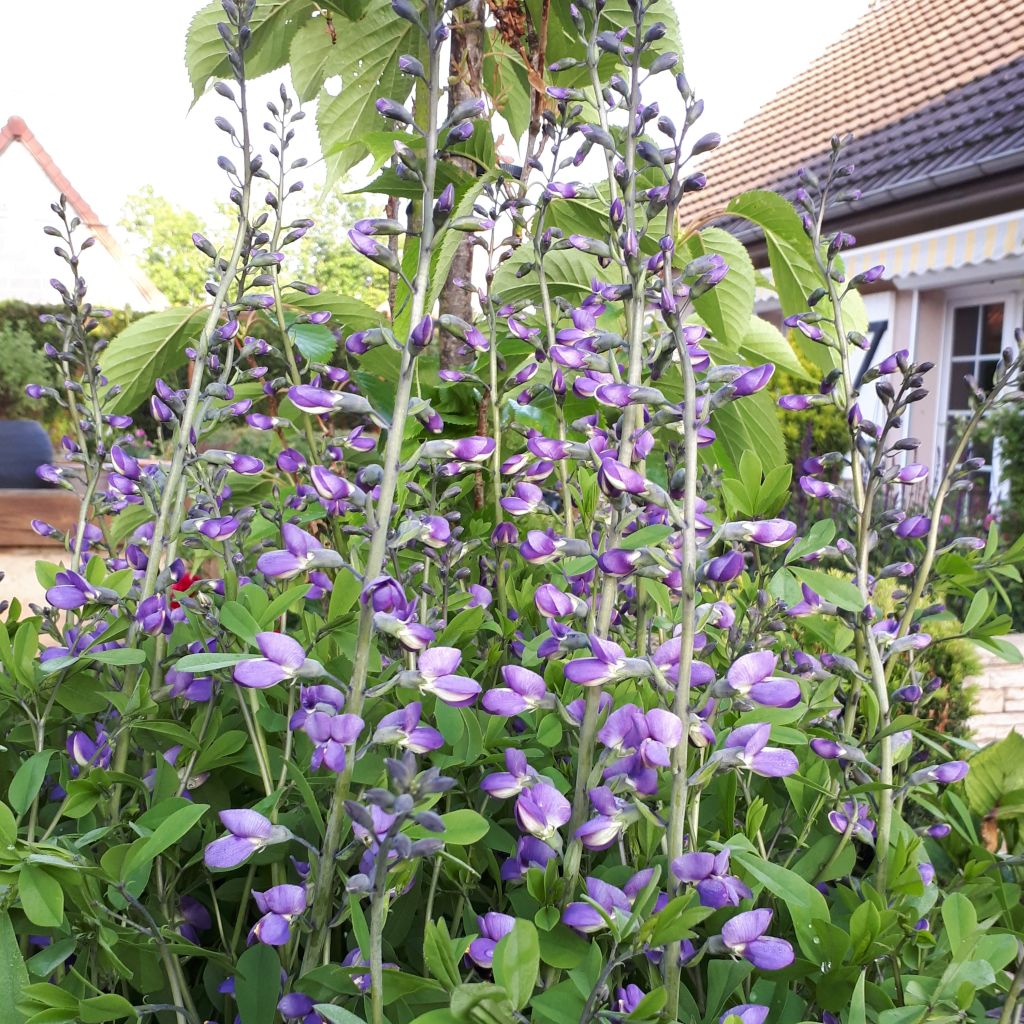
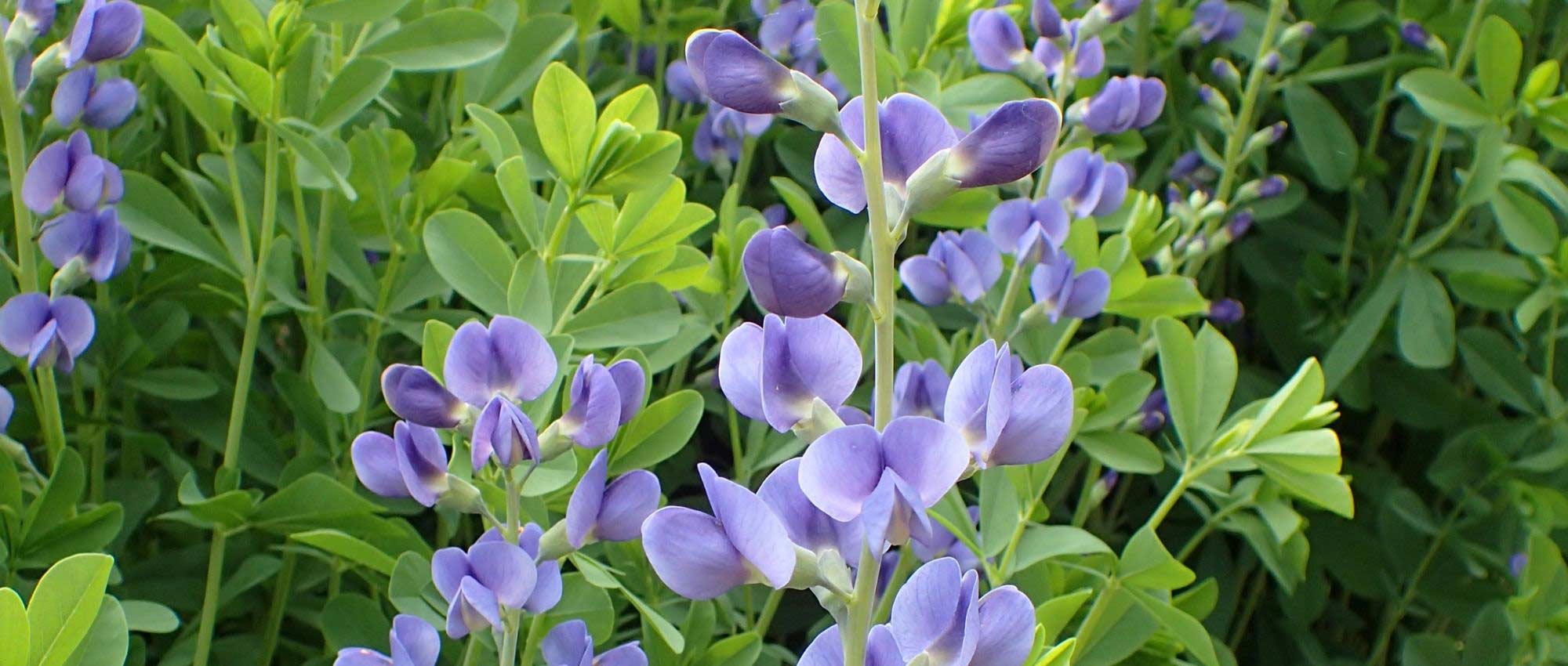
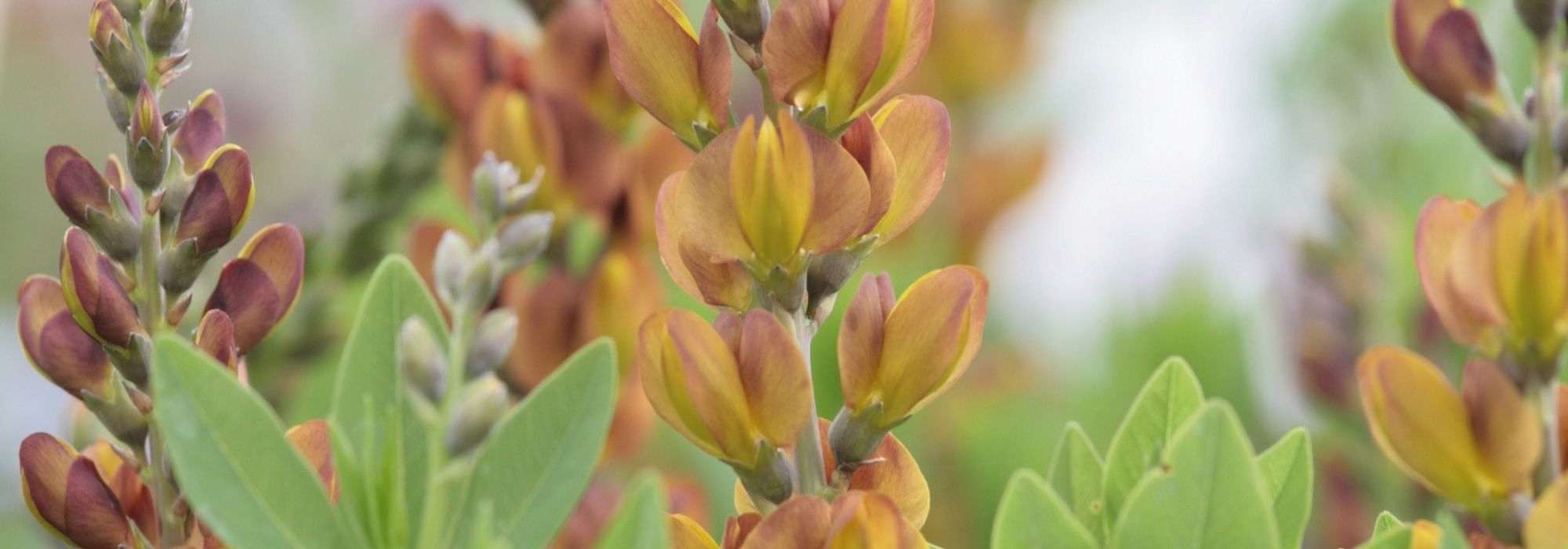
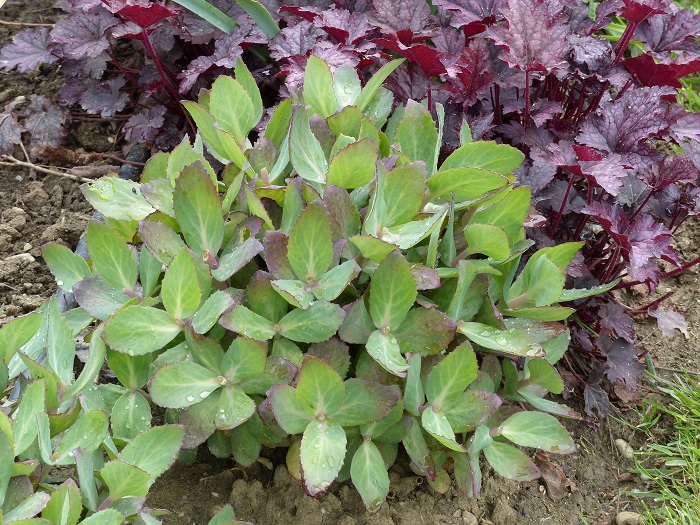
The Baptisia 'Purple Smoke', or false indigo, is distinguished by long clusters of flowers in shades of purplish violet and smoky blue-mauve, borne on anthracite-grey stems that are almost black. This unusual colouring is accompanied by fine, grey-green foliage that clothes a broad, rounded clump. This robust perennial from North America takes a little time to establish, but it lives for many years with very little care. Its deep root system allows it to withstand drought well once established. It is also one of the few baptisias commonly cultivated that tolerates chalky (alkaline) soil.
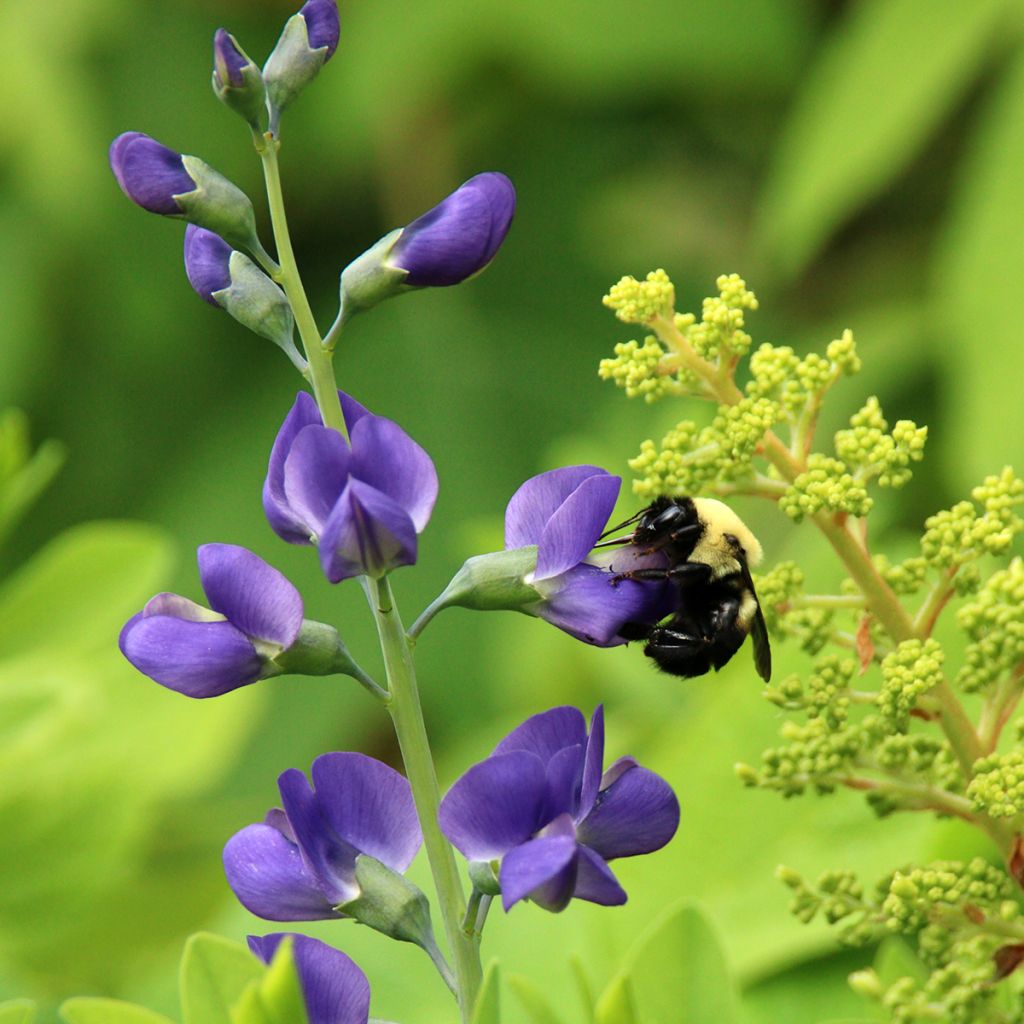
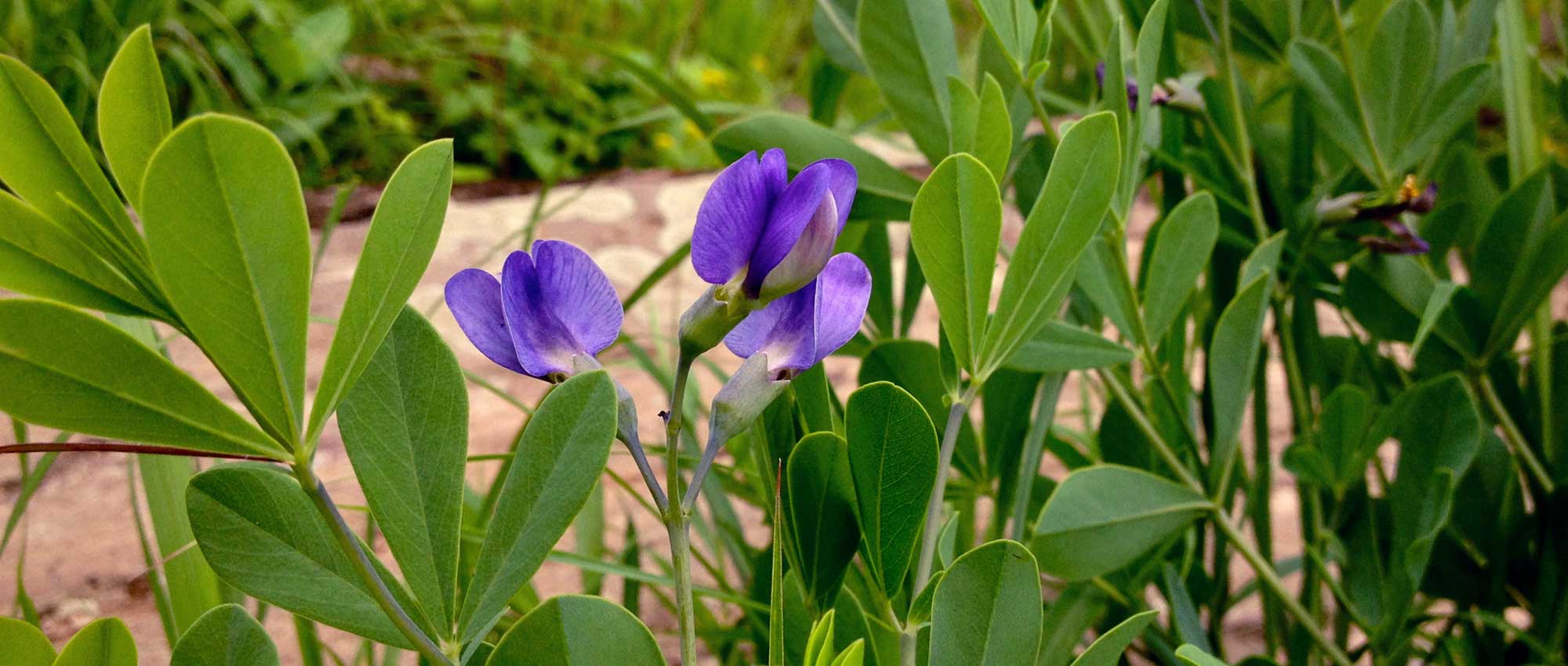
The baptisia belongs to the Fabaceae family, like peas, lupins and wisteria. It is a herbaceous and deciduous perennial: its stems emerge from the rootstock in spring and then dry up in winter. Species of the genus Baptisia grow naturally in meadows, clearings and dry woodlands of North America, sometimes on poor, stony ground. 'Purple Smoke' was discovered in the early 1990s among spontaneous seedlings cultivated at the North Carolina Botanical Garden. Rob Gardner, then curator of the native plant collections, selected it for the colour of its stems and flowers. The Botanical Garden and Niche Gardens nursery introduced it in 1996. It is a hybrid between Baptisia aberrans and B. alba. The first parent passed on its small leaves and the smoky violet colour of its flowers, while the second accounts for its dark stems and grey-green foliage. The plant establishes slowly during the first two or three years, as it develops a thick, deep taproot. It then takes the form of a generous clump, 1 to 1.20m tall, potentially exceeding 1.50m in width after several years. The leaves are divided into three small leaflets, narrower than those of many other baptisias. The inflorescences, 35 to 45 cm long, gather greyish-violet pea flowers, marked with a more purplish eye. They open progressively from the base to the top between May and June. The flowering period extends over three weeks, then gives way to cylindrical pods that turn brown as they ripen. The flowers are visited by bees and butterflies. In the trial conducted by the Mt. Cuba Center, 'Purple Smoke' scored 4.7 out of 5 and was among the top ten selections tested.
In a large, sunny border, you can pair Baptisia 'Purple Smoke' with the pale pink spikes of Linaria purpurea 'Canon J. Went', the blue-mauve flowers of the shrubby lavatera 'Blue Bird' and the stately spires of mullein 'Southern Charm'. The broom 'Hollandia', with its cream, pink and cherry-red flowers, can form a light backdrop. These plants offer successive flowering periods that animate the border from late spring to summer. Grasses such as Sporobolus heterolepis and Schizachyrium scoparium 'Blaze' also have the stature needed to compose a large border with the Baptisia and share its preference for sun, well-drained soil and a certain summer dryness.
Baptisia abberans x alba Purple Smoke - Lupin indigo, Baptisie, Faux indigo, Podalyre in pictures

Flowering
Foliage
Plant habit
Safety measures
Botanical data
Baptisia
abberans x alba
Purple Smoke
Fabaceae
Cultivar or hybrid
ingestion
Cette plante est toxique si elle est ingérée volontairement ou involontairement.
Ne la plantez pas là où de jeunes enfants peuvent évoluer, et lavez-vous les mains après l'avoir manipulée.
Pensez à conserver l'étiquette de la plante, à la photographier ou à noter son nom, afin de faciliter le travail des professionnels de santé.
Davantage d'informations sur https://plantes-risque.info
Planting and care
Plant Baptisia 'Purple Smoke' from February to April or from September to November, in full sun, in deep, well-drained soil. Light partial shade is tolerated, but it produces a less firm habit and less abundant flowering. Loosen the soil to a depth of 40 to 50 cm without enriching it excessively: overly fertile soil encourages weaker stems. This baptisia tolerates poor, stony, lime-bearing and even clay soils, provided water does not stagnate in winter. Choose its position carefully, as its taproot does not cope well with transplanting or division. Water deeply, but at spaced intervals, during the first two summers. Once the plant is well established, watering becomes unnecessary except during severe drought.
Planting period
Intended location
Care
Planting & care advice
-
-
-
-
-
-
-

-

-
, onOrder confirmed
Reply from on Promesse de fleurs
Recently viewed products
Haven't found what you were looking for?
Hardiness is the lowest winter temperature a plant can endure without suffering serious damage or even dying. However, hardiness is affected by location (a sheltered area, such as a patio), protection (winter cover) and soil type (hardiness is improved by well-drained soil).

The flowering period indicated on our website applies to countries and regions located in USDA zone 8 (France, the United Kingdom, Ireland, the Netherlands, etc.)
It will vary according to where you live:- In zones 9 to 10 (Italy, Spain, Greece, etc.), flowering will occur about 2 to 4 weeks earlier.
- In zones 6 to 7 (Germany, Poland, Slovenia, and lower mountainous regions), flowering will be delayed by 2 to 3 weeks.
- In zone 5 (Central Europe, Scandinavia), blooming will be delayed by 3 to 5 weeks.
In temperate climates, pruning of spring-flowering shrubs (forsythia, spireas, etc.) should be done just after flowering.
Pruning of summer-flowering shrubs (Indian Lilac, Perovskia, etc.) can be done in winter or spring.
In cold regions as well as with frost-sensitive plants, avoid pruning too early when severe frosts may still occur.
The planting period indicated on our website applies to countries and regions located in USDA zone 8 (France, United Kingdom, Ireland, Netherlands).
It will vary according to where you live:
- In Mediterranean zones (Marseille, Madrid, Milan, etc.), autumn and winter are the best planting periods.
- In continental zones (Strasbourg, Munich, Vienna, etc.), delay planting by 2 to 3 weeks in spring and bring it forward by 2 to 4 weeks in autumn.
- In mountainous regions (the Alps, Pyrenees, Carpathians, etc.), it is best to plant in late spring (May-June) or late summer (August-September).
The harvesting period indicated on our website applies to countries and regions in USDA zone 8 (France, England, Ireland, the Netherlands).
In colder areas (Scandinavia, Poland, Austria...) fruit and vegetable harvests are likely to be delayed by 3-4 weeks.
In warmer areas (Italy, Spain, Greece, etc.), harvesting will probably take place earlier, depending on weather conditions.
The sowing periods indicated on our website apply to countries and regions within USDA Zone 8 (France, UK, Ireland, Netherlands).
In colder areas (Scandinavia, Poland, Austria...), delay any outdoor sowing by 3-4 weeks, or sow under glass.
In warmer climes (Italy, Spain, Greece, etc.), bring outdoor sowing forward by a few weeks.
Shipping country and language
Your country of residence may be:
Your country of residence is:
For a better user experience on our website, you can select:
Your shipping country:
-
 Austria
-
 Belgium
-
 Bosnia & Herzegovina
-
 Bulgaria
-
 Croatia
-
 Cyprus
-
 Czechia
-
 Denmark
-
 Estonia
-
 Finland
-
 France
-
 Germany
-
 Greece
-
 Hungary
-
 Iceland
-
 Ireland
-
 Italy
Italy
-
 Latvia
-
 Liechtenstein
-
 Lithuania
-
 Luxembourg
-
 Malta
Malta
-
 Netherlands
-
 Poland
-
 Portugal
-
 Romania
-
 Serbia
-
 Slovakia
-
 Slovenia
-
 Spain
Spain
-
 Sweden
-
 Switzerland
Language:
-
French
-
 English
-
Spanish
-
Italian
-
German
-
Portuguese
-
Dutch
-
Finnish
My Account
Hello
My wish lists
My cart
Log in / Register
Existing customer?
This form is protected by reCAPTCHA - the Google Privacy Policy and Terms of Service apply.
New customer?
Create an account to track your orders, access our customer service and, if you wish, make the most of our upcoming offers.