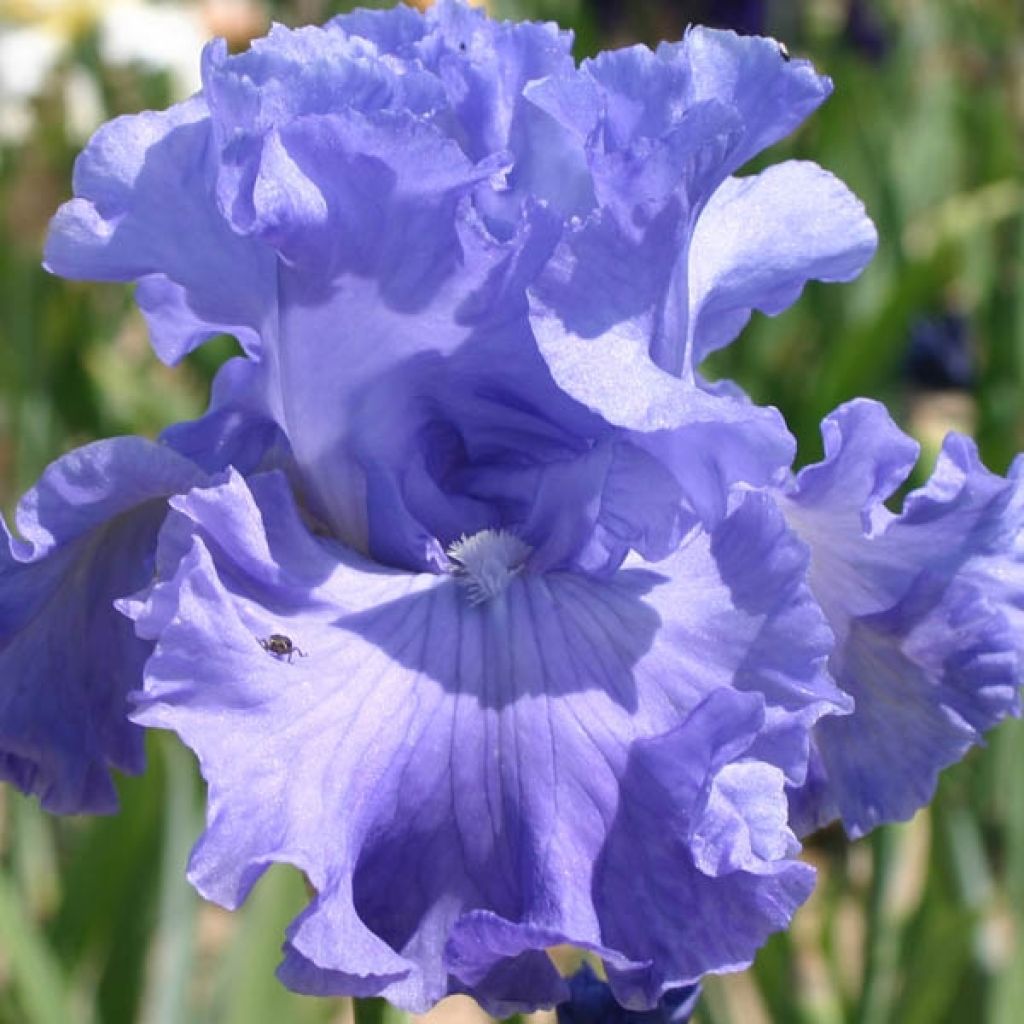
Iris germanica Delta Blues - Bearded Iris
Iris germanica Delta Blues - Bearded Iris
Iris germanica Delta Blues
German Iris, Bearded Iris
Beautiful young plant
Dorothee, 27/04/2022
Back-to-school special offer!
Get €10 off for every €50 you spend! And get up to €40 off on a single order.
How does it work?
1. Shop your favourites
Add your favourite plants to your basket. For every €50 you spend (excluding delivery charges, store credit and the plastic-free option), you’ll receive a €10 voucher.
€50 spent = €10 voucher
€100 spent = €20 voucher
€150 spent = €30 voucher
€200 spent = €40 voucher
2. Place your order
Once your basket reaches one of the spending thresholds, place your order. You can even choose your delivery date!
3. Receive your voucher
As soon as your order has been shipped, you’ll receive an email containing your personal voucher code and its value.
4. Use it on your next order
Your voucher is valid for 90 days from the date you receive it. It can be used once only, on a new order worth at least the value of the voucher, excluding delivery charges.
Please note: Vouchers can be combined with other offers, but cannot be split or refunded.
Home or relay delivery (depending on size and destination)
Important: You may be charged customs duties by your country’s customs authorities upon delivery.
Schedule delivery date,
and select date in basket
This plant carries a 12 months recovery warranty
More information
We guarantee the quality of our plants for a full growing cycle, and will replace at our expense any plant that fails to recover under normal climatic and planting conditions.

Would this plant suit my garden?
Set up your Plantfit profile →
Description
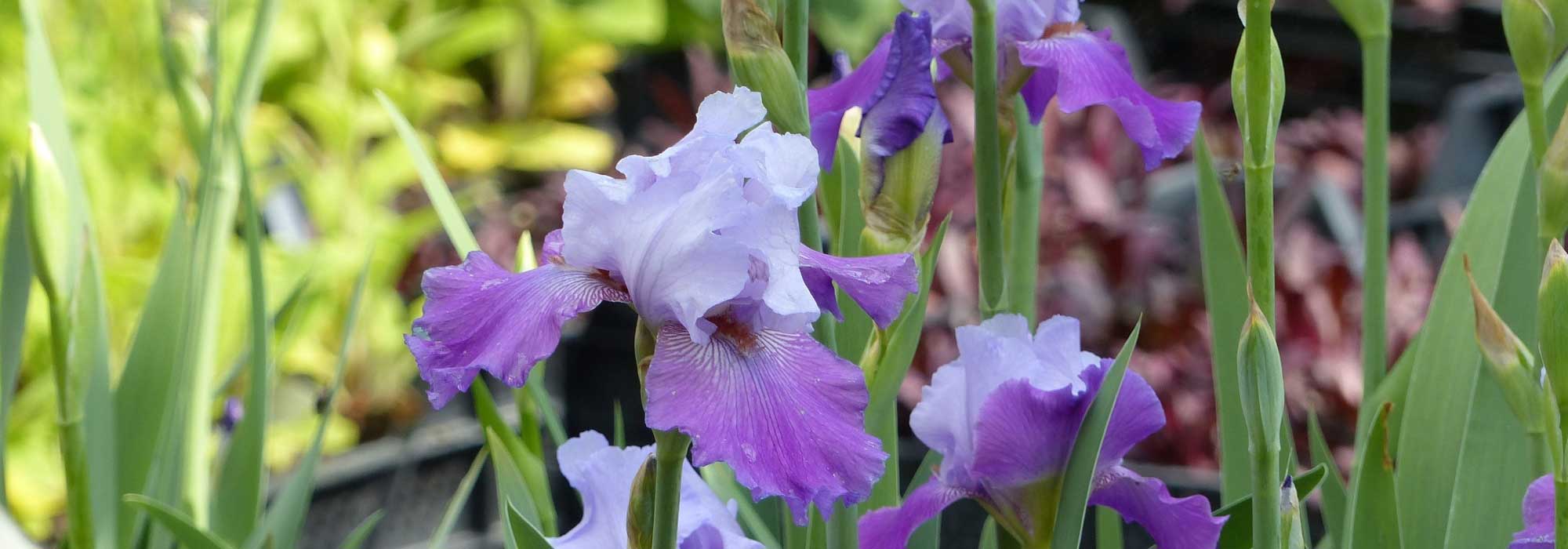
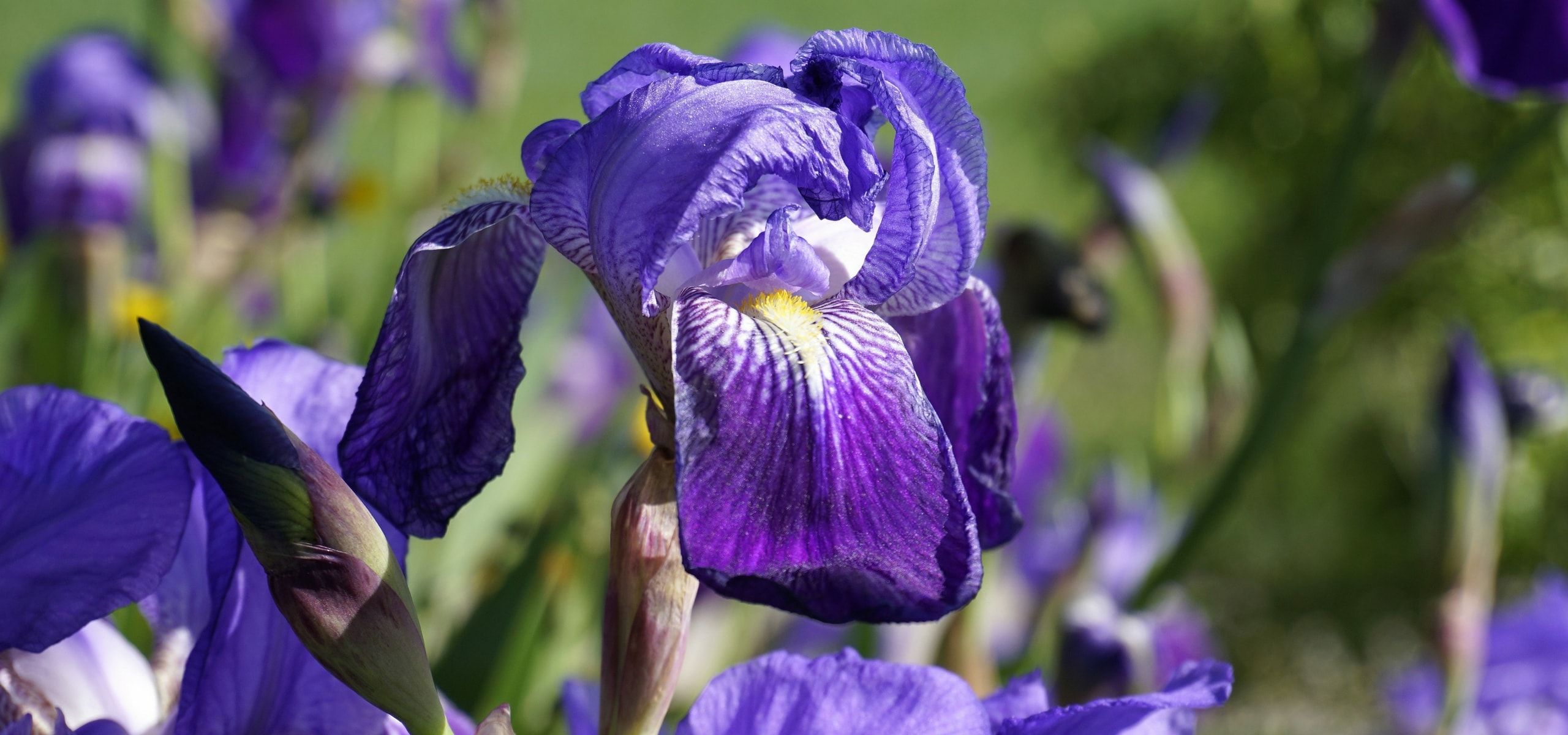
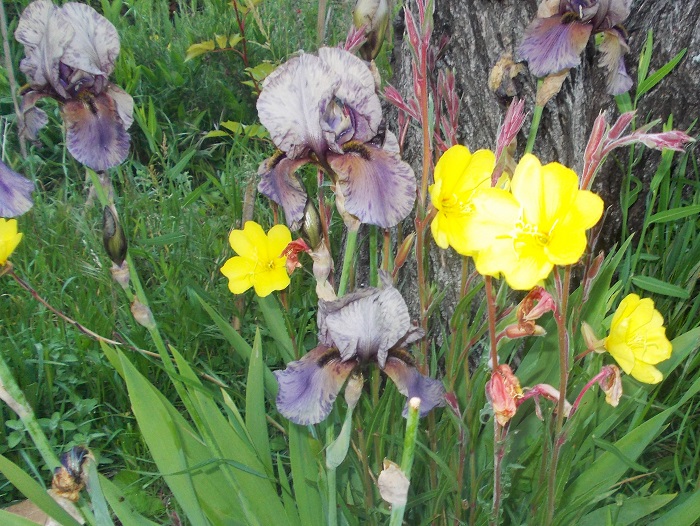
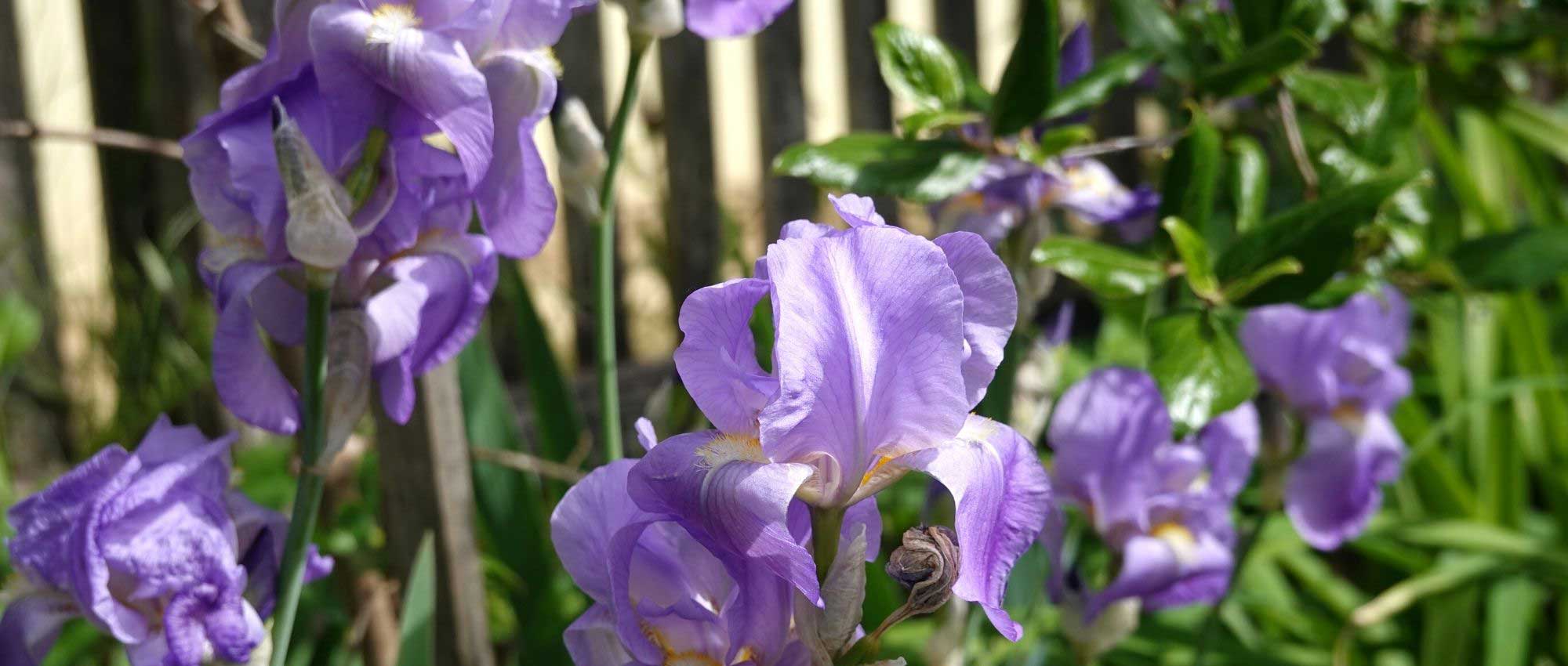
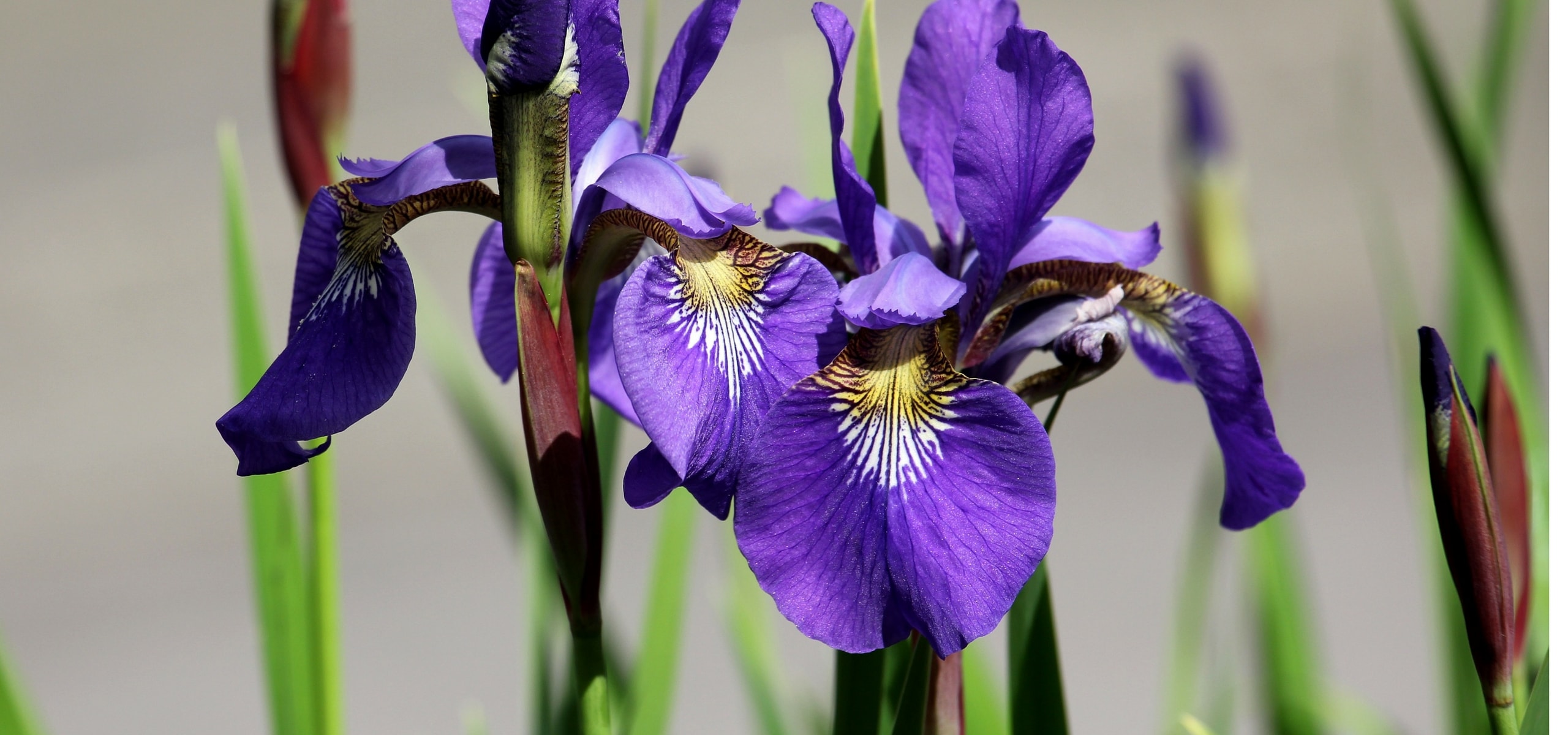
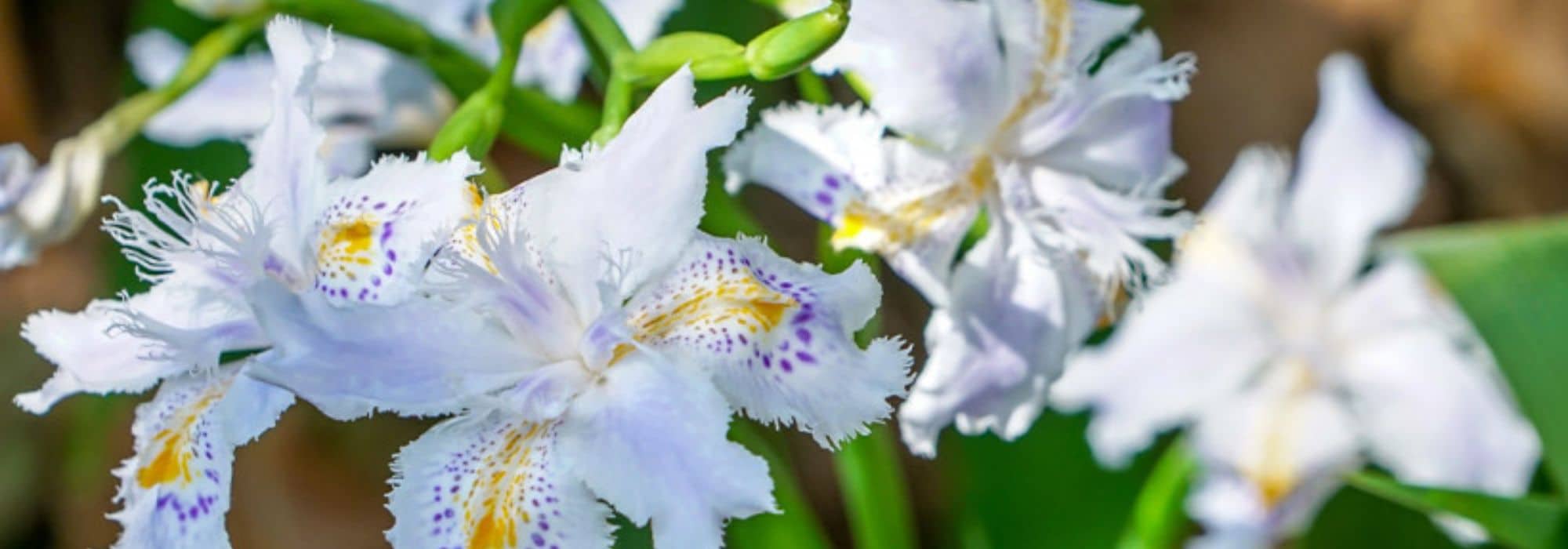
Iris germanica 'Delta Blues' is a tall and elegant bearded iris. Its large and beautiful flowers, with their undulating petals, display a magnificent lavender blue colour, delicately veined in a deeper shade of blue and highlighted by white beards. This iris can bear up to 10 flower buds per stem, ensuring long mid-season flowering. It is stunning in the garden in spring and its flowers are superb in bouquets.
The 'Delta Blues' iris is a perennial rhizomatous plant that develops in spring into elegantly upright clumps, with its foliage disappearing in winter. It belongs to the Iridaceae family. It is one of many cultivars obtained over the centuries, with debate about their disputed origins revolving around the number of chromosomes of potential ancestors. It should be noted that Bearded Irises have European origins. They are plants that thrive in calcareous soils and require plenty of sunlight, with their rhizomes needing to "cook" in summer in order to bloom. A minimum of 6 hours of sunlight per day is generally required.
'Delta Blues' can reach a height of 90 cm (35in) when in bloom, under good growing conditions. The clump can spread indefinitely over time, with the central rhizomes thinning out in favour of the outer ones. The foliage consists of long and wide sword-shaped leaves, of a slightly glaucous green colour and with parallel veins. In April floral stems appear, giving rise to 8 to 10 large flowers in May-June, which open from the top down towards the lower branches. The very bright colour of this plant is, as always with Bearded Irises, enhanced by the thick and iridescent texture of the upright petals and the trailing sepals. Note that the flower is not fragrant.
Obtained by Schreiner, 1994
Awards: HM (Honorable Mention) in 1996 and AM (Award of Merit) in 1998.
To complement irises, choose plants based on their needs (sunlight, soil), their "respectful" growth habit vis-a-vis irises (low-growing plants or light foliage), and how they complement each other visually (appearance, flowering period). For example, Gauras will cast little shade and will keep the bed attractive throughout summer once the irises have flowered. California Poppies (Eschscholzia), like irises, will be satisfied with dry and poor soil. Perennial geraniums, salvias, and Libertia also complement irises very well. Slopes and terraced edges can be stabilised by dense planting of old diploid varieties that can remain in place and require little care. If the goal is more decorative and access for care is possible one can choose more modern varieties, such as intermediates that are less likely than tall varieties to be knocked over by wind and rain.
Tip: avoid large masses of just irises, instead placing a few carefully chosen clumps among other plants with staggered flowering times.
Flowering
Foliage
Plant habit
Botanical data
Iris
germanica
Delta Blues
Iridaceae
German Iris, Bearded Iris
Cultivar or hybrid
Planting and care
The Delta Blues iris should be planted shallow, leaving the rhizome exposed at ground level. Add sand when the soil is too heavy or too wet, and place the rhizomes on small mounds. Ensure good drainage to prevent the iris from rotting. In summer this iris should be watered 1 to 2 times a month. At the end of flowering, they should be pruned by cutting the flower stalks 10 cm (4in) from the ground. Damaged leaves should only be removed in autumn. It is not advisable to provide too much nitrogen as it weakens the plant and increases the number of leaves at the expense of flowers. The taller flower stems become brittle. The iris can be susceptible to heterosporiosis, a disease characterised by oval brown spots. To prevent this, treat the iris with Bordeaux mixture at the beginning of the growing season. Every 4 years, in summer after flowering, divide the clumps by pulling up the entire plant. Transplanting should be done into a site that hasn't had irises in the last year. Select the most beautiful plants from the rhizome, usually those on the outer edge.
Planting period
Intended location
Care
Planting & care advice
-
-
-
-
-
-
-
-
-
, onOrder confirmed
Reply from on Promesse de fleurs
Recently viewed products
Haven't found what you were looking for?
Hardiness is the lowest winter temperature a plant can endure without suffering serious damage or even dying. However, hardiness is affected by location (a sheltered area, such as a patio), protection (winter cover) and soil type (hardiness is improved by well-drained soil).

The flowering period indicated on our website applies to countries and regions located in USDA zone 8 (France, the United Kingdom, Ireland, the Netherlands, etc.)
It will vary according to where you live:- In zones 9 to 10 (Italy, Spain, Greece, etc.), flowering will occur about 2 to 4 weeks earlier.
- In zones 6 to 7 (Germany, Poland, Slovenia, and lower mountainous regions), flowering will be delayed by 2 to 3 weeks.
- In zone 5 (Central Europe, Scandinavia), blooming will be delayed by 3 to 5 weeks.
In temperate climates, pruning of spring-flowering shrubs (forsythia, spireas, etc.) should be done just after flowering.
Pruning of summer-flowering shrubs (Indian Lilac, Perovskia, etc.) can be done in winter or spring.
In cold regions as well as with frost-sensitive plants, avoid pruning too early when severe frosts may still occur.
The planting period indicated on our website applies to countries and regions located in USDA zone 8 (France, United Kingdom, Ireland, Netherlands).
It will vary according to where you live:
- In Mediterranean zones (Marseille, Madrid, Milan, etc.), autumn and winter are the best planting periods.
- In continental zones (Strasbourg, Munich, Vienna, etc.), delay planting by 2 to 3 weeks in spring and bring it forward by 2 to 4 weeks in autumn.
- In mountainous regions (the Alps, Pyrenees, Carpathians, etc.), it is best to plant in late spring (May-June) or late summer (August-September).
The harvesting period indicated on our website applies to countries and regions in USDA zone 8 (France, England, Ireland, the Netherlands).
In colder areas (Scandinavia, Poland, Austria...) fruit and vegetable harvests are likely to be delayed by 3-4 weeks.
In warmer areas (Italy, Spain, Greece, etc.), harvesting will probably take place earlier, depending on weather conditions.
The sowing periods indicated on our website apply to countries and regions within USDA Zone 8 (France, UK, Ireland, Netherlands).
In colder areas (Scandinavia, Poland, Austria...), delay any outdoor sowing by 3-4 weeks, or sow under glass.
In warmer climes (Italy, Spain, Greece, etc.), bring outdoor sowing forward by a few weeks.
Shipping country and language
Your country of residence may be:
Your country of residence is:
For a better user experience on our website, you can select:
Your shipping country:
-
 Austria
-
 Belgium
-
 Bosnia & Herzegovina
-
 Bulgaria
-
 Croatia
-
 Cyprus
-
 Czechia
-
 Denmark
-
 Estonia
-
 Finland
-
 France
-
 Germany
-
 Greece
-
 Hungary
-
 Iceland
-
 Ireland
-
 Italy
Italy
-
 Latvia
-
 Liechtenstein
-
 Lithuania
-
 Luxembourg
-
 Malta
Malta
-
 Netherlands
-
 Poland
-
 Portugal
-
 Romania
-
 Serbia
-
 Slovakia
-
 Slovenia
-
 Spain
Spain
-
 Sweden
-
 Switzerland
Language:
-
French
-
 English
-
Spanish
-
Italian
-
German
-
Portuguese
-
Dutch
-
Finnish
My Account
Hello
My wish lists
My cart
Log in / Register
Existing customer?
This form is protected by reCAPTCHA - the Google Privacy Policy and Terms of Service apply.
New customer?
Create an account to track your orders, access our customer service and, if you wish, make the most of our upcoming offers.