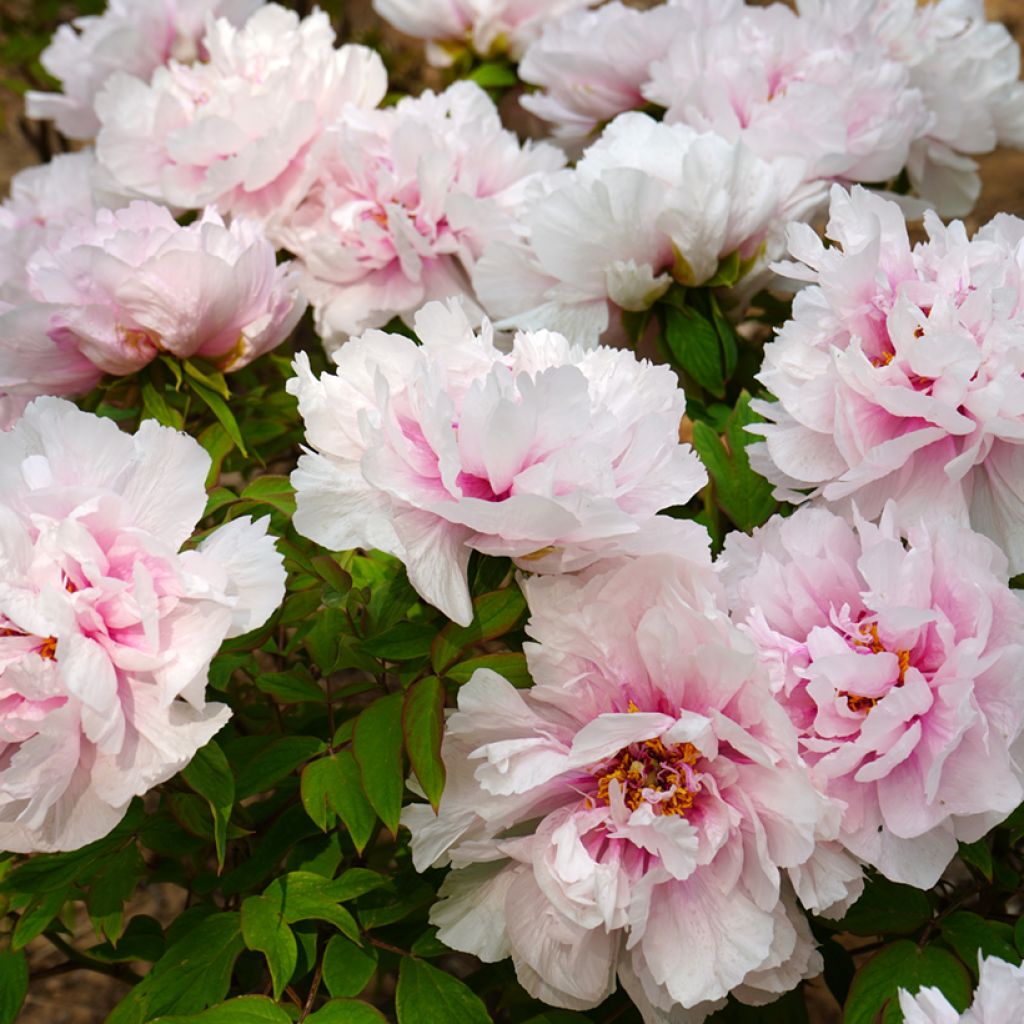
Paeonia x suffruticosa Xue Ying Tao Hua - Tree peony
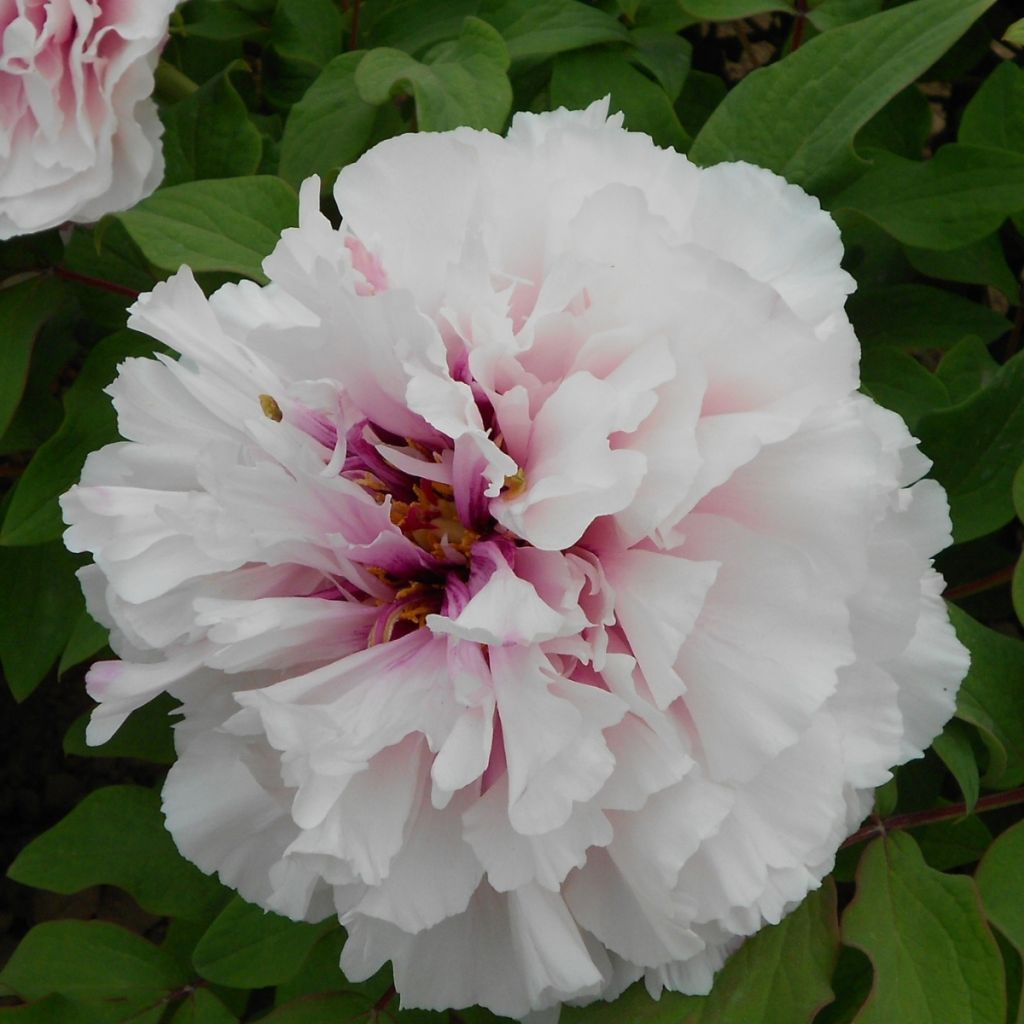
Paeonia x suffruticosa Xue Ying Tao Hua - Tree peony
Paeonia x suffruticosa Xue Ying Tao Hua - Tree peony
Paeonia x suffruticosa Xue Ying Tao Hua
Tree Peony
Back-to-school special offer!
Get €10 off for every €50 you spend! And get up to €40 off on a single order.
How does it work?
1. Shop your favourites
Add your favourite plants to your basket. For every €50 you spend (excluding delivery charges, store credit and the plastic-free option), you’ll receive a €10 voucher.
€50 spent = €10 voucher
€100 spent = €20 voucher
€150 spent = €30 voucher
€200 spent = €40 voucher
2. Place your order
Once your basket reaches one of the spending thresholds, place your order. You can even choose your delivery date!
3. Receive your voucher
As soon as your order has been shipped, you’ll receive an email containing your personal voucher code and its value.
4. Use it on your next order
Your voucher is valid for 90 days from the date you receive it. It can be used once only, on a new order worth at least the value of the voucher, excluding delivery charges.
Please note: Vouchers can be combined with other offers, but cannot be split or refunded.
Why not try an alternative variety in stock?
View all →
Available in 2 sizes

Available in 3 sizes
Available in 2 sizes

Available in 3 sizes
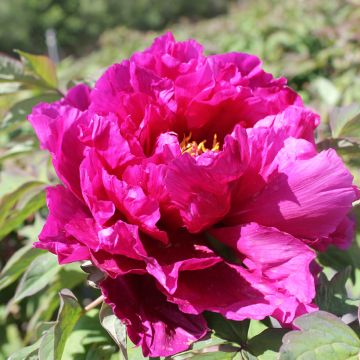
Available in 2 sizes
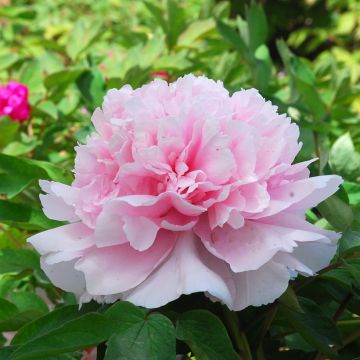
Available in 2 sizes
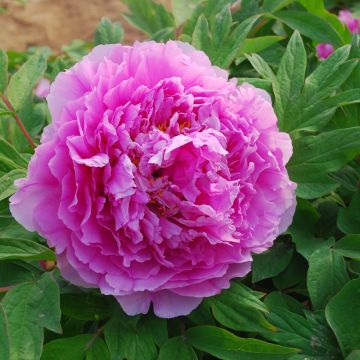
Available in 2 sizes

Available in 2 sizes

Available in 2 sizes
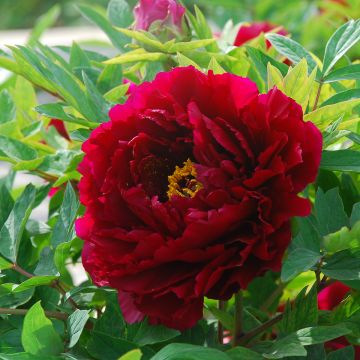
Available in 2 sizes
This plant carries a 12 months recovery warranty
More information
We guarantee the quality of our plants for a full growing cycle, and will replace at our expense any plant that fails to recover under normal climatic and planting conditions.
Would this plant suit my garden?
Set up your Plantfit profile →
Description
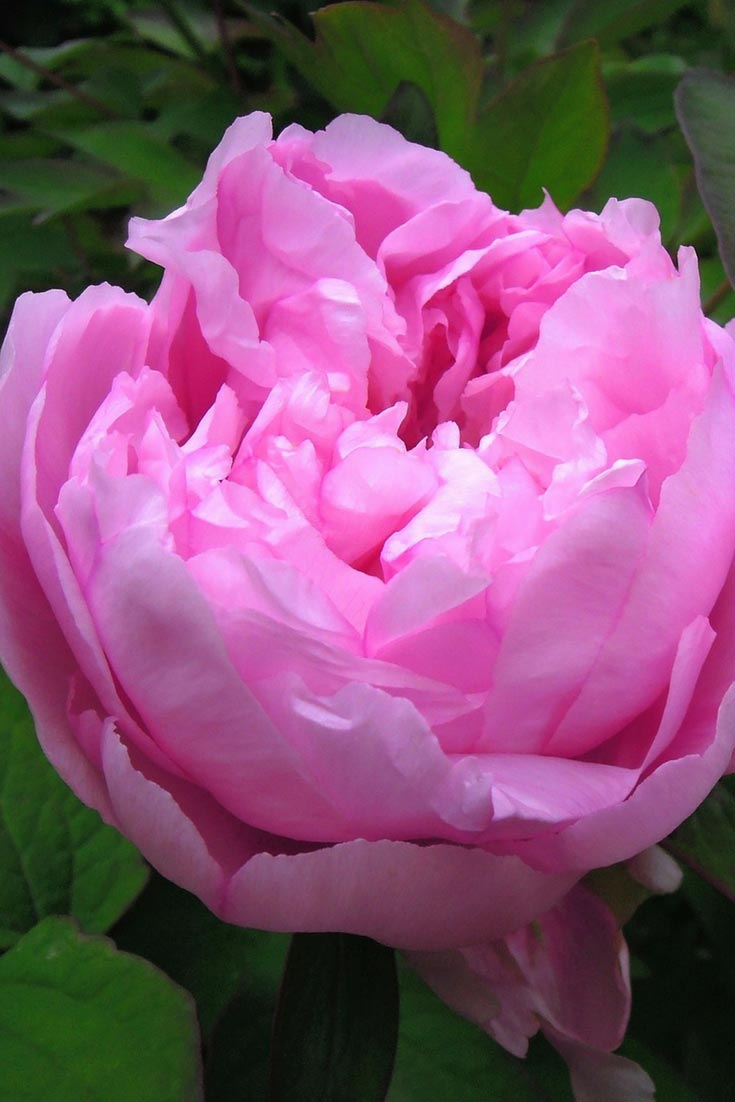
Paeonia × suffruticosa 'Xue Ying Tao Hua', also sold under the name 'Peachy Snow', is a Chinese tree peony prized for its large, very pale pink flowers touched with red at the centre. Its Chinese name, 雪映桃花, means 'peach blossoms seen in the snow'. Place it near a path or terrace to fully enjoy its spring flowering, which overflows with elegance but is quite brief.
This peony belongs to the Paeoniaceae family. It is related to Chinese tree peonies, grown under the name mudan, which has been translated as moutan peony. Paeonia × suffruticosa is a hybrid of Paeonia jishanensis and P. rockii, native to China, particularly the Henan province in the centre of this vast country.
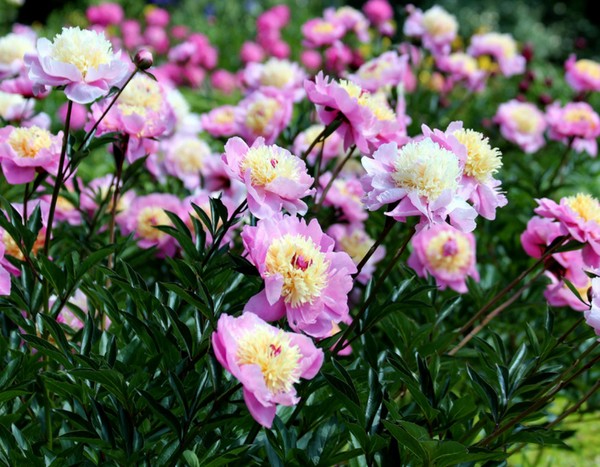
'Xue Ying Tao Hua' is a Chinese cultivar of the species suffruticosa; it is also classified among the Gansu mudan hybrids, which are tree peonies possessing genes from Paeonia rockii. It is a selection from Heze, in Shandong province, a major region for growing tree peonies. This plant is a slow-growing, deciduous shrub: its woody branches persist in winter, and its leaves fall in autumn. It is upright to semi-spreading, becoming broader with age. It reaches 1.50 to 1.80m, sometimes nearly 1.90m in very rich soil, with a spread of around 1.50m. This variety flowers in the middle of the tree peony season, between April and May. The flowers measure 16 to 18cm in diameter; they are double to very double, in a rose or crown shape. The petals are numerous, quite soft, very pale pink to rosy white, with a purplish line on some inner petals and small violet marks at the base. The flowers face upwards or slightly to the side. Their scent is light. The foliage consists of large green leaves, divided into elongated leaflets.
Plant this ‘Peachy Snow’ peony as a specimen or in a not-too-dense shrub bed to leave enough space for its base. Its very pale flowers will be more visible near shrubs with dark foliage and will create a romantic monochrome effect alongside mauve or purple blooms. An old rose ‘Reine des Violettes’, a lilac 'Palibin' and a Physocarpus opulifolius 'Black Light' will be good companions.
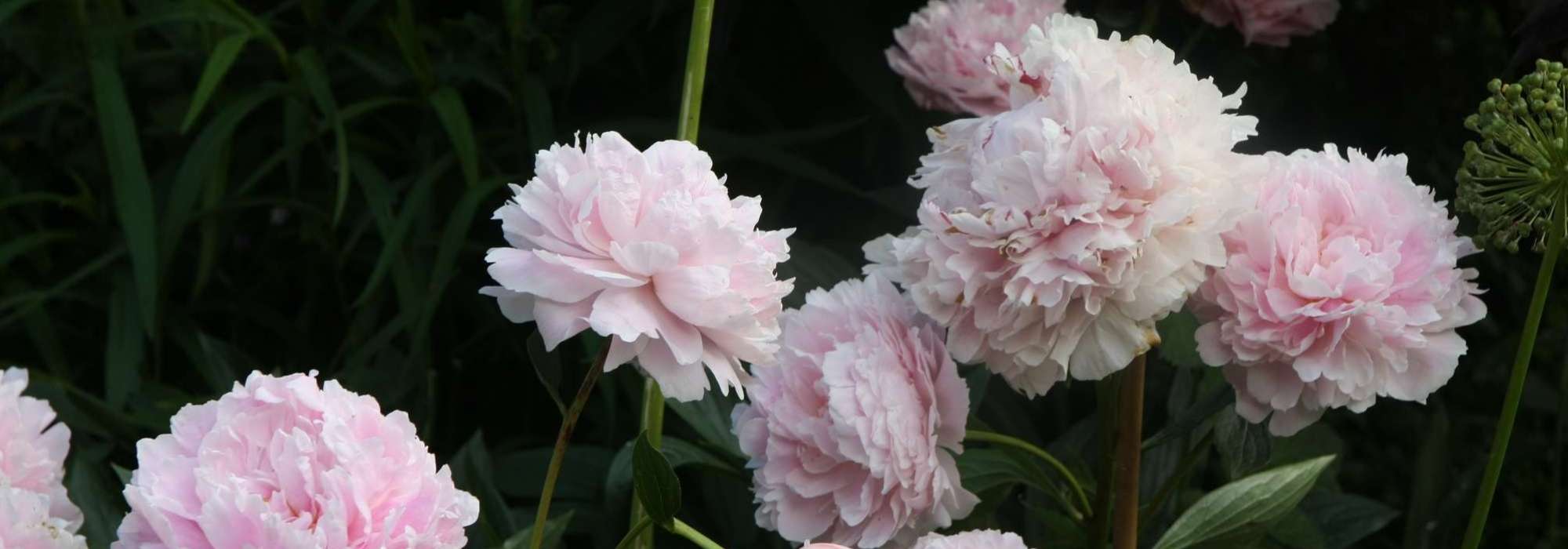
Paeonia x suffruticosa Xue Ying Tao Hua - Tree peony in pictures
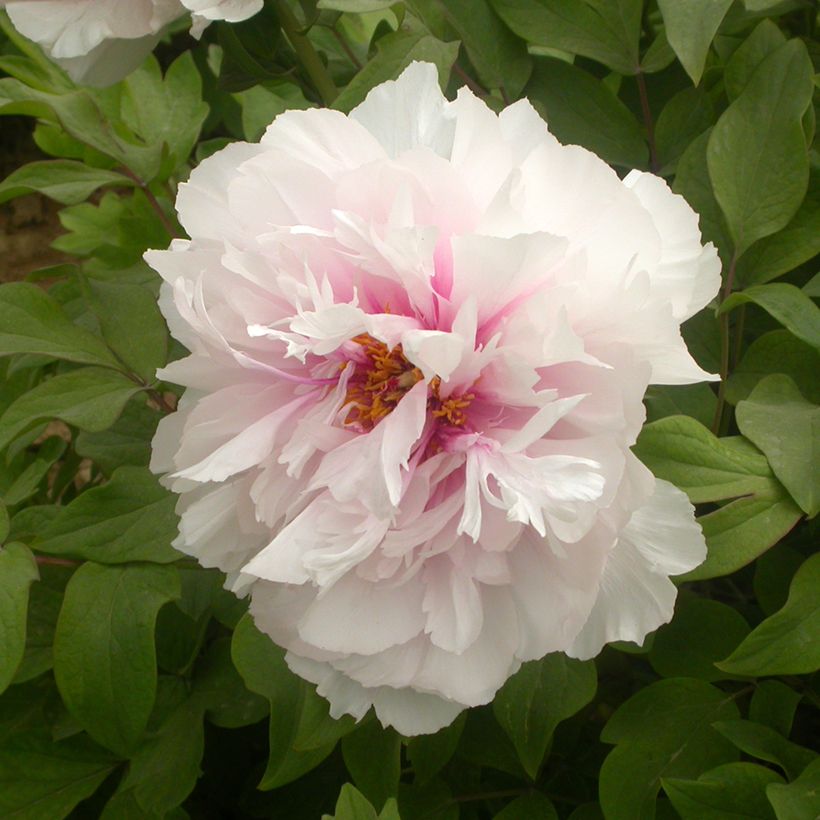
Flowering
Foliage
Plant habit
Botanical data
Paeonia
x suffruticosa
Xue Ying Tao Hua
Paeoniaceae
Tree Peony
Paeonia x suffruticosa 'Peachy Snow'
Cultivar or hybrid, China
Planting and care
Preferably place the tree peony Xue Ying Tao Hua in partial shade, or in full sun in northern regions. Six hours of sunlight per day are necessary for beautiful flowering. Contrasting climates (continental), with marked winters and springs and hot summers, favour particularly abundant flowering. Morning sun is especially appreciated in Mediterranean areas, as scorching situations should be avoided. Plant it in fertile, deep, slightly acidic, neutral or even slightly alkaline soil, moist but well-drained. Once well established in deep soil, tree peonies require no watering in summer in all regions, particularly the varieties that flower early in spring. Its cold resistance is excellent, but the flower buds can be damaged by strong, dry or cold winds.
Tree peonies are easy-going, requiring little care, but they deserve careful planting. When planting, dig a large hole 40 to 50cm deep and at least as wide. Fill it with a mixture of garden soil, leaf mould, and river sand or gravel if your soil is very heavy and compact. Add crushed horn, bone meal and dried blood to the bottom of the planting hole. Tree peonies dislike competition from the roots of other plants; allow a spacing of 1m from its neighbours. The graft must be buried about twenty centimetres deep so that the plant gradually becomes independent of its rootstock. Water abundantly, but spaced 8 to 15 days apart for the first two years, from March to September. Peonies have a reputation for not liking to be transplanted. That is why they should not be moved after planting. Avoid pruning unless the plant becomes bare at the base. If this is the case, prune at the level of the basal shoots. Provide a stake to support the flower stems and cut off faded flowers.
It can be grown for several years in a very large pot, provided it is given a deep container with several drainage holes. Choose a pot at least 50cm in diameter, with 40 to 45cm of actual depth; a volume of 60 to 80 litres is suitable. Prepare a consistent mixture, formed of about 40% slightly clayey topsoil, 40% rich potting compost and 20% fine pozzolana, pumice or fine gravel. Place 3 to 5cm of coarse pozzolana at the bottom of the pot. Position the peony in morning sun or soft light, as dark pots quickly heat the roots. Water regularly during the growing season, without allowing water to stagnate in a saucer. In winter, leave the pot outside as the plant needs the cold to flower well again.
Planting period
Intended location
Care
Planting & care advice




This item has not been reviewed yet - be the first to leave a review about it.
Recently viewed products
Haven't found what you were looking for?
Hardiness is the lowest winter temperature a plant can endure without suffering serious damage or even dying. However, hardiness is affected by location (a sheltered area, such as a patio), protection (winter cover) and soil type (hardiness is improved by well-drained soil).

The flowering period indicated on our website applies to countries and regions located in USDA zone 8 (France, the United Kingdom, Ireland, the Netherlands, etc.)
It will vary according to where you live:- In zones 9 to 10 (Italy, Spain, Greece, etc.), flowering will occur about 2 to 4 weeks earlier.
- In zones 6 to 7 (Germany, Poland, Slovenia, and lower mountainous regions), flowering will be delayed by 2 to 3 weeks.
- In zone 5 (Central Europe, Scandinavia), blooming will be delayed by 3 to 5 weeks.
In temperate climates, pruning of spring-flowering shrubs (forsythia, spireas, etc.) should be done just after flowering.
Pruning of summer-flowering shrubs (Indian Lilac, Perovskia, etc.) can be done in winter or spring.
In cold regions as well as with frost-sensitive plants, avoid pruning too early when severe frosts may still occur.
The planting period indicated on our website applies to countries and regions located in USDA zone 8 (France, United Kingdom, Ireland, Netherlands).
It will vary according to where you live:
- In Mediterranean zones (Marseille, Madrid, Milan, etc.), autumn and winter are the best planting periods.
- In continental zones (Strasbourg, Munich, Vienna, etc.), delay planting by 2 to 3 weeks in spring and bring it forward by 2 to 4 weeks in autumn.
- In mountainous regions (the Alps, Pyrenees, Carpathians, etc.), it is best to plant in late spring (May-June) or late summer (August-September).
The harvesting period indicated on our website applies to countries and regions in USDA zone 8 (France, England, Ireland, the Netherlands).
In colder areas (Scandinavia, Poland, Austria...) fruit and vegetable harvests are likely to be delayed by 3-4 weeks.
In warmer areas (Italy, Spain, Greece, etc.), harvesting will probably take place earlier, depending on weather conditions.
The sowing periods indicated on our website apply to countries and regions within USDA Zone 8 (France, UK, Ireland, Netherlands).
In colder areas (Scandinavia, Poland, Austria...), delay any outdoor sowing by 3-4 weeks, or sow under glass.
In warmer climes (Italy, Spain, Greece, etc.), bring outdoor sowing forward by a few weeks.
Shipping country and language
Your country of residence may be:
Your country of residence is:
For a better user experience on our website, you can select:
Your shipping country:
-
 Austria
-
 Belgium
-
 Bosnia & Herzegovina
-
 Bulgaria
-
 Croatia
-
 Cyprus
-
 Czechia
-
 Denmark
-
 Estonia
-
 Finland
-
 France
-
 Germany
-
 Greece
-
 Hungary
-
 Iceland
-
 Ireland
-
 Italy
Italy
-
 Latvia
-
 Liechtenstein
-
 Lithuania
-
 Luxembourg
-
 Malta
Malta
-
 Netherlands
-
 Poland
-
 Portugal
-
 Romania
-
 Serbia
-
 Slovakia
-
 Slovenia
-
 Spain
Spain
-
 Sweden
-
 Switzerland
Language:
-
French
-
 English
-
Spanish
-
Italian
-
German
-
Portuguese
-
Dutch
-
Finnish
My Account
Hello
My wish lists
My cart
Log in / Register
Existing customer?
This form is protected by reCAPTCHA - the Google Privacy Policy and Terms of Service apply.
New customer?
Create an account to track your orders, access our customer service and, if you wish, make the most of our upcoming offers.