Impenetrable Eco Hedge Collection
Impenetrable Eco Hedge Collection
Back-to-school special offer!
Get €10 off for every €50 you spend! And get up to €40 off on a single order.
How does it work?
1. Shop your favourites
Add your favourite plants to your basket. For every €50 you spend (excluding delivery charges, store credit and the plastic-free option), you’ll receive a €10 voucher.
€50 spent = €10 voucher
€100 spent = €20 voucher
€150 spent = €30 voucher
€200 spent = €40 voucher
2. Place your order
Once your basket reaches one of the spending thresholds, place your order. You can even choose your delivery date!
3. Receive your voucher
As soon as your order has been shipped, you’ll receive an email containing your personal voucher code and its value.
4. Use it on your next order
Your voucher is valid for 90 days from the date you receive it. It can be used once only, on a new order worth at least the value of the voucher, excluding delivery charges.
Please note: Vouchers can be combined with other offers, but cannot be split or refunded.
Home or relay delivery (depending on size and destination)
Important: You may be charged customs duties by your country’s customs authorities upon delivery.
Schedule delivery date,
and select date in basket
This plant carries a 24 months recovery warranty
More information
We guarantee the quality of our plants for a full growing cycle, and will replace at our expense any plant that fails to recover under normal climatic and planting conditions.
Would this plant suit my garden?
Set up your Plantfit profile →
Description
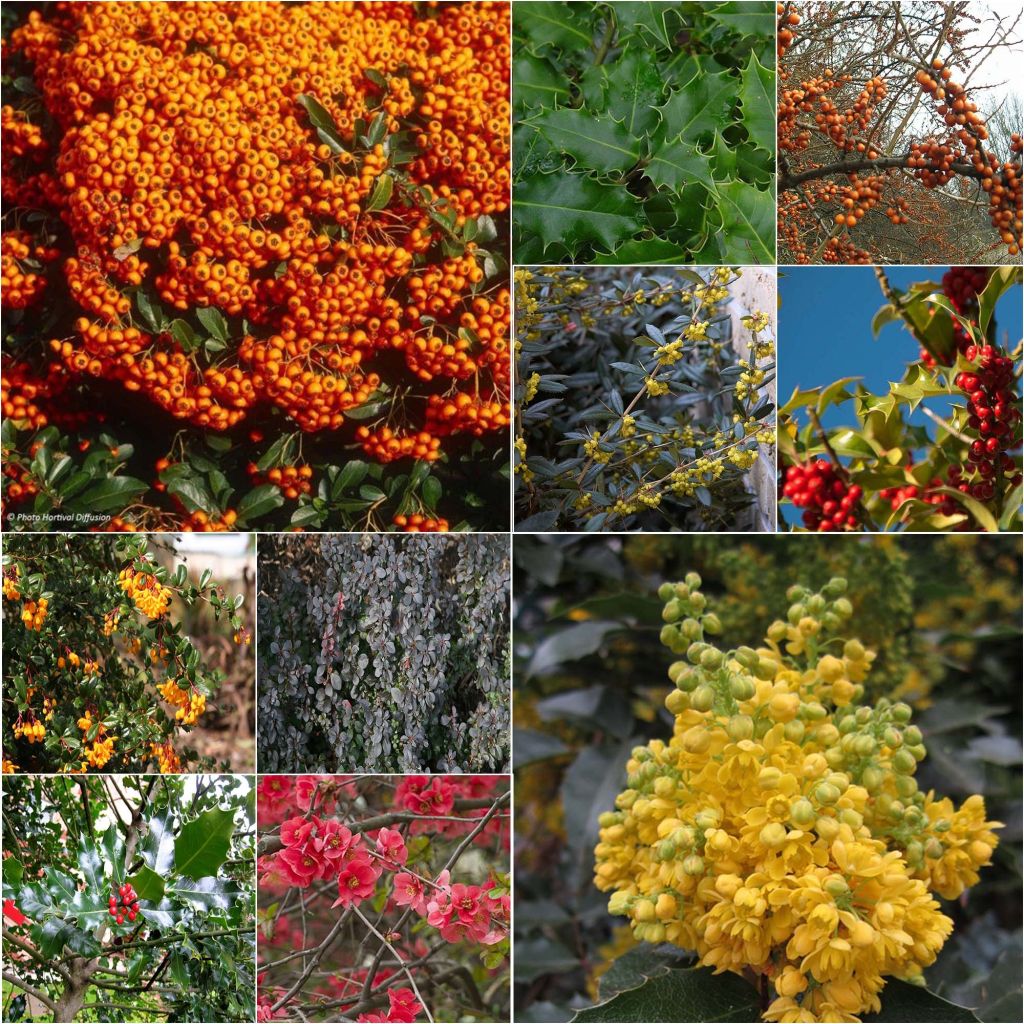
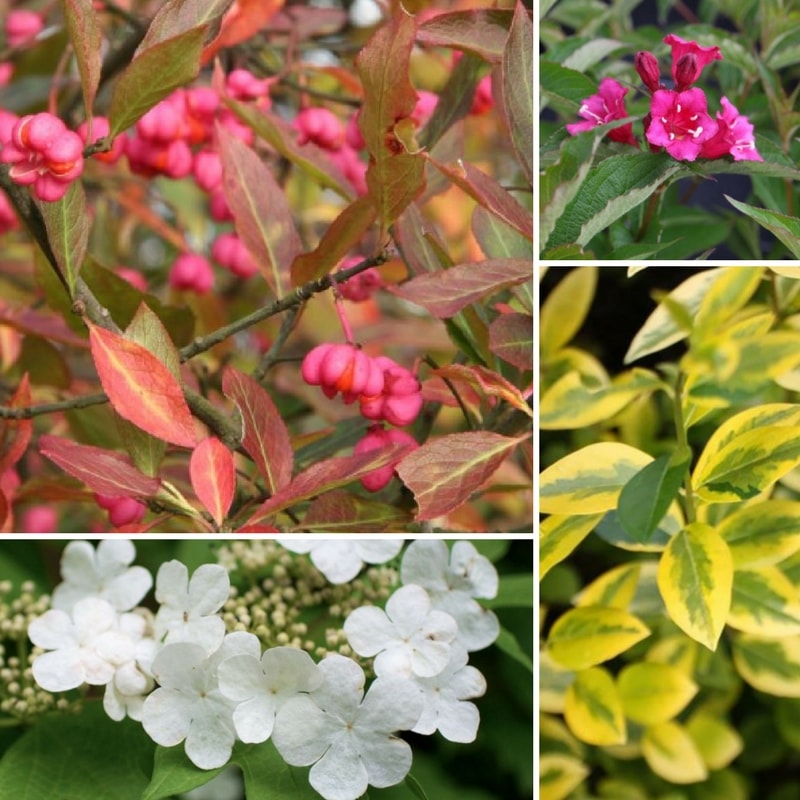
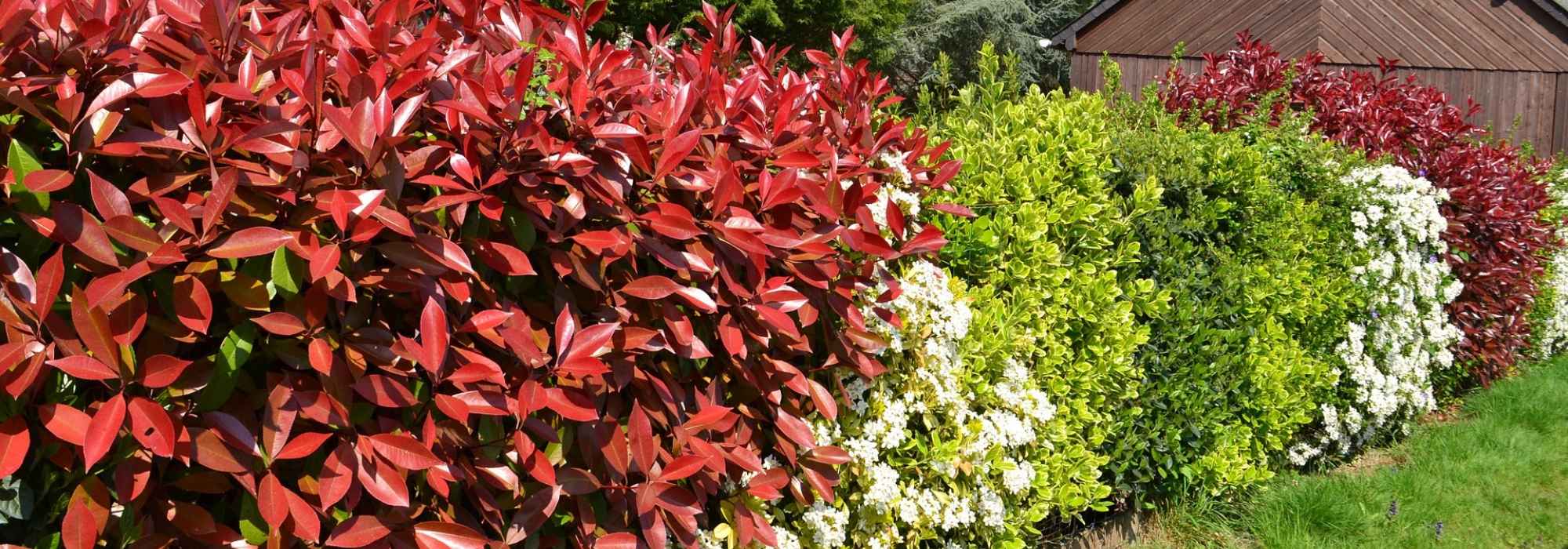
This is a collection of 10 varieties of shrubs with evergreen or deciduous foliage, armed with thorns, perfect for creating an impenetrable hedge that will protect your garden from intruders, wind, and prying eyes, while offering staggered flowering, varied foliage, and interesting fruiting. All these species are easy to grow in ordinary soil in all our regions and require little maintenance. Delivered in a kit of 10 potted plants (1 plant of each variety), ready to plant! This shrub kit allows you to create approximately 10 metres (33 feet) of mixed and defensive hedge at a lower cost.
The collection consists of:
- 1 Berberis darwinii - Darwin Barberry: approximately 2.75 metres (9 feet) in all directions, of fairly rapid growth, with evergreen foliage in winter. Flowering from March to May, depending on the climate, and again in autumn, with numerous clusters of small flowers in a bright yellow streaked with orange and very nectar-rich. Its small fleshy fruits turn purple when ripe. Its small tough leaves are shiny green, toothed, and spiny along the edges.
- 1 Berberis julianae - Saint Julian Barberry: of rather slow growth, approximately 3 metres (10 feet) in height and 1.50 metres (5 feet) in spread at maturity. Evergreen foliage. Its branches are adorned with long trifurcate thorns. The young shoots and leaves are slightly pinkish, while the mature leaves are a shiny dark green and turn red-orange at the first cold spells. Flowering from March to May, depending on the climate, with small clusters of fragrant flowers in yellow streaked with red, and a second flowering in late autumn or early winter. Its small fleshy fruits turn black when ripe.
- 1 Berberis thunbergii Atropurpurea - Purple Barberry: with semi-evergreen foliage, approximately 1.50 metres (5 feet) in all directions. Its thorny branches bear small red-purple leaves that become bright red in autumn. It creates a beautiful contrast with its April-May flowering. The small yellow flowers streaked with red are nectar-rich and gathered in clusters. Its small fruits are a very bright red in September-October and last part of the winter.
- 1 Quercus ilex - Holm Oak: a slow-growing tree, reaching approximately 15 metres (49 feet) in height with a spread of 10 metres (33 feet), but pruning, which it tolerates well, can keep it in more modest dimensions. Evergreen foliage even in winter. Its habit is somewhat twisted, its bark is fissured, and its crown is crumpled, adorned with tough foliage that is dark green on top and silvery gray underneath. Its spring flowering is abundant and nectar-rich, with cream-white flowers giving way to a profusion of variable-looking acorns.
- 1 Chaenomeles superba - Japanese Quince Nicoline: approximately 1.50 metres (5 feet) in height and 1.75 metres (6 feet) in spread. Deciduous foliage, absent in winter. Flowering in March-April, depending on the regions, in a very bright red, just before or at the same time as the foliage appears, on its branches adorned with long and slender sharp thorns. The large globular and fragrant fruits, yellow in colour, are decorative and edible, although their scent does not equal that of true quinces.
- 1 Hippophae rhamnoides Leikora - Female Sea Buckthorn: fast-growing, reaching approximately 4 metres (13 feet) in height and 3 metres (10 feet) in spread. Deciduous foliage, absent in winter. Thorny branches bear narrow and elongated leaves, dark green on top and silvery gray underneath. Discreet but nectar-rich flowering in April, before the foliage. In the presence of a male plant, it produces small bright orange fruits rich in vitamins and antioxidants that last throughout the winter.
- 1 JC Van Tol Holly: approximately 3.50 metres (11 feet) in height and 2.50 metres (8 feet) in spread. Evergreen foliage in winter, tough, toothed, shiny, and very dark green. Insignificant but nectar-rich spring flowering followed by a rich red fruiting.
- 1 Ilex aquifolium - Common Holly: approximately 2.50 metres (8 feet) in height and 1.20 metres (4 feet) in spread, with a rather slow growth. This conical-shaped bush has evergreen foliage that persists in winter, very dense, shiny dark green, tough, with undulating and toothed edges and sharp thorns. Flowering in May-June, with small white flowers tinged with pink, nectar-rich and fragrant. Only female hollies bear characteristic bright red fruits in the presence of male hollies.
- 1 Mahonia aquifolium - Oregon Grape Holly: approximately 1 metre (3 feet) in all directions. Its evergreen foliage persists in winter, composed of spiny leaves, shiny green, turning purple in winter. Flowering from February, with clusters of small yellow and fragrant flowers, giving way to blackish-blue berries.
- 1 Pyracantha Saphyr Orange - Firethorn: approximately 3 metres (10 feet) in height and 2.50 metres (8 feet) in spread. Small, shiny evergreen foliage in dark green. The branches, tinged with red, are armed with long formidable thorns. Flowering from May to July, depending on the climate, along the branches, with numerous clusters of pure white small flowers, nectar-rich and pleasantly scented. Fruiting with bright orange berries.
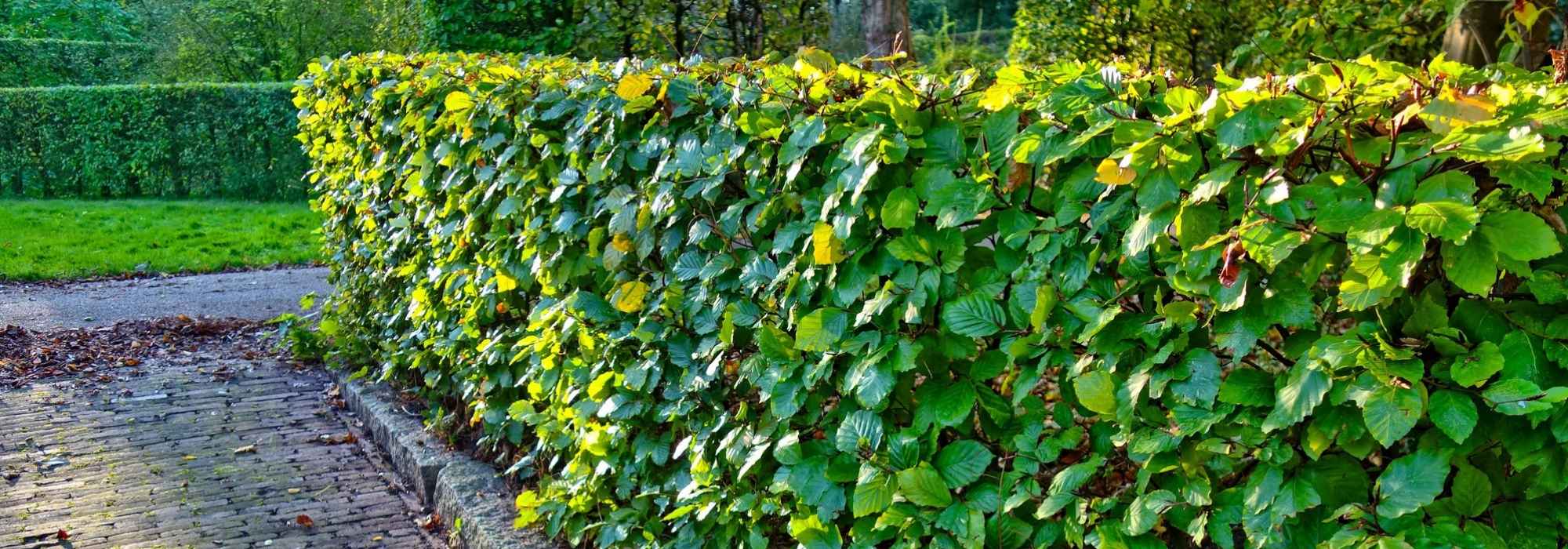
A hedge that is both impenetrable, protective, beautiful all year round, and welcoming to the small wildlife in the garden! Plant these shrubs preferably in autumn or early spring, in full sun or partial shade, mixing and spacing them 80 cm (32in) to 1 meter (3 feet) apart. They are content with any well-prepared garden soil enriched with leaf compost.
Advice: Do not prune early in the season to fully enjoy the flowering! If possible, also avoid pruning in late summer to enjoy the fruits and feed the birds in the garden during winter.
Report an error about the product description
Plant habit
Flowering
Foliage
Botanical data
Cultivar or hybrid
Planting and care
Plant this collection in the sun or partial shade, in ordinary but well-prepared soil, enriched with leaf compost, that is rather moist but well-drained. Dig planting holes of 30-40 cm (12-16in) in all directions, thoroughly loosening the bottom and walls with a fork or pickaxe. Maintain a planting distance of 80 cm (32in) to 1 m (3ft) between each bush. Easy to grow and not very demanding, these shrubs only require mulching in summer in dry climates to maintain some moisture, at least during the first summers after planting. Water them abundantly in the first few years in the case of pronounced drought (15-20 litres of water each time), but keep waterings spaced out. You can prune the longest branches to help your shrubs branch out.
Planting period
Intended location
Care
Planting & care advice
-

-
-
-
-

-

-
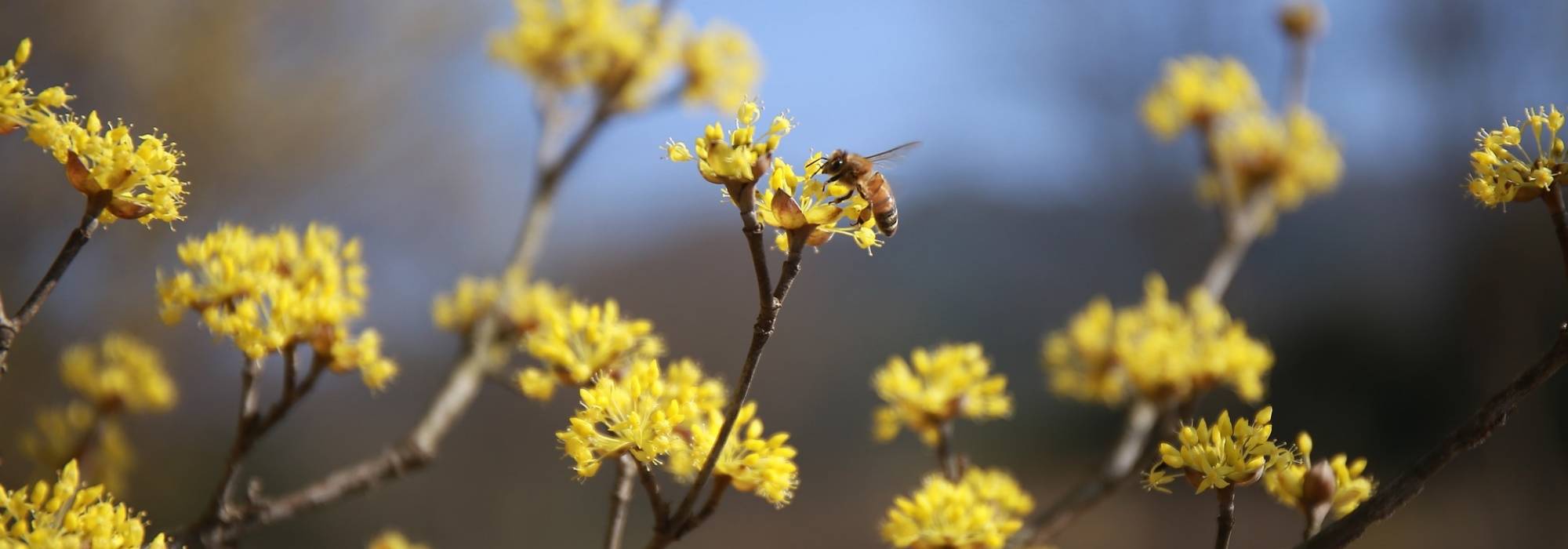
-
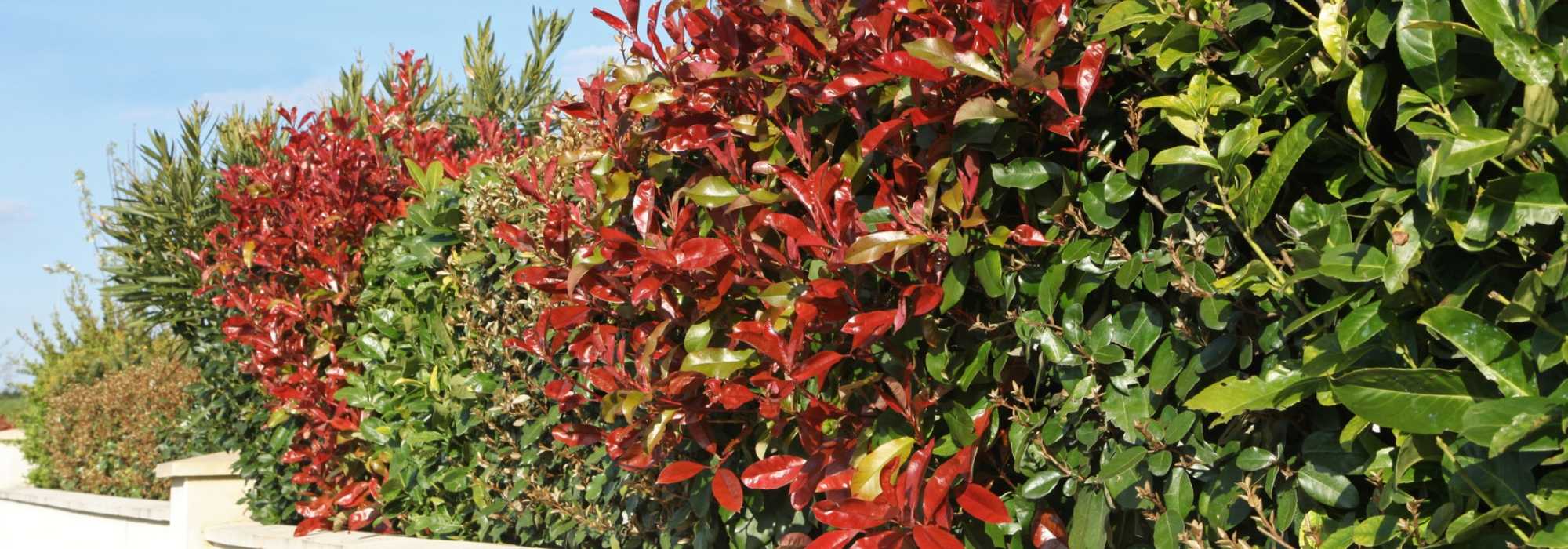
This item has not been reviewed yet - be the first to leave a review about it.
Recently viewed products
Haven't found what you were looking for?
Hardiness is the lowest winter temperature a plant can endure without suffering serious damage or even dying. However, hardiness is affected by location (a sheltered area, such as a patio), protection (winter cover) and soil type (hardiness is improved by well-drained soil).

The flowering period indicated on our website applies to countries and regions located in USDA zone 8 (France, the United Kingdom, Ireland, the Netherlands, etc.)
It will vary according to where you live:- In zones 9 to 10 (Italy, Spain, Greece, etc.), flowering will occur about 2 to 4 weeks earlier.
- In zones 6 to 7 (Germany, Poland, Slovenia, and lower mountainous regions), flowering will be delayed by 2 to 3 weeks.
- In zone 5 (Central Europe, Scandinavia), blooming will be delayed by 3 to 5 weeks.
In temperate climates, pruning of spring-flowering shrubs (forsythia, spireas, etc.) should be done just after flowering.
Pruning of summer-flowering shrubs (Indian Lilac, Perovskia, etc.) can be done in winter or spring.
In cold regions as well as with frost-sensitive plants, avoid pruning too early when severe frosts may still occur.
The planting period indicated on our website applies to countries and regions located in USDA zone 8 (France, United Kingdom, Ireland, Netherlands).
It will vary according to where you live:
- In Mediterranean zones (Marseille, Madrid, Milan, etc.), autumn and winter are the best planting periods.
- In continental zones (Strasbourg, Munich, Vienna, etc.), delay planting by 2 to 3 weeks in spring and bring it forward by 2 to 4 weeks in autumn.
- In mountainous regions (the Alps, Pyrenees, Carpathians, etc.), it is best to plant in late spring (May-June) or late summer (August-September).
The harvesting period indicated on our website applies to countries and regions in USDA zone 8 (France, England, Ireland, the Netherlands).
In colder areas (Scandinavia, Poland, Austria...) fruit and vegetable harvests are likely to be delayed by 3-4 weeks.
In warmer areas (Italy, Spain, Greece, etc.), harvesting will probably take place earlier, depending on weather conditions.
The sowing periods indicated on our website apply to countries and regions within USDA Zone 8 (France, UK, Ireland, Netherlands).
In colder areas (Scandinavia, Poland, Austria...), delay any outdoor sowing by 3-4 weeks, or sow under glass.
In warmer climes (Italy, Spain, Greece, etc.), bring outdoor sowing forward by a few weeks.
Shipping country and language
Your country of residence may be:
Your country of residence is:
For a better user experience on our website, you can select:
Your shipping country:
-
 Austria
-
 Belgium
-
 Bosnia & Herzegovina
-
 Bulgaria
-
 Croatia
-
 Cyprus
-
 Czechia
-
 Denmark
-
 Estonia
-
 Finland
-
 France
-
 Germany
-
 Greece
-
 Hungary
-
 Iceland
-
 Ireland
-
 Italy
Italy
-
 Latvia
-
 Liechtenstein
-
 Lithuania
-
 Luxembourg
-
 Malta
Malta
-
 Netherlands
-
 Poland
-
 Portugal
-
 Romania
-
 Serbia
-
 Slovakia
-
 Slovenia
-
 Spain
Spain
-
 Sweden
-
 Switzerland
Language:
-
French
-
 English
-
Spanish
-
Italian
-
German
-
Portuguese
-
Dutch
-
Finnish
My Account
Hello
My wish lists
My cart
Log in / Register
Existing customer?
This form is protected by reCAPTCHA - the Google Privacy Policy and Terms of Service apply.
New customer?
Create an account to track your orders, access our customer service and, if you wish, make the most of our upcoming offers.