Anisodontea Cotton Candy Pink - Cape mallow
Anisodontea Cotton Candy Pink - Cape mallow

Anisodontea Cotton Candy Pink - Cape mallow
Anisodontea Cotton Candy Pink - Cape mallow
Anisodontea Cotton Candy Pink - Cape mallow
Anisodontea Cotton Candy Pink - Cape mallow
Anisodontea Cotton Candy Pink - Cape mallow
Anisodontea 'IB 005-6' COTTON CANDY PINK
Cape Mallow
Back-to-school special offer!
Get €10 off for every €50 you spend! And get up to €40 off on a single order.
How does it work?
1. Shop your favourites
Add your favourite plants to your basket. For every €50 you spend (excluding delivery charges, store credit and the plastic-free option), you’ll receive a €10 voucher.
€50 spent = €10 voucher
€100 spent = €20 voucher
€150 spent = €30 voucher
€200 spent = €40 voucher
2. Place your order
Once your basket reaches one of the spending thresholds, place your order. You can even choose your delivery date!
3. Receive your voucher
As soon as your order has been shipped, you’ll receive an email containing your personal voucher code and its value.
4. Use it on your next order
Your voucher is valid for 90 days from the date you receive it. It can be used once only, on a new order worth at least the value of the voucher, excluding delivery charges.
Please note: Vouchers can be combined with other offers, but cannot be split or refunded.
Home or relay delivery (depending on size and destination)
Important: You may be charged customs duties by your country’s customs authorities upon delivery.
Schedule delivery date,
and select date in basket
This plant carries a 12 months recovery warranty
More information
We guarantee the quality of our plants for a full growing cycle, and will replace at our expense any plant that fails to recover under normal climatic and planting conditions.
Would this plant suit my garden?
Set up your Plantfit profile →
Description
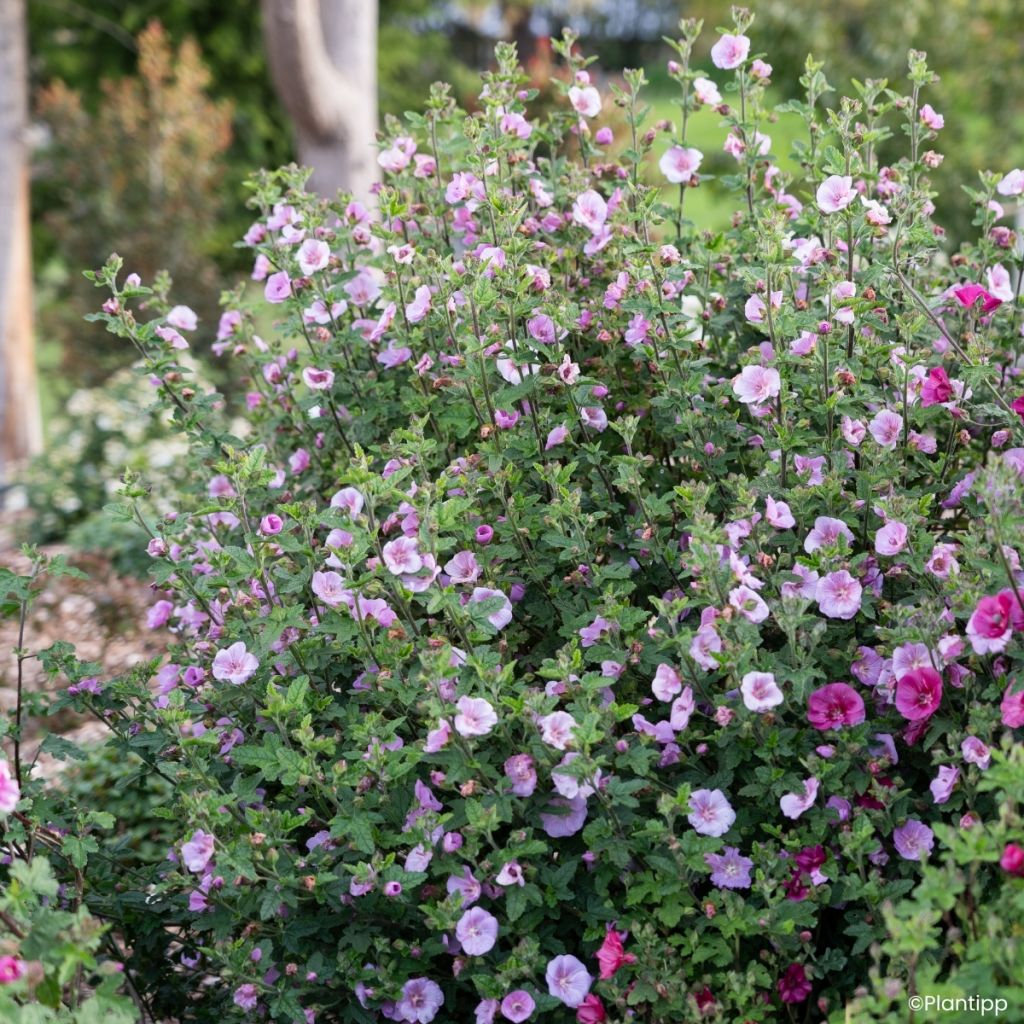
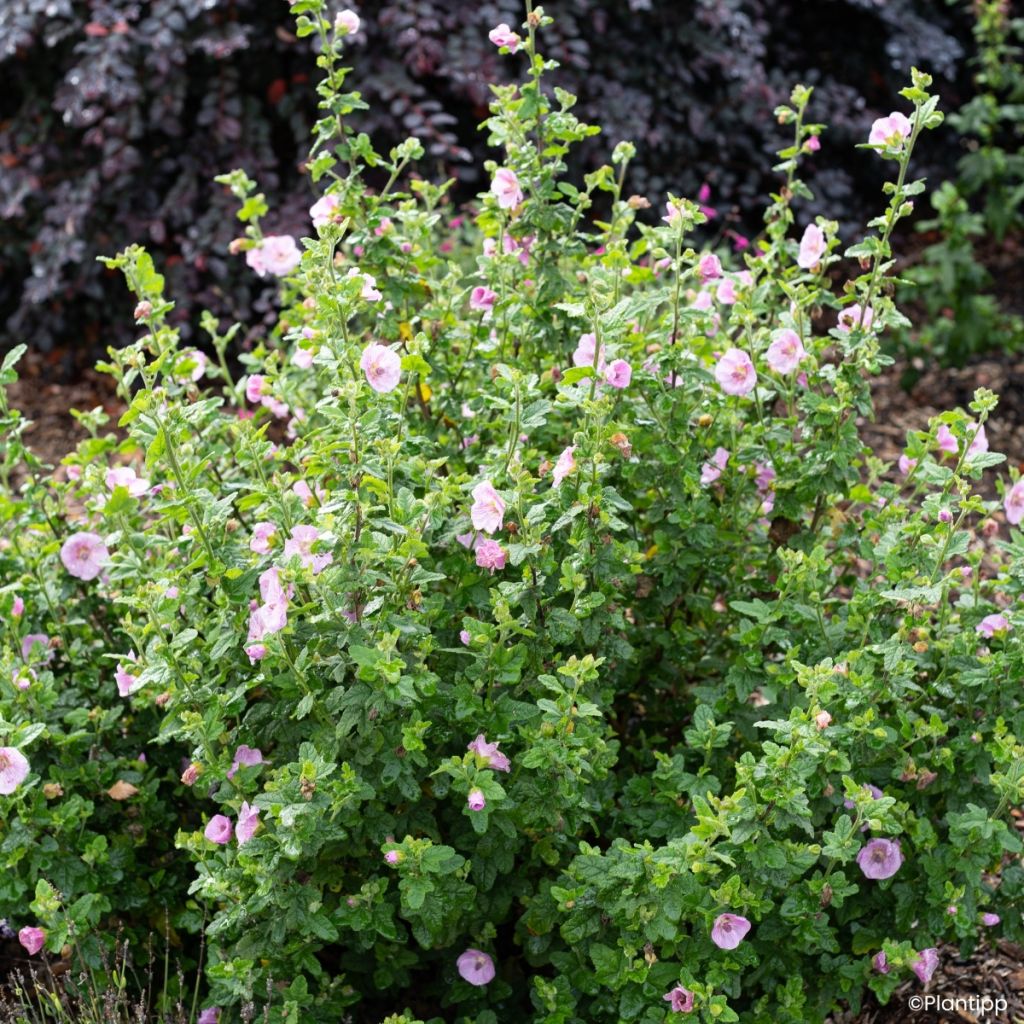
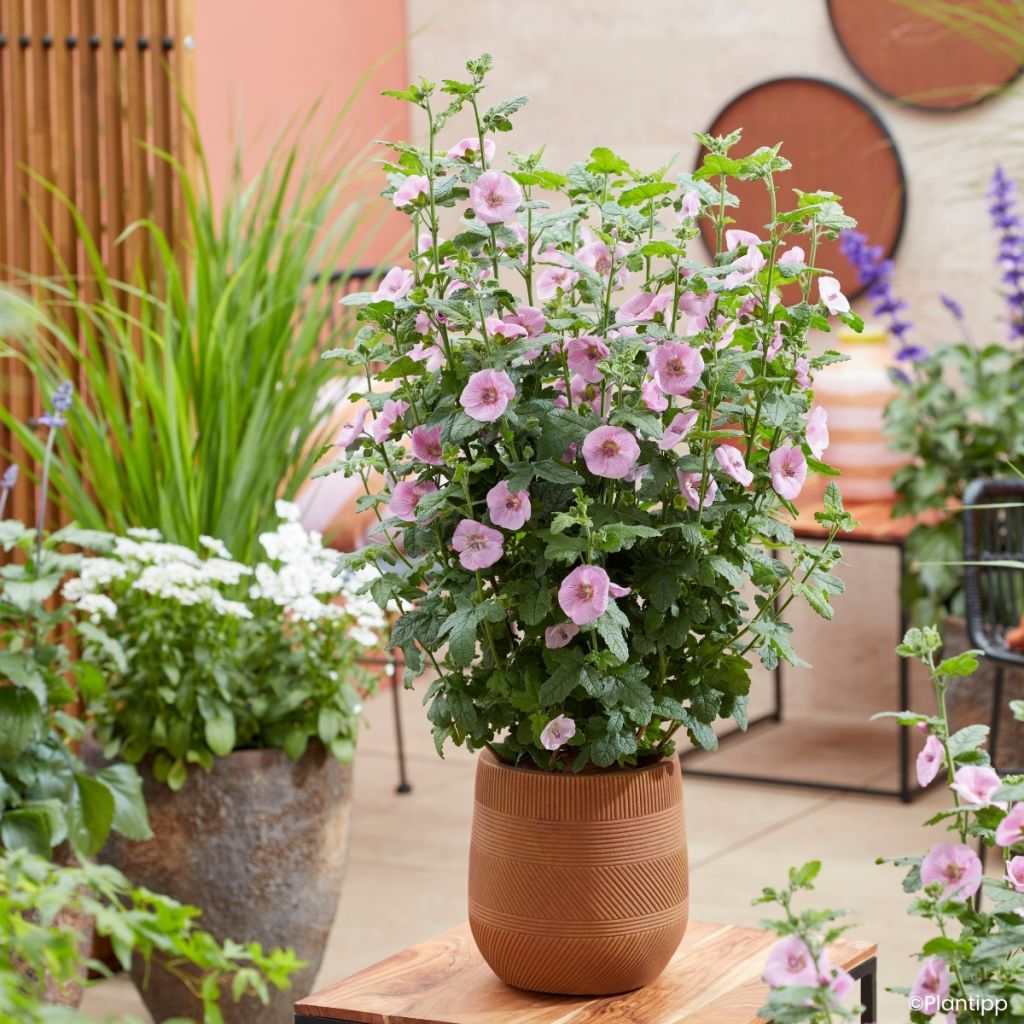
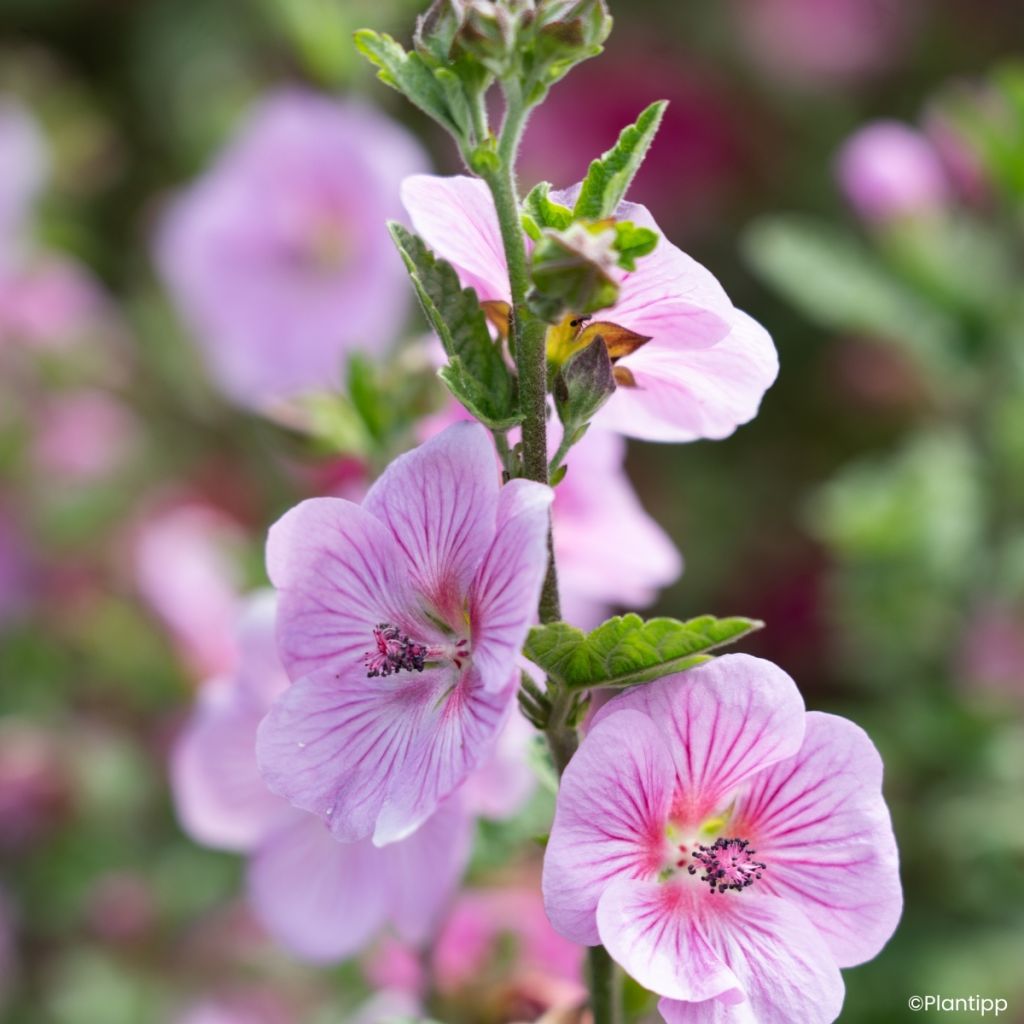
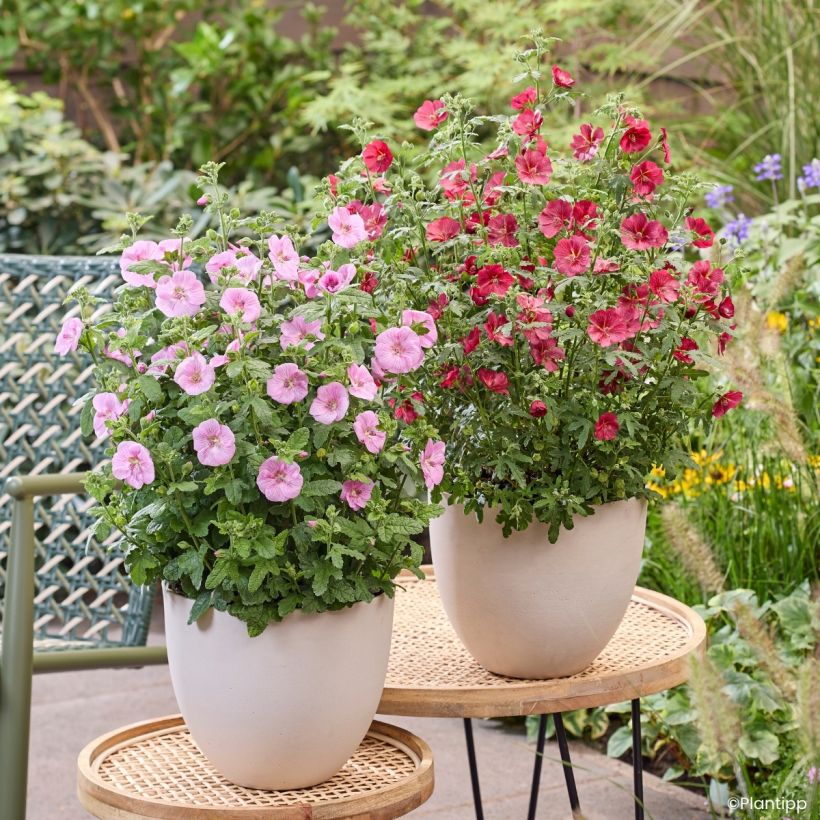
Anisodontea ‘Cotton Candy Pink’ is a compact and bushy shrub, which, in mild climates, flowers for almost half the year. Its beautiful, evergreen, glossy green foliage serves as a setting for the single, light pink flowers, enhanced by subtle, more pronounced streaks. Not exceeding 1 m in height, this upright plant can be used in mixed borders and can even be used to form low hedges. Loving the sun, it is drought-resistant and performs particularly well in the South of France. Its compactness also allows it to be easily grown in a decorative pot in regions where the winter is too harsh for it.
Anisodontea belongs to the Malvaceae family, rich with over 240 genera and 4200 species, distributed in most of the world's climates, except those that are too cold. It encompasses plant forms as diverse as the baobab, giant of the savannas, cotton, of considerable economic importance, or countryside mallows. Many Malvaceae are prized by gardeners of all kinds, such as Fremontodendron californicum, a shrub with bright yellow flowers, or hardy or tropical Hibiscus.
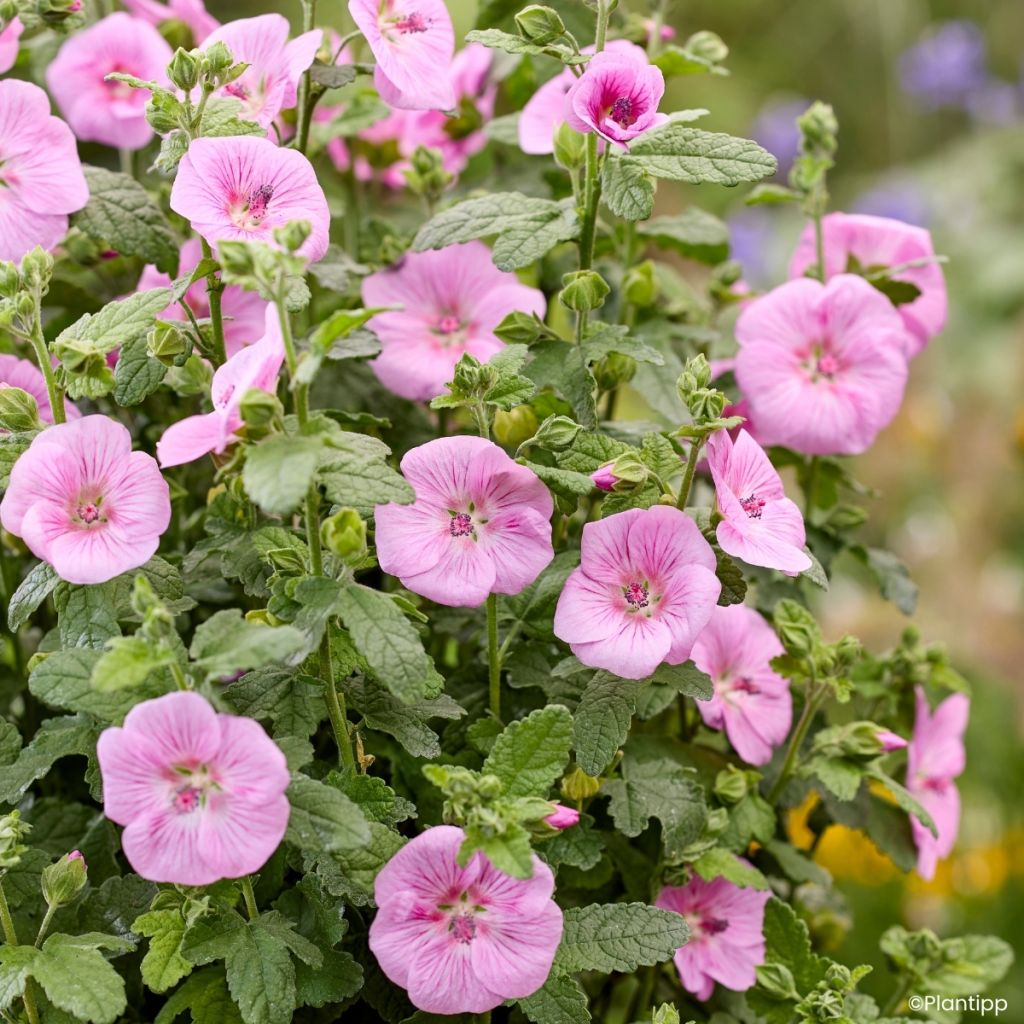
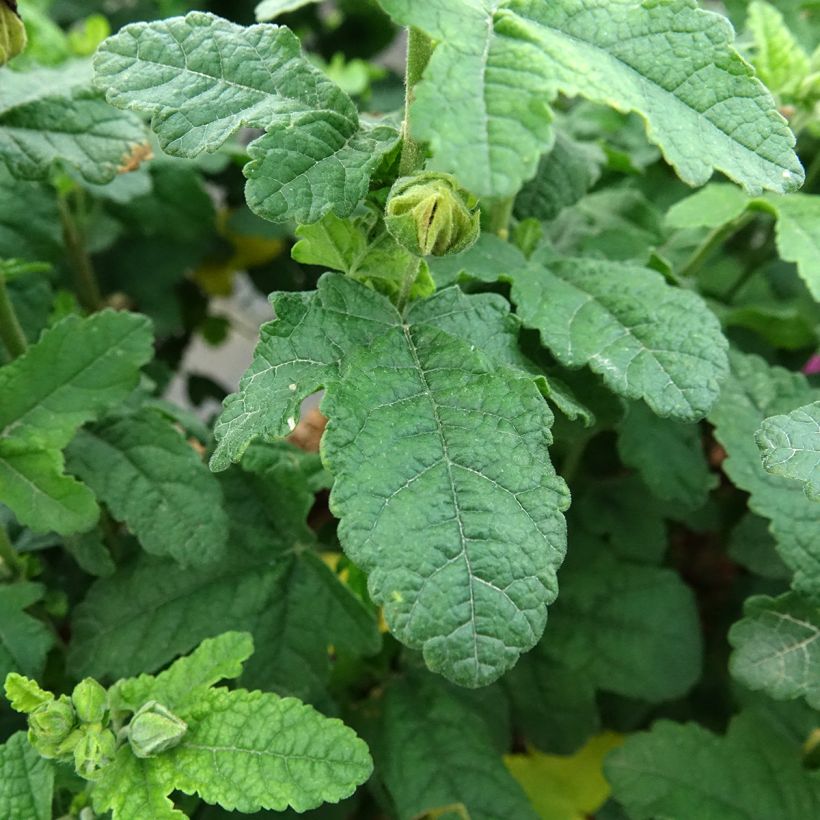
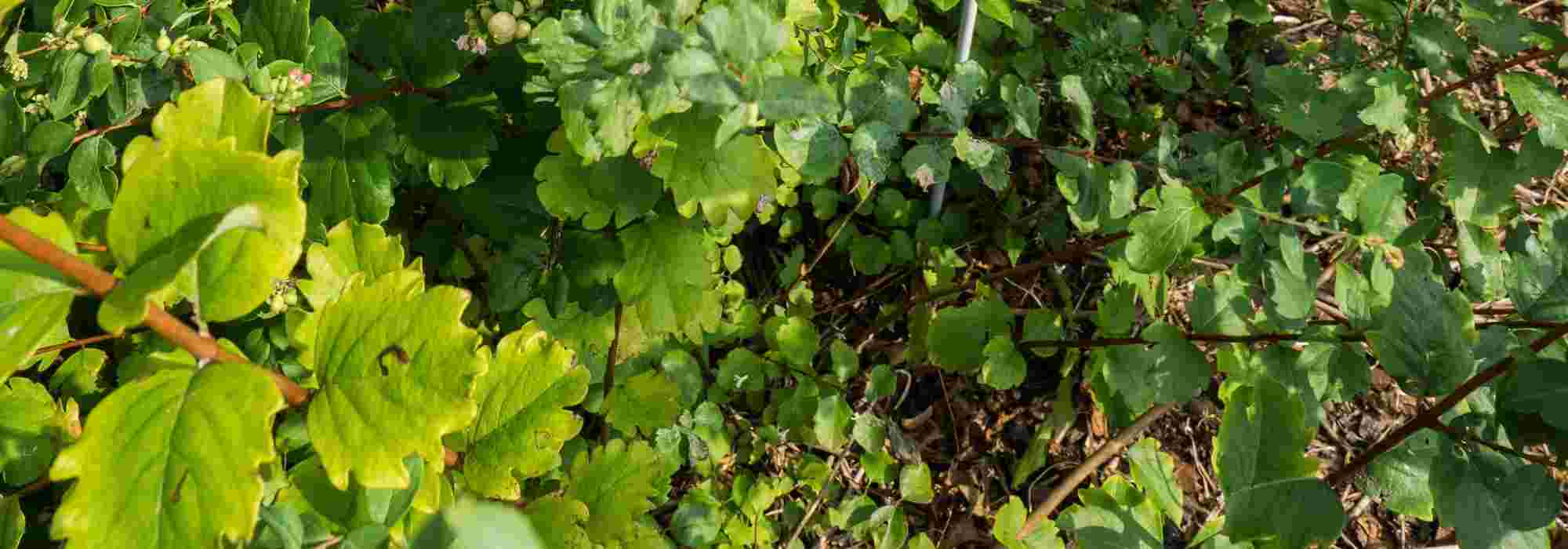
The Anisodontea genus comprises 22 species of shrubs, all native to South Africa, whose flowers resemble miniature Hibiscus. 'Cotton Candy Pink' is a horticultural cultivar of Cape Mallow with very attractive flowers. It is part of a small range called Carnival Lights, with rapid growth and long-lasting flowering. This perennial, evergreen shrub forms a dense, upright clump, which quickly reaches its mature size of approximately 1 m in height and 60 cm in width. The numerous thin, upright, medium green stems bear small leaves of the same colour, with a satiny surface. The alternate leaves, borne on short petioles, measure from 4 to 6 cm in length and are generally trilobed, often with two small, faint additional lobes at the base.
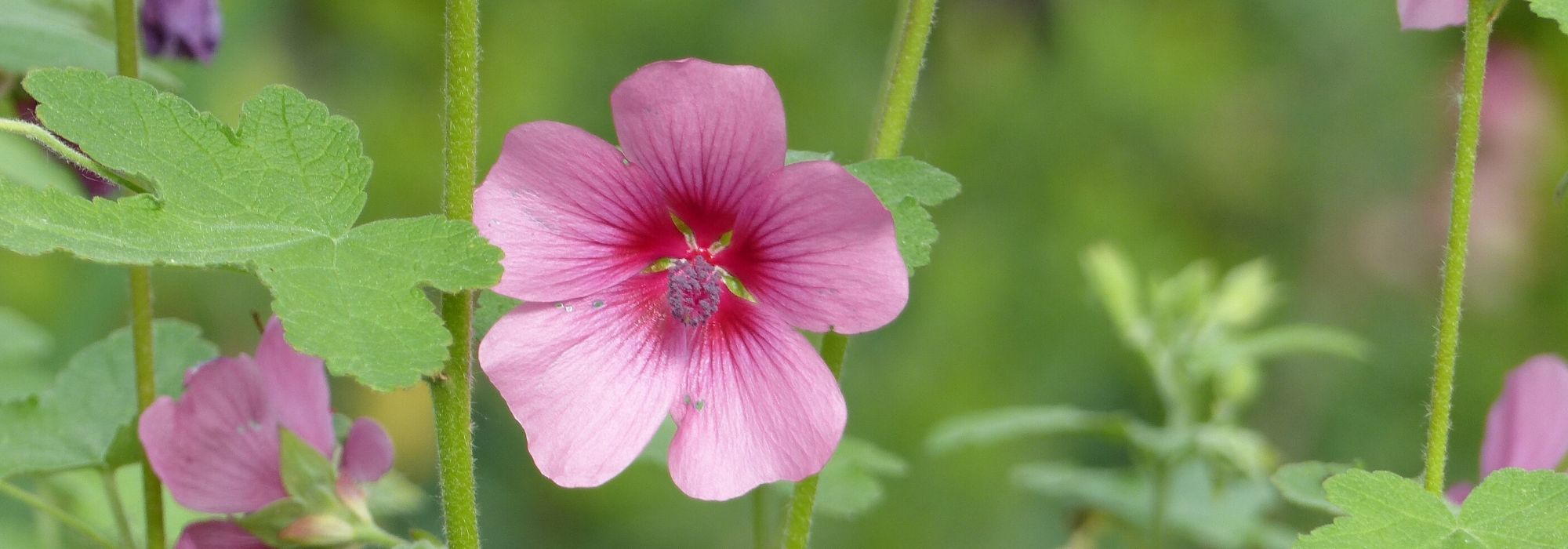
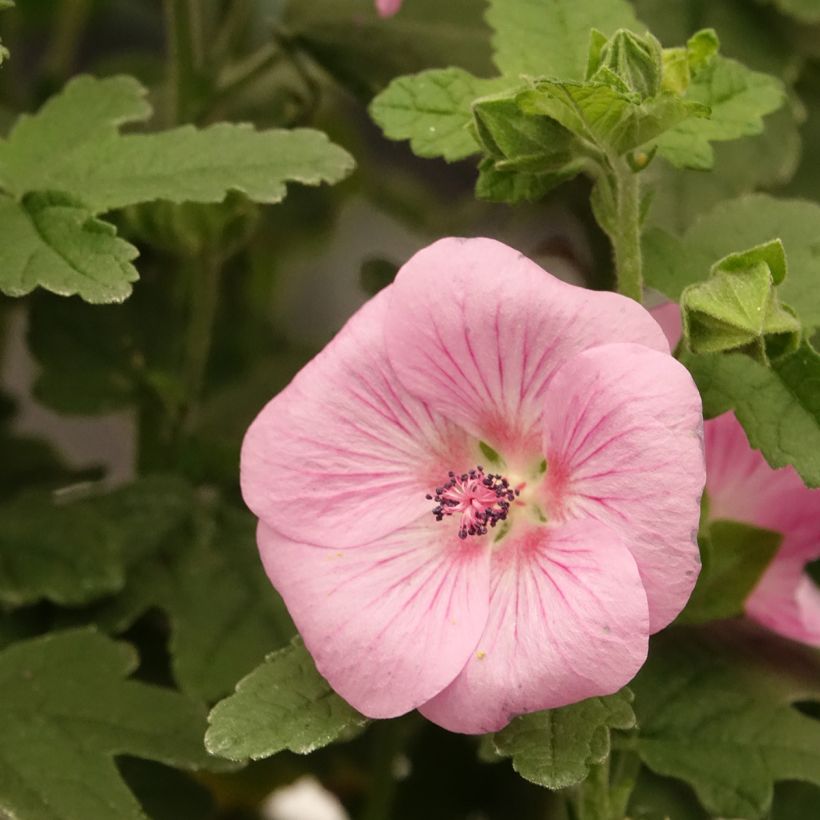
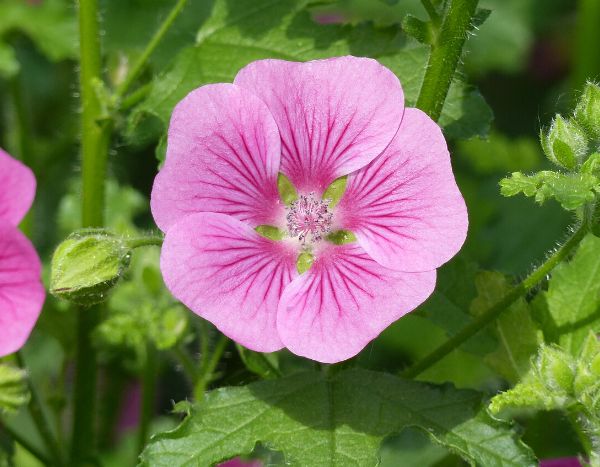
Flowering begins in June, or even May, depending on the climate, and continues late into the season, until October. Typical of Malvaceae, the flowers are single, composed of 5 petals which slightly overlap each other to form a widely open and spreading, practically circular corolla, 4 to 5 cm in diameter. The soft pink petals are delicately veined with a deeper pink, tending towards fuchsia. The base of the petals and the heart are also a darker pink, creating a very slight contrast in tone, giving the flower a romantic charm. The darker green background of the foliage particularly highlights the solitary flowers, well distributed over the surface of the vegetation.
Anisodontea ‘Cotton Candy Pink’ is a very attractive plant, perfect in a pot to adorn a terrace throughout summer. Pair it with a Kumquat Fukushu, a small citrus tree with oval orange fruits, both decorative and entirely edible, to create an exotic scene. In southern regions where it can be planted in the ground, place it alongside other plants evocative of distant skies, such as Callistemons, or Bottlebrushes, so nicknamed due to their often brightly coloured bottlebrush-like flower spikes. To also play on foliage contrasts, plant a Lagerstroemia indica 'Black Solitaire', a Crape Myrtle with burgundy-black foliage, which enhances very pale pink, almost white flowers, which will pair wonderfully with the pink of your Cape Mallow.
Anisodontea Cotton Candy Pink - Cape mallow in pictures
Flowering
Foliage
Plant habit
Botanical data
Anisodontea
'IB 005-6' COTTON CANDY PINK
Malvaceae
Cape Mallow
Cultivar or hybrid
Planting and care
Anisodontea 'Cotton Candy Pink' is a sun-lover and should be planted in a sunny location. It grows in well-drained soils and tolerates drought well, and even salt spray. Poor soils are not a problem either; only the cold can truly harm it. A well-established mature plant in good conditions (well-drained soil, shelter from cold winter winds...) can withstand brief cold spells of around -7°C to -10°C. In cooler areas, protect with a 30 g/m² non-woven fleece during sustained cold spells. In regions that are too cold, it will be necessary to grow it in a pot so it can be brought indoors in winter into a conservatory, or a cool but very bright room.
Planting period
Intended location
Care
Planting & care advice
-

-
-

-
-

-

-
-

This item has not been reviewed yet - be the first to leave a review about it.
Recently viewed products
Haven't found what you were looking for?
Hardiness is the lowest winter temperature a plant can endure without suffering serious damage or even dying. However, hardiness is affected by location (a sheltered area, such as a patio), protection (winter cover) and soil type (hardiness is improved by well-drained soil).

The flowering period indicated on our website applies to countries and regions located in USDA zone 8 (France, the United Kingdom, Ireland, the Netherlands, etc.)
It will vary according to where you live:- In zones 9 to 10 (Italy, Spain, Greece, etc.), flowering will occur about 2 to 4 weeks earlier.
- In zones 6 to 7 (Germany, Poland, Slovenia, and lower mountainous regions), flowering will be delayed by 2 to 3 weeks.
- In zone 5 (Central Europe, Scandinavia), blooming will be delayed by 3 to 5 weeks.
In temperate climates, pruning of spring-flowering shrubs (forsythia, spireas, etc.) should be done just after flowering.
Pruning of summer-flowering shrubs (Indian Lilac, Perovskia, etc.) can be done in winter or spring.
In cold regions as well as with frost-sensitive plants, avoid pruning too early when severe frosts may still occur.
The planting period indicated on our website applies to countries and regions located in USDA zone 8 (France, United Kingdom, Ireland, Netherlands).
It will vary according to where you live:
- In Mediterranean zones (Marseille, Madrid, Milan, etc.), autumn and winter are the best planting periods.
- In continental zones (Strasbourg, Munich, Vienna, etc.), delay planting by 2 to 3 weeks in spring and bring it forward by 2 to 4 weeks in autumn.
- In mountainous regions (the Alps, Pyrenees, Carpathians, etc.), it is best to plant in late spring (May-June) or late summer (August-September).
The harvesting period indicated on our website applies to countries and regions in USDA zone 8 (France, England, Ireland, the Netherlands).
In colder areas (Scandinavia, Poland, Austria...) fruit and vegetable harvests are likely to be delayed by 3-4 weeks.
In warmer areas (Italy, Spain, Greece, etc.), harvesting will probably take place earlier, depending on weather conditions.
The sowing periods indicated on our website apply to countries and regions within USDA Zone 8 (France, UK, Ireland, Netherlands).
In colder areas (Scandinavia, Poland, Austria...), delay any outdoor sowing by 3-4 weeks, or sow under glass.
In warmer climes (Italy, Spain, Greece, etc.), bring outdoor sowing forward by a few weeks.
Shipping country and language
Your country of residence may be:
Your country of residence is:
For a better user experience on our website, you can select:
Your shipping country:
-
 Austria
-
 Belgium
-
 Bosnia & Herzegovina
-
 Bulgaria
-
 Croatia
-
 Cyprus
-
 Czechia
-
 Denmark
-
 Estonia
-
 Finland
-
 France
-
 Germany
-
 Greece
-
 Hungary
-
 Iceland
-
 Ireland
-
 Italy
Italy
-
 Latvia
-
 Liechtenstein
-
 Lithuania
-
 Luxembourg
-
 Malta
Malta
-
 Netherlands
-
 Poland
-
 Portugal
-
 Romania
-
 Serbia
-
 Slovakia
-
 Slovenia
-
 Spain
Spain
-
 Sweden
-
 Switzerland
Language:
-
French
-
 English
-
Spanish
-
Italian
-
German
-
Portuguese
-
Dutch
-
Finnish
My Account
Hello
My wish lists
My cart
Log in / Register
Existing customer?
This form is protected by reCAPTCHA - the Google Privacy Policy and Terms of Service apply.
New customer?
Create an account to track your orders, access our customer service and, if you wish, make the most of our upcoming offers.