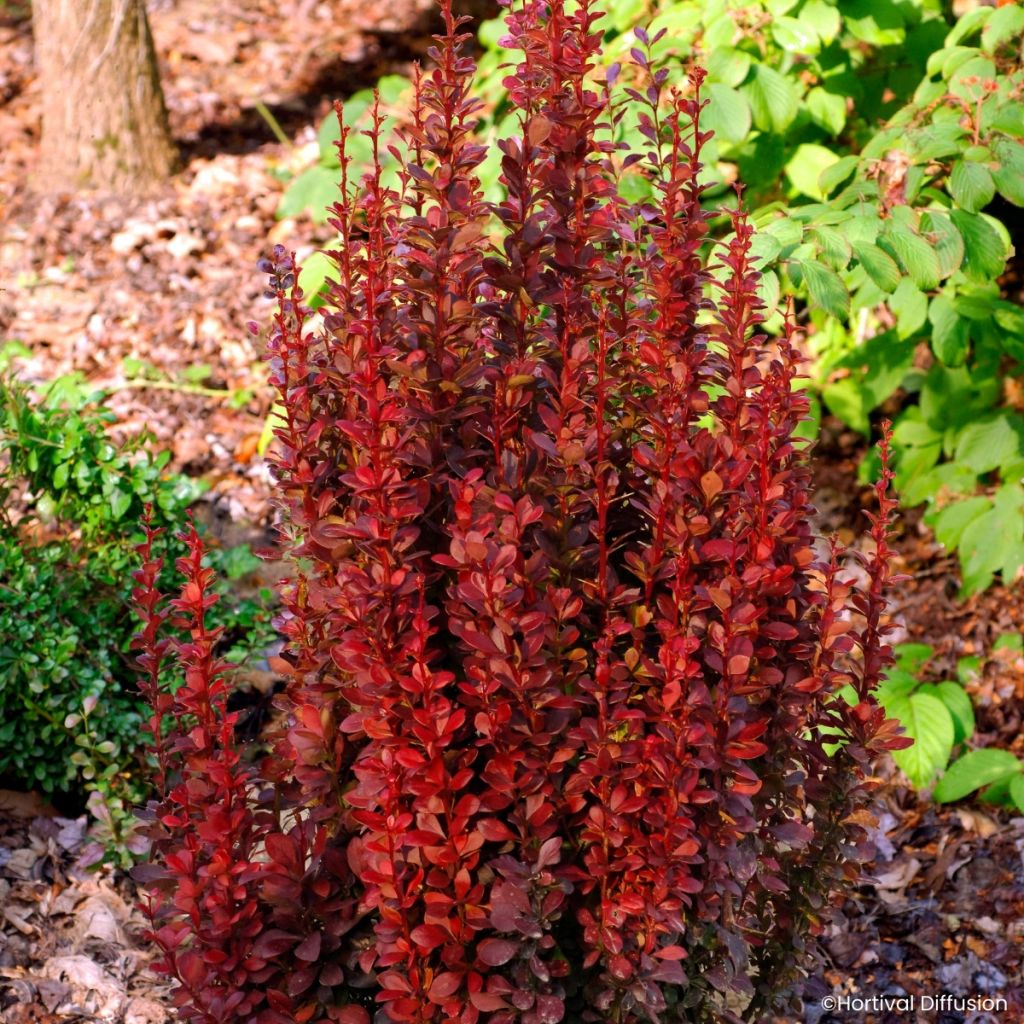
Berberis thunbergii Red Torch - Japanese barberry
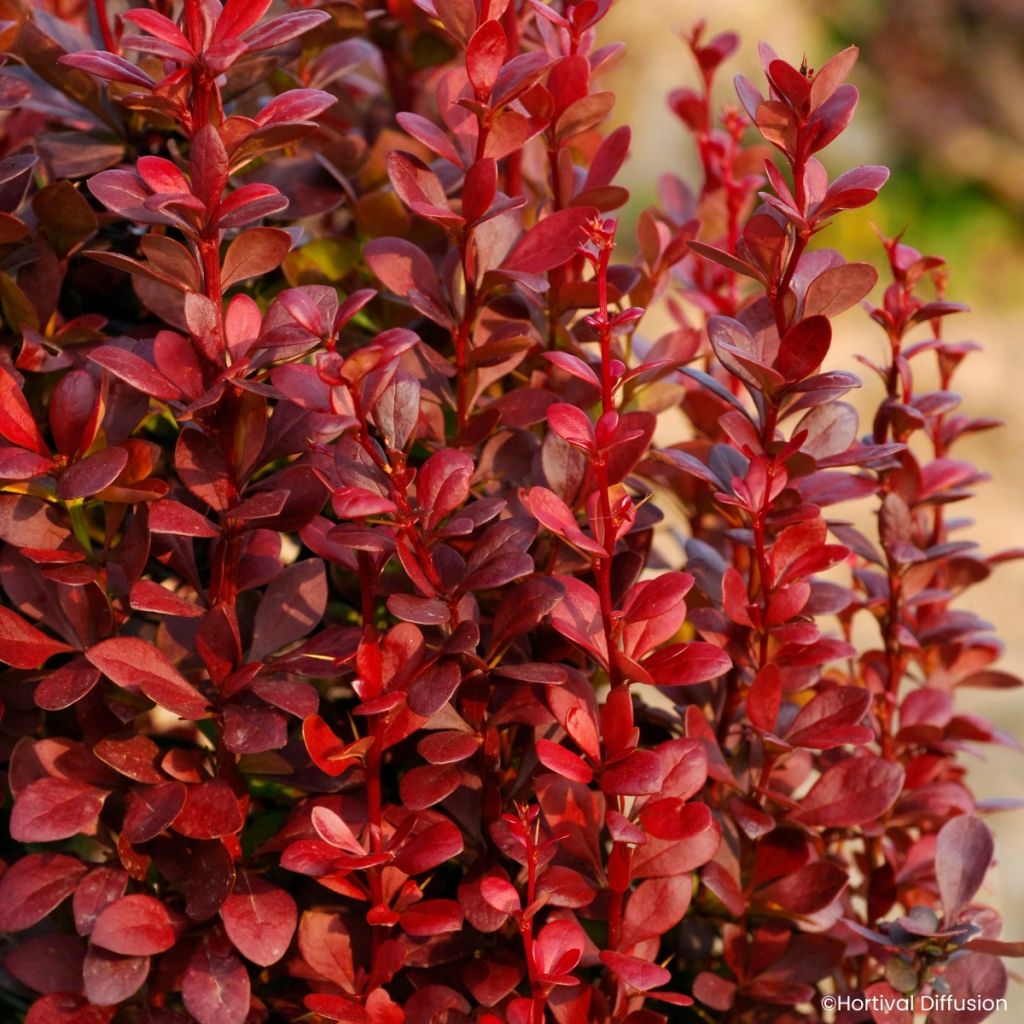
Berberis thunbergii Red Torch - Japanese barberry
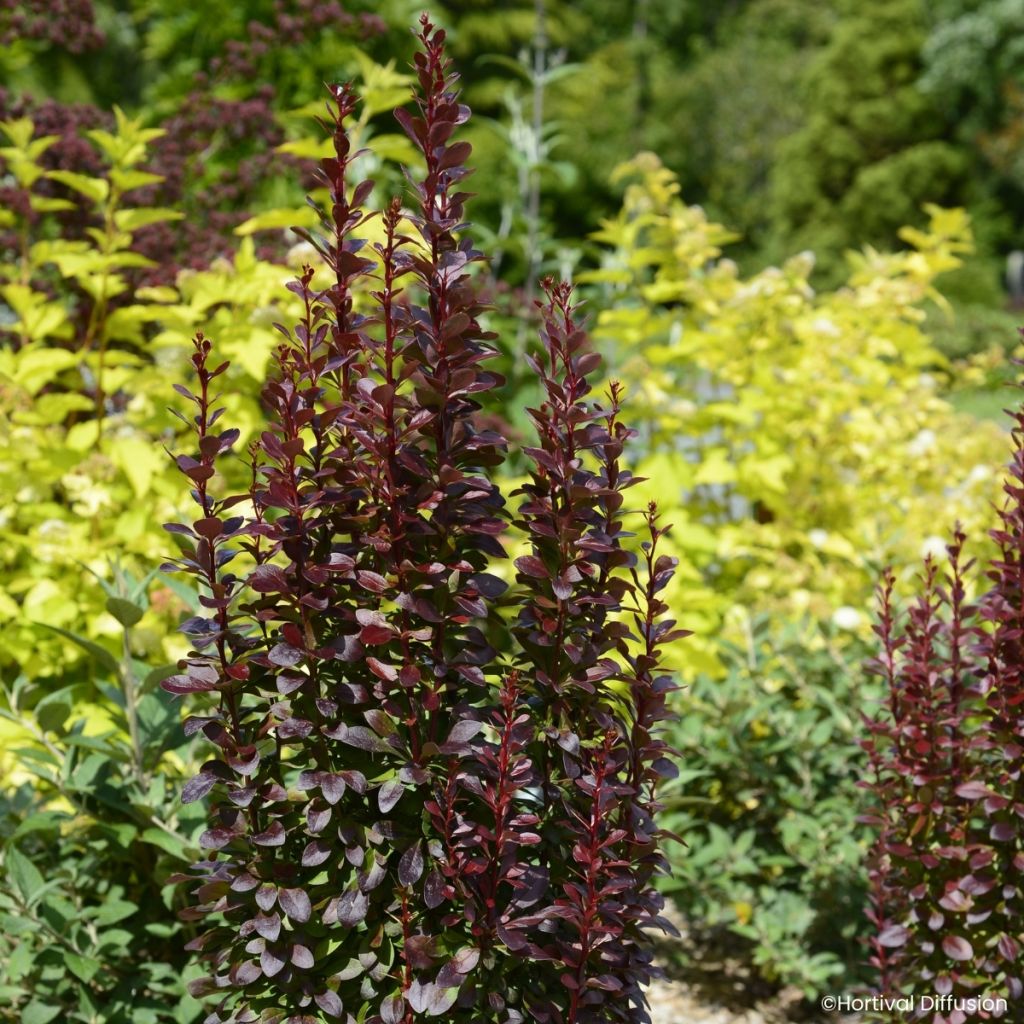
Berberis thunbergii Red Torch - Japanese barberry
Berberis thunbergii Red Torch - Japanese barberry
Berberis thunbergii 'Red Torch'
Japanese Barberry
Back-to-school special offer!
Get €10 off for every €50 you spend! And get up to €40 off on a single order.
How does it work?
1. Shop your favourites
Add your favourite plants to your basket. For every €50 you spend (excluding delivery charges, store credit and the plastic-free option), you’ll receive a €10 voucher.
€50 spent = €10 voucher
€100 spent = €20 voucher
€150 spent = €30 voucher
€200 spent = €40 voucher
2. Place your order
Once your basket reaches one of the spending thresholds, place your order. You can even choose your delivery date!
3. Receive your voucher
As soon as your order has been shipped, you’ll receive an email containing your personal voucher code and its value.
4. Use it on your next order
Your voucher is valid for 90 days from the date you receive it. It can be used once only, on a new order worth at least the value of the voucher, excluding delivery charges.
Please note: Vouchers can be combined with other offers, but cannot be split or refunded.
Home or relay delivery (depending on size and destination)
Important: You may be charged customs duties by your country’s customs authorities upon delivery.
Schedule delivery date,
and select date in basket
This plant carries a 24 months recovery warranty
More information
We guarantee the quality of our plants for a full growing cycle, and will replace at our expense any plant that fails to recover under normal climatic and planting conditions.
Would this plant suit my garden?
Set up your Plantfit profile →
Description
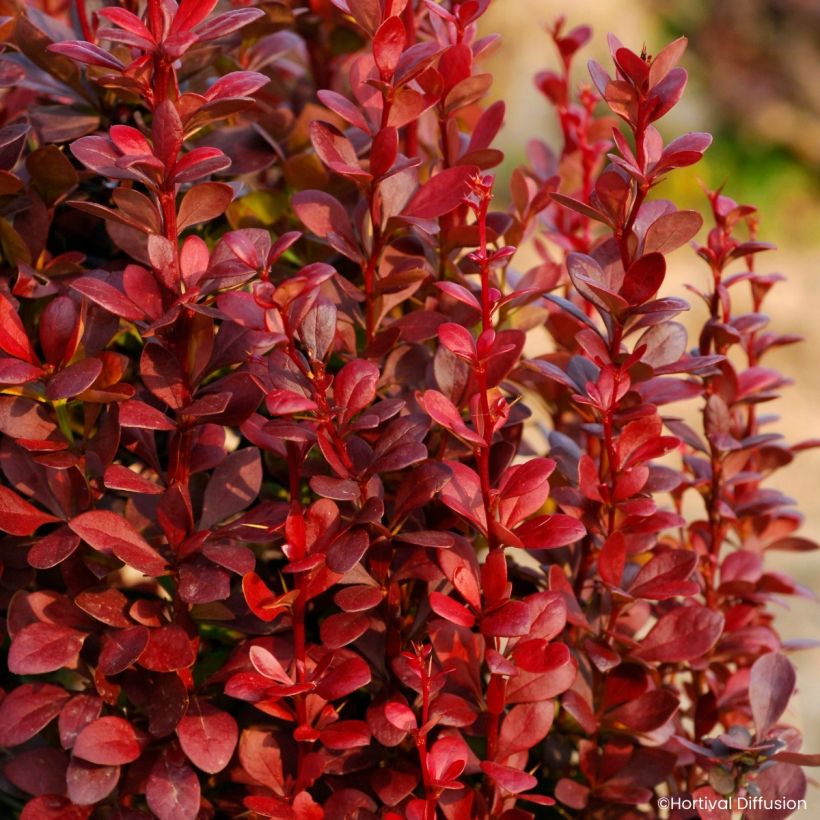
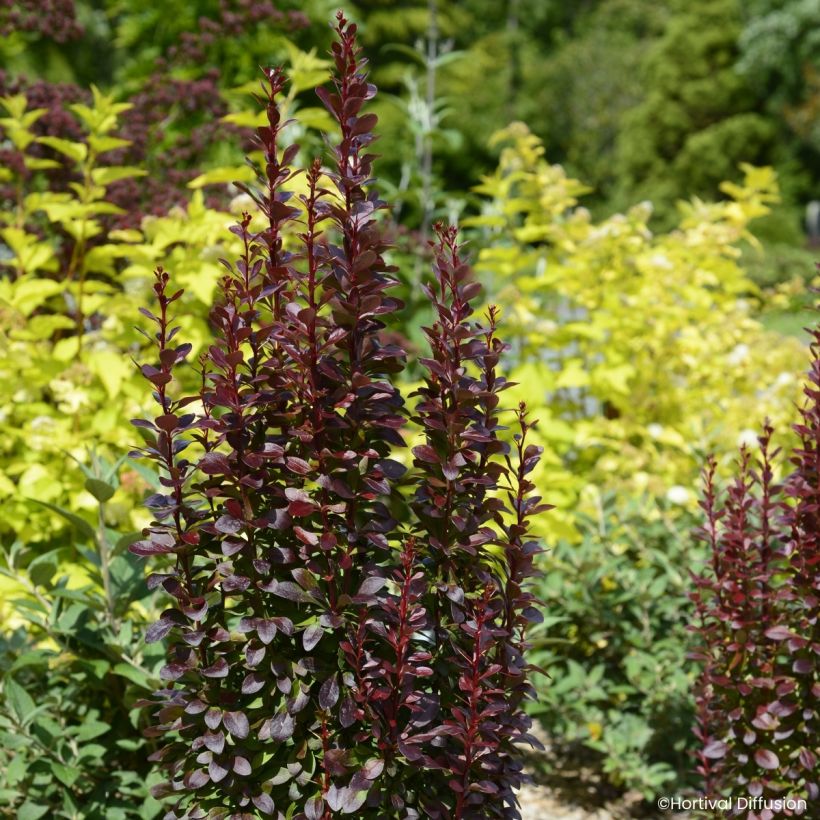
Berberis thunbergii 'Red Torch' is a horticultural variety of barberry that captures attention with its architectural silhouette and the colours of its foliage. This compact, dense shrub forms a column that rarely exceeds 1.20m in height at maturity. Its deciduous foliage oscillates between two tones: bright red in spring and autumn, and purple in summer, thus marking the seasons in the garden. Though small, the yellow spring flowers create a lovely contrast and evolve to produce decorative red fruits at the end of the season. This remarkably hardy Berberis thrives in full sun in most soils, tolerating dry conditions well once established. Its compact, colourful habit makes it an excellent choice for borders, low hedges, and containers on a terrace or even a small balcony, where it enlivens the space with its seasonal variations.
The Berberis genus belongs to the Berberidaceae family, and includes other widely planted ornamental genera such as Nandina (Heavenly bamboo) and mahonias, alongside more niche genera like Podophyllums with their surprisingly architectural leaves. While Berberis vulgaris is considered the 'true' barberry, many other species and hybrids are commonly referred to by this name. The genus is rich with nearly 500 species, more or less thorny, ranging from dwarf shrubs to specimens several metres tall. Berberis thunbergii, also known as Thunberg's barberry, is a species native to the Japanese archipelago, which has given rise to numerous cultivars planted in gardens worldwide.
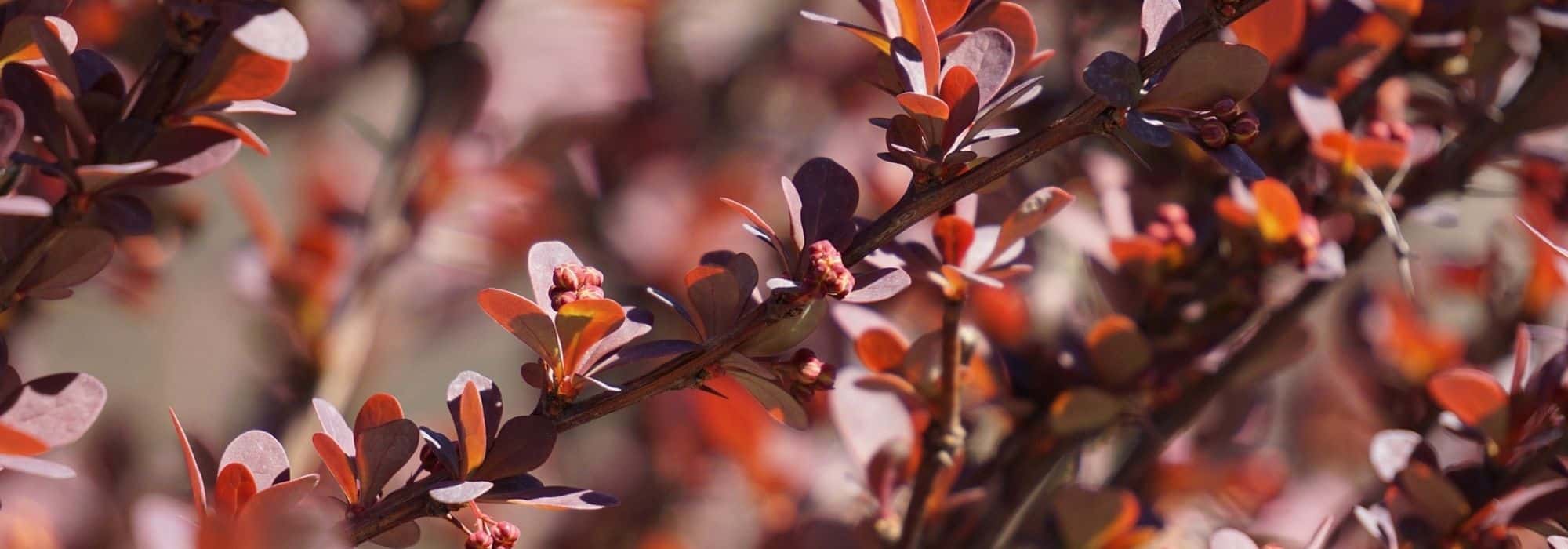
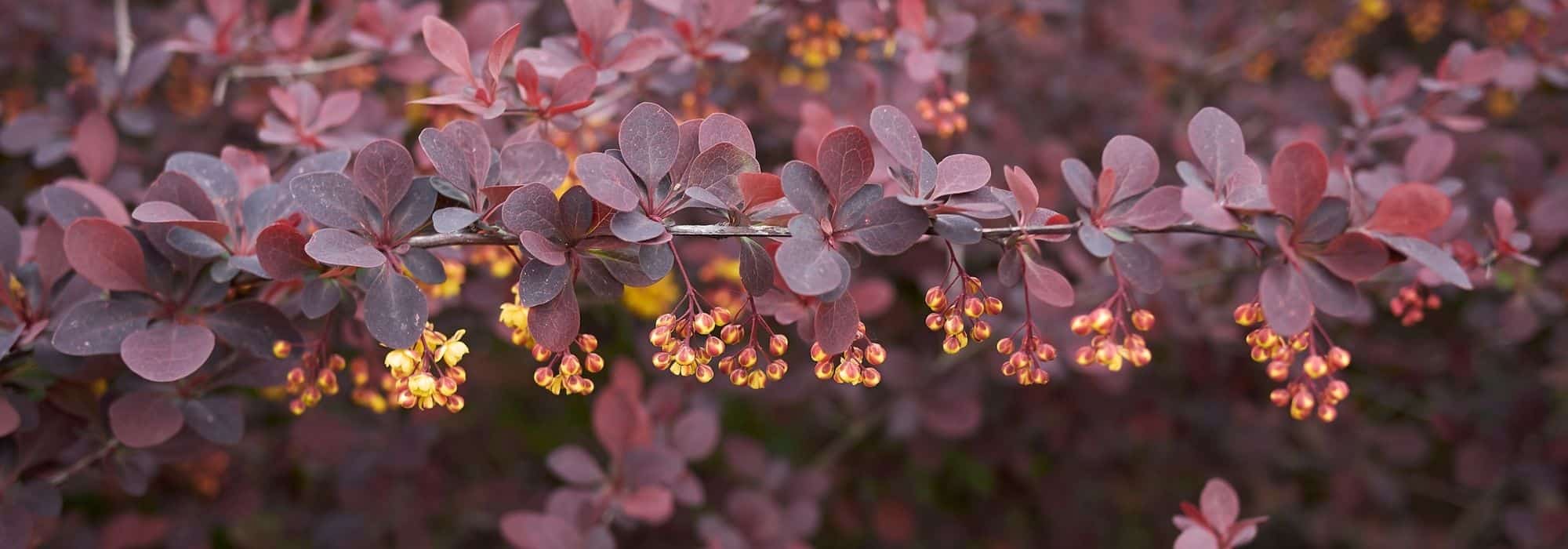
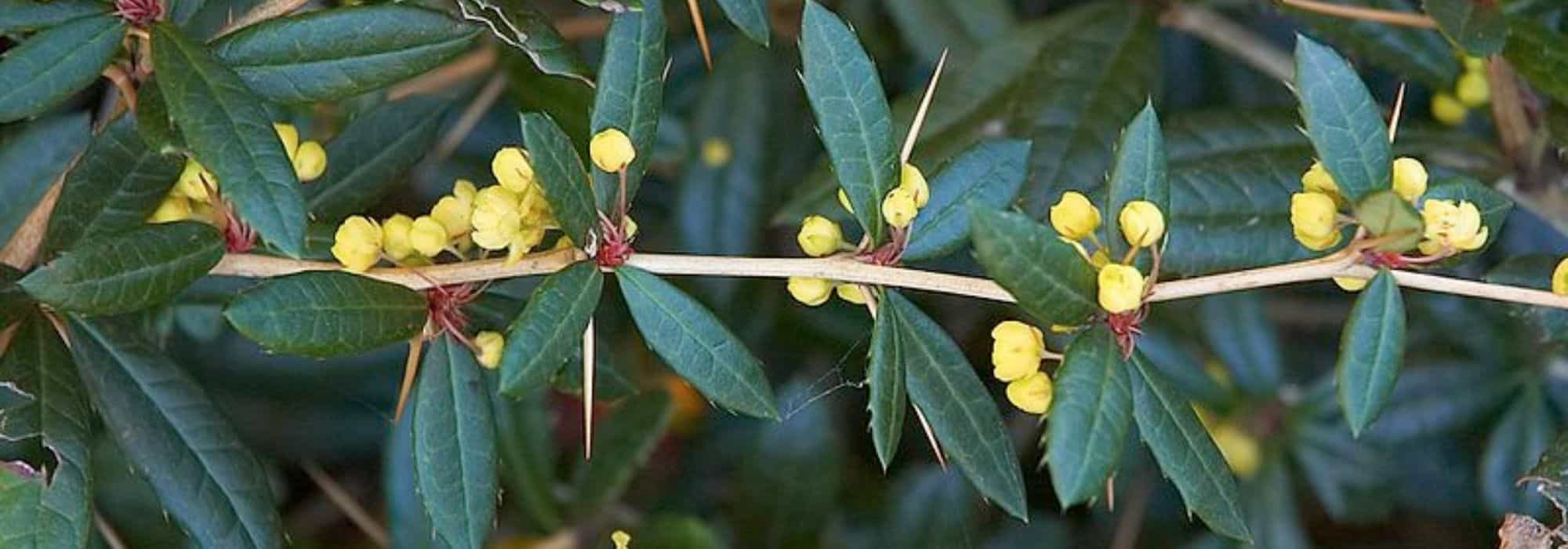
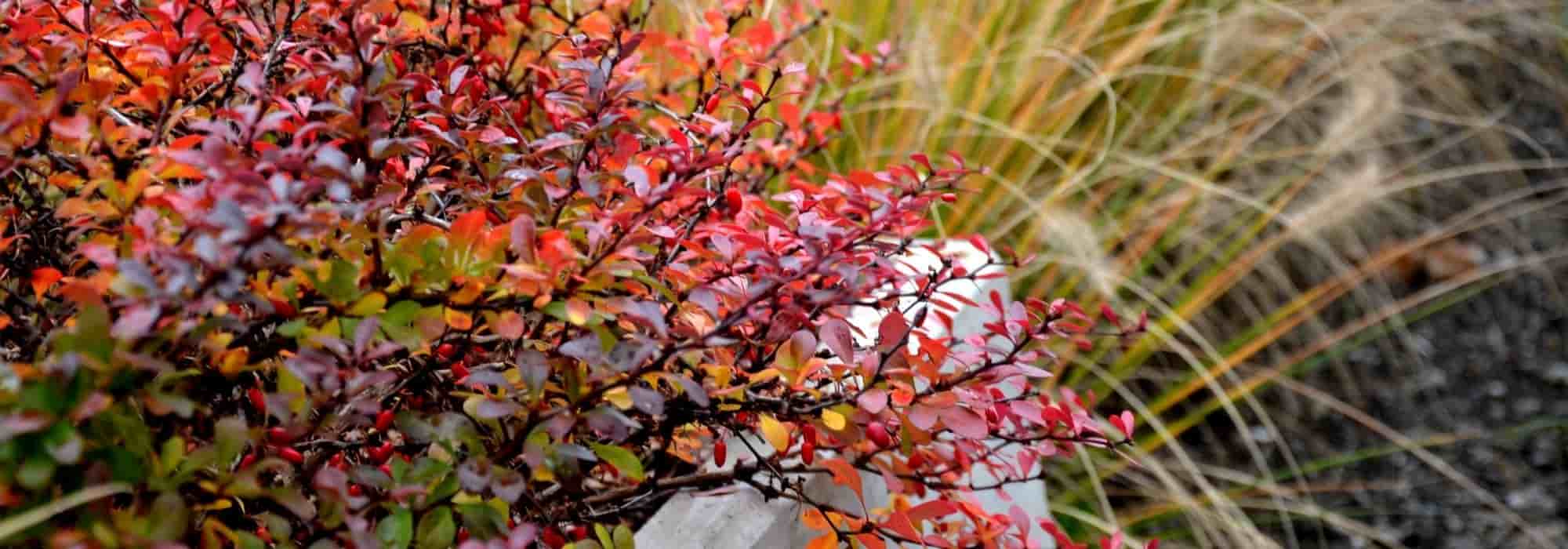
'Red Torch' is a selection by Frenchman C. Castenet obtained in the early 2000s, highly prized for its ornamental qualities and ease of cultivation. With a very upright habit, the shrub forms a column 80cm to 1.20m tall, and 40 to 60cm wide. The fine branches that make up its dense vegetation grow vertically, forming a kind of plant flame where the central shoots reach up, with the lateral ones arranged in successive tiers. Its name "red torch" is particularly well-deserved in spring when the bright red young shoots appear, and at the end of the season when the plant takes on its equally red autumn colouring. In summer, its foliage turns purple, a more classic colour for the species, very useful for creating colour contrasts in a border. The small, spatulate leaves with rounded tips are proportionate to the shrub's compact dimensions. The tiny flowers appear in small yellow corollas, still decorative for the contrast they create with the foliage in May. They evolve through the season to produce small ornamental red fruits in autumn. Though insignificant, the flowering is nectar-rich and therefore beneficial to biodiversity. The short thorns at the nodes are hidden by the leaves during the growing season, and are more visible in winter after leaf fall. Less formidable than in many other species, they are still quite sharp, so watch your fingers and children.
Berberis thunbergii 'Red Torch' is useful in the garden for creating contrasts in both form and colour. Its compactness allows it to be used even in smaller borders. Plant behind it a Cotinus coggygria 'Golden Lady' for a magnificent display from spring to autumn. This smoke tree develops into an irregular ball 2m in diameter, whose colours sweep the palette from yellow to orange over the months. More compact, Physocarpus opulifolius 'Magic Ball' changes from orange to golden yellow, then to red, while in less harsh climates, Choisya 'Aztec Gold' with its finely cut, architectural, beautiful yellow-green foliage will also be a good companion, its white flowers releasing a pleasant citrus scent in spring.
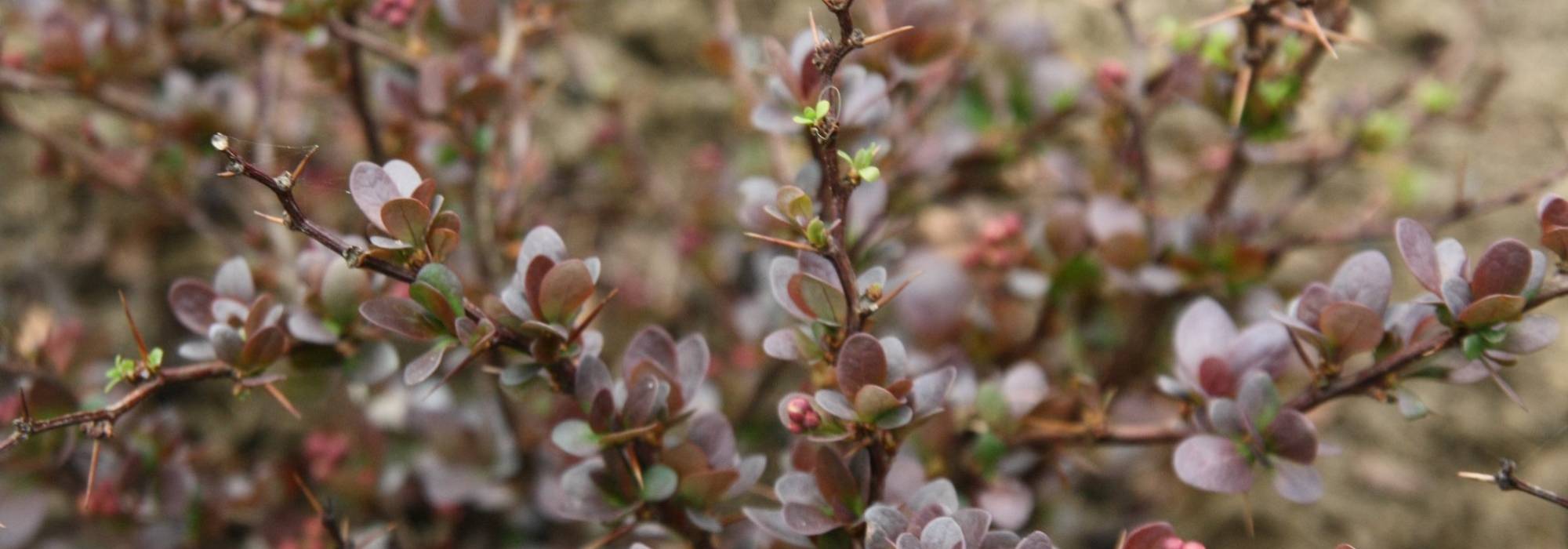
Berberis thunbergii Red Torch - Japanese barberry in pictures
Plant habit
Flowering
Foliage
Botanical data
Berberis
thunbergii
'Red Torch'
Berberidaceae
Japanese Barberry
Berberis thunbergii RED TORCH®
Cultivar or hybrid
Planting and care
Berberis thunbergii 'Red Torch', hardy down to -25°C, can be planted in spring or autumn in any moist, well-drained soil, even lime-bearing, poor or stony. To enhance its beautiful colours, place it in a sunny position, reserving partial shade for the south. Water generously and frequently during the first few summers, but there is no need to feed. It requires very little maintenance; just ensure the soil remains moist, especially in summer. For Berberis planted as a hedge, shape the silhouette in spring and September. In informal hedges, even out the branches after flowering to reinforce the shrub's columnar habit. Be careful not to handle the branches with bare hands, as they have thorns that are difficult to remove once embedded in the skin.
Planting period
Intended location
Care
Planting & care advice




This item has not been reviewed yet - be the first to leave a review about it.
Recently viewed products
Haven't found what you were looking for?
Hardiness is the lowest winter temperature a plant can endure without suffering serious damage or even dying. However, hardiness is affected by location (a sheltered area, such as a patio), protection (winter cover) and soil type (hardiness is improved by well-drained soil).

The flowering period indicated on our website applies to countries and regions located in USDA zone 8 (France, the United Kingdom, Ireland, the Netherlands, etc.)
It will vary according to where you live:- In zones 9 to 10 (Italy, Spain, Greece, etc.), flowering will occur about 2 to 4 weeks earlier.
- In zones 6 to 7 (Germany, Poland, Slovenia, and lower mountainous regions), flowering will be delayed by 2 to 3 weeks.
- In zone 5 (Central Europe, Scandinavia), blooming will be delayed by 3 to 5 weeks.
In temperate climates, pruning of spring-flowering shrubs (forsythia, spireas, etc.) should be done just after flowering.
Pruning of summer-flowering shrubs (Indian Lilac, Perovskia, etc.) can be done in winter or spring.
In cold regions as well as with frost-sensitive plants, avoid pruning too early when severe frosts may still occur.
The planting period indicated on our website applies to countries and regions located in USDA zone 8 (France, United Kingdom, Ireland, Netherlands).
It will vary according to where you live:
- In Mediterranean zones (Marseille, Madrid, Milan, etc.), autumn and winter are the best planting periods.
- In continental zones (Strasbourg, Munich, Vienna, etc.), delay planting by 2 to 3 weeks in spring and bring it forward by 2 to 4 weeks in autumn.
- In mountainous regions (the Alps, Pyrenees, Carpathians, etc.), it is best to plant in late spring (May-June) or late summer (August-September).
The harvesting period indicated on our website applies to countries and regions in USDA zone 8 (France, England, Ireland, the Netherlands).
In colder areas (Scandinavia, Poland, Austria...) fruit and vegetable harvests are likely to be delayed by 3-4 weeks.
In warmer areas (Italy, Spain, Greece, etc.), harvesting will probably take place earlier, depending on weather conditions.
The sowing periods indicated on our website apply to countries and regions within USDA Zone 8 (France, UK, Ireland, Netherlands).
In colder areas (Scandinavia, Poland, Austria...), delay any outdoor sowing by 3-4 weeks, or sow under glass.
In warmer climes (Italy, Spain, Greece, etc.), bring outdoor sowing forward by a few weeks.
Shipping country and language
Your country of residence may be:
Your country of residence is:
For a better user experience on our website, you can select:
Your shipping country:
-
 Austria
-
 Belgium
-
 Bosnia & Herzegovina
-
 Bulgaria
-
 Croatia
-
 Cyprus
-
 Czechia
-
 Denmark
-
 Estonia
-
 Finland
-
 France
-
 Germany
-
 Greece
-
 Hungary
-
 Iceland
-
 Ireland
-
 Italy
Italy
-
 Latvia
-
 Liechtenstein
-
 Lithuania
-
 Luxembourg
-
 Malta
Malta
-
 Netherlands
-
 Poland
-
 Portugal
-
 Romania
-
 Serbia
-
 Slovakia
-
 Slovenia
-
 Spain
Spain
-
 Sweden
-
 Switzerland
Language:
-
French
-
 English
-
Spanish
-
Italian
-
German
-
Portuguese
-
Dutch
-
Finnish
My Account
Hello
My wish lists
My cart
Log in / Register
Existing customer?
This form is protected by reCAPTCHA - the Google Privacy Policy and Terms of Service apply.
New customer?
Create an account to track your orders, access our customer service and, if you wish, make the most of our upcoming offers.