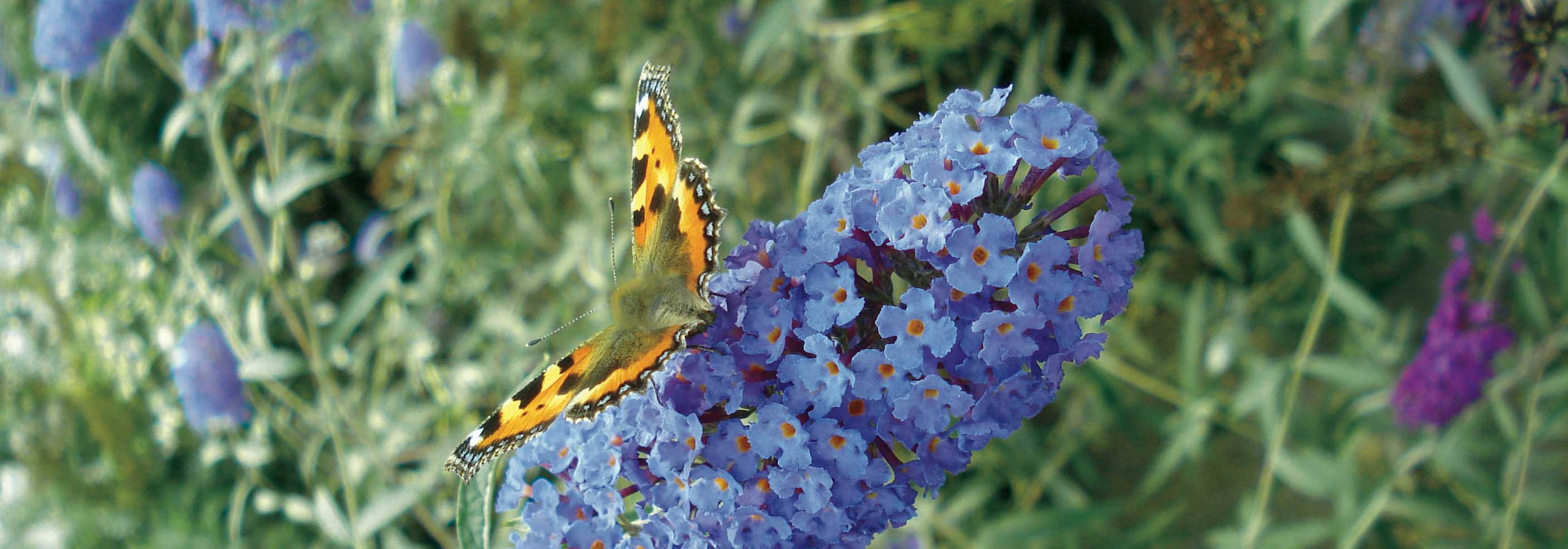
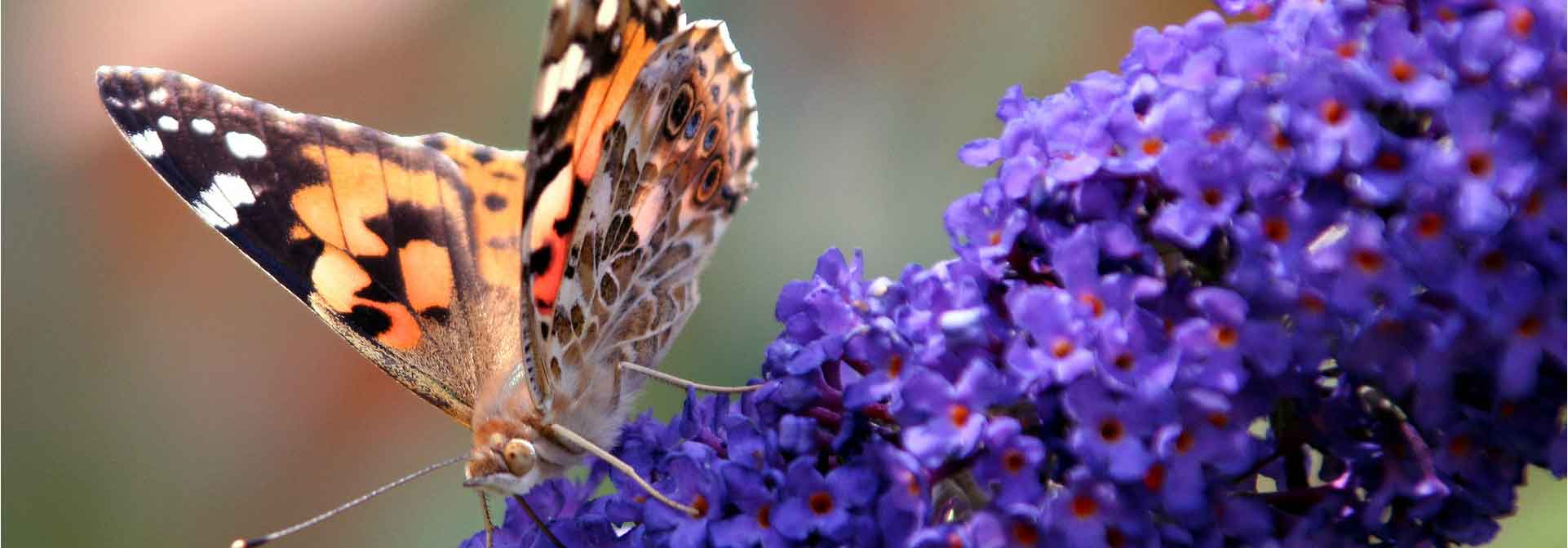
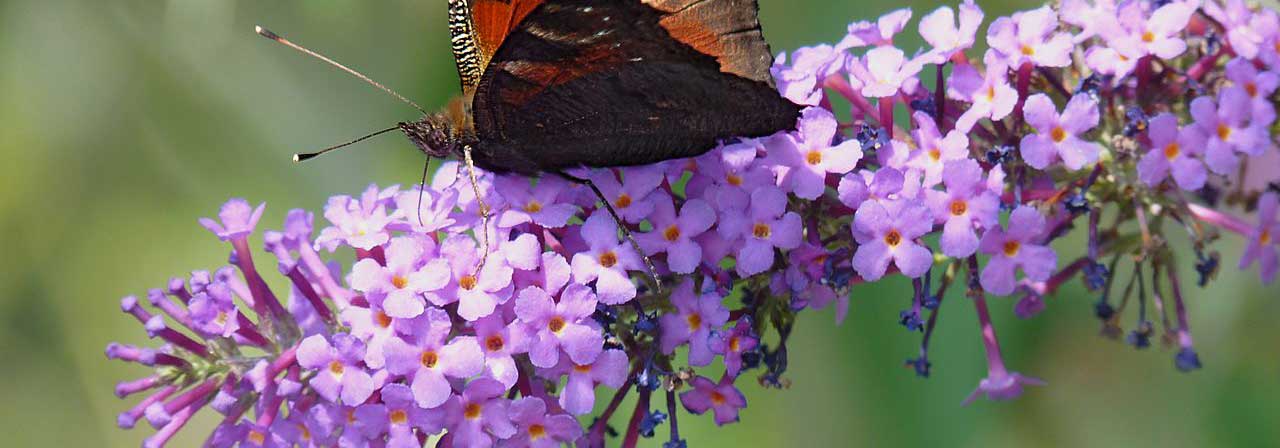
Very well adapted to urban conditions, Buddleja Rêve de Papillon® Red is really easy to grow successfully in most situations. It adapts to the majority of soils, even chalky ones, tolerating dry conditions relatively well once established, although it prefers slightly moist and well-drained soils. Thriving in full sun, it also tolerates some shade without its flowering suffering too much. It attracts butterflies, bringing nature into the garden, while emitting a light honey scent. Plant alongside it plants with different flowering times, and as undemanding as itself, such as Forsythias, which are unmatched for brightening a border with their brilliant yellow flowers in early spring. A specimen of Weigela florida 'Alexandra' will take over in May with its intense pink flowers, while its purple foliage will create a strong contrast all season. In the background, plant a Deutzia crenata 'Pride of Rochester', whose abundant white flowering in May-June will bridge the gap.
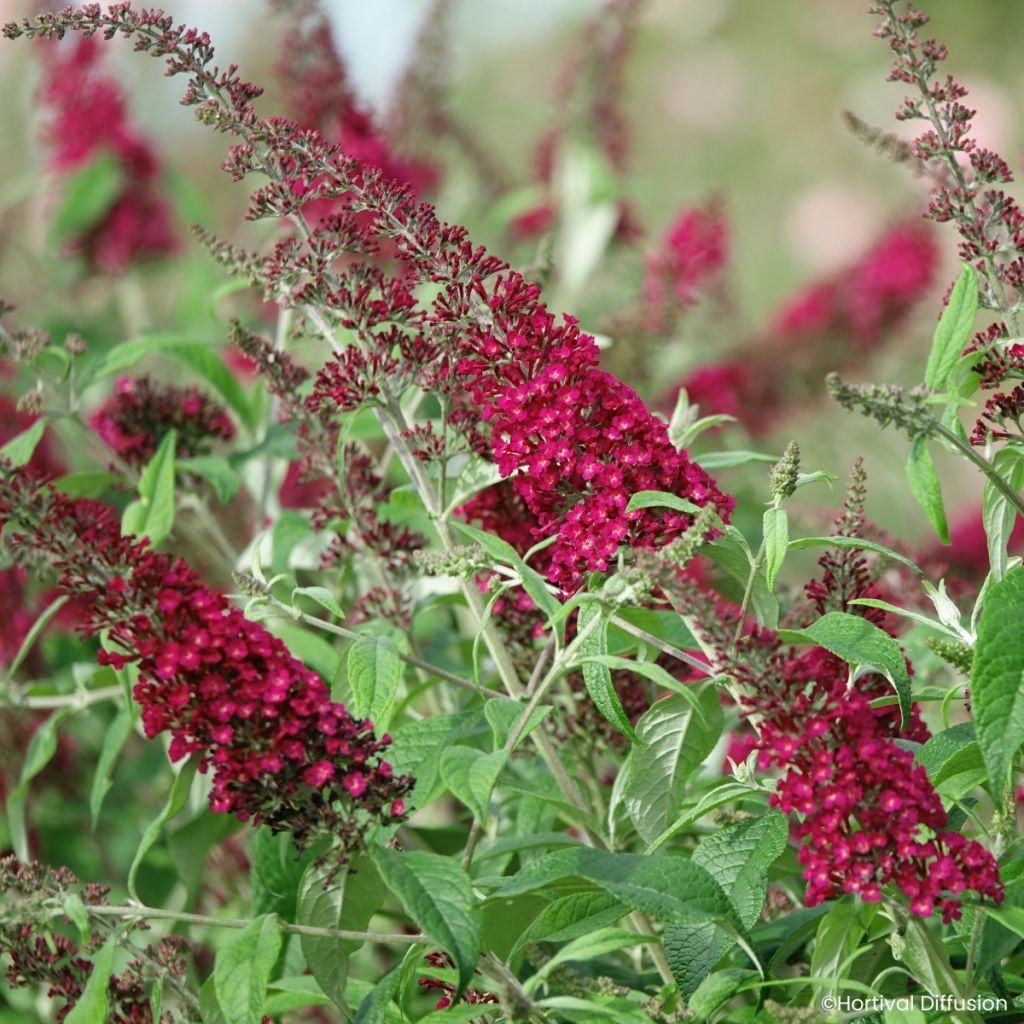
Buddleja Rêve de papillon Red - Butterfly bush
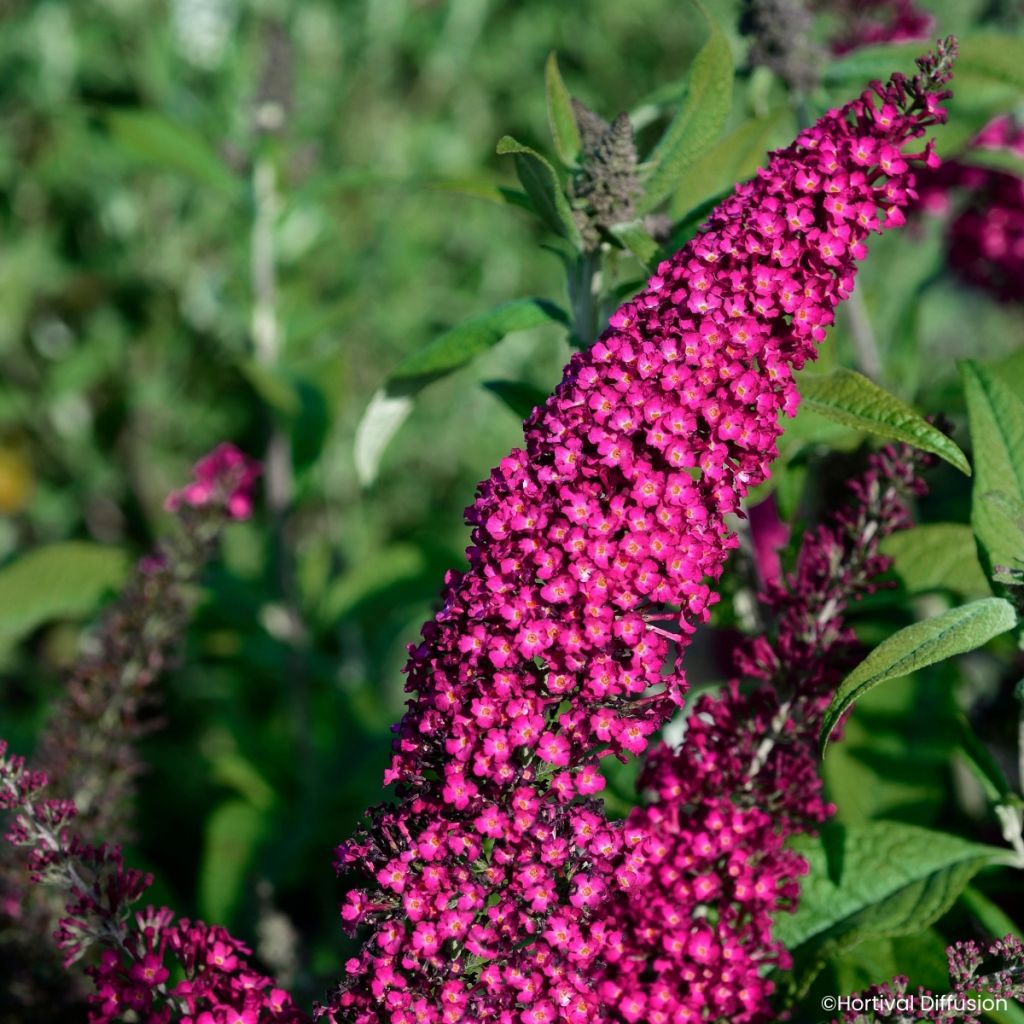
Buddleja Rêve de papillon Red - Butterfly bush
Buddleja Rêve de papillon Red - Butterfly bush
Buddleja x davidii 'Boscranz' Red - Rêve de Papillon®
Butterfly Bush
Back-to-school special offer!
Get €10 off for every €50 you spend! And get up to €40 off on a single order.
How does it work?
1. Shop your favourites
Add your favourite plants to your basket. For every €50 you spend (excluding delivery charges, store credit and the plastic-free option), you’ll receive a €10 voucher.
€50 spent = €10 voucher
€100 spent = €20 voucher
€150 spent = €30 voucher
€200 spent = €40 voucher
2. Place your order
Once your basket reaches one of the spending thresholds, place your order. You can even choose your delivery date!
3. Receive your voucher
As soon as your order has been shipped, you’ll receive an email containing your personal voucher code and its value.
4. Use it on your next order
Your voucher is valid for 90 days from the date you receive it. It can be used once only, on a new order worth at least the value of the voucher, excluding delivery charges.
Please note: Vouchers can be combined with other offers, but cannot be split or refunded.
Home or relay delivery (depending on size and destination)
Important: You may be charged customs duties by your country’s customs authorities upon delivery.
Schedule delivery date,
and select date in basket
This plant carries a 24 months recovery warranty
More information
We guarantee the quality of our plants for a full growing cycle, and will replace at our expense any plant that fails to recover under normal climatic and planting conditions.
Would this plant suit my garden?
Set up your Plantfit profile →
Description
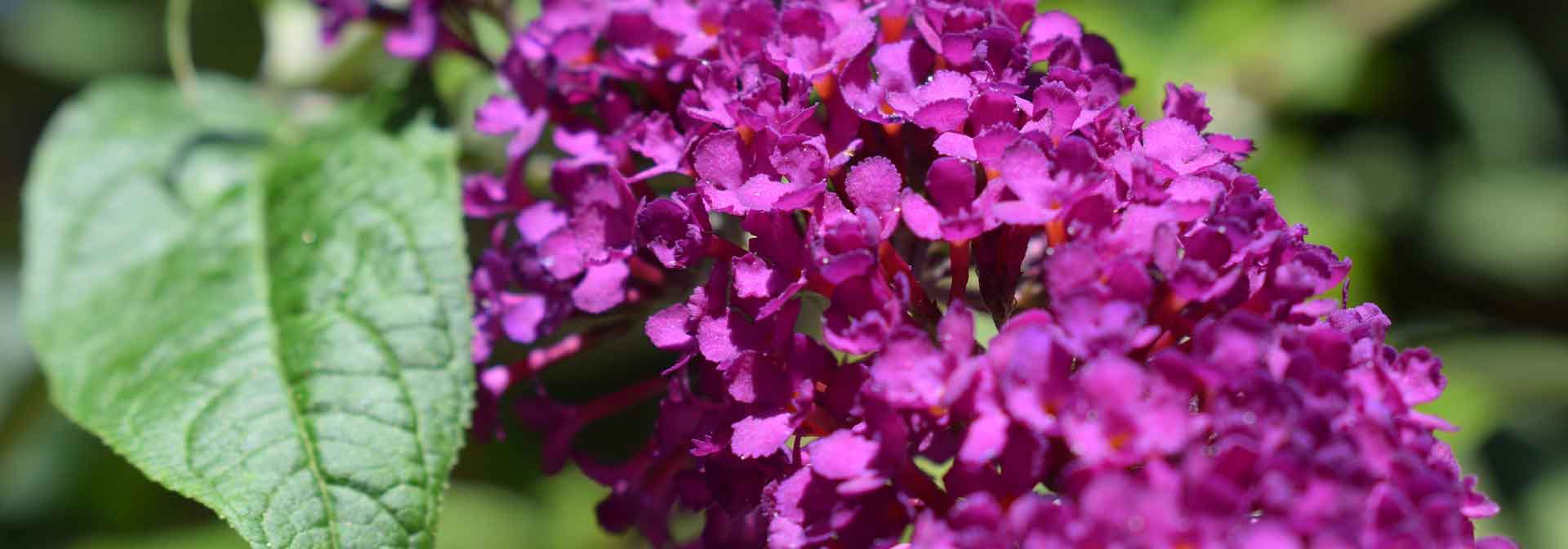
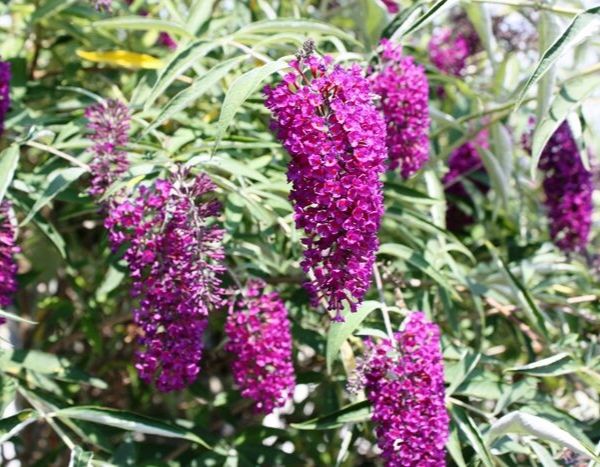
Buddleja Rêve de Papillon® 'Boscranz' Red is a variety of Butterfly bush that stands out with its beautiful ruby-red blooms mingled with pinkish highlights. The long inflorescences, 25 cm and more, flower from July to September and form a beautiful contrast with the fairly dark green foliage. This shrub of medium vigour, which can exceed 2m in height if left unpruned, forms a dense clump with irregular outlines that give it a natural look. An ideal beginner plant, this Buddleia thrives in most soils, in a sunny or possibly partially shaded position. It is ornamental and also useful for wildlife, attracting butterflies and other insects that come to feed on it.
The Buddleja genus, has a variable position depending on botanical classifications. Once included in the Loganiaceae family, it has now moved either into the relatively obscure Buddlejaceae or, more often, within Scrophulariaceae. There it is in company with other ornamental genera such as Leucophyllum or Texas Sage, with grey foliage and mauve-pink flowers, or the charming little Diascia, much appreciated for flowering in decorative pots. There are over a hundred species of Buddleia in the wild, distributed across three continents, America, Africa and Asia, from temperate regions for deciduous species to tropical zones for evergreen ones. Buddleja davidii was discovered in 1890 simultaneously by two botanists, the Englishman A. Henry in Sichuan province in China, and the French missionary Soulié in eastern Tibet, who sent seeds to the Museum in Paris. Growing up to 3000 m altitude in its native regions, B. davidii develops into a large shrub 3 to 5m in height, forming angular, hairy and spreading branches. Its lilac-coloured flowers are not particularly striking, which is why, following the later discovery in China of varieties with brighter colours, breeders have continuously used them to produce more compact horticultural varieties with larger and more colourful flowers.
Buddleja x davidii 'Boscranz' Red belongs to the Rêve de Papillon® series, which comes in different colours (white, mauve...). The American breeder Scott Trees used the variety 'Miss Ruby' to produce an improvement with deeper red flowers. 'Boscranz' Red opens long panicles (up to 30 cm) all summer, made up of dozens of small flowers clustered together. With four petals, the flowers display a nearly pure red, barely tinged with pink. The deep green foliage is composed of pointed lanceolate leaves with a very slight greyish tinge. This fast-growing, deciduous shrub reaches 2 m in height or more, with a spread of approximately 1.60 to 1.80 m. Its slightly irregular habit gives it a rather wild silhouette, allowing it to fit into both a natural garden and a more formal planting.
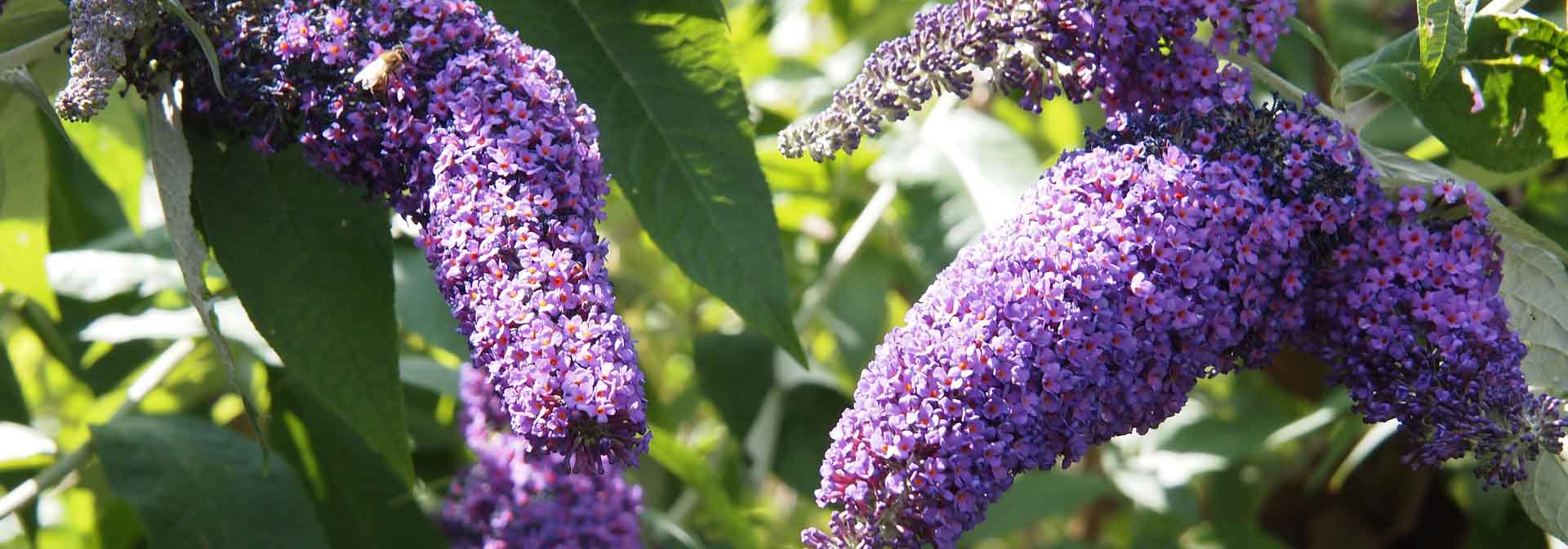
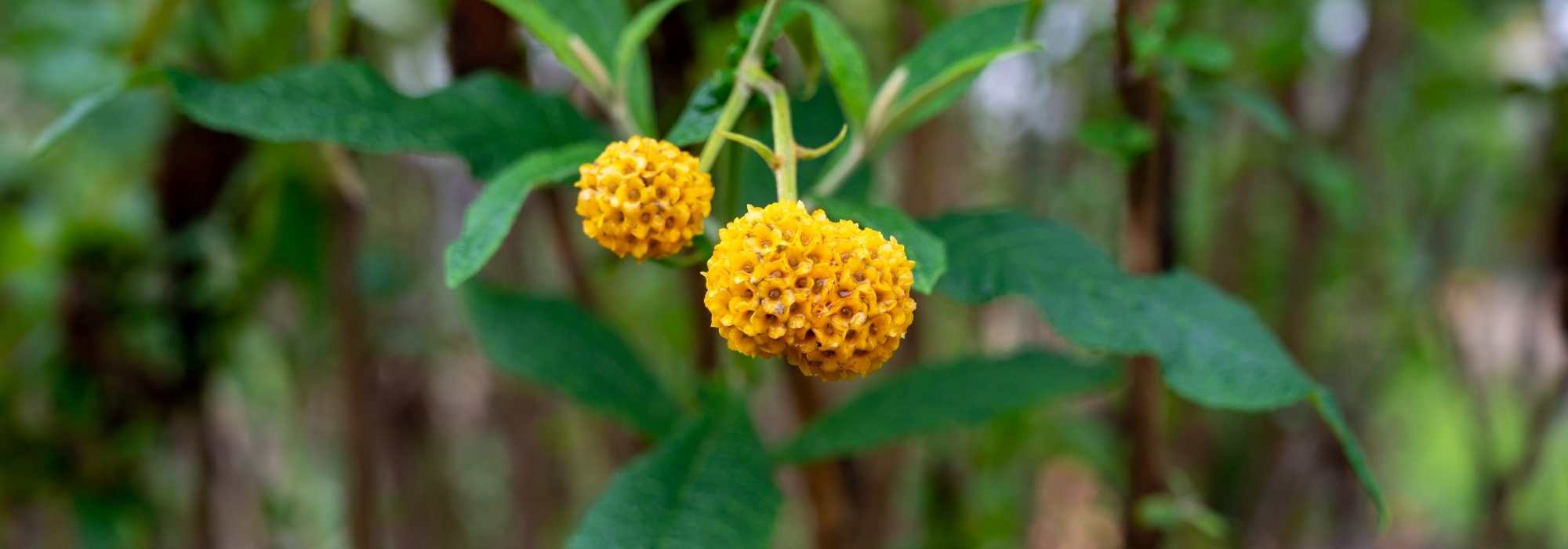
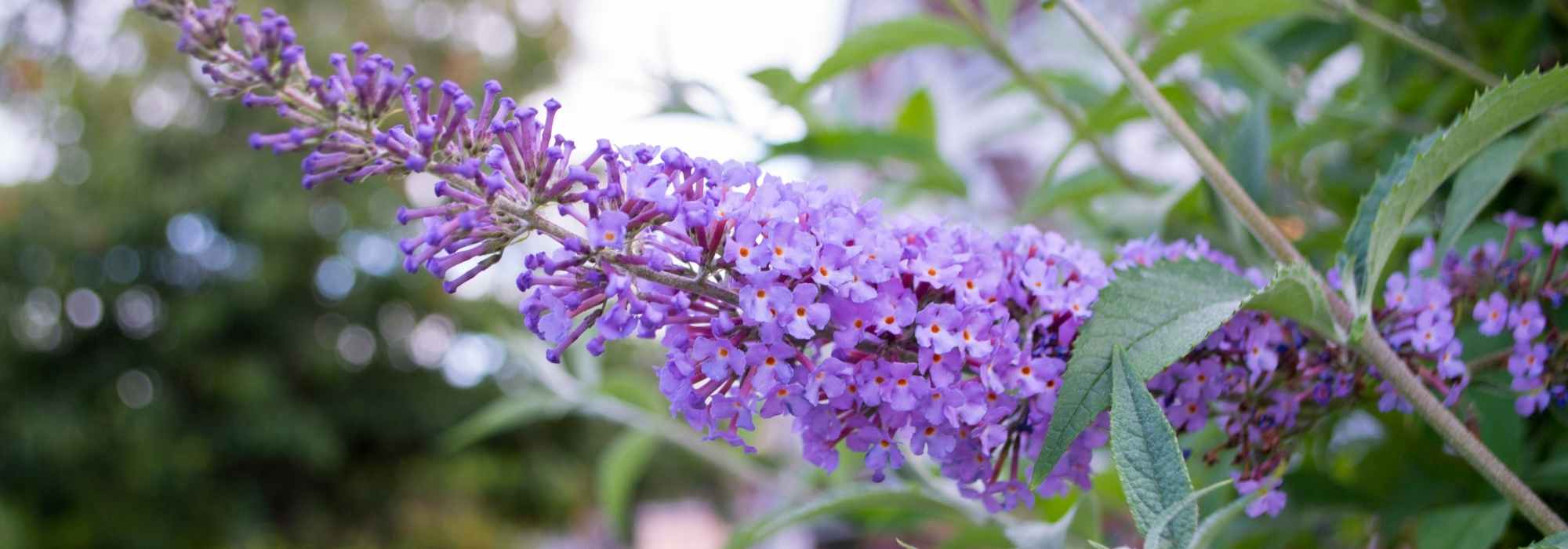
Buddleja Rêve de papillon Red - Butterfly bush in pictures
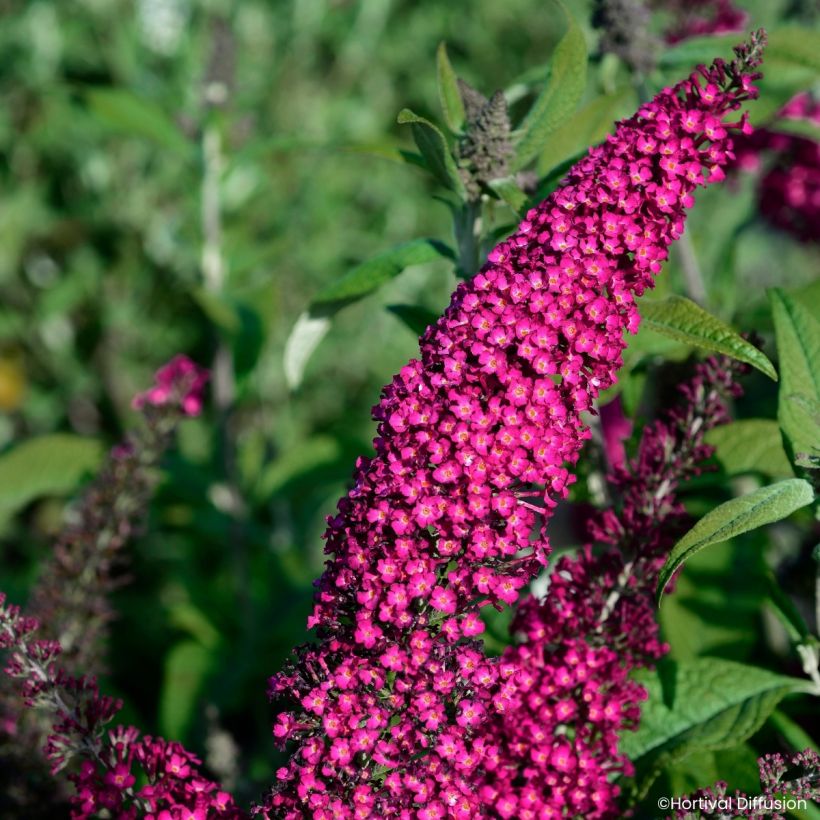
Plant habit
Flowering
Foliage
Botanical data
Buddleja
x davidii
'Boscranz' Red - Rêve de Papillon®
Scrophulariaceae
Butterfly Bush
Buddleja davidii 'Boscranz', Buddleia davidii Rêve de Papillon® RED
Cultivar or hybrid
Planting and care
Buddleia davidii 'Rêve de Papillon® Red' is easy to grow, as it is an undemanding plant that adapts to a wide range of soils and climates. It enjoys sunny positions but also flowers in semi-shade. Plant it in spring or early autumn, in ordinary soil, even chalky and poor, but well-worked and well-drained. Once well established, the plant will tolerate periods of moderate drought, especially if planted in deep soil. The butterfly bush has no significant enemies. However, be aware of caterpillars, vine weevils, capsid bugs and red spider mites that can invade it. A hard pruning after flowering and/or in early spring maintains a branched, compact habit and encourages the shrub to produce many flowers.
Planting period
Intended location
Care
Planting & care advice
-
-
-

-
-
-
-
-
This item has not been reviewed yet - be the first to leave a review about it.
Recently viewed products
Haven't found what you were looking for?
Hardiness is the lowest winter temperature a plant can endure without suffering serious damage or even dying. However, hardiness is affected by location (a sheltered area, such as a patio), protection (winter cover) and soil type (hardiness is improved by well-drained soil).

The flowering period indicated on our website applies to countries and regions located in USDA zone 8 (France, the United Kingdom, Ireland, the Netherlands, etc.)
It will vary according to where you live:- In zones 9 to 10 (Italy, Spain, Greece, etc.), flowering will occur about 2 to 4 weeks earlier.
- In zones 6 to 7 (Germany, Poland, Slovenia, and lower mountainous regions), flowering will be delayed by 2 to 3 weeks.
- In zone 5 (Central Europe, Scandinavia), blooming will be delayed by 3 to 5 weeks.
In temperate climates, pruning of spring-flowering shrubs (forsythia, spireas, etc.) should be done just after flowering.
Pruning of summer-flowering shrubs (Indian Lilac, Perovskia, etc.) can be done in winter or spring.
In cold regions as well as with frost-sensitive plants, avoid pruning too early when severe frosts may still occur.
The planting period indicated on our website applies to countries and regions located in USDA zone 8 (France, United Kingdom, Ireland, Netherlands).
It will vary according to where you live:
- In Mediterranean zones (Marseille, Madrid, Milan, etc.), autumn and winter are the best planting periods.
- In continental zones (Strasbourg, Munich, Vienna, etc.), delay planting by 2 to 3 weeks in spring and bring it forward by 2 to 4 weeks in autumn.
- In mountainous regions (the Alps, Pyrenees, Carpathians, etc.), it is best to plant in late spring (May-June) or late summer (August-September).
The harvesting period indicated on our website applies to countries and regions in USDA zone 8 (France, England, Ireland, the Netherlands).
In colder areas (Scandinavia, Poland, Austria...) fruit and vegetable harvests are likely to be delayed by 3-4 weeks.
In warmer areas (Italy, Spain, Greece, etc.), harvesting will probably take place earlier, depending on weather conditions.
The sowing periods indicated on our website apply to countries and regions within USDA Zone 8 (France, UK, Ireland, Netherlands).
In colder areas (Scandinavia, Poland, Austria...), delay any outdoor sowing by 3-4 weeks, or sow under glass.
In warmer climes (Italy, Spain, Greece, etc.), bring outdoor sowing forward by a few weeks.
Shipping country and language
Your country of residence may be:
Your country of residence is:
For a better user experience on our website, you can select:
Your shipping country:
-
 Austria
-
 Belgium
-
 Bosnia & Herzegovina
-
 Bulgaria
-
 Croatia
-
 Cyprus
-
 Czechia
-
 Denmark
-
 Estonia
-
 Finland
-
 France
-
 Germany
-
 Greece
-
 Hungary
-
 Iceland
-
 Ireland
-
 Italy
Italy
-
 Latvia
-
 Liechtenstein
-
 Lithuania
-
 Luxembourg
-
 Malta
Malta
-
 Netherlands
-
 Poland
-
 Portugal
-
 Romania
-
 Serbia
-
 Slovakia
-
 Slovenia
-
 Spain
Spain
-
 Sweden
-
 Switzerland
Language:
-
French
-
 English
-
Spanish
-
Italian
-
German
-
Portuguese
-
Dutch
-
Finnish
My Account
Hello
My wish lists
My cart
Log in / Register
Existing customer?
This form is protected by reCAPTCHA - the Google Privacy Policy and Terms of Service apply.
New customer?
Create an account to track your orders, access our customer service and, if you wish, make the most of our upcoming offers.