Camellia japonica Stromboli® - Japanese Camellia
Camellia japonica Stromboli® - Japanese Camellia
Camellia japonica Stromboli®
Japanese Camellia, Common Camellia
My little Stromboli arrived safely and has already been planted. I can't wait to see this jewel bloom. Thanks to the team.
Nath44, 02/03/2026
Back-to-school special offer!
Get €10 off for every €50 you spend! And get up to €40 off on a single order.
How does it work?
1. Shop your favourites
Add your favourite plants to your basket. For every €50 you spend (excluding delivery charges, store credit and the plastic-free option), you’ll receive a €10 voucher.
€50 spent = €10 voucher
€100 spent = €20 voucher
€150 spent = €30 voucher
€200 spent = €40 voucher
2. Place your order
Once your basket reaches one of the spending thresholds, place your order. You can even choose your delivery date!
3. Receive your voucher
As soon as your order has been shipped, you’ll receive an email containing your personal voucher code and its value.
4. Use it on your next order
Your voucher is valid for 90 days from the date you receive it. It can be used once only, on a new order worth at least the value of the voucher, excluding delivery charges.
Please note: Vouchers can be combined with other offers, but cannot be split or refunded.
Home or relay delivery (depending on size and destination)
Important: You may be charged customs duties by your country’s customs authorities upon delivery.
Schedule delivery date,
and select date in basket
This plant carries a 24 months recovery warranty
More information
We guarantee the quality of our plants for a full growing cycle, and will replace at our expense any plant that fails to recover under normal climatic and planting conditions.

Would this plant suit my garden?
Set up your Plantfit profile →
Description
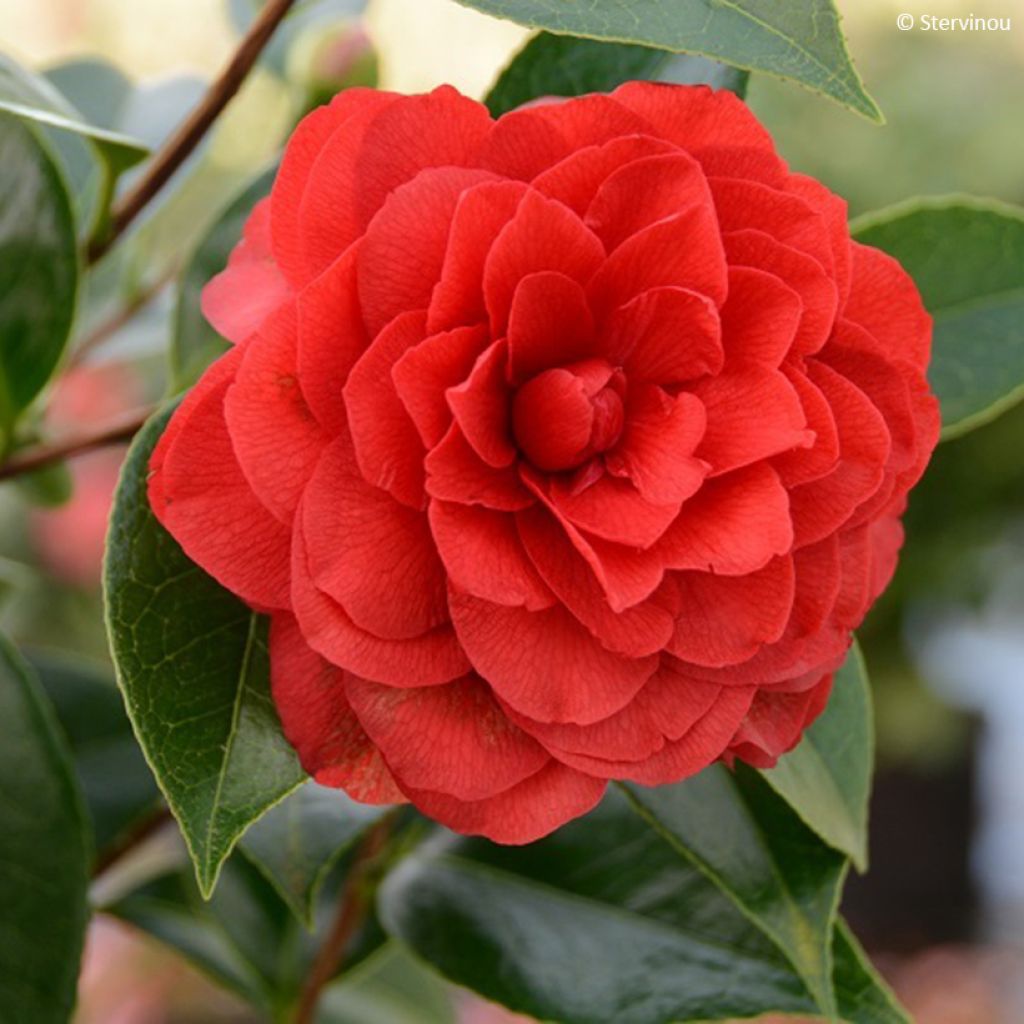
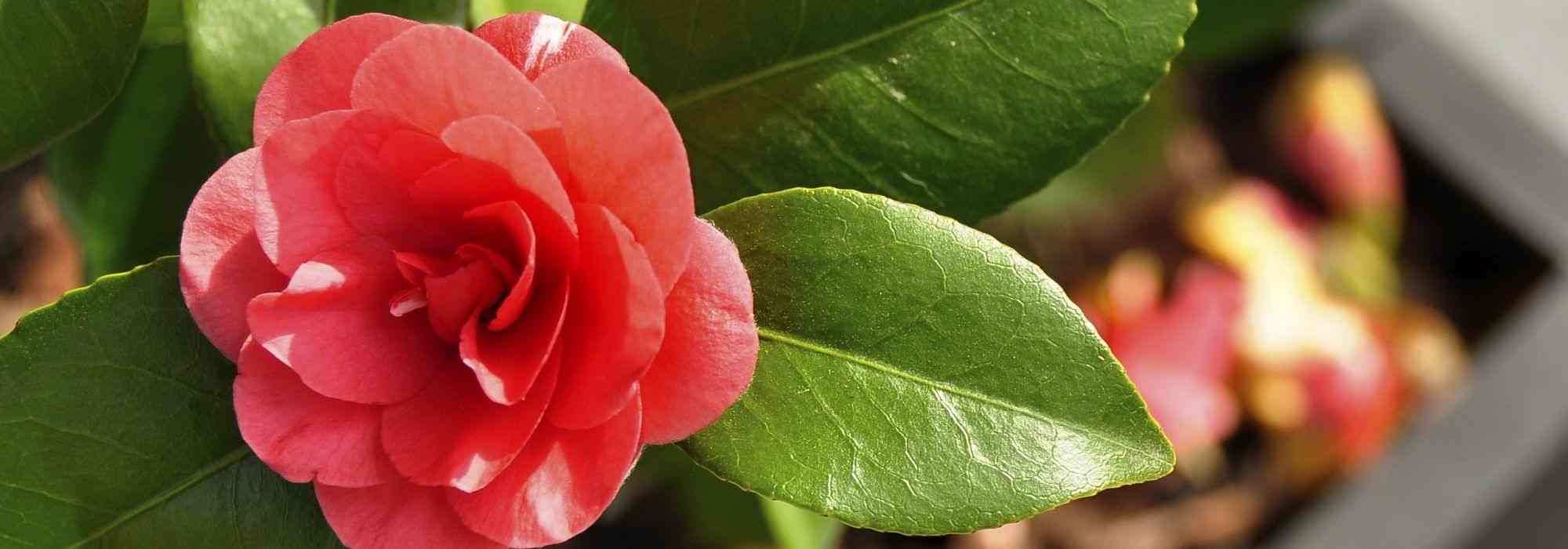
The Camellia japonica 'Stromboli' is a particularly attractive variety with its flowering, both very graphic and of a bright colour. This bush of medium size with an upright habit carries beautiful shiny dark green foliage. Evergreen, it proves to be decorative all year round and forms a perfect setting for spring flowering. From March, it blooms with superb very double flowers, with corollas arranged in very geometric rosettes. Their vivid red hue, rather dark, contrasts beautifully with the dark vegetation and captures attention in the garden. Rather hardy for a Japanese Camellia, this variety adapts to container culture if the soil is chalky and does not allow its cultivation in the ground.
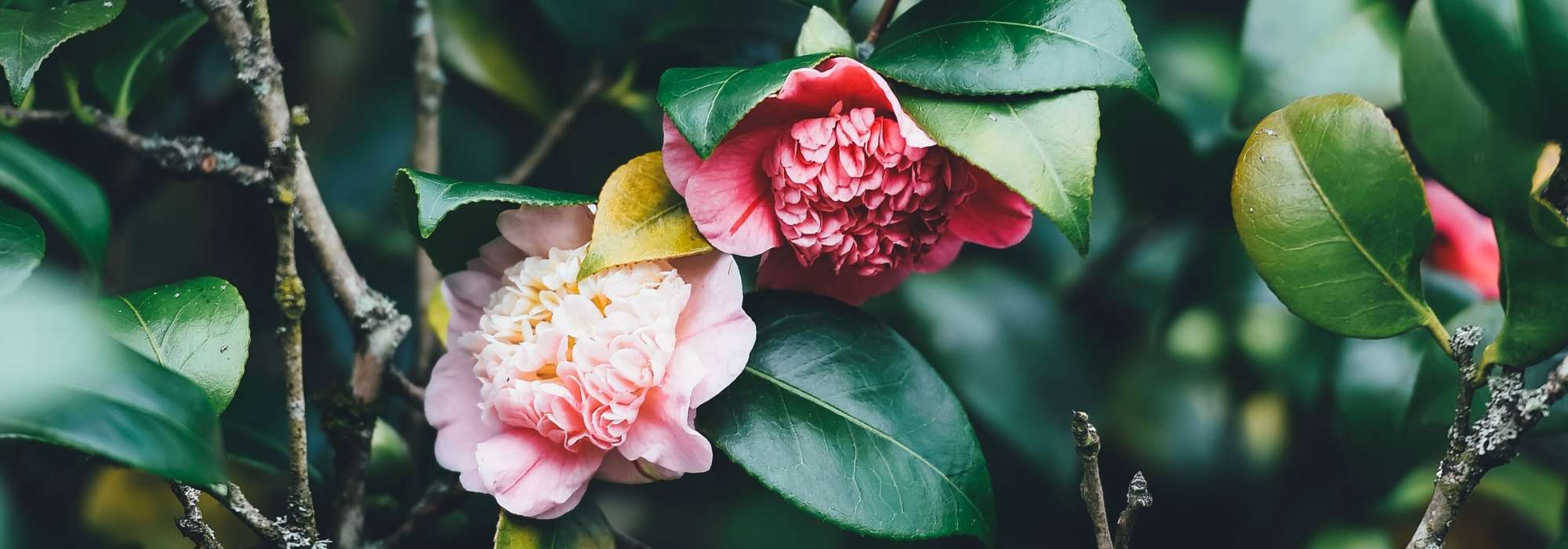
The Camellia is the most important genus in terms of species in the small family of Theaceae, and also has both economic and cultural value through tea, made from the leaves of Camellia sinensis. Some other ornamental genera are part of the family, like the not widely spread Stewartia which combines the appeal of a beautiful flowering, flamboyant autumnal colours, and decorative bark. Originally from Japan and Korea, and cultivated in China for over 4700 years (under the reign of Emperor Chen-Nung), the Camellia japonica forms in these regions a large bush or even a small tree 10 to 15 m high. It is adorned with leathery, ovate leaves, measuring 7 to 10 cm in length, in a glossy dark green. The red flowers are solitary, almost sessile (without a floral peduncle), and measure 6 to 10 cm in diameter. Officially introduced as a young plant in England in 1739 by Baron Robert James Petre, but probably even earlier in the form of seeds, the Japanese Camellia became very fashionable as a winter garden plant during the first half of the 19th century. In 1840, there were nearly 1500 horticultural varieties!
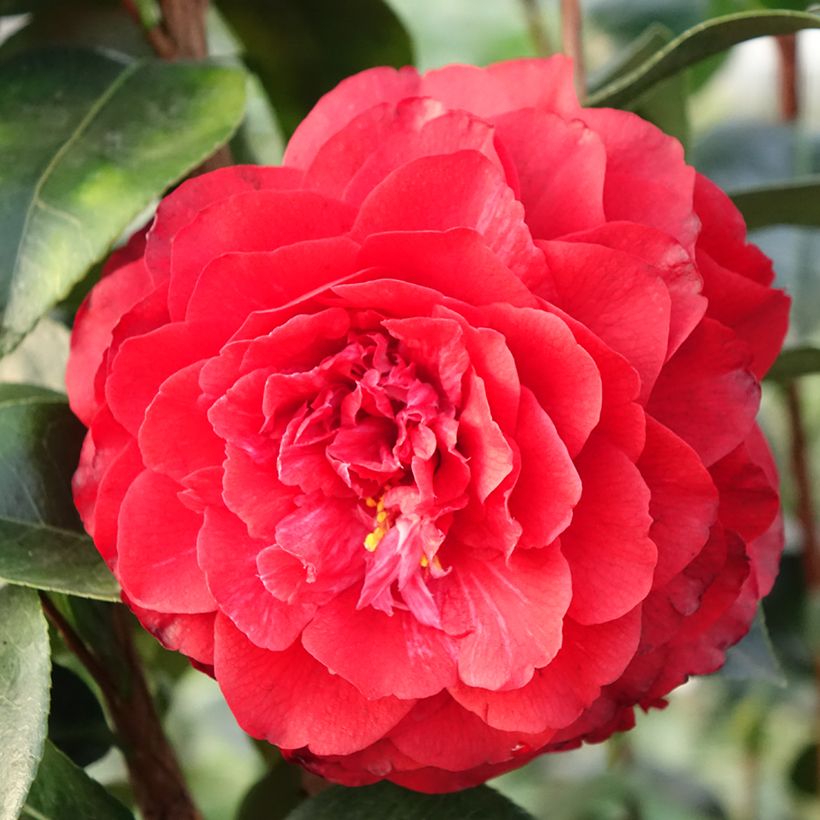
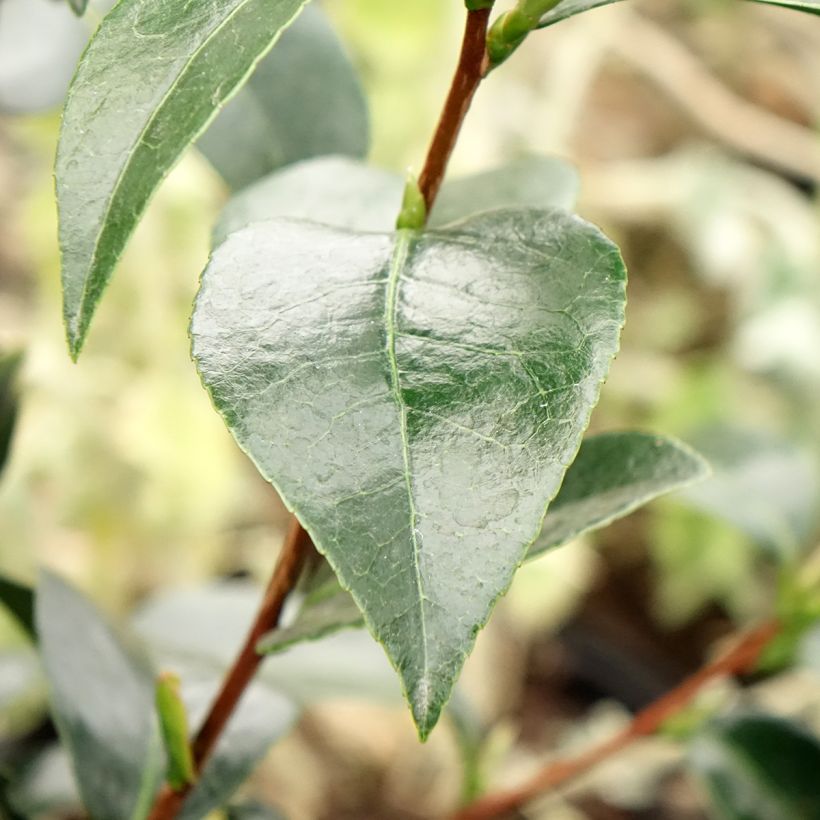
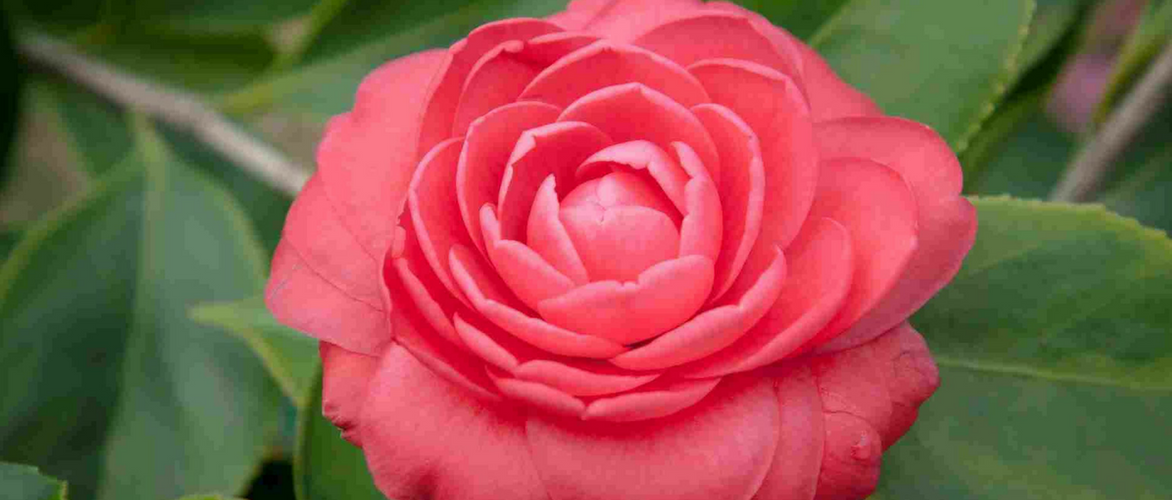
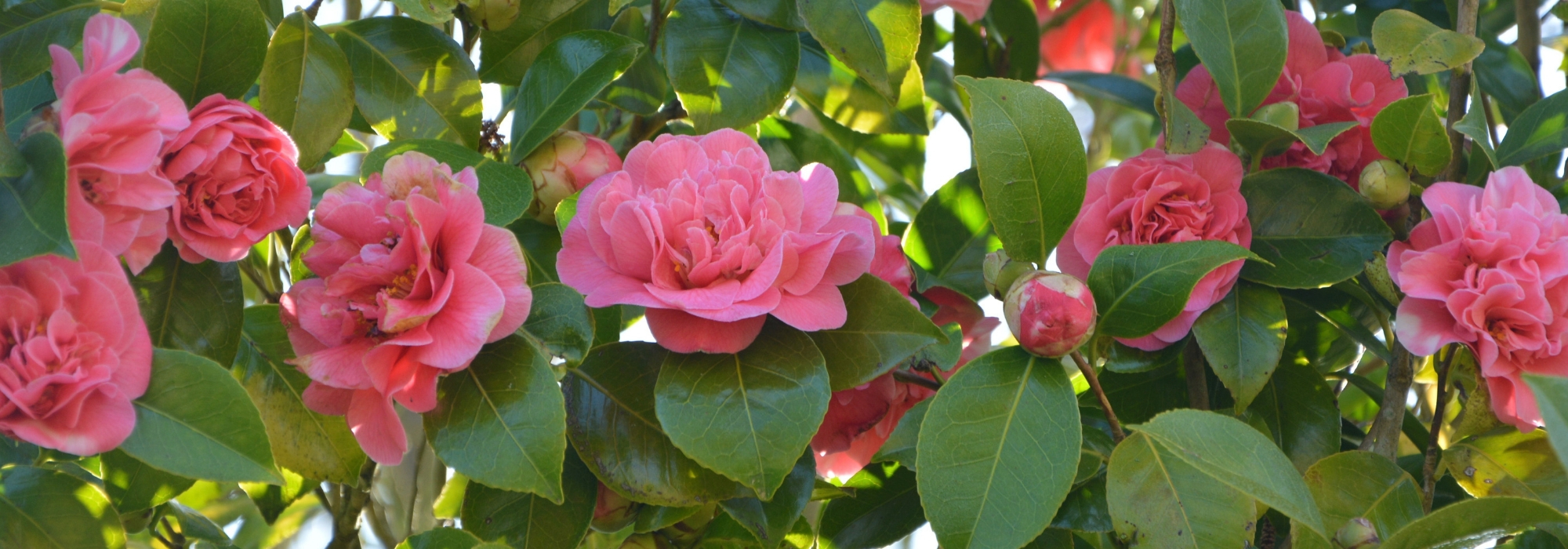
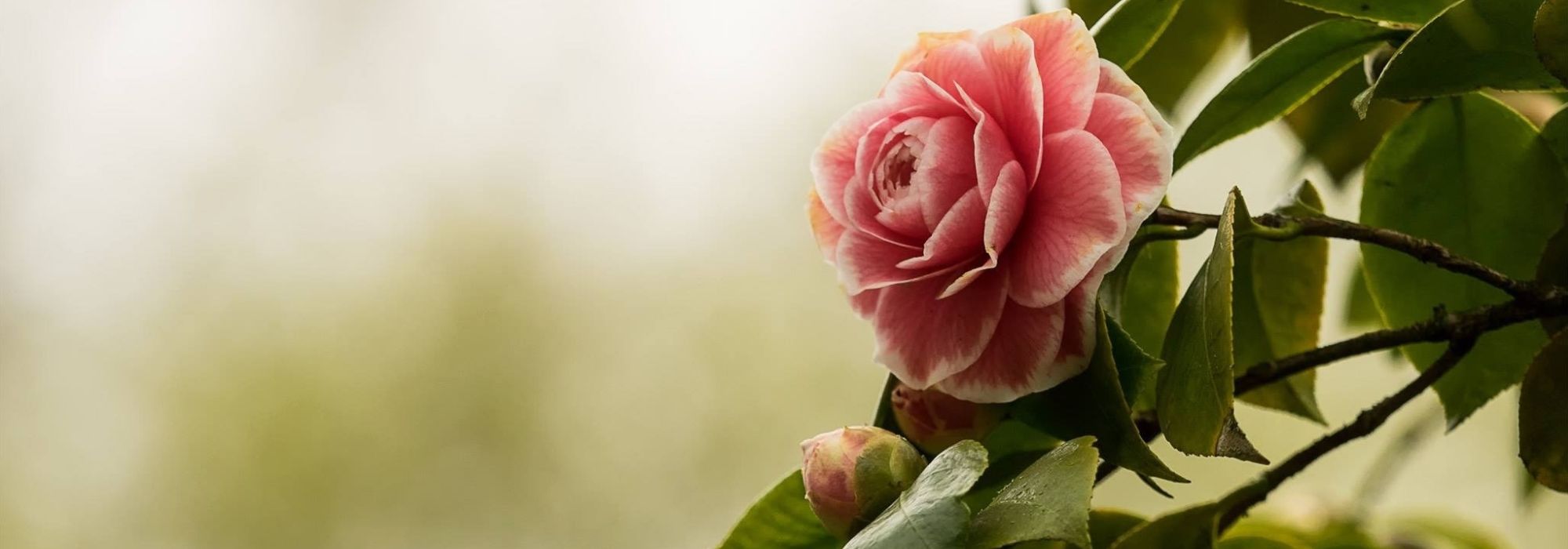
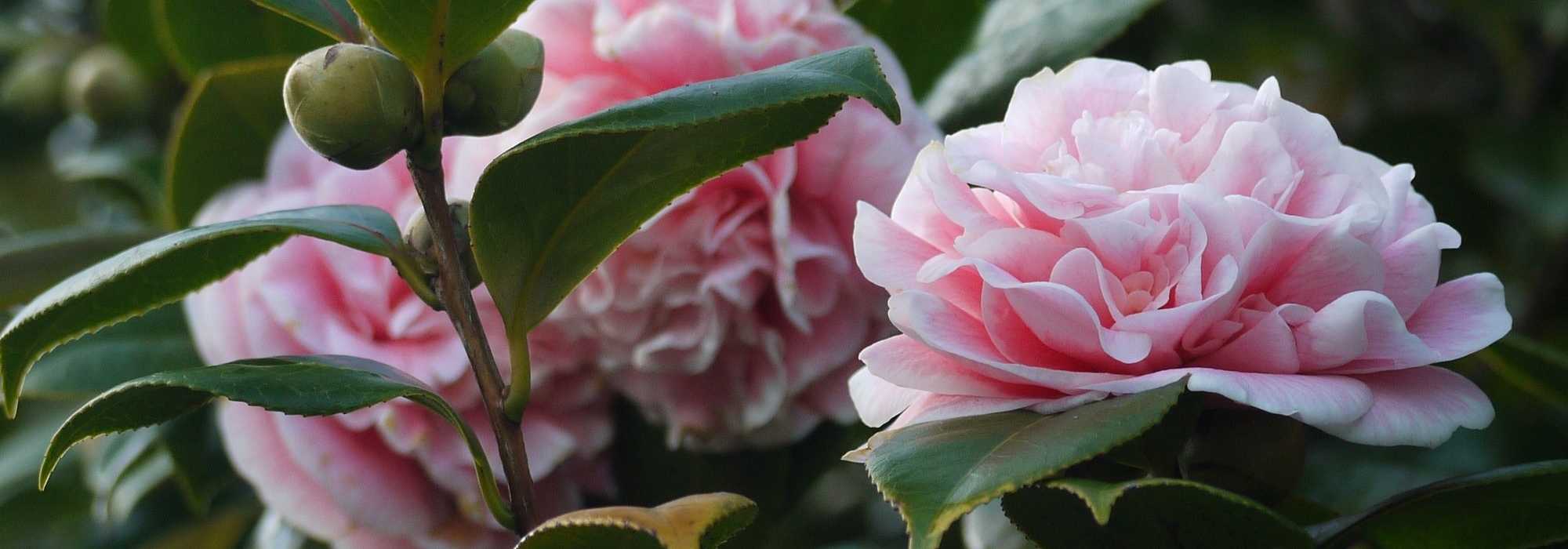
The work of breeders continues to this day, and 'Stromboli' is proof of this. This very recent variety comes from a Breton nursery specialised in the genus and stands out for the beauty and colour of its flowers. This bush with a distinctly upright habit has a much more modest development than the botanical species, since, after 10 years of cultivation, it generally reaches 1.40 m in height by 80 cm in width. Its foliage is truly ornamental, composed of ovate leaves, pointed at the end, in a very shiny dark green. The young shoots emerge in a slightly bronze green, which pleasantly contrasts with the young mahogany brown branches. This dark vegetation is, as is often the case with Camellias, a blessing, as it enhances the flowering like a jewellery box, so true it is that the flowers are real gems. Appearing in March and blooming until April-May, the floral corollas are formed of very numerous petals. The young flower has a kind of central cone formed of petals curled around each other and surrounded by well-opened petals on the periphery, giving a slight resemblance to a tea rose overall. When fully open, the flower appears formed of petals imbricated in a way that designs a very graphic and extremely aesthetic rosette. The spectacle of the flowering bush is magnificent and fascinating, both because of the beauty of the corollas and their slightly dark intense red colour, shining like volcano lava.
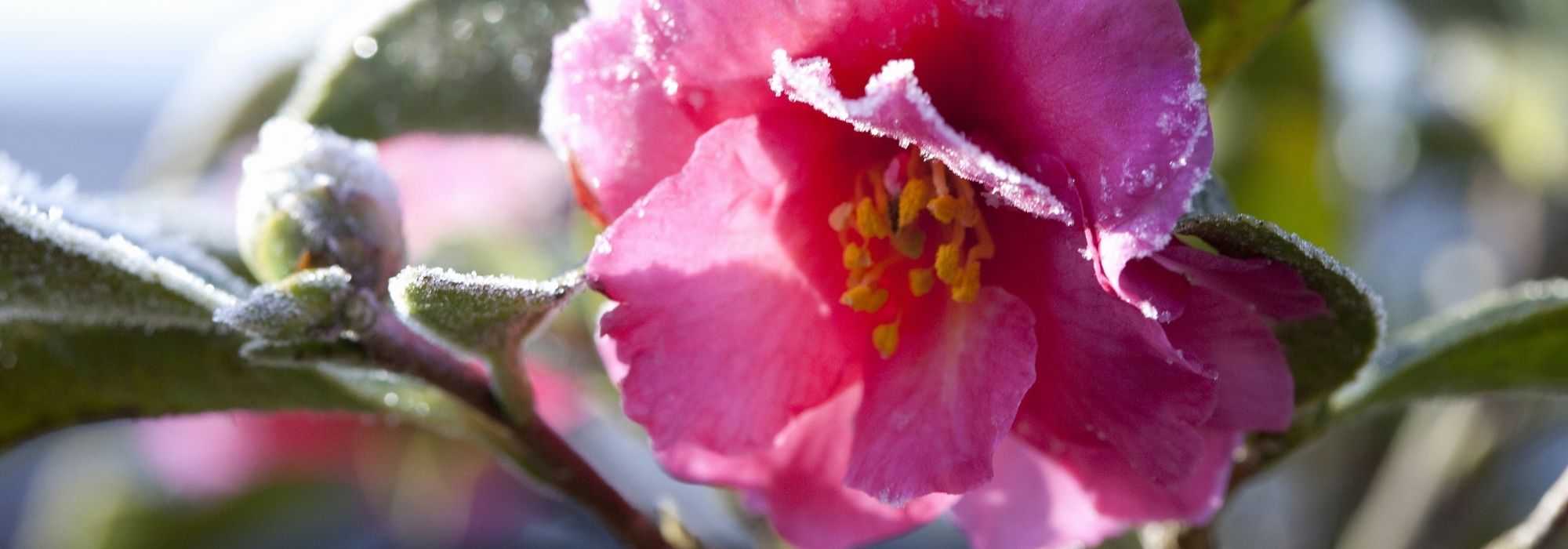
The Japanese Camellia 'Stromboli' will be at ease in a rather mild Atlantic climate and not too cold in winter, although it tolerates frost down to about -14°C. It is demanding in terms of soil, not tolerating chalk and must be grown in a pot if it cannot benefit from a tendency towards acidic, humus-bearing, and fresh soil. In regions that are well suited to its cultivation, provide it with the shade of taller plants, which will both protect it from too much sun and maintain a certain atmospheric humidity due to their transpiration. Perfect in a heather soil bed, you can plant it alongside Fragrant Rhododendrons and Azaleas that will not only compensate for its lack of fragrance but also play with a wide range of flowering colours. For the summer, add some Hydrangeas, like Hydrangea serra 'Empress Eugenie', with a slightly wider than tall habit, which will delight you not only with its abundant flowering in changing shades but also with pretty autumnal leaf colourations. And for the winter, go for the Witch Hazels which, placed in the background, will warm up your bed in autumn with their flamboyant hues and surprise you in winter with their curious filamentous flowers of spider-like grace.
Camellia japonica Stromboli® - Japanese Camellia in pictures
Plant habit
Flowering
Foliage
Botanical data
Camellia
japonica
Stromboli®
Theaceae
Japanese Camellia, Common Camellia
Cultivar or hybrid
Planting and care
The Camellia japonica 'Stromboli' accepts full non-burning sun in favourable climate, such as in Atlantic regions; however, it is in partial shade, protected from intense sunlight and in a sheltered position from strong winds that it will give its best. Plant it in a fresh, humus-bearing, acidic and well-drained soil. The shrub should not be planted too deeply; the top of the root ball should be covered by 3 cm. In winter, cover it with a 5 to 7 cm thick mulch made of leaf compost and crushed bark. Beware of late frosts that can damage flowers and buds. During dry periods, water the shrub to prevent the dropping of flower buds. It is recommended to plant the camellia preferably in autumn to promote good rooting and better flowering from the first year. Possible diseases include chlorosis caused by excess limestone, brown spots caused by burns on leaves exposed to full southern sun, sooty mould, scale insects, and vine-plant weevils.
Camellias tolerate pot culture well; their root system forms dense but not extensive root hairs. Annual repotting in a slightly larger pot is sufficient. Regularly feed your potted camellia and water it with preferably non-limestone water. If the water is limestone-rich in your region, add a teaspoon of iron chelate to the watering water every three months from spring to autumn.
Pruning is not necessary; if needed, it should be done just after flowering, before the start of new spring shoots, and sparingly. Most camellia hybrids do not recover from excessive pruning.
Planting period
Intended location
Care
Planting & care advice
-
-
-
-
-
-
-
-
-
, onOrder confirmed
Reply from on Promesse de fleurs
Recently viewed products
Haven't found what you were looking for?
Hardiness is the lowest winter temperature a plant can endure without suffering serious damage or even dying. However, hardiness is affected by location (a sheltered area, such as a patio), protection (winter cover) and soil type (hardiness is improved by well-drained soil).

The flowering period indicated on our website applies to countries and regions located in USDA zone 8 (France, the United Kingdom, Ireland, the Netherlands, etc.)
It will vary according to where you live:- In zones 9 to 10 (Italy, Spain, Greece, etc.), flowering will occur about 2 to 4 weeks earlier.
- In zones 6 to 7 (Germany, Poland, Slovenia, and lower mountainous regions), flowering will be delayed by 2 to 3 weeks.
- In zone 5 (Central Europe, Scandinavia), blooming will be delayed by 3 to 5 weeks.
In temperate climates, pruning of spring-flowering shrubs (forsythia, spireas, etc.) should be done just after flowering.
Pruning of summer-flowering shrubs (Indian Lilac, Perovskia, etc.) can be done in winter or spring.
In cold regions as well as with frost-sensitive plants, avoid pruning too early when severe frosts may still occur.
The planting period indicated on our website applies to countries and regions located in USDA zone 8 (France, United Kingdom, Ireland, Netherlands).
It will vary according to where you live:
- In Mediterranean zones (Marseille, Madrid, Milan, etc.), autumn and winter are the best planting periods.
- In continental zones (Strasbourg, Munich, Vienna, etc.), delay planting by 2 to 3 weeks in spring and bring it forward by 2 to 4 weeks in autumn.
- In mountainous regions (the Alps, Pyrenees, Carpathians, etc.), it is best to plant in late spring (May-June) or late summer (August-September).
The harvesting period indicated on our website applies to countries and regions in USDA zone 8 (France, England, Ireland, the Netherlands).
In colder areas (Scandinavia, Poland, Austria...) fruit and vegetable harvests are likely to be delayed by 3-4 weeks.
In warmer areas (Italy, Spain, Greece, etc.), harvesting will probably take place earlier, depending on weather conditions.
The sowing periods indicated on our website apply to countries and regions within USDA Zone 8 (France, UK, Ireland, Netherlands).
In colder areas (Scandinavia, Poland, Austria...), delay any outdoor sowing by 3-4 weeks, or sow under glass.
In warmer climes (Italy, Spain, Greece, etc.), bring outdoor sowing forward by a few weeks.
Shipping country and language
Your country of residence may be:
Your country of residence is:
For a better user experience on our website, you can select:
Your shipping country:
-
 Austria
-
 Belgium
-
 Bosnia & Herzegovina
-
 Bulgaria
-
 Croatia
-
 Cyprus
-
 Czechia
-
 Denmark
-
 Estonia
-
 Finland
-
 France
-
 Germany
-
 Greece
-
 Hungary
-
 Iceland
-
 Ireland
-
 Italy
Italy
-
 Latvia
-
 Liechtenstein
-
 Lithuania
-
 Luxembourg
-
 Malta
Malta
-
 Netherlands
-
 Poland
-
 Portugal
-
 Romania
-
 Serbia
-
 Slovakia
-
 Slovenia
-
 Spain
Spain
-
 Sweden
-
 Switzerland
Language:
-
French
-
 English
-
Spanish
-
Italian
-
German
-
Portuguese
-
Dutch
-
Finnish
My Account
Hello
My wish lists
My cart
Log in / Register
Existing customer?
This form is protected by reCAPTCHA - the Google Privacy Policy and Terms of Service apply.
New customer?
Create an account to track your orders, access our customer service and, if you wish, make the most of our upcoming offers.