
Cotoneaster adpressus Little Gem
Cotoneaster adpressus Little Gem
Cotoneaster adpressus Little Gem
Cotoneaster adpressus Little Gem
Cotoneaster adpressus Little Gem
Cotoneaster adpressus Little Gem
Creeping Cotoneaster
Three plants delivered in good condition. A few weeks later and there are signs of new growth.
Eliane, 08/06/2025
Back-to-school special offer!
Get €10 off for every €50 you spend! And get up to €40 off on a single order.
How does it work?
1. Shop your favourites
Add your favourite plants to your basket. For every €50 you spend (excluding delivery charges, store credit and the plastic-free option), you’ll receive a €10 voucher.
€50 spent = €10 voucher
€100 spent = €20 voucher
€150 spent = €30 voucher
€200 spent = €40 voucher
2. Place your order
Once your basket reaches one of the spending thresholds, place your order. You can even choose your delivery date!
3. Receive your voucher
As soon as your order has been shipped, you’ll receive an email containing your personal voucher code and its value.
4. Use it on your next order
Your voucher is valid for 90 days from the date you receive it. It can be used once only, on a new order worth at least the value of the voucher, excluding delivery charges.
Please note: Vouchers can be combined with other offers, but cannot be split or refunded.
Home or relay delivery (depending on size and destination)
Important: You may be charged customs duties by your country’s customs authorities upon delivery.
Schedule delivery date,
and select date in basket
This plant carries a 24 months recovery warranty
More information
We guarantee the quality of our plants for a full growing cycle, and will replace at our expense any plant that fails to recover under normal climatic and planting conditions.

Would this plant suit my garden?
Set up your Plantfit profile →
Description
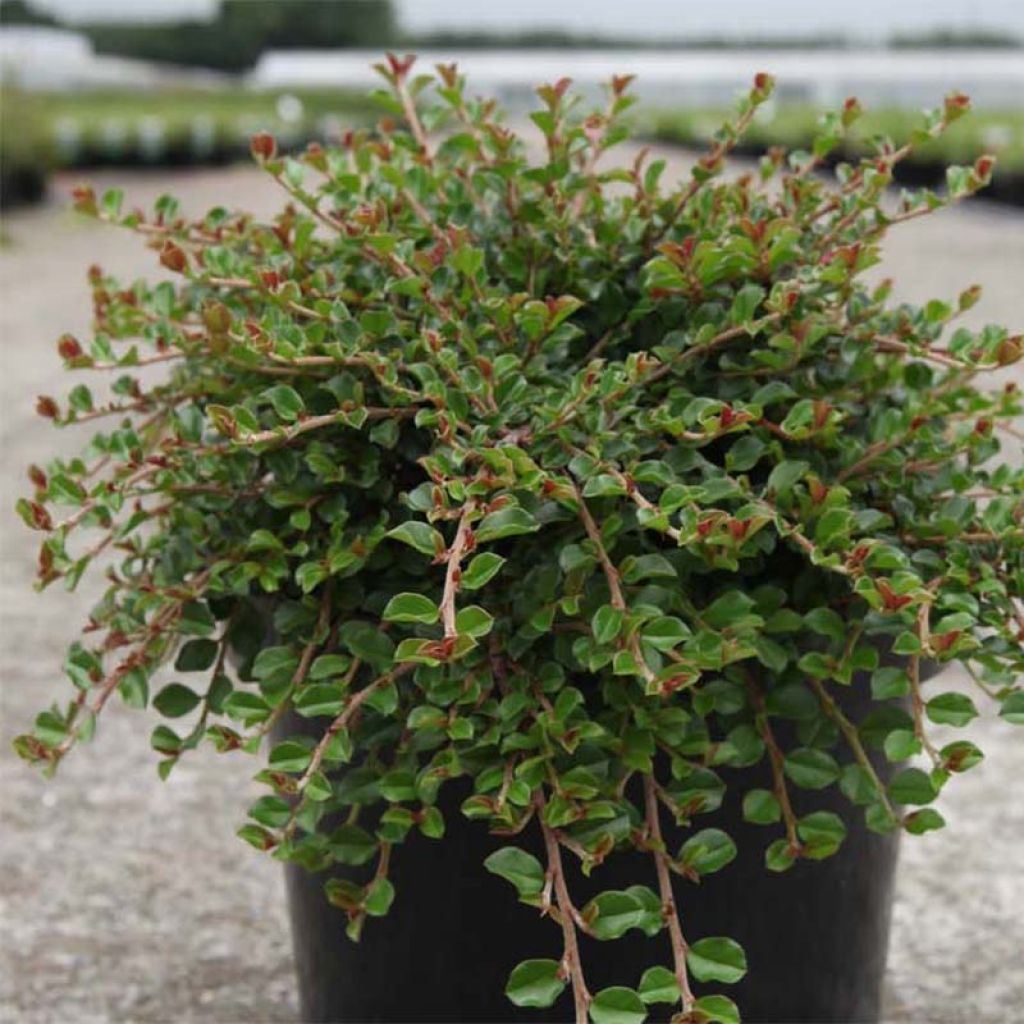
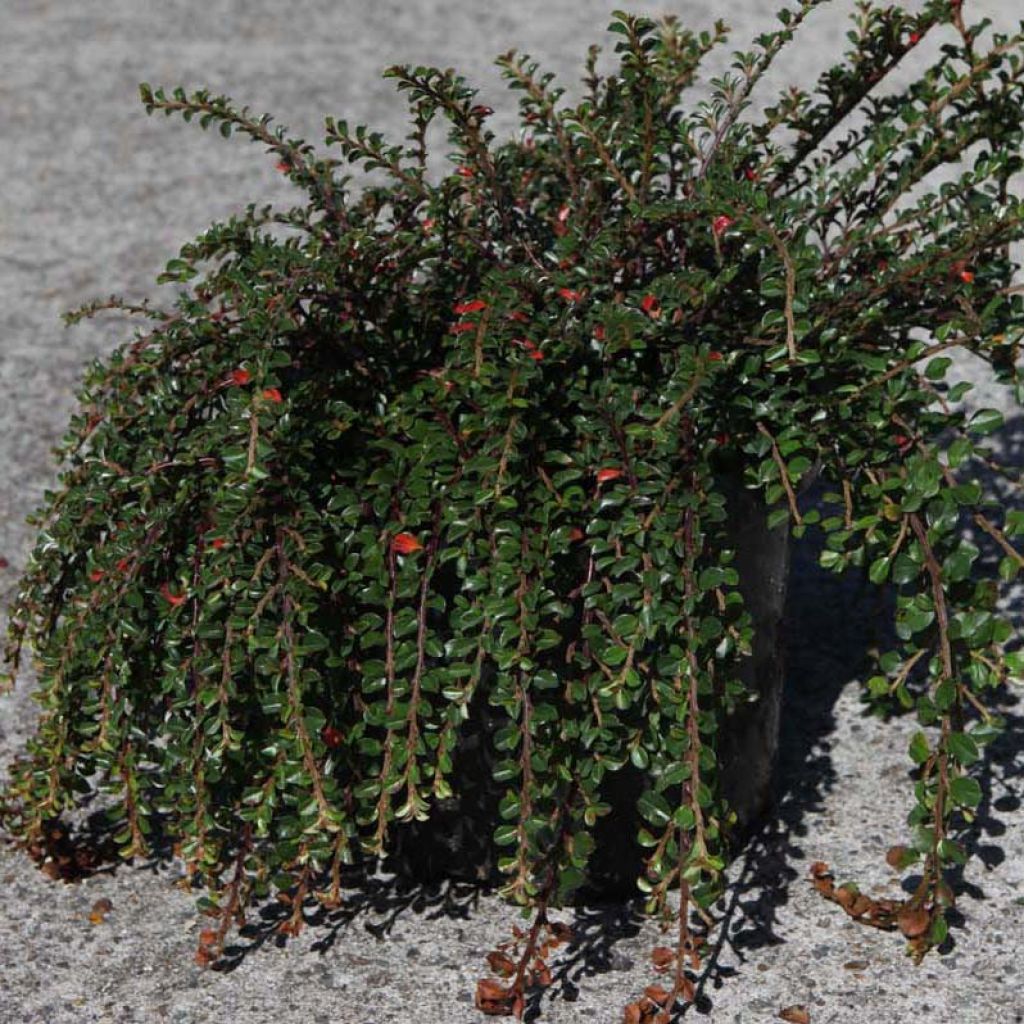
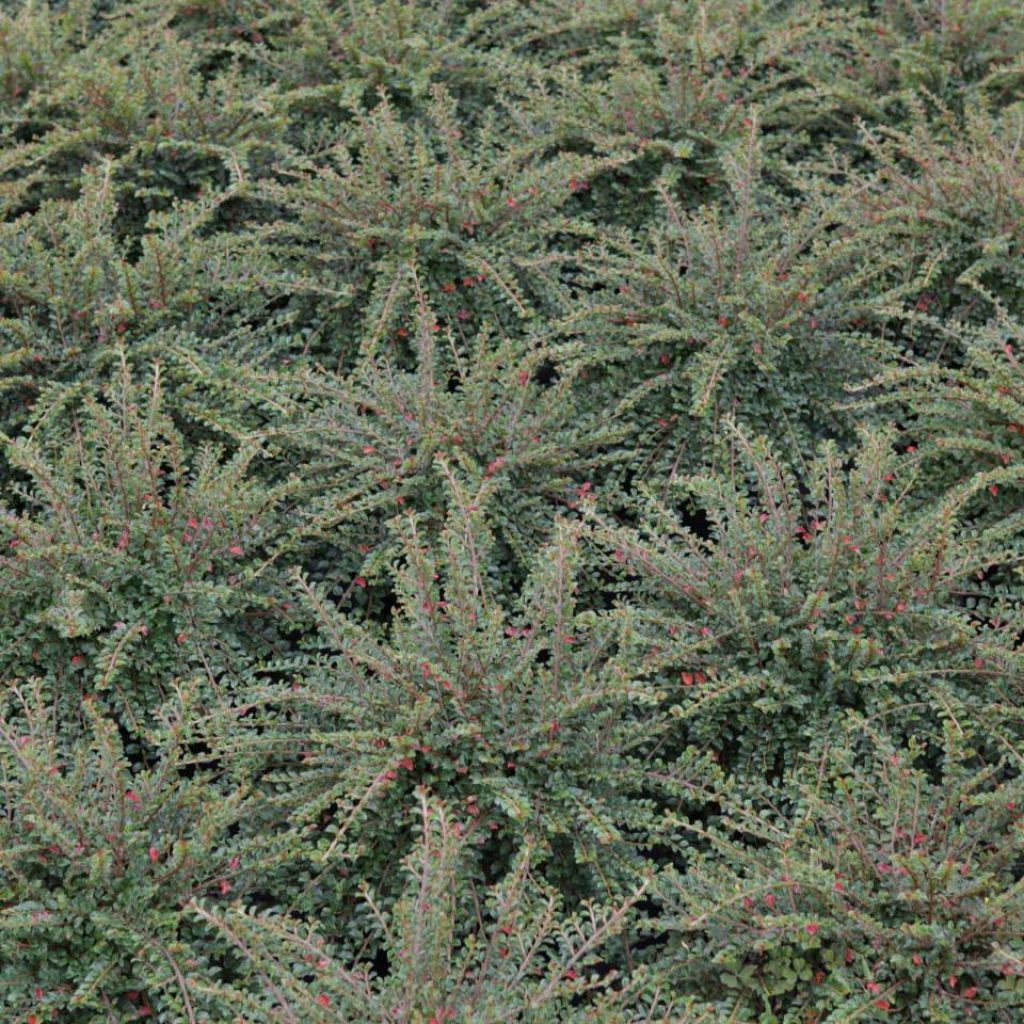
Cotoneaster adpressus 'Little Gem' is a variety of creeping cotoneaster that differs from the standard type by a more compact and dense habit, as well as the almost total absence of flowers and fruits. This prostrate bush slowly forms a well-groomed mound, with a glossy dark green colour that turns beautiful shades of red to violet in autumn before falling. Although deciduous, this plant makes a good ground cover, both versatile in garden design and effective in weed control. 'Little Gem' is perfect in a rockery, on a slope or above a wall.
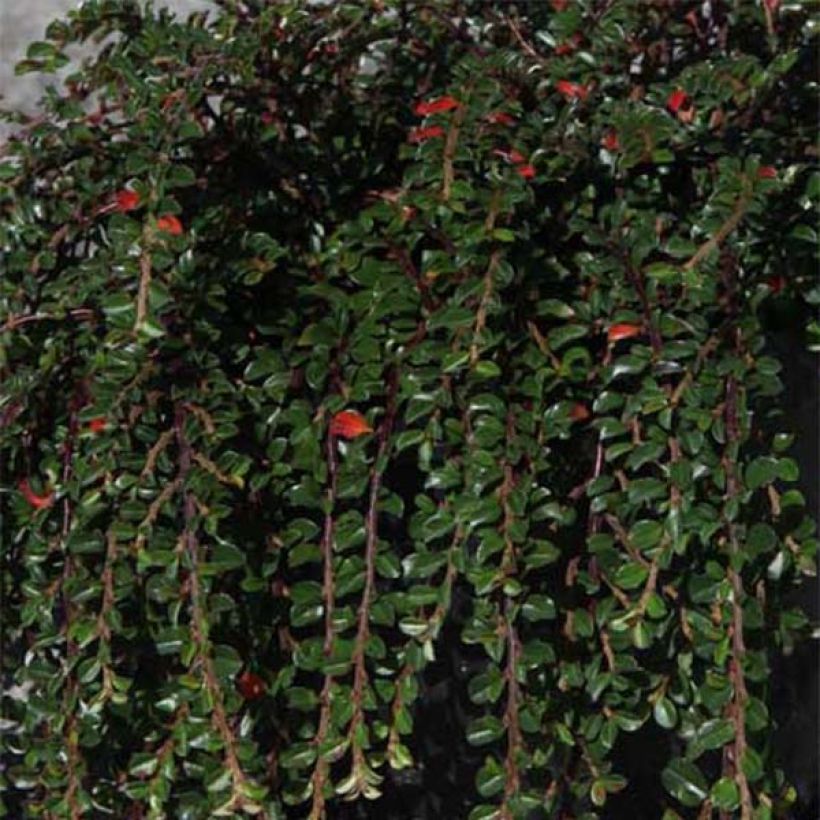
Cotoneaster Little Gem, considered to be identical to the Tom Thumb variety, is a cultivar of uncertain origin, probably resulting from the hybridisation of different species and varieties including the Cotoneaster horizontalis var. adpressus, the creeping cotoneaster. The latter is native to western China, where it grows in mixed forests covering rocky slopes of mountains, at an altitude between 1900 and 4000 m (6233 ft 7 in-13123 ft 5 in). All these plants belong to the Rosaceae family. Very robust, 'Little Gem' is able to withstand very harsh winters and occasional droughts, even when growing in poor, rocky soil. It has a prostrate, spreading and creeping habit, more compact than its ancestor, and slower growth. It develops curved and flexible, well-branched branches with shorter internodes, reddish-brown and villous when young, then greyish to almost black and glabrous as they age. It will not exceed 25 cm (9.8 in) in height and 1.8 m (5 ft 11 in) in spread. Its deciduous foliage is composed of small, thick and leathery leaves, ovate in shape, not exceeding 1 cm (0.4 in) in length and 6 mm (0.2 in) in width. They are light green when they bud, before darkening over time and turning red in autumn before falling. Flowering, rarely observed on this plant, takes place in May, in the form of very small flowers with 5 white petals tinged with red. It does not produce fruits.
This creeping cotoneaster 'Little Gem' is ideal for effectively covering the ground in slightly challenging areas of the garden, bringing a very neat touch. While it can grow in various conditions, Cotoneaster adpressus does not appreciate hot and dry climates. Perfect at the base of a tall hedge, it can also be planted in a rockery to fill the spaces between other plants. Plant it without hesitation on a large slope, above a wall or retaining wall, at the edge of a terrace or pathway. It can be paired, for example, with the creeping juniper Blue Star, the Euonymus fortunei Emerald Gaiety, the Berberis thunb. atropurpurea Nana, and the Forsythia intermedia Marée d'or courtasol.

Cotoneaster adpressus Little Gem in pictures
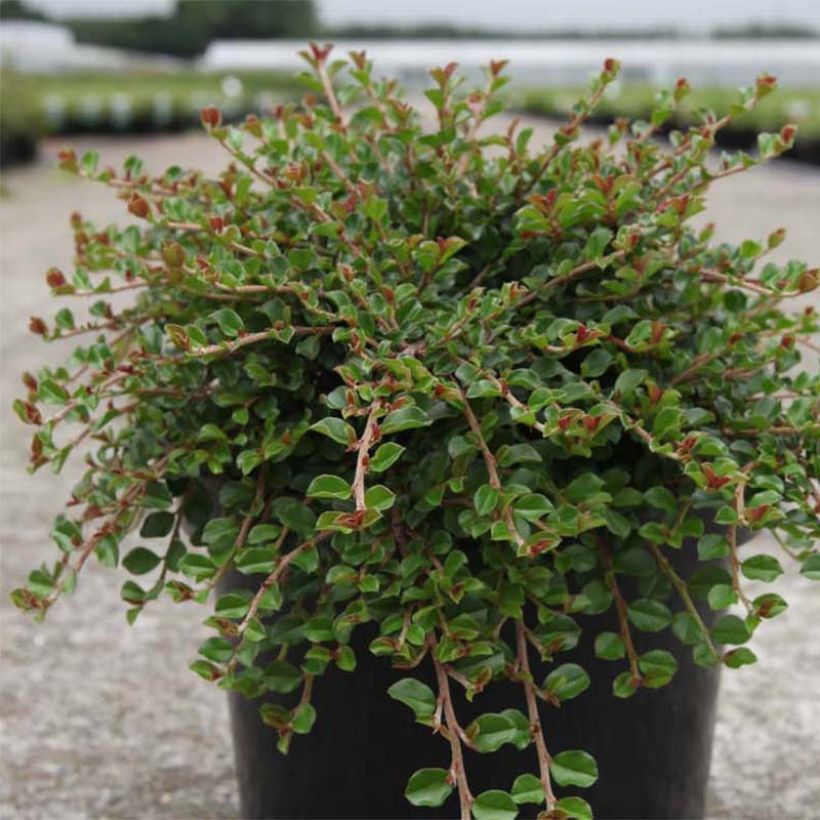
Plant habit
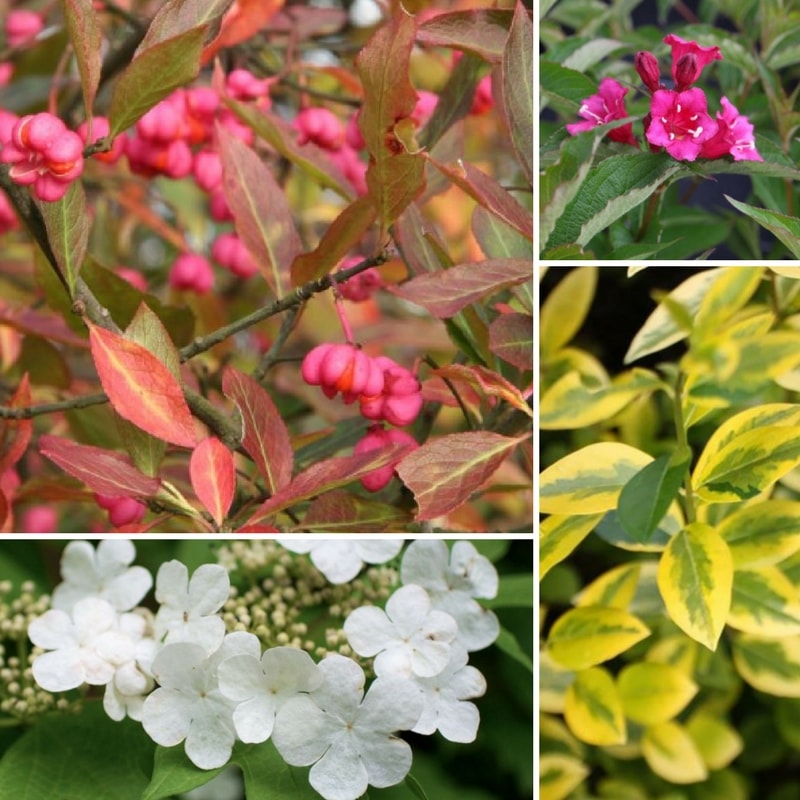
Flowering
Foliage
Botanical data
Cotoneaster
adpressus
Little Gem
Rosaceae
Creeping Cotoneaster
Cultivar or hybrid
Planting and care
Plant Cotoneaster adpressus Little Gem in a preferably sunny location, although it tolerates partial shade perfectly well. It requires well-draining soil as it does not tolerate excessive moisture. On the other hand, its drought tolerance is quite good once it is well established. It will adapt to any ordinary soil that is slightly acidic, neutral, or even alkaline, as well as rocky soils. This creeping cotoneaster thrives in cool climates and suffers in hot and dry regions. It may be susceptible to fire blight, canker, and foliar spots. Mites may appear in hot and dry conditions.
Planting period
Intended location
Care
Planting & care advice
-

-

-

-

-
-
-

-
-
, onOrder confirmed
Reply from on Promesse de fleurs
Recently viewed products
Haven't found what you were looking for?
Hardiness is the lowest winter temperature a plant can endure without suffering serious damage or even dying. However, hardiness is affected by location (a sheltered area, such as a patio), protection (winter cover) and soil type (hardiness is improved by well-drained soil).

The flowering period indicated on our website applies to countries and regions located in USDA zone 8 (France, the United Kingdom, Ireland, the Netherlands, etc.)
It will vary according to where you live:- In zones 9 to 10 (Italy, Spain, Greece, etc.), flowering will occur about 2 to 4 weeks earlier.
- In zones 6 to 7 (Germany, Poland, Slovenia, and lower mountainous regions), flowering will be delayed by 2 to 3 weeks.
- In zone 5 (Central Europe, Scandinavia), blooming will be delayed by 3 to 5 weeks.
In temperate climates, pruning of spring-flowering shrubs (forsythia, spireas, etc.) should be done just after flowering.
Pruning of summer-flowering shrubs (Indian Lilac, Perovskia, etc.) can be done in winter or spring.
In cold regions as well as with frost-sensitive plants, avoid pruning too early when severe frosts may still occur.
The planting period indicated on our website applies to countries and regions located in USDA zone 8 (France, United Kingdom, Ireland, Netherlands).
It will vary according to where you live:
- In Mediterranean zones (Marseille, Madrid, Milan, etc.), autumn and winter are the best planting periods.
- In continental zones (Strasbourg, Munich, Vienna, etc.), delay planting by 2 to 3 weeks in spring and bring it forward by 2 to 4 weeks in autumn.
- In mountainous regions (the Alps, Pyrenees, Carpathians, etc.), it is best to plant in late spring (May-June) or late summer (August-September).
The harvesting period indicated on our website applies to countries and regions in USDA zone 8 (France, England, Ireland, the Netherlands).
In colder areas (Scandinavia, Poland, Austria...) fruit and vegetable harvests are likely to be delayed by 3-4 weeks.
In warmer areas (Italy, Spain, Greece, etc.), harvesting will probably take place earlier, depending on weather conditions.
The sowing periods indicated on our website apply to countries and regions within USDA Zone 8 (France, UK, Ireland, Netherlands).
In colder areas (Scandinavia, Poland, Austria...), delay any outdoor sowing by 3-4 weeks, or sow under glass.
In warmer climes (Italy, Spain, Greece, etc.), bring outdoor sowing forward by a few weeks.
Shipping country and language
Your country of residence may be:
Your country of residence is:
For a better user experience on our website, you can select:
Your shipping country:
-
 Austria
-
 Belgium
-
 Bosnia & Herzegovina
-
 Bulgaria
-
 Croatia
-
 Cyprus
-
 Czechia
-
 Denmark
-
 Estonia
-
 Finland
-
 France
-
 Germany
-
 Greece
-
 Hungary
-
 Iceland
-
 Ireland
-
 Italy
Italy
-
 Latvia
-
 Liechtenstein
-
 Lithuania
-
 Luxembourg
-
 Malta
Malta
-
 Netherlands
-
 Poland
-
 Portugal
-
 Romania
-
 Serbia
-
 Slovakia
-
 Slovenia
-
 Spain
Spain
-
 Sweden
-
 Switzerland
Language:
-
French
-
 English
-
Spanish
-
Italian
-
German
-
Portuguese
-
Dutch
-
Finnish
My Account
Hello
My wish lists
My cart
Log in / Register
Existing customer?
This form is protected by reCAPTCHA - the Google Privacy Policy and Terms of Service apply.
New customer?
Create an account to track your orders, access our customer service and, if you wish, make the most of our upcoming offers.