Musa sikkimensis Himalayensis Speciosa - Hardy banana
Musa sikkimensis Himalayensis Speciosa - Hardy banana
Musa sikkimensis Himalayensis Speciosa
Hardy banana
Back-to-school special offer!
Get €10 off for every €50 you spend! And get up to €40 off on a single order.
How does it work?
1. Shop your favourites
Add your favourite plants to your basket. For every €50 you spend (excluding delivery charges, store credit and the plastic-free option), you’ll receive a €10 voucher.
€50 spent = €10 voucher
€100 spent = €20 voucher
€150 spent = €30 voucher
€200 spent = €40 voucher
2. Place your order
Once your basket reaches one of the spending thresholds, place your order. You can even choose your delivery date!
3. Receive your voucher
As soon as your order has been shipped, you’ll receive an email containing your personal voucher code and its value.
4. Use it on your next order
Your voucher is valid for 90 days from the date you receive it. It can be used once only, on a new order worth at least the value of the voucher, excluding delivery charges.
Please note: Vouchers can be combined with other offers, but cannot be split or refunded.
Home or relay delivery (depending on size and destination)
Important: You may be charged customs duties by your country’s customs authorities upon delivery.
Schedule delivery date,
and select date in basket
This plant carries a 12 months recovery warranty
More information
We guarantee the quality of our plants for a full growing cycle, and will replace at our expense any plant that fails to recover under normal climatic and planting conditions.
Would this plant suit my garden?
Set up your Plantfit profile →
Description
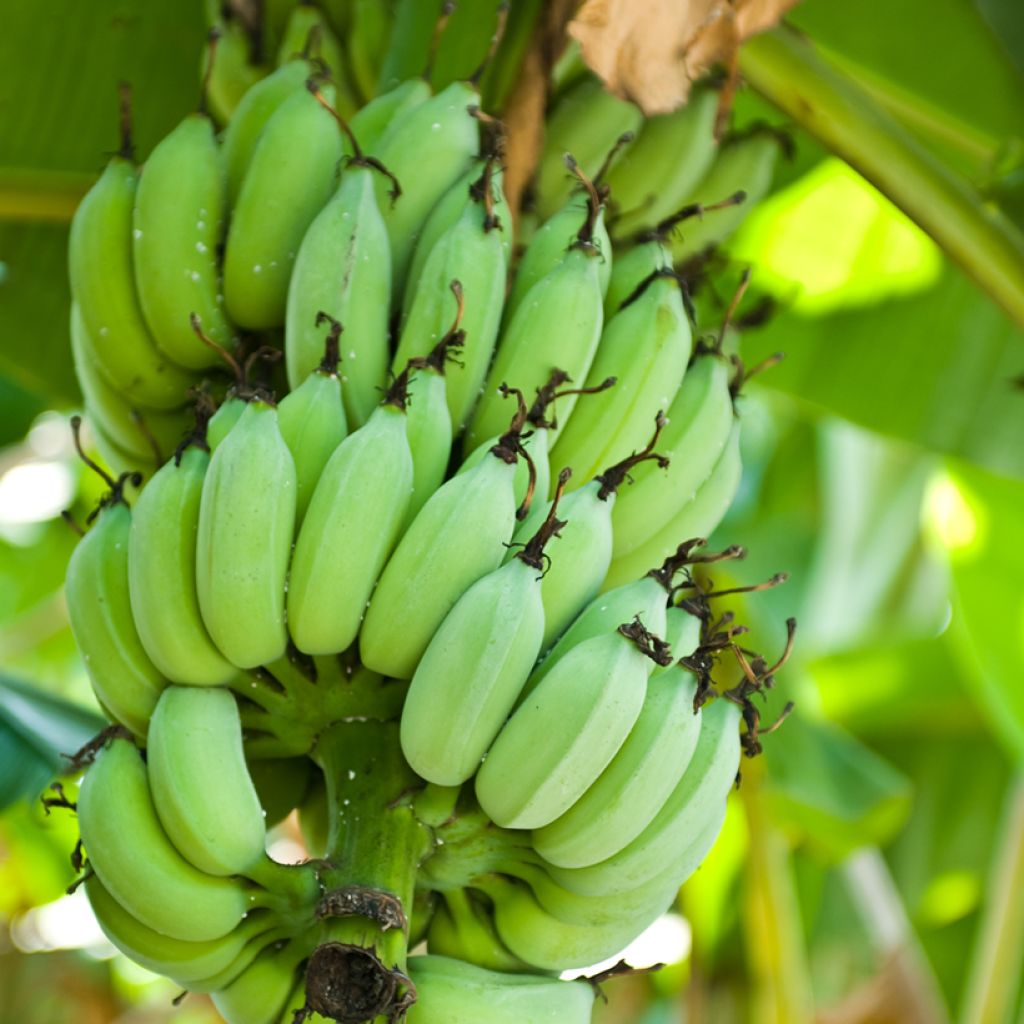
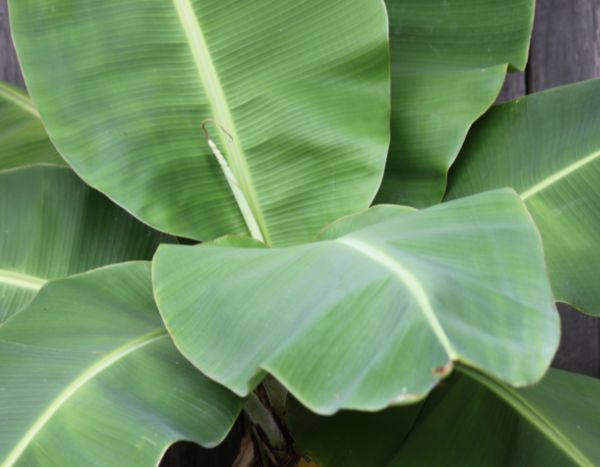
Musa 'Himalayensis Speciosa' is a hardy banana plant originating from the foothills of the Himalayas and selected in France, still little known but promising. Its large, light green, slightly wavy leaves create a decidedly exotic atmosphere in a sheltered garden or in a container on a patio. As a bonus, it can, given hot, prolonged summers, produce bunches of small edible bananas with a pleasant flavour. Not demanding, but sensitive to cold during its early years, this banana plant requires rich, well-drained soil and regular watering.
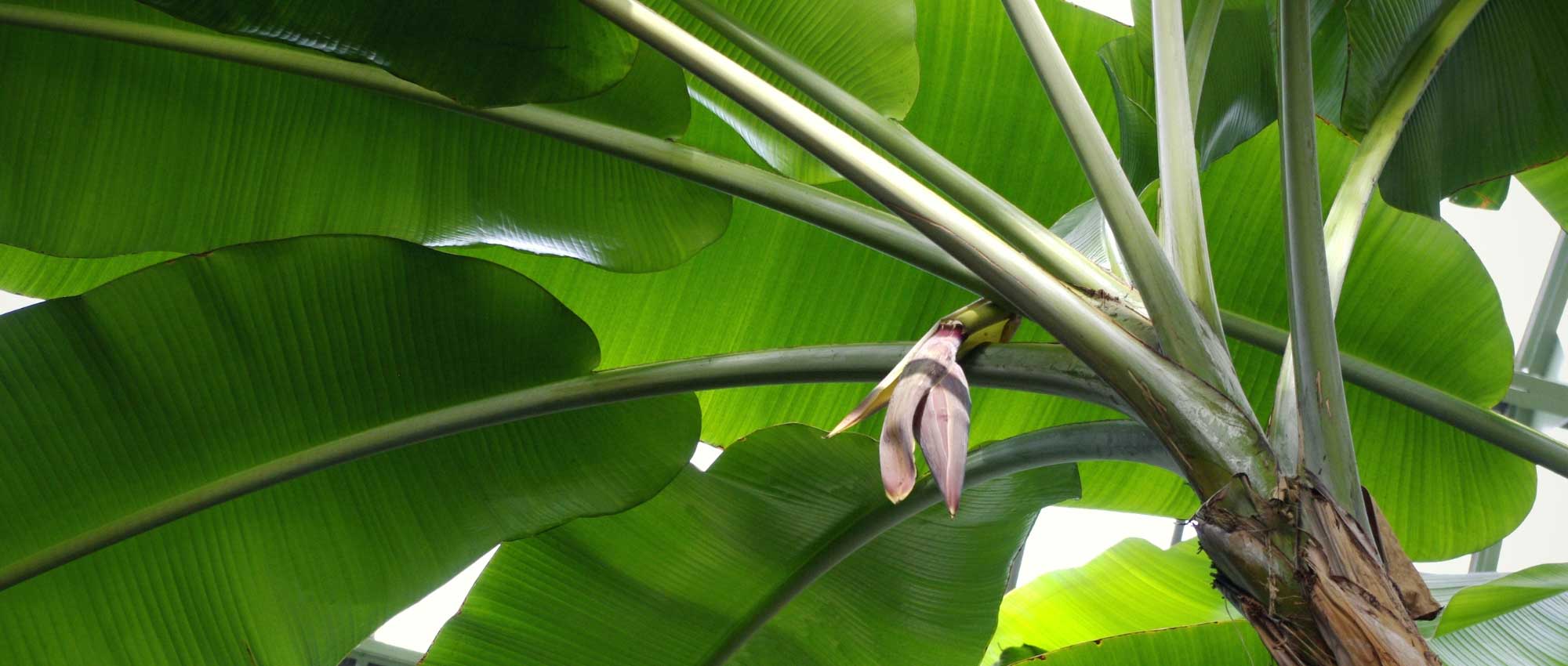
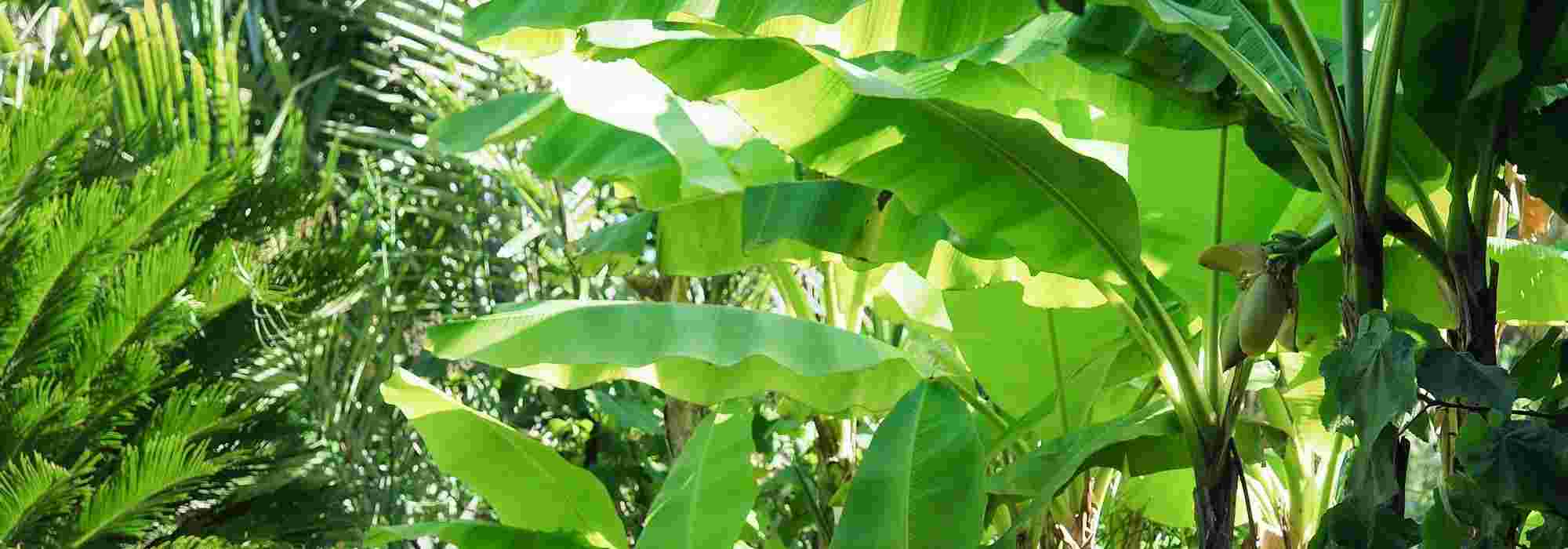
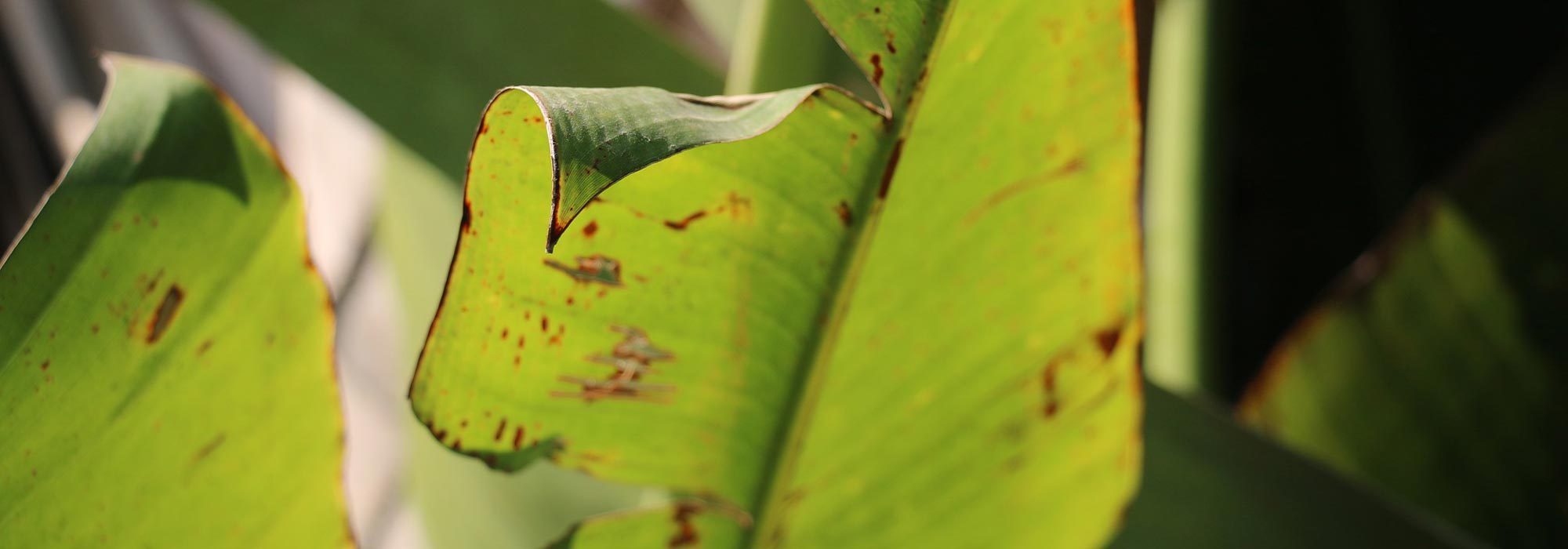
The banana plant 'Himalayensis Speciosa' is a recent French horticultural selection derived from the botanical species Musa sikkimensis, native to the mountainous regions of Sikkim, Bhutan and northern India. This variety is ornamental, fairly hardy and capable of fruiting. The plant has an upright habit, then slightly spreading; its growth is rapid once it gets warm. It forms a massive pseudostem and can reach 3 to 4 m in height in open ground, with a spread of 2 to 3 m. In a pot, its development is more moderate, around 2.5 m. The foliage is composed of large elliptical leaves with pointed tips, slightly wavy on the edges, light green with the underside veined in pale red, potentially measuring up to 2 m long by 50 cm wide.
The above-ground vegetation is deciduous in cold climates, but will persist in winter where it does not freeze. Like all Musa, 'Himalayensis Speciosa' produces offshoots from a clustered and rhizomatous root system, spreading and shallow. The spectacular flowering appears after 2 to 3 years of cultivation, in summer. It takes the form of a long spadix emerging from the centre of the pseudostem, protected by large pink to purple bracts. The flowers are small and arranged in spirals, pollinated by insects. If summer warmth extends into autumn, the fruits can develop. They are arranged in compact bunches: the small, cylindrical, edible bananas with sweet flesh, ripen around October. The pseudostem is green, sometimes dotted with red or brown nuances depending on exposure.
With its architectural habit and tropical look, Musa 'Himalayensis Speciosa' can create a jungle setting in temperate regions. In open ground, it becomes the centrepiece of a lush border, surrounded by giant cannas ('Marabout', 'Musifolia') or large colocasias such as 'Jack's Giant' or 'Noble Gigante'. In a pot, it creates a spectacular effect on a sunny patio. Its generous silhouette works well near a pond or at the back of a border. We also love it with Purple Phormiums.
Just like perennial plants, banana plants are dormant during winter: their aerial parts dry out and die. Plants dispatched in winter are therefore cut back to the ground (leaves and stems) by our teams to allow a better start for the plant in spring.
Flowering
Foliage
Plant habit
Botanical data
Musa
sikkimensis
Himalayensis Speciosa
Musaceae
Hardy banana
Musa sikkimensis ‘Himalayensis Speciosa’, Musa x Speciosa, Musa 'Speciosa'
Cultivar or hybrid
Planting and care
Plant Musa sikkimensis 'Himalayensis Speciosa' in spring or summer, in well-loosened soil rich in humus, remaining moist. Choose a sunny and sheltered location, as wind can tear the leaves. Soak the root ball in water for a few minutes before planting. Dig a hole (3 times the volume of the root ball), place a layer of gravel at the bottom to help drainage. Position the root ball and cover with soil. Tamp down well and water abundantly.
In spring and summer, make regular applications of organic fertiliser. Water regularly in summer (about 2 to 3 times a week). Banana plants are not very susceptible to diseases and pests.
In winter, cut back the leaves along the trunk and protect the stump by installing a mesh filled with dead leaves along the pseudostem. Cover the top with a winter protection fleece to avoid excess moisture. The Himalayan Banana plant will regrow from the base or from offshoots formed around the base.
Container cultivation is possible, taking into account the future height of the Banana plant (2 to 4 m in height for the Himalayan Banana plant). Plan to repot approximately every two years. Bring the pot indoors before the first frosts to a bright location, but without direct sunlight, not too heated. Mist the foliage if necessary or fill a saucer with damp clay pebbles, as the Banana is a tropical plant and appreciates humid environments.
Planting period
Intended location
Care
Planting & care advice
-
-
-

-

-
-

-
-
This item has not been reviewed yet - be the first to leave a review about it.
Recently viewed products
Haven't found what you were looking for?
Hardiness is the lowest winter temperature a plant can endure without suffering serious damage or even dying. However, hardiness is affected by location (a sheltered area, such as a patio), protection (winter cover) and soil type (hardiness is improved by well-drained soil).

The flowering period indicated on our website applies to countries and regions located in USDA zone 8 (France, the United Kingdom, Ireland, the Netherlands, etc.)
It will vary according to where you live:- In zones 9 to 10 (Italy, Spain, Greece, etc.), flowering will occur about 2 to 4 weeks earlier.
- In zones 6 to 7 (Germany, Poland, Slovenia, and lower mountainous regions), flowering will be delayed by 2 to 3 weeks.
- In zone 5 (Central Europe, Scandinavia), blooming will be delayed by 3 to 5 weeks.
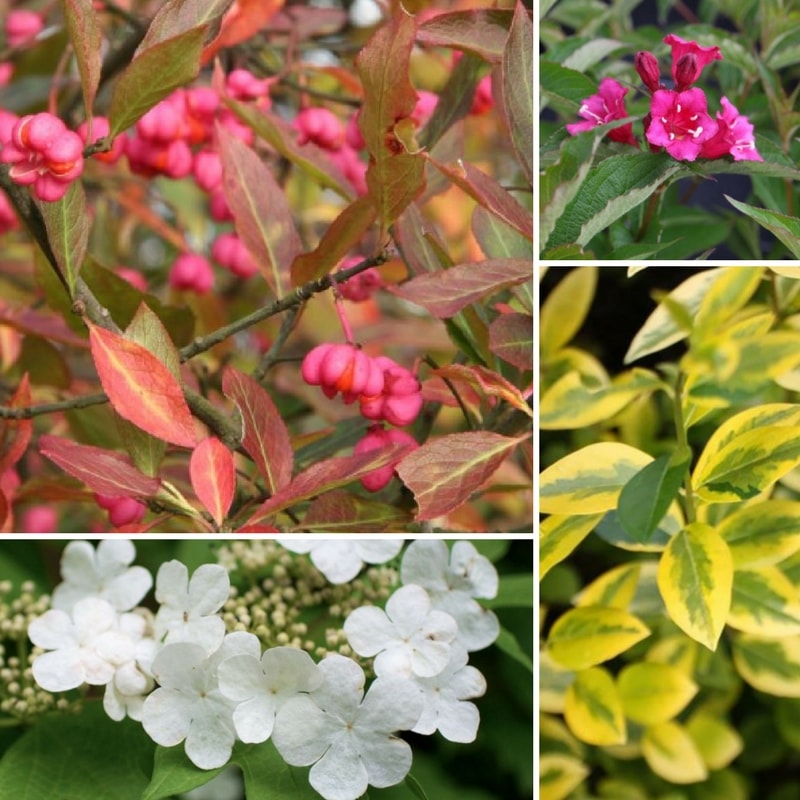
In temperate climates, pruning of spring-flowering shrubs (forsythia, spireas, etc.) should be done just after flowering.
Pruning of summer-flowering shrubs (Indian Lilac, Perovskia, etc.) can be done in winter or spring.
In cold regions as well as with frost-sensitive plants, avoid pruning too early when severe frosts may still occur.
The planting period indicated on our website applies to countries and regions located in USDA zone 8 (France, United Kingdom, Ireland, Netherlands).
It will vary according to where you live:
- In Mediterranean zones (Marseille, Madrid, Milan, etc.), autumn and winter are the best planting periods.
- In continental zones (Strasbourg, Munich, Vienna, etc.), delay planting by 2 to 3 weeks in spring and bring it forward by 2 to 4 weeks in autumn.
- In mountainous regions (the Alps, Pyrenees, Carpathians, etc.), it is best to plant in late spring (May-June) or late summer (August-September).
The harvesting period indicated on our website applies to countries and regions in USDA zone 8 (France, England, Ireland, the Netherlands).
In colder areas (Scandinavia, Poland, Austria...) fruit and vegetable harvests are likely to be delayed by 3-4 weeks.
In warmer areas (Italy, Spain, Greece, etc.), harvesting will probably take place earlier, depending on weather conditions.
The sowing periods indicated on our website apply to countries and regions within USDA Zone 8 (France, UK, Ireland, Netherlands).
In colder areas (Scandinavia, Poland, Austria...), delay any outdoor sowing by 3-4 weeks, or sow under glass.
In warmer climes (Italy, Spain, Greece, etc.), bring outdoor sowing forward by a few weeks.
Shipping country and language
Your country of residence may be:
Your country of residence is:
For a better user experience on our website, you can select:
Your shipping country:
-
 Austria
-
 Belgium
-
 Bosnia & Herzegovina
-
 Bulgaria
-
 Croatia
-
 Cyprus
-
 Czechia
-
 Denmark
-
 Estonia
-
 Finland
-
 France
-
 Germany
-
 Greece
-
 Hungary
-
 Iceland
-
 Ireland
-
 Italy
Italy
-
 Latvia
-
 Liechtenstein
-
 Lithuania
-
 Luxembourg
-
 Malta
Malta
-
 Netherlands
-
 Poland
-
 Portugal
-
 Romania
-
 Serbia
-
 Slovakia
-
 Slovenia
-
 Spain
Spain
-
 Sweden
-
 Switzerland
Language:
-
French
-
 English
-
Spanish
-
Italian
-
German
-
Portuguese
-
Dutch
-
Finnish
My Account
Hello
My wish lists
My cart
Log in / Register
Existing customer?
This form is protected by reCAPTCHA - the Google Privacy Policy and Terms of Service apply.
New customer?
Create an account to track your orders, access our customer service and, if you wish, make the most of our upcoming offers.