Vitex trifolia Purpurea - Chaste Tree
Vitex trifolia Purpurea - Chaste Tree
Vitex trifolia Purpurea - Chaste Tree
Vitex trifolia Purpurea
East Indian wild pepper
Back-to-school special offer!
Get €10 off for every €50 you spend! And get up to €40 off on a single order.
How does it work?
1. Shop your favourites
Add your favourite plants to your basket. For every €50 you spend (excluding delivery charges, store credit and the plastic-free option), you’ll receive a €10 voucher.
€50 spent = €10 voucher
€100 spent = €20 voucher
€150 spent = €30 voucher
€200 spent = €40 voucher
2. Place your order
Once your basket reaches one of the spending thresholds, place your order. You can even choose your delivery date!
3. Receive your voucher
As soon as your order has been shipped, you’ll receive an email containing your personal voucher code and its value.
4. Use it on your next order
Your voucher is valid for 90 days from the date you receive it. It can be used once only, on a new order worth at least the value of the voucher, excluding delivery charges.
Please note: Vouchers can be combined with other offers, but cannot be split or refunded.
Why not try an alternative variety in stock?
View all →
Available in 1 sizes
Available in 1 sizes
Available in 1 sizes
Available in 2 sizes
Available in 1 sizes
Available in 2 sizes
Available in 1 sizes
Available in 1 sizes
This plant carries a 24 months recovery warranty
More information
We guarantee the quality of our plants for a full growing cycle, and will replace at our expense any plant that fails to recover under normal climatic and planting conditions.
Would this plant suit my garden?
Set up your Plantfit profile →
Description
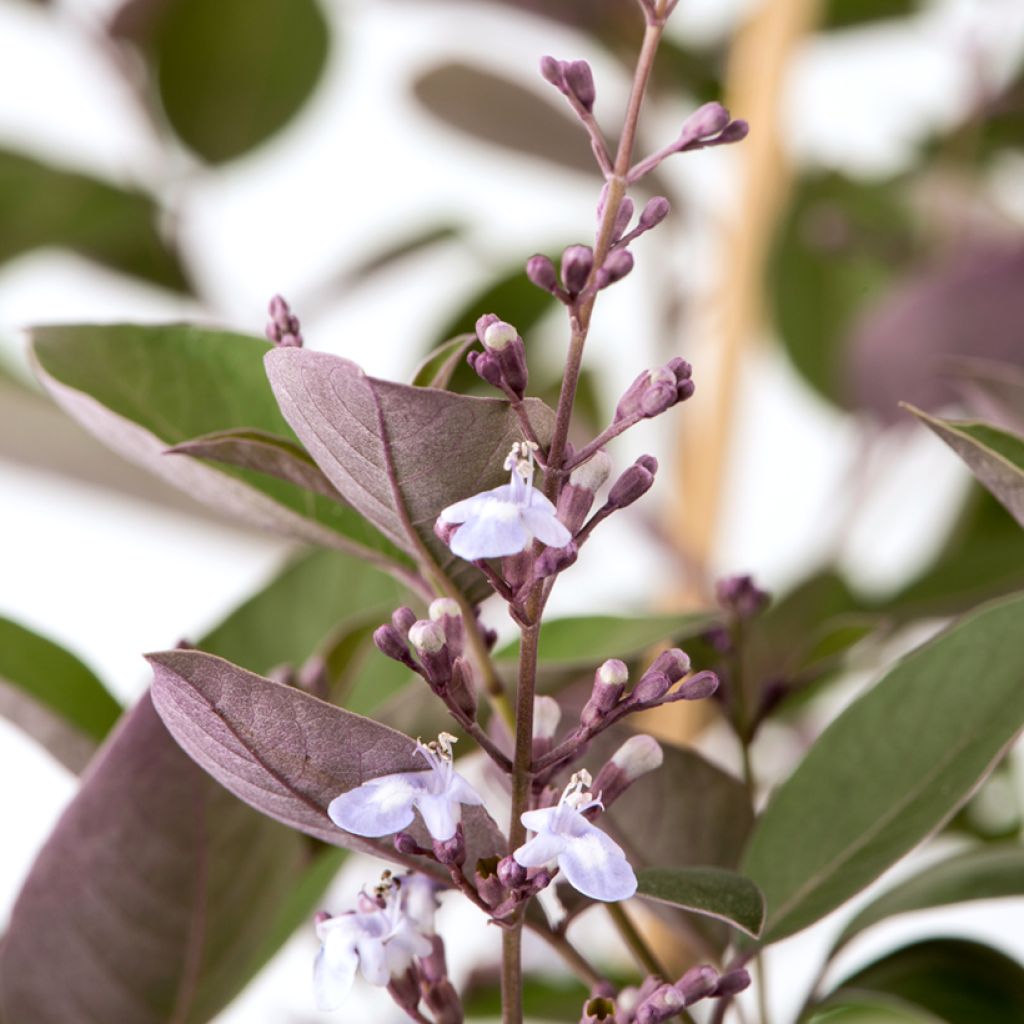
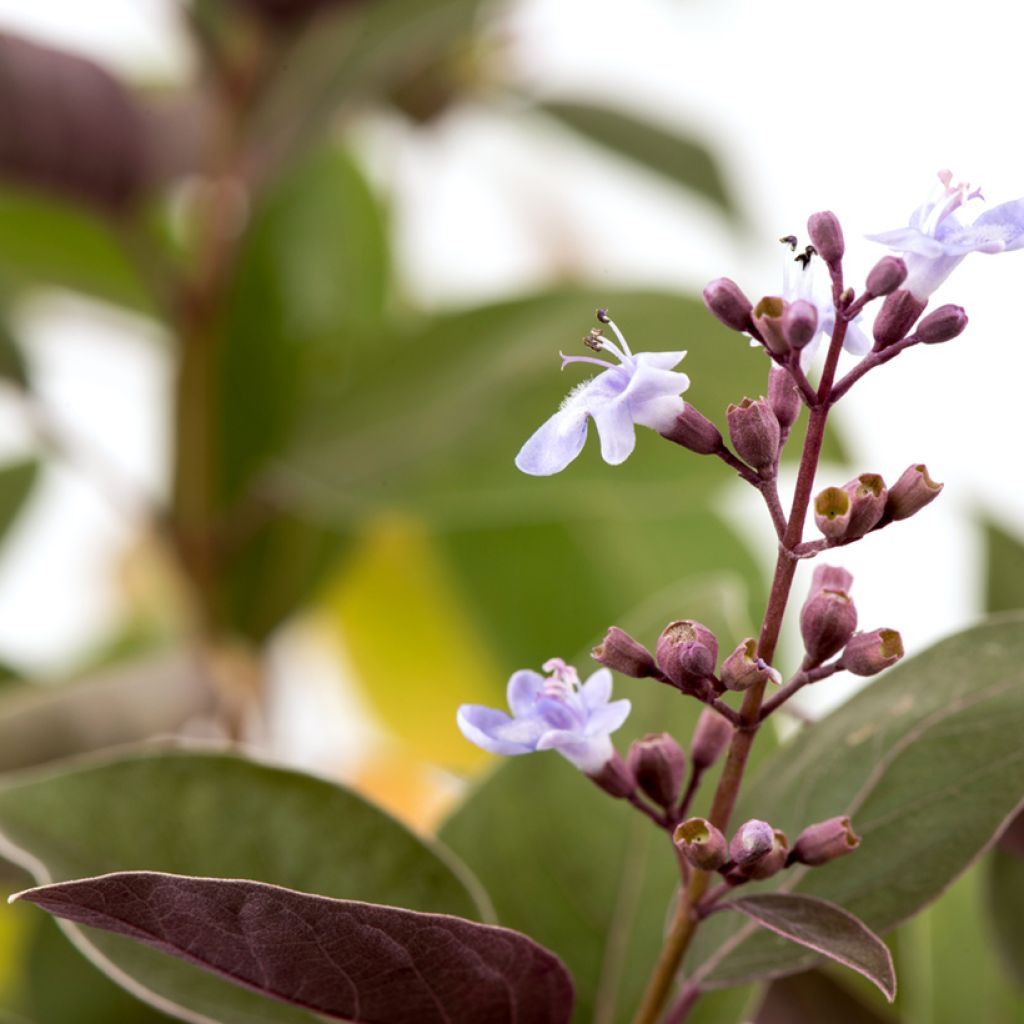
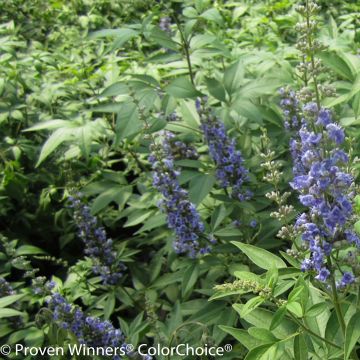
Vitex trifolia 'Purpurea', also known as Arabian Lilac or Purple Arabian Lilac, is an ornamental bush that boasts numerous qualities despite its limited cold resistance. This exotic tree is adorned with aromatic foliage in stunning colours, blending shades of green, purple, and silver, and in summer, it graces the garden with delicate mauve flowering. Its elusive colour looks different depending on the time of day and season. It is a low-maintenance, drought-resistant, standout bush in the garden and suited to coastal areas.
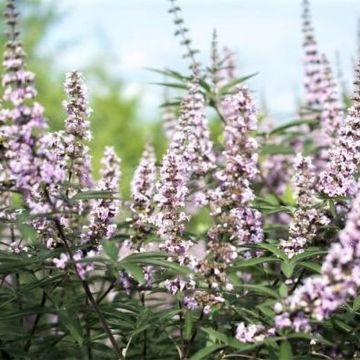
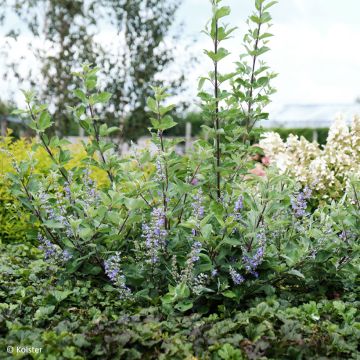
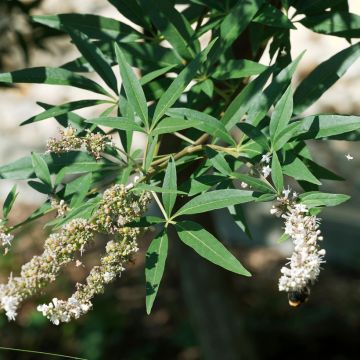
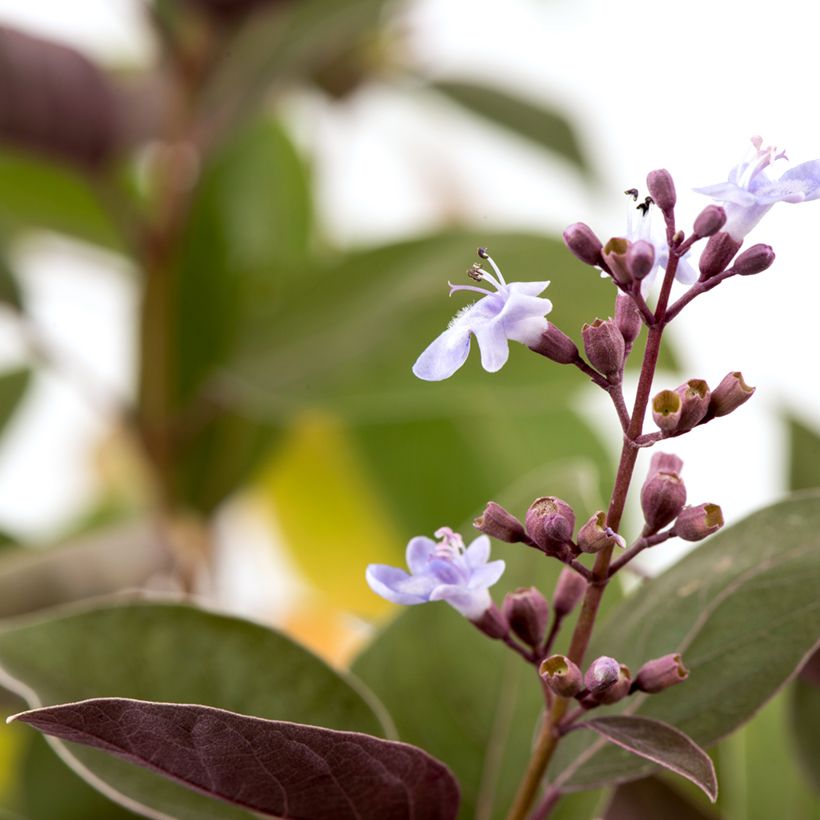
Vitex trifolia 'Purpurea' belongs to the botanical Lamiaceae family, which includes many aromatic plants such as sages and lavenders. The species is widespread in tropical and subtropical regions, from the coasts of East Africa through Asia, Indonesia, French Polynesia, to the middle of the Pacific Ocean, and southwards across much of Australia, where it is called Blue Vitex. In the wild, this bush is found in dunes, coastal areas, and littoral forests. This 'Purpurea' cultivar, selected for its ornamental qualities, stands out for its purple-tinged foliage. The bush has a rounded, bushy habit, with dense branches forming an elegant silhouette. It typically reaches a height of 3 to 4 m and a spread of 2 to 3 m at maturity, depending on growing conditions and climate. Its growth will be more modest (2.50 m) in cooler climates, as it is often cut back by frost, in poor and dry soil, or when grown in pots. Its growth is considered fast, a valued trait for quickly creating privacy hedges or other landscaping features. The foliage of Vitex trifolia 'Purpurea' is evergreen to semi-evergreen, depending on the climate. The leaves, composed of three oblong, slightly downy leaflets, measure between 3 and 9 cm in length. Their upper surface is more or less olive-green to greyish, while the underside displays a beautiful silvery violet hue, accentuated by violet veins. When crushed, the leaves release a peppery, aromatic fragrance.
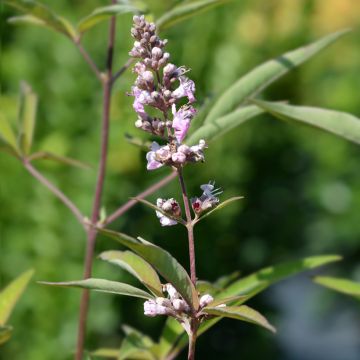
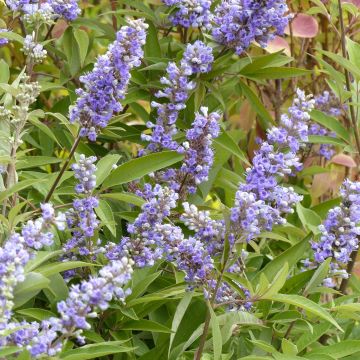
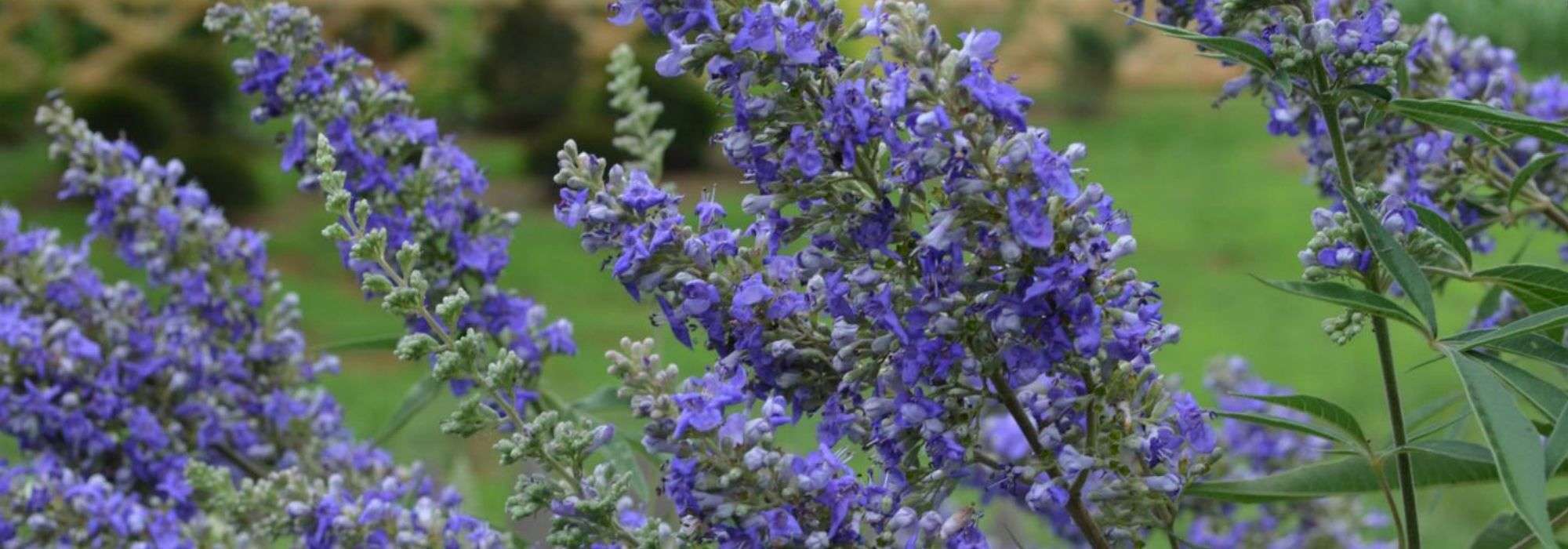
The flowering period, which lasts from June-July to September, is a charming spectacle. The flowers, arranged in long, slender terminal panicles of 15 to 25 cm, are a mauve lilac colour, with aubergine anthers and slightly silvery, downy calyxes. Their subtle fragrance attracts a multitude of pollinators: bees, butterflies, bumblebees... After flowering, the bush produces small spherical fruits in the form of edible drupes, which turn from yellow to black as they ripen. Their slightly peppery flavour is interesting for culinary or medicinal use, though their small size limits their practicality. The stems, meanwhile, are smooth, light brown, and contribute to the plant's neat appearance year-round.
The stump of Vitex trifolia 'Purpurea' can tolerate temperatures as low as -7 to -8 °C at peak. Its stems die below -4°C. In colder regions, it is recommended to grow it in a pot so it can be protected in winter. It is undemanding and thrives in well-drained soils, even slightly chalky, sandy, or poor. Once well-rooted in deep soil, it can withstand dry summers.
In an informal hedge, the Purple Arabian Lilac is an excellent choice for structuring a Mediterranean or exotic garden. At the centre of a flowerbed, it can be surrounded by ornamental grasses like Stipa and small-leaved sages, which also tolerate dry summers. Consider pairing it with Perovskia atriplicifolia ‘Blue Spire’, whose lavender-blue spikes contrast with its foliage, or with Teucrium fruticans 'Azureum', a large cushion of silvery leaves dotted with blue flowers, or the highly fragrant toothed lavender (Lavandula dentata), which blooms for months.
Vitex trifolia Purpurea - Chaste Tree in pictures
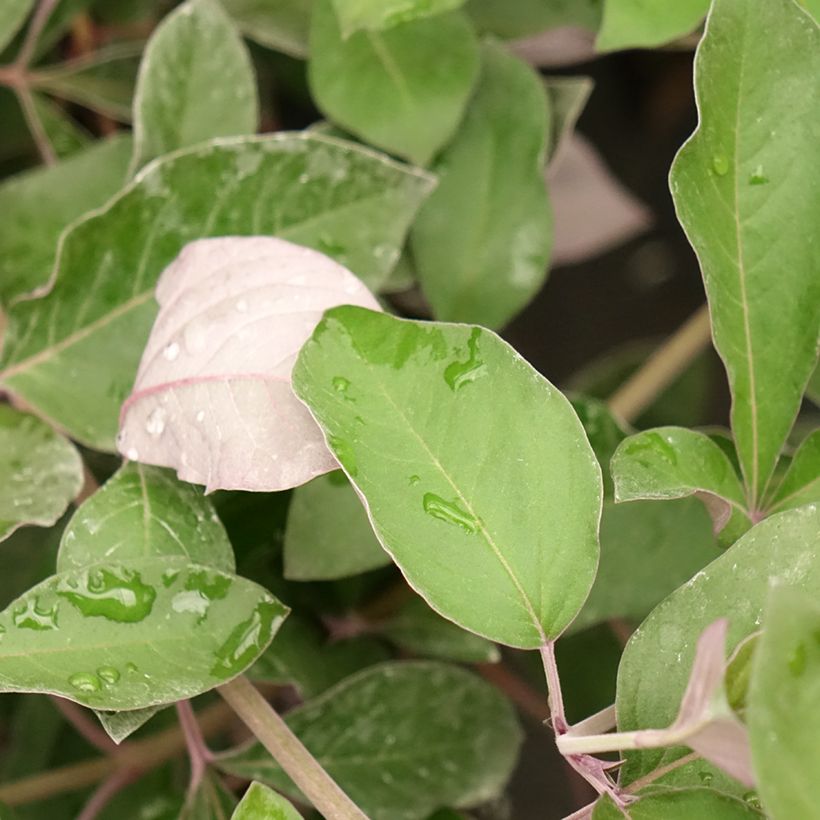
Plant habit
Flowering
Foliage
Botanical data
Vitex
trifolia
Purpurea
Lamiaceae
East Indian wild pepper
Vitex agnus-castus var. trifolia, Vitex indica, Vitex integerrima, Vitex trifolia var. trifoliolata
Cultivar or hybrid
Planting and care
To cultivate Vitex trifolia 'Purpurea', either in a pot or in the ground, it's essential to provide conditions that meet its needs. In the ground, choose a spot in full sun or partial shade, in well-drained, deep, sandy, slightly chalky, or ordinary soil. Dig a hole twice as wide as the root ball and mix the removed soil with compost or potting soil to enrich the soil. Water generously after planting and during the first year to encourage good establishment.
The crown of Vitex trifolia 'Purpurea' can tolerate temperatures down to -7 to -8 °C at peak. Its stems die below -4°C, and its foliage is deciduous below -2°C.
In a pot, opt for a container at least 50 cm in diameter with drainage holes. Use a mix of universal potting soil and sand or pumice to ensure optimal drainage. Place the pot in a well-exposed location and water regularly, allowing the substrate to dry slightly between waterings.
Vitex is rarely affected by diseases and pests.
Planting period
Intended location
Care
Planting & care advice
-

-
-
-

-
-
-

-
This item has not been reviewed yet - be the first to leave a review about it.
Recently viewed products
Haven't found what you were looking for?
Hardiness is the lowest winter temperature a plant can endure without suffering serious damage or even dying. However, hardiness is affected by location (a sheltered area, such as a patio), protection (winter cover) and soil type (hardiness is improved by well-drained soil).

The flowering period indicated on our website applies to countries and regions located in USDA zone 8 (France, the United Kingdom, Ireland, the Netherlands, etc.)
It will vary according to where you live:- In zones 9 to 10 (Italy, Spain, Greece, etc.), flowering will occur about 2 to 4 weeks earlier.
- In zones 6 to 7 (Germany, Poland, Slovenia, and lower mountainous regions), flowering will be delayed by 2 to 3 weeks.
- In zone 5 (Central Europe, Scandinavia), blooming will be delayed by 3 to 5 weeks.
In temperate climates, pruning of spring-flowering shrubs (forsythia, spireas, etc.) should be done just after flowering.
Pruning of summer-flowering shrubs (Indian Lilac, Perovskia, etc.) can be done in winter or spring.
In cold regions as well as with frost-sensitive plants, avoid pruning too early when severe frosts may still occur.
The planting period indicated on our website applies to countries and regions located in USDA zone 8 (France, United Kingdom, Ireland, Netherlands).
It will vary according to where you live:
- In Mediterranean zones (Marseille, Madrid, Milan, etc.), autumn and winter are the best planting periods.
- In continental zones (Strasbourg, Munich, Vienna, etc.), delay planting by 2 to 3 weeks in spring and bring it forward by 2 to 4 weeks in autumn.
- In mountainous regions (the Alps, Pyrenees, Carpathians, etc.), it is best to plant in late spring (May-June) or late summer (August-September).
The harvesting period indicated on our website applies to countries and regions in USDA zone 8 (France, England, Ireland, the Netherlands).
In colder areas (Scandinavia, Poland, Austria...) fruit and vegetable harvests are likely to be delayed by 3-4 weeks.
In warmer areas (Italy, Spain, Greece, etc.), harvesting will probably take place earlier, depending on weather conditions.
The sowing periods indicated on our website apply to countries and regions within USDA Zone 8 (France, UK, Ireland, Netherlands).
In colder areas (Scandinavia, Poland, Austria...), delay any outdoor sowing by 3-4 weeks, or sow under glass.
In warmer climes (Italy, Spain, Greece, etc.), bring outdoor sowing forward by a few weeks.
Shipping country and language
Your country of residence may be:
Your country of residence is:
For a better user experience on our website, you can select:
Your shipping country:
-
 Austria
-
 Belgium
-
 Bosnia & Herzegovina
-
 Bulgaria
-
 Croatia
-
 Cyprus
-
 Czechia
-
 Denmark
-
 Estonia
-
 Finland
-
 France
-
 Germany
-
 Greece
-
 Hungary
-
 Iceland
-
 Ireland
-
 Italy
Italy
-
 Latvia
-
 Liechtenstein
-
 Lithuania
-
 Luxembourg
-
 Malta
Malta
-
 Netherlands
-
 Poland
-
 Portugal
-
 Romania
-
 Serbia
-
 Slovakia
-
 Slovenia
-
 Spain
Spain
-
 Sweden
-
 Switzerland
Language:
-
French
-
 English
-
Spanish
-
Italian
-
German
-
Portuguese
-
Dutch
-
Finnish
My Account
Hello
My wish lists
My cart
Log in / Register
Existing customer?
This form is protected by reCAPTCHA - the Google Privacy Policy and Terms of Service apply.
New customer?
Create an account to track your orders, access our customer service and, if you wish, make the most of our upcoming offers.