Yucca French Flag
Yucca French Flag
Yucca French Flag
Yucca filamentosa (x) rostrata Yuccaam1 (FRENCH FLAG)
needle palm
Back-to-school special offer!
Get €10 off for every €50 you spend! And get up to €40 off on a single order.
How does it work?
1. Shop your favourites
Add your favourite plants to your basket. For every €50 you spend (excluding delivery charges, store credit and the plastic-free option), you’ll receive a €10 voucher.
€50 spent = €10 voucher
€100 spent = €20 voucher
€150 spent = €30 voucher
€200 spent = €40 voucher
2. Place your order
Once your basket reaches one of the spending thresholds, place your order. You can even choose your delivery date!
3. Receive your voucher
As soon as your order has been shipped, you’ll receive an email containing your personal voucher code and its value.
4. Use it on your next order
Your voucher is valid for 90 days from the date you receive it. It can be used once only, on a new order worth at least the value of the voucher, excluding delivery charges.
Please note: Vouchers can be combined with other offers, but cannot be split or refunded.
Home or relay delivery (depending on size and destination)
Important: You may be charged customs duties by your country’s customs authorities upon delivery.
Schedule delivery date
and select date in basket
This plant carries a 24 months recovery warranty
More information
We guarantee the quality of our plants for a full growing cycle, and will replace at our expense any plant that fails to recover under normal climatic and planting conditions.
Would this plant suit my garden?
Set up your Plantfit profile →
Description
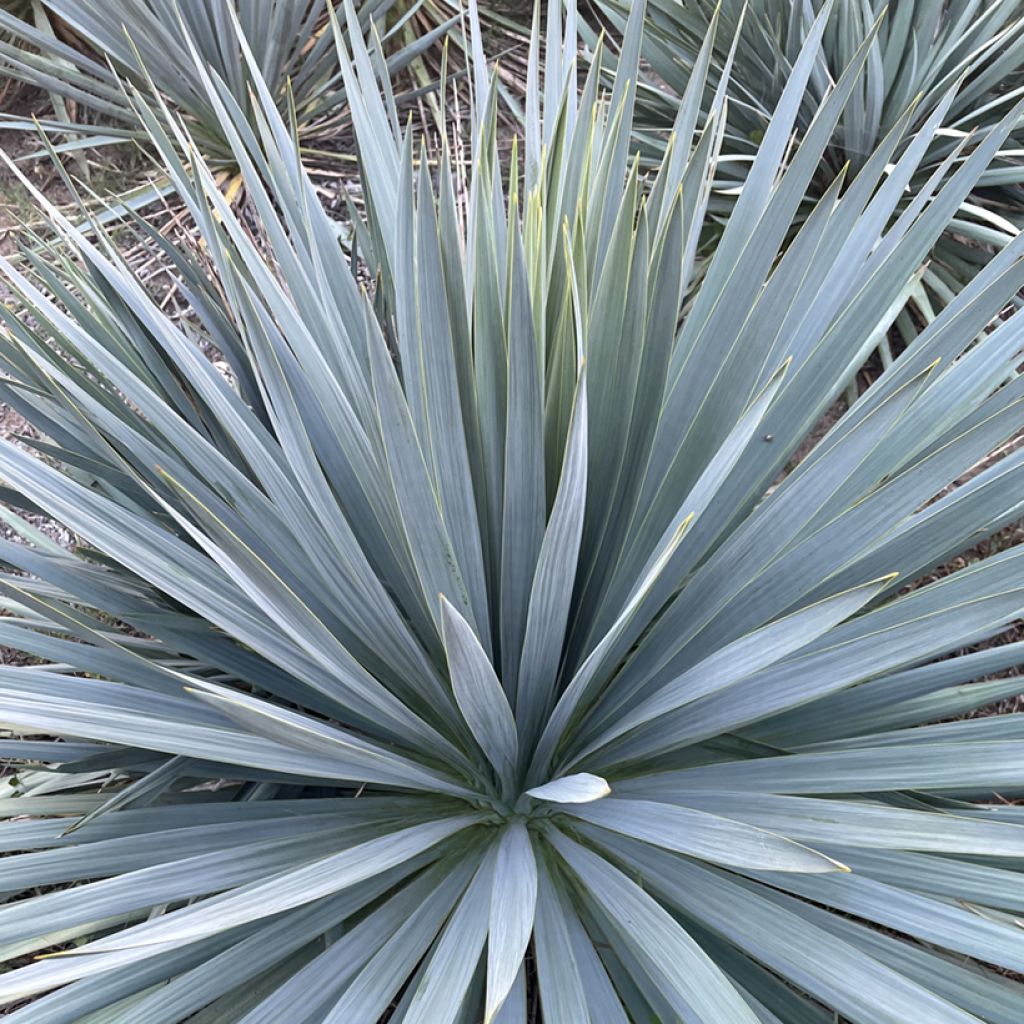
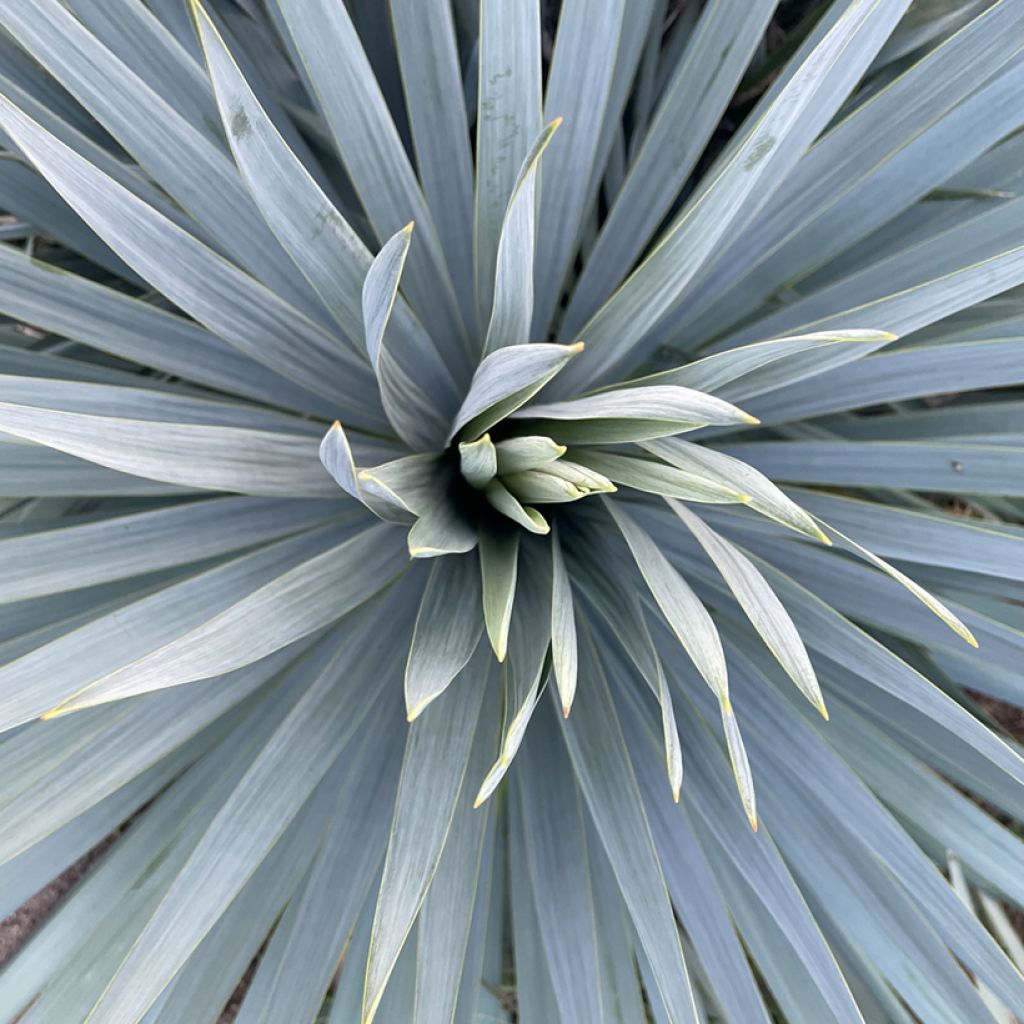
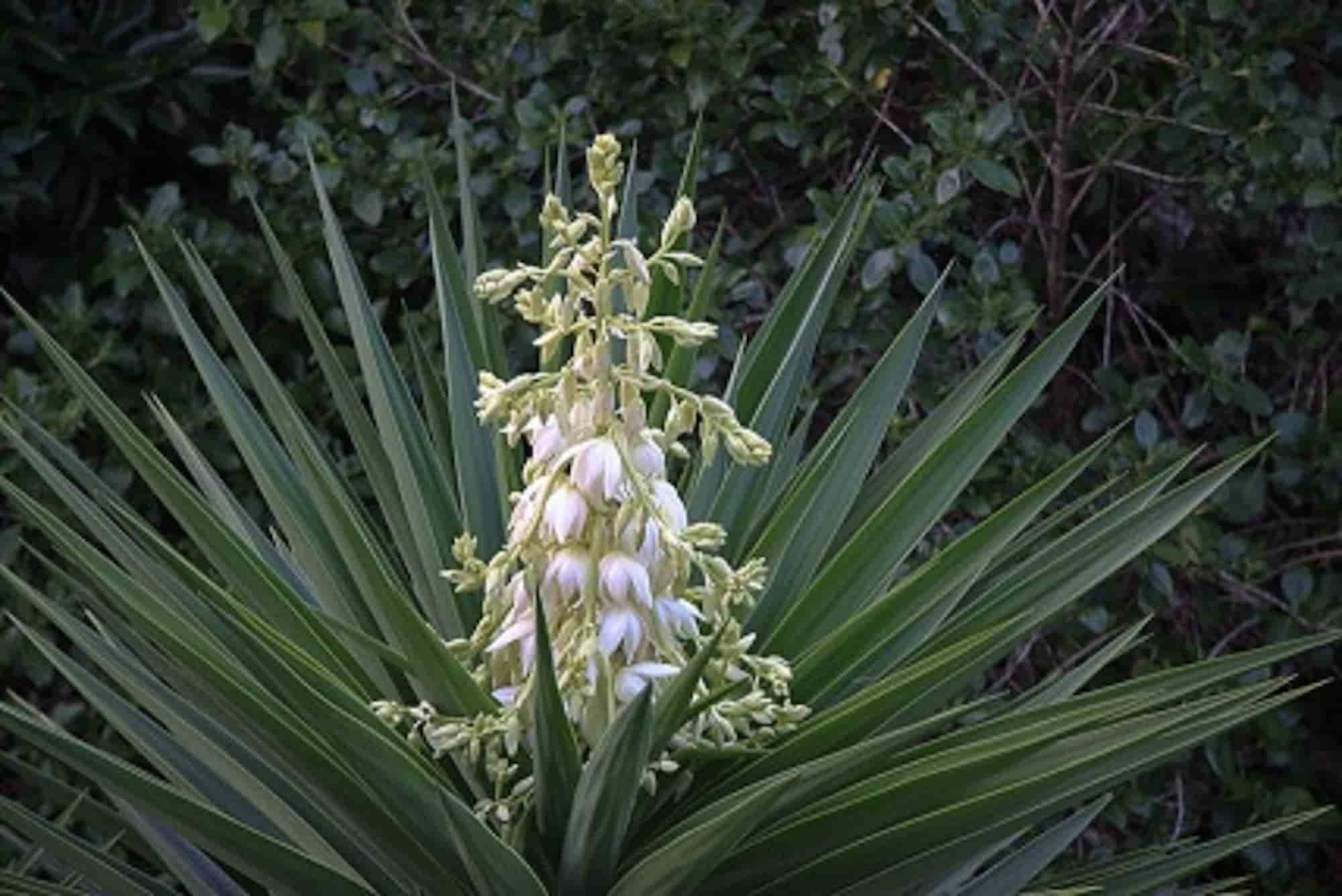
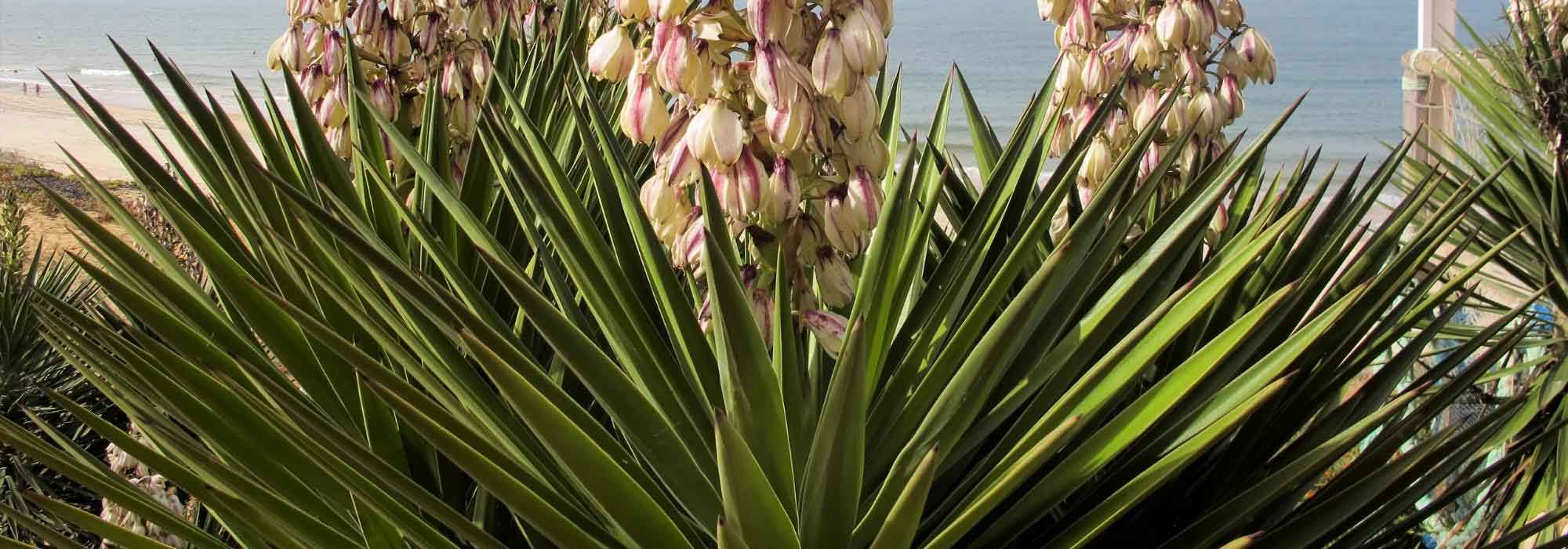
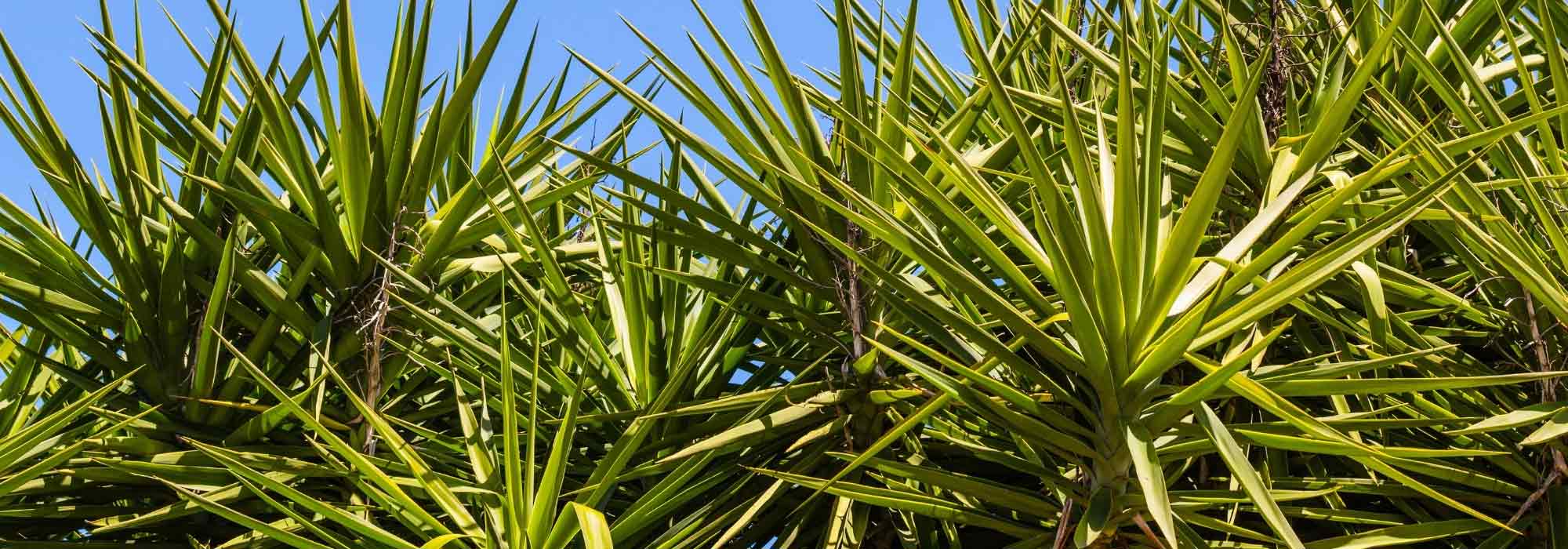
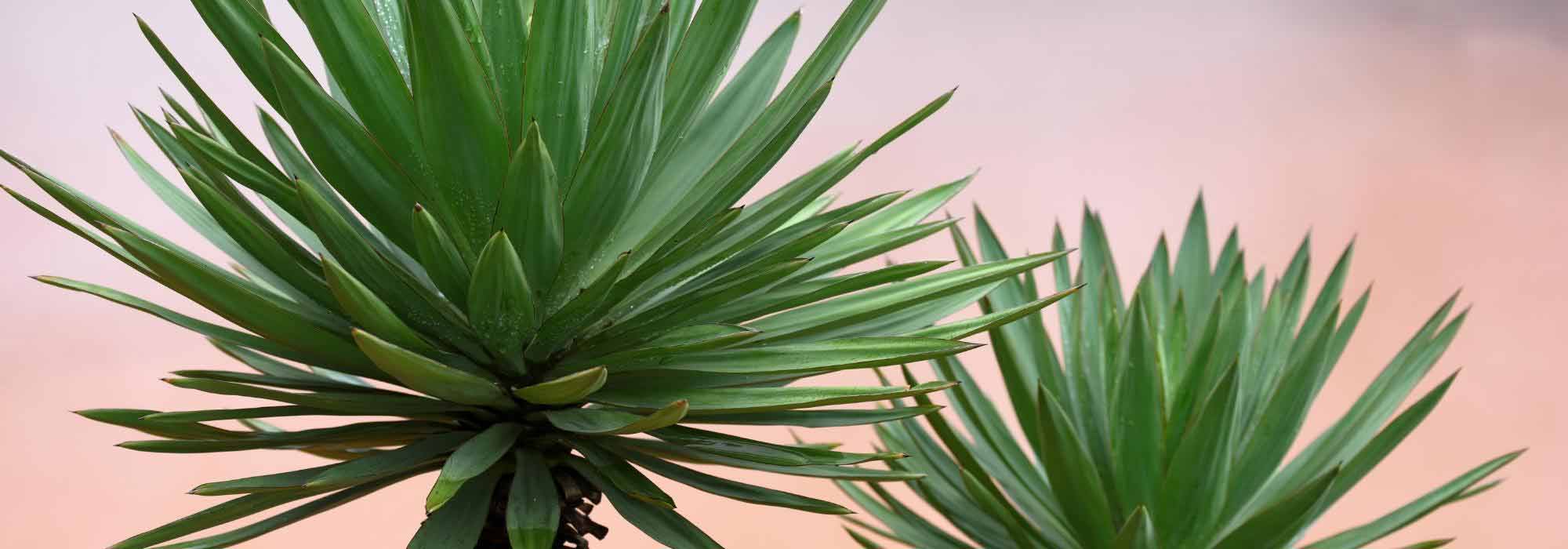
Yucca 'French Flag' is a recent variety that will bring exoticism to regions with cold climates. Not only is this hybrid extremely hardy, but it is also extremely ornamental. It grows rather quickly and forms a superb crown of true blue, which is eye-catching in the garden. Its flexible foliage is not very prickly and not dangerous, and it reaches maturity fairly quickly, offering a beautiful spring flowering with long white spikes. This gem is easy to grow anywhere, tolerating humidity and dry conditions, and can also be grown in a pot.
Yucca was previously classified in the Agavaceae family, which is now included, along with six other closely related families, in the Asparagaceae family, which includes about 120 genera and 2900 species. There are about forty species of Yucca, native to North and Central America.
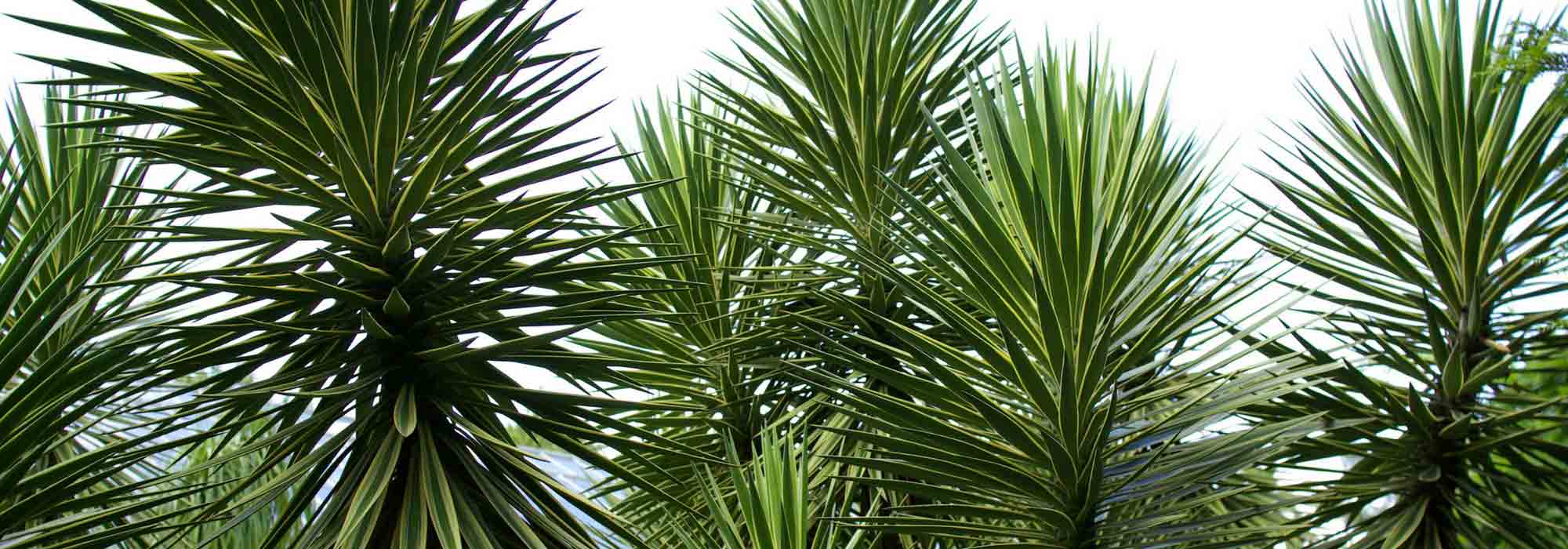
The 'French Flag' variety was obtained in 2016 by the Frenchman Frédéric Julien by crossing Yucca rostrata and Yucca filamentosa. Y. rostrata, native to the southwest United States and Mexico, is a magnificent plant with a bluish appearance, narrow, stiff foliage, and very sharp pointed ends. It grows slowly and eventually forms a trunk that supports the rosette of leaves. Y. filamentosa, found naturally from South Carolina to Florida, forms imposing clumps of large, wide, flexible leaves with filamentous edges, producing a spectacular summer flowering in the form of long white bell-shaped flowers.
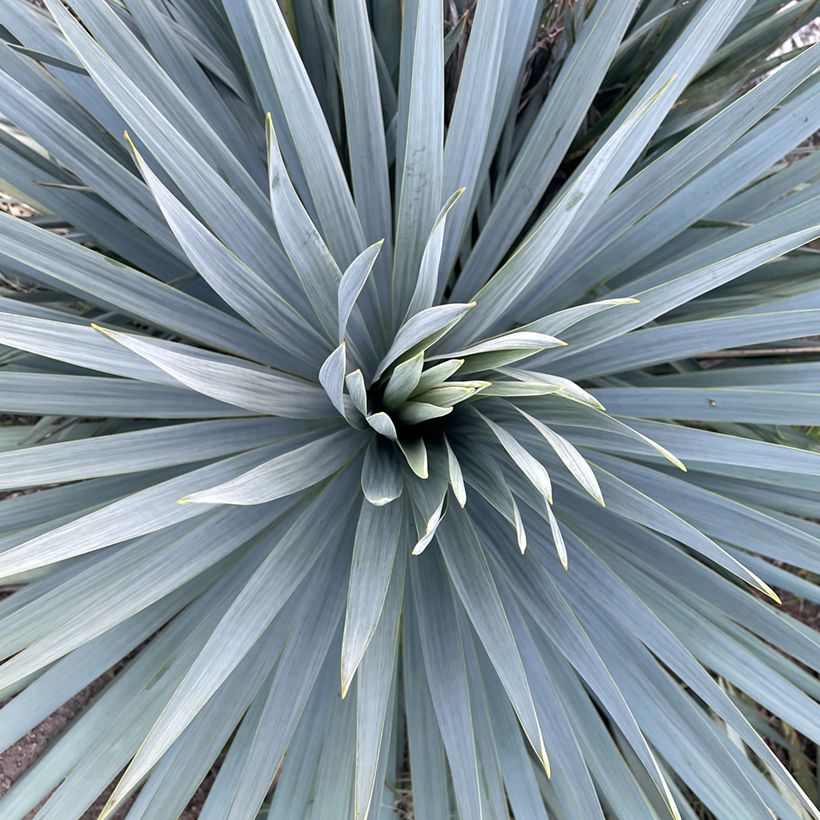
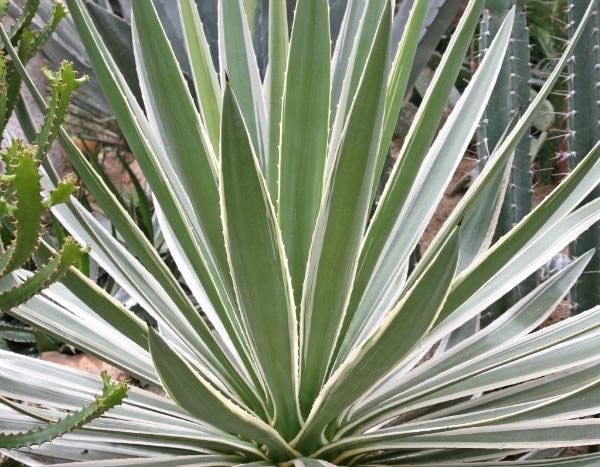
'French Flag' has taken the best from both parents, with a personal touch added. This Yucca is particularly attractive due to the blue of its foliage, even more intense than that of Y. rostrata. The leaves have a texture similar to Y. filamentosa, they are flexible, relatively wide (intermediate between the two botanical species), and not very prickly, in any case, not dangerous. The plant forms a sculptural, spherical head of about 1m in diameter. It grows faster than Y. rostrata and forms a short trunk, reaching a height of 1.50m. It also blooms more quickly than Y. rostrata, inspired in this by Y. filamentosa. In May-June, red buds open into white flowers gathered in large floral spikes, further enhancing the ornamental interest of the plant.
Easy to grow, 'French Flag' obviously withstands dry conditions very well, while tolerating humidity better than other varieties, and displays remarkable hardiness, down to -23°C! It can therefore be planted almost anywhere and is also suitable for container cultivation.
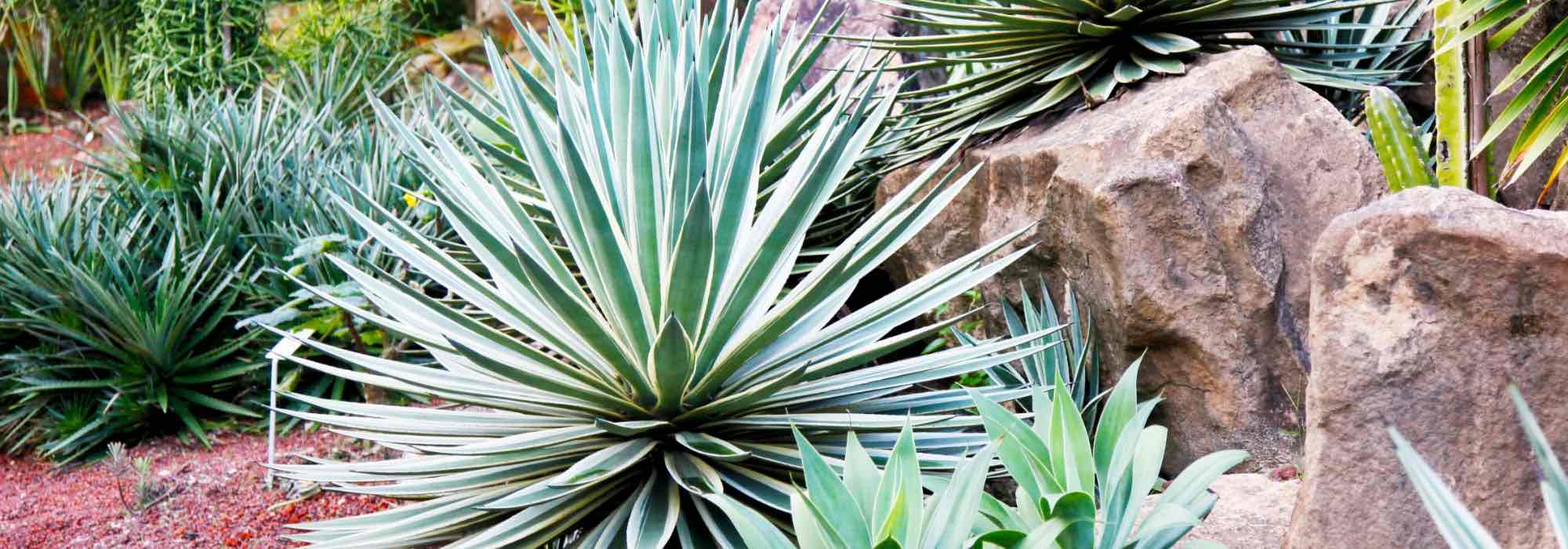
Yucca 'French Flag' is a little gem that will delight exotic plant enthusiasts, who can create an exotic scene in their garden, even far from southern regions. Combine it with other distinctive plants such as Hesperaloe parviflora, mistakenly called Red Yucca due to its clump of tough leaves that can be confused with this genus. This sturdy and hardy perennial produces a dazzling coral red flowering during the summer, which will perfectly complement the blue vegetation of your Yucca 'French Flag'. If you don't mind the thorns, plant some hardy cacti alongside them, such as Opuntia phaecantha 'Moyavensis', with its grey-blue pads that are so evocative of desert regions. Cylindropuntia imbricata, with its cylindrical segments, has a completely different appearance and also boasts a fiercely exotic silhouette that will enrich your flower bed. Add some mineral elements, such as raw-looking stones, between which you can plant some Sedum or even Joubarbes (Sempervivum), and the change of scenery will be complete...
Yucca French Flag in pictures
Plant habit
Flowering
Foliage
Botanical data
Yucca
filamentosa (x) rostrata
Yuccaam1 (FRENCH FLAG)
Asparagaceae
needle palm
Cultivar or hybrid
Planting and care
Plant Yucca 'French Flag' in spring or autumn, in a sunny position, in well-drained, ordinary, even sandy, poor, clayey and rocky soil. It also tolerates limestone soils. This plant really requires little maintenance but does not like waterlogged soils in winter, which affects its hardiness. Nevertheless, this variety tolerates moisture better than others, which, combined with its high hardiness (-23°C approximately), makes it the perfect plant for regions far from the south. In addition, its foliage is highly resistant to diseases. Remove the faded leaves and flowers.
Planting period
Intended location
Care
Planting & care advice


This item has not been reviewed yet - be the first to leave a review about it.
Recently viewed products
Haven't found what you were looking for?
Hardiness is the lowest winter temperature a plant can endure without suffering serious damage or even dying. However, hardiness is affected by location (a sheltered area, such as a patio), protection (winter cover) and soil type (hardiness is improved by well-drained soil).

The flowering period indicated on our website applies to countries and regions located in USDA zone 8 (France, the United Kingdom, Ireland, the Netherlands, etc.)
It will vary according to where you live:- In zones 9 to 10 (Italy, Spain, Greece, etc.), flowering will occur about 2 to 4 weeks earlier.
- In zones 6 to 7 (Germany, Poland, Slovenia, and lower mountainous regions), flowering will be delayed by 2 to 3 weeks.
- In zone 5 (Central Europe, Scandinavia), blooming will be delayed by 3 to 5 weeks.
In temperate climates, pruning of spring-flowering shrubs (forsythia, spireas, etc.) should be done just after flowering.
Pruning of summer-flowering shrubs (Indian Lilac, Perovskia, etc.) can be done in winter or spring.
In cold regions as well as with frost-sensitive plants, avoid pruning too early when severe frosts may still occur.
The planting period indicated on our website applies to countries and regions located in USDA zone 8 (France, United Kingdom, Ireland, Netherlands).
It will vary according to where you live:
- In Mediterranean zones (Marseille, Madrid, Milan, etc.), autumn and winter are the best planting periods.
- In continental zones (Strasbourg, Munich, Vienna, etc.), delay planting by 2 to 3 weeks in spring and bring it forward by 2 to 4 weeks in autumn.
- In mountainous regions (the Alps, Pyrenees, Carpathians, etc.), it is best to plant in late spring (May-June) or late summer (August-September).
The harvesting period indicated on our website applies to countries and regions in USDA zone 8 (France, England, Ireland, the Netherlands).
In colder areas (Scandinavia, Poland, Austria...) fruit and vegetable harvests are likely to be delayed by 3-4 weeks.
In warmer areas (Italy, Spain, Greece, etc.), harvesting will probably take place earlier, depending on weather conditions.
The sowing periods indicated on our website apply to countries and regions within USDA Zone 8 (France, UK, Ireland, Netherlands).
In colder areas (Scandinavia, Poland, Austria...), delay any outdoor sowing by 3-4 weeks, or sow under glass.
In warmer climes (Italy, Spain, Greece, etc.), bring outdoor sowing forward by a few weeks.
Shipping country and language
Your country of residence may be:
Your country of residence is:
For a better user experience on our website, you can select:
Your shipping country:
-
 Austria
-
 Belgium
-
 Bosnia & Herzegovina
-
 Bulgaria
-
 Croatia
-
 Cyprus
-
 Czechia
-
 Denmark
-
 Estonia
-
 Finland
-
 France
-
 Germany
-
 Greece
-
 Hungary
-
 Iceland
-
 Ireland
-
 Italy
Italy
-
 Latvia
-
 Liechtenstein
-
 Lithuania
-
 Luxembourg
-
 Malta
Malta
-
 Netherlands
-
 Poland
-
 Portugal
-
 Romania
-
 Serbia
-
 Slovakia
-
 Slovenia
-
 Spain
Spain
-
 Sweden
-
 Switzerland
Language:
-
French
-
 English
-
Spanish
-
Italian
-
German
-
Portuguese
-
Dutch
-
Finnish
My Account
Hello
My wish lists
My cart
Log in / Register
Existing customer?
This form is protected by reCAPTCHA - the Google Privacy Policy and Terms of Service apply.
New customer?
Create an account to track your orders, access our customer service and, if you wish, make the most of our upcoming offers.