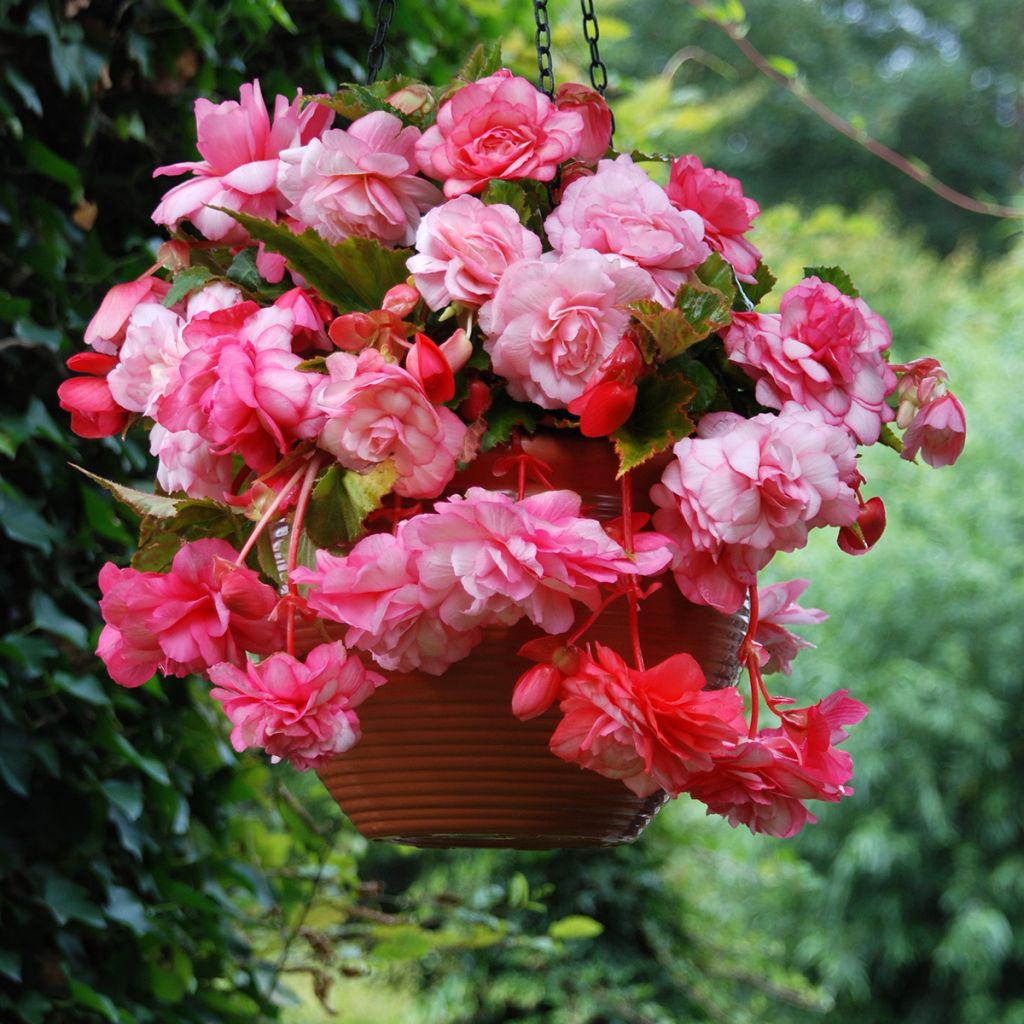
Begonia × tuberhybrida Splendide Alifra - Trailing tuberous begonia
Begonia × tuberhybrida Splendide Alifra - Trailing tuberous begonia
Begonia × tuberhybrida Splendide Alifra
Back-to-school special offer!
Get €10 off for every €50 you spend! And get up to €40 off on a single order.
How does it work?
1. Shop your favourites
Add your favourite plants to your basket. For every €50 you spend (excluding delivery charges, store credit and the plastic-free option), you’ll receive a €10 voucher.
€50 spent = €10 voucher
€100 spent = €20 voucher
€150 spent = €30 voucher
€200 spent = €40 voucher
2. Place your order
Once your basket reaches one of the spending thresholds, place your order. You can even choose your delivery date!
3. Receive your voucher
As soon as your order has been shipped, you’ll receive an email containing your personal voucher code and its value.
4. Use it on your next order
Your voucher is valid for 90 days from the date you receive it. It can be used once only, on a new order worth at least the value of the voucher, excluding delivery charges.
Please note: Vouchers can be combined with other offers, but cannot be split or refunded.
Why not try an alternative variety in stock?
View all →
Available in 1 sizes
This plant carries a 6 months recovery warranty
More information
We guarantee the quality of our plants for a full growing cycle, and will replace at our expense any plant that fails to recover under normal climatic and planting conditions.
Would this plant suit my garden?
Set up your Plantfit profile →
Description
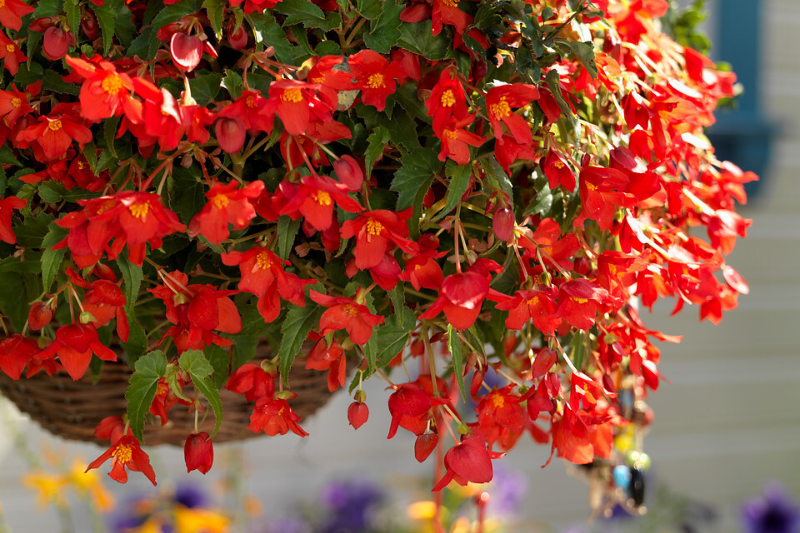
Begonia × tuberhybrida Splendide 'Alifra’ is a variety known for its exceptionally large, double flowers in pink tones, and a very trailing habit, well-suited to hanging baskets, tall containers, and window boxes. Its generous flowering adds great charm to partially shaded terraces and balconies from summer to autumn. With appropriate care, it is possible to make it flower again for several years.
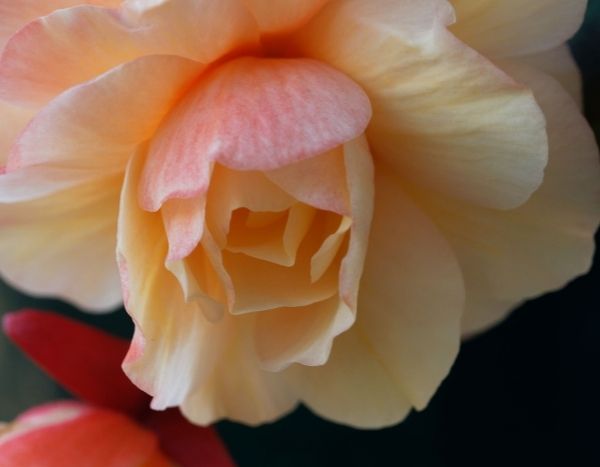
Belonging to the Begoniaceae family, this Alifra cultivar is classified in the group of tuberous begonias (Begonia × tuberhybrida), horticultural hybrids derived from several Andean species such as B. boliviensis, B. veitchii, or B. pearcei; it is sometimes marketed with the label "pendula/cascading" due to its trailing habit. Splendide refers to a series of cultivars with large double flowers in pastel colours (Splendide 'Apricot', ‘Ice Maiden’, ‘Ballerina’), of which ‘Alifra’ is the pink version.
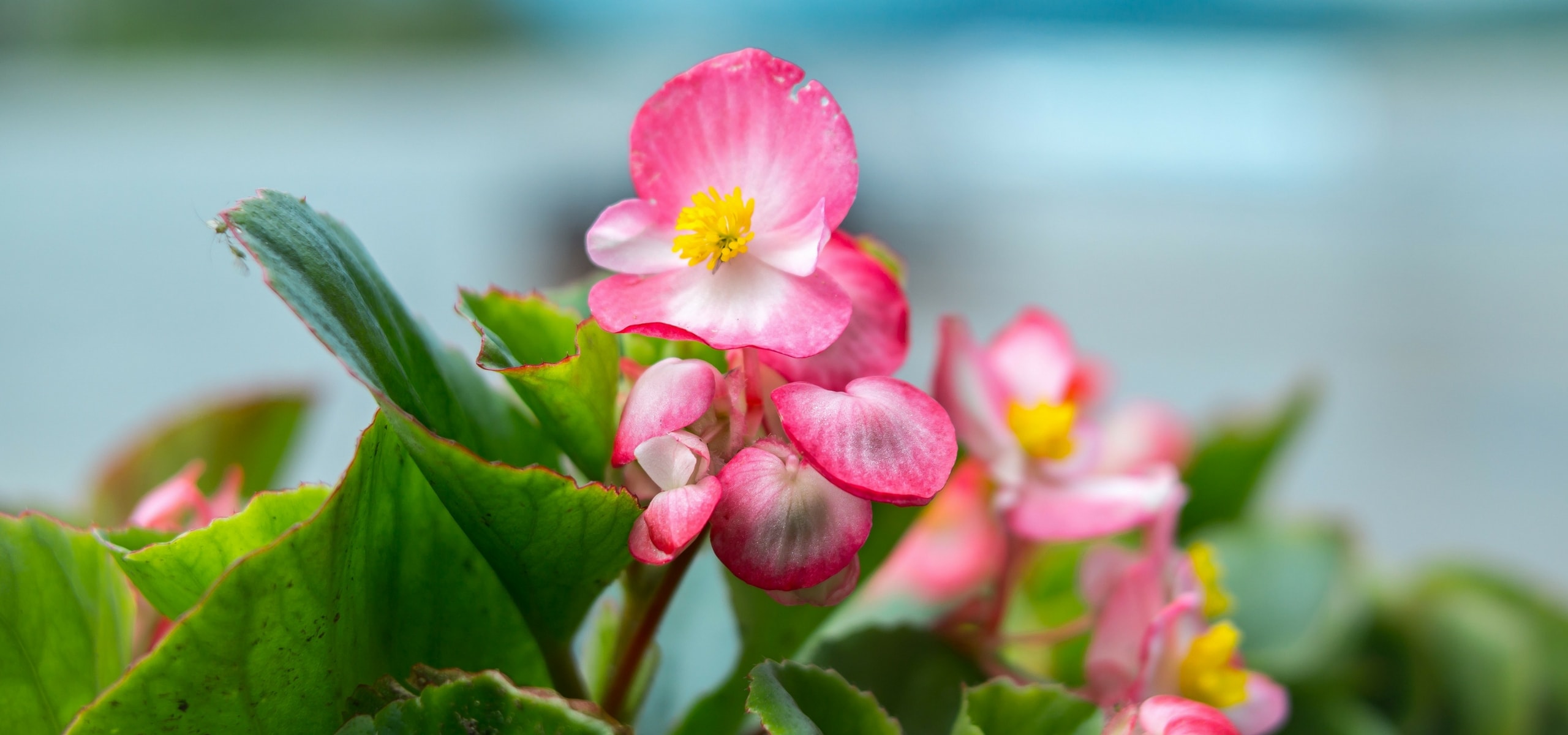
This Alifra begonia grows from a tuber and forms fleshy stems each spring, adorned with asymmetrical, bright green leaves with finely toothed margins. The plant reaches 30 to 35 cm in height, with its arching stems spreading 45 to 60 cm wide. In summer it has double to semi-double, large flowers 12 to 15 cm in diameter. Each cup-shaped flower features numerous silky, overlapping tepals in a soft pink shaded with a deeper pink; the inflorescences, borne in pendulous clusters, are renewed from July to September-October if faded flowers are regularly removed. The deciduous foliage disappears at the end of the season during the tuber's dormancy; the brittle stems require a location sheltered from the wind.
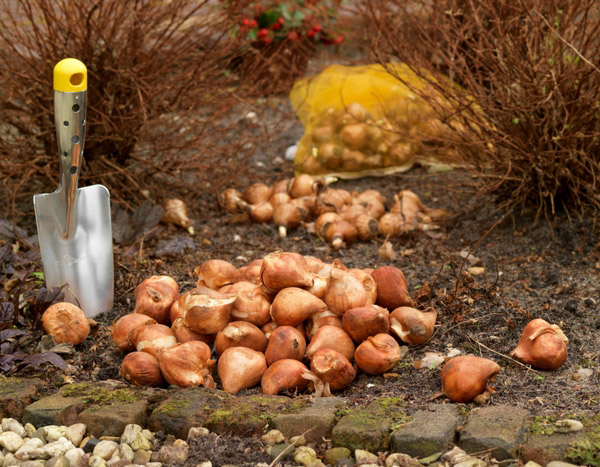
The tubers are flattened storage organs measuring 5/6 cm and more at maturity which produce a mass of fine root hairs upon regrowth; they are frost-tender and should be stored dry and frost-free, ideally between 5 and 10 °C.
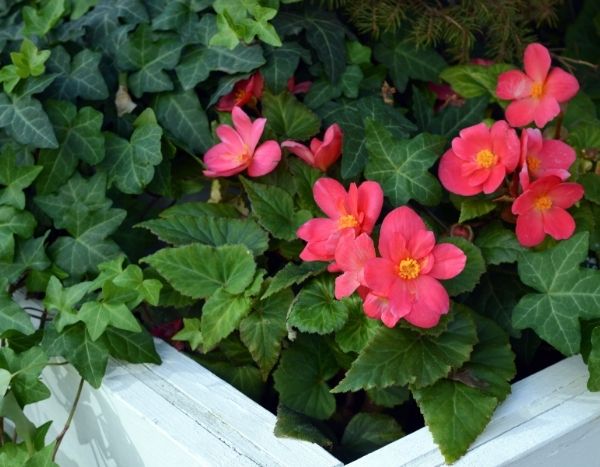
Plant this Splendide 'Alifra’ begonia in a hanging basket or wide bowl, in a light, humus-rich, and well-drained substrate, in bright partial shade, avoiding the scorching afternoon sun. Pair it with other trailing tuberous begonias from the Splendide series for a soft monochrome effect, or combine it with a variegated dwarf ivy such as Hedera helix Kolibri or a Plectranthus coleoides Variegatus. In container plantings, pair it with a trailing fuchsia Bella Rosella which will flower until the first frosts.
The genus name Begonia pays tribute to Michel Bégon (1638-1710), intendant of Santo Domingo and patron of the botanist Plumier. The rise of tuberous begonias in Europe was built in the 19th century from Andean species introduced by the Veitch and Lemoine nurseries; these cultivars popularised balcony begonias throughout the northern hemisphere.
Report an error about the product description
Plant habit
Flowering
Foliage
Botanical data
Begonia
× tuberhybrida
Splendide Alifra
Begoniaceae
Cultivar or hybrid
Planting and care
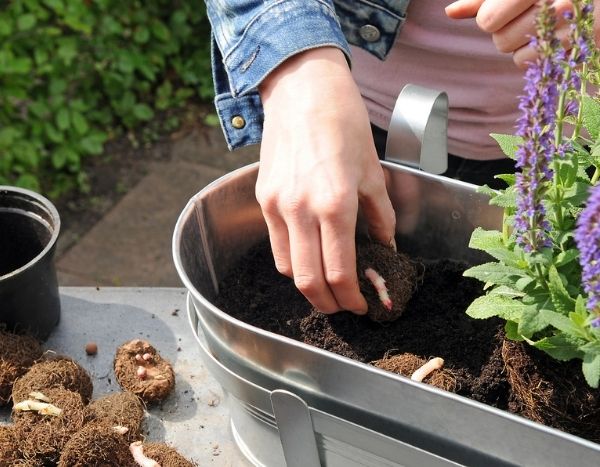
Plant your Splendide Alifra begonias in a shaded or lightly sunny position, in light and moist soil, rich in humus. Begonias dislike overly heavy soils; lighten it if necessary with sand. Plant after the last frosts, one per pot of about twenty centimetres, or spaced 25 cm apart in open ground. Position the tuber with the concave (hollow) part facing upwards, then cover with 5 cm of soil. As with Dahlias, you can accelerate their cycle by planting them as early as February, in sheltered pots, moving them outdoors in May.
Water very regularly. Apply begonia fertiliser at planting, then twice a month during the season. Remove faded flowers.
Dig up the bulbs before the first frosts, and store them in a little peat, in a dry and cool place, during winter. It is a shade plant that will grow better if it receives a few hours of sunlight per day. Additionally, it is quite susceptible to powdery mildew and nematodes and requires regular, but not excessive, watering.
Begonia is a frost-tender plant, so it cannot tolerate sub-zero temperatures. For this reason, it is often grown in containers that are easy to bring into a heated greenhouse or conservatory at the first chill. If it is in open ground, it is time to remove them and store them under cover until the following spring.
Planting period
Intended location
Care
Planting & care advice
-

-
-
-
-
-
-

-
This item has not been reviewed yet - be the first to leave a review about it.
Recently viewed products
Haven't found what you were looking for?
Hardiness is the lowest winter temperature a plant can endure without suffering serious damage or even dying. However, hardiness is affected by location (a sheltered area, such as a patio), protection (winter cover) and soil type (hardiness is improved by well-drained soil).

The flowering period indicated on our website applies to countries and regions located in USDA zone 8 (France, the United Kingdom, Ireland, the Netherlands, etc.)
It will vary according to where you live:- In zones 9 to 10 (Italy, Spain, Greece, etc.), flowering will occur about 2 to 4 weeks earlier.
- In zones 6 to 7 (Germany, Poland, Slovenia, and lower mountainous regions), flowering will be delayed by 2 to 3 weeks.
- In zone 5 (Central Europe, Scandinavia), blooming will be delayed by 3 to 5 weeks.
In temperate climates, pruning of spring-flowering shrubs (forsythia, spireas, etc.) should be done just after flowering.
Pruning of summer-flowering shrubs (Indian Lilac, Perovskia, etc.) can be done in winter or spring.
In cold regions as well as with frost-sensitive plants, avoid pruning too early when severe frosts may still occur.
The planting period indicated on our website applies to countries and regions located in USDA zone 8 (France, United Kingdom, Ireland, Netherlands).
It will vary according to where you live:
- In Mediterranean zones (Marseille, Madrid, Milan, etc.), autumn and winter are the best planting periods.
- In continental zones (Strasbourg, Munich, Vienna, etc.), delay planting by 2 to 3 weeks in spring and bring it forward by 2 to 4 weeks in autumn.
- In mountainous regions (the Alps, Pyrenees, Carpathians, etc.), it is best to plant in late spring (May-June) or late summer (August-September).
The harvesting period indicated on our website applies to countries and regions in USDA zone 8 (France, England, Ireland, the Netherlands).
In colder areas (Scandinavia, Poland, Austria...) fruit and vegetable harvests are likely to be delayed by 3-4 weeks.
In warmer areas (Italy, Spain, Greece, etc.), harvesting will probably take place earlier, depending on weather conditions.
The sowing periods indicated on our website apply to countries and regions within USDA Zone 8 (France, UK, Ireland, Netherlands).
In colder areas (Scandinavia, Poland, Austria...), delay any outdoor sowing by 3-4 weeks, or sow under glass.
In warmer climes (Italy, Spain, Greece, etc.), bring outdoor sowing forward by a few weeks.
Shipping country and language
Your country of residence may be:
Your country of residence is:
For a better user experience on our website, you can select:
Your shipping country:
-
 Austria
-
 Belgium
-
 Bosnia & Herzegovina
-
 Bulgaria
-
 Croatia
-
 Cyprus
-
 Czechia
-
 Denmark
-
 Estonia
-
 Finland
-
 France
-
 Germany
-
 Greece
-
 Hungary
-
 Iceland
-
 Ireland
-
 Italy
Italy
-
 Latvia
-
 Liechtenstein
-
 Lithuania
-
 Luxembourg
-
 Malta
Malta
-
 Netherlands
-
 Poland
-
 Portugal
-
 Romania
-
 Serbia
-
 Slovakia
-
 Slovenia
-
 Spain
Spain
-
 Sweden
-
 Switzerland
Language:
-
French
-
 English
-
Spanish
-
Italian
-
German
-
Portuguese
-
Dutch
-
Finnish
My Account
Hello
My wish lists
My cart
Log in / Register
Existing customer?
This form is protected by reCAPTCHA - the Google Privacy Policy and Terms of Service apply.
New customer?
Create an account to track your orders, access our customer service and, if you wish, make the most of our upcoming offers.