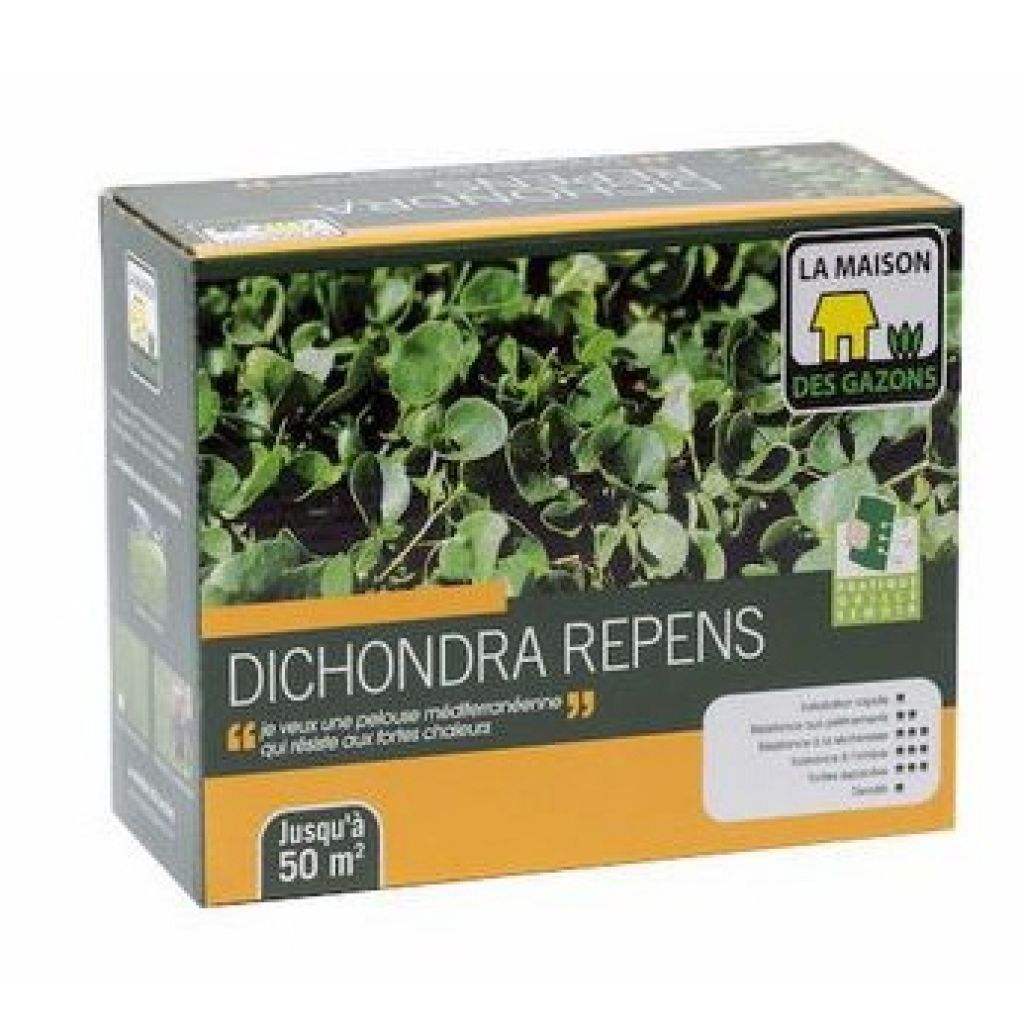
Dichondra repens Seeds
Dichondra repens Seeds
Dichondra repens
Kidney Weed, Pennywort, Dichondra
Back-to-school special offer!
Get €10 off for every €50 you spend! And get up to €40 off on a single order.
How does it work?
1. Shop your favourites
Add your favourite plants to your basket. For every €50 you spend (excluding delivery charges, store credit and the plastic-free option), you’ll receive a €10 voucher.
€50 spent = €10 voucher
€100 spent = €20 voucher
€150 spent = €30 voucher
€200 spent = €40 voucher
2. Place your order
Once your basket reaches one of the spending thresholds, place your order. You can even choose your delivery date!
3. Receive your voucher
As soon as your order has been shipped, you’ll receive an email containing your personal voucher code and its value.
4. Use it on your next order
Your voucher is valid for 90 days from the date you receive it. It can be used once only, on a new order worth at least the value of the voucher, excluding delivery charges.
Please note: Vouchers can be combined with other offers, but cannot be split or refunded.
Why not try an alternative variety in stock?
View all →
Available in 1 sizes

Available in 1 sizes

Available in 1 sizes

Available in 1 sizes
Available in 2 sizes
Available in 1 sizes

Available in 1 sizes

Available in 1 sizes

Available in 1 sizes
Available in 2 sizes
This plant carries a 6 months recovery warranty
More information
We guarantee the quality of our plants for a full growing cycle, and will replace at our expense any plant that fails to recover under normal climatic and planting conditions.
Would this plant suit my garden?
Set up your Plantfit profile →
Description
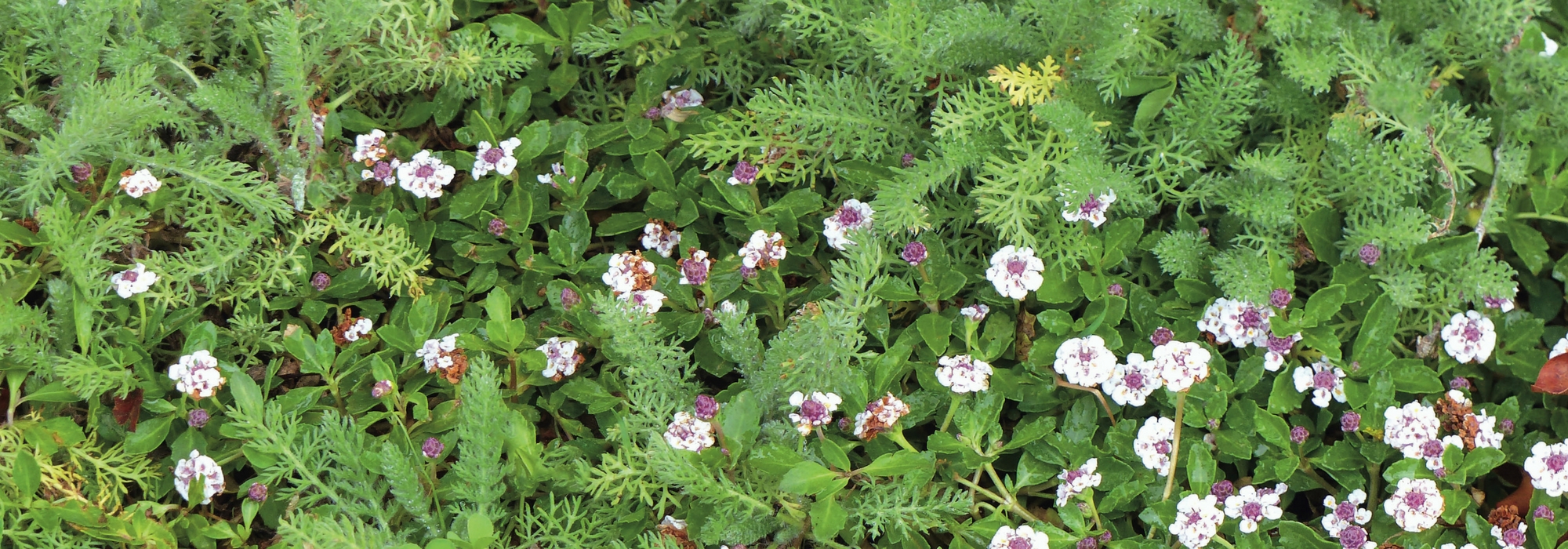
Dichondra repens, sometimes called creeping Dichondra, is a small perennial plant that forms a dense ground cover, making it one of the best ground covers for partial shade or shade. It can tolerate drought and salty soils. Its small round leaves are a beautiful fresh green colour and persist in mild climates, but are burned by frost below -8°C (17.6°F). The root system can withstand short frosts of around -10/-12°C (14/10.4°F). Remarkable at the base of hedges or shrub or perennial beds, very useful in the gaps between paving stones, Dichondra repens does not require mowing and is a great alternative to grass in shaded and lightly trafficked areas of the garden, on small surfaces.
Dichondra creeping belongs to the family of Convolvulaceae, just like bindweeds and morning glories. It is native to Australia and New Zealand, but has naturalized in Texas, California, New Mexico, Northwest India, South Japan, and China. Dichondra is a perennial plant with rather slow growth. It develops long, hairy, and highly branched stems that root at each node. This characteristic allows it to colonize the surface of the soil. The thickness of the carpet depends on the exposure and the soil that hosts the plant: in the sun and in dry soil, its thickness will not exceed 3 to 5cm (1 to 2in). In shade and in moist soil, the stems elongate and the leaves are larger, with the plant reaching a height of 15cm (6in). A single plant can cover an area of 50 to 60cm (20 to 24in) in diameter, or even more. The stems are covered with very small leaves, more or less evergreen in winter, round, 0.5 to 2.50cm (0 to 1in) long, bean-shaped, often bending at the central vein. Very tightly packed together, they form a very dense, regular carpet, with a very fresh and shiny green colour. While it is sensitive to heavy frosts and excessive trampling, Dichondra repens has exceptional longevity. In case of pronounced summer drought, the foliage dries up and the plant eventually disappears.
Often used as an alternative to grass in moderately trafficked areas, Dichondra repens works wonders in dry shade, where few plants are willing to grow. To stay beautiful, it still requires regular weeding and watering that varies depending on the region, which limits its use to small areas (50 to 100 m²). It can be used alone or mixed with other ground cover plants: in the sun, it pairs well with yarrows (Achillea crithmifolia) and Phyla nodiflora. In shade, it can be paired, for example, with Soleirolia or Glechoma hederacea. An annual mowing in October is sufficient. It can also be planted in mass at the edge of pathways or at the base of perennials and shrubs, on slopes.
Composition:
- 100% Dichondra repens
Usage and dosage:
- 0.5kg box: approximately 50m²
- Sowing dose: 10g per m²
Report an error about the product description
Flowering
Foliage
Plant habit
Botanical data
Dichondra
repens
Convolvulaceae
Kidney Weed, Pennywort, Dichondra
Australia
Planting and care
Sowing:
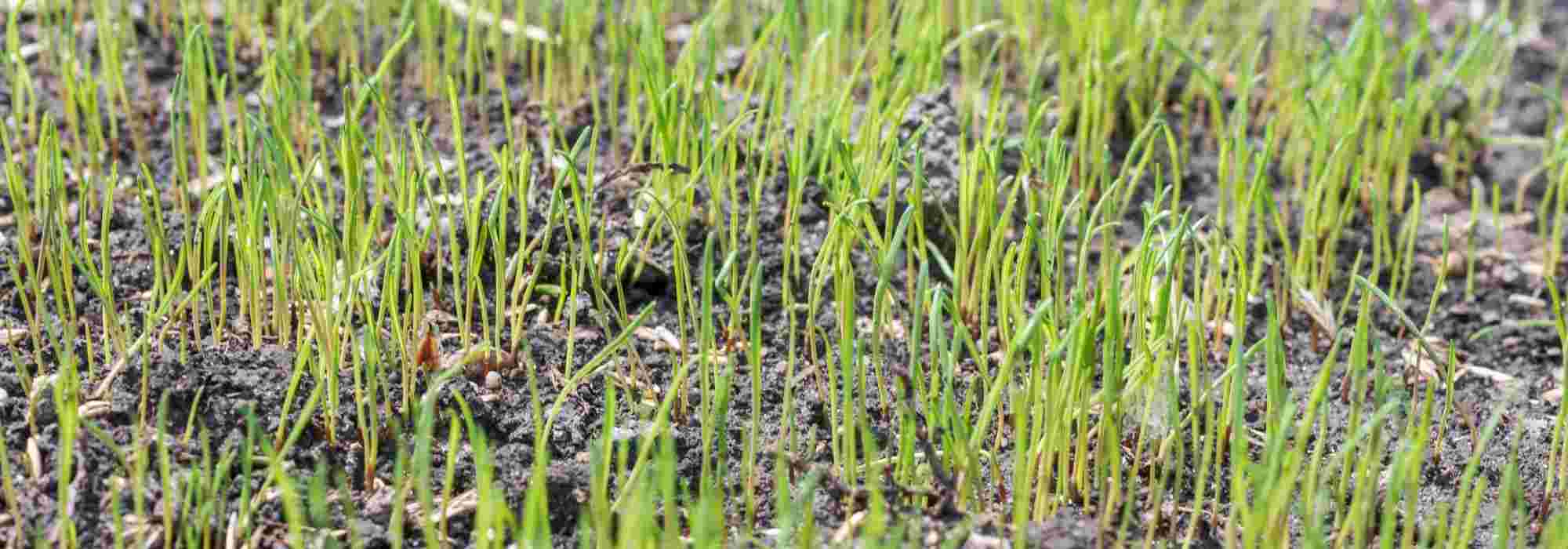
Sow directly in place in full sun, in March-April, in a well-prepared soil, free of weeds, refined and raked. Sow by broadcasting on the soil surface and lightly rake to cover the seeds. Optionally, pass the roller to ensure good adhesion of the seeds to the ground. Regularly water with a fine rain to keep the soil slightly moist until germination if it doesn't rain.
Dosage:
- 1 box of 0.5kg for 50m², approximately 10g/m²
Dichondra repens can replace lawn in moderately trafficked and not too large areas, as it requires regular maintenance and watering, depending on the regions. Sow Dichondra repens in all exposures. In shade, the foliage will be more developed. This plant needs a light, well-drained soil. If your soil is heavy, clayey and compact, incorporate river sand and compost and work the mixture thoroughly. Preferring humus-rich and compost-rich soils, the plant tolerates the presence of limestone well. Dichondra tolerates rather dry soils and dislikes stagnant moisture as well as daily watering in summer. Adapt the watering frequency to your climate: in hot regions, one to two waterings per week are often necessary to maintain a beautiful appearance of the carpet. Elsewhere, water as soon as the plant requires it. The first year of planting, careful manual weeding is essential until complete coverage of the soil. Afterwards, regular manual weeding, up to 6 times a year, is necessary to maintain a neat appearance of the carpet. Optionally, apply slow-release lawn fertilizer once or twice a year. An annual mowing is generally sufficient, preferably in October.
Sowing period
Intended location
Planting & care advice
-
-

-

-
-

-

-

-
This item has not been reviewed yet - be the first to leave a review about it.
Recently viewed products
Haven't found what you were looking for?
Hardiness is the lowest winter temperature a plant can endure without suffering serious damage or even dying. However, hardiness is affected by location (a sheltered area, such as a patio), protection (winter cover) and soil type (hardiness is improved by well-drained soil).

The flowering period indicated on our website applies to countries and regions located in USDA zone 8 (France, the United Kingdom, Ireland, the Netherlands, etc.)
It will vary according to where you live:- In zones 9 to 10 (Italy, Spain, Greece, etc.), flowering will occur about 2 to 4 weeks earlier.
- In zones 6 to 7 (Germany, Poland, Slovenia, and lower mountainous regions), flowering will be delayed by 2 to 3 weeks.
- In zone 5 (Central Europe, Scandinavia), blooming will be delayed by 3 to 5 weeks.
In temperate climates, pruning of spring-flowering shrubs (forsythia, spireas, etc.) should be done just after flowering.
Pruning of summer-flowering shrubs (Indian Lilac, Perovskia, etc.) can be done in winter or spring.
In cold regions as well as with frost-sensitive plants, avoid pruning too early when severe frosts may still occur.
The planting period indicated on our website applies to countries and regions located in USDA zone 8 (France, United Kingdom, Ireland, Netherlands).
It will vary according to where you live:
- In Mediterranean zones (Marseille, Madrid, Milan, etc.), autumn and winter are the best planting periods.
- In continental zones (Strasbourg, Munich, Vienna, etc.), delay planting by 2 to 3 weeks in spring and bring it forward by 2 to 4 weeks in autumn.
- In mountainous regions (the Alps, Pyrenees, Carpathians, etc.), it is best to plant in late spring (May-June) or late summer (August-September).
The harvesting period indicated on our website applies to countries and regions in USDA zone 8 (France, England, Ireland, the Netherlands).
In colder areas (Scandinavia, Poland, Austria...) fruit and vegetable harvests are likely to be delayed by 3-4 weeks.
In warmer areas (Italy, Spain, Greece, etc.), harvesting will probably take place earlier, depending on weather conditions.
The sowing periods indicated on our website apply to countries and regions within USDA Zone 8 (France, UK, Ireland, Netherlands).
In colder areas (Scandinavia, Poland, Austria...), delay any outdoor sowing by 3-4 weeks, or sow under glass.
In warmer climes (Italy, Spain, Greece, etc.), bring outdoor sowing forward by a few weeks.
Shipping country and language
Your country of residence may be:
Your country of residence is:
For a better user experience on our website, you can select:
Your shipping country:
-
 Austria
-
 Belgium
-
 Bosnia & Herzegovina
-
 Bulgaria
-
 Croatia
-
 Cyprus
-
 Czechia
-
 Denmark
-
 Estonia
-
 Finland
-
 France
-
 Germany
-
 Greece
-
 Hungary
-
 Iceland
-
 Ireland
-
 Italy
Italy
-
 Latvia
-
 Liechtenstein
-
 Lithuania
-
 Luxembourg
-
 Malta
Malta
-
 Netherlands
-
 Poland
-
 Portugal
-
 Romania
-
 Serbia
-
 Slovakia
-
 Slovenia
-
 Spain
Spain
-
 Sweden
-
 Switzerland
Language:
-
French
-
 English
-
Spanish
-
Italian
-
German
-
Portuguese
-
Dutch
-
Finnish
My Account
Hello
My wish lists
My cart
Log in / Register
Existing customer?
This form is protected by reCAPTCHA - the Google Privacy Policy and Terms of Service apply.
New customer?
Create an account to track your orders, access our customer service and, if you wish, make the most of our upcoming offers.