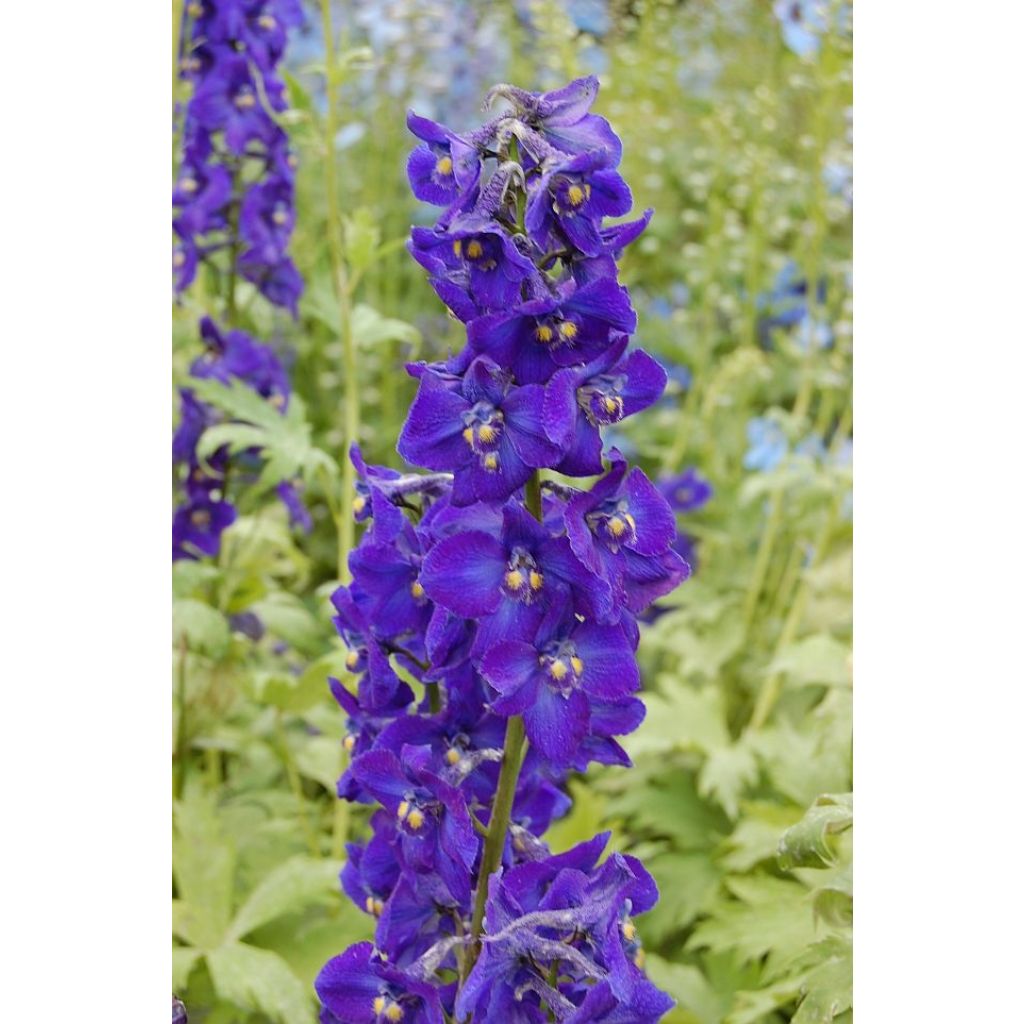
Delphinium Kleine Nachtmusik - Pied d'Alouette vivace, Dauphinelle
Delphinium Kleine Nachtmusik - Pied d'Alouette vivace, Dauphinelle
Delphinium Kleine Nachtmusik
Back-to-school special offer!
Get €10 off for every €50 you spend! And get up to €40 off on a single order.
How does it work?
1. Shop your favourites
Add your favourite plants to your basket. For every €50 you spend (excluding delivery charges, store credit and the plastic-free option), you’ll receive a €10 voucher.
€50 spent = €10 voucher
€100 spent = €20 voucher
€150 spent = €30 voucher
€200 spent = €40 voucher
2. Place your order
Once your basket reaches one of the spending thresholds, place your order. You can even choose your delivery date!
3. Receive your voucher
As soon as your order has been shipped, you’ll receive an email containing your personal voucher code and its value.
4. Use it on your next order
Your voucher is valid for 90 days from the date you receive it. It can be used once only, on a new order worth at least the value of the voucher, excluding delivery charges.
Please note: Vouchers can be combined with other offers, but cannot be split or refunded.
Why not try an alternative variety in stock?
View all →
Available in 0 sizes
Available in 0 sizes
Available in 3 sizes

Available in 2 sizes
Available in 2 sizes
Available in 0 sizes
Available in 2 sizes

Available in 1 sizes

Available in 2 sizes
Available in 2 sizes
This plant carries a 12 months recovery warranty
More information
We guarantee the quality of our plants for a full growing cycle, and will replace at our expense any plant that fails to recover under normal climatic and planting conditions.
Would this plant suit my garden?
Set up your Plantfit profile →
Description
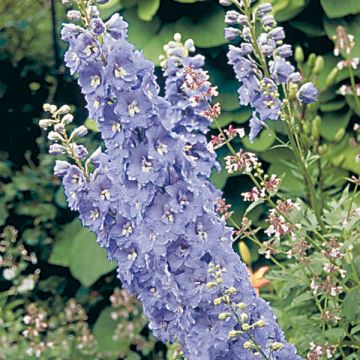
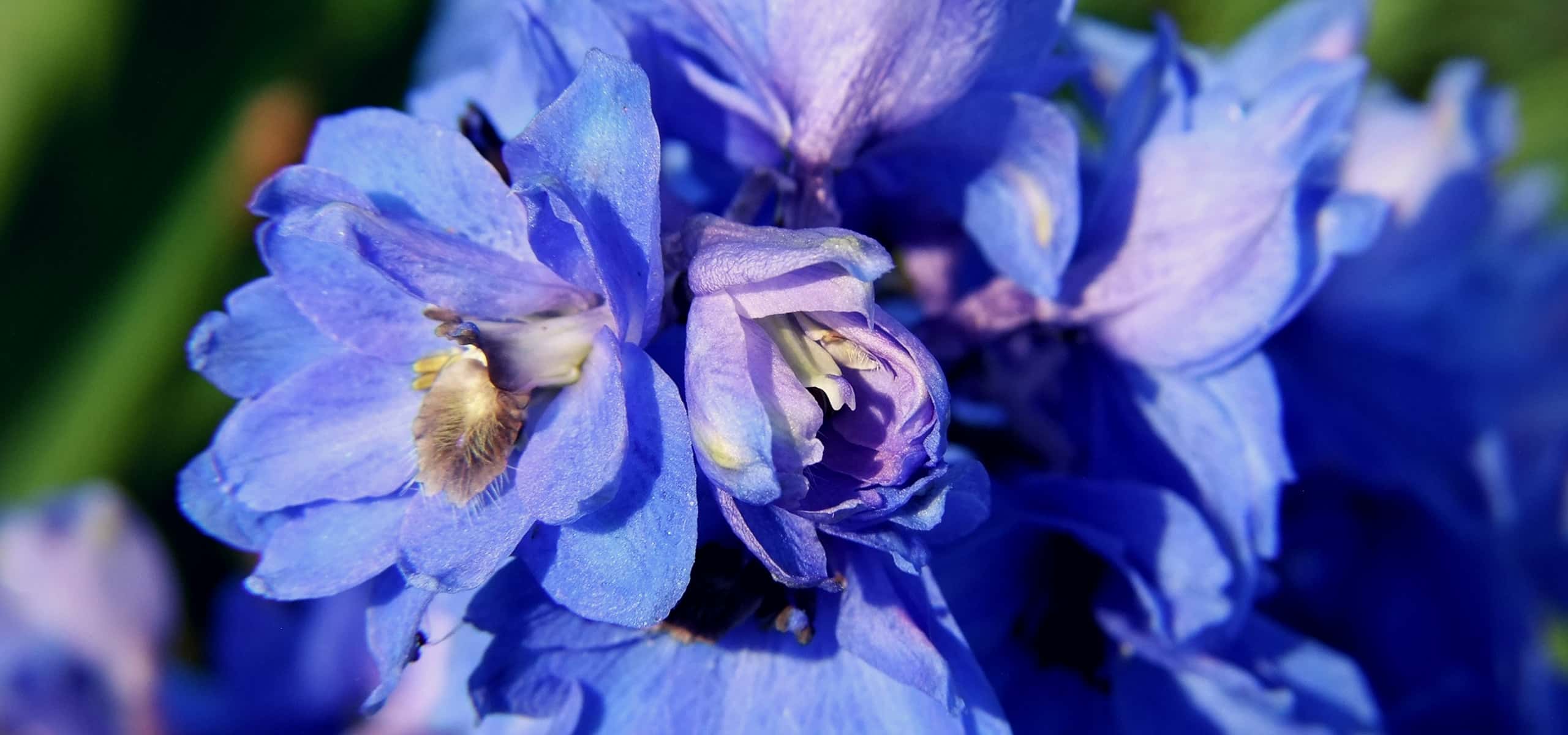
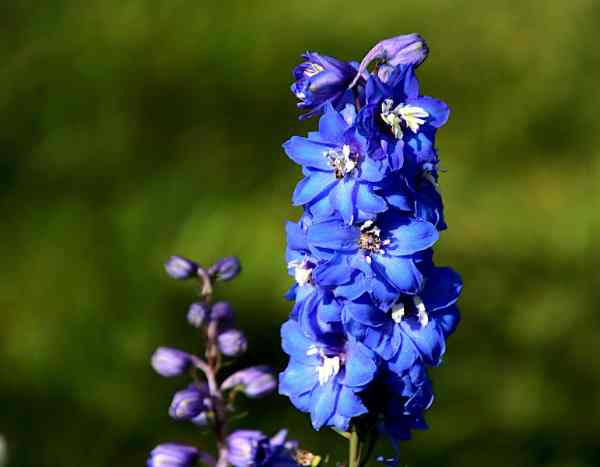
The Delphinium (Belladonna Group) ‘Kleine Nachtmusik’ is an early creation by Karl Foerster, prized for the depth of its colour and the lightness of its flowering. In early summer, its numerous violet flowers appear, as if suspended above a fine, deeply cut leafy mound. Wide open, they attract pollinating insects and provide cut flower arrangements that are less formal than those of the tall larkspurs. This hardy variety will express all its charm in herbaceous borders and among roses, with white or pink flowers.
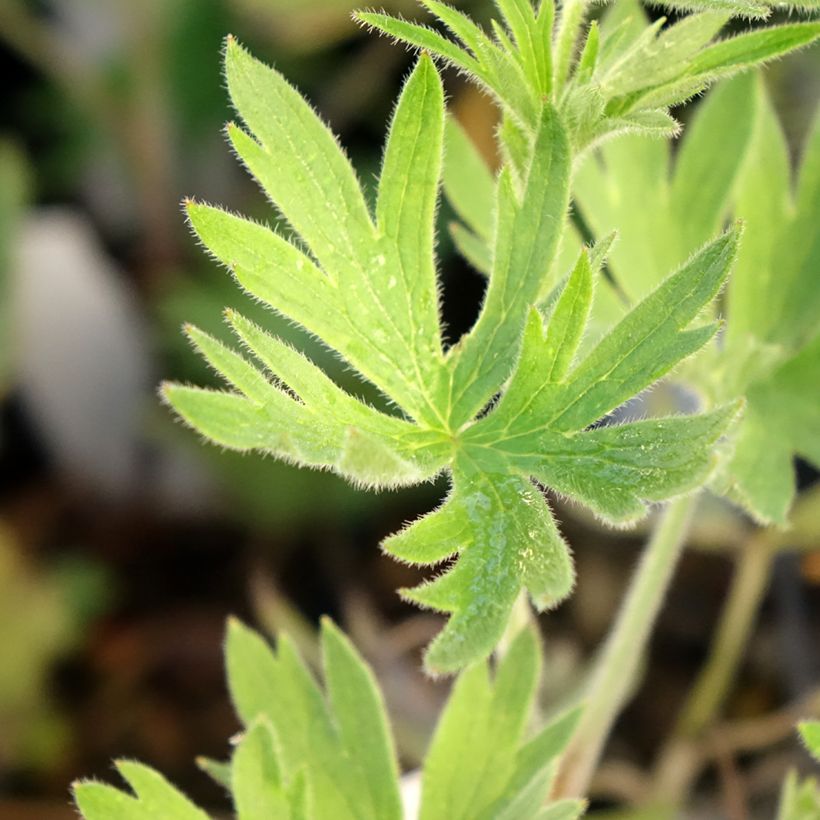
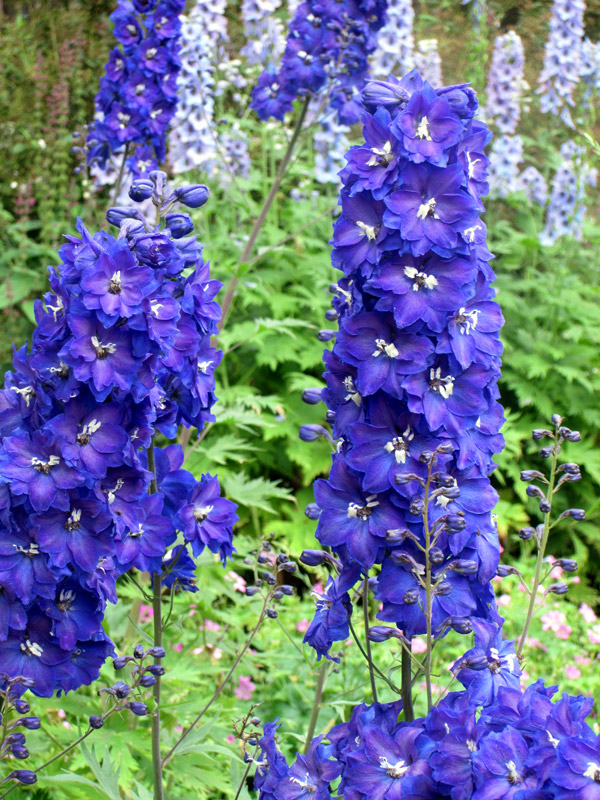
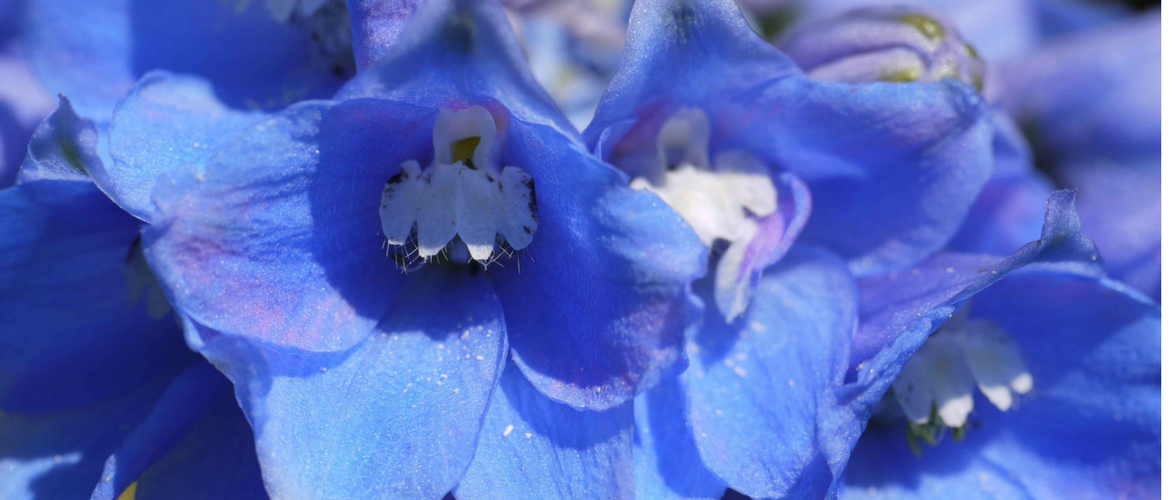
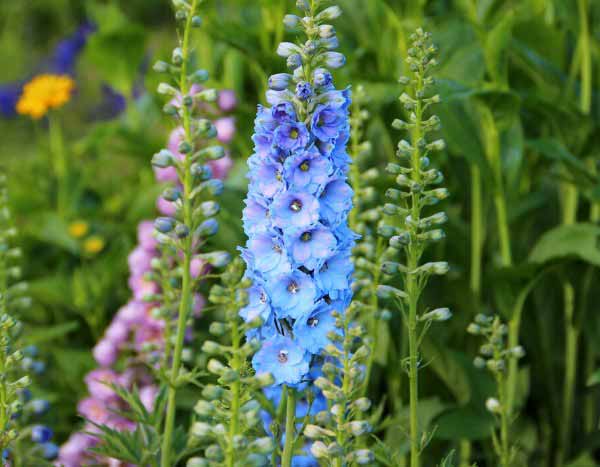
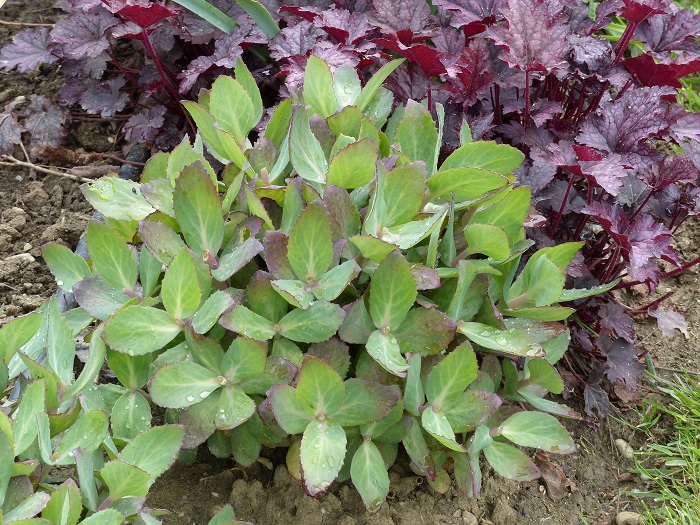
This cultivar belongs to the family of the Ranunculaceae. It is a herbaceous perennial plant: its stump lives for several years, but its stems and foliage disappear during the winter before regrowing in spring. The Belladonna Group brings together hybrid Delphiniums derived mainly from lines of Delphinium elatum and D. grandiflorum. This German variety ‘Kleine Nachtmusik’ was raised by Karl Foerster and introduced in 1942. Its name translates as "Little Night Music". The plant forms an upright clump 80 to 100 cm tall and 40 to 50 cm wide. Several stems arise from the stump, branch in their upper part and bear loose clusters of flowers, with lateral floriferous branching. The medium green leaves are palmate and deeply cut into dentate lobes; they are present mainly at the base of the plant and on the lower part of the stems. Flowering takes place in June and July. Numerous single, cup-shaped flowers open along the flower spikes. Each measures about 4 cm in diameter and is formed of five sepals; the upper sepal extends backwards into a spur, which is the origin of the name larkspur. Their colour ranges between dark violet and violet-blue depending on the light. The open flowers are accessible to bees and other pollinating insects. Pruning carried out after the first flowering encourages the production of new stems and a second flowering in late summer or early autumn. The stump of this delphinium withstands harsh winters, down to –25 °C in well-drained soil. Soil that is too dry, insufficiently light exposure or young plants that are too closely spaced encourage the appearance of powdery mildew on delphiniums of the Belladonna Group. All parts are toxic if ingested.
Shorter than the tall Elatum delphiniums, this larkspur ‘Kleine Nachtmusik’ blends easily among perennial plants and bush roses. You can plant alongside it the Delphinium Belladonna ‘Moerheimii’, with white flowers, the pastel pink rose ‘Bonica’ , the Alchemilla mollis and the masterwort ‘Roma’. Their white, anise green and soft pink colours form a beautiful combination with its violet flowers. Delphiniums also provide excellent cut flowers, to be picked as soon as the first buds open.
Note: from March to September, the stems of our delphiniums are pruned short to encourage better branching of the stump and to obtain optimal root growth. This pruning also prevents the stems from breaking during transport.
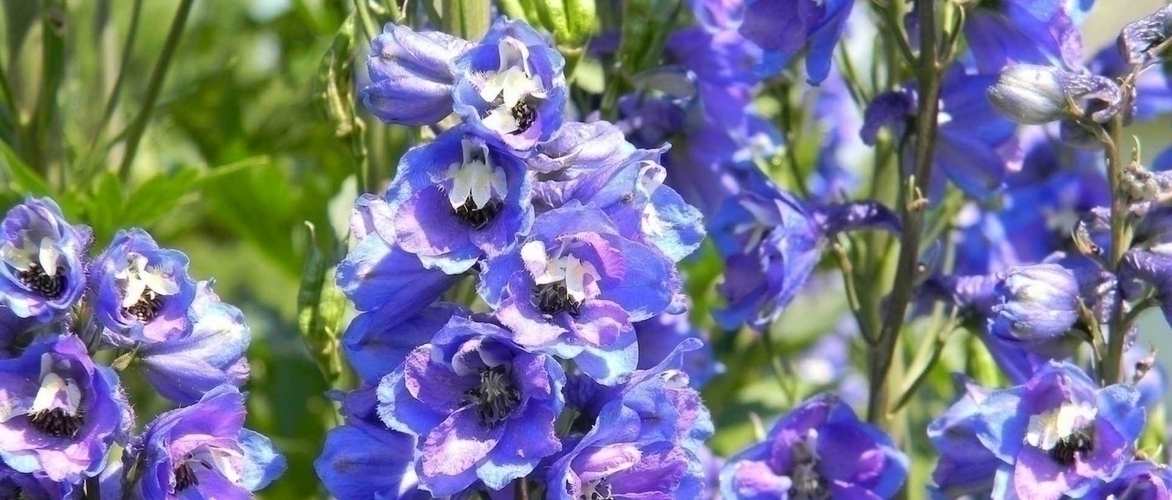
Delphinium Kleine Nachtmusik - Pied d'Alouette vivace, Dauphinelle in pictures
Flowering
Foliage
Plant habit
Safety measures
Botanical data
Delphinium
Kleine Nachtmusik
Ranunculaceae
Delphinium × belladonna ‘Kleine Nachtmusik’
Cultivar or hybrid
ingestion
Cette plante est toxique si elle est ingérée volontairement ou involontairement.
Ne la plantez pas là où de jeunes enfants peuvent évoluer, et lavez-vous les mains après l'avoir manipulée.
Pensez à conserver l'étiquette de la plante, à la photographier ou à noter son nom, afin de faciliter le travail des professionnels de santé.
Davantage d'informations sur https://plantes-risque.info
Planting and care
Plant Delphinium ‘Kleine Nachtmusik’ from February to April or from September to November, preferably in full sun, in a spot sheltered from the wind. Work the soil deeply and incorporate mature compost. In heavy soil, improve the drainage and avoid positions where water stagnates in winter. The soil should remain rich and moist during growth, without being waterlogged. Water regularly in the first summer, then also water established plants during dry spells. A 5 cm mulch of compost applied in spring helps to retain moisture at the base of the plant. Protect young shoots from slugs. Install a discreet support before the stems lengthen if the border is a little exposed to the wind. After the main flowering, prune the spent flower stems close to the base, add a little compost and water to encourage a second flush. Divide old clumps in spring every three to five years if they lose vigour.
Planting period
Intended location
Care
Planting & care advice
-
-
-
-
-
-
-
-
This item has not been reviewed yet - be the first to leave a review about it.
Recently viewed products
Haven't found what you were looking for?
Hardiness is the lowest winter temperature a plant can endure without suffering serious damage or even dying. However, hardiness is affected by location (a sheltered area, such as a patio), protection (winter cover) and soil type (hardiness is improved by well-drained soil).

The flowering period indicated on our website applies to countries and regions located in USDA zone 8 (France, the United Kingdom, Ireland, the Netherlands, etc.)
It will vary according to where you live:- In zones 9 to 10 (Italy, Spain, Greece, etc.), flowering will occur about 2 to 4 weeks earlier.
- In zones 6 to 7 (Germany, Poland, Slovenia, and lower mountainous regions), flowering will be delayed by 2 to 3 weeks.
- In zone 5 (Central Europe, Scandinavia), blooming will be delayed by 3 to 5 weeks.
In temperate climates, pruning of spring-flowering shrubs (forsythia, spireas, etc.) should be done just after flowering.
Pruning of summer-flowering shrubs (Indian Lilac, Perovskia, etc.) can be done in winter or spring.
In cold regions as well as with frost-sensitive plants, avoid pruning too early when severe frosts may still occur.
The planting period indicated on our website applies to countries and regions located in USDA zone 8 (France, United Kingdom, Ireland, Netherlands).
It will vary according to where you live:
- In Mediterranean zones (Marseille, Madrid, Milan, etc.), autumn and winter are the best planting periods.
- In continental zones (Strasbourg, Munich, Vienna, etc.), delay planting by 2 to 3 weeks in spring and bring it forward by 2 to 4 weeks in autumn.
- In mountainous regions (the Alps, Pyrenees, Carpathians, etc.), it is best to plant in late spring (May-June) or late summer (August-September).
The harvesting period indicated on our website applies to countries and regions in USDA zone 8 (France, England, Ireland, the Netherlands).
In colder areas (Scandinavia, Poland, Austria...) fruit and vegetable harvests are likely to be delayed by 3-4 weeks.
In warmer areas (Italy, Spain, Greece, etc.), harvesting will probably take place earlier, depending on weather conditions.
The sowing periods indicated on our website apply to countries and regions within USDA Zone 8 (France, UK, Ireland, Netherlands).
In colder areas (Scandinavia, Poland, Austria...), delay any outdoor sowing by 3-4 weeks, or sow under glass.
In warmer climes (Italy, Spain, Greece, etc.), bring outdoor sowing forward by a few weeks.
Shipping country and language
Your country of residence may be:
Your country of residence is:
For a better user experience on our website, you can select:
Your shipping country:
-
 Austria
-
 Belgium
-
 Bosnia & Herzegovina
-
 Bulgaria
-
 Croatia
-
 Cyprus
-
 Czechia
-
 Denmark
-
 Estonia
-
 Finland
-
 France
-
 Germany
-
 Greece
-
 Hungary
-
 Iceland
-
 Ireland
-
 Italy
Italy
-
 Latvia
-
 Liechtenstein
-
 Lithuania
-
 Luxembourg
-
 Malta
Malta
-
 Netherlands
-
 Poland
-
 Portugal
-
 Romania
-
 Serbia
-
 Slovakia
-
 Slovenia
-
 Spain
Spain
-
 Sweden
-
 Switzerland
Language:
-
French
-
 English
-
Spanish
-
Italian
-
German
-
Portuguese
-
Dutch
-
Finnish
My Account
Hello
My wish lists
My cart
Log in / Register
Existing customer?
This form is protected by reCAPTCHA - the Google Privacy Policy and Terms of Service apply.
New customer?
Create an account to track your orders, access our customer service and, if you wish, make the most of our upcoming offers.