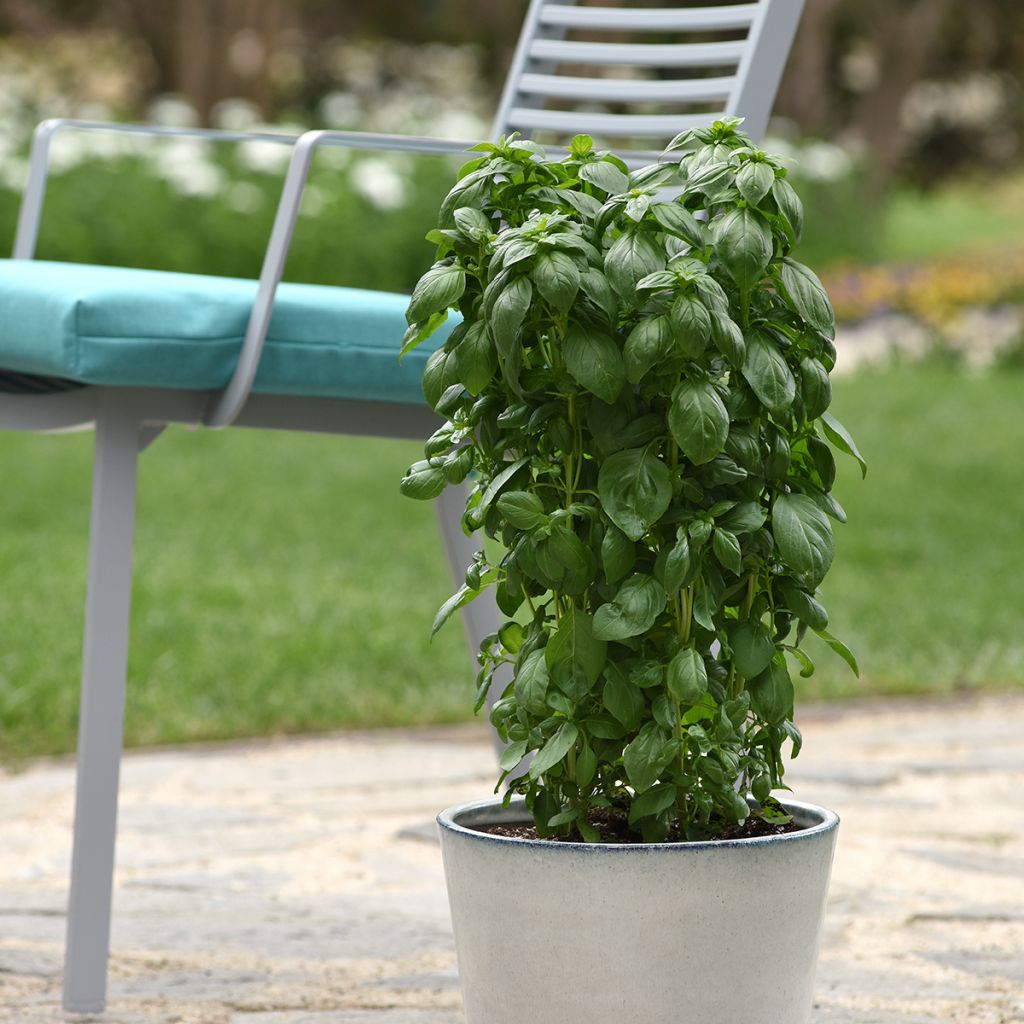
Basil Everleaf® Emerald Towers - Ocimum basilicum
Basil Everleaf® Emerald Towers - Ocimum basilicum
Ocimum basilicum Everleaf® Emerald Tower
Basil
Back-to-school special offer!
Get €10 off for every €50 you spend! And get up to €40 off on a single order.
How does it work?
1. Shop your favourites
Add your favourite plants to your basket. For every €50 you spend (excluding delivery charges, store credit and the plastic-free option), you’ll receive a €10 voucher.
€50 spent = €10 voucher
€100 spent = €20 voucher
€150 spent = €30 voucher
€200 spent = €40 voucher
2. Place your order
Once your basket reaches one of the spending thresholds, place your order. You can even choose your delivery date!
3. Receive your voucher
As soon as your order has been shipped, you’ll receive an email containing your personal voucher code and its value.
4. Use it on your next order
Your voucher is valid for 90 days from the date you receive it. It can be used once only, on a new order worth at least the value of the voucher, excluding delivery charges.
Please note: Vouchers can be combined with other offers, but cannot be split or refunded.
Home or relay delivery (depending on size and destination)
Important: You may be charged customs duties by your country’s customs authorities upon delivery.
Schedule delivery date
and select date in basket
This plant carries a 6 months recovery warranty
More information
We guarantee the quality of our plants for a full growing cycle, and will replace at our expense any plant that fails to recover under normal climatic and planting conditions.
Description
Everleaf Emerald Tower Basil is an aromatic variety highly prized for its upright and compact habit, well-suited to small spaces, pot cultivation on balconies, or planting in tight rows in the vegetable garden. Its particularly late flowering allows for prolonged harvests throughout the summer season. Featuring large, glossy dark green leaves with an intense Genovese basil fragrance, it is ideal for enhancing Mediterranean dishes, sauces, or infusions. It is resistant to bolting and retains its flavour longer than classic varieties.
Everleaf Emerald Tower Basil stands out for its exceptional upright growth, dense foliage, and very late flowering, which allows for a prolonged harvest without premature bolting. It also shows good natural resistance to fungal diseases such as botrytis, and adapts equally well to pot cultivation or open ground. This variety will delight gardeners looking for a vigorous, structured, and decorative basil that is also very productive. The flowers are rich in eucalyptol and eugenol, to add to its soothing, antibacterial, and relaxing virtues.
In the garden, Everleaf Emerald Tower Basil prefers rich, humus-bearing, and well-drained soil. It dislikes cold and stagnant moisture and is best grown in full sun, sheltered from the wind. Harvesting can begin between 6 to 10 weeks after sowing and continue all summer. To harvest, simply cut the leaves by hand or with scissors as soon as they release an intense fragrance. In pots, the plant requires regular watering, but not too much, avoiding wetting the foliage. On the balcony, you can pair it with cherry tomato ‘Balconi Red F1’, dwarf sweet pepper ‘Redskin F1’, and Rocky (mini) F1 cucumber.
The use of basil in the Mediterranean basin dates back to antiquity. For the Romans, this plant was the emblem of lovers, whereas for the Greeks, it symbolised hatred and misfortune! Basil is a condiment plant widely used to flavour and enhance dishes. Rich in essential oil, it possesses soothing, anti-inflammatory, and stimulating properties.
Everleaf Emerald Tower Basil develops a powerful and traditional flavour, ideal for elevating Mediterranean dishes, salads, sauces, and of course, the famous pesto. It pairs wonderfully with tomatoes, fresh cheeses, summer fruits, or grilled meats. For optimal preservation, keep the stems for a few days in a glass of water in the refrigerator. It can also be dried, but this reduces its fragrance. In the vegetable garden, grow it with tomatoes: in addition to enriching your dishes, it naturally protects them from nematodes, while creating a beautiful harmony in the beds.
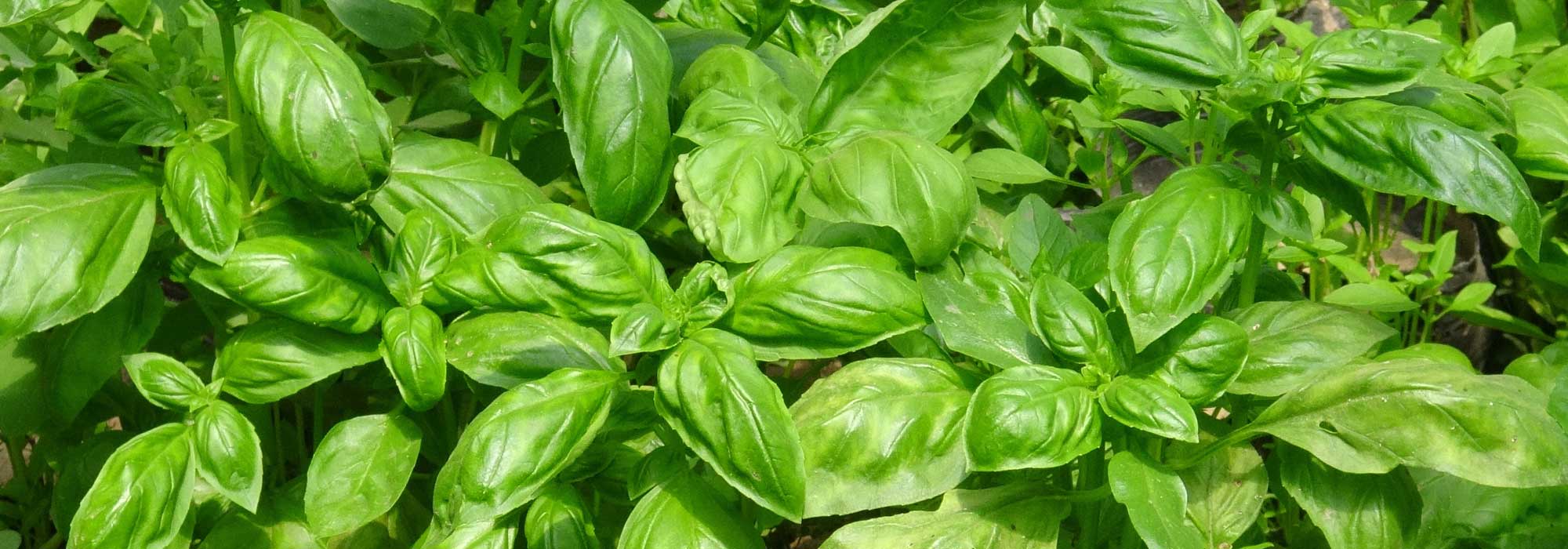
Basil Everleaf® Emerald Towers - Ocimum basilicum in pictures
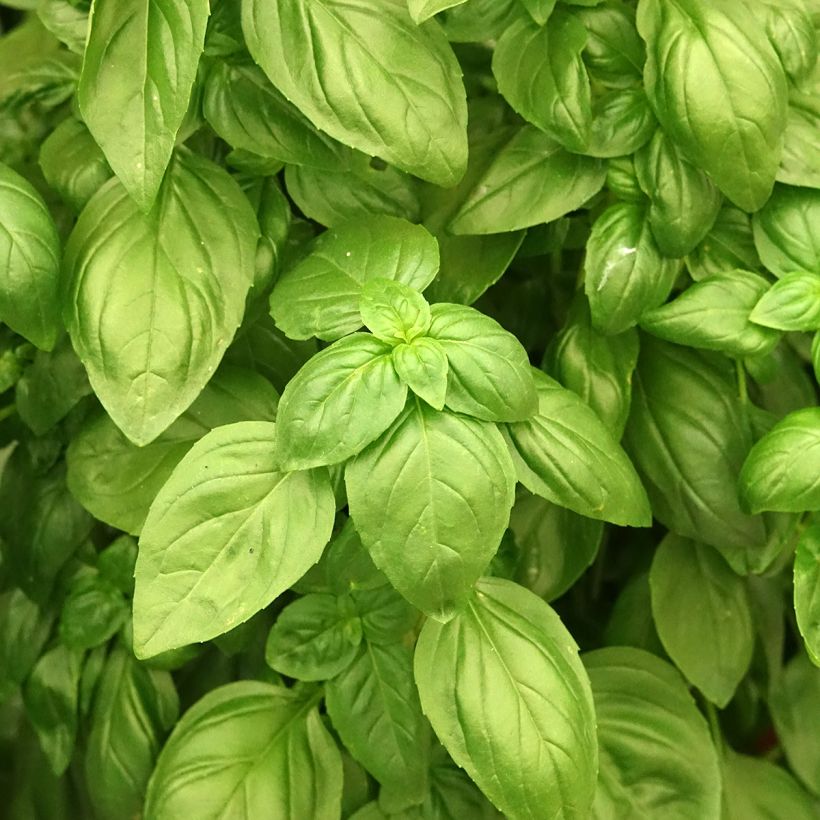
Harvest
Plant habit
Foliage
Botanical data
Ocimum
basilicum
Everleaf® Emerald Tower
Lamiaceae
Basil
Cultivar or hybrid
Perennial
Planting and care
Sowing and care: 'Everleaf Emerald Tower' basil likes moist, loose soil, rich in humus. This plant also requires a partially shaded position to thrive. Basil is sensitive to direct sun exposure, as this tends to scorch the leaves. Basil is typically grown in the kitchen garden, but it adapts very well to being grown in a pot in a conservatory or on a balcony.
Sowing: sow in spring, from February under cover or under a frame and from April in open ground until early summer. Sow in a very well-spaced line in a flat furrow about ten centimetres wide and 2 cm deep. The rows should be 25 cm apart. Cover the seeds with the soil removed from along the furrow and then water. Germination takes between 10 to 15 days. As soon as the first young plants appear, thin lightly. The more you stagger the sowing, the longer the harvest period will be. You can sow the seeds in a pot to be replanted as soon as the young plant reaches 10 cm (4 to 6 leaves) in height. Basil can remain in a pot to be kept handy in the kitchen if it is well-lit.
When transplanting, space your young plants 20 cm apart in all directions.
Care: basil needs watering (or preventive mulching) when the soil dries out. It is a lack of water (water stress) that can cause basil to go to seed. Pinch off the flower spikes as soon as they appear, to encourage leaf production. Basil is susceptible to powdery mildew, grey mould and aphids. To combat moulds and powdery mildew, reduce watering and thin out the planting. You can treat the young plants against aphids with a water-olive oil mixture.
Seedlings
Care
Intended location
Planting & care advice
-
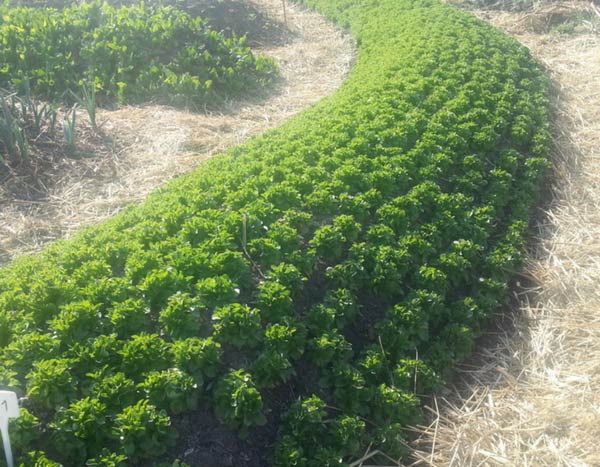
-
-
-
-

-

-
-

This item has not been reviewed yet - be the first to leave a review about it.
Recently viewed products
Haven't found what you were looking for?
Hardiness is the lowest winter temperature a plant can endure without suffering serious damage or even dying. However, hardiness is affected by location (a sheltered area, such as a patio), protection (winter cover) and soil type (hardiness is improved by well-drained soil).

The flowering period indicated on our website applies to countries and regions located in USDA zone 8 (France, the United Kingdom, Ireland, the Netherlands, etc.)
It will vary according to where you live:- In zones 9 to 10 (Italy, Spain, Greece, etc.), flowering will occur about 2 to 4 weeks earlier.
- In zones 6 to 7 (Germany, Poland, Slovenia, and lower mountainous regions), flowering will be delayed by 2 to 3 weeks.
- In zone 5 (Central Europe, Scandinavia), blooming will be delayed by 3 to 5 weeks.
In temperate climates, pruning of spring-flowering shrubs (forsythia, spireas, etc.) should be done just after flowering.
Pruning of summer-flowering shrubs (Indian Lilac, Perovskia, etc.) can be done in winter or spring.
In cold regions as well as with frost-sensitive plants, avoid pruning too early when severe frosts may still occur.
The planting period indicated on our website applies to countries and regions located in USDA zone 8 (France, United Kingdom, Ireland, Netherlands).
It will vary according to where you live:
- In Mediterranean zones (Marseille, Madrid, Milan, etc.), autumn and winter are the best planting periods.
- In continental zones (Strasbourg, Munich, Vienna, etc.), delay planting by 2 to 3 weeks in spring and bring it forward by 2 to 4 weeks in autumn.
- In mountainous regions (the Alps, Pyrenees, Carpathians, etc.), it is best to plant in late spring (May-June) or late summer (August-September).
The harvesting period indicated on our website applies to countries and regions in USDA zone 8 (France, England, Ireland, the Netherlands).
In colder areas (Scandinavia, Poland, Austria...) fruit and vegetable harvests are likely to be delayed by 3-4 weeks.
In warmer areas (Italy, Spain, Greece, etc.), harvesting will probably take place earlier, depending on weather conditions.
The sowing periods indicated on our website apply to countries and regions within USDA Zone 8 (France, UK, Ireland, Netherlands).
In colder areas (Scandinavia, Poland, Austria...), delay any outdoor sowing by 3-4 weeks, or sow under glass.
In warmer climes (Italy, Spain, Greece, etc.), bring outdoor sowing forward by a few weeks.
Shipping country and language
Your country of residence may be:
Your country of residence is:
For a better user experience on our website, you can select:
Your shipping country:
-
 Austria
-
 Belgium
-
 Bosnia & Herzegovina
-
 Bulgaria
-
 Croatia
-
 Cyprus
-
 Czechia
-
 Denmark
-
 Estonia
-
 Finland
-
 France
-
 Germany
-
 Greece
-
 Hungary
-
 Iceland
-
 Ireland
-
 Italy
Italy
-
 Latvia
-
 Liechtenstein
-
 Lithuania
-
 Luxembourg
-
 Malta
Malta
-
 Netherlands
-
 Poland
-
 Portugal
-
 Romania
-
 Serbia
-
 Slovakia
-
 Slovenia
-
 Spain
Spain
-
 Sweden
-
 Switzerland
Language:
-
French
-
 English
-
Spanish
-
Italian
-
German
-
Portuguese
-
Dutch
-
Finnish
My Account
Hello
My wish lists
My cart
Log in / Register
Existing customer?
This form is protected by reCAPTCHA - the Google Privacy Policy and Terms of Service apply.
New customer?
Create an account to track your orders, access our customer service and, if you wish, make the most of our upcoming offers.