





























Downy mildew: identification, treatment, prevention
Everything you need to know about this fungal disease affecting many plants
Contents
If there is one recurring disease in vegetable gardens and ornamental gardens, it is downy mildew. This fungal disease often attacks the most commonly grown plants and can quickly wreak havoc, especially in wet years. Its rapid spread, the damage it causes to leaves, stems and fruits, together with its impact on crop health, make it a feared threat. For a beginner gardener or even a more experienced gardener, spotting downy mildew and acting in time can seem tricky: should an infected plant be pulled up? Which natural remedy should be used? And above all, how can this disease be prevented from returning each season?
Discover everything you need to know about downy mildew, from identifying the first symptoms to natural treatments, not forgetting the preventive measures to limit the impact of this seasonal disease.

What is downy mildew?
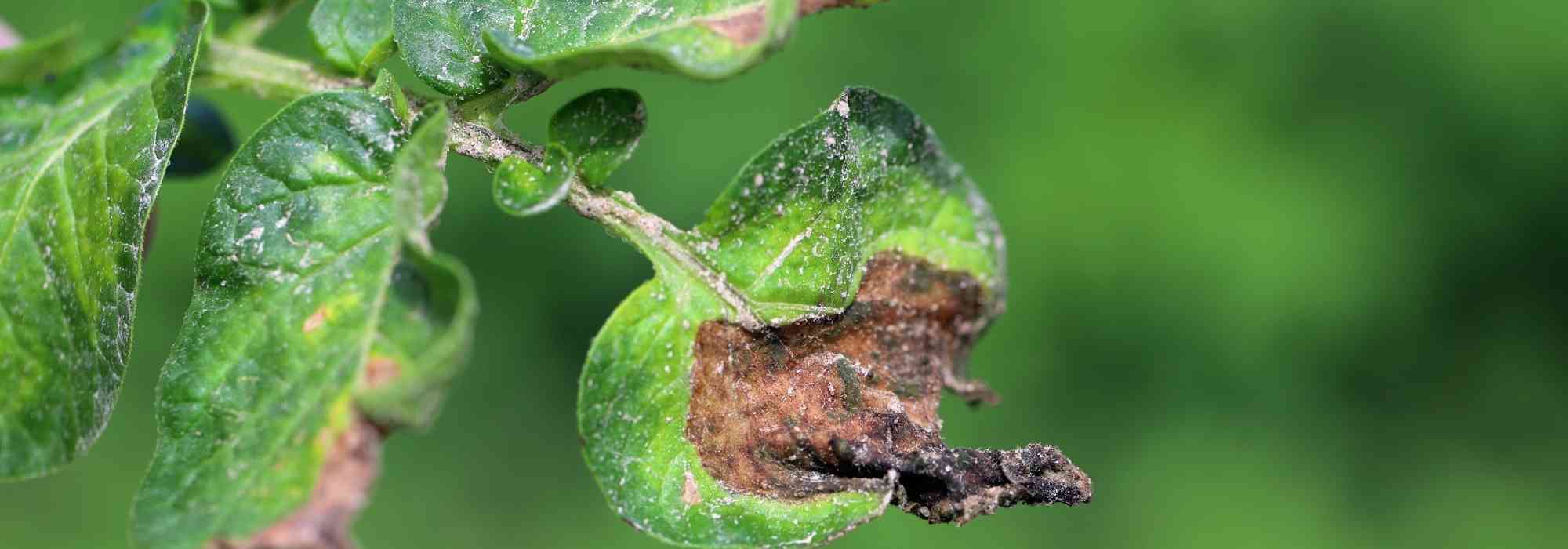
Downy mildew is a fungal or cryptogamous disease, caused by several parasitic fungi of the genera Phytophthora, Peronospora or Plasmopara. Different species of fungi responsible for downy mildew are generally specific to their host plants. For example, Phytophthora infestans develops mainly on Solanaceae (tomatoes, potatoes, peppers, aubergines), Peronospora farinosa on spinach, Plasmopara viticola on the vine…
The fungus overwinters as spores during winter or as mycelium on parts of living plants. Downy mildew is in fact due to an oomycete, that is a microorganism living in moist environments which needs water to release its spores. During the growing season, plants are mainly infected through the stomata, and spores germinate when humidity is high due to adverse weather and dew. The disease then spreads via splashing, wind or direct contact.
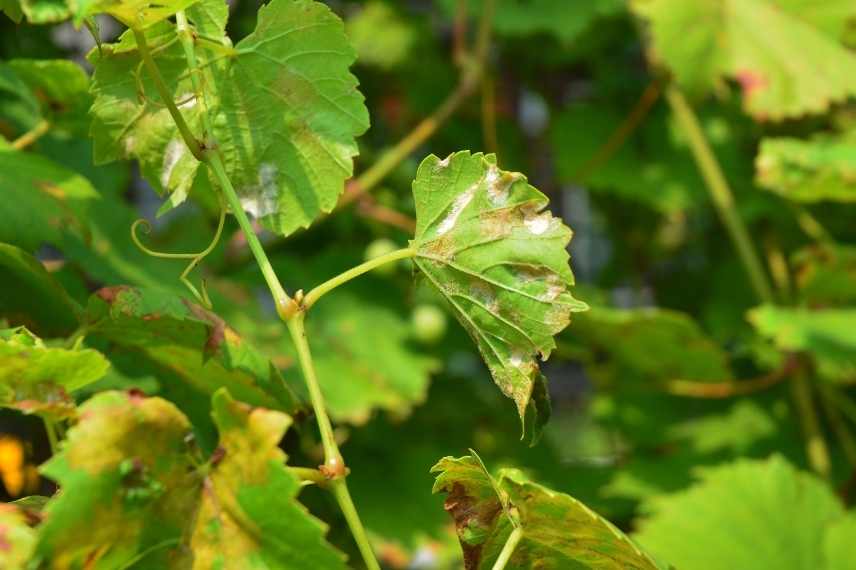
Development of Plasmopara viticola on vine leaves
Typically, downy mildew develops at temperatures between 15 and 25 °C associated with high humidity. In dry years, downy mildew causes almost no damage.
What causes downy mildew?
Warm, humid weather caused by frequent rainfall, heavy dew and high humidity favours rapid multiplication of the responsible fungi. This can occur as early as spring. However, other factors increase occurrence of downy mildew:
- Moderate temperatures ranging from 15 to 25 °C, with a development peak between 18 and 22 °C
- Planting density: if vegetable plants are planted too close together, humidity stagnates and air circulation is poor
- Inappropriate watering, with water sprayed onto the foliage rather than at the base of plants, favours fungal development
- Poor soil drainage again maintains harmful moisture that accelerates development of fungi
- Presence of contaminated crop residues, such as leaves or fruits, harbouring spores that survive the winter.
While weather conditions have a huge impact on occurrence of downy mildew, certain cultivation practices increase risk.
How to recognise downy mildew?
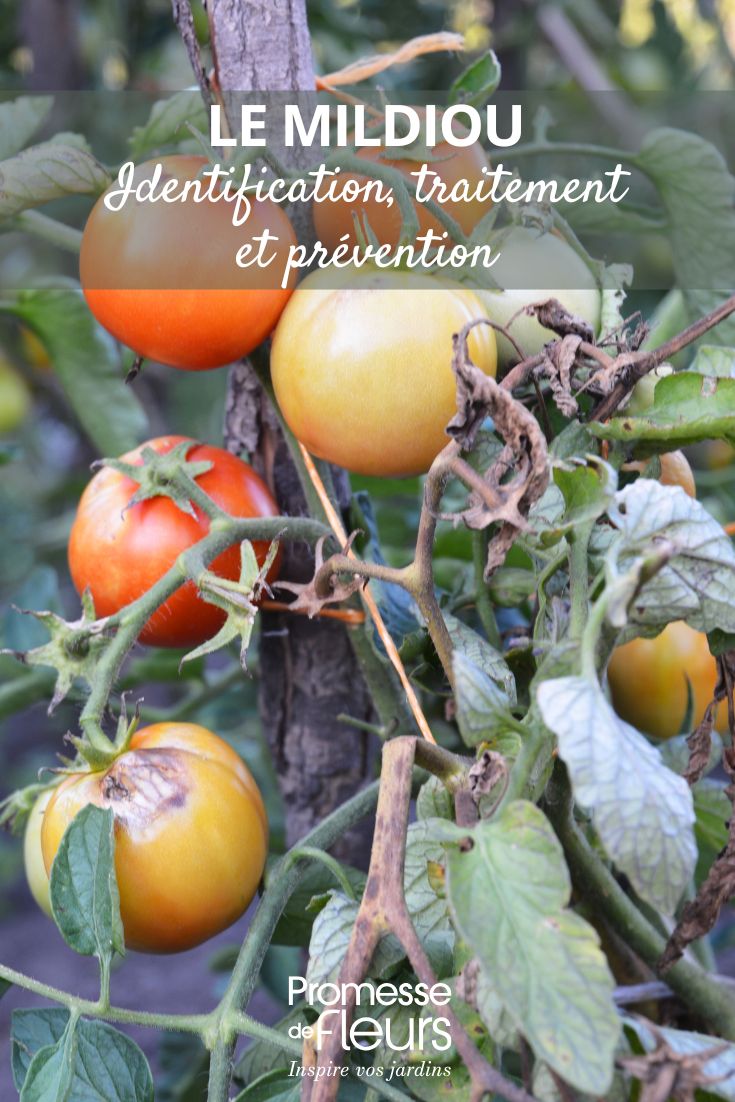
Several symptoms help identify downy mildew, which affects foliage, stems and fruits alike. To begin with, yellowish-white spots appear on the upper surface of leaves. And a white to grey‑violet down develops on the underside of leaves. Sometimes spots may be slightly raised. On Solanaceae, irregular spots progress from pale yellow to brown and concentrate on leaves and stems. In potatoes, sunken grey‑brown spots form on tubercles. Under the spots, flesh is rusty, a colour indicative of rot. In tomatoes, fruits are often affected by irregular spots, green‑brown to black. On onion, downy mildew is particularly dangerous because whole leaves die and bulb growth is halted.
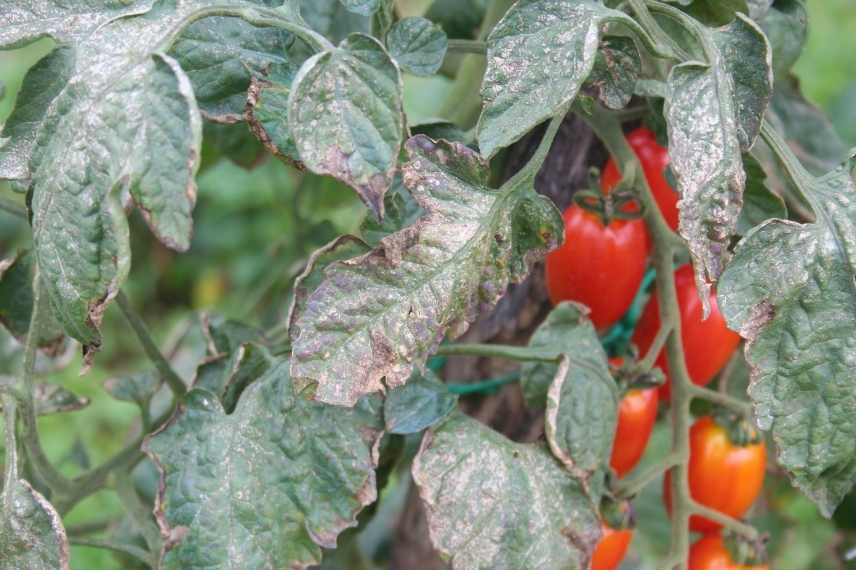
Signs of downy mildew on a tomato plant
In parallel, browning of stems is observed, which sometimes become brittle or slimy. Affected fruits such as tomatoes rot, develop spots and burst. Leaf tips die.
Symptoms of downy mildew can be considered similar to those of powdery mildew. However, they are different: powdery mildew forms a white powdering on the upper surface of leaves, downy mildew on the lower surface.
Which plants are affected by downy mildew?
Downy mildew mainly affects various vegetables, grapevines and, more rarely, some ornamental plants :
- Solanaceae such as tomatoes, potatoes, but also aubergines and peppers
- Cucurbits: mainly courgettes, cucumbers, melons, red kuri squash
- Vegetables such as spinach, celery, chervil and parsley, onion, lamb’s lettuce, lettuce
- grapevines
- strawberry plants
- Flowers and ornamental plants such as roses, impatiens, sweet peas, sunflowers, diascias, wallflowers, osteospermum, sweet alyssum…
How to treat downy mildew naturally?
If downy mildew has established itself, act very quickly at first signs. This approach relies on curative treatments as well as mechanical methods.
Treating affected parts
Initially, carefully remove all infected parts (leaves, stems, fruits) at first lesions while wearing gloves. Do not put them in the compost heap, as fungi may survive there. Burning is prohibited; take material to the recycling centre.
After removing diseased parts, or even entire affected plants, thoroughly clean and disinfect tools to avoid cross-contamination. Next, clear soil of any remaining plant debris.
Curative treatments
Apply repeated treatments:
- Horsetail decoction : recognised for stimulating natural defences. Use diluted at 5–10% and spray at first signs
- Garlic decoction : infuse 20 g chopped garlic in 1 litre water, leave to macerate 24 h, filter and spray
- Baking soda : use 5 g per 1 litre water then add a few drops of black soap. This preparation works by altering surface pH of leaves
- In case of severe attack, switch to a Bordeaux mixture, observing dosages indicated on packaging.
How to prevent downy mildew?
Logically, little can be done to change climatic conditions. The only solution is to build tunnel shelters for some vegetables, such as tomatoes, to protect them from inclement weather, or to grow under glass. But it is possible to take certain precautions and adopt good cultural practices to avoid development of late blight. Control can therefore be preventive:
In terms of cultural practices, it is essential to leave adequate spacing between plants to improve aeration. Distances of 40–50 cm between tomato plants, or 1 m between courgette plants, are recommended. In case of severe attack, you must apply a crop rotation of at least three years. Finally, pruning should always be moderate, particularly on tomatoes where suckers and lower leaves are removed. Likewise, avoid growing susceptible vegetables in damp locations and keep soil loose. Where possible, avoid growing potatoes close to tomatoes, peppers and aubergines.
Watering should also be sensible, at the base only without wetting foliage, preferably in the morning to favour rapid evaporation. Drip irrigation systems work very well to eliminate foliar moisture.
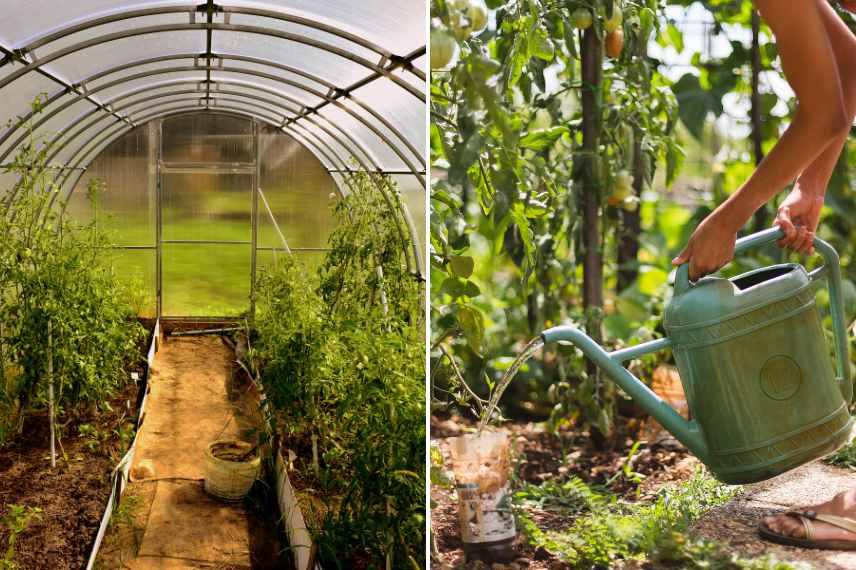
Growing sheltered from inclement weather and sensible watering prevent development of late blight
Choice of varieties is paramount, notably for potatoes, tomatoes, lettuces and spinach. Some varieties are known for their resistance to late blight. For potatoes and tomatoes, we invite you to consult our articles: Potatoes resistant to late blight and Selection of 7 tomato varieties naturally resistant to late blight. Also ensure buying quality seeds and check any seeds you are given.
Preventive sprays of horsetail decoction or garlic decoction can be applied every two weeks in humid periods. Nettle manure will stimulate growth and strengthen immune defences. Sprays of Bordeaux mixture can be continued during growth, but must be stopped at least 15 days before fruit harvest.
Downy mildew in history
In 1845, Ireland experienced catastrophic summer weather. Rains fell daily. Potatoes, which formed the staple of the Irish diet, were severely affected by late blight. Half the crops were destroyed, plunging the country into a terrible famine. Children and the elderly were the worst affected. Some, already greatly weakened, emigrated to the United States but did not survive the journey. At the same time, cereals grown on the island were shipped to England, which only exacerbated the famine.
Downy mildew also frequently attacks our vineyards. It was first described in 1878 in Gironde, almost certainly brought by botanists and collectors of exotic plants, in the same way as phylloxera.
- Subscribe!
- Contents
Comments