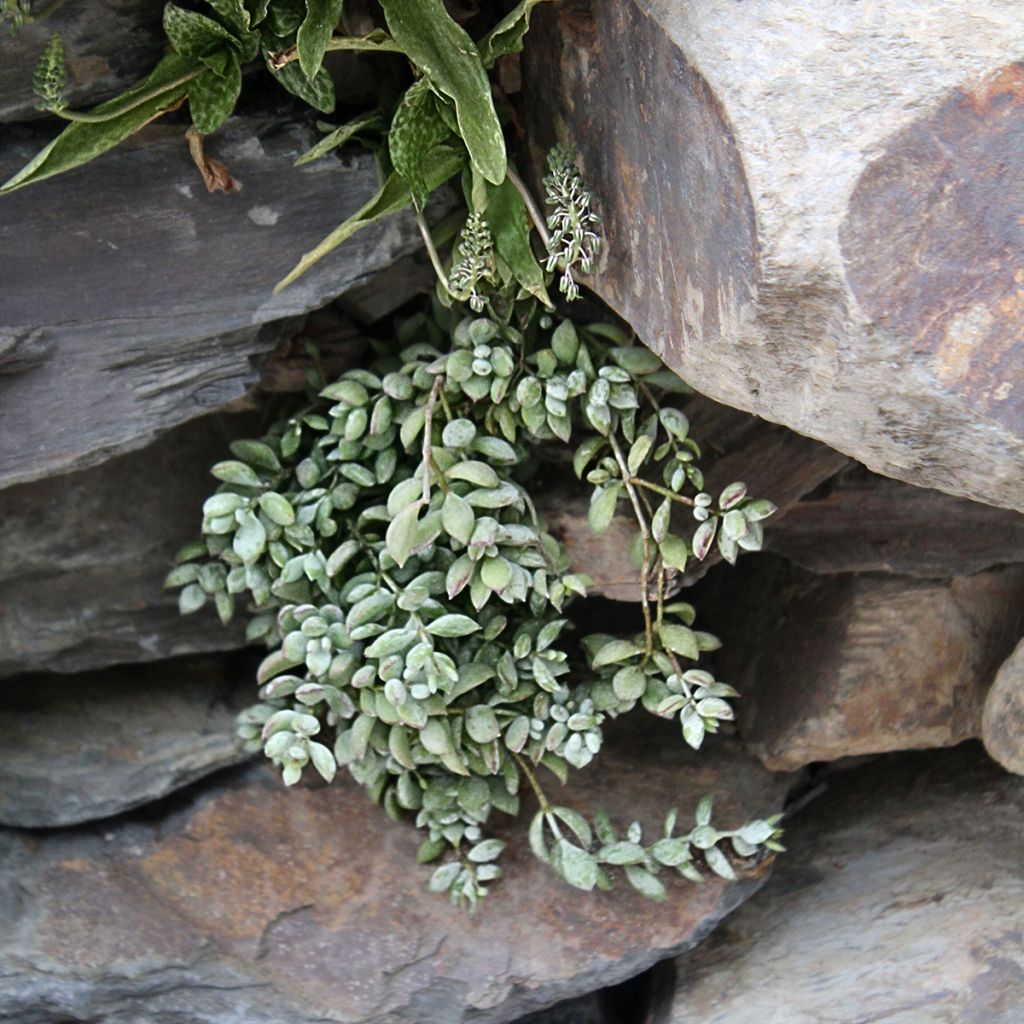
Cotyledon pendens
Cotyledon pendens
Cotyledon pendens
Back-to-school special offer!
Get €10 off for every €50 you spend! And get up to €40 off on a single order.
How does it work?
1. Shop your favourites
Add your favourite plants to your basket. For every €50 you spend (excluding delivery charges, store credit and the plastic-free option), you’ll receive a €10 voucher.
€50 spent = €10 voucher
€100 spent = €20 voucher
€150 spent = €30 voucher
€200 spent = €40 voucher
2. Place your order
Once your basket reaches one of the spending thresholds, place your order. You can even choose your delivery date!
3. Receive your voucher
As soon as your order has been shipped, you’ll receive an email containing your personal voucher code and its value.
4. Use it on your next order
Your voucher is valid for 90 days from the date you receive it. It can be used once only, on a new order worth at least the value of the voucher, excluding delivery charges.
Please note: Vouchers can be combined with other offers, but cannot be split or refunded.
Why not try an alternative variety in stock?
View all →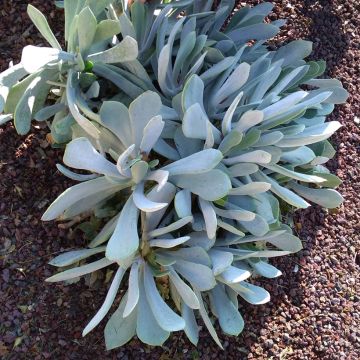
Available in 1 sizes
This plant carries a 12 months recovery warranty
More information
We guarantee the quality of our plants for a full growing cycle, and will replace at our expense any plant that fails to recover under normal climatic and planting conditions.
Would this plant suit my garden?
Set up your Plantfit profile →
Description
Cotyledon pendens, the trailing cotyledon, is a succulent plant with captivating, long trailing stems covered in small, fleshy, grey-green leaves and large orange bell-shaped flowers, highly decorative in late spring and summer. It is a lovely plant for decorating hanging baskets, tall planters, and dry rockeries. In temperate climates, it is mainly grown in pots, outdoors during the fine season, and then sheltered from the cold in winter. Its cultivation is not difficult in a very free-draining substrate.
Botanically, Cotyledon pendens belongs to the Crassulaceae family. This South African species is native to south-facing shale cliffs along the Mbashe River in the Eastern Cape, between 300 and 400 metres above sea level, in a region with hot summers and dry winters, almost frost-free. Its hardiness is around -2°C at its lowest in dry soil.
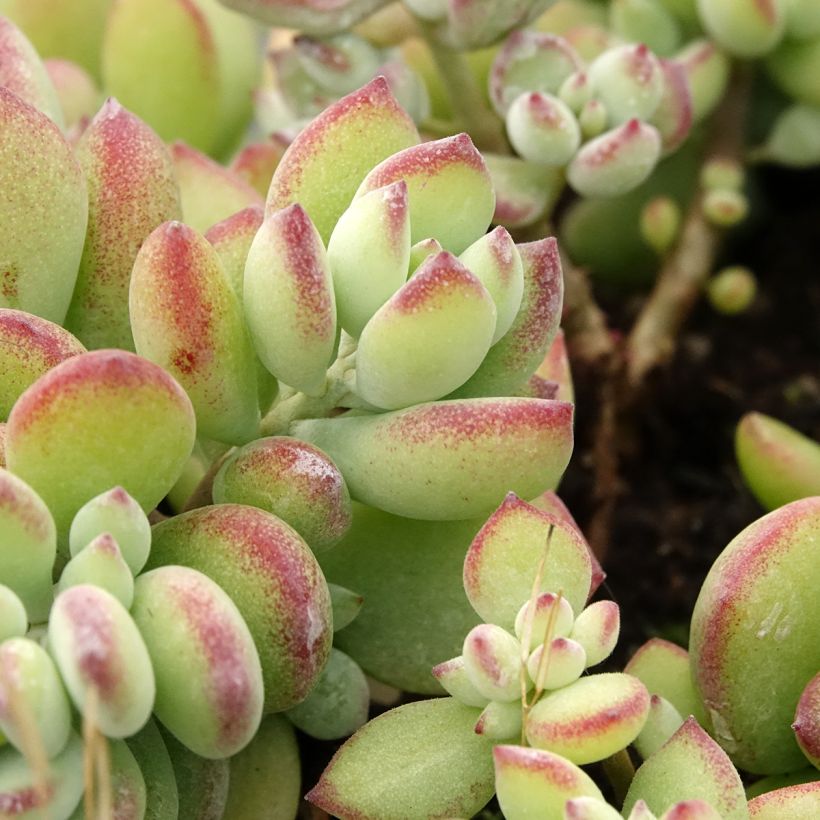
It is a small, perennial, trailing succulent shrub; the flexible and pendulous stems reach 50-60 cm in length, sometimes more on older specimens, and gradually become woody at the base. The roots anchor deeply into rock crevices. The young stems, about 2 mm in diameter, are slightly hairy and covered with a whitish bloom. The leaves, arranged in opposite, closely spaced pairs on the stem, are elliptical to ovoid in shape, 1.8 to 2.5 cm long, 1 to 1.5 cm wide, and 7 to 10 mm thick, ending in a small, distinct point. Their grey-green to grey-bluish epidermis is covered with a fine bloom, and the edge turns red under strong light. This foliage is evergreen in winter.
The flowers develop at the ends of the stems, in the form of pendulous panicles that can bear up to four large flowers, carried on a fairly long pedicel. The flowers, in upturned bell shapes, measure 4 to 4.5 cm long by 1.2 to 1.5 cm wide. Their colour ranges from orange to deep red. They appear from June to August-September.
In nature, the long stems can root when they come into contact with a damp crevice, ensuring the vegetative propagation of the plant; in cultivation, it is easily propagated by cuttings from stem segments or even from leaves.
Cotyledon pendens is a tender perennial, best suited to the mildest coastal regions or, more generally, to pot cultivation. It will thrive outdoors, on the terrace or balcony during summer. This succulent plant needs very bright light, with a little light shade during the hottest hours (especially behind a window) and a substrate such as a cactus mix. Water it moderately from spring to early autumn, allowing the substrate to dry out between waterings, then keep it almost dry in winter, at an ideal temperature between 5 and 10°C; it is prudent to bring it indoors as soon as the thermometer approaches 0°C.
To showcase it, place the trailing cotyledon in a hanging basket, a bowl placed on a low wall, or a large, elevated pot, allowing its stems to trail freely. It pairs well with the golden cushions of Sedum reflexum ‘Angelina’, the rosettes of Echeveria ‘Perle von Nurnberg’, or the flowering carpets of Delosperma cooperi ‘Wheels of Wonder Violet’.
In a dry seaside garden, it can be planted at the top of a stony slope, combined with a few small hardy agaves. On a balcony, a single pot is enough to give architectural character to a railing, provided you follow the golden rule for this species: plenty of light, little water, and no frost.
Only described in 2003 by the South African botanist Ernst van Jaarsveld from plants collected on the Mbashe cliffs, Cotyledon pendens is distinguished from Cotyledon woodii notably by its distinctly trailing habit and its branching inflorescences. The specific name pendens comes from Latin and directly refers to its pendulous stems.
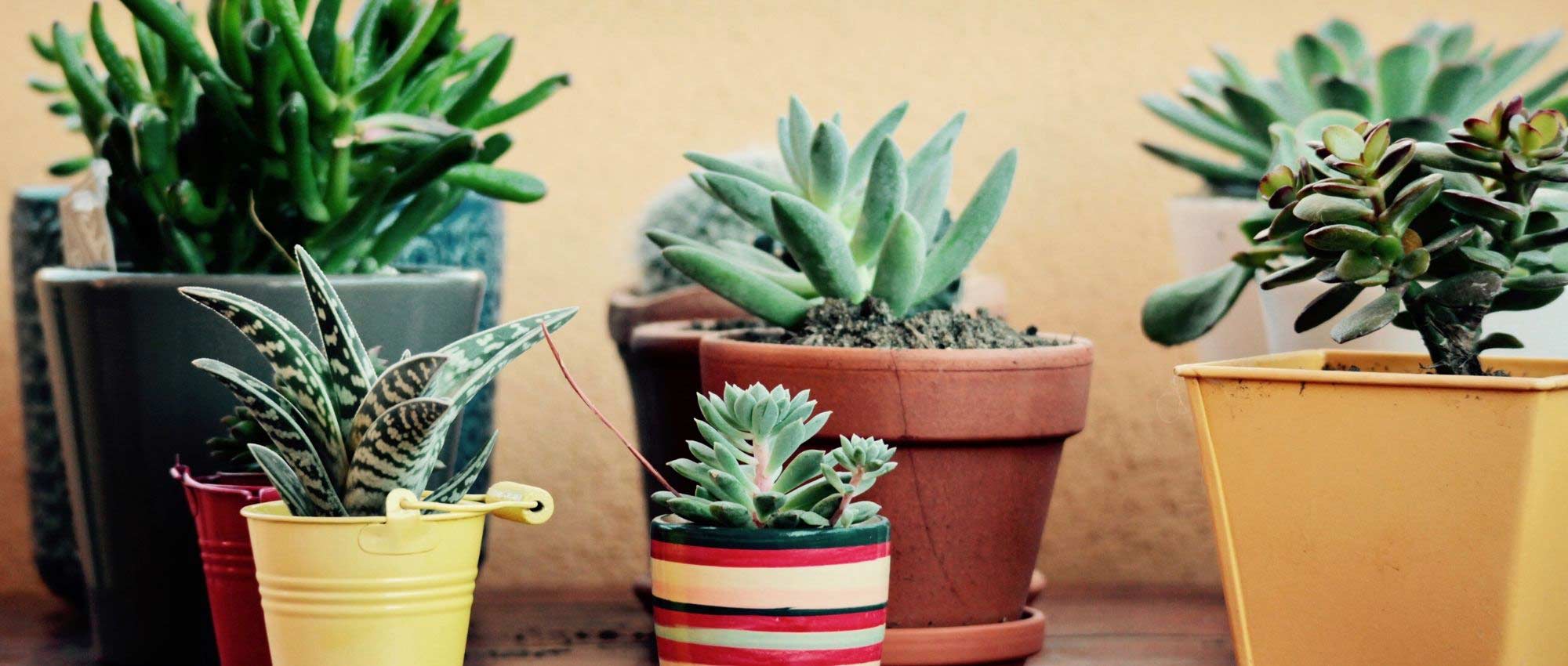
Cotyledon pendens in pictures
Flowering
Foliage
Plant habit
Botanical data
Cotyledon
pendens
Crassulaceae
South Africa
Planting and care
Plant Cotyledon pendens in open ground only in a very mild climate, on a well-drained mound or slope, in poor to stony soil, never waterlogged in winter, in full sun or very bright light, sheltered from rain. Dig a wide but shallow hole, loosen and enrich with gravel, pumice or coarse sand, without excessive compost, then water lightly to firm and allow to dry out between waterings.
Elsewhere, grow it in a terracotta pot, wider rather than deep, with a good drainage layer at the bottom and a special cactus mix. Be sure to empty the saucer after each watering. Water moderately from spring to early autumn, allowing the substrate to dry out almost completely, then keep it almost dry in winter. Apply a little very diluted fertiliser in spring only, repot every two or three years in a container just slightly larger and pinch back overly long stems to encourage branching and to take cuttings.
Its hardiness is very low: outside of truly sheltered coastal gardens, overwinter the cotyledon in a frost-free location, between 5 and 10°C, in a bright and dry room.
Planting period
Intended location
Care
Planting & care advice
-
-
-
-
-

-

-

-

This item has not been reviewed yet - be the first to leave a review about it.
Recently viewed products
Haven't found what you were looking for?
Hardiness is the lowest winter temperature a plant can endure without suffering serious damage or even dying. However, hardiness is affected by location (a sheltered area, such as a patio), protection (winter cover) and soil type (hardiness is improved by well-drained soil).

The flowering period indicated on our website applies to countries and regions located in USDA zone 8 (France, the United Kingdom, Ireland, the Netherlands, etc.)
It will vary according to where you live:- In zones 9 to 10 (Italy, Spain, Greece, etc.), flowering will occur about 2 to 4 weeks earlier.
- In zones 6 to 7 (Germany, Poland, Slovenia, and lower mountainous regions), flowering will be delayed by 2 to 3 weeks.
- In zone 5 (Central Europe, Scandinavia), blooming will be delayed by 3 to 5 weeks.
In temperate climates, pruning of spring-flowering shrubs (forsythia, spireas, etc.) should be done just after flowering.
Pruning of summer-flowering shrubs (Indian Lilac, Perovskia, etc.) can be done in winter or spring.
In cold regions as well as with frost-sensitive plants, avoid pruning too early when severe frosts may still occur.
The planting period indicated on our website applies to countries and regions located in USDA zone 8 (France, United Kingdom, Ireland, Netherlands).
It will vary according to where you live:
- In Mediterranean zones (Marseille, Madrid, Milan, etc.), autumn and winter are the best planting periods.
- In continental zones (Strasbourg, Munich, Vienna, etc.), delay planting by 2 to 3 weeks in spring and bring it forward by 2 to 4 weeks in autumn.
- In mountainous regions (the Alps, Pyrenees, Carpathians, etc.), it is best to plant in late spring (May-June) or late summer (August-September).
The harvesting period indicated on our website applies to countries and regions in USDA zone 8 (France, England, Ireland, the Netherlands).
In colder areas (Scandinavia, Poland, Austria...) fruit and vegetable harvests are likely to be delayed by 3-4 weeks.
In warmer areas (Italy, Spain, Greece, etc.), harvesting will probably take place earlier, depending on weather conditions.
The sowing periods indicated on our website apply to countries and regions within USDA Zone 8 (France, UK, Ireland, Netherlands).
In colder areas (Scandinavia, Poland, Austria...), delay any outdoor sowing by 3-4 weeks, or sow under glass.
In warmer climes (Italy, Spain, Greece, etc.), bring outdoor sowing forward by a few weeks.
Shipping country and language
Your country of residence may be:
Your country of residence is:
For a better user experience on our website, you can select:
Your shipping country:
-
 Austria
-
 Belgium
-
 Bosnia & Herzegovina
-
 Bulgaria
-
 Croatia
-
 Cyprus
-
 Czechia
-
 Denmark
-
 Estonia
-
 Finland
-
 France
-
 Germany
-
 Greece
-
 Hungary
-
 Iceland
-
 Ireland
-
 Italy
Italy
-
 Latvia
-
 Liechtenstein
-
 Lithuania
-
 Luxembourg
-
 Malta
Malta
-
 Netherlands
-
 Poland
-
 Portugal
-
 Romania
-
 Serbia
-
 Slovakia
-
 Slovenia
-
 Spain
Spain
-
 Sweden
-
 Switzerland
Language:
-
French
-
 English
-
Spanish
-
Italian
-
German
-
Portuguese
-
Dutch
-
Finnish
My Account
Hello
My wish lists
My cart
Log in / Register
Existing customer?
This form is protected by reCAPTCHA - the Google Privacy Policy and Terms of Service apply.
New customer?
Create an account to track your orders, access our customer service and, if you wish, make the most of our upcoming offers.