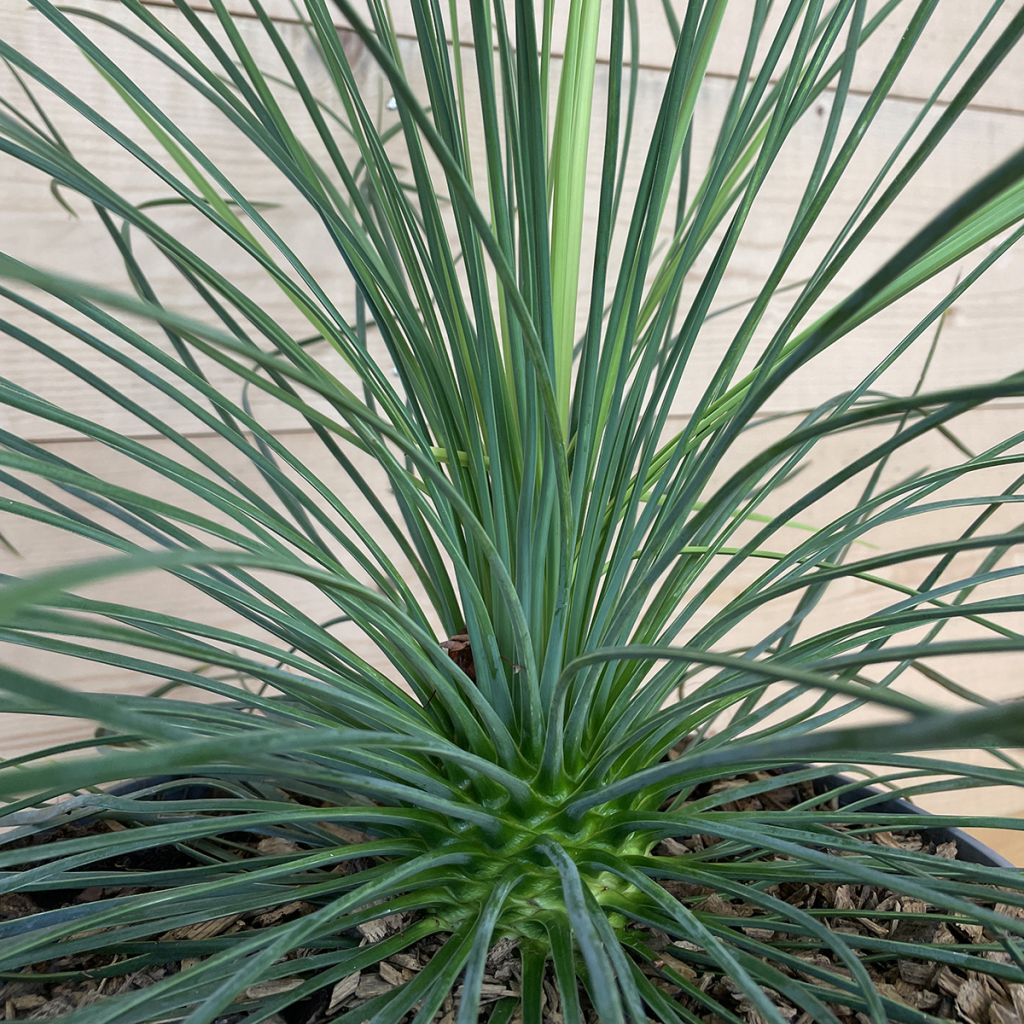
Yucca linearis Cascade
Yucca linearis Cascade
Yucca linearis 'Cascade'
Back-to-school special offer!
Get €10 off for every €50 you spend! And get up to €40 off on a single order.
How does it work?
1. Shop your favourites
Add your favourite plants to your basket. For every €50 you spend (excluding delivery charges, store credit and the plastic-free option), you’ll receive a €10 voucher.
€50 spent = €10 voucher
€100 spent = €20 voucher
€150 spent = €30 voucher
€200 spent = €40 voucher
2. Place your order
Once your basket reaches one of the spending thresholds, place your order. You can even choose your delivery date!
3. Receive your voucher
As soon as your order has been shipped, you’ll receive an email containing your personal voucher code and its value.
4. Use it on your next order
Your voucher is valid for 90 days from the date you receive it. It can be used once only, on a new order worth at least the value of the voucher, excluding delivery charges.
Please note: Vouchers can be combined with other offers, but cannot be split or refunded.
Why not try an alternative variety in stock?
View all →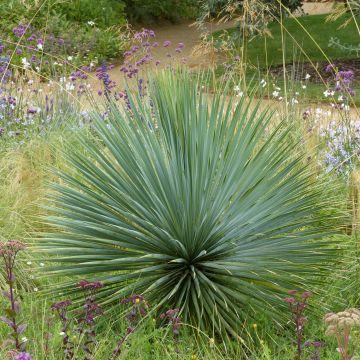
Available in 3 sizes
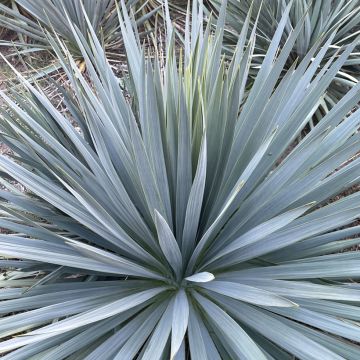
Available in 2 sizes
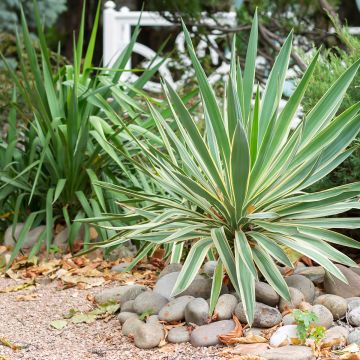
Available in 2 sizes
Available in 2 sizes
Available in 1 sizes
Available in 1 sizes

Available in 1 sizes

Available in 1 sizes
Available in 1 sizes
Available in 1 sizes
This plant carries a 24 months recovery warranty
More information
We guarantee the quality of our plants for a full growing cycle, and will replace at our expense any plant that fails to recover under normal climatic and planting conditions.
Would this plant suit my garden?
Set up your Plantfit profile →
Description
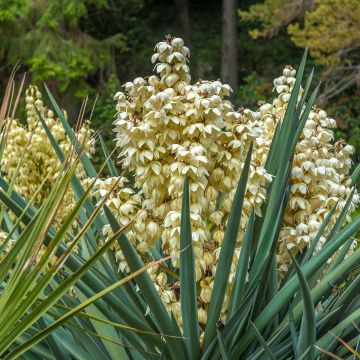
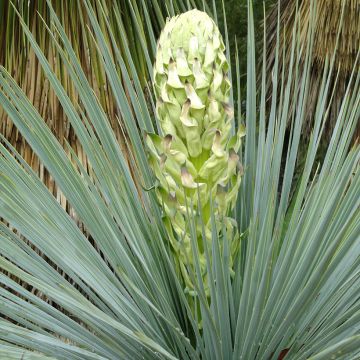
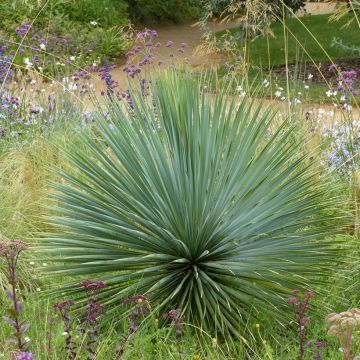
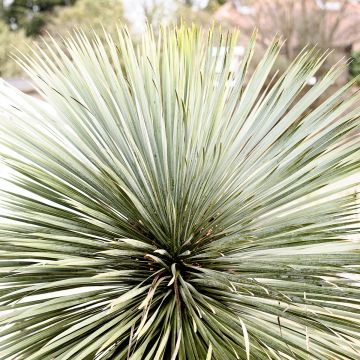
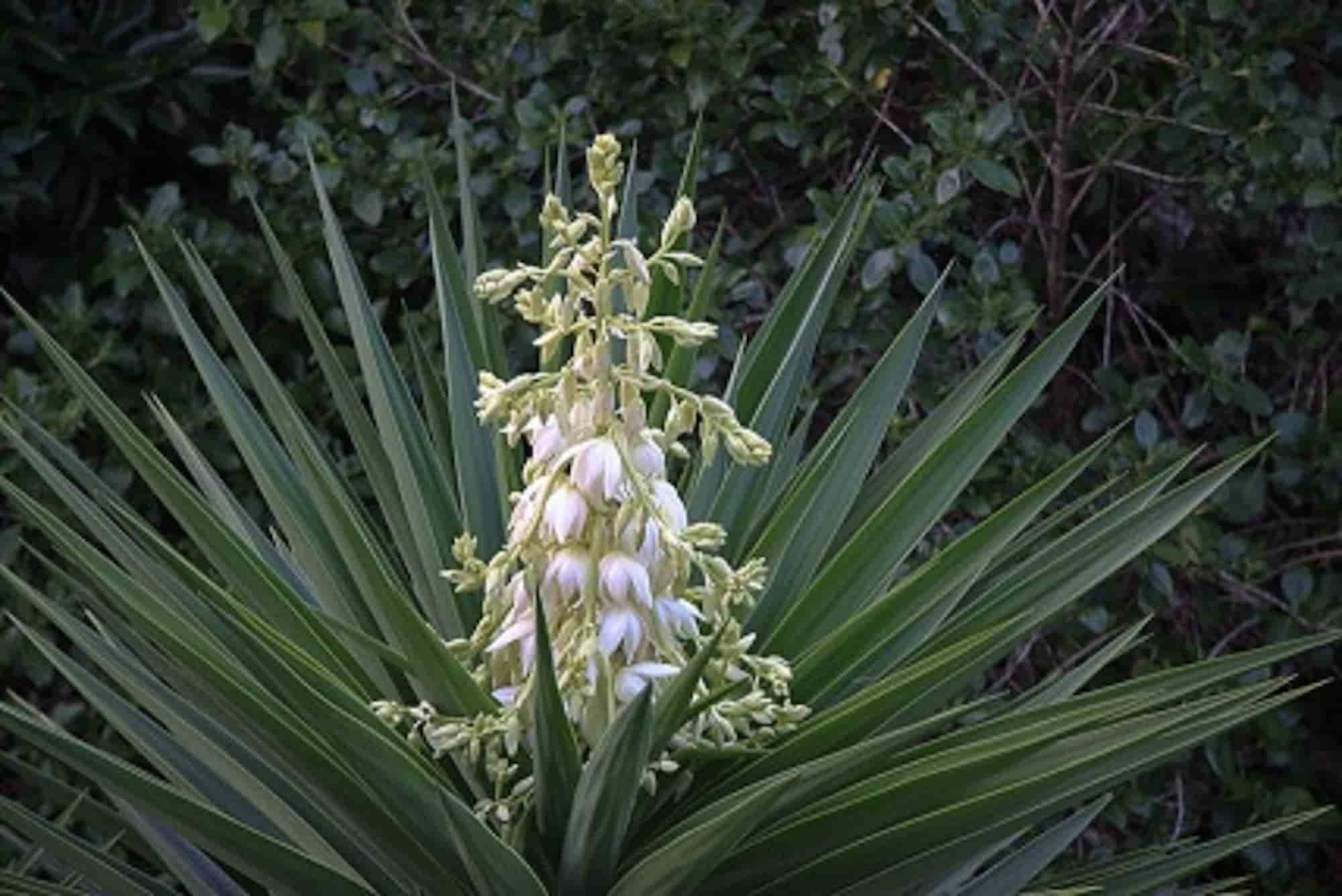
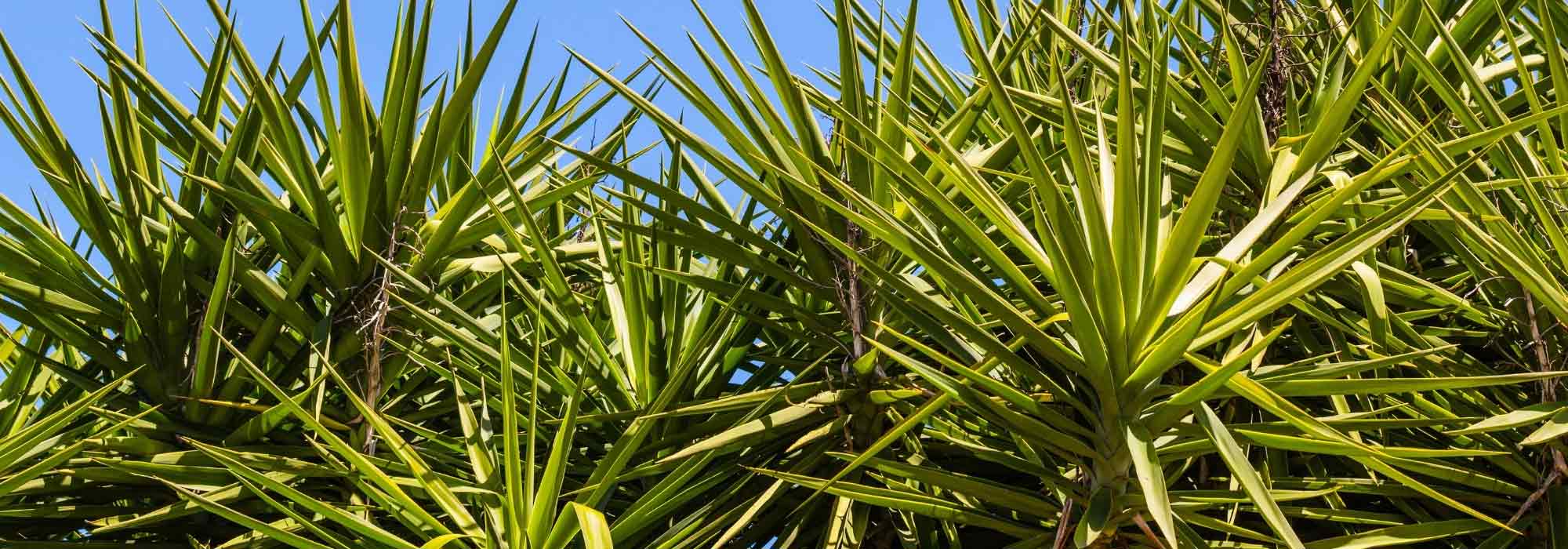
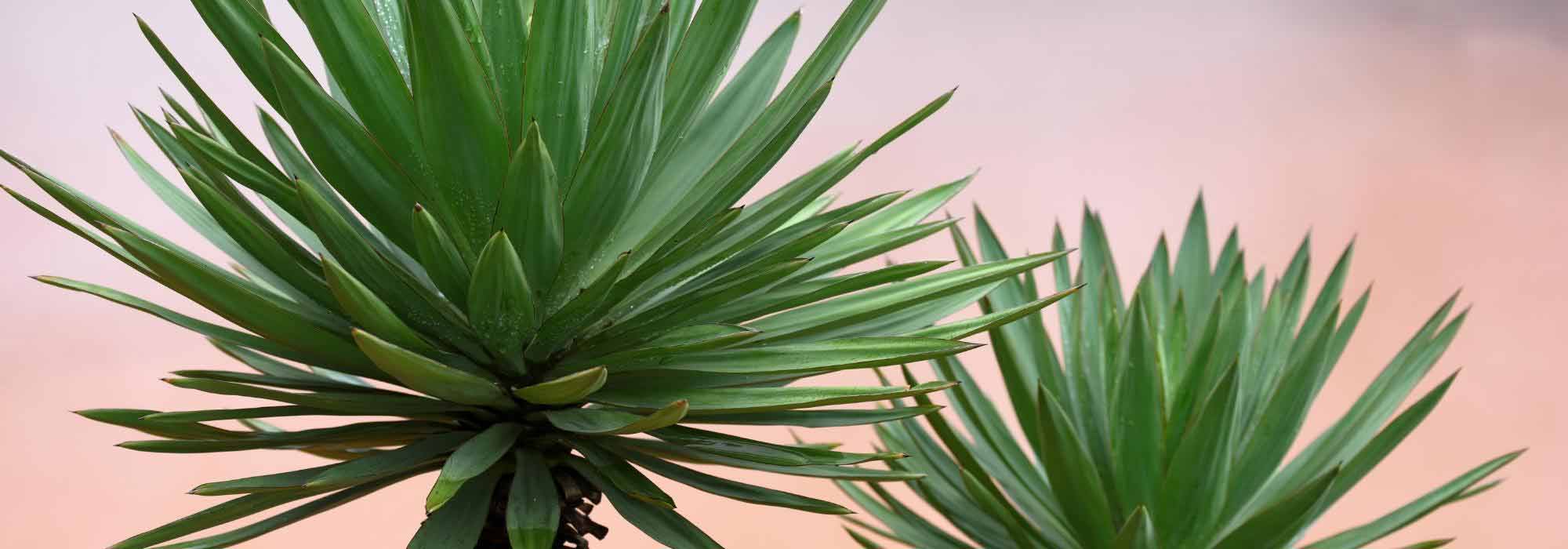
The Yucca linearis 'Cascade' is a French horticultural selection of the botanical species, even more interesting from a graphic point of view. Its extremely fine evergreen foliage gives it a distinctive, very ornamental weeping silhouette in all seasons. The imposing rosette formed by hundreds of very narrow leaves stretched into filaments is truly spectacular. Over the years, a short trunk forms to lift it from the ground, making it even more attractive. Drought-resistant, the plant also tolerates cold well, allowing it to be planted in most regions. Its relatively slow growth also allows it to be grown in a large pot to add an exotic touch to a balcony or terrace.
The Agavaceae family, which once housed the Yucca genus, has migrated along with six other closely related families into the Asparagaceae family. The Asparagus family (Asparagus in Latin) therefore now includes many ornamental genera recognisable by their rosette of more or less large leaves, such as Agave, or Beaucarnea. There are more than 40 wild species of Yucca, mainly native to the arid zones of North America. They are sun-loving plants that appreciate sandy, well-draining soils and heat, even though some of them are quite cold-hardy.
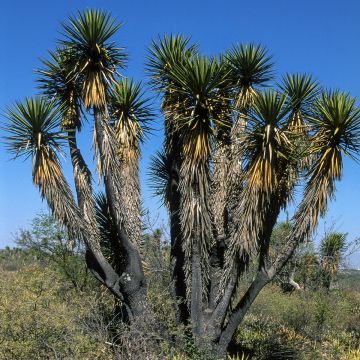
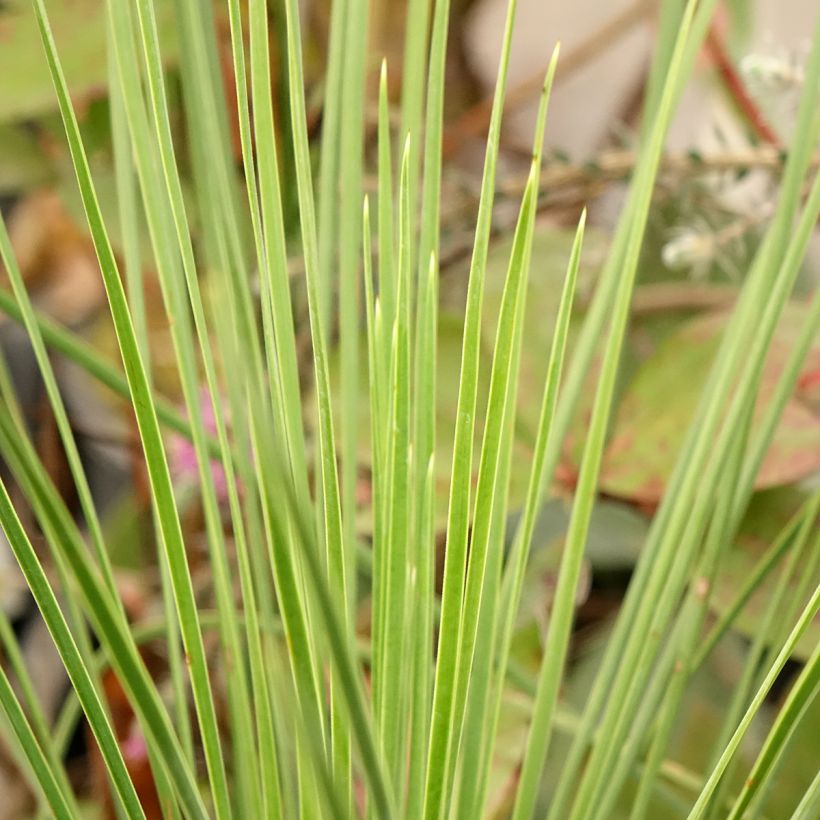
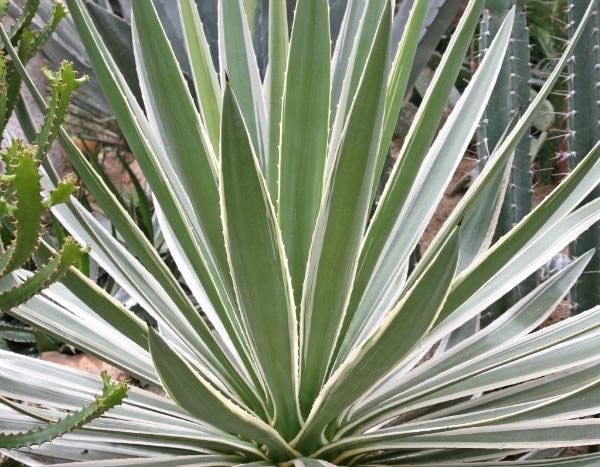
This is the case for Yucca linearis 'Cascade', which hardiness is close to that of the much more widespread Yucca rostrata. The botanical type species, Yucca linearis (or Yucca linearifolia), lives in north-central Mexico, as well as in the southwestern United States, in the Rocky Mountains. Growing in semi-desert areas, it is particularly adapted to sandy and stony soils, and under these conditions can withstand dry cold of around -12°C to -15°C. The 'Cascade' variety is a selection from 2019 by the French nurseryman and enthusiast Frédéric Julien. The leaves with a concave cross-section measure only 3 to 5 mm wide at the juvenile stage for a good fifteen cm in length. At maturity, the leaves lengthen to reach about 60 to 80 cm long and their great flexibility allows them to gracefully cascade all around the central axis. The plant then forms a large rosette of green colour, slightly grey-blue depending on the specimen, which leaves stand upright in the centre before cascading more and more as they approach the periphery. The silhouette of this Yucca evokes the glowing orb lights that were fashionable a few years ago, formed of hundreds of light fibres. Very different from the many species with broad, stiff, and prickly leaves like Yucca gloriosa, this Yucca 'Cascade' much more closely resembles certain Dasylirions. With medium to slow growth, it should over time form a short trunk 1.20 m high (this is an estimate, as the variety is still too recent to judge), gradually raising the rosette which could thus reach a height of 2 m (tip of the leaves). The outermost leaves dry out little by little, forming a sort of "skirt" that contributes to the exotic appearance of the plant.
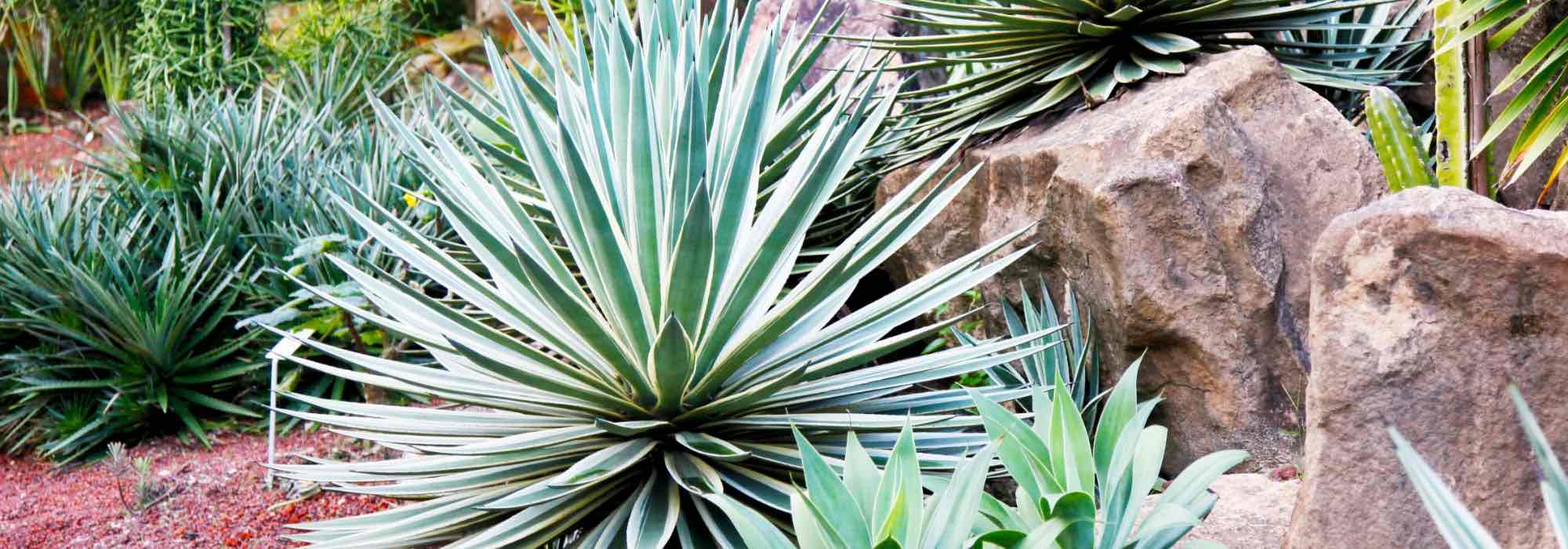
The Yucca linearis 'Cascade' is valuable for its graphic quality and its hardiness, which will allow, even in cool regions far from the south, to give a distinctive look to a border or rockery. Pair it with other cold-hardy plants to create an exotic scene in your garden. The Agave parryi var. neomexicana will allow you to create a strong contrast in every way, thanks to its broad, stocky leaves tending towards blue. To vary the shapes and not limit yourself to rosettes, add a few hardy outdoor "cacti" with stems transformed into prickly pears (of the Opuntia genus) or curious cylinders (Cylindropuntia).

Yucca linearis Cascade in pictures
Plant habit
Foliage
Botanical data
Yucca
linearis
'Cascade'
Asparagaceae
Yucca rostrata 'Cascade'
Cultivar or hybrid
Planting and care
Plant the Yucca linearis 'Cascade' in spring in regions with cold winters, or in autumn in a dry and warm climate, such as the South of France. Choose a sunny position, in well-drained, ordinary soil, even if it is calcareous, sandy, poor, clayey, and rocky. This plant requires very little maintenance but does not appreciate damp soil in winter at all, which significantly harms its hardiness. Its good resistance to cold (down to -15°C), when it is well-rooted in a draining soil, allows it to be adopted in many regions. Furthermore, its foliage is highly resistant to diseases.
Planting period
Intended location
Care
Planting & care advice


This item has not been reviewed yet - be the first to leave a review about it.
Recently viewed products
Haven't found what you were looking for?
Hardiness is the lowest winter temperature a plant can endure without suffering serious damage or even dying. However, hardiness is affected by location (a sheltered area, such as a patio), protection (winter cover) and soil type (hardiness is improved by well-drained soil).

The flowering period indicated on our website applies to countries and regions located in USDA zone 8 (France, the United Kingdom, Ireland, the Netherlands, etc.)
It will vary according to where you live:- In zones 9 to 10 (Italy, Spain, Greece, etc.), flowering will occur about 2 to 4 weeks earlier.
- In zones 6 to 7 (Germany, Poland, Slovenia, and lower mountainous regions), flowering will be delayed by 2 to 3 weeks.
- In zone 5 (Central Europe, Scandinavia), blooming will be delayed by 3 to 5 weeks.
In temperate climates, pruning of spring-flowering shrubs (forsythia, spireas, etc.) should be done just after flowering.
Pruning of summer-flowering shrubs (Indian Lilac, Perovskia, etc.) can be done in winter or spring.
In cold regions as well as with frost-sensitive plants, avoid pruning too early when severe frosts may still occur.
The planting period indicated on our website applies to countries and regions located in USDA zone 8 (France, United Kingdom, Ireland, Netherlands).
It will vary according to where you live:
- In Mediterranean zones (Marseille, Madrid, Milan, etc.), autumn and winter are the best planting periods.
- In continental zones (Strasbourg, Munich, Vienna, etc.), delay planting by 2 to 3 weeks in spring and bring it forward by 2 to 4 weeks in autumn.
- In mountainous regions (the Alps, Pyrenees, Carpathians, etc.), it is best to plant in late spring (May-June) or late summer (August-September).
The harvesting period indicated on our website applies to countries and regions in USDA zone 8 (France, England, Ireland, the Netherlands).
In colder areas (Scandinavia, Poland, Austria...) fruit and vegetable harvests are likely to be delayed by 3-4 weeks.
In warmer areas (Italy, Spain, Greece, etc.), harvesting will probably take place earlier, depending on weather conditions.
The sowing periods indicated on our website apply to countries and regions within USDA Zone 8 (France, UK, Ireland, Netherlands).
In colder areas (Scandinavia, Poland, Austria...), delay any outdoor sowing by 3-4 weeks, or sow under glass.
In warmer climes (Italy, Spain, Greece, etc.), bring outdoor sowing forward by a few weeks.
Shipping country and language
Your country of residence may be:
Your country of residence is:
For a better user experience on our website, you can select:
Your shipping country:
-
 Austria
-
 Belgium
-
 Bosnia & Herzegovina
-
 Bulgaria
-
 Croatia
-
 Cyprus
-
 Czechia
-
 Denmark
-
 Estonia
-
 Finland
-
 France
-
 Germany
-
 Greece
-
 Hungary
-
 Iceland
-
 Ireland
-
 Italy
Italy
-
 Latvia
-
 Liechtenstein
-
 Lithuania
-
 Luxembourg
-
 Malta
Malta
-
 Netherlands
-
 Poland
-
 Portugal
-
 Romania
-
 Serbia
-
 Slovakia
-
 Slovenia
-
 Spain
Spain
-
 Sweden
-
 Switzerland
Language:
-
French
-
 English
-
Spanish
-
Italian
-
German
-
Portuguese
-
Dutch
-
Finnish
My Account
Hello
My wish lists
My cart
Log in / Register
Existing customer?
This form is protected by reCAPTCHA - the Google Privacy Policy and Terms of Service apply.
New customer?
Create an account to track your orders, access our customer service and, if you wish, make the most of our upcoming offers.