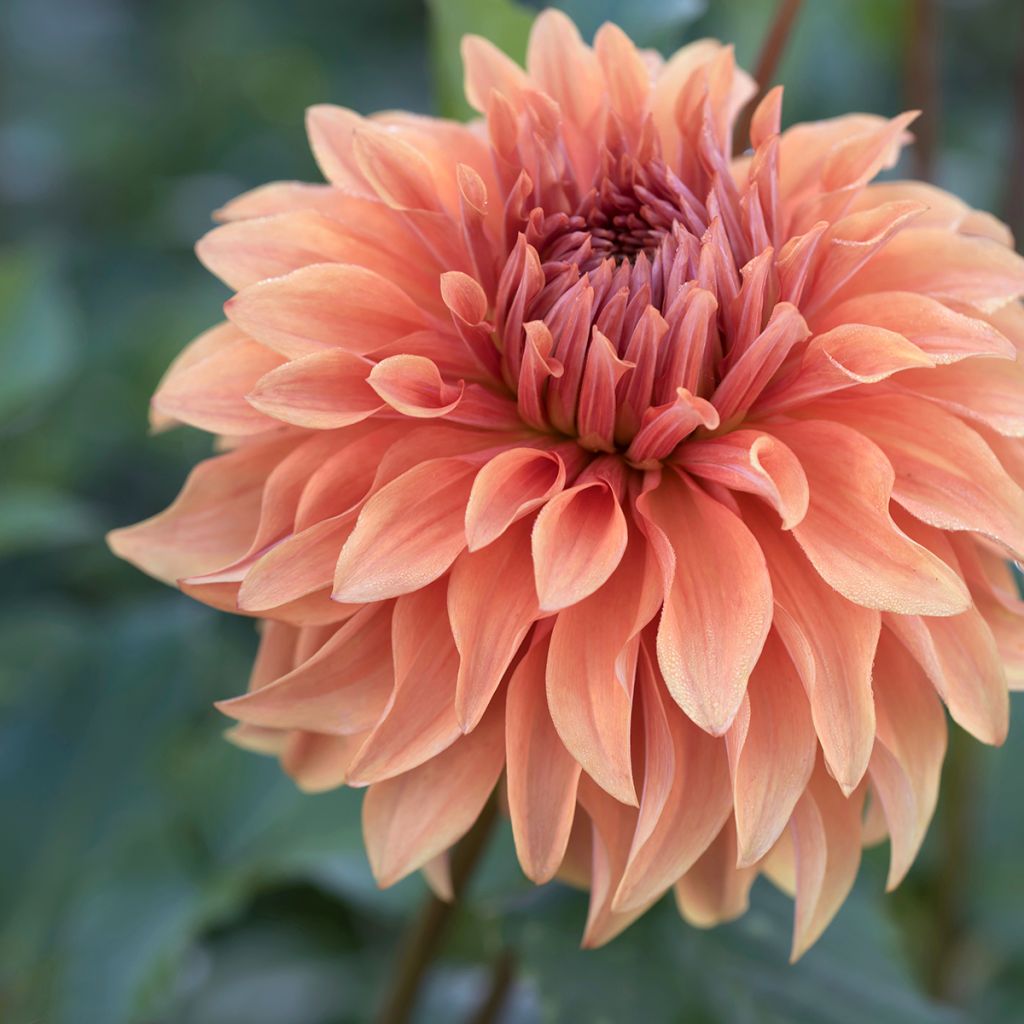
Dahlia Fairway Spur
Dahlia Fairway Spur
Dahlia Fairway Spur
Dinnerplate dahlia, decorative dahlia
Back-to-school special offer!
Get €10 off for every €50 you spend! And get up to €40 off on a single order.
How does it work?
1. Shop your favourites
Add your favourite plants to your basket. For every €50 you spend (excluding delivery charges, store credit and the plastic-free option), you’ll receive a €10 voucher.
€50 spent = €10 voucher
€100 spent = €20 voucher
€150 spent = €30 voucher
€200 spent = €40 voucher
2. Place your order
Once your basket reaches one of the spending thresholds, place your order. You can even choose your delivery date!
3. Receive your voucher
As soon as your order has been shipped, you’ll receive an email containing your personal voucher code and its value.
4. Use it on your next order
Your voucher is valid for 90 days from the date you receive it. It can be used once only, on a new order worth at least the value of the voucher, excluding delivery charges.
Please note: Vouchers can be combined with other offers, but cannot be split or refunded.
This plant carries a 6 months recovery warranty
More information
We guarantee the quality of our plants for a full growing cycle, and will replace at our expense any plant that fails to recover under normal climatic and planting conditions.
Would this plant suit my garden?
Set up your Plantfit profile →
Description
Dahlia ‘Fairway Spur’ is a giant decorative dahlia, prized for its enormous peach-pink inflorescences with salmon reflections, which take on a more bronze tone towards the centre. Its heads dominate flower beds from summer to autumn. With prolonged and regular flowering, it is a plant of choice for the ornamental garden, but also for creating large romantic cut flower arrangements.
Like all modern dahlias, this cultivar is a non-hardy tuberous perennial: the aerial part disappears in winter, while the tubercles store reserves. The plant cannot tolerate sub-zero temperatures; it is therefore overwintered by lifting and storing the tubercles in a dry place, or by protecting them under a thick mulch in very mild climates.
'Fairway Spur’ is a decorative dahlia with very large flowers, rated AA FD BR in the international classification: "AA" for the giant category (flowers exceeding 25 cm), "FD" for the formal decorative form with regular ligules, and "BR" for the bronze-apricot shade of the flower. This selection is attributed to a Dutch breeder, D. Bruidegom, introduced in the late 1960s. The plant has an upright habit, forming a well-ramified clump 1 to 1.20 m in height and about 40 to 50 cm in spread. The thick, sturdy stems bear inflorescences in heads that can reach 25 to 30 cm in diameter, sometimes up to 35 cm when disbudding is practised to keep only one bud per stem. The flowers are formed of very numerous flat to slightly incurved and undulate petals, arranged in tight layers that completely conceal the centre. Their colour is a mix of salmon, apricot-pink and peach, with a warmer, almost coppery centre. Flowering spreads from July to October. The foliage, medium green, is formed of pinnate leaves with ovate to lanceolate lobes, of a clear green. The stems are hollow but robust, a green tinged with bronze towards the base.
To prolong flowering and encourage repeat blooms, regularly cut off the faded flowers.
In the garden as in a vase, this dahlia imposes its generous and warm style. It suits romantic atmospheres and works wonders in late summer displays with indulgent hues. It pairs well with pastel varieties like ‘White Perfection’ or 'Penhill Watermelon'. Darker varieties like ‘Rip City’ or ‘Dark Spirit’ can be added to give depth and contrast to the whole. It can also be paired with large ornamental grasses like Pennisetum macrourum or Miscanthus 'Red Chief' and with cosmos, which lighten its giant flowers. In a cut flower arrangement, in large vases, mix it with ferns, euphorbias or old-fashioned roses.
The genus Dahlia is native to the Mexican mountains, where it was long cultivated by pre-Columbian peoples for its flowers and edible tubercles, before being introduced to Europe in the 18th century and later becoming the national flower of Mexico. Dahlias use inulin as a reserve, a sugar once exploited in Europe as a substitute for diabetics. The hollow stems of some species were used as water conduits by the Aztecs.

Plant habit
Flowering
Foliage
Botanical data
Dahlia
Fairway Spur
Asteraceae
Dinnerplate dahlia, decorative dahlia
Cultivar or hybrid
Planting and care
Plant your 'Fairway Spur' dahlias on a fine weather day in deeply worked soil enriched, for example, with ground horn or dried blood. Place your tubercle and crumble the soil well to fill in without air pockets. Your dahlia should be covered with 6 cm of soil. At the end of planting, pour a litre of water. Water regularly during the first 6 weeks to aid rooting.
Dahlias are sensitive to cold, they need to be overwintered. In November, the first frosts will blacken the foliage, it's time to lift them. Dig up the tubercles carefully. Remove as much soil as possible. Allow the foliage to dry, so the tubercle can replenish its reserves. When the foliage is dry, cut the stems to 10 cm from the tubercle. Spread your bulbs in a crate on newspaper. Store in a frost-free place in a dry, cool, and dark room.
Planting period
Intended location
Care
Planting & care advice








This item has not been reviewed yet - be the first to leave a review about it.
Recently viewed products
Haven't found what you were looking for?
Hardiness is the lowest winter temperature a plant can endure without suffering serious damage or even dying. However, hardiness is affected by location (a sheltered area, such as a patio), protection (winter cover) and soil type (hardiness is improved by well-drained soil).

The flowering period indicated on our website applies to countries and regions located in USDA zone 8 (France, the United Kingdom, Ireland, the Netherlands, etc.)
It will vary according to where you live:- In zones 9 to 10 (Italy, Spain, Greece, etc.), flowering will occur about 2 to 4 weeks earlier.
- In zones 6 to 7 (Germany, Poland, Slovenia, and lower mountainous regions), flowering will be delayed by 2 to 3 weeks.
- In zone 5 (Central Europe, Scandinavia), blooming will be delayed by 3 to 5 weeks.
In temperate climates, pruning of spring-flowering shrubs (forsythia, spireas, etc.) should be done just after flowering.
Pruning of summer-flowering shrubs (Indian Lilac, Perovskia, etc.) can be done in winter or spring.
In cold regions as well as with frost-sensitive plants, avoid pruning too early when severe frosts may still occur.
The planting period indicated on our website applies to countries and regions located in USDA zone 8 (France, United Kingdom, Ireland, Netherlands).
It will vary according to where you live:
- In Mediterranean zones (Marseille, Madrid, Milan, etc.), autumn and winter are the best planting periods.
- In continental zones (Strasbourg, Munich, Vienna, etc.), delay planting by 2 to 3 weeks in spring and bring it forward by 2 to 4 weeks in autumn.
- In mountainous regions (the Alps, Pyrenees, Carpathians, etc.), it is best to plant in late spring (May-June) or late summer (August-September).
The harvesting period indicated on our website applies to countries and regions in USDA zone 8 (France, England, Ireland, the Netherlands).
In colder areas (Scandinavia, Poland, Austria...) fruit and vegetable harvests are likely to be delayed by 3-4 weeks.
In warmer areas (Italy, Spain, Greece, etc.), harvesting will probably take place earlier, depending on weather conditions.
The sowing periods indicated on our website apply to countries and regions within USDA Zone 8 (France, UK, Ireland, Netherlands).
In colder areas (Scandinavia, Poland, Austria...), delay any outdoor sowing by 3-4 weeks, or sow under glass.
In warmer climes (Italy, Spain, Greece, etc.), bring outdoor sowing forward by a few weeks.
Shipping country and language
Your country of residence may be:
Your country of residence is:
For a better user experience on our website, you can select:
Your shipping country:
-
 Austria
-
 Belgium
-
 Bosnia & Herzegovina
-
 Bulgaria
-
 Croatia
-
 Cyprus
-
 Czechia
-
 Denmark
-
 Estonia
-
 Finland
-
 France
-
 Germany
-
 Greece
-
 Hungary
-
 Iceland
-
 Ireland
-
 Italy
Italy
-
 Latvia
-
 Liechtenstein
-
 Lithuania
-
 Luxembourg
-
 Malta
Malta
-
 Netherlands
-
 Poland
-
 Portugal
-
 Romania
-
 Serbia
-
 Slovakia
-
 Slovenia
-
 Spain
Spain
-
 Sweden
-
 Switzerland
Language:
-
French
-
 English
-
Spanish
-
Italian
-
German
-
Portuguese
-
Dutch
-
Finnish
My Account
Hello
My wish lists
My cart
Log in / Register
Existing customer?
This form is protected by reCAPTCHA - the Google Privacy Policy and Terms of Service apply.
New customer?
Create an account to track your orders, access our customer service and, if you wish, make the most of our upcoming offers.