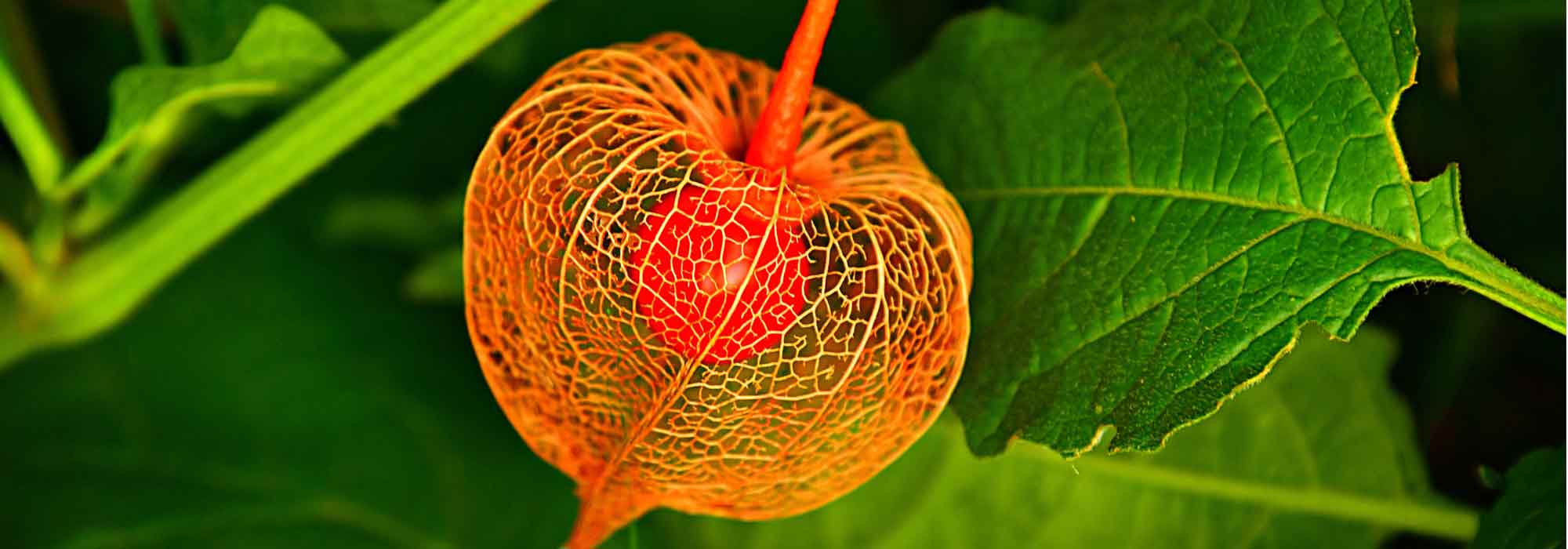
The 'Fruttosa' Cape Gooseberry can be grown in the garden in regions where frosts are late and mild.
In open ground, plant the young plants from mid-May, when all risk of frost has passed. Choose a location in full sun, sheltered from the wind, in a light, humus-bearing and well-drained soil. Adding well-rotted compost at planting time encourages growth.
Space the plants about 80 cm apart to give them room to spread.
Water regularly but not excessively, especially at the beginning, and then during dry periods. An organic mulch helps retain moisture and suppress weeds.
Pinch out the tips of the stems early in the season to encourage branching and increase fruit production.
In cooler regions, it is best to grow this 'Fruttosa' cape gooseberry in a deep container (at least 30 cm), filled with a light mix based on potting compost, well-rotted compost and sand or perlite to improve drainage. Place the pot in full sun, water regularly, allowing the surface to dry out between waterings. A liquid feed every two weeks after flowering stimulates fruiting. At the end of the season, bring the plant under cover from frost if you wish to keep it, or let it complete its cycle.
This plant is not hardy: it dies as soon as the temperature drops below 0°C. It is therefore grown as an annual in temperate climates.
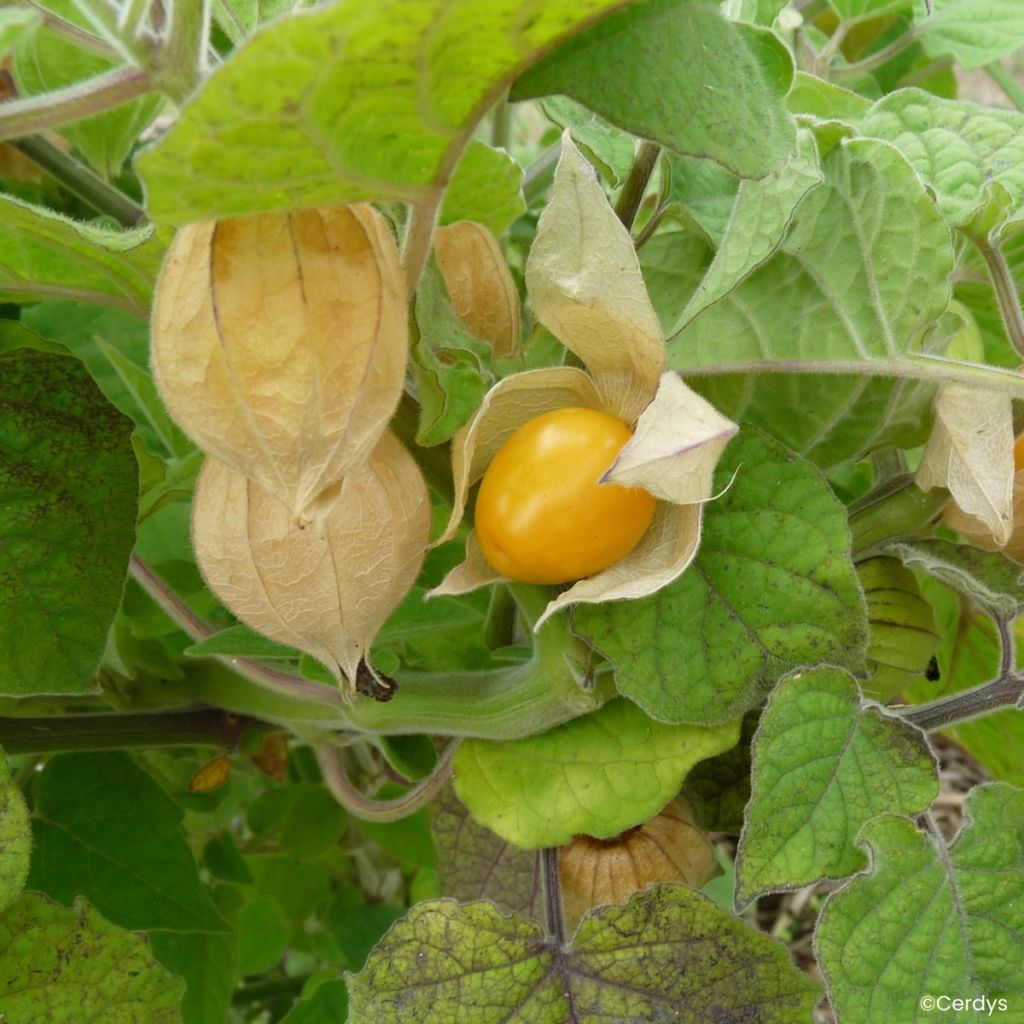
Physalis peruviana 'Fruttosa' - Cape gooseberry
Physalis peruviana 'Fruttosa' - Cape gooseberry
Physalis peruviana 'Fruttosa'
Back-to-school special offer!
Get €10 off for every €50 you spend! And get up to €40 off on a single order.
How does it work?
1. Shop your favourites
Add your favourite plants to your basket. For every €50 you spend (excluding delivery charges, store credit and the plastic-free option), you’ll receive a €10 voucher.
€50 spent = €10 voucher
€100 spent = €20 voucher
€150 spent = €30 voucher
€200 spent = €40 voucher
2. Place your order
Once your basket reaches one of the spending thresholds, place your order. You can even choose your delivery date!
3. Receive your voucher
As soon as your order has been shipped, you’ll receive an email containing your personal voucher code and its value.
4. Use it on your next order
Your voucher is valid for 90 days from the date you receive it. It can be used once only, on a new order worth at least the value of the voucher, excluding delivery charges.
Please note: Vouchers can be combined with other offers, but cannot be split or refunded.
Why not try an alternative variety in stock?
View all →Available in 1 sizes
Available in 1 sizes
Available in 1 sizes
Available in 1 sizes
This plant carries a 12 months recovery warranty
More information
We guarantee the quality of our plants for a full growing cycle, and will replace at our expense any plant that fails to recover under normal climatic and planting conditions.
Description
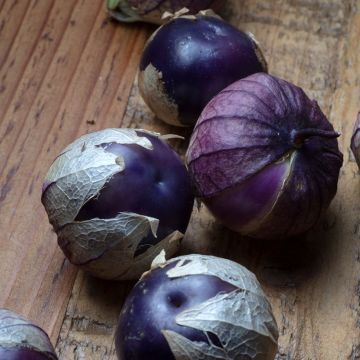
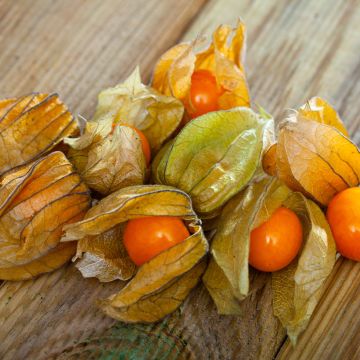
Physalis peruviana 'Fruttosa', or Cape Gooseberry 'Fruttosa', is an ornamental vegetable grown for its bright orange edible berries, encased in a decorative calyx. Easy to grow in the garden or on a balcony, it offers generous fruiting and a captivating, original appearance. The fruits are harvested from late summer until autumn. They can be eaten raw, as jam, or as an accompaniment to dishes. This variety offers a good compromise between yield, flavour, and aesthetics.
Cape Gooseberry belongs to the Solanaceae family, like the tomato and potato. Its scientific name, Physalis peruviana, refers to its Andean origins, particularly in Peru and Colombia, where it grows spontaneously in the temperate highlands between 500 and 3,000 m. The Physalis genus , meaning "bladder" in Greek, refers to the shape of the calyx that surrounds the fruit like a lantern.
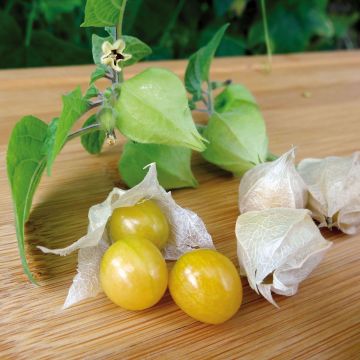
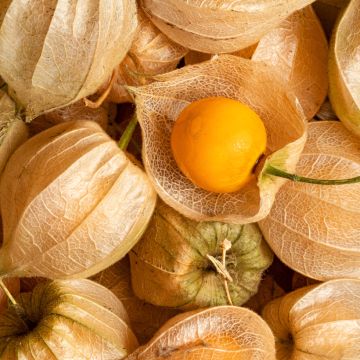
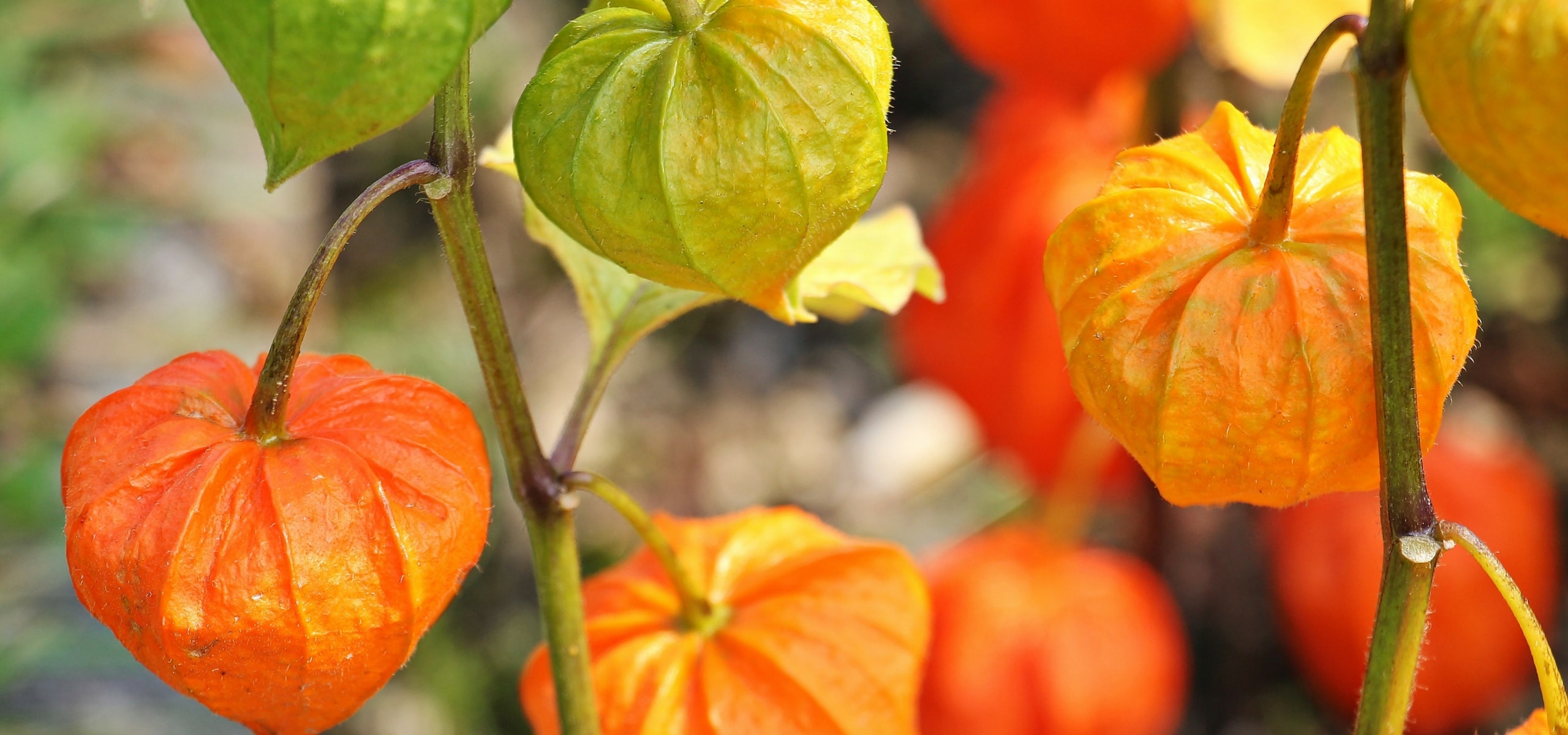
'Fruttosa' is a cultivar selected for its good productivity and compact habit. Unlike some more vigorous varieties, 'Fruttosa' does not exceed 80 cm to 1.20 m in height. The plant grows quickly once the heat sets in, forming a small, branched bush with flexible, hairy stems. The medium to dark green leaves are ovate with a heart-shaped base, covered in light down. Flowering begins in July. The small 2 cm diameter flowers are solitary, campanulate, pale yellow, and spotted with brown inside. These flowers are followed by a round, smooth, orange fruit, 1.5 to 2 cm in diameter. With a sweet flavour when ripe, its taste is reminiscent of mango and tomato. Each fruit is protected by a light beige, veined calyx, which closes completely and protects it from insects and moisture. Ripe fruits fall to the ground.
The plant is not frost-hardy. It is typically grown as an annual in our latitudes.
Once cultivated in South American monasteries, the Cape Gooseberry was disseminated to South Africa in the 19th century. The calyx acted as a natural packaging, allowing for its preservation during long sea voyages.
The harvest: Physalis peruviana 'Fruttosa' can be harvested from August, when the fruits have taken on their best colour and the calyx is papery. One plant can yield 250 to 300 fruits.
Storage: Physalis fruits are traditionally consumed fresh. They keep for a few days in the vegetable drawer of the refrigerator. They can be cooked or even dried. To dry them, they should be left in a dry, airy place without touching each other and can then be stored for a few months.
The gardener's tip: Physalis are sometimes prone to whitefly infestations. These small white insects from the same family as aphids are only really a nuisance if they are present in too great numbers. A peppermint manure or even a spray of water mixed with black soap will deal with them without resorting to chemicals. Natural predators of aphids, such as ladybirds or lacewings, should also be encouraged.
Plant habit
Fruit
Flowering
Foliage
Botanical data
Physalis
peruviana
'Fruttosa'
Solanaceae
Cultivar or hybrid
Planting and care
Planting period
Intended location
Care
Planting & care advice

This item has not been reviewed yet - be the first to leave a review about it.
Recently viewed products
Haven't found what you were looking for?
Hardiness is the lowest winter temperature a plant can endure without suffering serious damage or even dying. However, hardiness is affected by location (a sheltered area, such as a patio), protection (winter cover) and soil type (hardiness is improved by well-drained soil).

The flowering period indicated on our website applies to countries and regions located in USDA zone 8 (France, the United Kingdom, Ireland, the Netherlands, etc.)
It will vary according to where you live:- In zones 9 to 10 (Italy, Spain, Greece, etc.), flowering will occur about 2 to 4 weeks earlier.
- In zones 6 to 7 (Germany, Poland, Slovenia, and lower mountainous regions), flowering will be delayed by 2 to 3 weeks.
- In zone 5 (Central Europe, Scandinavia), blooming will be delayed by 3 to 5 weeks.
In temperate climates, pruning of spring-flowering shrubs (forsythia, spireas, etc.) should be done just after flowering.
Pruning of summer-flowering shrubs (Indian Lilac, Perovskia, etc.) can be done in winter or spring.
In cold regions as well as with frost-sensitive plants, avoid pruning too early when severe frosts may still occur.
The planting period indicated on our website applies to countries and regions located in USDA zone 8 (France, United Kingdom, Ireland, Netherlands).
It will vary according to where you live:
- In Mediterranean zones (Marseille, Madrid, Milan, etc.), autumn and winter are the best planting periods.
- In continental zones (Strasbourg, Munich, Vienna, etc.), delay planting by 2 to 3 weeks in spring and bring it forward by 2 to 4 weeks in autumn.
- In mountainous regions (the Alps, Pyrenees, Carpathians, etc.), it is best to plant in late spring (May-June) or late summer (August-September).
The harvesting period indicated on our website applies to countries and regions in USDA zone 8 (France, England, Ireland, the Netherlands).
In colder areas (Scandinavia, Poland, Austria...) fruit and vegetable harvests are likely to be delayed by 3-4 weeks.
In warmer areas (Italy, Spain, Greece, etc.), harvesting will probably take place earlier, depending on weather conditions.
The sowing periods indicated on our website apply to countries and regions within USDA Zone 8 (France, UK, Ireland, Netherlands).
In colder areas (Scandinavia, Poland, Austria...), delay any outdoor sowing by 3-4 weeks, or sow under glass.
In warmer climes (Italy, Spain, Greece, etc.), bring outdoor sowing forward by a few weeks.
Shipping country and language
Your country of residence may be:
Your country of residence is:
For a better user experience on our website, you can select:
Your shipping country:
-
 Austria
-
 Belgium
-
 Bosnia & Herzegovina
-
 Bulgaria
-
 Croatia
-
 Cyprus
-
 Czechia
-
 Denmark
-
 Estonia
-
 Finland
-
 France
-
 Germany
-
 Greece
-
 Hungary
-
 Iceland
-
 Ireland
-
 Italy
Italy
-
 Latvia
-
 Liechtenstein
-
 Lithuania
-
 Luxembourg
-
 Malta
Malta
-
 Netherlands
-
 Poland
-
 Portugal
-
 Romania
-
 Serbia
-
 Slovakia
-
 Slovenia
-
 Spain
Spain
-
 Sweden
-
 Switzerland
Language:
-
French
-
 English
-
Spanish
-
Italian
-
German
-
Portuguese
-
Dutch
-
Finnish
My Account
Hello
My wish lists
My cart
Log in / Register
Existing customer?
This form is protected by reCAPTCHA - the Google Privacy Policy and Terms of Service apply.
New customer?
Create an account to track your orders, access our customer service and, if you wish, make the most of our upcoming offers.