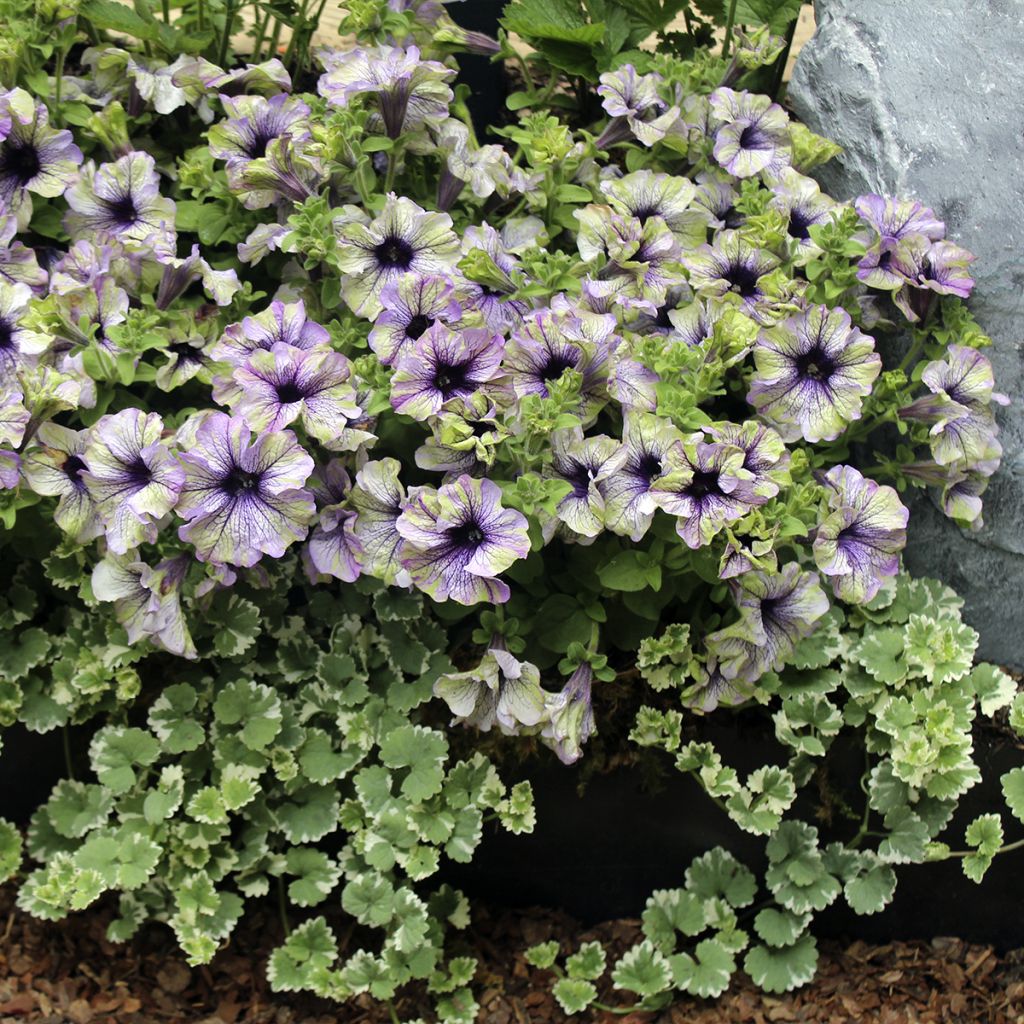
Petunia Amazonas Plum Cockatoo
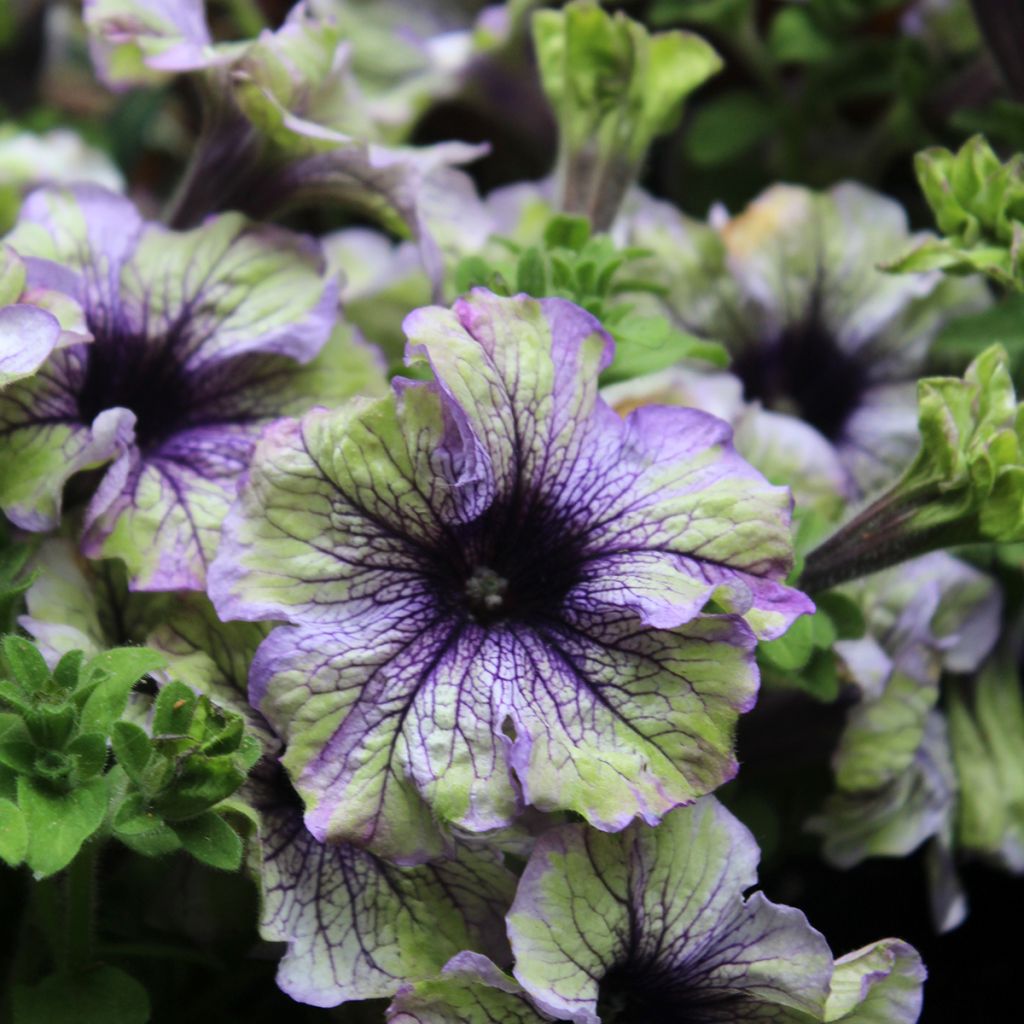
Petunia Amazonas Plum Cockatoo
Petunia Amazonas Plum Cockatoo
Petunia hybrida ‘Dpetampluc’ Amazonas Plum Cockatoo
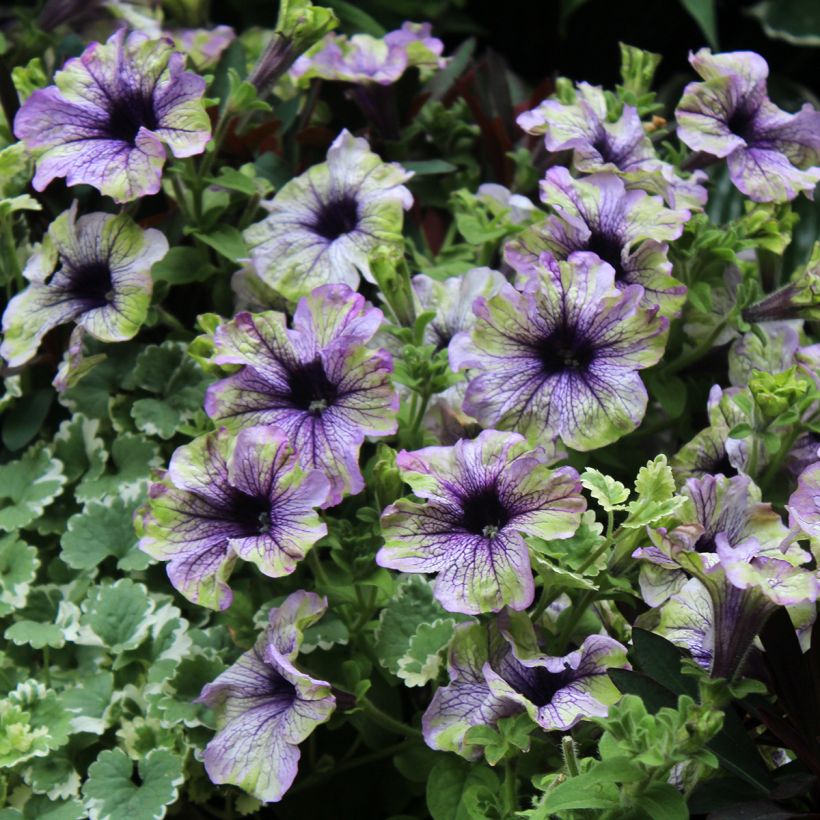
These plug plants have flowered under cover. A very pretty colour, full of promise for this summer.
Ank, 18/04/2026
Back-to-school special offer!
Get €10 off for every €50 you spend! And get up to €40 off on a single order.
How does it work?
1. Shop your favourites
Add your favourite plants to your basket. For every €50 you spend (excluding delivery charges, store credit and the plastic-free option), you’ll receive a €10 voucher.
€50 spent = €10 voucher
€100 spent = €20 voucher
€150 spent = €30 voucher
€200 spent = €40 voucher
2. Place your order
Once your basket reaches one of the spending thresholds, place your order. You can even choose your delivery date!
3. Receive your voucher
As soon as your order has been shipped, you’ll receive an email containing your personal voucher code and its value.
4. Use it on your next order
Your voucher is valid for 90 days from the date you receive it. It can be used once only, on a new order worth at least the value of the voucher, excluding delivery charges.
Please note: Vouchers can be combined with other offers, but cannot be split or refunded.
Why not try an alternative variety in stock?
View all →
Available in 1 sizes

Available in 2 sizes
This plant carries a 6 months recovery warranty
More information
We guarantee the quality of our plants for a full growing cycle, and will replace at our expense any plant that fails to recover under normal climatic and planting conditions.

Would this plant suit my garden?
Set up your Plantfit profile →
Description
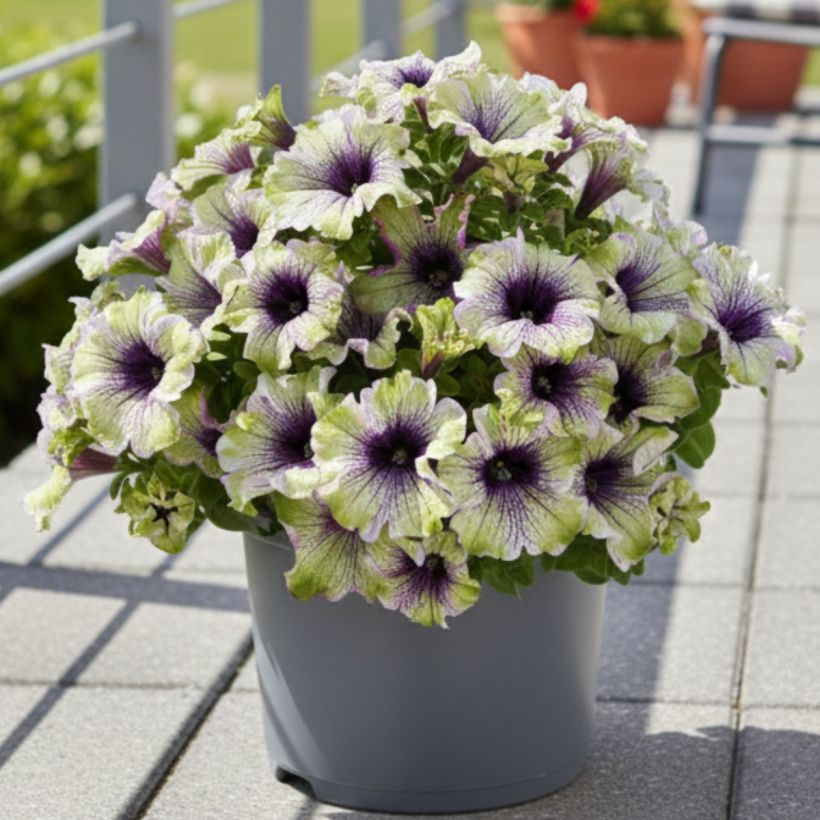
Petunia Amazonas™ Plum Cockatoo (‘Dpetampluc’) is a compact annual petunia with spectacular, large bicoloured flowers, soft green at the centre of deep plum. It is part of the Amazonas™ series, known for its green-edged flowers and good drought tolerance. This plant makes a big impact in containers, hanging baskets or as a border edging. Well-branched and floriferous all summer long, it is a generous, characterful and easy-going variety.
This petunia belongs to the Solanaceae family and the Petunia genus, which includes around thirty South American species. It falls under the Petunia × atkinsiana complex, which groups hybrids between the large, fragrant white-flowered P. axillaris and the purple-flowered P. integrifolia, sometimes supplemented by P. inflata.
‘Dpetampluc’ is a cultivar selected by the Israeli breeder Danziger within the Amazonas™ series, launched in the mid-2020s and distinguished by a National Garden Bureau award. This series is characterised by large-sized flowers, with fringed green margins, very stable colouring even in summer, early and prolonged flowering, compact growth, good drought resistance and excellent garden performance.
It is an annual plant, grown from young plants or cuttings, which will be killed by frost. It forms a slightly trailing cushion, 30 to 35 cm in height and 35 to 45 cm in spread, which will fill pots and hanging baskets within a few weeks. Its cylindrical stems are woody at the base and covered in fine down. The foliage consists of simple, entire, ovate, 3 to 6 cm long, medium to light green, slightly hairy leaves, arranged alternately on the stems.
The very long-lasting flowering extends from May to the first frosts, peaking from June to September. The flowers are corollas with five waved lobes, 6 to 8 cm in diameter. In Plum Cockatoo, the background of the flower is anise green to cream green, highlighted by a broad central zone of purple to very dark plum, traversed by purplish veins which radiate across the petals, sometimes giving the impression of a heart-shaped design when viewed face-on. The slightly fringed petal edges remain bordered in green, accentuating the bicolour effect. The centre of the flower is dark, almost black, with a small cluster of fused stamens bearing light pollen. This flowering is lightly scented, especially in the evening. It attracts butterflies and other pollinating insects.
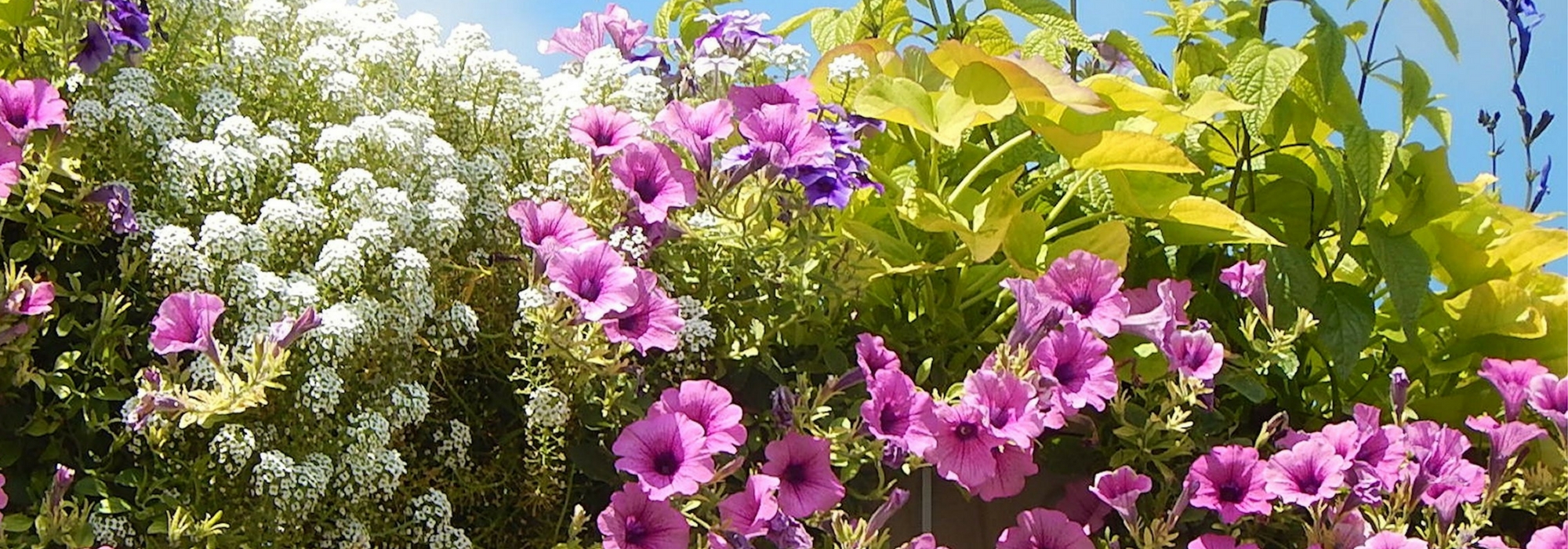
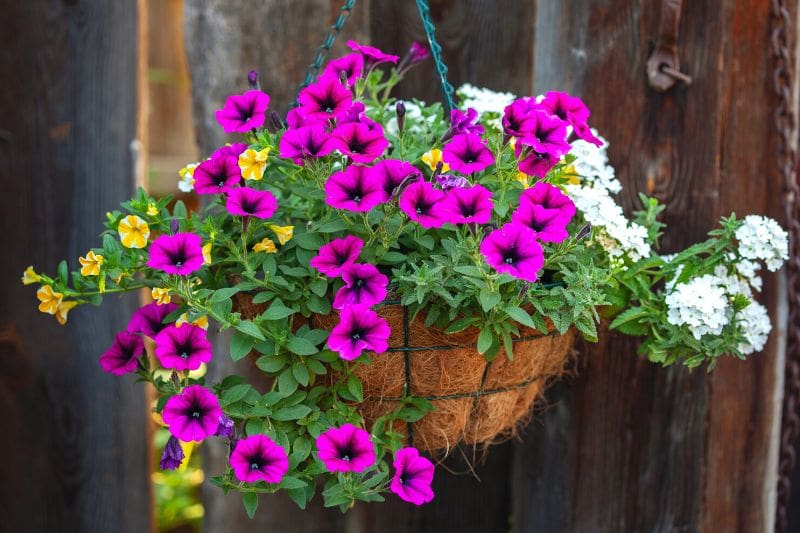
This Amazonas Plum Cockatoo variety can be planted in hanging baskets and window boxes, as well as in low borders where it creates a colourful carpet near pathways or seating areas. It can be paired with the dark-leaved Coleus 'Black Prince', with a chartreuse-green foliaged Ipomoea ‘Sweet Caroline Light Green’, with Calibrachoa Eyeconic Purple or dwarf Dahlia ‘Topmix Purple’. Ideally, plant it in a rich potting compost, with regular watering and a few applications of liquid fertiliser for flowering plants to support the bloom until the first chills.
The genus name Petunia comes from a word in the Tupi-Guarani languages meaning "tobacco", referring to the plants' resemblance to small wild tobaccos. The Amazonas™ series was designed to evoke a tropical jungle atmosphere. Plum Cockatoo recalls the plumage of Australian cockatoos with their contrasting colours.
Note: Please note, plug plants are products reserved for experienced gardeners: upon receipt, pot them on as soon as possible, into containers, window boxes or directly into borders.
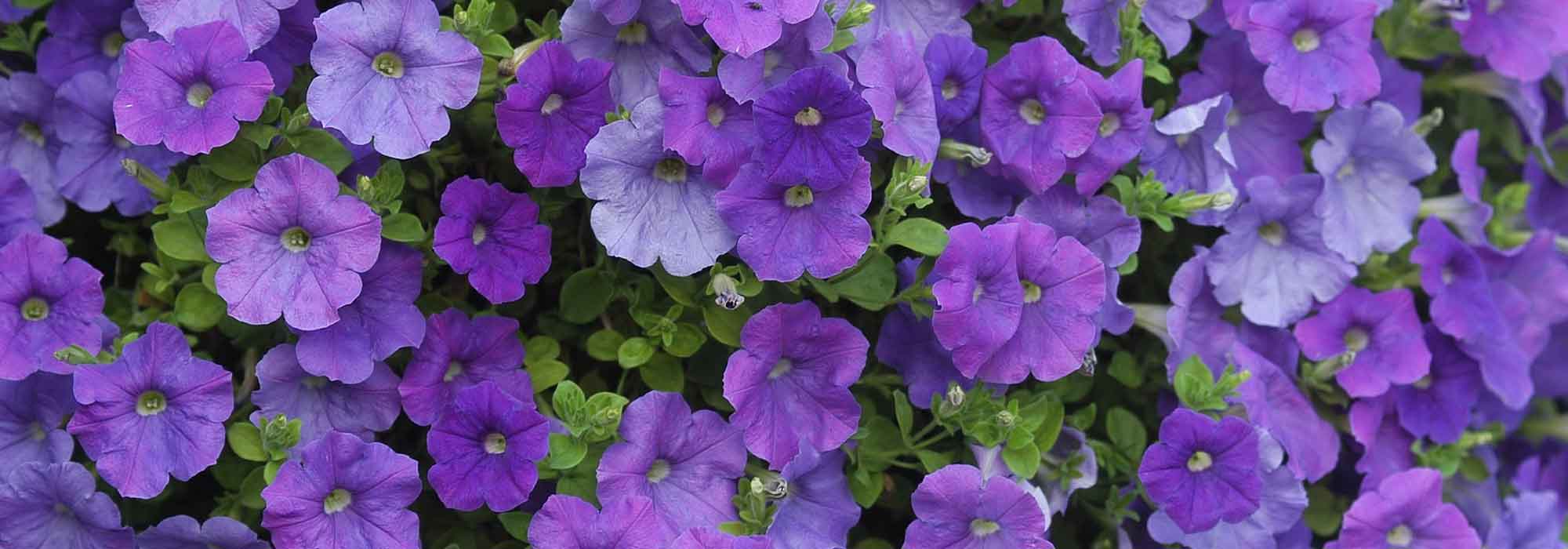
Petunia Amazonas Plum Cockatoo in pictures
Flowering
Foliage
Plant habit
Botanical data
Petunia
hybrida
‘Dpetampluc’ Amazonas Plum Cockatoo
Solanaceae
Petunia hybrida ‘Dpetampluc’, Petunia hybrida Amazonas Plum Cockatoo
Cultivar or hybrid
Planting and care
Petunia Amazonas Plum Cockatoo is an easy-to-grow plant that will find a place in a border or in a pot, planter, or hanging basket. If you wish to grow it outdoors, wait until the last frosts have passed (it is sensitive to frost: minimum -1°C). While waiting to plant it in your borders and containers, you can grow it in a pot in a warm and bright spot.
Petunia appreciates a sunny position, or lightly shaded in the afternoon, sheltered from the wind. It requires a light, humus-bearing soil that does not retain too much water. It doesn't tolerate excess moisture at the root level very well, especially at the beginning of the growing season. Water it moderately. It withstands drought well once established, but will need regular watering during intense summer heat. It is a heavy feeder, so provide liquid fertiliser once or twice a week during the growth period.
Planting period
Intended location
Care
Planting & care advice
-
-

-
-
-
-
-

-
-
, onOrder confirmed
Reply from on Promesse de fleurs
Recently viewed products
Haven't found what you were looking for?
Hardiness is the lowest winter temperature a plant can endure without suffering serious damage or even dying. However, hardiness is affected by location (a sheltered area, such as a patio), protection (winter cover) and soil type (hardiness is improved by well-drained soil).

The flowering period indicated on our website applies to countries and regions located in USDA zone 8 (France, the United Kingdom, Ireland, the Netherlands, etc.)
It will vary according to where you live:- In zones 9 to 10 (Italy, Spain, Greece, etc.), flowering will occur about 2 to 4 weeks earlier.
- In zones 6 to 7 (Germany, Poland, Slovenia, and lower mountainous regions), flowering will be delayed by 2 to 3 weeks.
- In zone 5 (Central Europe, Scandinavia), blooming will be delayed by 3 to 5 weeks.
In temperate climates, pruning of spring-flowering shrubs (forsythia, spireas, etc.) should be done just after flowering.
Pruning of summer-flowering shrubs (Indian Lilac, Perovskia, etc.) can be done in winter or spring.
In cold regions as well as with frost-sensitive plants, avoid pruning too early when severe frosts may still occur.
The planting period indicated on our website applies to countries and regions located in USDA zone 8 (France, United Kingdom, Ireland, Netherlands).
It will vary according to where you live:
- In Mediterranean zones (Marseille, Madrid, Milan, etc.), autumn and winter are the best planting periods.
- In continental zones (Strasbourg, Munich, Vienna, etc.), delay planting by 2 to 3 weeks in spring and bring it forward by 2 to 4 weeks in autumn.
- In mountainous regions (the Alps, Pyrenees, Carpathians, etc.), it is best to plant in late spring (May-June) or late summer (August-September).
The harvesting period indicated on our website applies to countries and regions in USDA zone 8 (France, England, Ireland, the Netherlands).
In colder areas (Scandinavia, Poland, Austria...) fruit and vegetable harvests are likely to be delayed by 3-4 weeks.
In warmer areas (Italy, Spain, Greece, etc.), harvesting will probably take place earlier, depending on weather conditions.
The sowing periods indicated on our website apply to countries and regions within USDA Zone 8 (France, UK, Ireland, Netherlands).
In colder areas (Scandinavia, Poland, Austria...), delay any outdoor sowing by 3-4 weeks, or sow under glass.
In warmer climes (Italy, Spain, Greece, etc.), bring outdoor sowing forward by a few weeks.
Shipping country and language
Your country of residence may be:
Your country of residence is:
For a better user experience on our website, you can select:
Your shipping country:
-
 Austria
-
 Belgium
-
 Bosnia & Herzegovina
-
 Bulgaria
-
 Croatia
-
 Cyprus
-
 Czechia
-
 Denmark
-
 Estonia
-
 Finland
-
 France
-
 Germany
-
 Greece
-
 Hungary
-
 Iceland
-
 Ireland
-
 Italy
Italy
-
 Latvia
-
 Liechtenstein
-
 Lithuania
-
 Luxembourg
-
 Malta
Malta
-
 Netherlands
-
 Poland
-
 Portugal
-
 Romania
-
 Serbia
-
 Slovakia
-
 Slovenia
-
 Spain
Spain
-
 Sweden
-
 Switzerland
Language:
-
French
-
 English
-
Spanish
-
Italian
-
German
-
Portuguese
-
Dutch
-
Finnish
My Account
Hello
My wish lists
My cart
Log in / Register
Existing customer?
This form is protected by reCAPTCHA - the Google Privacy Policy and Terms of Service apply.
New customer?
Create an account to track your orders, access our customer service and, if you wish, make the most of our upcoming offers.