
Adiantum raddianum 'Fritz Lüthi' - Capillaire radiée Fritz Lüthi, Capillaire radiée Fritz-Luth
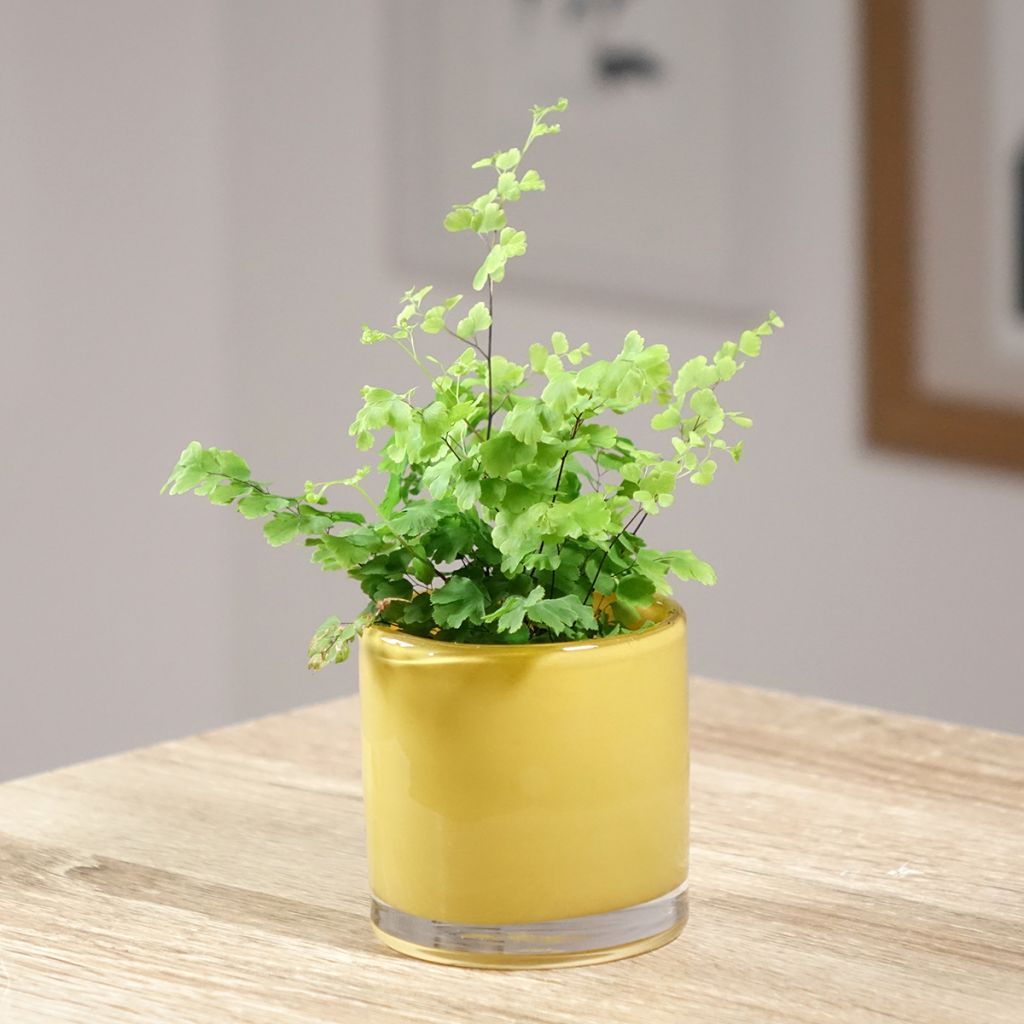
Adiantum raddianum 'Fritz Lüthi' - Capillaire radiée Fritz Lüthi, Capillaire radiée Fritz-Luth

Adiantum raddianum 'Fritz Lüthi' - Capillaire radiée Fritz Lüthi, Capillaire radiée Fritz-Luth
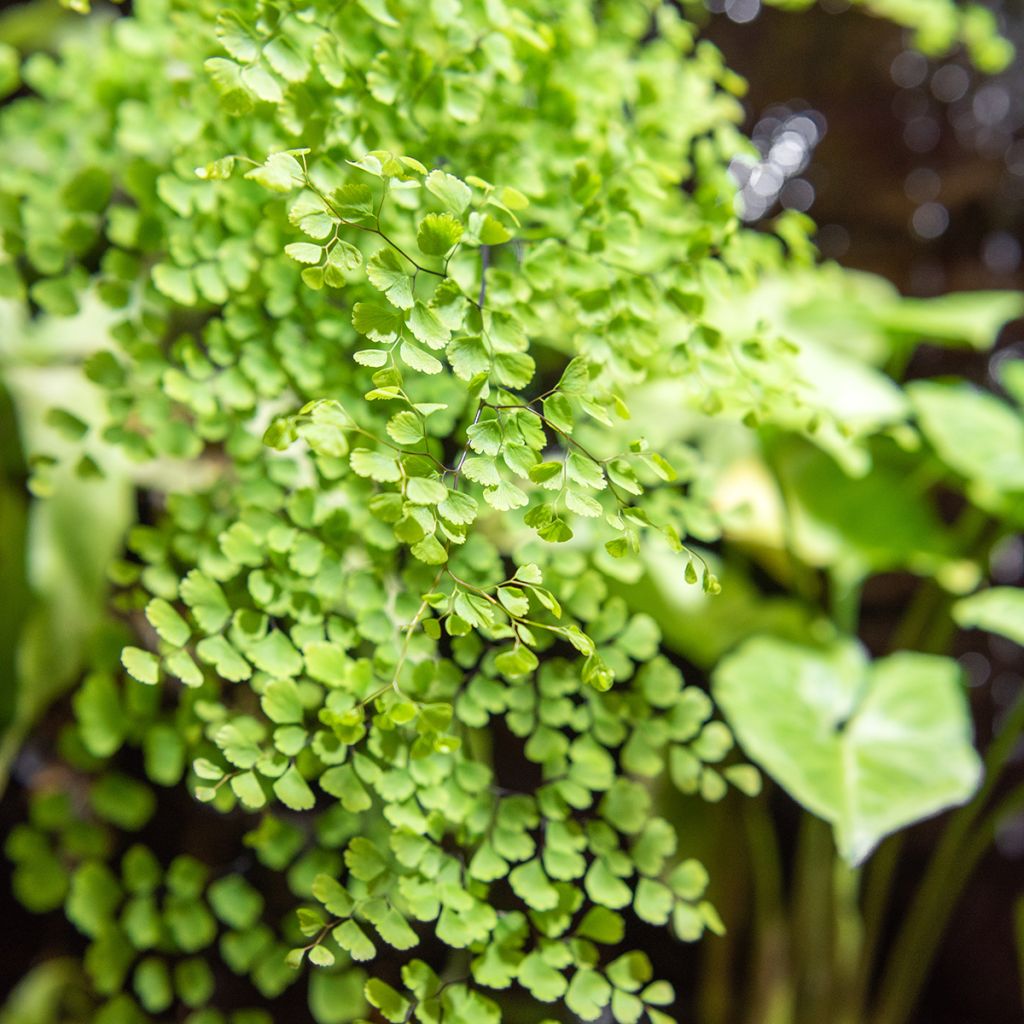
Adiantum raddianum 'Fritz Lüthi' - Capillaire radiée Fritz Lüthi, Capillaire radiée Fritz-Luth

Adiantum raddianum 'Fritz Lüthi' - Capillaire radiée Fritz Lüthi, Capillaire radiée Fritz-Luth
Adiantum raddianum 'Fritz Lüthi' - Capillaire radiée Fritz Lüthi, Capillaire radiée Fritz-Luth
Adiantum raddianum 'Fritz Lüthi'
Back-to-school special offer!
Get €10 off for every €50 you spend! And get up to €40 off on a single order.
How does it work?
1. Shop your favourites
Add your favourite plants to your basket. For every €50 you spend (excluding delivery charges, store credit and the plastic-free option), you’ll receive a €10 voucher.
€50 spent = €10 voucher
€100 spent = €20 voucher
€150 spent = €30 voucher
€200 spent = €40 voucher
2. Place your order
Once your basket reaches one of the spending thresholds, place your order. You can even choose your delivery date!
3. Receive your voucher
As soon as your order has been shipped, you’ll receive an email containing your personal voucher code and its value.
4. Use it on your next order
Your voucher is valid for 90 days from the date you receive it. It can be used once only, on a new order worth at least the value of the voucher, excluding delivery charges.
Please note: Vouchers can be combined with other offers, but cannot be split or refunded.
Why not try an alternative variety in stock?
View all →
Available in 2 sizes

Available in 2 sizes

Available in 2 sizes

Available in 1 sizes

Available in 1 sizes

Available in 2 sizes

Available in 1 sizes
This plant carries a 30 days recovery warranty
More information
We guarantee the quality of our plants for a full growing cycle, and will replace at our expense any plant that fails to recover under normal climatic and planting conditions.
Description
Adiantum raddianum ‘Fritz Lüthi’, the capillary fern also known as Venus hair fern, possesses the rare talent of bringing lightness to a room without cluttering it. Its lacy fronds, borne on dark stems, work wonders on a console table, near a veiled window, or in a temperate conservatory. It is a plant of choice for lovers of fine foliage and slightly "woodland" atmospheres, provided it is given a stable, gentle, and humid environment.
Belonging to the Pteridaceae family, the species Adiantum raddianum is native to tropical Americas and the Caribbean, where it lives in humid environments, sometimes on rocks or cool slopes, in filtered light. It is a lithophytic plant. Botanical synonyms include Adiantum cuneatum or Adiantum rubellum, with vernacular names such as radiate maidenhair fern or cuneate maidenhair.
‘Fritz Lüthi’ is a Swiss horticultural selection, appearing in the 1950s, prized for its firmer and well-upright fronds. The plant forms a clump from short rootstocks; the shiny, black petioles bear triangular fronds composed of small fan-shaped segments, rounded to triangular, more or less lobed and often slightly overlapping. The foliage is evergreen year-round indoors. Like all ferns, it does not flower: reproduction is by spores, discreetly housed under the edge of the segments.
At maturity, in a pot, it reaches 30 to 50 cm in height with a comparable width. Its growth is fairly rapid if the air is humid and its roots remain cool.
This variety is considered non-toxic, but ingestion of leaves may cause minor digestive discomfort and should therefore be avoided.
Indoors, provide it with bright light but no direct sun, humid air, and a stable temperature between 16 and 24 °C; avoid exposing it to temperatures below 10 °C. Its cultivation method is similar to that of indoor Pteris, but with a more pronounced requirement for humidity. This fern dislikes rooms that are too dry and forgotten waterings.
With Adiantum ‘Fritz Lüthi’, everything depends on humidity: it thrives particularly in a slightly heated conservatory, an indoor greenhouse, or a large, well-ventilated terrarium, always in soft light without direct sun. Under glass or near a humidifier, this maidenhair fern more easily finds what it needs. You can pair it with Pteris cretica ‘Albolineata’, the crocodile fern Microsorum musifolium 'Crocodyllus' and Fittonia ‘Mini White’, two cultivars that love the same bright shade and a very humid atmosphere.

Adiantum raddianum 'Fritz Lüthi' - Capillaire radiée Fritz Lüthi, Capillaire radiée Fritz-Luth in pictures
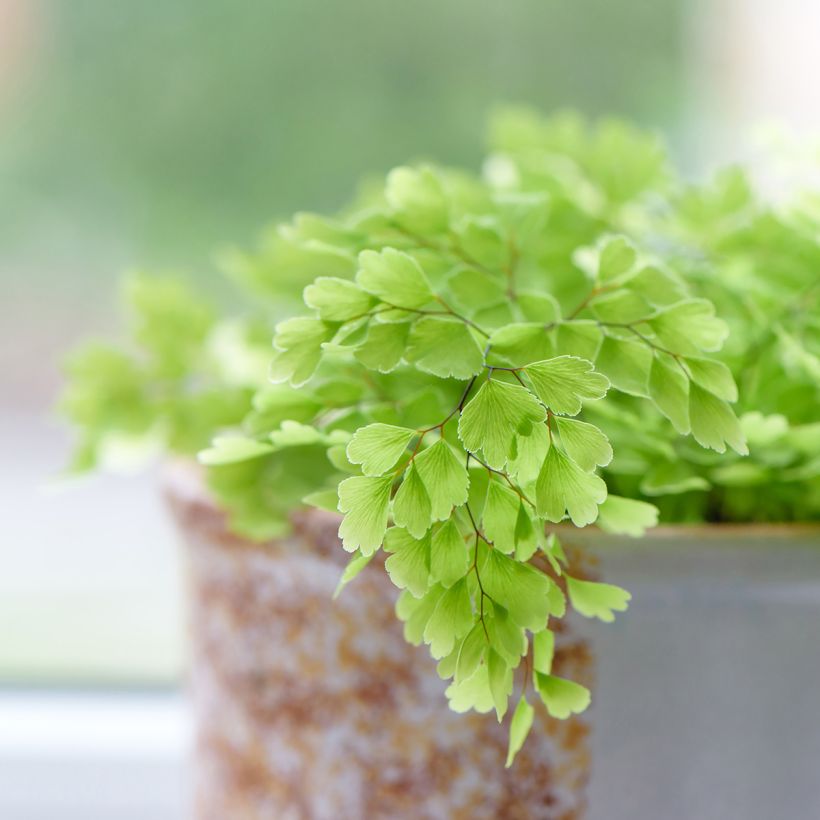

Foliage
Plant habit
Flowering
Botanical data
Adiantum
raddianum
'Fritz Lüthi'
Pteridaceae
Cultivar or hybrid, Australia
Location
Location
Maintenance & care
Watering tips
Potting advice, substrates and fertilisers
Houseplant care
Disease and pest advice
Maintenance & care
Planting & care advice








This item has not been reviewed yet - be the first to leave a review about it.
Recently viewed products
Haven't found what you were looking for?
Hardiness is the lowest winter temperature a plant can endure without suffering serious damage or even dying. However, hardiness is affected by location (a sheltered area, such as a patio), protection (winter cover) and soil type (hardiness is improved by well-drained soil).

The flowering period indicated on our website applies to countries and regions located in USDA zone 8 (France, the United Kingdom, Ireland, the Netherlands, etc.)
It will vary according to where you live:- In zones 9 to 10 (Italy, Spain, Greece, etc.), flowering will occur about 2 to 4 weeks earlier.
- In zones 6 to 7 (Germany, Poland, Slovenia, and lower mountainous regions), flowering will be delayed by 2 to 3 weeks.
- In zone 5 (Central Europe, Scandinavia), blooming will be delayed by 3 to 5 weeks.
In temperate climates, pruning of spring-flowering shrubs (forsythia, spireas, etc.) should be done just after flowering.
Pruning of summer-flowering shrubs (Indian Lilac, Perovskia, etc.) can be done in winter or spring.
In cold regions as well as with frost-sensitive plants, avoid pruning too early when severe frosts may still occur.
The planting period indicated on our website applies to countries and regions located in USDA zone 8 (France, United Kingdom, Ireland, Netherlands).
It will vary according to where you live:
- In Mediterranean zones (Marseille, Madrid, Milan, etc.), autumn and winter are the best planting periods.
- In continental zones (Strasbourg, Munich, Vienna, etc.), delay planting by 2 to 3 weeks in spring and bring it forward by 2 to 4 weeks in autumn.
- In mountainous regions (the Alps, Pyrenees, Carpathians, etc.), it is best to plant in late spring (May-June) or late summer (August-September).
The harvesting period indicated on our website applies to countries and regions in USDA zone 8 (France, England, Ireland, the Netherlands).
In colder areas (Scandinavia, Poland, Austria...) fruit and vegetable harvests are likely to be delayed by 3-4 weeks.
In warmer areas (Italy, Spain, Greece, etc.), harvesting will probably take place earlier, depending on weather conditions.
The sowing periods indicated on our website apply to countries and regions within USDA Zone 8 (France, UK, Ireland, Netherlands).
In colder areas (Scandinavia, Poland, Austria...), delay any outdoor sowing by 3-4 weeks, or sow under glass.
In warmer climes (Italy, Spain, Greece, etc.), bring outdoor sowing forward by a few weeks.
Shipping country and language
Your country of residence may be:
Your country of residence is:
For a better user experience on our website, you can select:
Your shipping country:
-
 Austria
-
 Belgium
-
 Bosnia & Herzegovina
-
 Bulgaria
-
 Croatia
-
 Cyprus
-
 Czechia
-
 Denmark
-
 Estonia
-
 Finland
-
 France
-
 Germany
-
 Greece
-
 Hungary
-
 Iceland
-
 Ireland
-
 Italy
Italy
-
 Latvia
-
 Liechtenstein
-
 Lithuania
-
 Luxembourg
-
 Malta
Malta
-
 Netherlands
-
 Poland
-
 Portugal
-
 Romania
-
 Serbia
-
 Slovakia
-
 Slovenia
-
 Spain
Spain
-
 Sweden
-
 Switzerland
Language:
-
French
-
 English
-
Spanish
-
Italian
-
German
-
Portuguese
-
Dutch
-
Finnish
My Account
Hello
My wish lists
My cart
Log in / Register
Existing customer?
This form is protected by reCAPTCHA - the Google Privacy Policy and Terms of Service apply.
New customer?
Create an account to track your orders, access our customer service and, if you wish, make the most of our upcoming offers.