×Mangave ‘Navajo Princess’ - Agave Navajo Princess
×Mangave ‘Navajo Princess’ - Agave Navajo Princess
×Mangave ‘Navajo Princess’
Back-to-school special offer!
Get €10 off for every €50 you spend! And get up to €40 off on a single order.
How does it work?
1. Shop your favourites
Add your favourite plants to your basket. For every €50 you spend (excluding delivery charges, store credit and the plastic-free option), you’ll receive a €10 voucher.
€50 spent = €10 voucher
€100 spent = €20 voucher
€150 spent = €30 voucher
€200 spent = €40 voucher
2. Place your order
Once your basket reaches one of the spending thresholds, place your order. You can even choose your delivery date!
3. Receive your voucher
As soon as your order has been shipped, you’ll receive an email containing your personal voucher code and its value.
4. Use it on your next order
Your voucher is valid for 90 days from the date you receive it. It can be used once only, on a new order worth at least the value of the voucher, excluding delivery charges.
Please note: Vouchers can be combined with other offers, but cannot be split or refunded.
Why not try an alternative variety in stock?
View all →
Available in 2 sizes
Available in 2 sizes
Available in 1 sizes
Available in 1 sizes
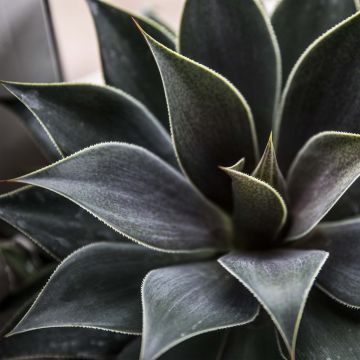
Available in 2 sizes
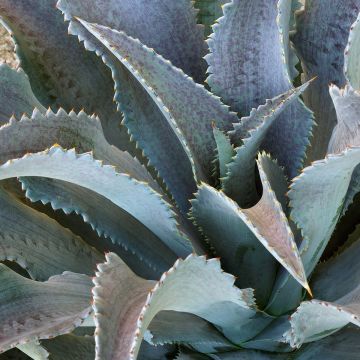
Available in 2 sizes
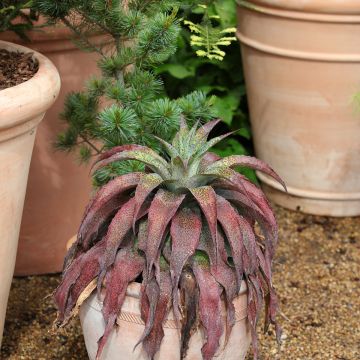
Available in 2 sizes
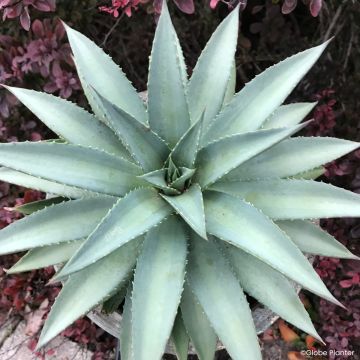
Available in 1 sizes

Available in 1 sizes
Available in 2 sizes
This plant carries a 12 months recovery warranty
More information
We guarantee the quality of our plants for a full growing cycle, and will replace at our expense any plant that fails to recover under normal climatic and planting conditions.
Would this plant suit my garden?
Set up your Plantfit profile →
Description
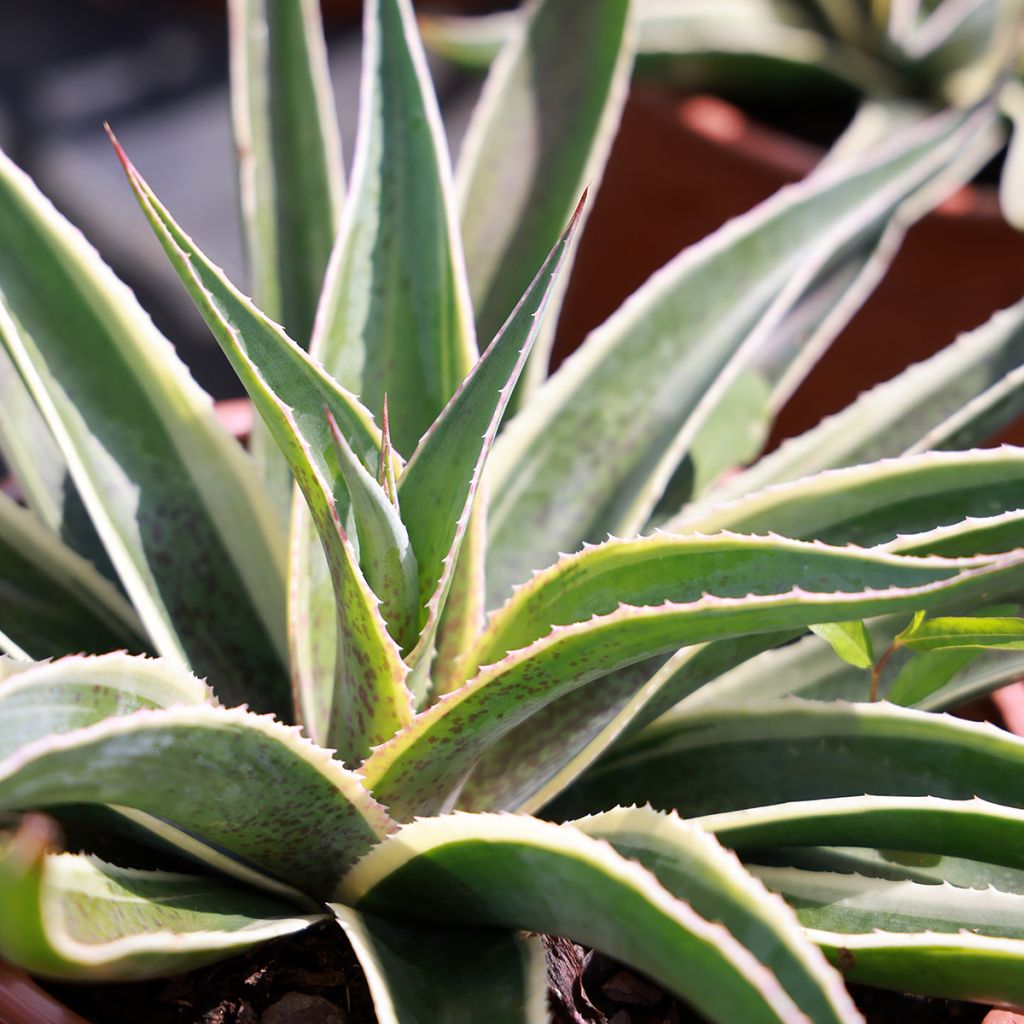
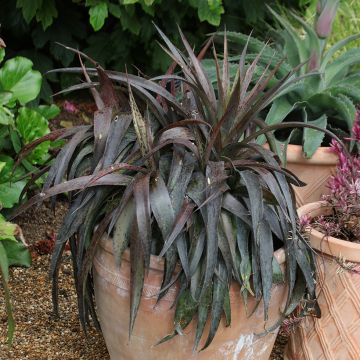
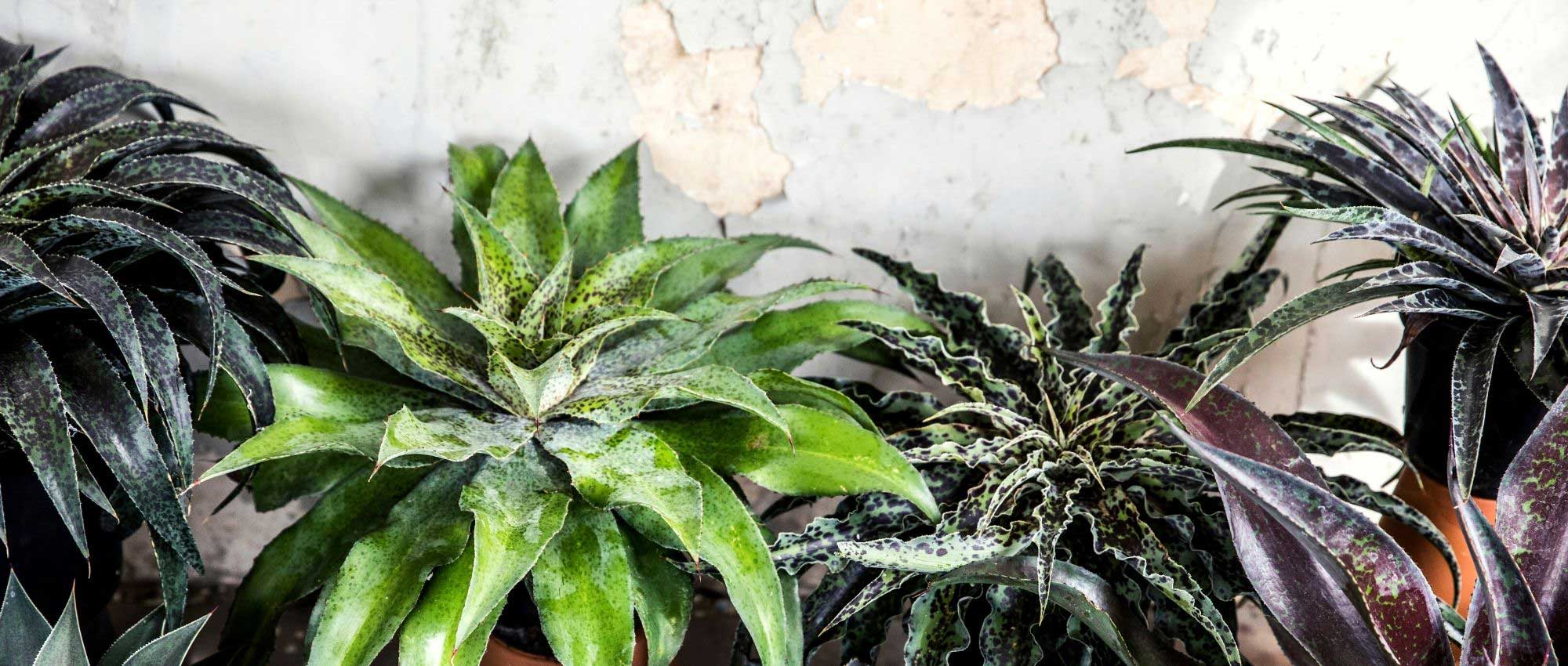
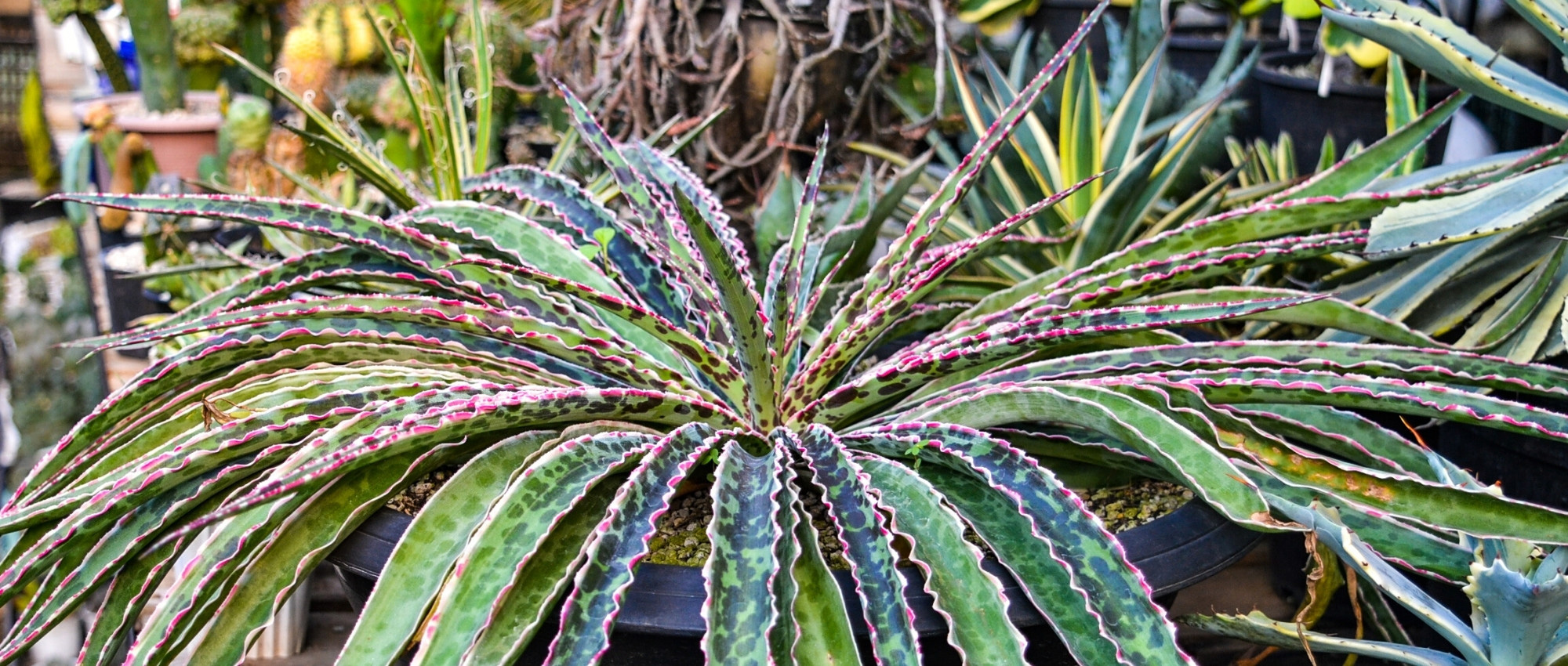
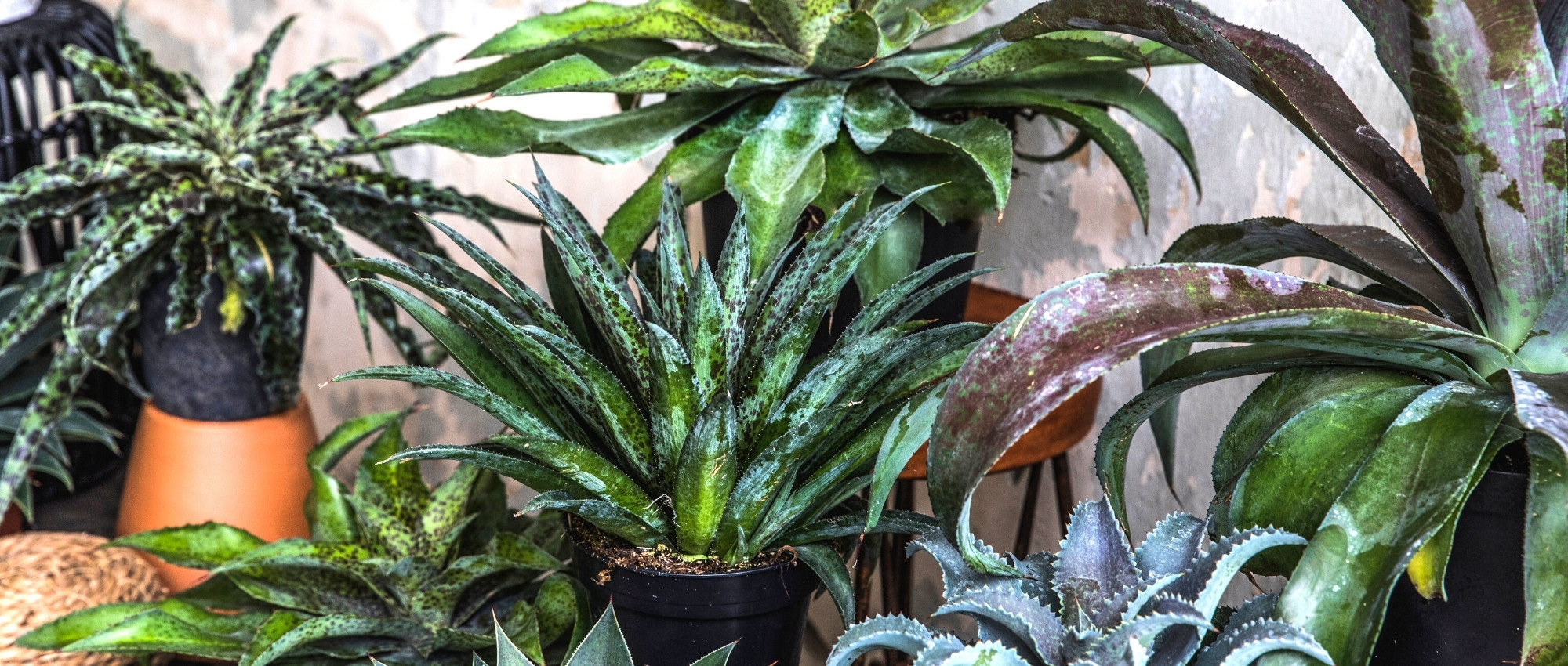
xMangave 'Navajo Princess' is a succulent plant that forms a rosette wider than it is tall, with a very geometric and ornamental appearance. The long leaves, overlapping at the base of one another, display a dark green with a slightly bluish tint, highlighted by a peripheral margin of creamy white. The clump produces new leaves each year, reaching 45 cm in diameter at maturity. The tough and quite stiff leaves are pointed and have teeth along their edges. Well-adapted to drought, this plant can withstand brief frosts of around -7°C. It will easily find a place in a rockery in the southern or southwestern regions of Europe and should be grown in a pot elsewhere to be overwintered in a cool, bright, and frost-free room.
Mangave is an intergeneric hybrid (strictly speaking, it is therefore an x Mangave) that appeared in the early 2000s, the result of cross-breeding between the Agave and Manfreda genera, both members of the Asparagaceae family. This family now encompasses the Agavaceae and other botanical families that were once distinct. While the flagship genus is Asparagus, many other ornamental genera are grouped within this family, such as Aspidistra, once a houseplant but hardy enough to be planted in the garden, or the popular Yucca.
'Navajo Princess' was developed by breeder Hans Hansen (Walters Garden nurseries in Michigan, USA) by crossing Agave montana, a very hardy alpine species, and Manfreda maculosa, which has thornless, leopard-patterned leaves (green marked with brown). This Manfreda is quite frost-hardy (down to -8°C) and can even regrow from its underground tubercle if the above-ground part freezes completely. xMangave 'Navajo Princess' is part of the Mad About Mangave® horticultural range, which includes many attractive varieties, such as Chocolate Chips. The plant initially forms a rosette of a few leaves, which continually increases until it forms a pretty, fairly low clump, approximately 20 to 25 cm tall and 45 to 50 cm in diameter. It produces long, tough leaves, slightly swollen in the lower third and then very tapered, ending in a point, much like Agaves. Similarly, the margins of the leaves have small, very sharp teeth, quite rough on the hands. The young leaves emerge erect and vertical from the centre of the rosette, then quickly curve to become horizontal, giving the Mangave its wider-than-tall silhouette. Their colour is a deep, almost dark green with a bluish hue, edged with creamy white along the entire border. This colour contrast is particularly elegant and gives the variety its originality. After a few years, when the Mangave has grown sufficiently, it sends up a large flower spike that rises from the heart of the rosette to over a metre in height. The upper half of the spike is adorned with several dozen tiered lateral shoots, each bearing five or six creamy-coloured tubular flowers.
xMangave 'Navajo Princess' will integrate perfectly into a sunny rockery in southern Europe, alongside other plants with an exotic appearance. Plant it alongside different varieties of Aeonium to create an attractive, colourful scene in every season. A lovely "mother-in-law's cushion" (Echinocactus grusonii) will create a very interesting contrast in form and volume, which will also be the case if you opt for the famous prickly pear cacti, or Opuntia, with silhouettes that are sometimes compact, sometimes sprawling, depending on the species.
Flowering
Foliage
Plant habit
Botanical data
×Mangave
‘Navajo Princess’
Asparagaceae
×Mangave ‘Navajo Princess’, Mad About Mangave® ‘Navajo Princess’
Cultivar or hybrid
Planting and care
Position xMangave Navajo Princess in full sun, or in partial shade in our warmest and sunniest regions. Plant it in very well-draining soil, even if poor, stony or sandy: it tolerates winter moisture and cold poorly, but will be better in dry cold spells that are not too severe, in dry soil. It is therefore highly recommended to grow this plant in a pot in damp and cold winter regions. As it adapts perfectly to dry, even arid soils in summer, it can be considered for a rockery or on a stony bank, in coastal gardens or in mild climates, where frosts do not drop below -7°C at their peak. This variety is slightly hardier than other Mangaves, which generally cannot withstand less than -5°C to -6°C.
Given the plant's modest growth, it can very easily be grown in a pot on a terrace or balcony, in a light substrate such as cactus compost, with particularly careful drainage, preferably in a terracotta pot. Water regularly in summer, but allow the substrate to dry out between waterings. It will then be easy to store the pot away from severe frosts and damp, in a bright, airy room with little or no heating. Reduce, or even stop, watering in winter. The plant can spend April to October outdoors.
Planting period
Intended location
Care
Planting & care advice
-
-
-
-
-
-
-
-
This item has not been reviewed yet - be the first to leave a review about it.
Recently viewed products
Haven't found what you were looking for?
Hardiness is the lowest winter temperature a plant can endure without suffering serious damage or even dying. However, hardiness is affected by location (a sheltered area, such as a patio), protection (winter cover) and soil type (hardiness is improved by well-drained soil).

The flowering period indicated on our website applies to countries and regions located in USDA zone 8 (France, the United Kingdom, Ireland, the Netherlands, etc.)
It will vary according to where you live:- In zones 9 to 10 (Italy, Spain, Greece, etc.), flowering will occur about 2 to 4 weeks earlier.
- In zones 6 to 7 (Germany, Poland, Slovenia, and lower mountainous regions), flowering will be delayed by 2 to 3 weeks.
- In zone 5 (Central Europe, Scandinavia), blooming will be delayed by 3 to 5 weeks.
In temperate climates, pruning of spring-flowering shrubs (forsythia, spireas, etc.) should be done just after flowering.
Pruning of summer-flowering shrubs (Indian Lilac, Perovskia, etc.) can be done in winter or spring.
In cold regions as well as with frost-sensitive plants, avoid pruning too early when severe frosts may still occur.
The planting period indicated on our website applies to countries and regions located in USDA zone 8 (France, United Kingdom, Ireland, Netherlands).
It will vary according to where you live:
- In Mediterranean zones (Marseille, Madrid, Milan, etc.), autumn and winter are the best planting periods.
- In continental zones (Strasbourg, Munich, Vienna, etc.), delay planting by 2 to 3 weeks in spring and bring it forward by 2 to 4 weeks in autumn.
- In mountainous regions (the Alps, Pyrenees, Carpathians, etc.), it is best to plant in late spring (May-June) or late summer (August-September).
The harvesting period indicated on our website applies to countries and regions in USDA zone 8 (France, England, Ireland, the Netherlands).
In colder areas (Scandinavia, Poland, Austria...) fruit and vegetable harvests are likely to be delayed by 3-4 weeks.
In warmer areas (Italy, Spain, Greece, etc.), harvesting will probably take place earlier, depending on weather conditions.
The sowing periods indicated on our website apply to countries and regions within USDA Zone 8 (France, UK, Ireland, Netherlands).
In colder areas (Scandinavia, Poland, Austria...), delay any outdoor sowing by 3-4 weeks, or sow under glass.
In warmer climes (Italy, Spain, Greece, etc.), bring outdoor sowing forward by a few weeks.
Shipping country and language
Your country of residence may be:
Your country of residence is:
For a better user experience on our website, you can select:
Your shipping country:
-
 Austria
-
 Belgium
-
 Bosnia & Herzegovina
-
 Bulgaria
-
 Croatia
-
 Cyprus
-
 Czechia
-
 Denmark
-
 Estonia
-
 Finland
-
 France
-
 Germany
-
 Greece
-
 Hungary
-
 Iceland
-
 Ireland
-
 Italy
Italy
-
 Latvia
-
 Liechtenstein
-
 Lithuania
-
 Luxembourg
-
 Malta
Malta
-
 Netherlands
-
 Poland
-
 Portugal
-
 Romania
-
 Serbia
-
 Slovakia
-
 Slovenia
-
 Spain
Spain
-
 Sweden
-
 Switzerland
Language:
-
French
-
 English
-
Spanish
-
Italian
-
German
-
Portuguese
-
Dutch
-
Finnish
My Account
Hello
My wish lists
My cart
Log in / Register
Existing customer?
This form is protected by reCAPTCHA - the Google Privacy Policy and Terms of Service apply.
New customer?
Create an account to track your orders, access our customer service and, if you wish, make the most of our upcoming offers.