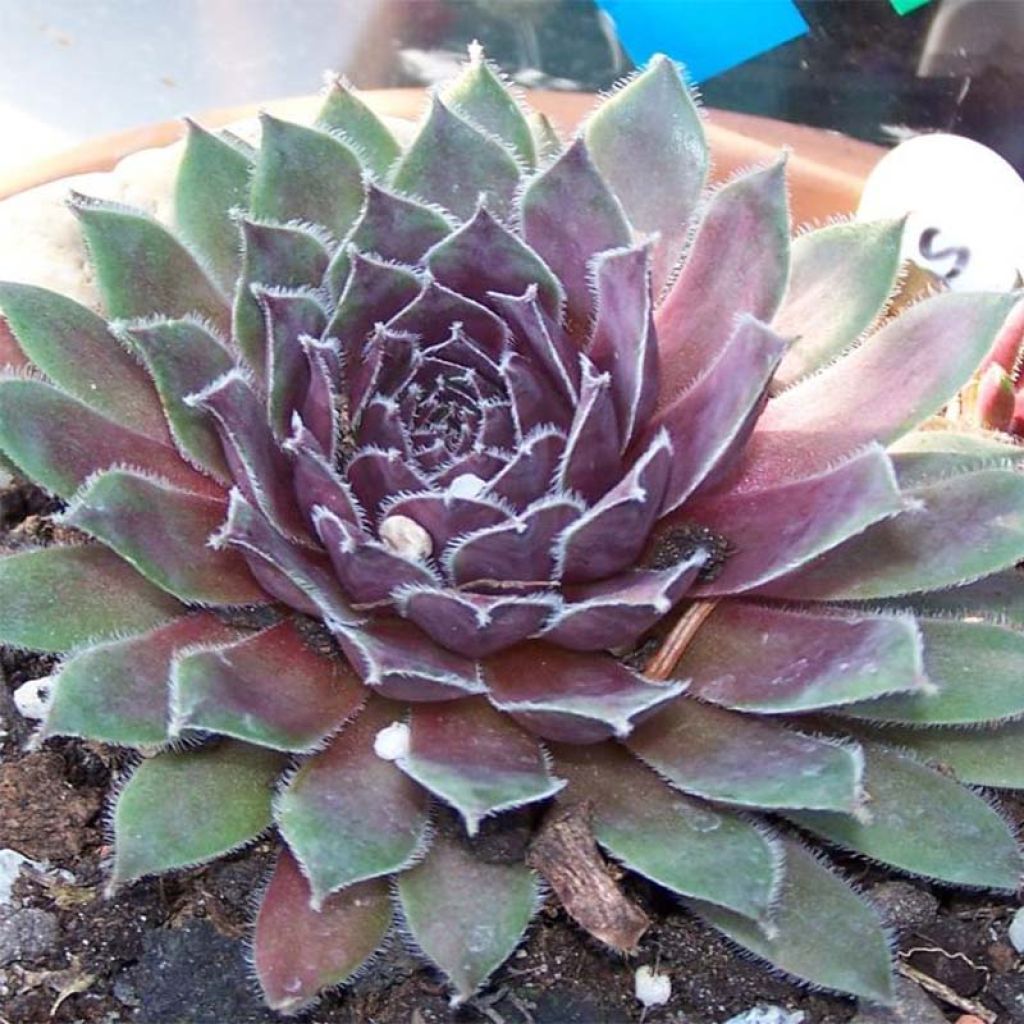
Sempervivum marmoreum Pilatus
Sempervivum marmoreum Pilatus
Sempervivum x marmoreum Pilatus
Houseleek, Hen and Chicks
Delighted to be the first to give my review. Beautiful young plant, healthy, nice pruning. Thank you.
Evelyne, 17/10/2025
Back-to-school special offer!
Get €10 off for every €50 you spend! And get up to €40 off on a single order.
How does it work?
1. Shop your favourites
Add your favourite plants to your basket. For every €50 you spend (excluding delivery charges, store credit and the plastic-free option), you’ll receive a €10 voucher.
€50 spent = €10 voucher
€100 spent = €20 voucher
€150 spent = €30 voucher
€200 spent = €40 voucher
2. Place your order
Once your basket reaches one of the spending thresholds, place your order. You can even choose your delivery date!
3. Receive your voucher
As soon as your order has been shipped, you’ll receive an email containing your personal voucher code and its value.
4. Use it on your next order
Your voucher is valid for 90 days from the date you receive it. It can be used once only, on a new order worth at least the value of the voucher, excluding delivery charges.
Please note: Vouchers can be combined with other offers, but cannot be split or refunded.
Why not try an alternative variety in stock?
View all →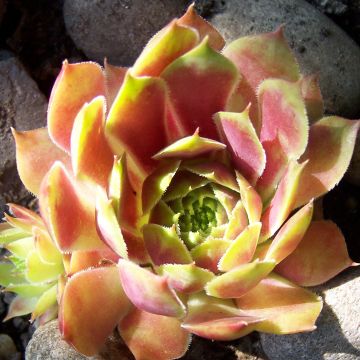
Available in 1 sizes

Available in 2 sizes

Available in 1 sizes

Available in 1 sizes

Available in 1 sizes

Available in 1 sizes

Available in 1 sizes

Available in 1 sizes

Available in 1 sizes

Available in 1 sizes
This plant carries a 12 months recovery warranty
More information
We guarantee the quality of our plants for a full growing cycle, and will replace at our expense any plant that fails to recover under normal climatic and planting conditions.

Would this plant suit my garden?
Set up your Plantfit profile →
Description
Sempervivum 'Pilatus' forms a superb carpet of coloured rosettes ranging from bronze to mauve-violet, with hints of pink in full light, and bordered by long silver cilia that shine like frost in the sun. In winter, they will be greener. Its pink flowering in small stars occurs on a beautiful summer day, emerging from rosettes aged 2 to 3 years old. It is an excellent variety of houseleek, with rapid growth, ideal for embellishing arid and mineral areas. This small succulent plant requires nothing more than an open location and dry soil without thickness. Without any maintenance, it miraculously survives in deprived environments, and relies on rainwater, even if it is scarce.
'Pilatus' is a Swiss cultivar dating back to 1967 resulting from the cross-breeding between the variety 'Alpha', possessing the genes of the cobweb houseleek, and the species Sempervivum marmoreum. All houseleeks grow spontaneously in rocky grassland, on rocks and scree, in open and sunny locations, mainly in mountainous areas. They are very hardy succulent perennial plants of the Crassulaceae family that retain their foliage even in winter.
The 'Pilatus' houseleek has thick and long roots that penetrate deeply into rock crevices, ensuring a good grip on the walls while drawing water from the depths. The plant quickly forms beautiful colonies of rosettes of different sizes, juxtaposed, reaching 8cm (3in) in diameter at maturity, and not exceeding 7 to 8cm (3in) in height. Over time, this houseleek can form an extremely dense mat through its stoloniferous stems, spreading over 40 to 50cm (16 to 20in) on the ground, perfectly following the terrain. Each pruinose rosette is composed of numerous spatulate leaves with pointed tips, without petioles, imbricated one into another, bordered by short silver hairs. Their colour varies according to the season and climatic conditions. In summer, dark shades such as mauve, violet, purple, and bronze dominate. In winter, due to the cold and decreased sunlight, the leaves will be rather greenish-bronze, with shades of chocolate. The flowering appears on rosettes aged 2 or 3 years old, which will then disappear, having ensured the plant's perpetuity by producing several small rosettes on the periphery. The fluffy flower stalks, 15 to 20cm (6 to 8in) tall, develop from June to August, formed by thick stems that bear 1 to 8 star-shaped flowers with 8 to 12 petals in shades of pale-pink crossed by a purplish-pink median line.
Sempervivum 'Pilatus' is a boon for gardens where the soil lacks depth. It thrives where few species survive and colonises abandoned spaces. You can enjoy this hardy perennial if your soil is poor, rather dry, stony, rocky, or even slightly chalky. It withstands temperatures below -15°C (5°F), requires no maintenance, and promises to bring life to any pile of stones, a wall, or even a green roof. Houseleeks are very easy-to-care-for succulent plants, offering flowers and foliage in various hues that will create stunning compositions. Magnificent in their pot arrangements, especially in low terrine-type pottery, they are irreplaceable in borders, troughs, or rockeries, alongside London pride (Saxifraga umbrosa), wall bellflowers, or Lewisia cotyledon. Consider choosing companions with staggered blooms (antennaria, small sedums, delosperma) and colourful foliage (Tanacetum densum subsp. amanii, Ajania pacifica, Hertia cheirifolia), for a varied and joyful rockery.

Sempervivum marmoreum Pilatus in pictures
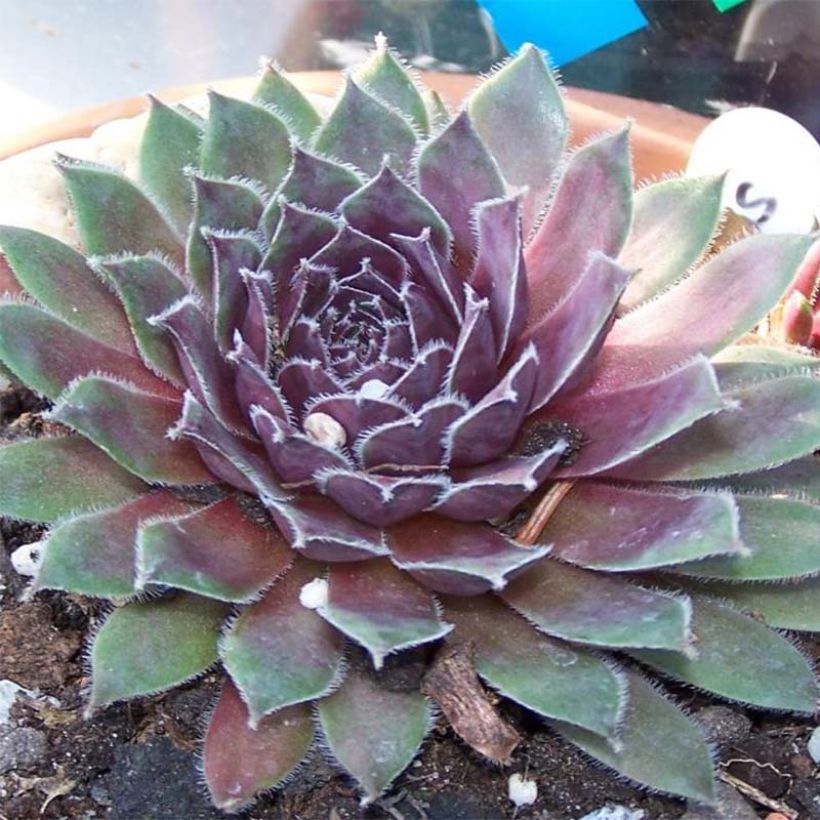
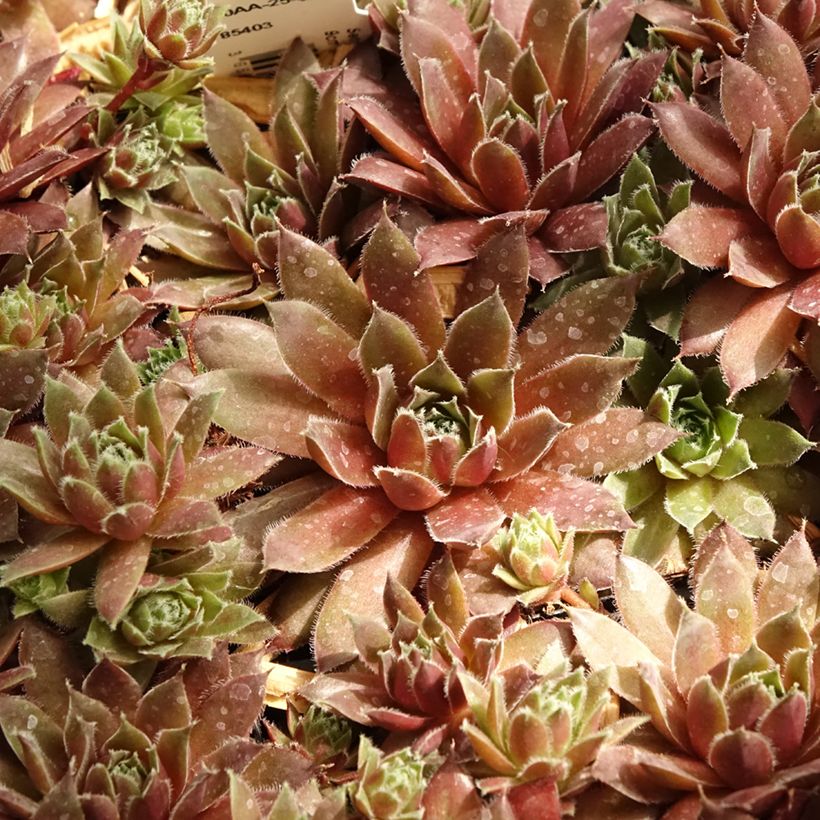
Flowering
Foliage
Plant habit
Botanical data
Sempervivum
x marmoreum
Pilatus
Crassulaceae
Houseleek, Hen and Chicks
Cultivar or hybrid
Planting and care
Sempervivum 'Pilatus' enjoys sunny or partially shaded exposures, and perfectly drained, moist to dry and poor soils that do not retain water. You can plant it in the ground or in a container in spring or autumn, adding gravel or coarse sand to the planting substrate. Conversely, if you place it in a rockery or on a wall, just give it a little potting soil to help it to establish. Afterwards, it will manage on its own.
If you want to propagate it, simply cut a few young rosettes and replant them elsewhere, barely burying the roots.
Take care of it by ensuring that it is not overwhelmed by taller plants, that it does not become covered in dead leaves or vegetation residues, and by optionally removing faded small inflorescences.
Planting period
Intended location
Care
Planting & care advice
-

-

-
-

-
-

-

-

-
, onOrder confirmed
Reply from on Promesse de fleurs
Recently viewed products
Haven't found what you were looking for?
Hardiness is the lowest winter temperature a plant can endure without suffering serious damage or even dying. However, hardiness is affected by location (a sheltered area, such as a patio), protection (winter cover) and soil type (hardiness is improved by well-drained soil).

The flowering period indicated on our website applies to countries and regions located in USDA zone 8 (France, the United Kingdom, Ireland, the Netherlands, etc.)
It will vary according to where you live:- In zones 9 to 10 (Italy, Spain, Greece, etc.), flowering will occur about 2 to 4 weeks earlier.
- In zones 6 to 7 (Germany, Poland, Slovenia, and lower mountainous regions), flowering will be delayed by 2 to 3 weeks.
- In zone 5 (Central Europe, Scandinavia), blooming will be delayed by 3 to 5 weeks.
In temperate climates, pruning of spring-flowering shrubs (forsythia, spireas, etc.) should be done just after flowering.
Pruning of summer-flowering shrubs (Indian Lilac, Perovskia, etc.) can be done in winter or spring.
In cold regions as well as with frost-sensitive plants, avoid pruning too early when severe frosts may still occur.
The planting period indicated on our website applies to countries and regions located in USDA zone 8 (France, United Kingdom, Ireland, Netherlands).
It will vary according to where you live:
- In Mediterranean zones (Marseille, Madrid, Milan, etc.), autumn and winter are the best planting periods.
- In continental zones (Strasbourg, Munich, Vienna, etc.), delay planting by 2 to 3 weeks in spring and bring it forward by 2 to 4 weeks in autumn.
- In mountainous regions (the Alps, Pyrenees, Carpathians, etc.), it is best to plant in late spring (May-June) or late summer (August-September).
The harvesting period indicated on our website applies to countries and regions in USDA zone 8 (France, England, Ireland, the Netherlands).
In colder areas (Scandinavia, Poland, Austria...) fruit and vegetable harvests are likely to be delayed by 3-4 weeks.
In warmer areas (Italy, Spain, Greece, etc.), harvesting will probably take place earlier, depending on weather conditions.
The sowing periods indicated on our website apply to countries and regions within USDA Zone 8 (France, UK, Ireland, Netherlands).
In colder areas (Scandinavia, Poland, Austria...), delay any outdoor sowing by 3-4 weeks, or sow under glass.
In warmer climes (Italy, Spain, Greece, etc.), bring outdoor sowing forward by a few weeks.
Shipping country and language
Your country of residence may be:
Your country of residence is:
For a better user experience on our website, you can select:
Your shipping country:
-
 Austria
-
 Belgium
-
 Bosnia & Herzegovina
-
 Bulgaria
-
 Croatia
-
 Cyprus
-
 Czechia
-
 Denmark
-
 Estonia
-
 Finland
-
 France
-
 Germany
-
 Greece
-
 Hungary
-
 Iceland
-
 Ireland
-
 Italy
Italy
-
 Latvia
-
 Liechtenstein
-
 Lithuania
-
 Luxembourg
-
 Malta
Malta
-
 Netherlands
-
 Poland
-
 Portugal
-
 Romania
-
 Serbia
-
 Slovakia
-
 Slovenia
-
 Spain
Spain
-
 Sweden
-
 Switzerland
Language:
-
French
-
 English
-
Spanish
-
Italian
-
German
-
Portuguese
-
Dutch
-
Finnish
My Account
Hello
My wish lists
My cart
Log in / Register
Existing customer?
This form is protected by reCAPTCHA - the Google Privacy Policy and Terms of Service apply.
New customer?
Create an account to track your orders, access our customer service and, if you wish, make the most of our upcoming offers.