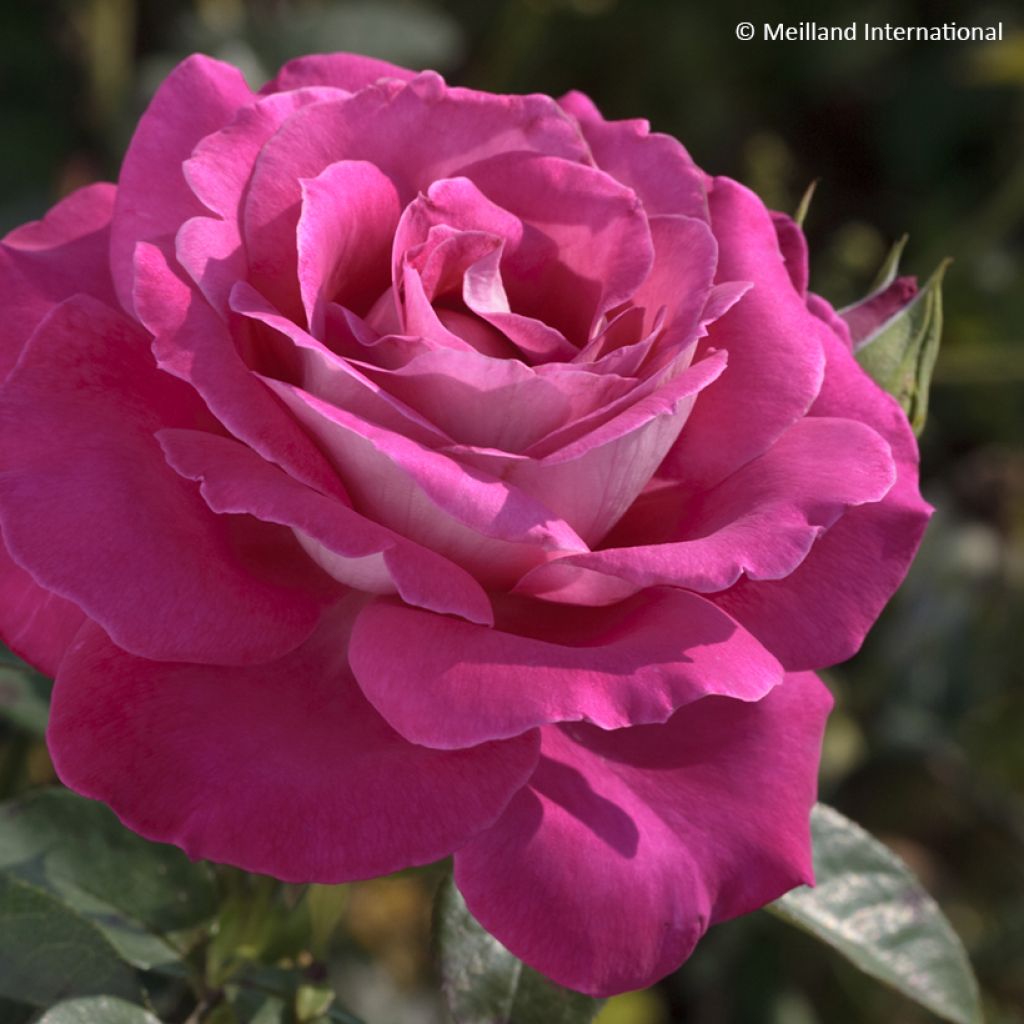
Rosa Baronne Edmond de Rothschild - Hybrid Tea Rose
Rosa Baronne Edmond de Rothschild - Hybrid Tea Rose
Rosa 'Meigriso' BARONNE E. DE ROTHSCHILD®
Hybrid Tea Rose
Back-to-school special offer!
Get €10 off for every €50 you spend! And get up to €40 off on a single order.
How does it work?
1. Shop your favourites
Add your favourite plants to your basket. For every €50 you spend (excluding delivery charges, store credit and the plastic-free option), you’ll receive a €10 voucher.
€50 spent = €10 voucher
€100 spent = €20 voucher
€150 spent = €30 voucher
€200 spent = €40 voucher
2. Place your order
Once your basket reaches one of the spending thresholds, place your order. You can even choose your delivery date!
3. Receive your voucher
As soon as your order has been shipped, you’ll receive an email containing your personal voucher code and its value.
4. Use it on your next order
Your voucher is valid for 90 days from the date you receive it. It can be used once only, on a new order worth at least the value of the voucher, excluding delivery charges.
Please note: Vouchers can be combined with other offers, but cannot be split or refunded.
Home or relay delivery (depending on size and destination)
Important: You may be charged customs duties by your country’s customs authorities upon delivery.
Schedule delivery date,
and select date in basket
This plant carries a 24 months recovery warranty
More information
We guarantee the quality of our plants for a full growing cycle, and will replace at our expense any plant that fails to recover under normal climatic and planting conditions.


Description
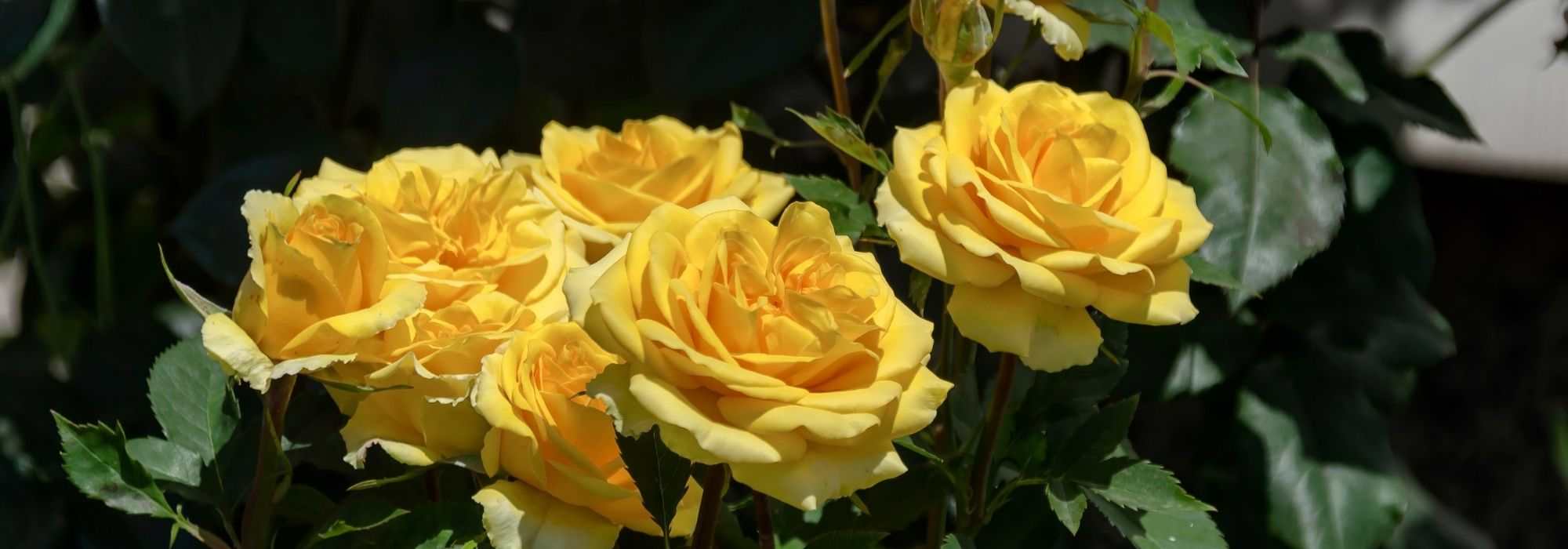
The Baroness Edmond de Rothschild® rose is an iconic variety from the Meilland house, awarded numerous times in international competitions. This variety has captivated rose enthusiasts for decades with its bicoloured flowers featuring an intense Solferino purple with a silvery reverse, and exuding a powerful fragrance reminiscent of May roses. This large-flowered shrub rose adds a fantastic touch of colour and fragrance to the garden. It is also highly prized as a cut flower for creating scented vase arrangements.
The Baroness Edmond de Rothschild ® 'Meigriso' Rose was created in 1968 by Meilland. This variety belongs to the Hybrid Tea group renowned for their elegant large flowers and continuous flowering. It has been widely awarded in prestigious international competitions, receiving notably: Gold Medals in Rome, Le Rœulx, and Lyon in 1968, Silver Medals in Geneva and Courtrai in 1968, the Golden Rose (Theodolinde Crown) Valbypark Certificate in 1969, the Most Fragrant Rose award in Monza in 1969, and a Fragrance Prize in Belfast. This rose was awarded the ADR Label (Germany) in 1971, a mark of robustness and adaptability to various climatic conditions.
This rose has a bushy, upright habit, reaching 80 cm to 1m in height and 60 to 80 cm in spread. Its dense, glossy, dark green foliage provides a beautiful contrast to the intense colour of the flowers. Formed of ovate and pointed leaflets, the leaves are thick and resistant to common fungal diseases in roses.
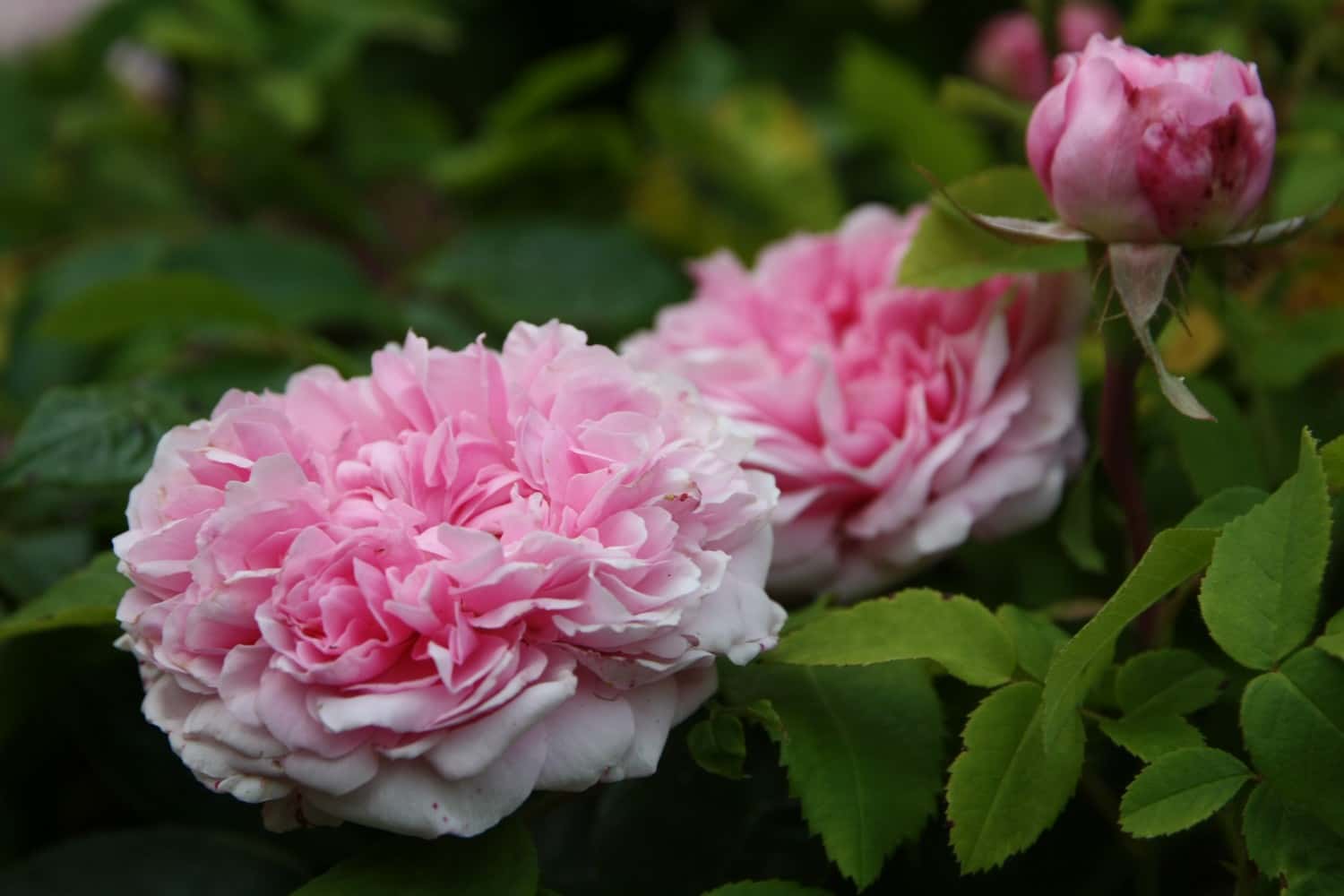
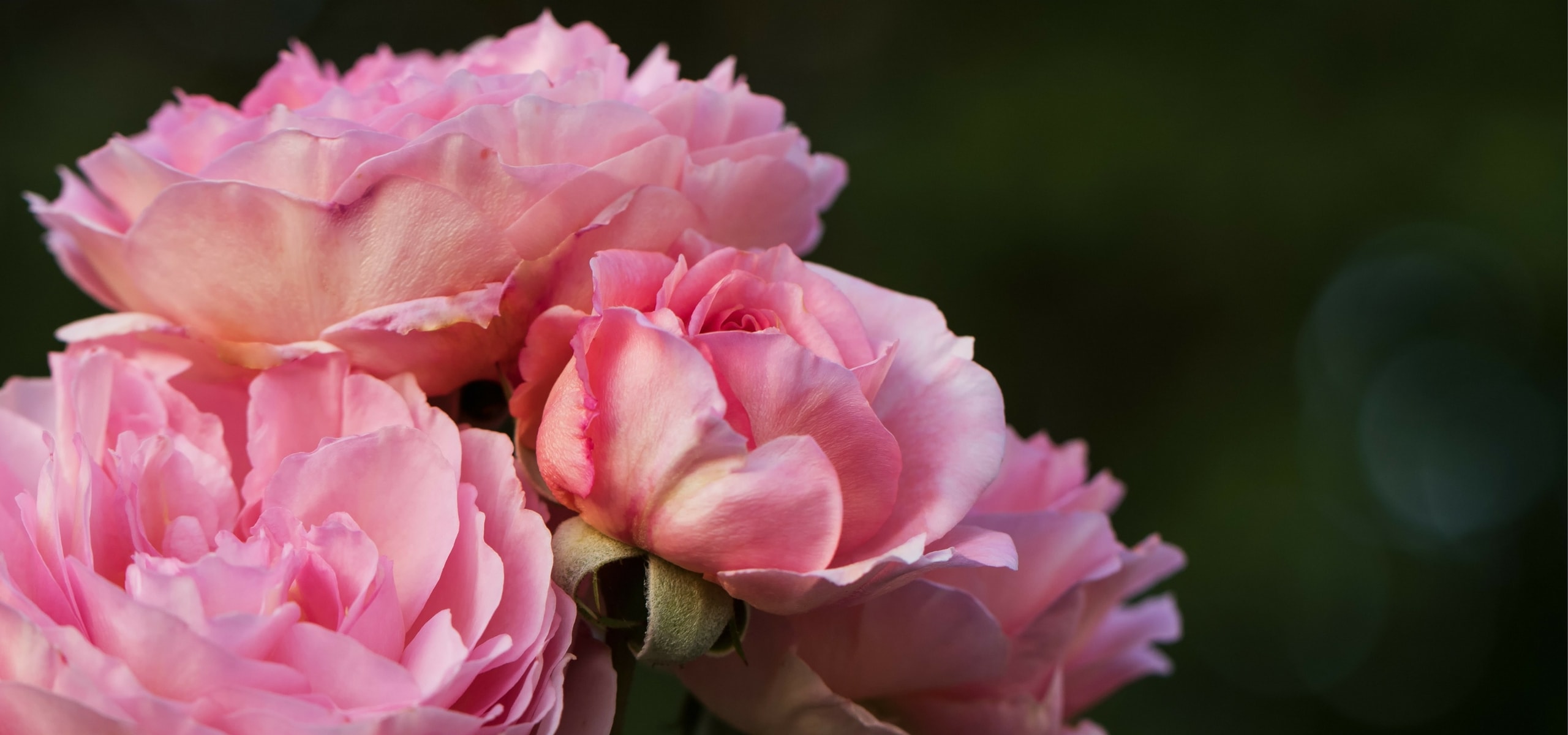
Approximately 12 cm in diameter, the flowers display a classic turbinate form and consist of around 40 petals. Their intense Solferino pink hue, a deep and luminous shade between fuchsia pink and magenta, gives the rose a striking and refined appearance. Inspired by the name of the Battle of Solferino in 1859, this colour refers to a vivid rosy-red dye popularised after this event. The petals' silvery reverse enhances the elegance of each flower. This rose is also cherished for its powerful fragrance reminiscent of May roses which perfumes the air. The flowering period lasting from May until the first frosts offers a continuous spectacle throughout the growing season.
This modern Baroness Edmond de Rothschild® rose deserves a prime spot in a lush garden. Placed at the back of a mixed border, it will pair perfectly with the delicate charm of an ‘Felicia’ old rose, whose pale pink flowers exude a sweet fragrance, and the golden abundance of a David Austin ‘Graham Thomas’ rose, which will add a warm glow to the combination. At its feet, a Nepeta faassenii ‘Six Hills Giant’ will form a wavy carpet of lavender-blue, to which a few white and pink foxgloves could be added. Together, these plants will create a structured and fluid display where each bloom seamlessly blends into the next, in a garden with a soft, natural rhythm through the seasons.
A tale of elegance and prestige:
Born on 18 April 1932, Nadine de Rothschild - Baroness Edmond de Rothschild - became famous for her work dedicated to etiquette and the art of French living, embodying elegance and refinement. The Baroness Edmond de Rothschild® Meigriso rose is a descendant of the legendary Mme A. Meilland (Peace), one of the most acclaimed roses in history. Not to be confused with the ‘Baroness Adolph de Rothschild’ (syn. ‘Baroness Rothschild’), an old rose from the Hybrid Continuously Flowering group created in 1868 by Pernet, which stands out for its timeless charm with large pale pink flowers.
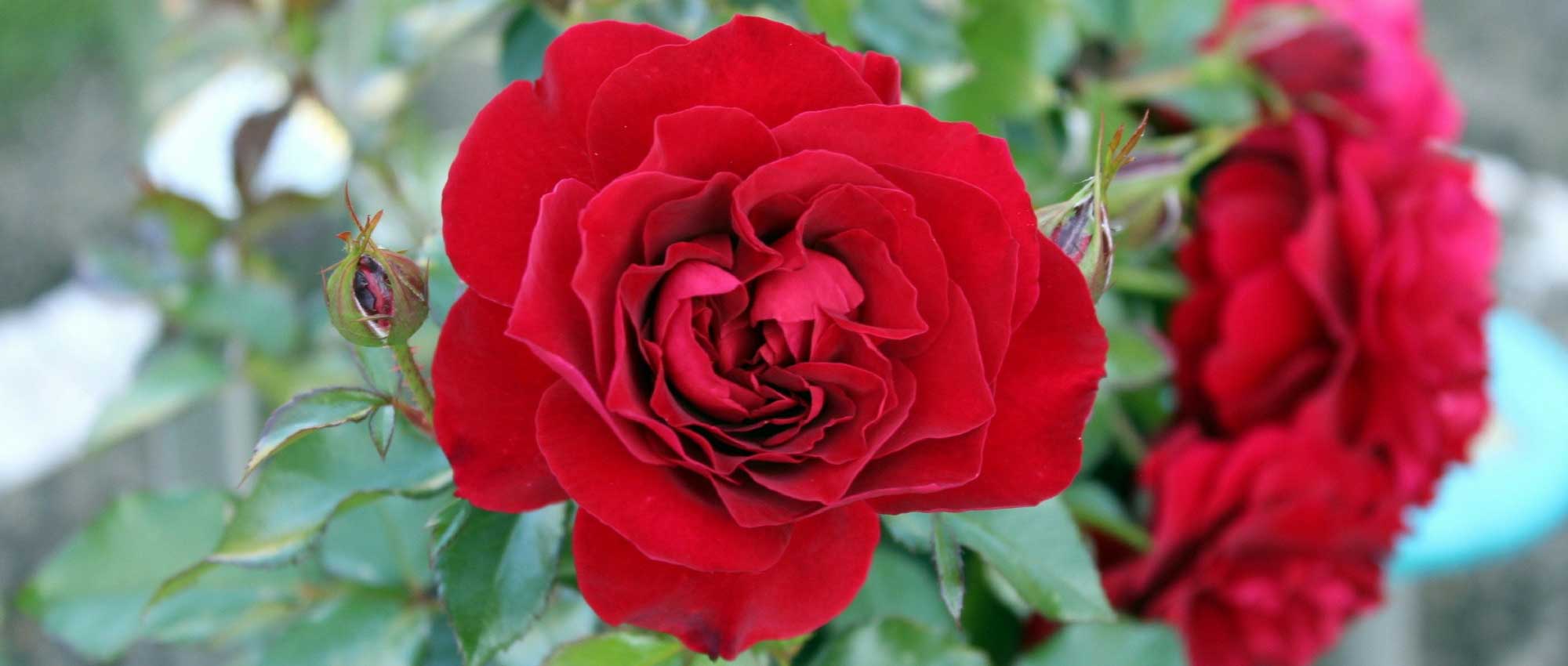
Plant habit
Flowering
Foliage
Botanical data
Rosa
'Meigriso' BARONNE E. DE ROTHSCHILD®
Rosaceae
Hybrid Tea Rose
Rosa 'Meigriso' BARONNE EDMOND DE ROTHSCHILD
Cultivar or hybrid
Planting and care
To plant your Baroness Edmond de Rothschild rose, prepare the soil by digging a 30 cm cube, breaking up the earth well and adding a base fertiliser such as dried blood or dehydrated horn at the bottom of the planting hole. Place your plant after removing it from its pot, covering the top of the root ball with 3 cm of soil, backfill and water thoroughly to eliminate any air pockets. In dry weather, water regularly for a few weeks to encourage root development. Also remember to feed your rose with a special rose fertiliser to stimulate flowering. Choose a sunny spot, or partial shade in the afternoon in very hot regions.
Planting period
Intended location
Care
Planting & care advice
-
-
-

-

-
-

-
-
This item has not been reviewed yet - be the first to leave a review about it.
Recently viewed products
Haven't found what you were looking for?
Hardiness is the lowest winter temperature a plant can endure without suffering serious damage or even dying. However, hardiness is affected by location (a sheltered area, such as a patio), protection (winter cover) and soil type (hardiness is improved by well-drained soil).

The flowering period indicated on our website applies to countries and regions located in USDA zone 8 (France, the United Kingdom, Ireland, the Netherlands, etc.)
It will vary according to where you live:- In zones 9 to 10 (Italy, Spain, Greece, etc.), flowering will occur about 2 to 4 weeks earlier.
- In zones 6 to 7 (Germany, Poland, Slovenia, and lower mountainous regions), flowering will be delayed by 2 to 3 weeks.
- In zone 5 (Central Europe, Scandinavia), blooming will be delayed by 3 to 5 weeks.
In temperate climates, pruning of spring-flowering shrubs (forsythia, spireas, etc.) should be done just after flowering.
Pruning of summer-flowering shrubs (Indian Lilac, Perovskia, etc.) can be done in winter or spring.
In cold regions as well as with frost-sensitive plants, avoid pruning too early when severe frosts may still occur.
The planting period indicated on our website applies to countries and regions located in USDA zone 8 (France, United Kingdom, Ireland, Netherlands).
It will vary according to where you live:
- In Mediterranean zones (Marseille, Madrid, Milan, etc.), autumn and winter are the best planting periods.
- In continental zones (Strasbourg, Munich, Vienna, etc.), delay planting by 2 to 3 weeks in spring and bring it forward by 2 to 4 weeks in autumn.
- In mountainous regions (the Alps, Pyrenees, Carpathians, etc.), it is best to plant in late spring (May-June) or late summer (August-September).
The harvesting period indicated on our website applies to countries and regions in USDA zone 8 (France, England, Ireland, the Netherlands).
In colder areas (Scandinavia, Poland, Austria...) fruit and vegetable harvests are likely to be delayed by 3-4 weeks.
In warmer areas (Italy, Spain, Greece, etc.), harvesting will probably take place earlier, depending on weather conditions.
The sowing periods indicated on our website apply to countries and regions within USDA Zone 8 (France, UK, Ireland, Netherlands).
In colder areas (Scandinavia, Poland, Austria...), delay any outdoor sowing by 3-4 weeks, or sow under glass.
In warmer climes (Italy, Spain, Greece, etc.), bring outdoor sowing forward by a few weeks.
Shipping country and language
Your country of residence may be:
Your country of residence is:
For a better user experience on our website, you can select:
Your shipping country:
-
 Austria
-
 Belgium
-
 Bosnia & Herzegovina
-
 Bulgaria
-
 Croatia
-
 Cyprus
-
 Czechia
-
 Denmark
-
 Estonia
-
 Finland
-
 France
-
 Germany
-
 Greece
-
 Hungary
-
 Iceland
-
 Ireland
-
 Italy
Italy
-
 Latvia
-
 Liechtenstein
-
 Lithuania
-
 Luxembourg
-
 Malta
Malta
-
 Netherlands
-
 Poland
-
 Portugal
-
 Romania
-
 Serbia
-
 Slovakia
-
 Slovenia
-
 Spain
Spain
-
 Sweden
-
 Switzerland
Language:
-
French
-
 English
-
Spanish
-
Italian
-
German
-
Portuguese
-
Dutch
-
Finnish
My Account
Hello
My wish lists
My cart
Log in / Register
Existing customer?
This form is protected by reCAPTCHA - the Google Privacy Policy and Terms of Service apply.
New customer?
Create an account to track your orders, access our customer service and, if you wish, make the most of our upcoming offers.