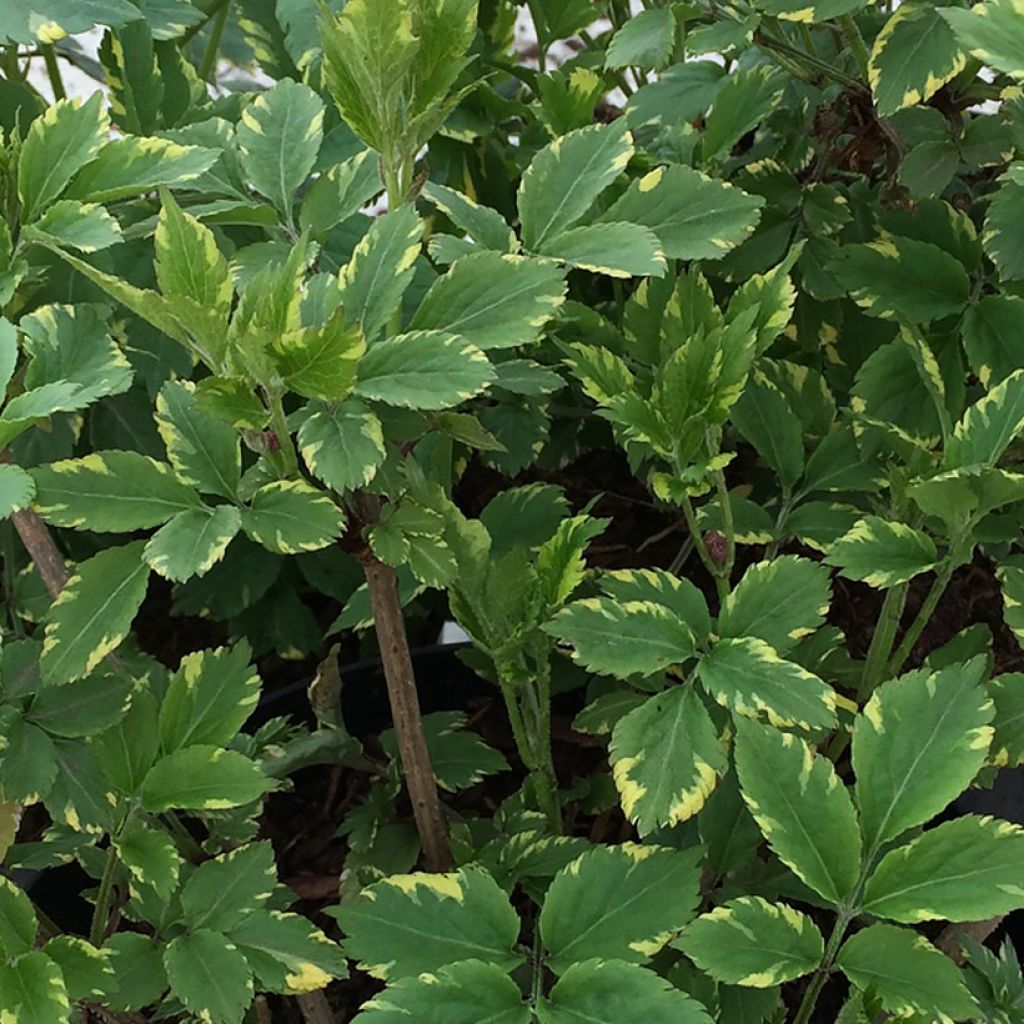
Sambucus nigra Golden Spark
Sambucus nigra Golden Spark
Sambucus nigra Golden Spark
Large elderberry, Black elderberry, Common elderberry, Judas tree
Received in early April, all the leaves were green. I waited for it to grow a little... it has grown well but still only plain green leaves :( just bad luck, or did I receive the wrong variety?
Cedric, 02/06/2025
Back-to-school special offer!
Get €10 off for every €50 you spend! And get up to €40 off on a single order.
How does it work?
1. Shop your favourites
Add your favourite plants to your basket. For every €50 you spend (excluding delivery charges, store credit and the plastic-free option), you’ll receive a €10 voucher.
€50 spent = €10 voucher
€100 spent = €20 voucher
€150 spent = €30 voucher
€200 spent = €40 voucher
2. Place your order
Once your basket reaches one of the spending thresholds, place your order. You can even choose your delivery date!
3. Receive your voucher
As soon as your order has been shipped, you’ll receive an email containing your personal voucher code and its value.
4. Use it on your next order
Your voucher is valid for 90 days from the date you receive it. It can be used once only, on a new order worth at least the value of the voucher, excluding delivery charges.
Please note: Vouchers can be combined with other offers, but cannot be split or refunded.
Home or relay delivery (depending on size and destination)
Important: You may be charged customs duties by your country’s customs authorities upon delivery.
Schedule delivery date
and select date in basket
This plant carries a 24 months recovery warranty
More information
We guarantee the quality of our plants for a full growing cycle, and will replace at our expense any plant that fails to recover under normal climatic and planting conditions.
Would this plant suit my garden?
Set up your Plantfit profile →
Description
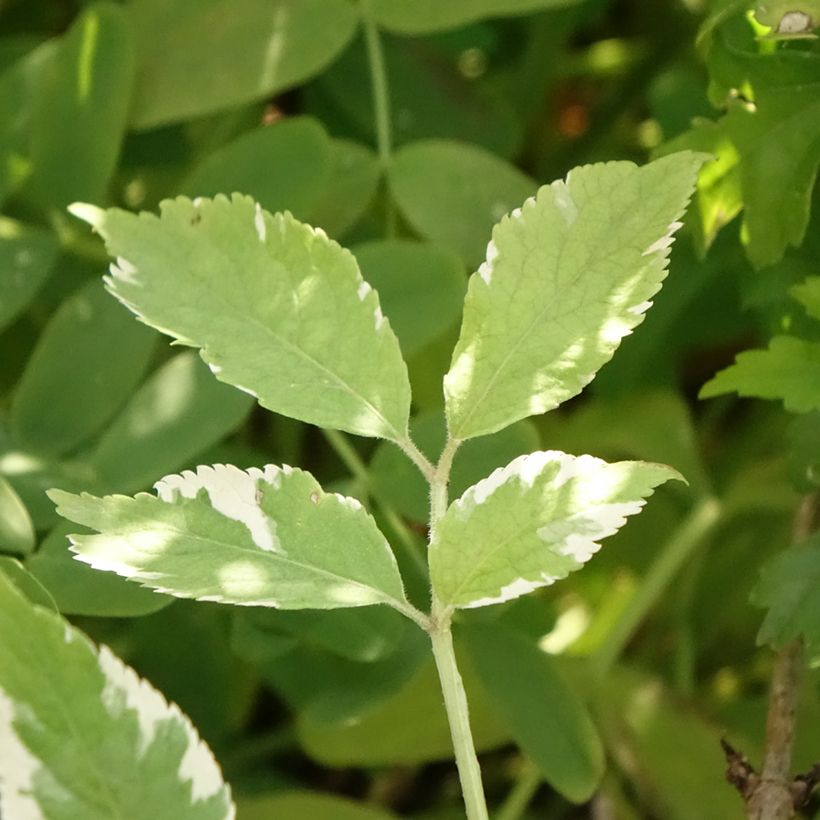
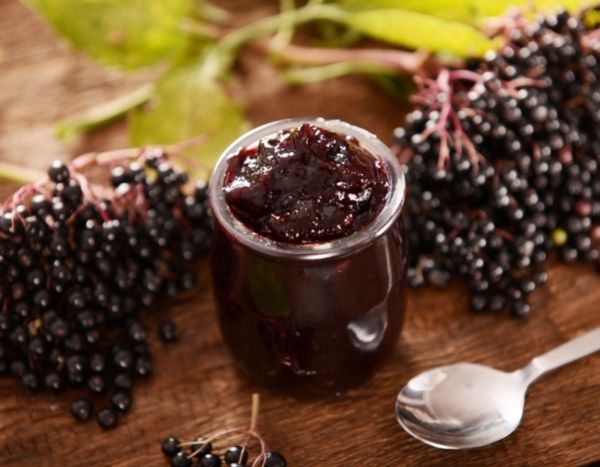
The Sambucus nigra 'Golden Spark' is a very decorative variety of black elderberry with its two-tone leaves. This beautiful deciduous bush is adorned with compound foliage with toothed leaflets, a beautiful bright green with a yellow margin on the leaf edge. It produces beautiful creamy-white flowering in May-June, in the form of large corymbs composed of tiny nectar-rich flowers. These then develop into both decorative and edible black fruits, which can be used for making jam... or be enjoyed by birds. This elegant elderberry accepts most soils, as long as they are fertile and moist, and will form a medium-sized bush.
The Sambucus nigra 'Golden Spark' is a plant that was classified in the Caprifoliaceae family (just like honeysuckles), but is now classified in the Adoxaceae, a rather obscure botanical family, whose main other known genus is Viburnum (the Snowballs). It is a variety derived from the Sambucus nigra, a wild species found in Europe, North Africa and as far as Asia Minor. In nature, it is a graceful, spreading and rounded bush, supported by arched branches, and can reach several meters in height and width. Its growth is rapid, especially in fertile and moist soils that it prefers, and its exuberant habit makes it too bulky for many gardens.
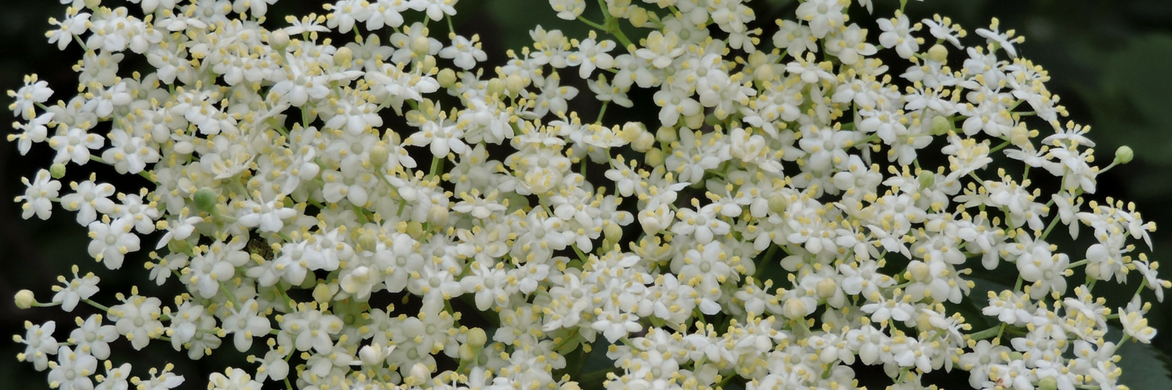
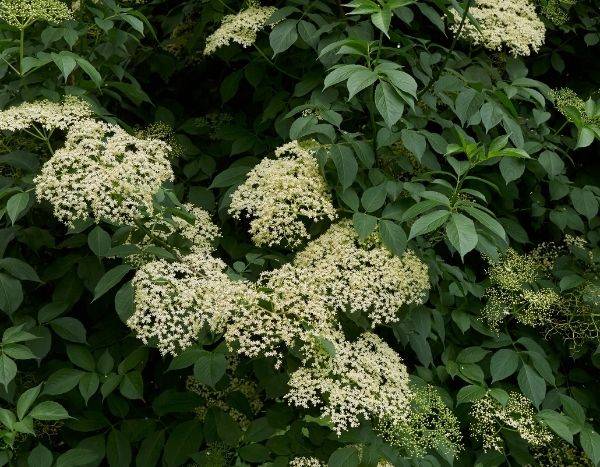
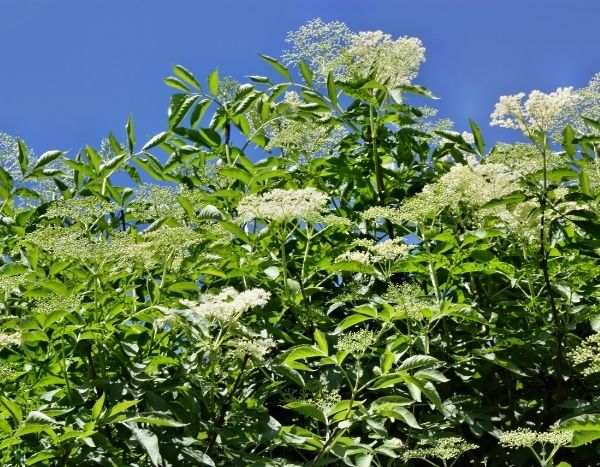
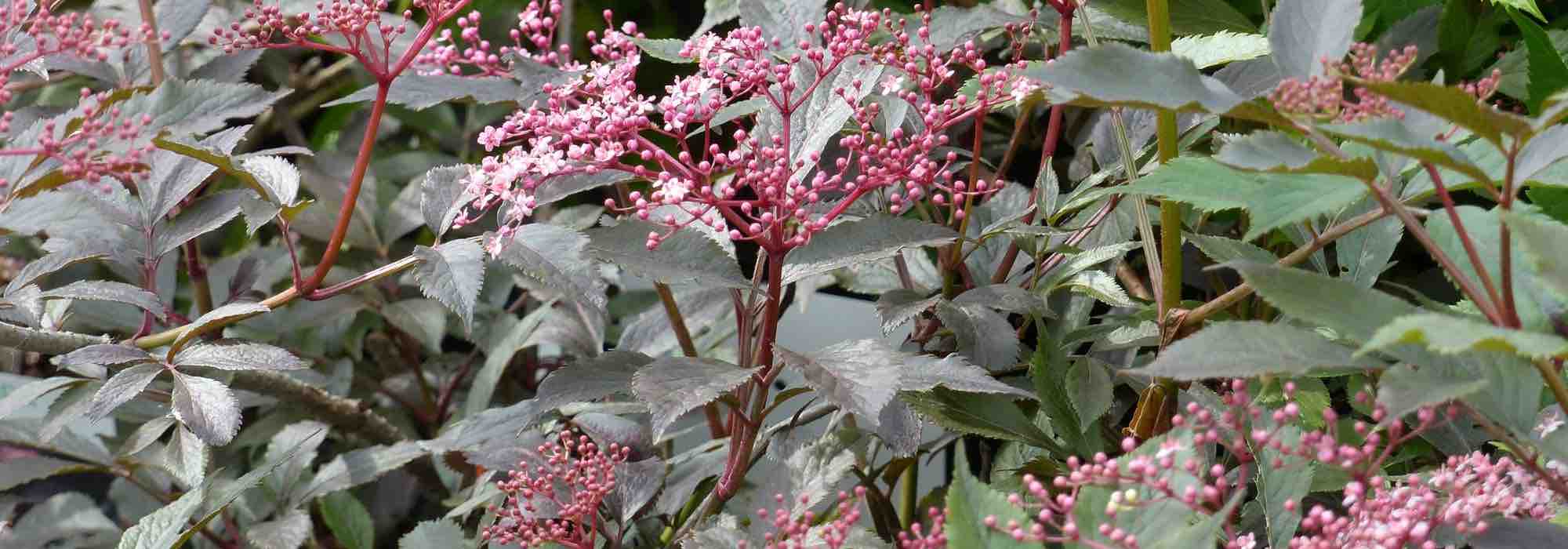
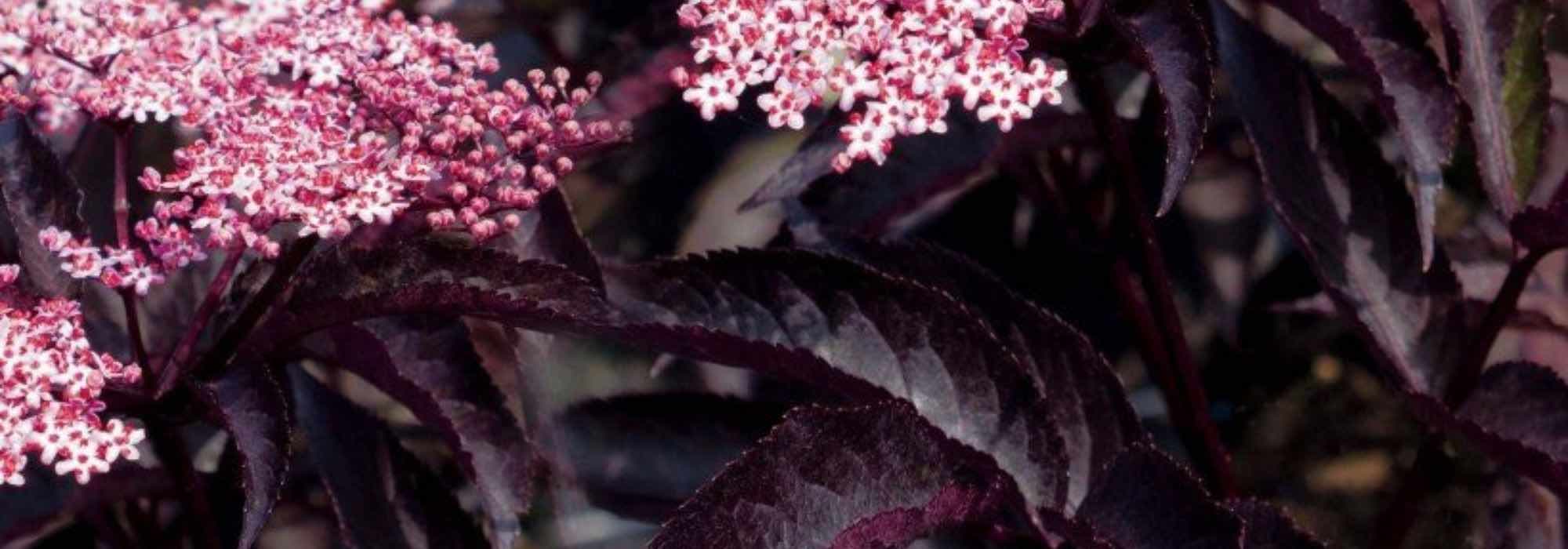
Fortunately, many cultivars (horticultural varieties) that are more compact allow us to enjoy this interesting bush, especially for its nectar-rich flowering, which is beneficial to bees. 'Golden Spark' is thus a medium-sized variety appreciated for its beautiful two-tone foliage. Consisting of odd-pinnate leaves (an odd number of leaflets, usually 5), this slightly toothed foliage has a beautiful bright green colour, enhanced by a yellow to white-yellow peripheral margin. With its delicate appearance, this beautiful foliage is reminiscent of that of the Variegated Ground Elder (Aegopodium podograria 'Variegata') - but in an XXL version, of course, because this elderberry will reach a height of about 3m (10ft) and a width of 2m (7ft), forming a large bushy clump. In May-June, it produces a myriad of tiny white flowers, with 5 petals forming small stars, gathered in large flat corymbs, fragrant and somewhat ethereal. Very nectar-rich, these flowers are therefore very useful to pollinating insects, and can also be used for making infusions. They then develop into decorative black fruits in the following months, which will delight birds, unless you decide to harvest them to make jams or jellies, as they are edible.
Easy to grow, this bush thrives in both full sun and partial shade. It is not demanding in terms of soil composition, but it does appreciate fertile and moist soil. Under these conditions, it requires very little maintenance, except for occasional pruning to correct its habit or limit its height. Very hardy, down to -30°C (-22°F), it can grow anywhere in France, being more sensitive to extreme heat than to cold.
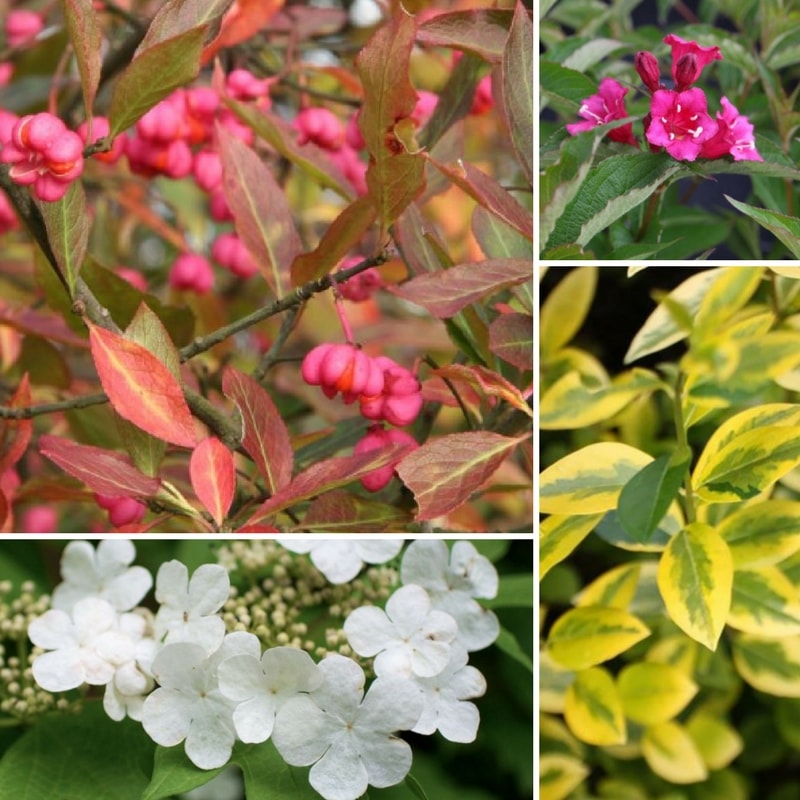
The Golden Spark elderberry is an interesting variety for the garden that deserves a place in a flowerbed or hedge. Its natural-looking habit is easy to combine with other plants with a wild appearance, even if its variegation betrays its horticultural origin. In a vibrant hedge, it will go well with our native European Spindle Tree (Euonymus europaeus) with its delicate habit, and whose foliage takes on superb autumn colours, while the pink and orange fruits are extremely decorative (but toxic, be careful!). Rosa glauca, a botanical rose with beautiful bluish foliage and nectar-rich bright pink flowers, produces decorative red fruits at the end of the season that will feed birds in winter, in addition to those of the elderberry. And remaining in the decorative flowering and edible fruit category, your hedge will be enriched with 'Smoky' Amelanchier, with its white spring flowers that produce appetising black berries in June-July...
Good to know: elderberry leaves are known to accelerate compost decomposition. The liquid fertiliser made from black elderberry leaves is useful in organic gardening to fight against mildew and attacks from aphids, or to deter rodents. Soak 1 kg of leaves in 10L of water for a few days, then spray as needed. It can also be planted in an orchard, where it attracts birds that prey on insects.
Sambucus nigra Golden Spark in pictures
Plant habit
Flowering
Foliage
Botanical data
Sambucus
nigra
Golden Spark
Viburnaceae
Large elderberry, Black elderberry, Common elderberry, Judas tree
Cultivar or hybrid
Planting and care
Easy to grow, the Golden Spark Elderberry is best planted in autumn to benefit from the rains - or in spring, but it will then need more watering afterwards. Plant it in any ordinary soil, but preferably fertile rather than poor, and if possible moist, as it doesn't tolerate dry conditions too well. Choose a sunny or semi-shaded location, and dig a planting hole at least 50 cm (20in) in all directions. Soak the root ball in a bucket of water for fifteen minutes (until completely saturated). Mix planting compost with the existing soil, position the root ball so that the top is level with the ground, fill in all around and water thoroughly. Water regularly afterwards for the first 2 years to promote root growth, and then during hot periods.
Planting period
Intended location
Care
Planting & care advice
-
-
-
-
-
-

-
-
-
, onOrder confirmed
Reply from on Promesse de fleurs
Recently viewed products
Haven't found what you were looking for?
Hardiness is the lowest winter temperature a plant can endure without suffering serious damage or even dying. However, hardiness is affected by location (a sheltered area, such as a patio), protection (winter cover) and soil type (hardiness is improved by well-drained soil).

The flowering period indicated on our website applies to countries and regions located in USDA zone 8 (France, the United Kingdom, Ireland, the Netherlands, etc.)
It will vary according to where you live:- In zones 9 to 10 (Italy, Spain, Greece, etc.), flowering will occur about 2 to 4 weeks earlier.
- In zones 6 to 7 (Germany, Poland, Slovenia, and lower mountainous regions), flowering will be delayed by 2 to 3 weeks.
- In zone 5 (Central Europe, Scandinavia), blooming will be delayed by 3 to 5 weeks.
In temperate climates, pruning of spring-flowering shrubs (forsythia, spireas, etc.) should be done just after flowering.
Pruning of summer-flowering shrubs (Indian Lilac, Perovskia, etc.) can be done in winter or spring.
In cold regions as well as with frost-sensitive plants, avoid pruning too early when severe frosts may still occur.
The planting period indicated on our website applies to countries and regions located in USDA zone 8 (France, United Kingdom, Ireland, Netherlands).
It will vary according to where you live:
- In Mediterranean zones (Marseille, Madrid, Milan, etc.), autumn and winter are the best planting periods.
- In continental zones (Strasbourg, Munich, Vienna, etc.), delay planting by 2 to 3 weeks in spring and bring it forward by 2 to 4 weeks in autumn.
- In mountainous regions (the Alps, Pyrenees, Carpathians, etc.), it is best to plant in late spring (May-June) or late summer (August-September).
The harvesting period indicated on our website applies to countries and regions in USDA zone 8 (France, England, Ireland, the Netherlands).
In colder areas (Scandinavia, Poland, Austria...) fruit and vegetable harvests are likely to be delayed by 3-4 weeks.
In warmer areas (Italy, Spain, Greece, etc.), harvesting will probably take place earlier, depending on weather conditions.
The sowing periods indicated on our website apply to countries and regions within USDA Zone 8 (France, UK, Ireland, Netherlands).
In colder areas (Scandinavia, Poland, Austria...), delay any outdoor sowing by 3-4 weeks, or sow under glass.
In warmer climes (Italy, Spain, Greece, etc.), bring outdoor sowing forward by a few weeks.
Shipping country and language
Your country of residence may be:
Your country of residence is:
For a better user experience on our website, you can select:
Your shipping country:
-
 Austria
-
 Belgium
-
 Bosnia & Herzegovina
-
 Bulgaria
-
 Croatia
-
 Cyprus
-
 Czechia
-
 Denmark
-
 Estonia
-
 Finland
-
 France
-
 Germany
-
 Greece
-
 Hungary
-
 Iceland
-
 Ireland
-
 Italy
Italy
-
 Latvia
-
 Liechtenstein
-
 Lithuania
-
 Luxembourg
-
 Malta
Malta
-
 Netherlands
-
 Poland
-
 Portugal
-
 Romania
-
 Serbia
-
 Slovakia
-
 Slovenia
-
 Spain
Spain
-
 Sweden
-
 Switzerland
Language:
-
French
-
 English
-
Spanish
-
Italian
-
German
-
Portuguese
-
Dutch
-
Finnish
My Account
Hello
My wish lists
My cart
Log in / Register
Existing customer?
This form is protected by reCAPTCHA - the Google Privacy Policy and Terms of Service apply.
New customer?
Create an account to track your orders, access our customer service and, if you wish, make the most of our upcoming offers.