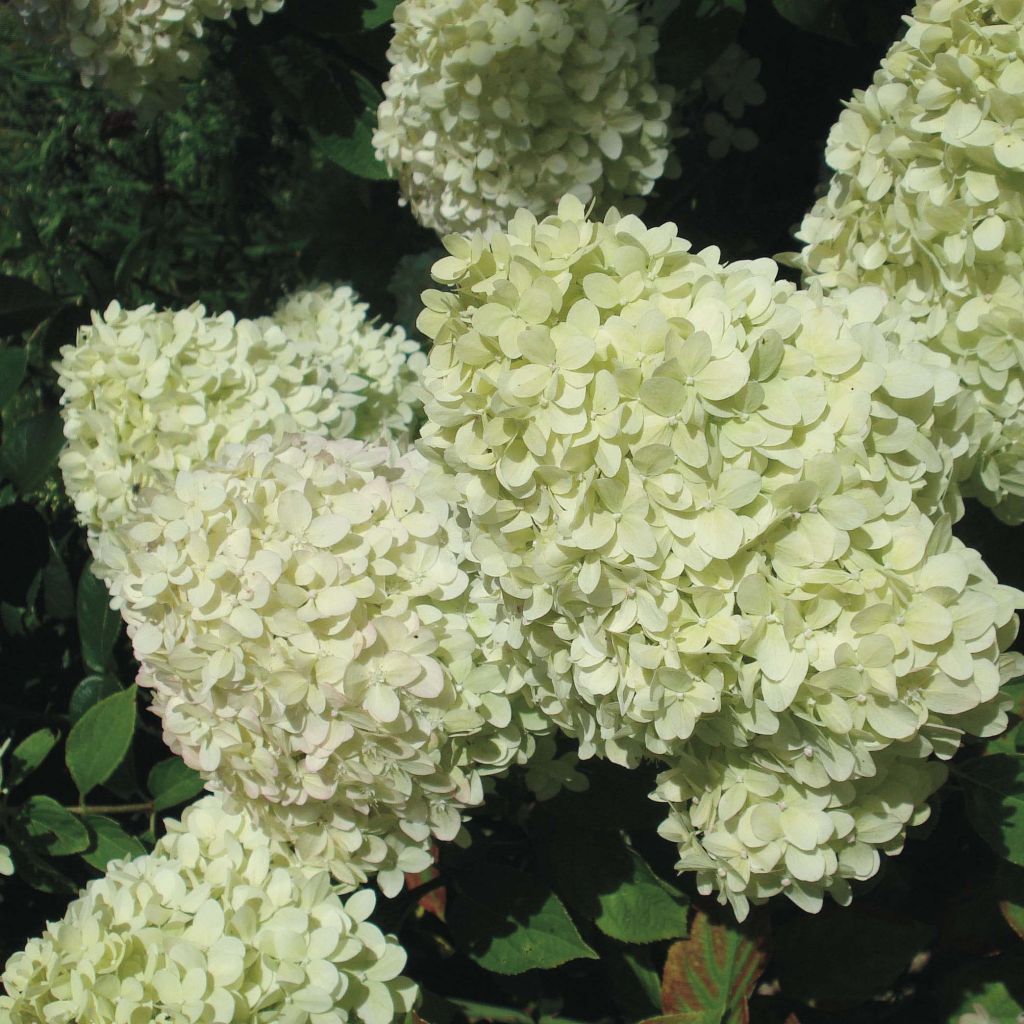
Hydrangea paniculata Limelight
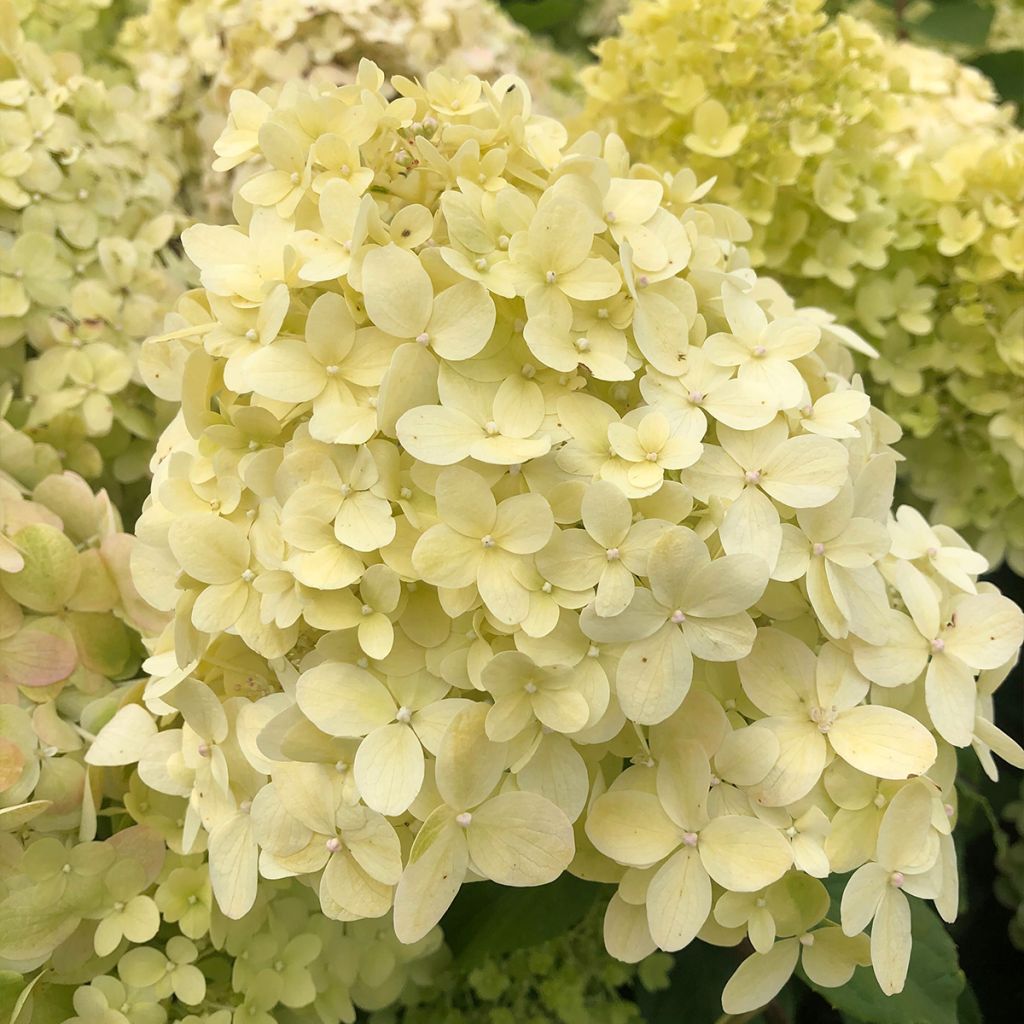
Hydrangea paniculata Limelight
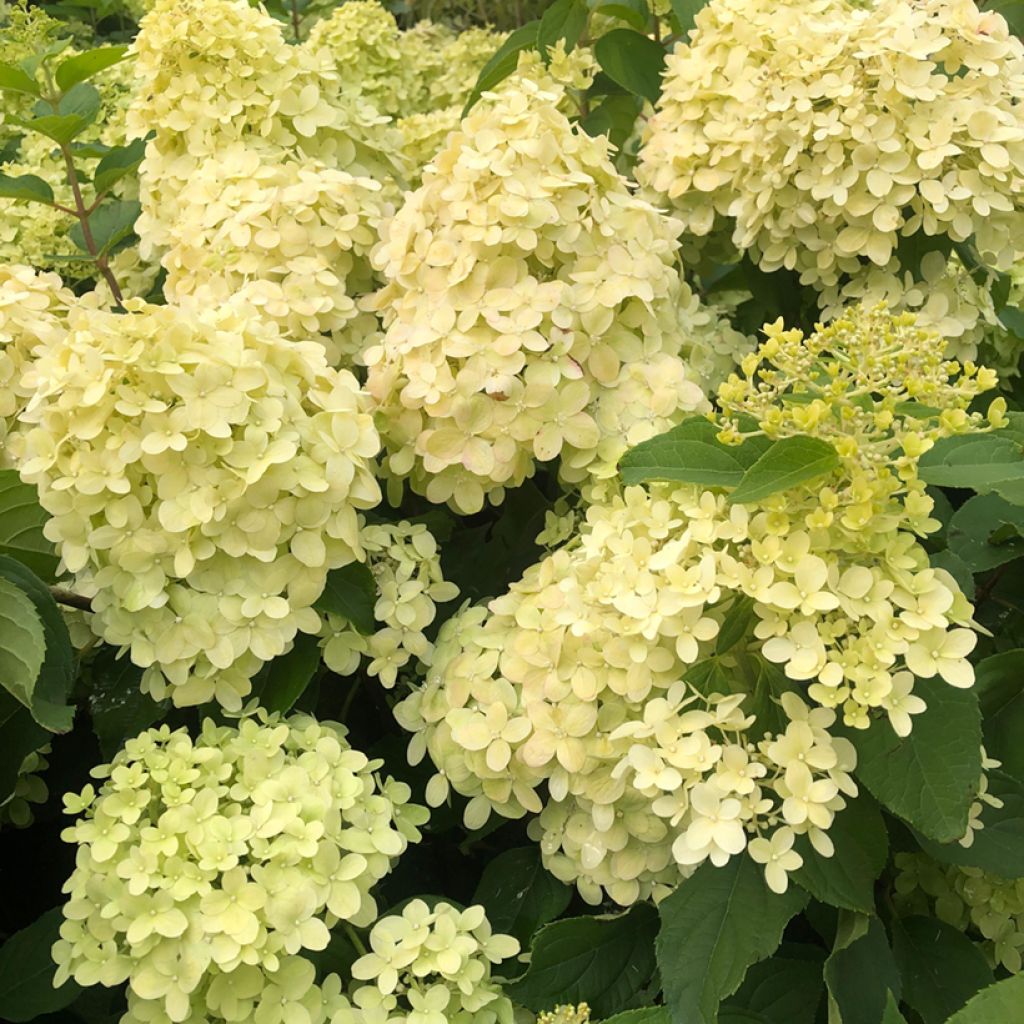
Hydrangea paniculata Limelight
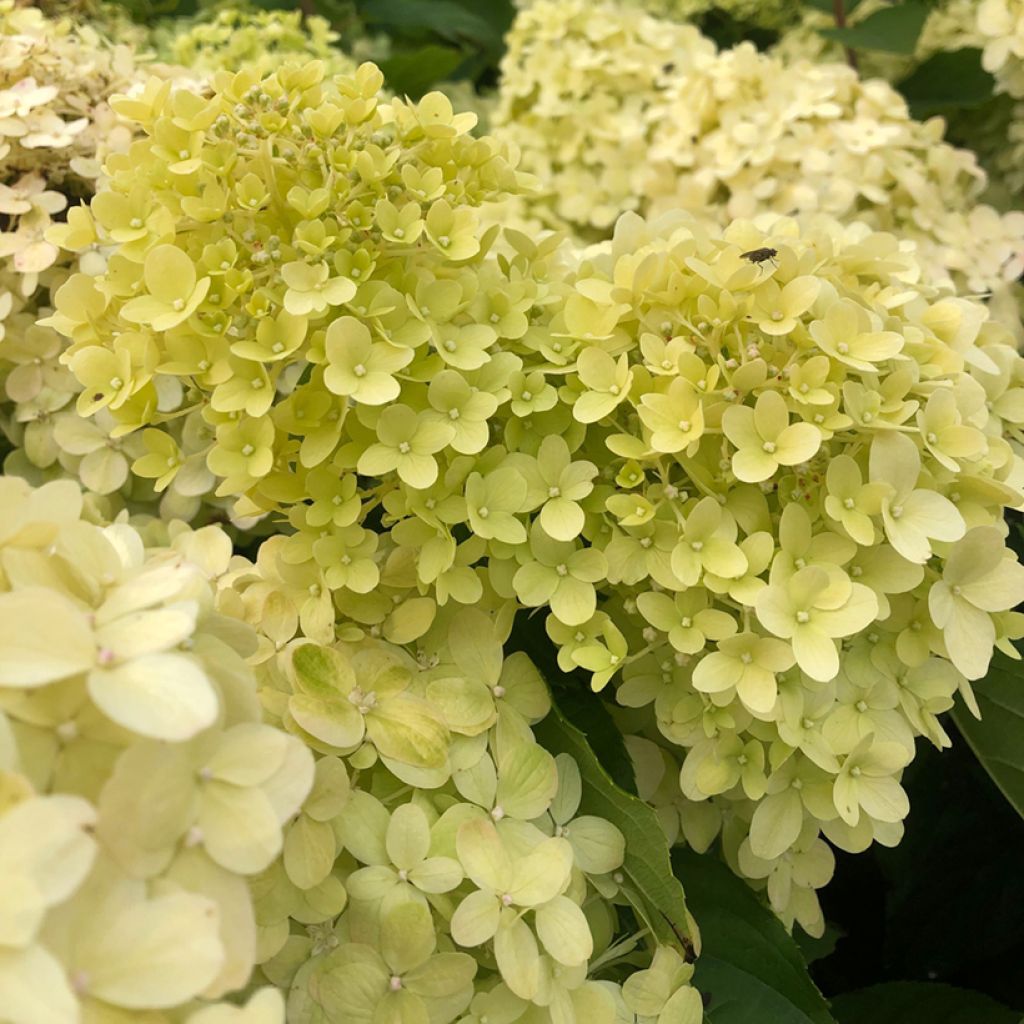
Hydrangea paniculata Limelight
Hydrangea paniculata Limelight
Hydrangea paniculata Limelight
Hydrangea paniculata Limelight
Hydrangea paniculata Limelight
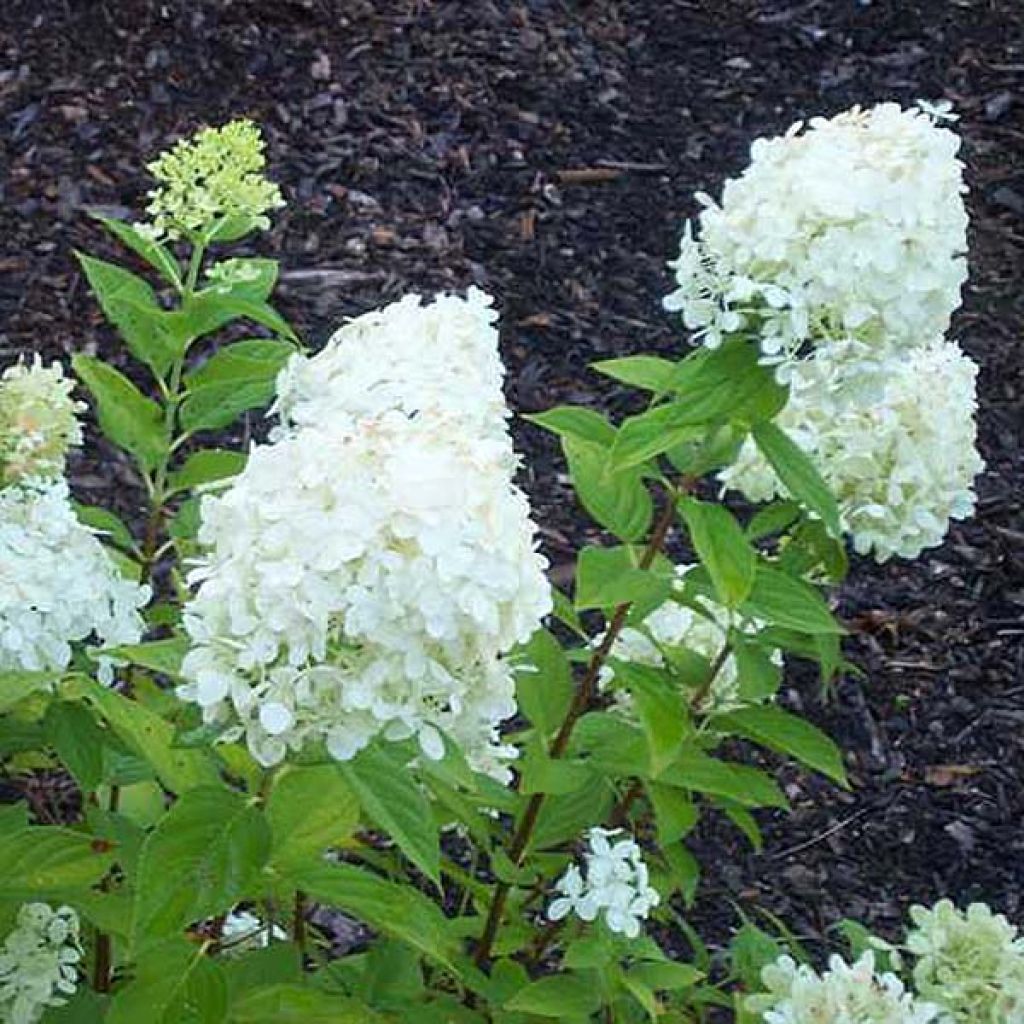
Hydrangea paniculata Limelight
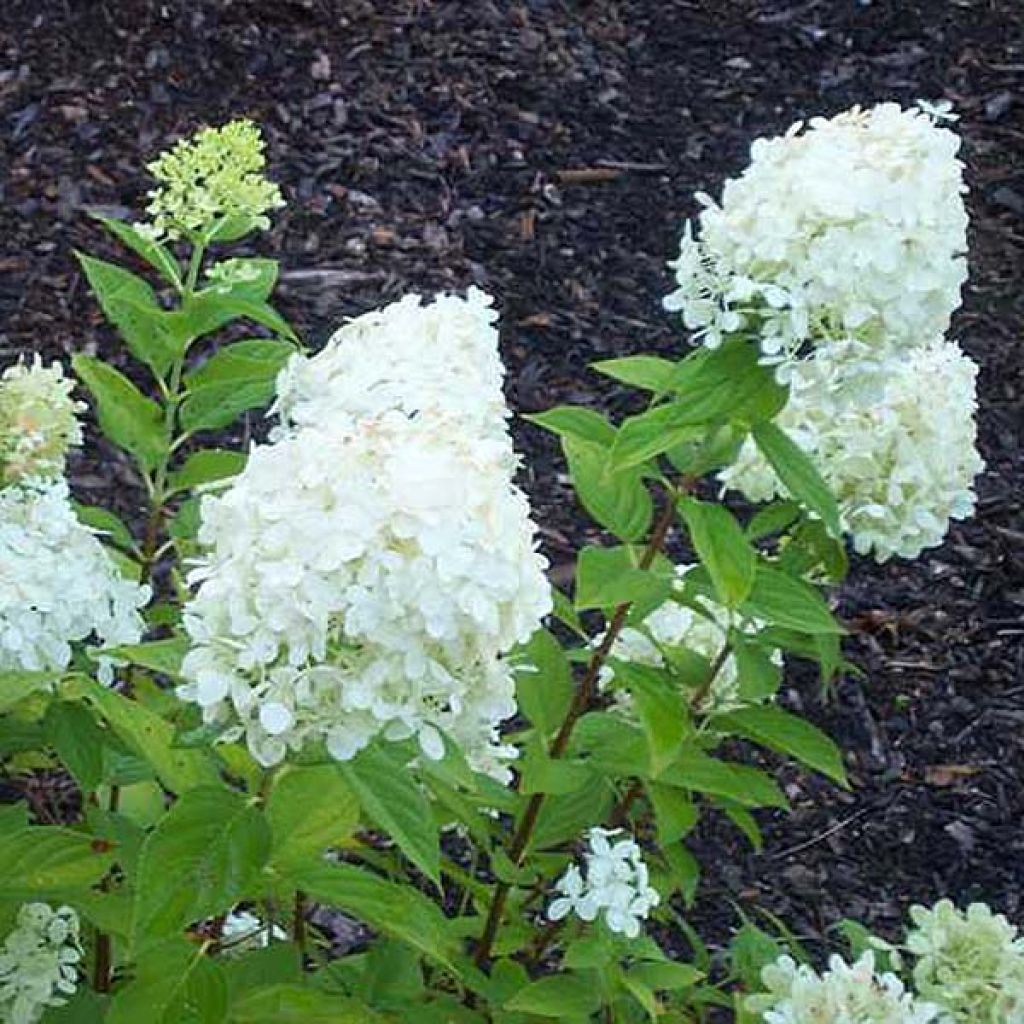
Hydrangea paniculata Limelight
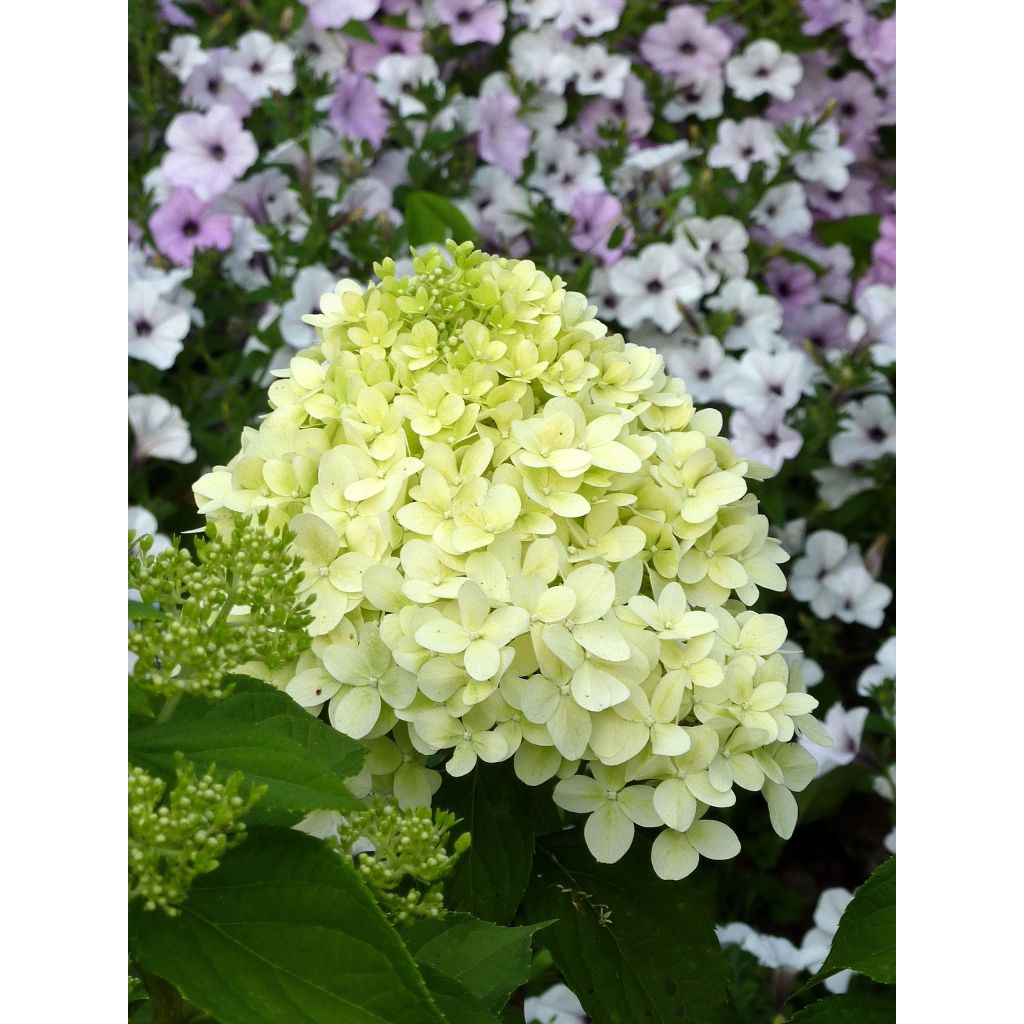
Hydrangea paniculata Limelight
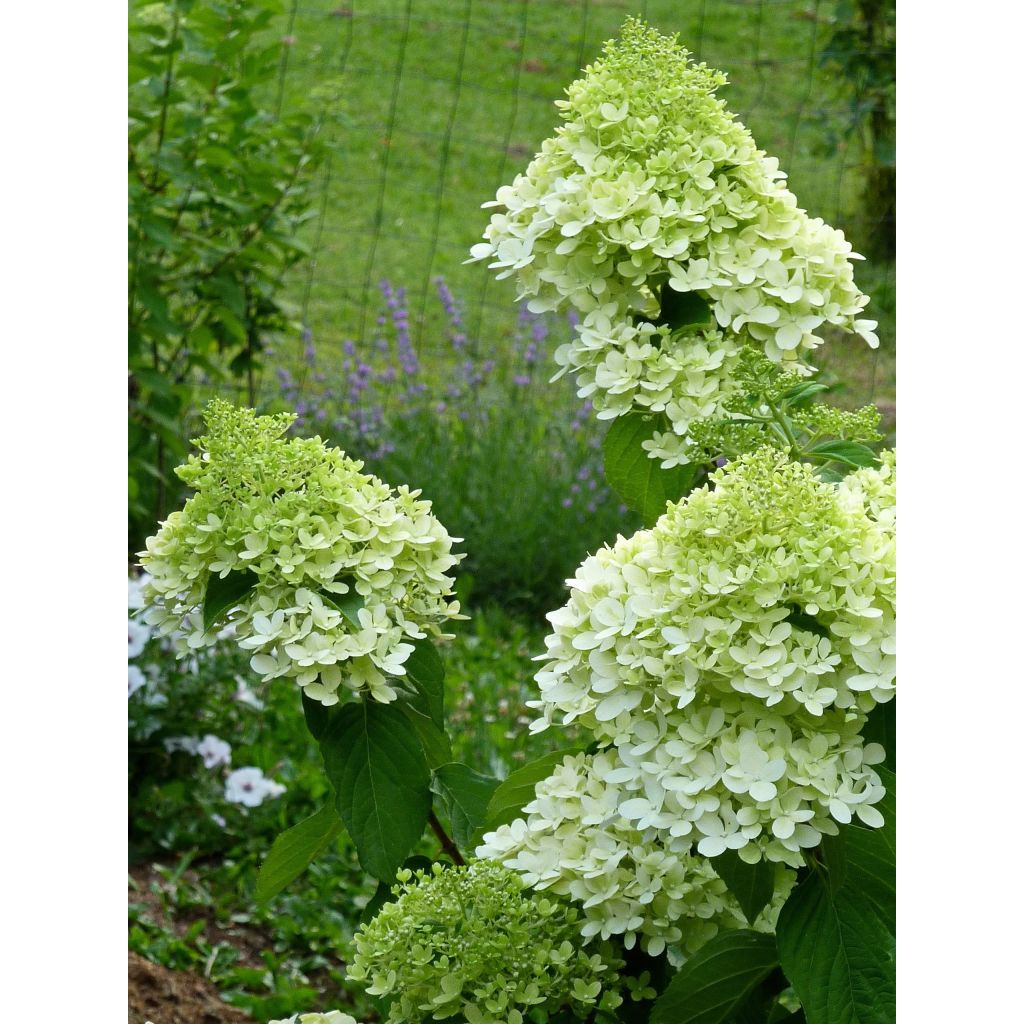
Hydrangea paniculata Limelight
View more pictures
Hide images
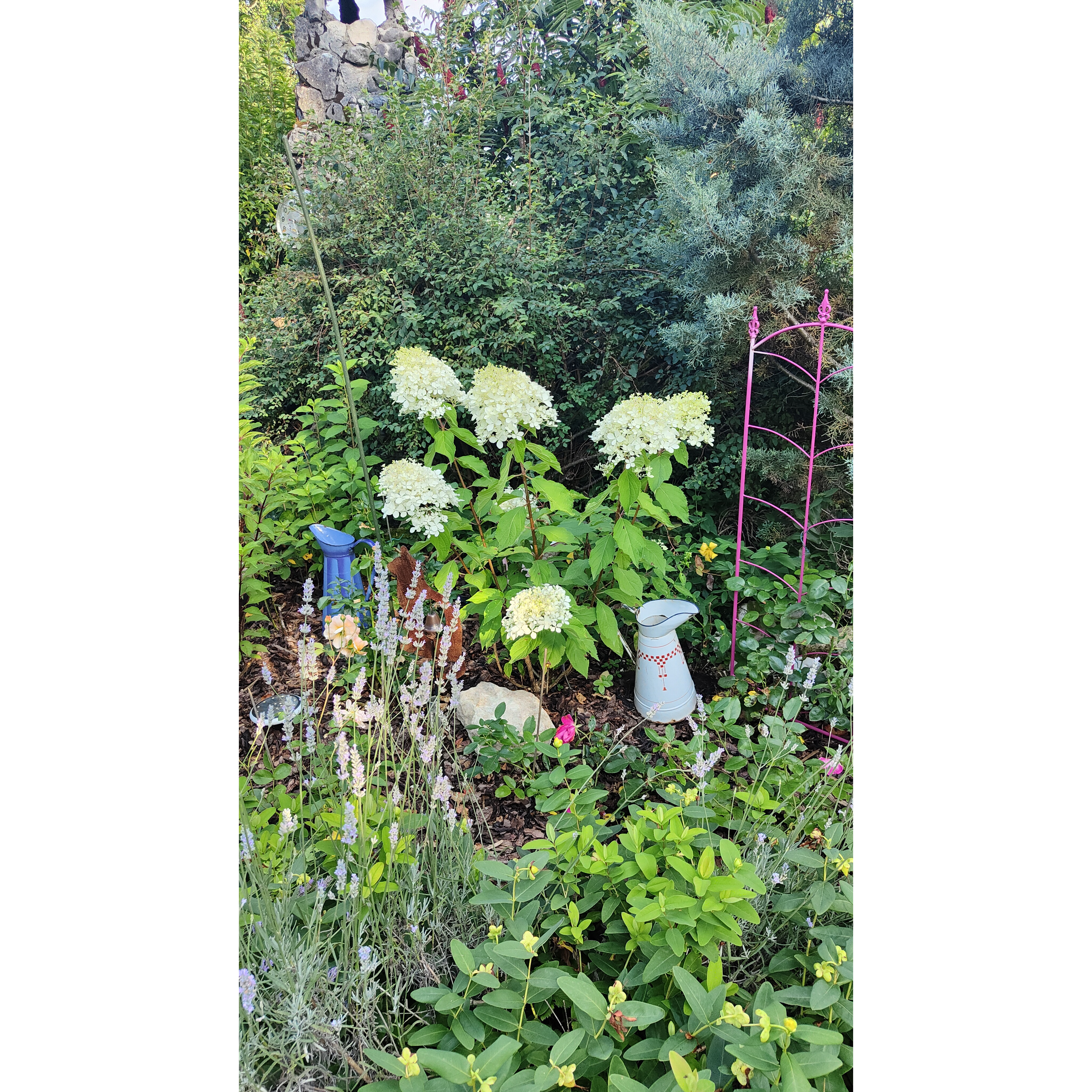
Goyard F.
Hydrangea paniculata Limelight
Goyard F. • 39 FR
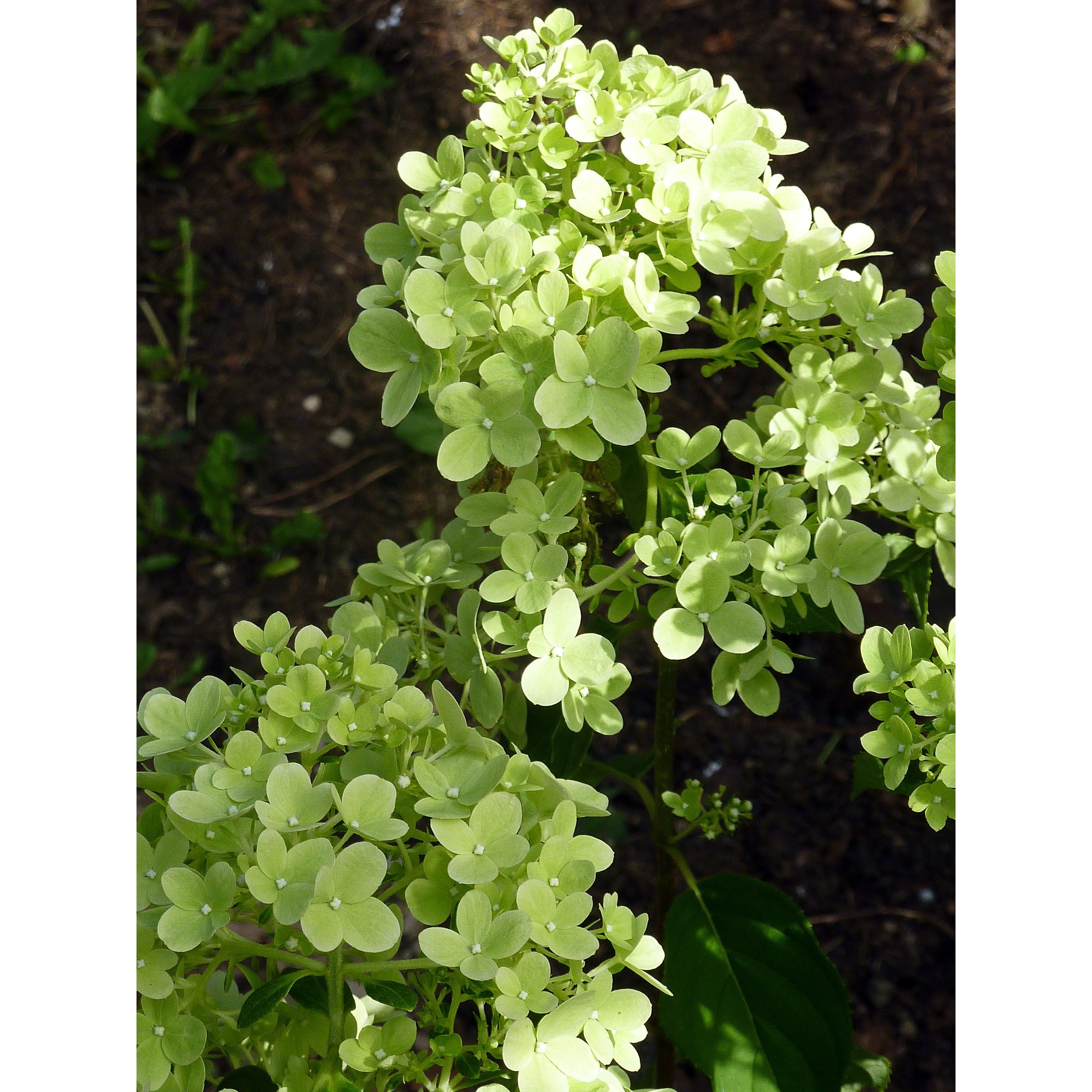
Tatsiana C.
Hydrangea paniculata Limelight
Tatsiana C. • 38 FR
Hydrangea paniculata Limelight
Hydrangea paniculata Limelight
Paniculate Hydrangea, Panicled Hydrangea, Panicle Hydrangea
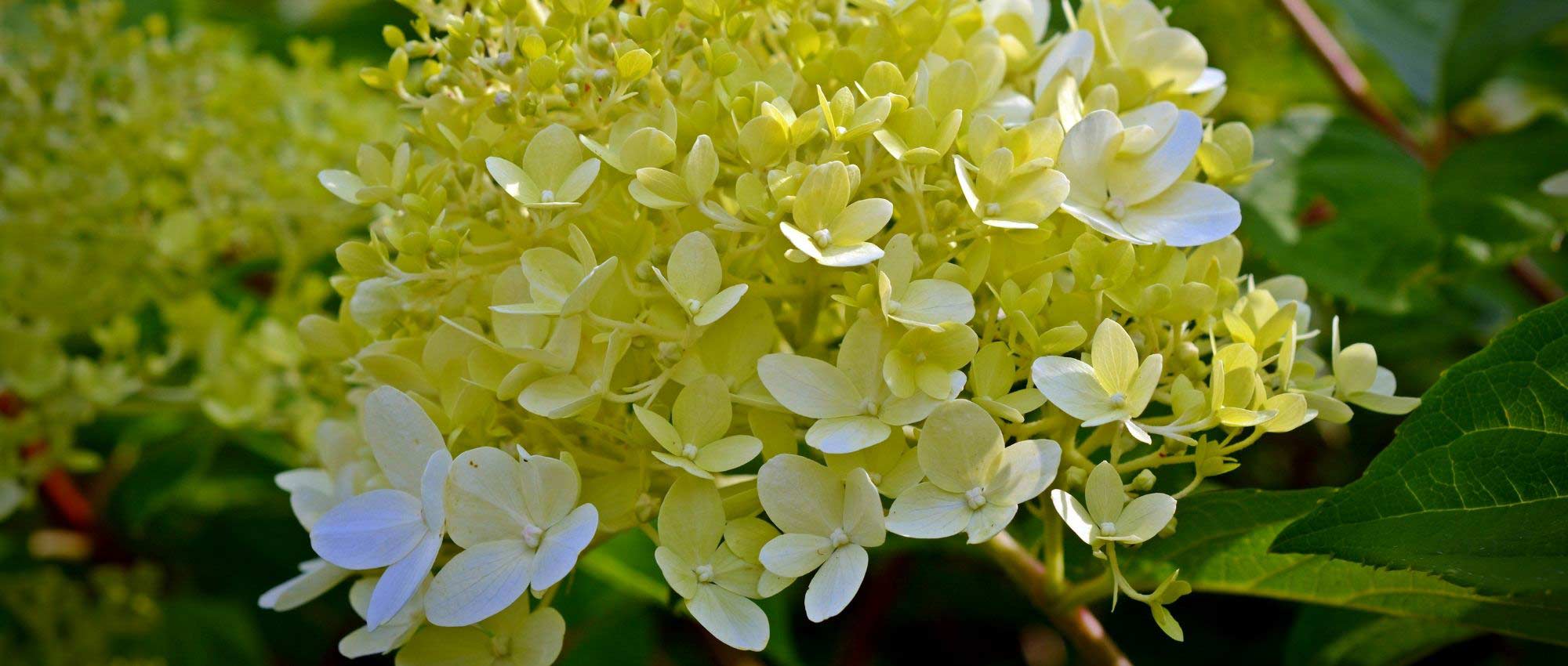
Plant received and planted in April 2024. It produced about ten large flowers, but on fairly short stems. I expected pure white, but it was more cream than white. Time will tell whether the stems grow taller and the flowers become whiter.
Linda , 06/10/2025
Back-to-school special offer!
Get €10 off for every €50 you spend! And get up to €40 off on a single order.
How does it work?
1. Shop your favourites
Add your favourite plants to your basket. For every €50 you spend (excluding delivery charges, store credit and the plastic-free option), you’ll receive a €10 voucher.
€50 spent = €10 voucher
€100 spent = €20 voucher
€150 spent = €30 voucher
€200 spent = €40 voucher
2. Place your order
Once your basket reaches one of the spending thresholds, place your order. You can even choose your delivery date!
3. Receive your voucher
As soon as your order has been shipped, you’ll receive an email containing your personal voucher code and its value.
4. Use it on your next order
Your voucher is valid for 90 days from the date you receive it. It can be used once only, on a new order worth at least the value of the voucher, excluding delivery charges.
Please note: Vouchers can be combined with other offers, but cannot be split or refunded.
Home or relay delivery (depending on size and destination)
Important: You may be charged customs duties by your country’s customs authorities upon delivery.
Schedule delivery date,
and select date in basket
This plant carries a 24 months recovery warranty
More information
We guarantee the quality of our plants for a full growing cycle, and will replace at our expense any plant that fails to recover under normal climatic and planting conditions.


Would this plant suit my garden?
Set up your Plantfit profile →
Description
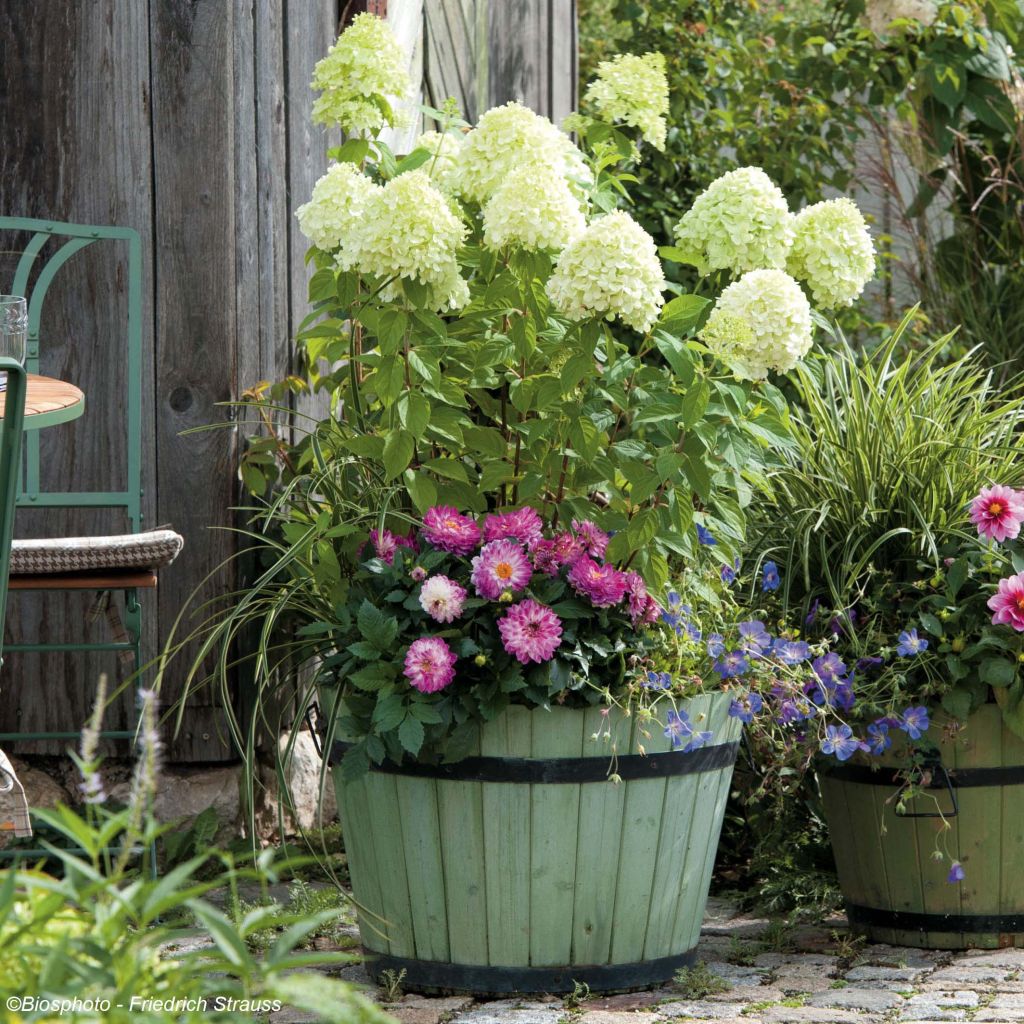
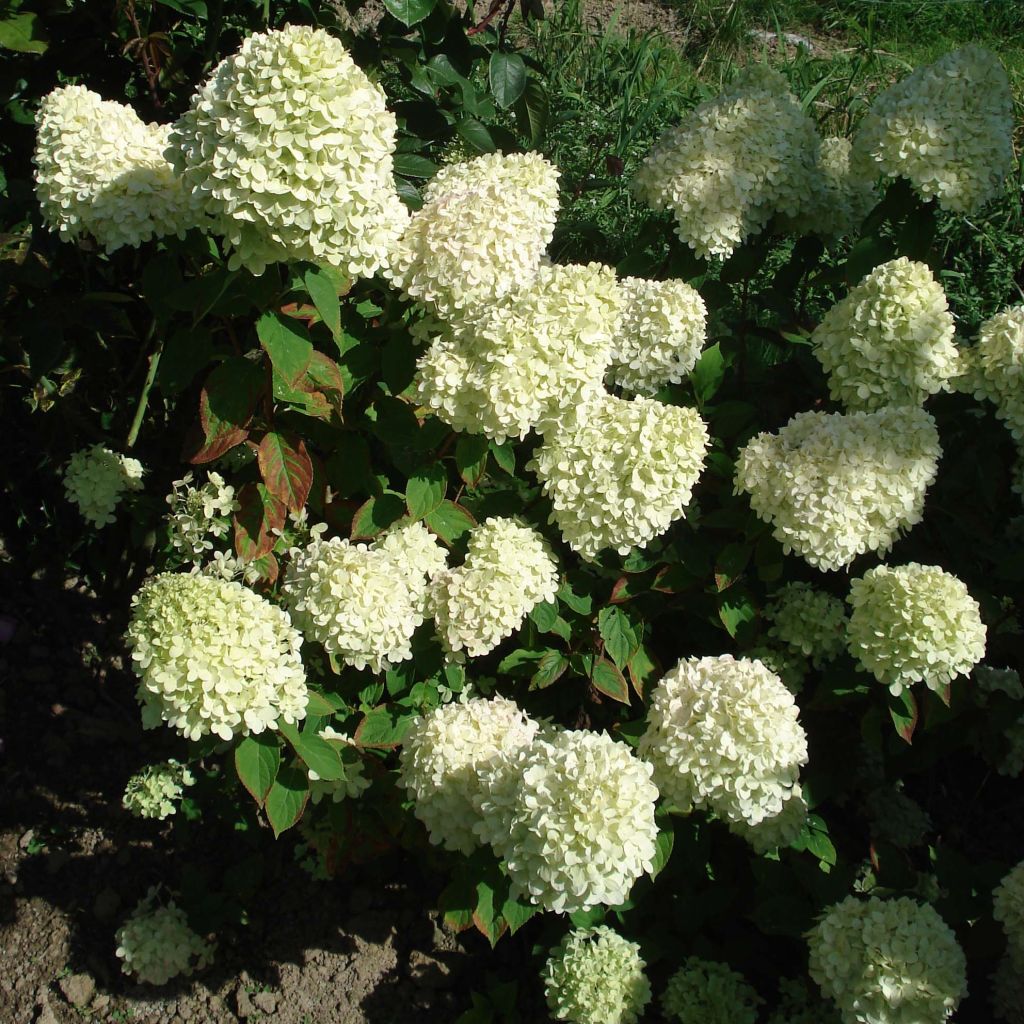
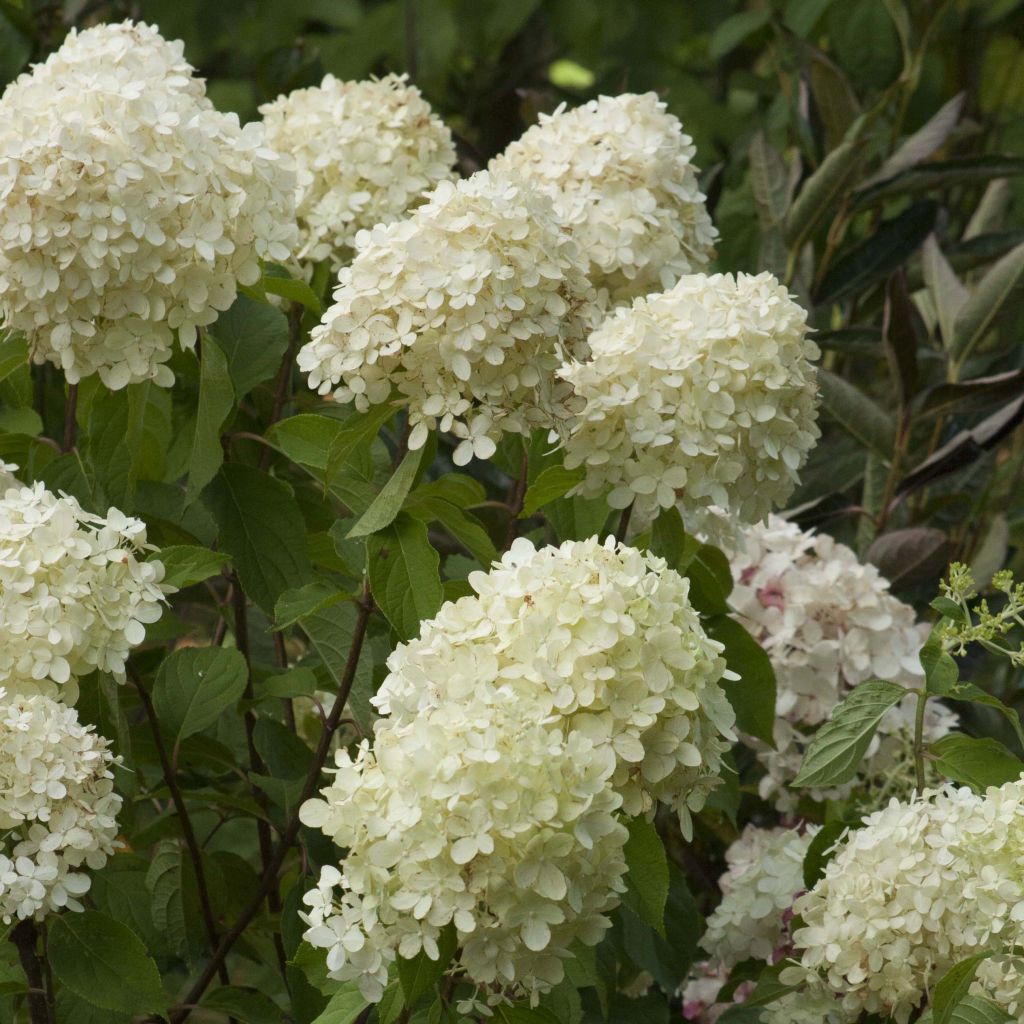
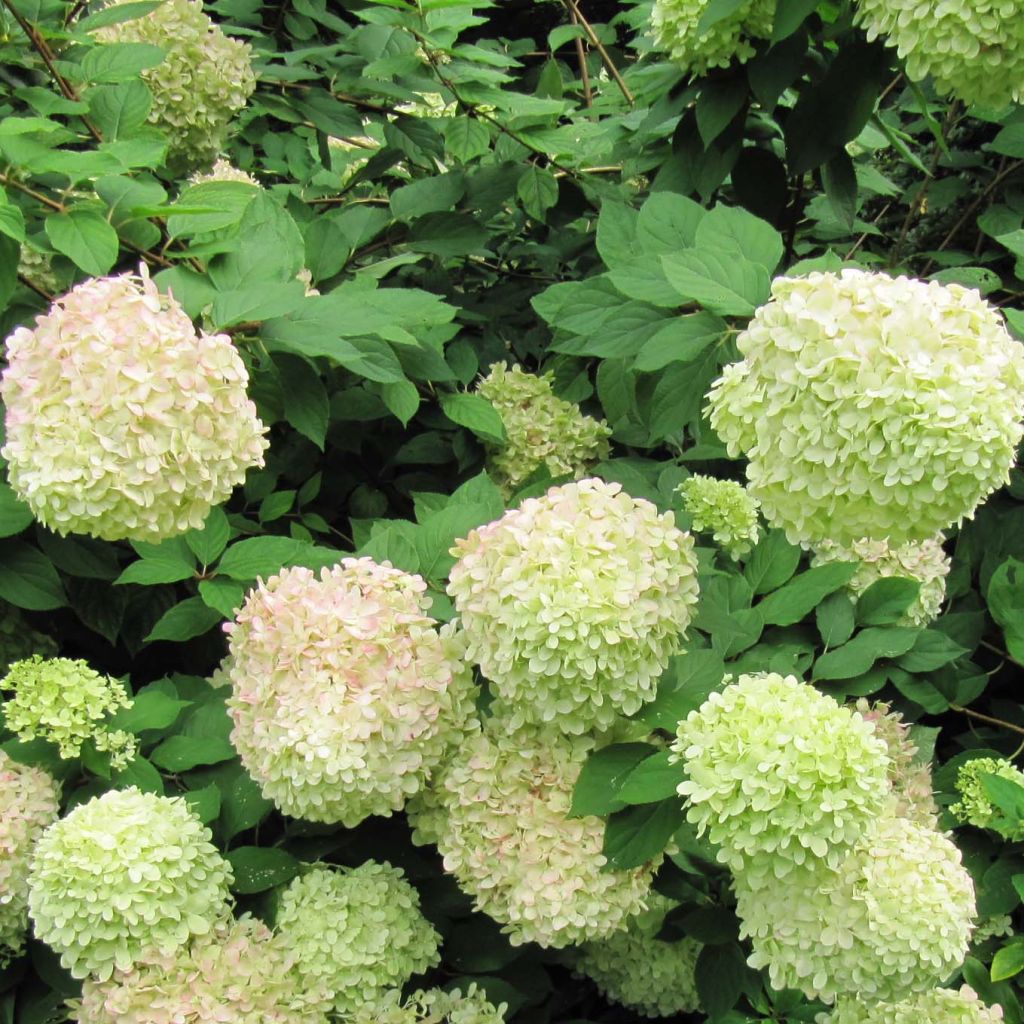
L'Hydrangea paniculata ‘Limelight’ est l’un des hortensias paniculés les plus connus, plébiscité pour ses grandes panicules coniques dont la couleur évolue de l'été à l'automne. Vert anis à l’ouverture, elles deviennent crème à blanc verdâtre en plein été, puis prennent des teintes roses en fin de saison. Portées par des tiges vigoureuses, elles restent bien visibles au-dessus du feuillage. Avec sa longue floraison, ce grand arbuste fait sensation dans un massif ou une haie libre et fournit aussi d’excellentes fleurs fraîches ou séchées. Frais et élégant, il a sa place dans les jardins au naturel ou un jardin blanc.
Cet hortensia appartient à la famille des Hydrangéacées. Il perd ses feuilles en automne et fleurit sur les pousses de l’année. Sa floraison est donc peu sensible aux gelées tardives. L'espèce type Hydrangea paniculata est originaire du centre et du sud de la Chine, du Japon, de Taïwan, de Sakhaline et des îles Kouriles. On trouve cet arbuste dans les forêts claires et les fourrés, entre 300 et 2 100 m d’altitude. ‘Limelight’ a été sélectionné par Pieter Zwijnenburg Jr. à Boskoop, aux Pays-Bas, en 1986 ; ce cultivar a été diffusé au début des années 1990. Le nom Hydrangea paniculata ‘Zwijnenburg’ est un synonyme horticole. La couleur vert clair de ses fleurs et ses panicules dressées ont largement contribué à sa réputation. Il a reçu l’Award of Garden Merit de la Royal Horticultural Society en 2008, une distinction reconfirmée en 2025. Il s'agit d'un buisson vigoureux, au port dressé devenant arrondi, de 2 à 2,50 m en tous sens s'il est peu taillé. Ses feuilles ovales et dentées, vert foncé, mesurent autour de 8 à 10 cm de long. Les jeunes tiges sont vertes à rougeâtres et se lignifient au fil de la saison. Chaque pousse vigoureuse peut donner naissance à une panicule, et l’arbuste se couvre ainsi de fleurs en été. De la mi-juillet à octobre apparaissent de grosses inflorescences très denses en forme de cône, longues de 15 à 25 cm ; jusqu'à 30 cm de long en fonction de la taille pratiquée et des conditions de culture. Elles sont constituées en grande partie de grands fleurons stériles qui s’ouvrent en vert lime, pâlissent ensuite vers le crème, puis se teintent progressivement de rose et de vieux rose lorsque les nuits rafraichissent. Ces couleurs ne dépendent pas de l’acidité du sol. Les inflorescences sèchent sur l’arbuste et restent décoratives une partie de l’hiver. ‘Limelight’ supporte des hivers très froids (-25 à -30 °C) et pousse aussi bien au soleil qu’à mi-ombre.
Cet hortensia ‘Limelight’ donne toute sa mesure dans un grand massif d’arbustes, une haie libre ou en sujet isolé. Son port ample et sa longue floraison font merveille dans les jardins à l’anglaise comme dans les compositions plus contemporaines qui privilégient les couleurs sobres et les tons blancs. On peut l’associer à des arbustes aux dimensions comparables tels que le Viburnum plicatum ‘Mariesii’, l’Hydrangea paniculata ‘Kyushu’, le Cornus alba ‘Sibirica’ ou le Calycanthus ‘Hartlage Wine’. Leurs floraisons, feuillages ou rameaux colorés sont décoratifs avant et après la floraison de l’hortensia.
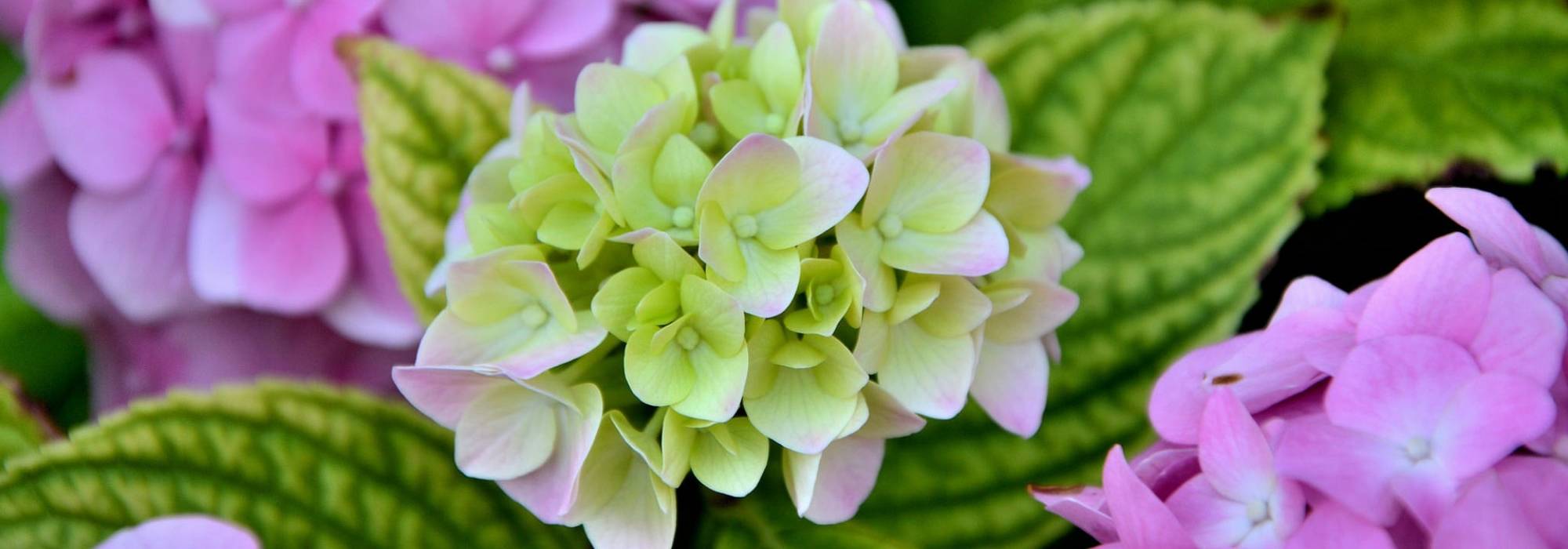
Hydrangea paniculata Limelight in pictures
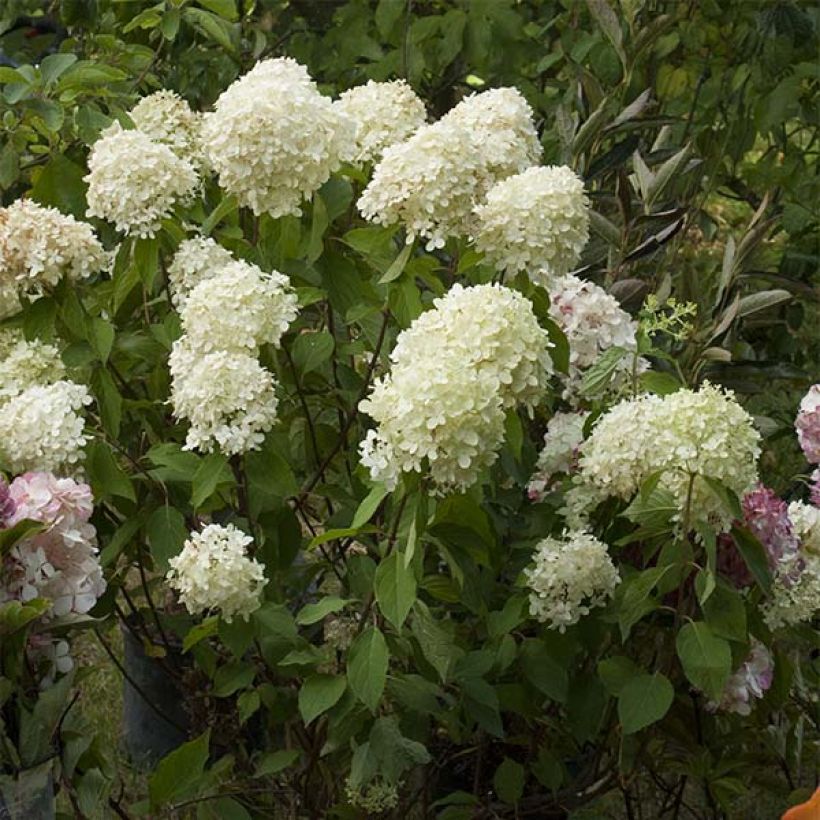
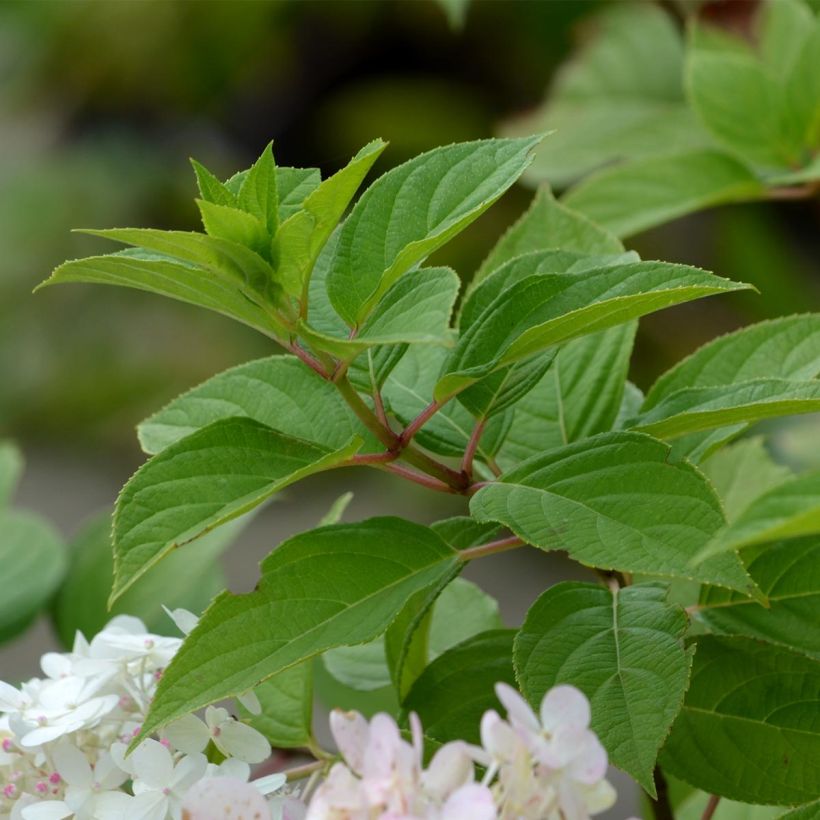
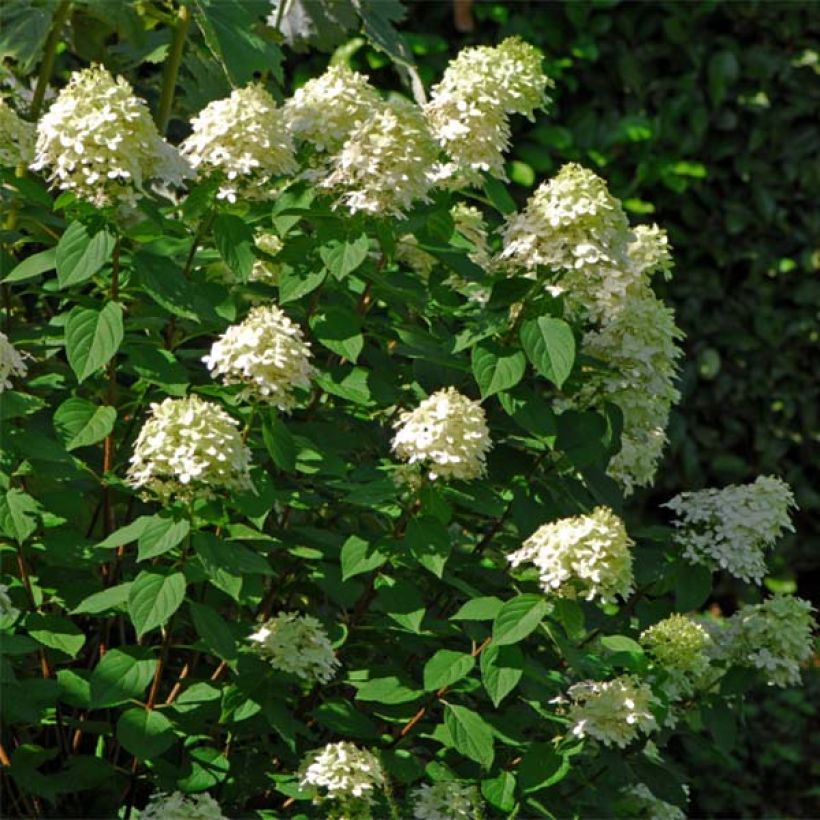
Plant habit
Flowering
Foliage
Botanical data
Hydrangea
paniculata
Limelight
Hydrangeaceae
Paniculate Hydrangea, Panicled Hydrangea, Panicle Hydrangea
Hydrangea paniculata ‘Zwijnenburg’
Cultivar or hybrid
Planting and care
Hydrangea paniculata ‘Limelight’ is preferably planted in autumn or spring, in full sun or partial shade. In hot regions, avoid positions that become scorching in the afternoon; the stronger the sun, the cooler the soil should remain. Plant it in a deep, humus-bearing, well-drained soil. It tolerates clay and chalky soils if they do not dry out for prolonged periods. Water regularly during the first two years, then during prolonged droughts; an organic mulch helps keep the roots cool.
Planting period
Intended location
Care
Planting & care advice
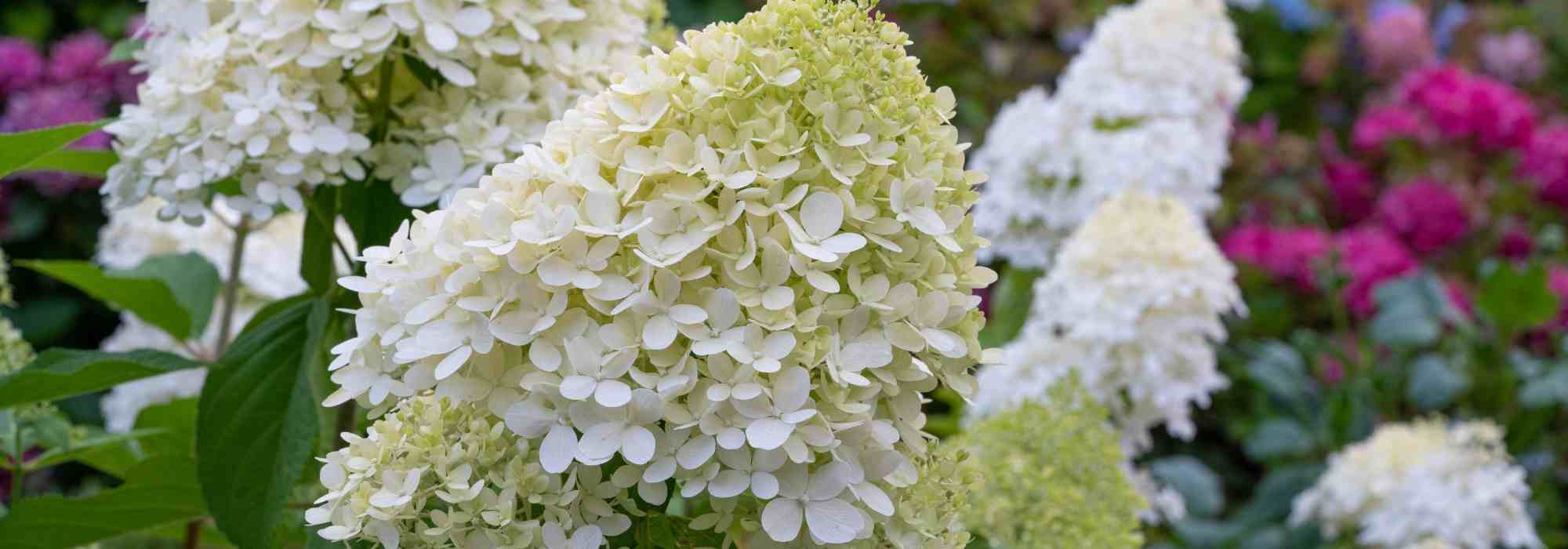

-
, onOrder confirmed
Reply from on Promesse de fleurs
Recently viewed products
Haven't found what you were looking for?
Hardiness is the lowest winter temperature a plant can endure without suffering serious damage or even dying. However, hardiness is affected by location (a sheltered area, such as a patio), protection (winter cover) and soil type (hardiness is improved by well-drained soil).

The flowering period indicated on our website applies to countries and regions located in USDA zone 8 (France, the United Kingdom, Ireland, the Netherlands, etc.)
It will vary according to where you live:- In zones 9 to 10 (Italy, Spain, Greece, etc.), flowering will occur about 2 to 4 weeks earlier.
- In zones 6 to 7 (Germany, Poland, Slovenia, and lower mountainous regions), flowering will be delayed by 2 to 3 weeks.
- In zone 5 (Central Europe, Scandinavia), blooming will be delayed by 3 to 5 weeks.
In temperate climates, pruning of spring-flowering shrubs (forsythia, spireas, etc.) should be done just after flowering.
Pruning of summer-flowering shrubs (Indian Lilac, Perovskia, etc.) can be done in winter or spring.
In cold regions as well as with frost-sensitive plants, avoid pruning too early when severe frosts may still occur.
The planting period indicated on our website applies to countries and regions located in USDA zone 8 (France, United Kingdom, Ireland, Netherlands).
It will vary according to where you live:
- In Mediterranean zones (Marseille, Madrid, Milan, etc.), autumn and winter are the best planting periods.
- In continental zones (Strasbourg, Munich, Vienna, etc.), delay planting by 2 to 3 weeks in spring and bring it forward by 2 to 4 weeks in autumn.
- In mountainous regions (the Alps, Pyrenees, Carpathians, etc.), it is best to plant in late spring (May-June) or late summer (August-September).
The harvesting period indicated on our website applies to countries and regions in USDA zone 8 (France, England, Ireland, the Netherlands).
In colder areas (Scandinavia, Poland, Austria...) fruit and vegetable harvests are likely to be delayed by 3-4 weeks.
In warmer areas (Italy, Spain, Greece, etc.), harvesting will probably take place earlier, depending on weather conditions.
The sowing periods indicated on our website apply to countries and regions within USDA Zone 8 (France, UK, Ireland, Netherlands).
In colder areas (Scandinavia, Poland, Austria...), delay any outdoor sowing by 3-4 weeks, or sow under glass.
In warmer climes (Italy, Spain, Greece, etc.), bring outdoor sowing forward by a few weeks.
Shipping country and language
Your country of residence may be:
Your country of residence is:
For a better user experience on our website, you can select:
Your shipping country:
-
 Austria
-
 Belgium
-
 Bosnia & Herzegovina
-
 Bulgaria
-
 Croatia
-
 Cyprus
-
 Czechia
-
 Denmark
-
 Estonia
-
 Finland
-
 France
-
 Germany
-
 Greece
-
 Hungary
-
 Iceland
-
 Ireland
-
 Italy
Italy
-
 Latvia
-
 Liechtenstein
-
 Lithuania
-
 Luxembourg
-
 Malta
Malta
-
 Netherlands
-
 Poland
-
 Portugal
-
 Romania
-
 Serbia
-
 Slovakia
-
 Slovenia
-
 Spain
Spain
-
 Sweden
-
 Switzerland
Language:
-
French
-
 English
-
Spanish
-
Italian
-
German
-
Portuguese
-
Dutch
-
Finnish
My Account
Hello
My wish lists
My cart
Log in / Register
Existing customer?
This form is protected by reCAPTCHA - the Google Privacy Policy and Terms of Service apply.
New customer?
Create an account to track your orders, access our customer service and, if you wish, make the most of our upcoming offers.