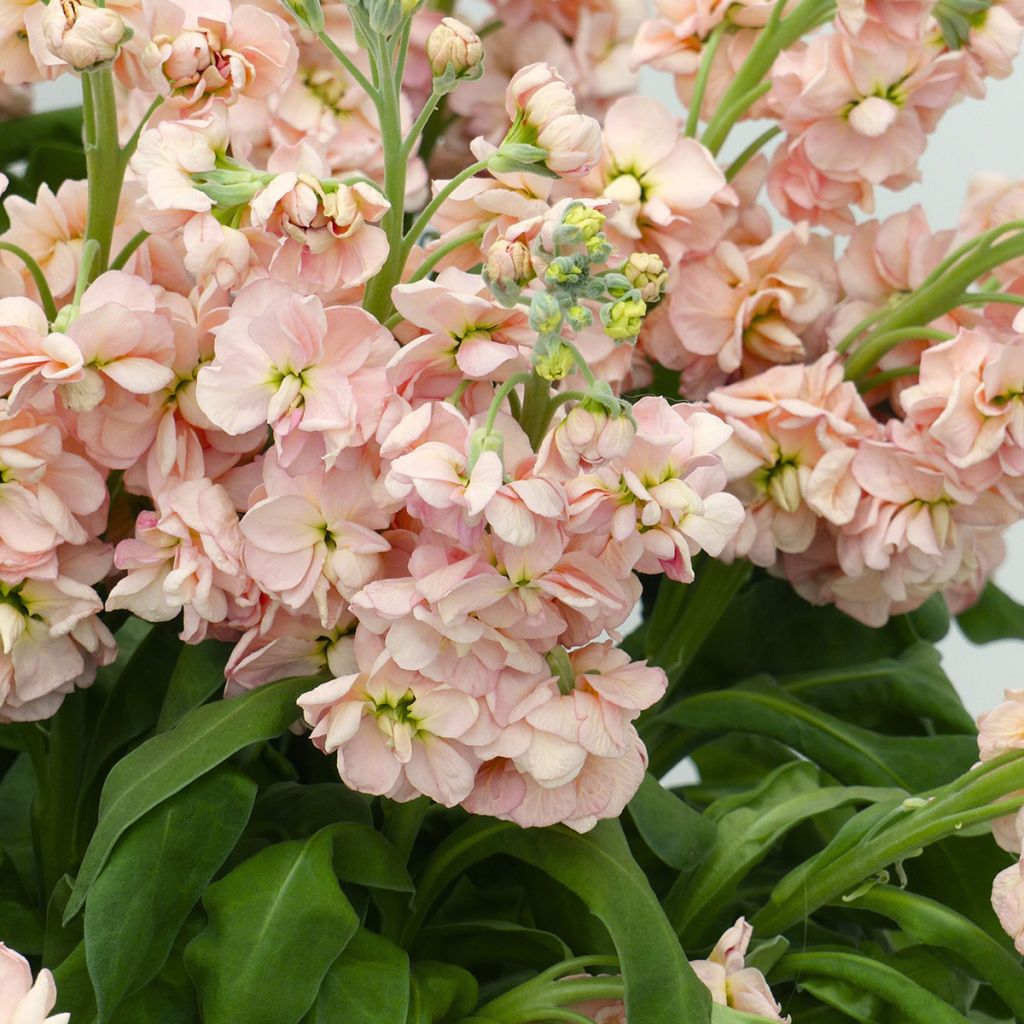
Matthiola incana Milla Salmon - Grande giroflée Milla Salmon, Giroflée des jardins, Giroflée des fleuristes, Giroflée quarantaine
Matthiola incana Milla Salmon - Grande giroflée Milla Salmon, Giroflée des jardins, Giroflée des fleuristes, Giroflée quarantaine
Matthiola incana Milla Salmon
Back-to-school special offer!
Get €10 off for every €50 you spend! And get up to €40 off on a single order.
How does it work?
1. Shop your favourites
Add your favourite plants to your basket. For every €50 you spend (excluding delivery charges, store credit and the plastic-free option), you’ll receive a €10 voucher.
€50 spent = €10 voucher
€100 spent = €20 voucher
€150 spent = €30 voucher
€200 spent = €40 voucher
2. Place your order
Once your basket reaches one of the spending thresholds, place your order. You can even choose your delivery date!
3. Receive your voucher
As soon as your order has been shipped, you’ll receive an email containing your personal voucher code and its value.
4. Use it on your next order
Your voucher is valid for 90 days from the date you receive it. It can be used once only, on a new order worth at least the value of the voucher, excluding delivery charges.
Please note: Vouchers can be combined with other offers, but cannot be split or refunded.
Home or relay delivery (depending on size and destination)
Important: You may be charged customs duties by your country’s customs authorities upon delivery.
Schedule delivery date,
and select date in basket
This plant carries a 6 months recovery warranty
More information
We guarantee the quality of our plants for a full growing cycle, and will replace at our expense any plant that fails to recover under normal climatic and planting conditions.
Would this plant suit my garden?
Set up your Plantfit profile →
Description
The Matthiola incana 'Milla Salmon' (or Cheiranthus incanus 'Milla Salmon') is a variety of Ten-week Stock from a horticultural group selected for its multiple cultivation qualities. The Milla series is distinguished by its regular, very straight stems, favoured by florists for creating cut flower arrangements, and which performs equally well in garden beds and in pots. This Florist's Stock, as it is also called, produces dense spikes of large salmon flowers, most often double (through cold treatment, professionals achieve a 100% rate). Sowing is done in spring or in late summer in mild climates, with a very high germination rate (over 90%).
Stock is a member of the Brassicaceae family, rich with over 3000 species, divided between wild plants, vegetables (cabbages, turnips...) and ornamental plants (Aubrieta, Iberis...). The term Stock unites two botanical genera, Mattthiola and Erysimum. Matthiola incana (synonym Hesperis incana) is found in the wild on calcareous shores and cliffs in the Mediterranean (from Spain to Greece). It is a herbaceous perennial plant, but with low longevity, recognisable by its cross-shaped flowers, and usually cultivated as a biennial in mild climates (sown in late summer, flowering the following spring) or as an annual in gardens and for cut flower production.
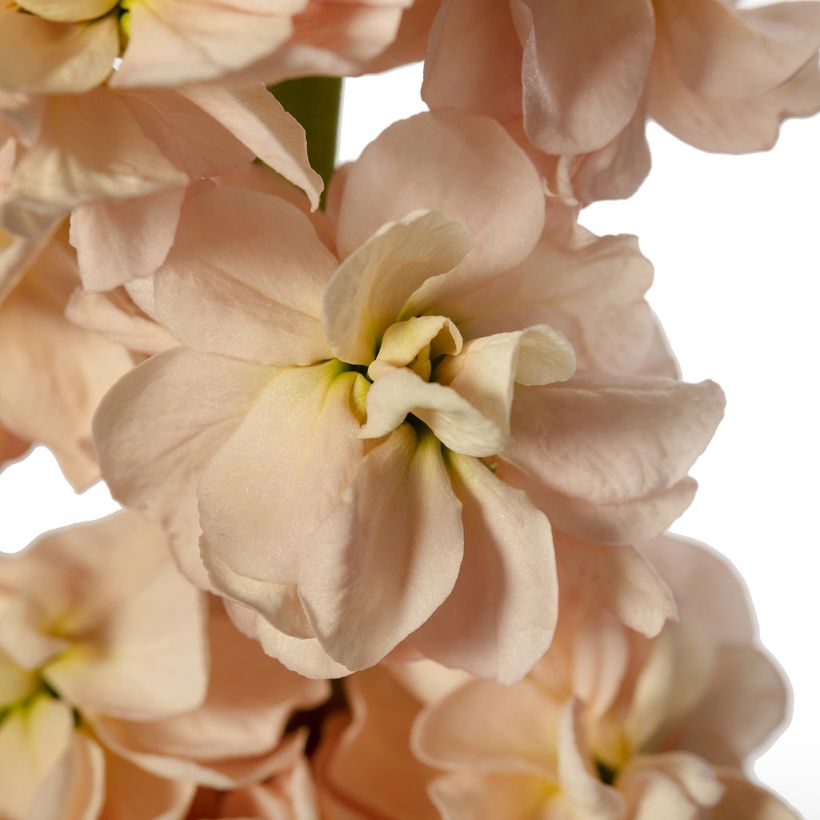
The Ten-week Stock 'Milla Salmon' is characterised, like other varieties in the Milla series, by rapid growth (9 to 16 weeks from seedling to mature plant) and an upright habit with a compact base. At maturity, it reaches approximately 65 to 70 cm in height with a spread of 30 to 40 cm. In a pot, it will be a little more compact, not exceeding 50 cm in height. The lanceolate leaves have an undulate and entire margin, are medium to dark green, measure 10 to 15 cm long and are in an alternate position on the stems. Deciduous to semi-evergreen depending on the mildness of the winter, the somewhat dark foliage particularly highlights the light-coloured flowering. The flowering period is linked to the sowing date and runs from May until mid-summer. The flowers are produced in dense spikes and, in this variety, measure up to 4 cm in diameter. Most of them are double, displaying a delicious, very homogeneous salmon-pink, with only the centre pulling slightly towards yellow. Well-scented, they diffuse sweet to spicy fragrances, especially in the evening (the French name 'giroflée' comes from the analogy of the scent with the clove...). Appreciating cool nights and able to withstand a few degrees below zero, the plant, however, suffers from persistent dry heat. Regular watering and occasional fertiliser will ensure healthy growth and abundant flowering.
The seeds of Ten-week Stock 'Milla Salmon' will allow you to enjoy economical and easy-to-establish flowering. The compactness of this variety makes it suitable for placement at the edge of a bed or border, near a path or the house, to fully enjoy its scent and beauty. It will also be perfectly at home on a sunny terrace. In a bed, combine it with other flowering plants to create an attractive scene. Daylilies in varied colours will accompany it with their starry, short-lived flowers, which are constantly renewed over a long period. To visually lighten your display, sow seeds of Gypsophila, which small flowers and fine foliage will intermingle delicately between the more imposing flowers. A few plants of forget-me-nots will have the same role but in a lower version...
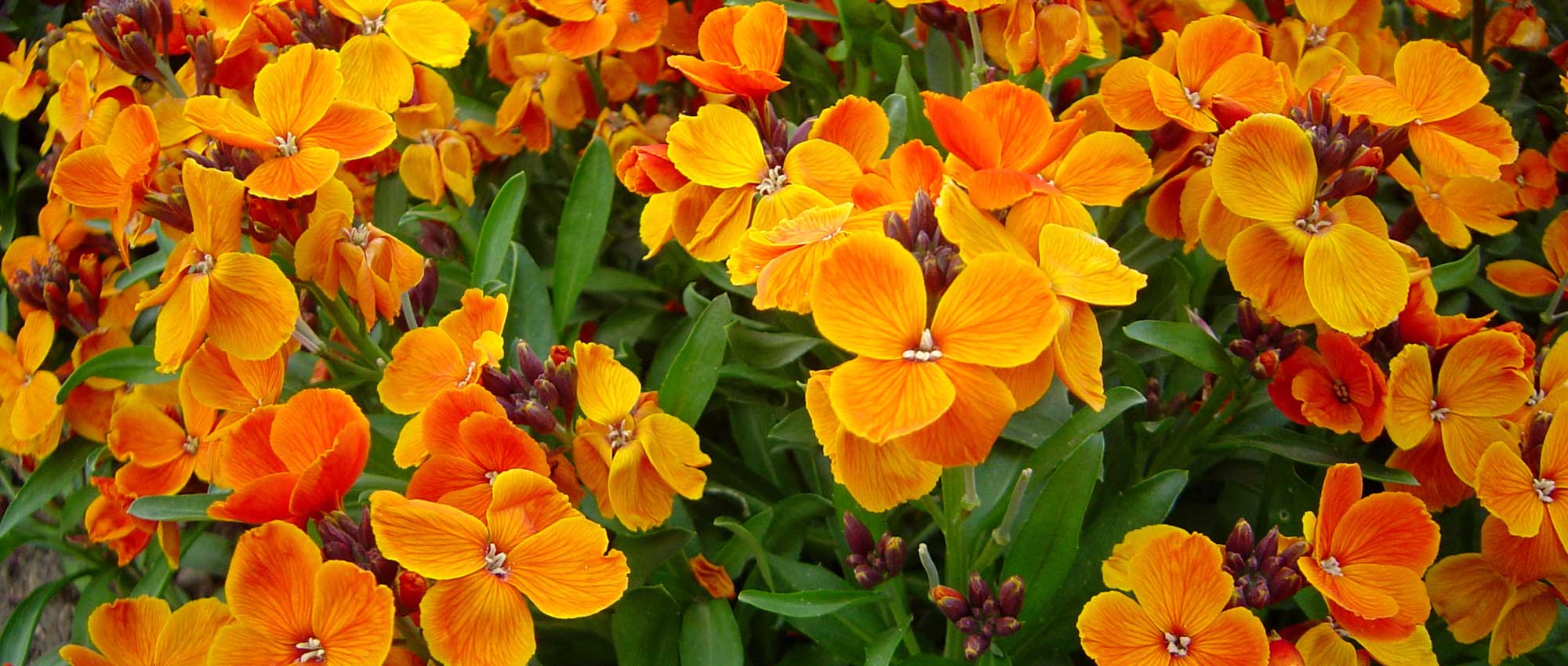
Matthiola incana Milla Salmon - Grande giroflée Milla Salmon, Giroflée des jardins, Giroflée des fleuristes, Giroflée quarantaine in pictures
Flowering
Foliage
Plant habit
Botanical data
Matthiola
incana
Milla Salmon
Brassicaceae
Cheiranthus incanus 'Milla Salmon'
Cultivar or hybrid
Planting and care
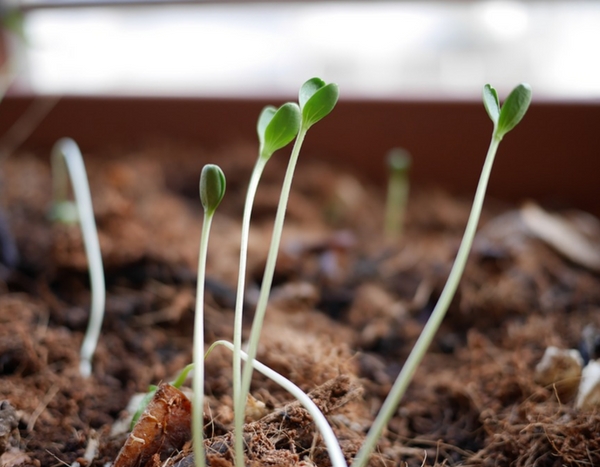
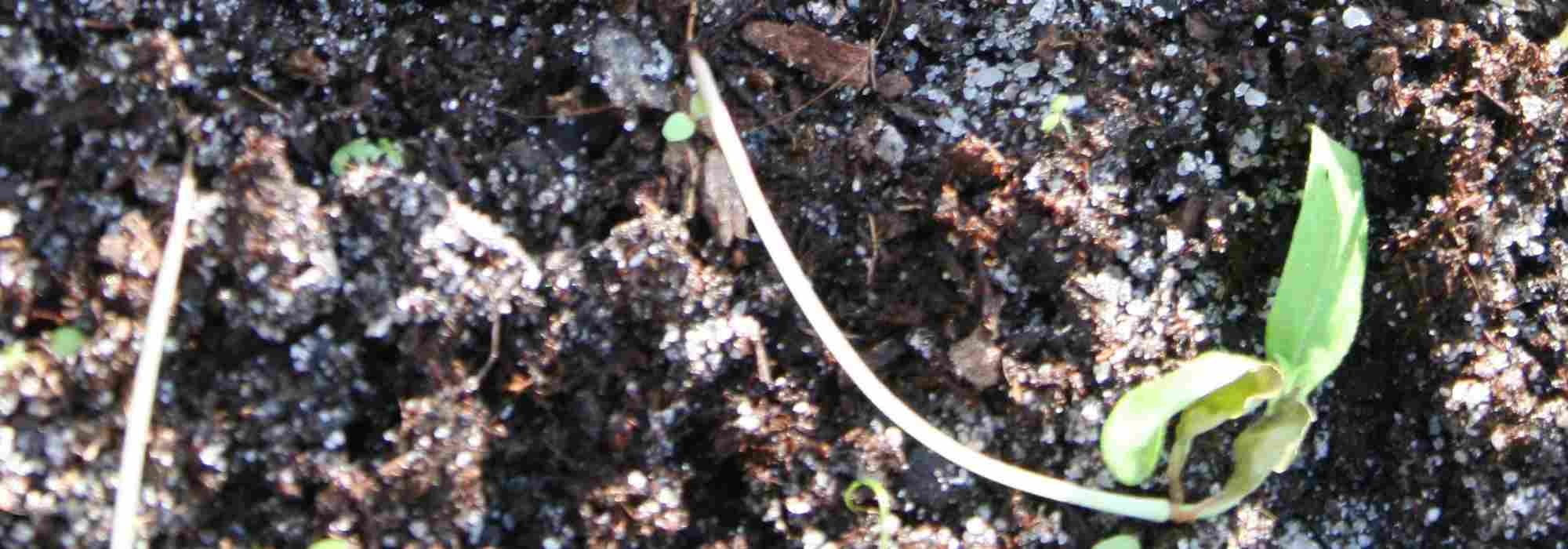
Sow the 'Milla Salmon' wallflowers from February to April or in late summer (in mild climates). Place the seeds on the surface of moist compost, in pots or trays, and lightly cover them with a thin layer of vermiculite. Position the seed tray in a mini greenhouse or enclose the containers in a clear plastic bag, kept in a warm place, at a temperature between 20-25°C. Keep the sowing near a light source, as this aids germination. Keep the surface of the compost moist, but not waterlogged; germination will usually take 7 to 14/21 days.
When the young plants are sufficiently developed, transplant them into 7.5 cm pots or trays. Gradually acclimatise the plants to cooler conditions for a few days before planting them out, after all risk of frost, spacing them 30 cm apart. Choose a sunny spot and well-draining soil, or pots filled with a rich, free-draining mix.
In dry soil and sunny positions, remember to water your plants often in summer so the soil never dries out completely between waterings.
Sowing period
Intended location
Planting & care advice
-

-
-
-

-

-
-

-

This item has not been reviewed yet - be the first to leave a review about it.
Recently viewed products
Haven't found what you were looking for?
Hardiness is the lowest winter temperature a plant can endure without suffering serious damage or even dying. However, hardiness is affected by location (a sheltered area, such as a patio), protection (winter cover) and soil type (hardiness is improved by well-drained soil).

The flowering period indicated on our website applies to countries and regions located in USDA zone 8 (France, the United Kingdom, Ireland, the Netherlands, etc.)
It will vary according to where you live:- In zones 9 to 10 (Italy, Spain, Greece, etc.), flowering will occur about 2 to 4 weeks earlier.
- In zones 6 to 7 (Germany, Poland, Slovenia, and lower mountainous regions), flowering will be delayed by 2 to 3 weeks.
- In zone 5 (Central Europe, Scandinavia), blooming will be delayed by 3 to 5 weeks.
In temperate climates, pruning of spring-flowering shrubs (forsythia, spireas, etc.) should be done just after flowering.
Pruning of summer-flowering shrubs (Indian Lilac, Perovskia, etc.) can be done in winter or spring.
In cold regions as well as with frost-sensitive plants, avoid pruning too early when severe frosts may still occur.
The planting period indicated on our website applies to countries and regions located in USDA zone 8 (France, United Kingdom, Ireland, Netherlands).
It will vary according to where you live:
- In Mediterranean zones (Marseille, Madrid, Milan, etc.), autumn and winter are the best planting periods.
- In continental zones (Strasbourg, Munich, Vienna, etc.), delay planting by 2 to 3 weeks in spring and bring it forward by 2 to 4 weeks in autumn.
- In mountainous regions (the Alps, Pyrenees, Carpathians, etc.), it is best to plant in late spring (May-June) or late summer (August-September).
The harvesting period indicated on our website applies to countries and regions in USDA zone 8 (France, England, Ireland, the Netherlands).
In colder areas (Scandinavia, Poland, Austria...) fruit and vegetable harvests are likely to be delayed by 3-4 weeks.
In warmer areas (Italy, Spain, Greece, etc.), harvesting will probably take place earlier, depending on weather conditions.
The sowing periods indicated on our website apply to countries and regions within USDA Zone 8 (France, UK, Ireland, Netherlands).
In colder areas (Scandinavia, Poland, Austria...), delay any outdoor sowing by 3-4 weeks, or sow under glass.
In warmer climes (Italy, Spain, Greece, etc.), bring outdoor sowing forward by a few weeks.
Shipping country and language
Your country of residence may be:
Your country of residence is:
For a better user experience on our website, you can select:
Your shipping country:
-
 Austria
-
 Belgium
-
 Bosnia & Herzegovina
-
 Bulgaria
-
 Croatia
-
 Cyprus
-
 Czechia
-
 Denmark
-
 Estonia
-
 Finland
-
 France
-
 Germany
-
 Greece
-
 Hungary
-
 Iceland
-
 Ireland
-
 Italy
Italy
-
 Latvia
-
 Liechtenstein
-
 Lithuania
-
 Luxembourg
-
 Malta
Malta
-
 Netherlands
-
 Poland
-
 Portugal
-
 Romania
-
 Serbia
-
 Slovakia
-
 Slovenia
-
 Spain
Spain
-
 Sweden
-
 Switzerland
Language:
-
French
-
 English
-
Spanish
-
Italian
-
German
-
Portuguese
-
Dutch
-
Finnish
My Account
Hello
My wish lists
My cart
Log in / Register
Existing customer?
This form is protected by reCAPTCHA - the Google Privacy Policy and Terms of Service apply.
New customer?
Create an account to track your orders, access our customer service and, if you wish, make the most of our upcoming offers.