
Hedera hibernica 'Spetchley' - Irish ivy
Hedera hibernica 'Spetchley' - Irish ivy
Hedera hibernica 'Spetchley'
Back-to-school special offer!
Get €10 off for every €50 you spend! And get up to €40 off on a single order.
How does it work?
1. Shop your favourites
Add your favourite plants to your basket. For every €50 you spend (excluding delivery charges, store credit and the plastic-free option), you’ll receive a €10 voucher.
€50 spent = €10 voucher
€100 spent = €20 voucher
€150 spent = €30 voucher
€200 spent = €40 voucher
2. Place your order
Once your basket reaches one of the spending thresholds, place your order. You can even choose your delivery date!
3. Receive your voucher
As soon as your order has been shipped, you’ll receive an email containing your personal voucher code and its value.
4. Use it on your next order
Your voucher is valid for 90 days from the date you receive it. It can be used once only, on a new order worth at least the value of the voucher, excluding delivery charges.
Please note: Vouchers can be combined with other offers, but cannot be split or refunded.
Why not try an alternative variety in stock?
View all →
Available in 4 sizes

Available in 1 sizes

Available in 2 sizes
Available in 2 sizes

Available in 1 sizes

Available in 1 sizes

Available in 2 sizes

Available in 1 sizes
Available in 2 sizes
Available in 2 sizes
This plant carries a 12 months recovery warranty
More information
We guarantee the quality of our plants for a full growing cycle, and will replace at our expense any plant that fails to recover under normal climatic and planting conditions.

Would this plant suit my garden?
Set up your Plantfit profile →
Description
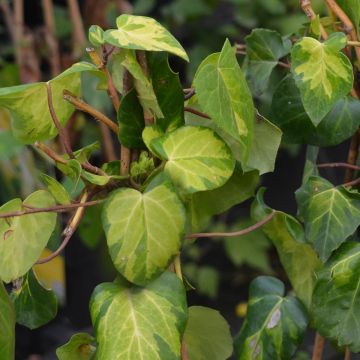
Hedera helix 'Spetchley' is a miniature ivy also listed under the name Hedera hibernica 'Spetchley'. This dwarf cultivar has a prostrate, very low and dense habit, along with fine textured, very small green leaves. Ideal for carpeting the base of bushes, shaded rockeries, borders or containers, it is decorative all year round and tolerates pruning well. A valuable plant for greening small shaded spaces in the garden, even dry ones.
Belonging to the Araliaceae family, this cultivar is often classified as Hedera helix (common ivy) and sometimes as Hedera hibernica (Irish ivy), depending on horticultural sources. It can also be found under the synonym ‘Gnome’. Its horticultural origin is linked to Spetchley Park, near Worcester (Worcestershire, United Kingdom), where it was cultivated in the early 1960s. It received the RHS Award of Garden Merit (AGM) in the early 1990s.
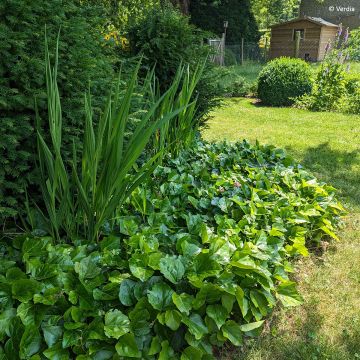
The habit of this ivy is very low and carpeting, with fine stems that elongate along the surface and spontaneously root at the nodes upon contact with the soil. Its growth is slow to medium, depending on conditions. The vegetation is between 5 and 10 cm high and spreads to 40 to 60 cm over a few years. In a pot, it maintains a very low silhouette, often 5 cm tall, and cascades over 30 to 40 cm. This ivy does not produce suckers, but advances via its rooting stems.
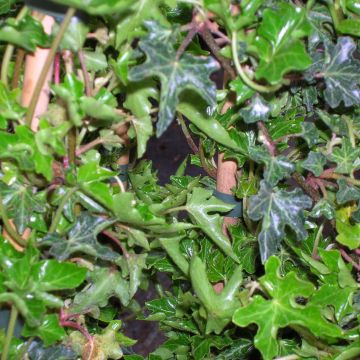
The evergreen leaves are very small (0.5 to 1.5 cm long), leathery, and glossy. They are entire or have 1 to 3 narrow, pointed lobes reminiscent of a "bird's foot". The medium to dark green leaf can redden under the effect of cold; in winter, the leaf takes on a purplish to violet hue. The petioles and young stems frequently take on a brown-red colour. Flowering is extremely rare in this cultivar, which most often remains in the juvenile stage. The root system is shallow; the plant can also produce small adhesive climbing roots if it encounters a rough support. Its hardiness is good: -15°C, even -20°C in open ground according to sources.
Use the dwarf ivy 'Spetchley' as a ground cover at the base of your bushes, to highlight the curve of a path, over a low wall, in a shaded rockery or to let it cascade from a planter in the shade. Its fine texture highlights hellebores, dwarf ferns (Polystichum tsus-simense), dwarf hostas and small heucheras like Heuchera 'Green Spice'. Prune it lightly in spring to contain the spread and densify the carpet.
This miniature ivy was popularised by British collector nurseries and is often used as a subject for bonsai cultivation or for furnishing ‘fairy gardens’. Fairy gardens are small miniature plant scenes that evoke an imaginary world: a pot, planter or trough populated with dwarf plants (miniature ivies, mosses, small ferns, sedums), pebbles, bark and micro-accessories (small house, bridge, bench, stepping stones) on the scale of a figurine.
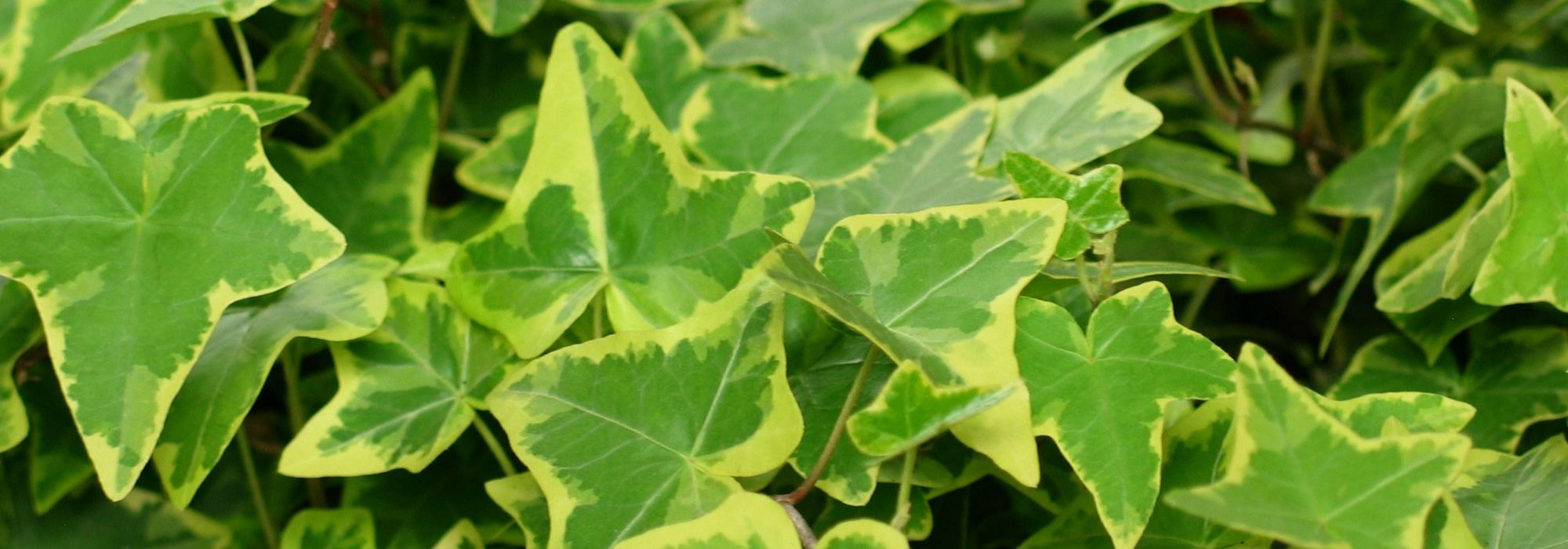
Hedera hibernica 'Spetchley' - Irish ivy in pictures
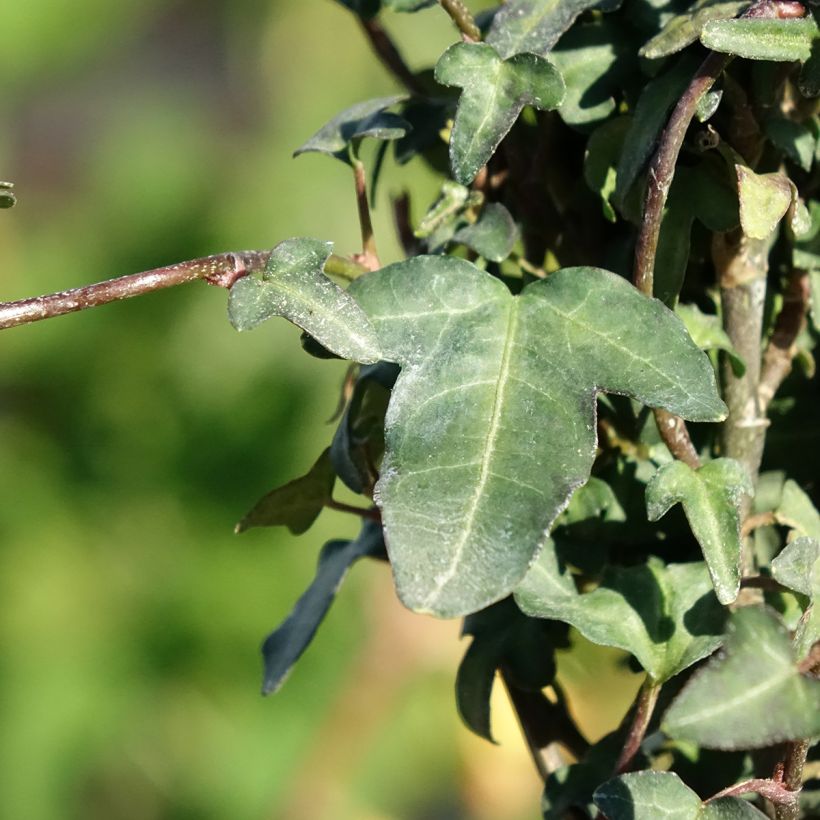
Plant habit
Foliage
Botanical data
Hedera
hibernica
'Spetchley'
Araliaceae
Hedera helix var. minima HORT., Hedera 'Gnome', Hedera 'Spetchley'
Cultivar or hybrid
Planting and care
Plant the 'Spetchley' ivy from autumn to spring, in ordinary but well-drained soil, in shade or partial shade; position the collar of the young plant at soil level and water copiously at planting time then regularly during the first summer. Avoid waterlogging and excessive fertiliser; a spring application of compost is sufficient.
In a pot, use a container of at least 20–30 cm with a free-draining mix (enriched potting compost, lightened with pumice or coarse sand), and raise the pot in winter to aid drainage; protect it if severe frosts are forecast.
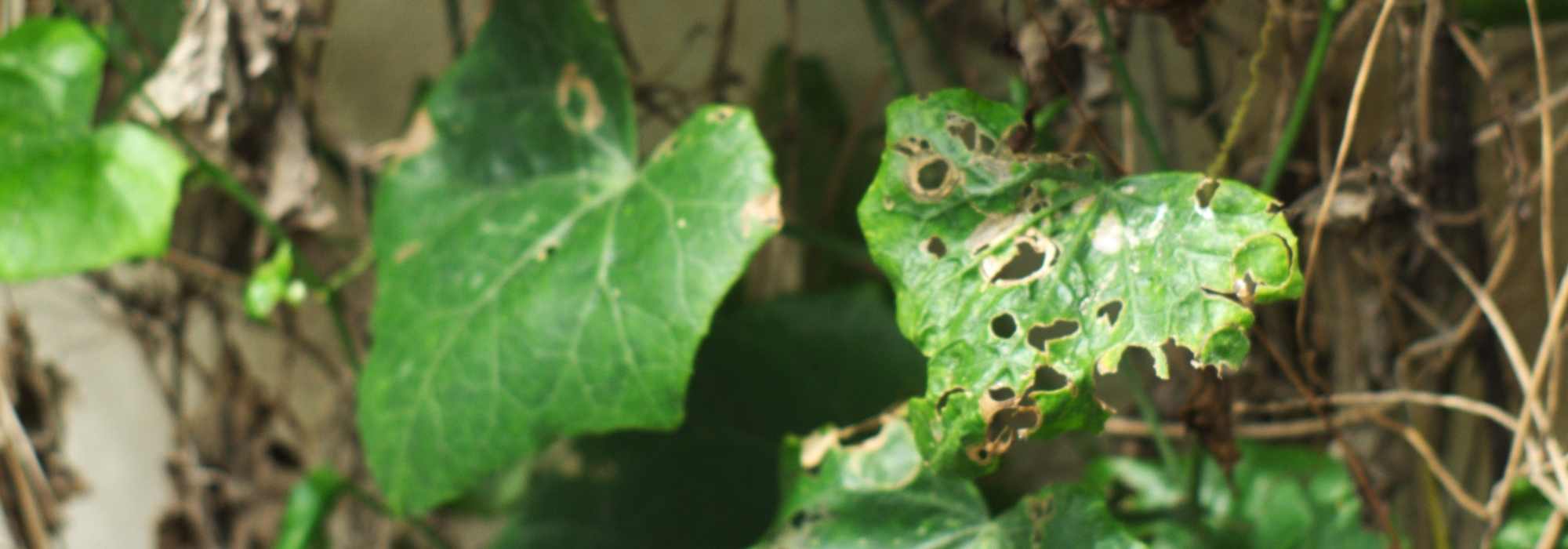
Propagation by layering or stem cuttings is easy. Watch for foliar spots during humid periods and water at the base with good air circulation around the foliage.
Planting period
Intended location
Care
Planting & care advice





This item has not been reviewed yet - be the first to leave a review about it.
Recently viewed products
Haven't found what you were looking for?
Hardiness is the lowest winter temperature a plant can endure without suffering serious damage or even dying. However, hardiness is affected by location (a sheltered area, such as a patio), protection (winter cover) and soil type (hardiness is improved by well-drained soil).

The flowering period indicated on our website applies to countries and regions located in USDA zone 8 (France, the United Kingdom, Ireland, the Netherlands, etc.)
It will vary according to where you live:- In zones 9 to 10 (Italy, Spain, Greece, etc.), flowering will occur about 2 to 4 weeks earlier.
- In zones 6 to 7 (Germany, Poland, Slovenia, and lower mountainous regions), flowering will be delayed by 2 to 3 weeks.
- In zone 5 (Central Europe, Scandinavia), blooming will be delayed by 3 to 5 weeks.
In temperate climates, pruning of spring-flowering shrubs (forsythia, spireas, etc.) should be done just after flowering.
Pruning of summer-flowering shrubs (Indian Lilac, Perovskia, etc.) can be done in winter or spring.
In cold regions as well as with frost-sensitive plants, avoid pruning too early when severe frosts may still occur.
The planting period indicated on our website applies to countries and regions located in USDA zone 8 (France, United Kingdom, Ireland, Netherlands).
It will vary according to where you live:
- In Mediterranean zones (Marseille, Madrid, Milan, etc.), autumn and winter are the best planting periods.
- In continental zones (Strasbourg, Munich, Vienna, etc.), delay planting by 2 to 3 weeks in spring and bring it forward by 2 to 4 weeks in autumn.
- In mountainous regions (the Alps, Pyrenees, Carpathians, etc.), it is best to plant in late spring (May-June) or late summer (August-September).
The harvesting period indicated on our website applies to countries and regions in USDA zone 8 (France, England, Ireland, the Netherlands).
In colder areas (Scandinavia, Poland, Austria...) fruit and vegetable harvests are likely to be delayed by 3-4 weeks.
In warmer areas (Italy, Spain, Greece, etc.), harvesting will probably take place earlier, depending on weather conditions.
The sowing periods indicated on our website apply to countries and regions within USDA Zone 8 (France, UK, Ireland, Netherlands).
In colder areas (Scandinavia, Poland, Austria...), delay any outdoor sowing by 3-4 weeks, or sow under glass.
In warmer climes (Italy, Spain, Greece, etc.), bring outdoor sowing forward by a few weeks.
Shipping country and language
Your country of residence may be:
Your country of residence is:
For a better user experience on our website, you can select:
Your shipping country:
-
 Austria
-
 Belgium
-
 Bosnia & Herzegovina
-
 Bulgaria
-
 Croatia
-
 Cyprus
-
 Czechia
-
 Denmark
-
 Estonia
-
 Finland
-
 France
-
 Germany
-
 Greece
-
 Hungary
-
 Iceland
-
 Ireland
-
 Italy
Italy
-
 Latvia
-
 Liechtenstein
-
 Lithuania
-
 Luxembourg
-
 Malta
Malta
-
 Netherlands
-
 Poland
-
 Portugal
-
 Romania
-
 Serbia
-
 Slovakia
-
 Slovenia
-
 Spain
Spain
-
 Sweden
-
 Switzerland
Language:
-
French
-
 English
-
Spanish
-
Italian
-
German
-
Portuguese
-
Dutch
-
Finnish
My Account
Hello
My wish lists
My cart
Log in / Register
Existing customer?
This form is protected by reCAPTCHA - the Google Privacy Policy and Terms of Service apply.
New customer?
Create an account to track your orders, access our customer service and, if you wish, make the most of our upcoming offers.