Thornless Blackberry Jumbo - Rubus fruticosus
Thornless Blackberry Jumbo - Rubus fruticosus
Rubus fruticosus Jumbo
Blackberry, Bramble
Good regrowth and a lovely crop in the second year.
Francoise, 18/04/2025
Back-to-school special offer!
Get €10 off for every €50 you spend! And get up to €40 off on a single order.
How does it work?
1. Shop your favourites
Add your favourite plants to your basket. For every €50 you spend (excluding delivery charges, store credit and the plastic-free option), you’ll receive a €10 voucher.
€50 spent = €10 voucher
€100 spent = €20 voucher
€150 spent = €30 voucher
€200 spent = €40 voucher
2. Place your order
Once your basket reaches one of the spending thresholds, place your order. You can even choose your delivery date!
3. Receive your voucher
As soon as your order has been shipped, you’ll receive an email containing your personal voucher code and its value.
4. Use it on your next order
Your voucher is valid for 90 days from the date you receive it. It can be used once only, on a new order worth at least the value of the voucher, excluding delivery charges.
Please note: Vouchers can be combined with other offers, but cannot be split or refunded.
Why not try an alternative variety in stock?
View all →
Available in 1 sizes

Available in 1 sizes
Available in 1 sizes
Available in 1 sizes
Available in 2 sizes
Available in 3 sizes
Available in 1 sizes
Available in 1 sizes
Available in 3 sizes
Available in 1 sizes
This plant carries a 12 months recovery warranty
More information
We guarantee the quality of our plants for a full growing cycle, and will replace at our expense any plant that fails to recover under normal climatic and planting conditions.
Description
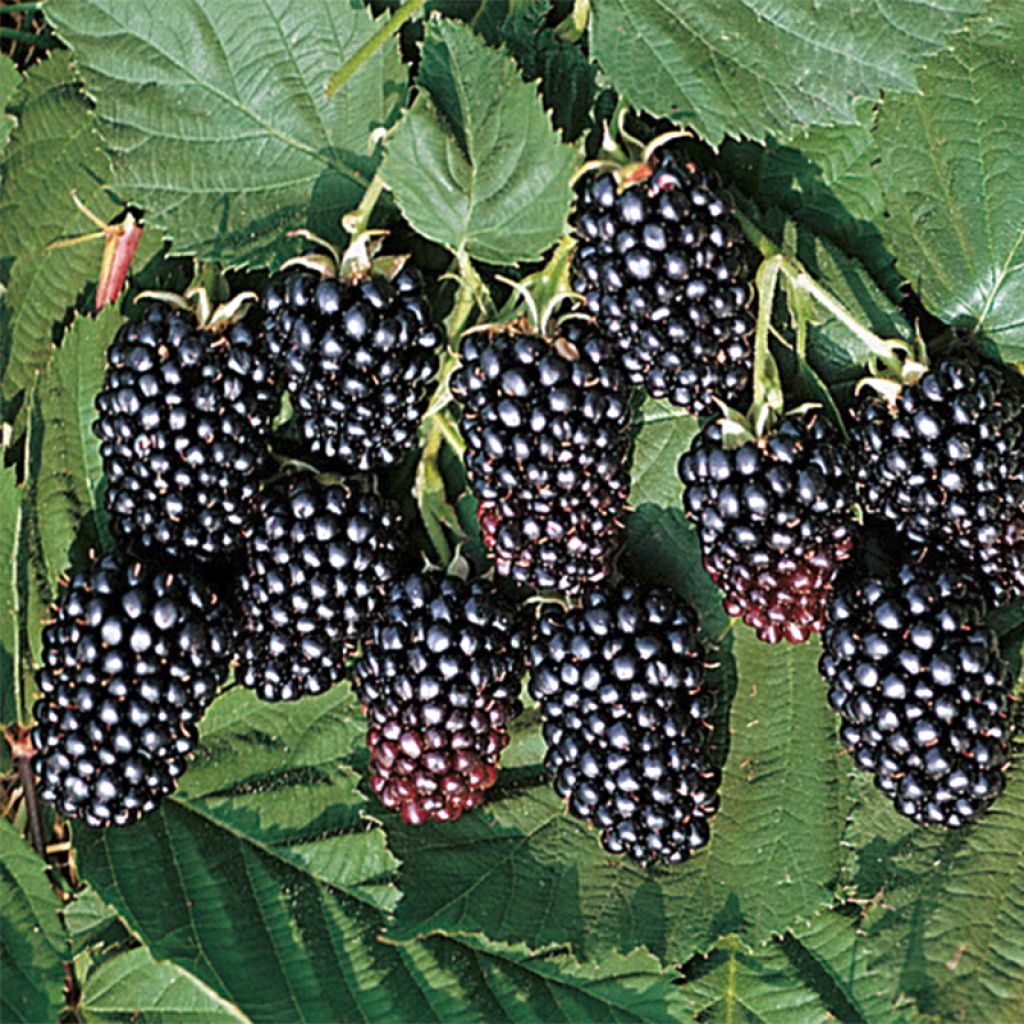
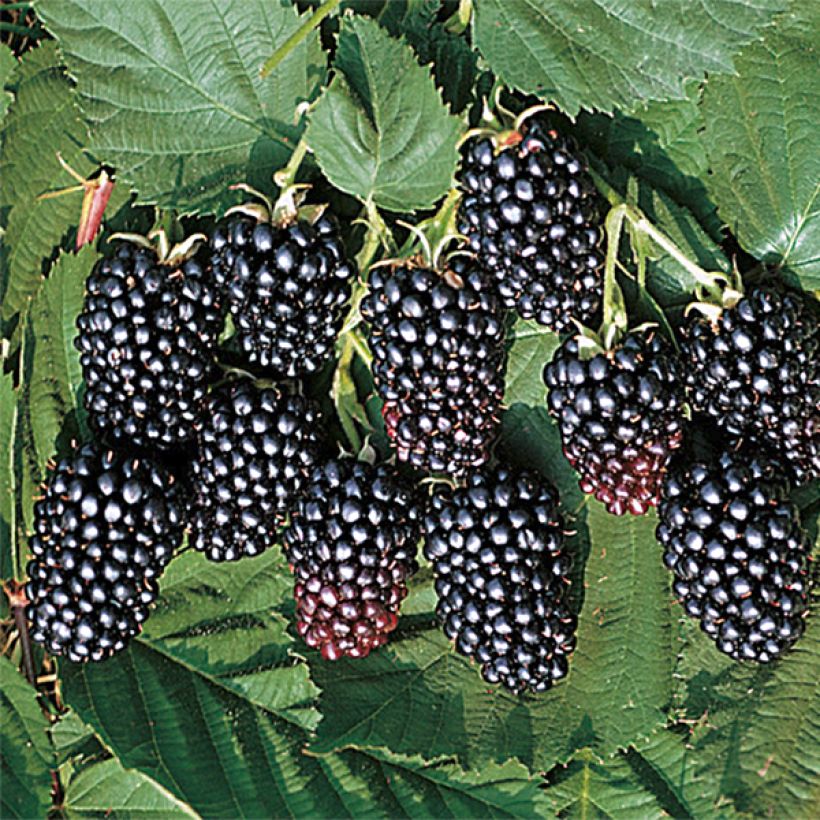
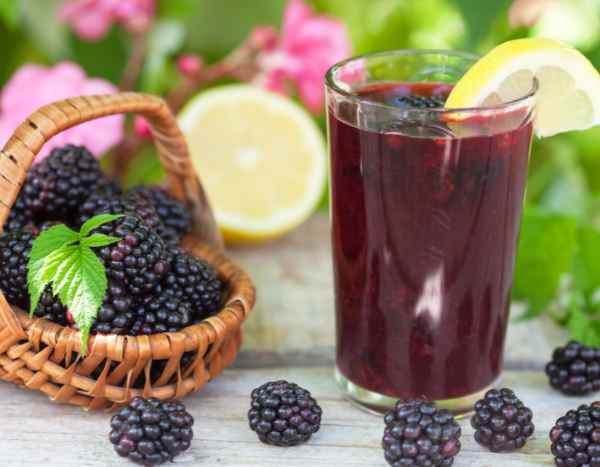
The Jumbo Mulberry is a thornless variety of garden blackberry, ideal for enjoying its large, shiny black fruits without getting pricked! The harvest takes place once the fruits are ripe, from August to October. These fruits are perfect for eating fresh or making fruit juice. Their slightly acidic flavor is delicious. The Jumbo Mulberry is resistant to diseases and can withstand temperatures as low as -18°C (-0.4°F).
The Mulberry belongs to the genus Rubus, which originated in the mountains of the Caucasus in Asia Minor. The genus has diversified over time and has given rise to several subgenera, including the raspberry (Rubus idaeus) and the common blackberry (Rubus fruticosus). The latter genus includes numerous subspecies that differ in size, colour, and acidity of the fruit. In Europe and America, this berry has been consumed for about 2000 years. The European-origin Jumbo Mulberry belongs to the subgenus Rubus fruticosus and is part of cultivated blackberries.
Hardy and easy to cultivate, the Jumbo Mulberry thrives in ordinary soil, with a preference for fertile, well-drained, and fresh soil. It will do well against a sunny or partially shaded wall, showcasing the bare wood of its flexible branches in winter. Garden blackberries are hybrids derived from the thornless Common Bramble, Rubus var. inermis, itself obtained by crossing the bramble and the raspberry. Extensive improvement and selection work has resulted in numerous thornless varieties, most of which are of American origin and highly productive.
The Jumbo Mulberry is a climbing perennial plant with a semi-shrub and bushy habit. The branches can reach a length of 2 to 3 meters (7 to 10 feet), and the stump can occupy 0.5 meters (2 feet) of ground. These branches will need to be trained: fence, wire mesh, trellis, pergola, arches, there are many options.
The foliage is deciduous, bright green, composed of compound, serrated leaves with visible veins, very similar to raspberry leaves. The stems are thornless. They only live to bear fruit (2 years) and are gradually replaced by suckers sprouting from the stump.
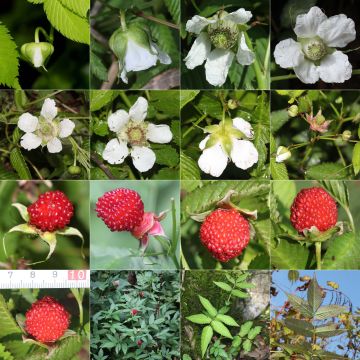
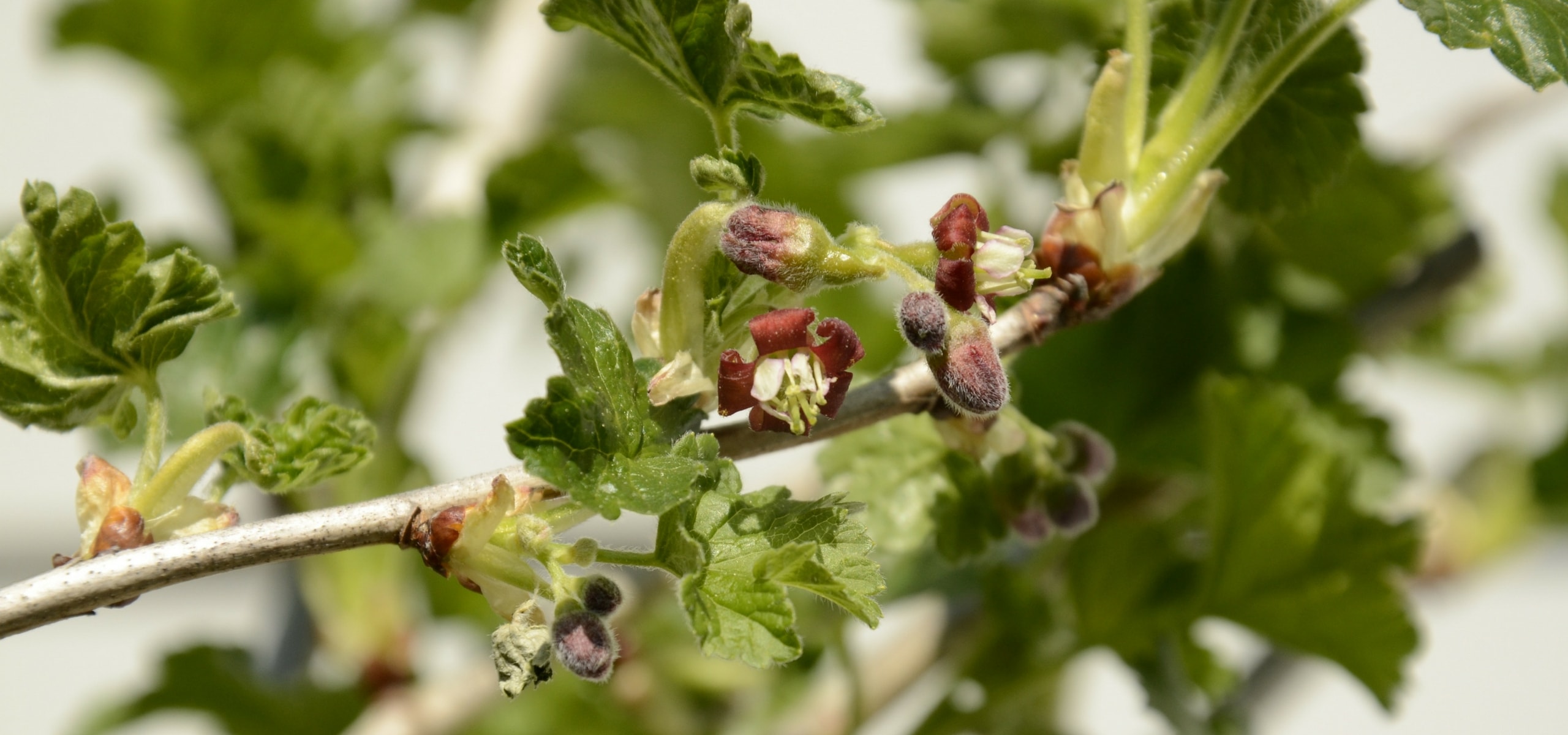
The abundant and nectar-rich flowering displays numerous small white-pink flowers, 1.5 to 2 cm (1in) in diameter, grouped in clusters. It occurs from May to June, starting from the first year of planting.
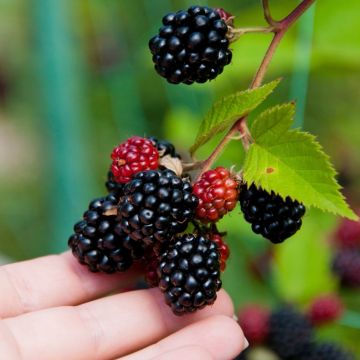
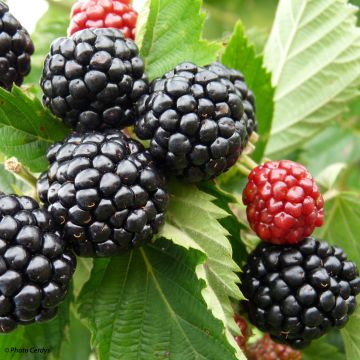
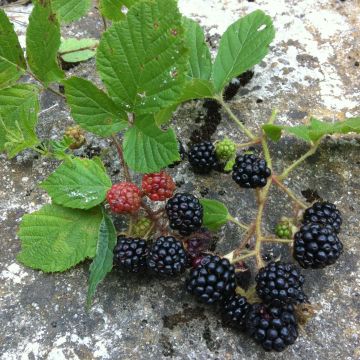
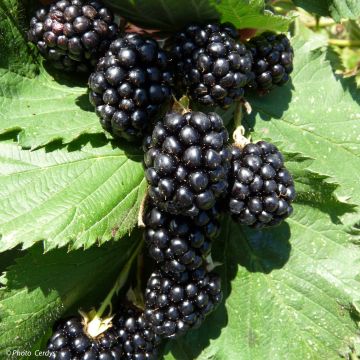
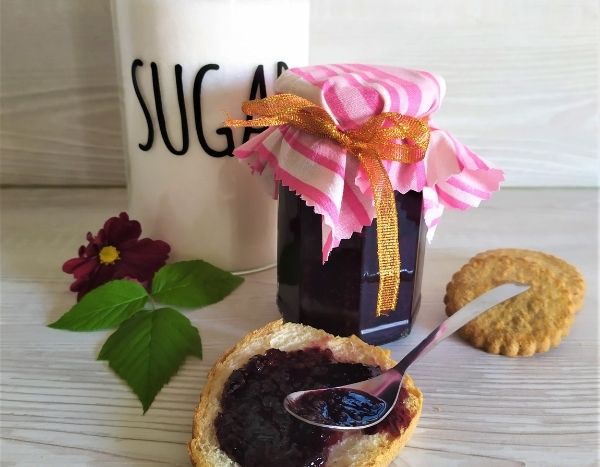
The fruits that form are composed of agglutinated drupes attached to the receptacle. They are large in size, much bigger than those of wild blackberries, turning red and then black when ripe, from August to November. They should be picked when fully black, as they become sweet, slightly acidic, juicy, and flavorful. The fruits can be eaten fresh right after picking, used for jellies, jams, tarts, or even sorbets, syrups, and juices. They can be perfectly preserved in the freezer.

Thornless Blackberry Jumbo - Rubus fruticosus in pictures
Plant habit
Fruit
Flowering
Foliage
Botanical data
Rubus
fruticosus
Jumbo
Rosaceae
Blackberry, Bramble
Cultivar or hybrid
Planting and care
The Jumbo Blackberry prefers deep, fertile soils that are not too dry or too wet, but it is a low-maintenance plant that can adapt to any ordinary soil that is not too dry. This bramble can bear fruit in full sun, partial shade, or even shade, although the fruit quality may be lower in shaded conditions. When grown in a pot, it can be planted at any time of the year. However, it is advisable to plant it in the garden in autumn, from September to December.
Dig a hole twice as large as the root ball. Loosen the root ball with a lightly cutting tool to untangle any tangled roots and promote new growth. Place the bush in the hole without burying it too deep. Water thoroughly to compact the soil and remove any air pockets around the roots. It is important to ensure that the plant does not lack water during the first year after planting. Similarly, in the first year, only keep the vigorous stems. An application of organic fertilizer is beneficial at the start of the growing season. As the new stems grow, train them to prevent the plant from spreading excessively: the bramble naturally layers, which means that if a branch touches the ground for an extended period, it will develop roots and new stems, creating a new bush.
Planting period
Intended location
Care
Planting & care advice
-
-
-
-
-
-
-
-
-
, onOrder confirmed
Reply from on Promesse de fleurs
Recently viewed products
Haven't found what you were looking for?
Hardiness is the lowest winter temperature a plant can endure without suffering serious damage or even dying. However, hardiness is affected by location (a sheltered area, such as a patio), protection (winter cover) and soil type (hardiness is improved by well-drained soil).

The flowering period indicated on our website applies to countries and regions located in USDA zone 8 (France, the United Kingdom, Ireland, the Netherlands, etc.)
It will vary according to where you live:- In zones 9 to 10 (Italy, Spain, Greece, etc.), flowering will occur about 2 to 4 weeks earlier.
- In zones 6 to 7 (Germany, Poland, Slovenia, and lower mountainous regions), flowering will be delayed by 2 to 3 weeks.
- In zone 5 (Central Europe, Scandinavia), blooming will be delayed by 3 to 5 weeks.
In temperate climates, pruning of spring-flowering shrubs (forsythia, spireas, etc.) should be done just after flowering.
Pruning of summer-flowering shrubs (Indian Lilac, Perovskia, etc.) can be done in winter or spring.
In cold regions as well as with frost-sensitive plants, avoid pruning too early when severe frosts may still occur.
The planting period indicated on our website applies to countries and regions located in USDA zone 8 (France, United Kingdom, Ireland, Netherlands).
It will vary according to where you live:
- In Mediterranean zones (Marseille, Madrid, Milan, etc.), autumn and winter are the best planting periods.
- In continental zones (Strasbourg, Munich, Vienna, etc.), delay planting by 2 to 3 weeks in spring and bring it forward by 2 to 4 weeks in autumn.
- In mountainous regions (the Alps, Pyrenees, Carpathians, etc.), it is best to plant in late spring (May-June) or late summer (August-September).
The harvesting period indicated on our website applies to countries and regions in USDA zone 8 (France, England, Ireland, the Netherlands).
In colder areas (Scandinavia, Poland, Austria...) fruit and vegetable harvests are likely to be delayed by 3-4 weeks.
In warmer areas (Italy, Spain, Greece, etc.), harvesting will probably take place earlier, depending on weather conditions.
The sowing periods indicated on our website apply to countries and regions within USDA Zone 8 (France, UK, Ireland, Netherlands).
In colder areas (Scandinavia, Poland, Austria...), delay any outdoor sowing by 3-4 weeks, or sow under glass.
In warmer climes (Italy, Spain, Greece, etc.), bring outdoor sowing forward by a few weeks.
Shipping country and language
Your country of residence may be:
Your country of residence is:
For a better user experience on our website, you can select:
Your shipping country:
-
 Austria
-
 Belgium
-
 Bosnia & Herzegovina
-
 Bulgaria
-
 Croatia
-
 Cyprus
-
 Czechia
-
 Denmark
-
 Estonia
-
 Finland
-
 France
-
 Germany
-
 Greece
-
 Hungary
-
 Iceland
-
 Ireland
-
 Italy
Italy
-
 Latvia
-
 Liechtenstein
-
 Lithuania
-
 Luxembourg
-
 Malta
Malta
-
 Netherlands
-
 Poland
-
 Portugal
-
 Romania
-
 Serbia
-
 Slovakia
-
 Slovenia
-
 Spain
Spain
-
 Sweden
-
 Switzerland
Language:
-
French
-
 English
-
Spanish
-
Italian
-
German
-
Portuguese
-
Dutch
-
Finnish
My Account
Hello
My wish lists
My cart
Log in / Register
Existing customer?
This form is protected by reCAPTCHA - the Google Privacy Policy and Terms of Service apply.
New customer?
Create an account to track your orders, access our customer service and, if you wish, make the most of our upcoming offers.