
Raspberry Ruby Beauty- Rubus idaeus
Raspberry Ruby Beauty- Rubus idaeus
Rubus idaeus Ruby Beauty
Raspberry, Red Raspberry, European Raspberry
A small raspberry plant that’s rehydrating while waiting to be planted. Thanks to the team.
Nath44, 08/06/2026
Back-to-school special offer!
Get €10 off for every €50 you spend! And get up to €40 off on a single order.
How does it work?
1. Shop your favourites
Add your favourite plants to your basket. For every €50 you spend (excluding delivery charges, store credit and the plastic-free option), you’ll receive a €10 voucher.
€50 spent = €10 voucher
€100 spent = €20 voucher
€150 spent = €30 voucher
€200 spent = €40 voucher
2. Place your order
Once your basket reaches one of the spending thresholds, place your order. You can even choose your delivery date!
3. Receive your voucher
As soon as your order has been shipped, you’ll receive an email containing your personal voucher code and its value.
4. Use it on your next order
Your voucher is valid for 90 days from the date you receive it. It can be used once only, on a new order worth at least the value of the voucher, excluding delivery charges.
Please note: Vouchers can be combined with other offers, but cannot be split or refunded.
Home or relay delivery (depending on size and destination)
Important: You may be charged customs duties by your country’s customs authorities upon delivery.
Schedule delivery date,
and select date in basket
This plant carries a 12 months recovery warranty
More information
We guarantee the quality of our plants for a full growing cycle, and will replace at our expense any plant that fails to recover under normal climatic and planting conditions.

Description
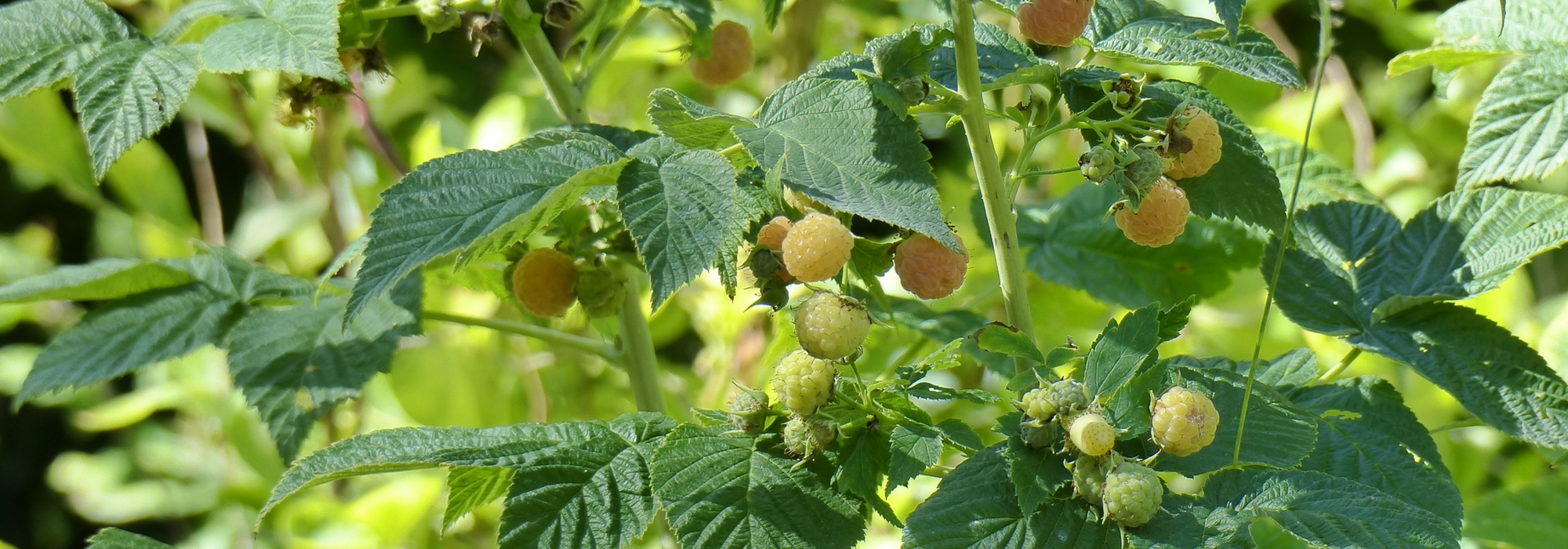
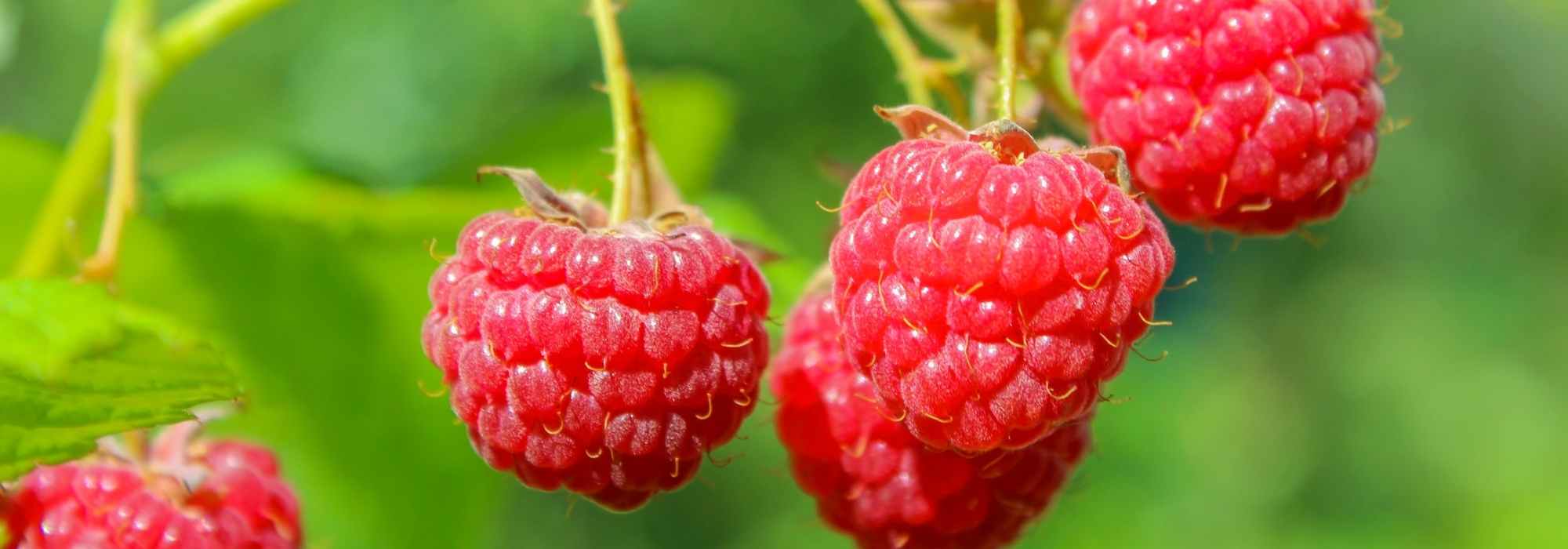
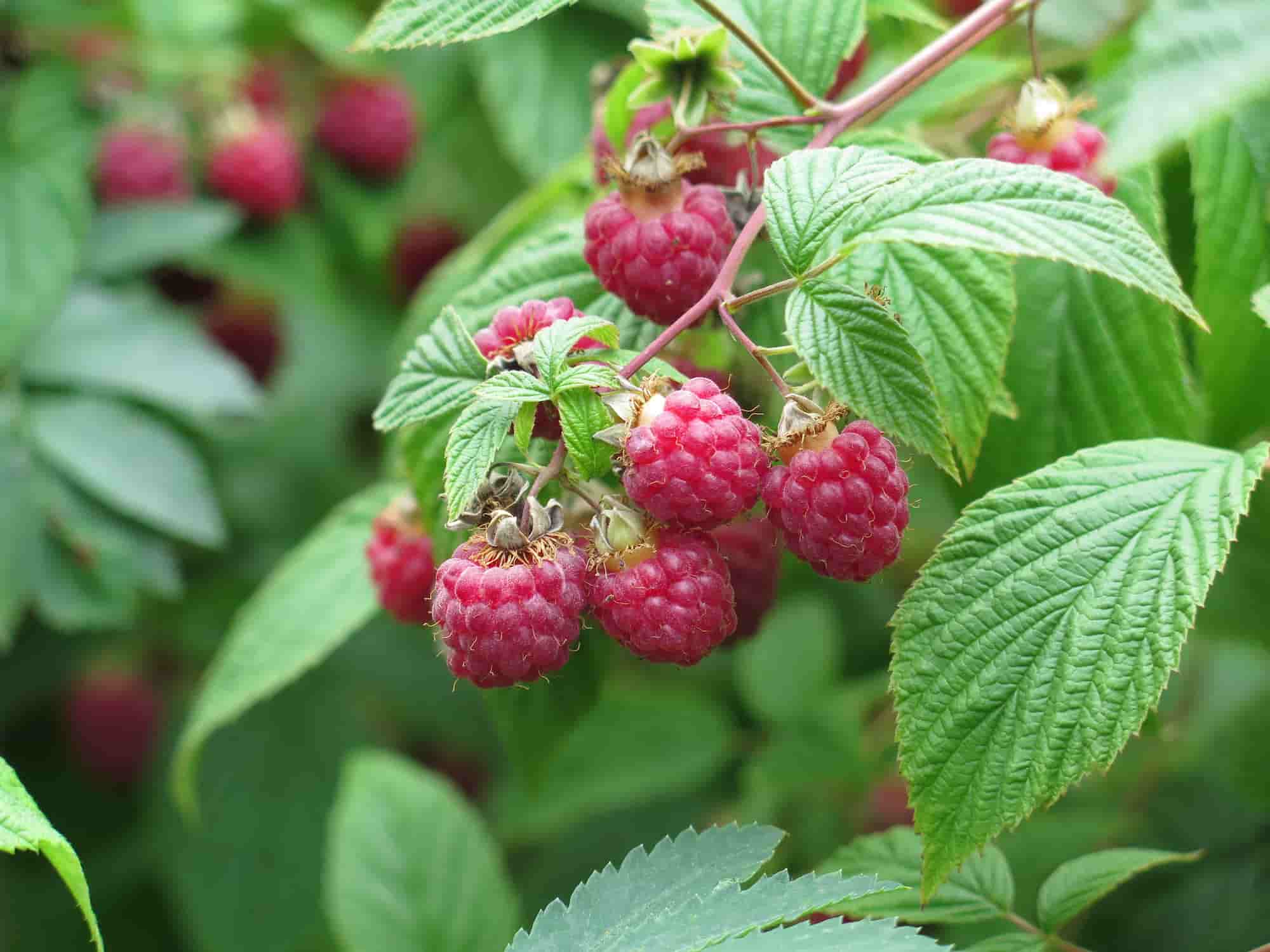
The Ruby Beauty Raspberry Bush (Rubus idaeus) is a dwarf and compact variety, reaching a height of 80 cm (32in) to 1 m (3ft), ideal for balconies and terraces. It is a thornless variety, not perpetual. It produces medium-sized, fragrant and sweet, red fruits. Each plant can produce about 1.5 kg of fruits. Plant from October to March for a harvest in June and July.
Raspberries should be consumed soon after picking to fully enjoy their flavour, as they do not keep well. If you have an abundant harvest, consider making coulis, sorbets, pies or preserves. You can also freeze them.
Production reaches its peak in the third year after planting. One plant can produce fruits for around 10 years.
There are remontant varieties, producing in autumn (generally from August to October) and then again in June the following year, and non-remontant varieties (like Ruby Beauty) with an abundant harvest in June - July.
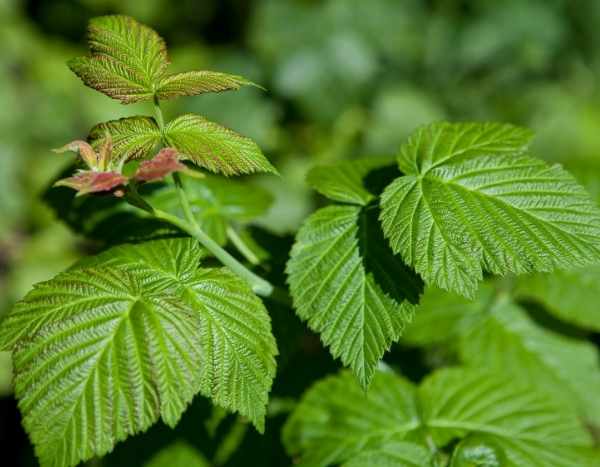
The Raspberry Bush is a deciduous shrub with upright stems. This variety will reach a height of 80 cm (32in) to 1 m (3ft). The stems or canes are biennial, each one dying after fruiting. New thornless canes emerge from its roots every year in this variety. A Raspberry Bush has leaves which are green on top, white-green and downy on the underside. The white, nectar-rich flowers are small (1 to 2 cm (0 to 1in) in diameter) and grouped in small clusters of 10 to 12 in April-May. The berries are formed by small clustered drupes, easy to detach when ripe.
The Raspberry Bush belongs to the Rosaceae family, like strawberries, blackberries and wild roses. The wild raspberry is native to Europe and temperate Asia, where it grows in cool climates alongside elderberry, beech or mountain ash, especially in mountain undergrowth, but also in plains.
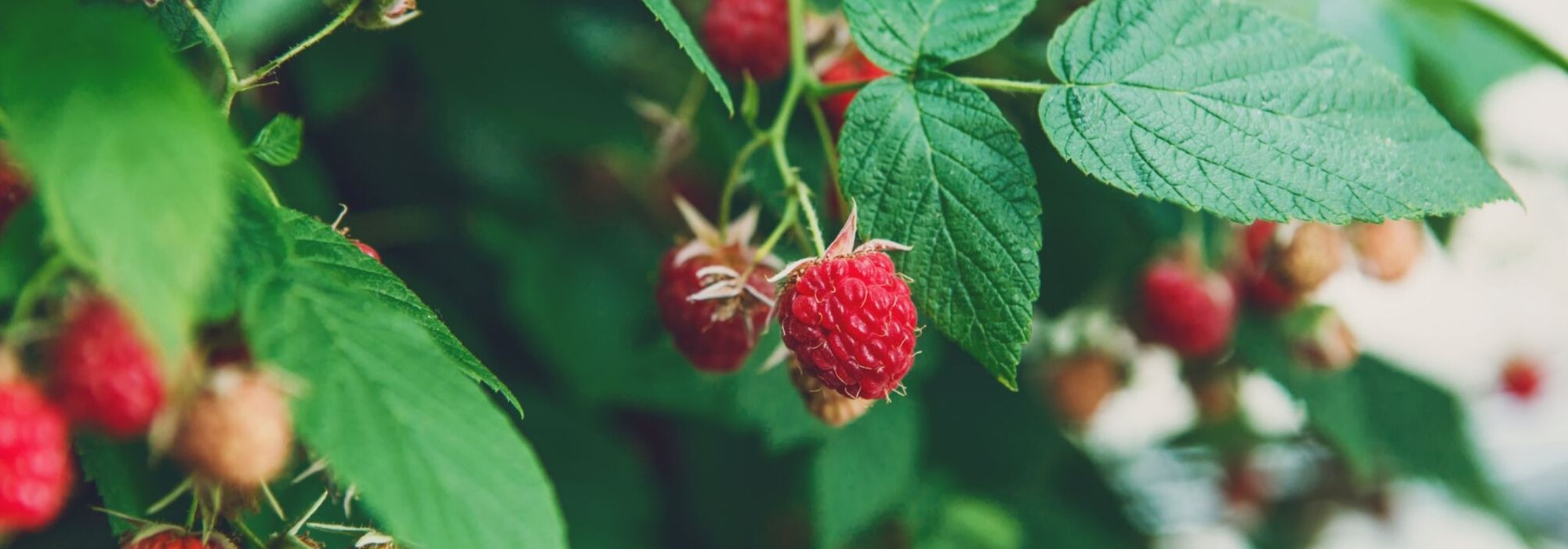
Raspberry Ruby Beauty- Rubus idaeus in pictures
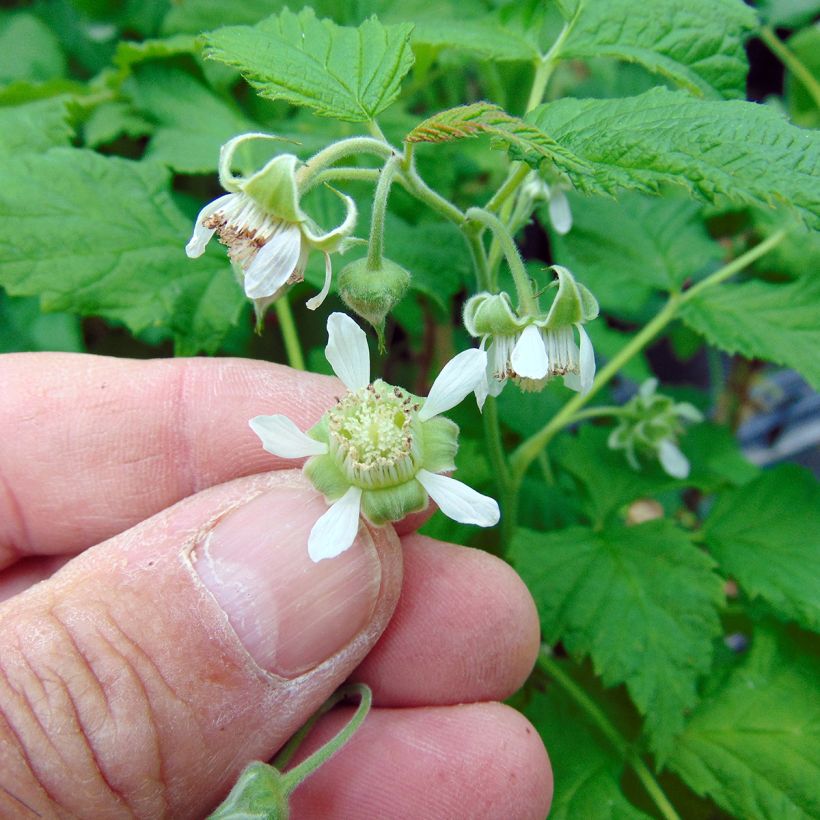
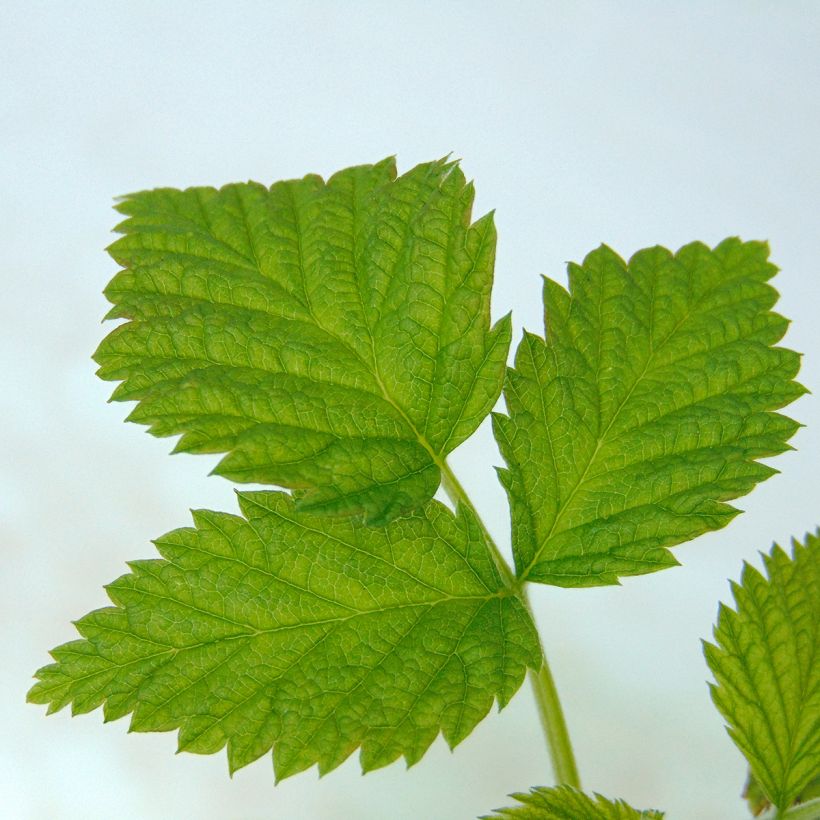

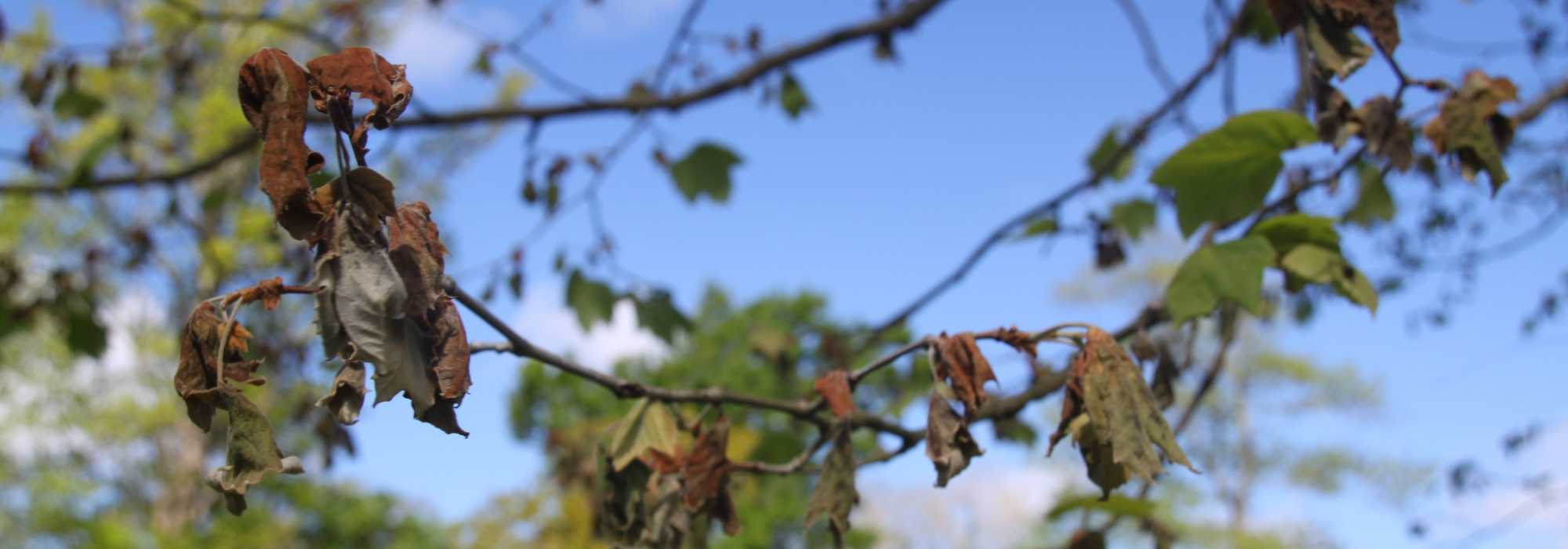
Plant habit
Fruit
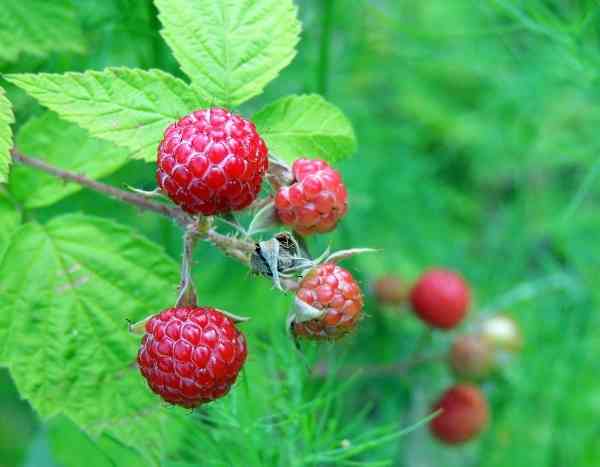
Flowering
Foliage
Botanical data
Rubus
idaeus
Ruby Beauty
Rosaceae
Raspberry, Red Raspberry, European Raspberry
Cultivar or hybrid
Planting and care
Raspberry bushes prefer humus-rich soils that retain moisture, even in summer, without too much limestone. They appreciate partially shaded but bright exposures. They will tolerate full sun in the north, while in the south, they prefer partial shade. Plant it from October to March in ordinary soil enriched with compost and well-rotted manure. Dwarf Raspberry 'Ruby Beauty' can be planted in open ground or in a pot.
Plant the canes every 50 cm (20in) in rows spaced 1.20m (4ft) apart. During planting, the collar should be level with the ground.
Water regularly to promote root growth in the first year of planting. During periods of high heat or prolonged drought, provide extra water. Weed the surface and apply mulch to retain moisture in summer.
For pot planting, place gravel or clay balls at the bottom of the pot to aid drainage. Fill the pot with a mixture of soil, compost, and potting soil.
Raspberry plants may be susceptible to various diseases if the growing conditions are not right (Raspberry anthracnose, Raspberry rust, powdery mildew, grey rot during rainy periods, or Botrytis). The damage is normally due to unfavourable climatic conditions, especially during cold springs that allow micro-fungi present in the soil to infest the vegetation. To protect Raspberry plants, feed with organic fertilisers that promote the multiplication of anaerobic bacteria in the soil, which strengthens the soil's ability to stimulate the plants' immune system. Raspberry plants can also be attacked by certain parasites such as Raspberry worms, the larvae of a small beetle that lodges in the fruits without causing significant damage.
Raspberry plants easily propagate through suckers that grow near the base: remove them and replant them elsewhere in the garden if desired.
Planting period
Intended location
Care
Planting & care advice
-
-
-
-
-
-

-

-
-
, onOrder confirmed
Reply from on Promesse de fleurs
Recently viewed products
Haven't found what you were looking for?
Hardiness is the lowest winter temperature a plant can endure without suffering serious damage or even dying. However, hardiness is affected by location (a sheltered area, such as a patio), protection (winter cover) and soil type (hardiness is improved by well-drained soil).

The flowering period indicated on our website applies to countries and regions located in USDA zone 8 (France, the United Kingdom, Ireland, the Netherlands, etc.)
It will vary according to where you live:- In zones 9 to 10 (Italy, Spain, Greece, etc.), flowering will occur about 2 to 4 weeks earlier.
- In zones 6 to 7 (Germany, Poland, Slovenia, and lower mountainous regions), flowering will be delayed by 2 to 3 weeks.
- In zone 5 (Central Europe, Scandinavia), blooming will be delayed by 3 to 5 weeks.
In temperate climates, pruning of spring-flowering shrubs (forsythia, spireas, etc.) should be done just after flowering.
Pruning of summer-flowering shrubs (Indian Lilac, Perovskia, etc.) can be done in winter or spring.
In cold regions as well as with frost-sensitive plants, avoid pruning too early when severe frosts may still occur.
The planting period indicated on our website applies to countries and regions located in USDA zone 8 (France, United Kingdom, Ireland, Netherlands).
It will vary according to where you live:
- In Mediterranean zones (Marseille, Madrid, Milan, etc.), autumn and winter are the best planting periods.
- In continental zones (Strasbourg, Munich, Vienna, etc.), delay planting by 2 to 3 weeks in spring and bring it forward by 2 to 4 weeks in autumn.
- In mountainous regions (the Alps, Pyrenees, Carpathians, etc.), it is best to plant in late spring (May-June) or late summer (August-September).
The harvesting period indicated on our website applies to countries and regions in USDA zone 8 (France, England, Ireland, the Netherlands).
In colder areas (Scandinavia, Poland, Austria...) fruit and vegetable harvests are likely to be delayed by 3-4 weeks.
In warmer areas (Italy, Spain, Greece, etc.), harvesting will probably take place earlier, depending on weather conditions.
The sowing periods indicated on our website apply to countries and regions within USDA Zone 8 (France, UK, Ireland, Netherlands).
In colder areas (Scandinavia, Poland, Austria...), delay any outdoor sowing by 3-4 weeks, or sow under glass.
In warmer climes (Italy, Spain, Greece, etc.), bring outdoor sowing forward by a few weeks.
Shipping country and language
Your country of residence may be:
Your country of residence is:
For a better user experience on our website, you can select:
Your shipping country:
-
 Austria
-
 Belgium
-
 Bosnia & Herzegovina
-
 Bulgaria
-
 Croatia
-
 Cyprus
-
 Czechia
-
 Denmark
-
 Estonia
-
 Finland
-
 France
-
 Germany
-
 Greece
-
 Hungary
-
 Iceland
-
 Ireland
-
 Italy
Italy
-
 Latvia
-
 Liechtenstein
-
 Lithuania
-
 Luxembourg
-
 Malta
Malta
-
 Netherlands
-
 Poland
-
 Portugal
-
 Romania
-
 Serbia
-
 Slovakia
-
 Slovenia
-
 Spain
Spain
-
 Sweden
-
 Switzerland
Language:
-
French
-
 English
-
Spanish
-
Italian
-
German
-
Portuguese
-
Dutch
-
Finnish
My Account
Hello
My wish lists
My cart
Log in / Register
Existing customer?
This form is protected by reCAPTCHA - the Google Privacy Policy and Terms of Service apply.
New customer?
Create an account to track your orders, access our customer service and, if you wish, make the most of our upcoming offers.