Blackcurrant Andega - Ribes nigrum
Blackcurrant Andega - Ribes nigrum
Blackcurrant Andega - Ribes nigrum
Ribes nigrum Andega
Blackcurrant, European Blackcurrat, gazels, quinsy berry, squinancy berry
I bought 2 plants and planted them in autumn 2023. They established well in spring.
Gil, 03/06/2024
Back-to-school special offer!
Get €10 off for every €50 you spend! And get up to €40 off on a single order.
How does it work?
1. Shop your favourites
Add your favourite plants to your basket. For every €50 you spend (excluding delivery charges, store credit and the plastic-free option), you’ll receive a €10 voucher.
€50 spent = €10 voucher
€100 spent = €20 voucher
€150 spent = €30 voucher
€200 spent = €40 voucher
2. Place your order
Once your basket reaches one of the spending thresholds, place your order. You can even choose your delivery date!
3. Receive your voucher
As soon as your order has been shipped, you’ll receive an email containing your personal voucher code and its value.
4. Use it on your next order
Your voucher is valid for 90 days from the date you receive it. It can be used once only, on a new order worth at least the value of the voucher, excluding delivery charges.
Please note: Vouchers can be combined with other offers, but cannot be split or refunded.
Home or relay delivery (depending on size and destination)
Important: You may be charged customs duties by your country’s customs authorities upon delivery.
Schedule delivery date,
and select date in basket
This plant carries a 12 months recovery warranty
More information
We guarantee the quality of our plants for a full growing cycle, and will replace at our expense any plant that fails to recover under normal climatic and planting conditions.


Description
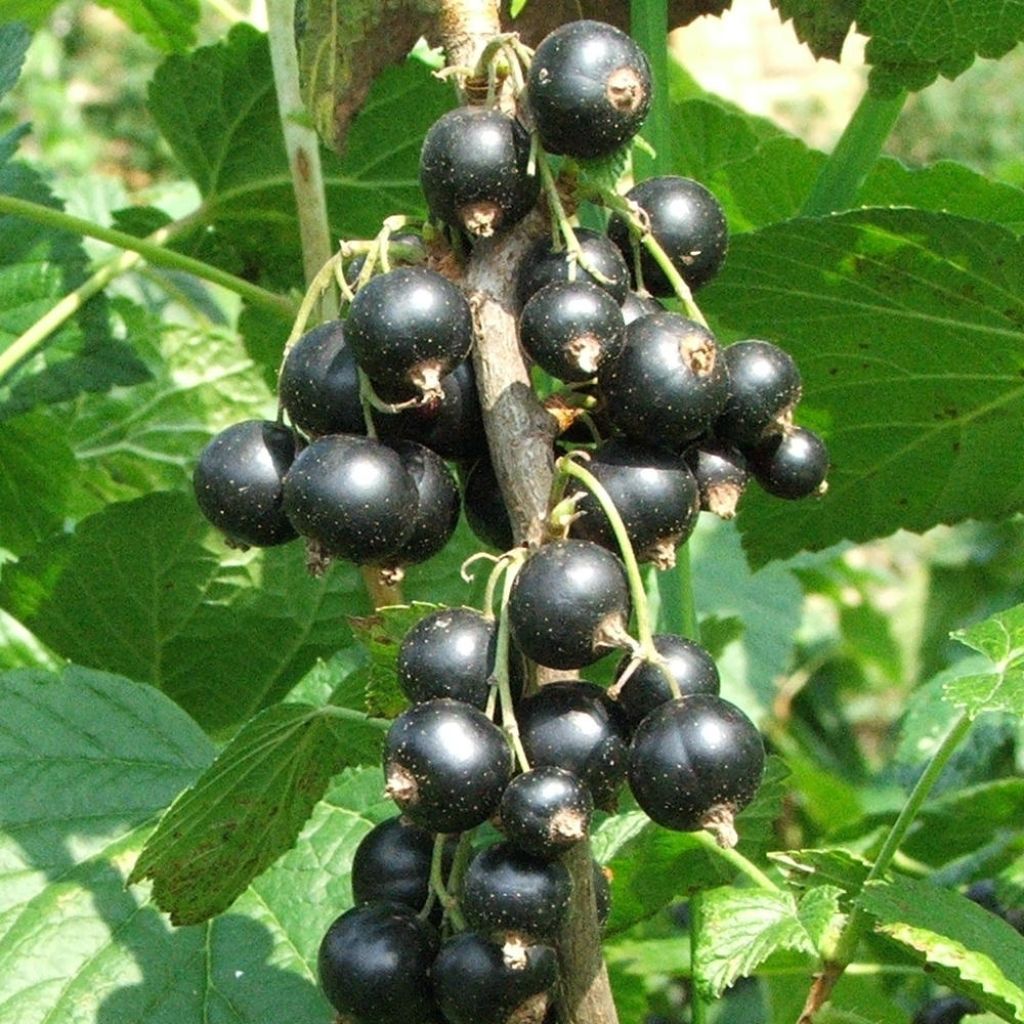
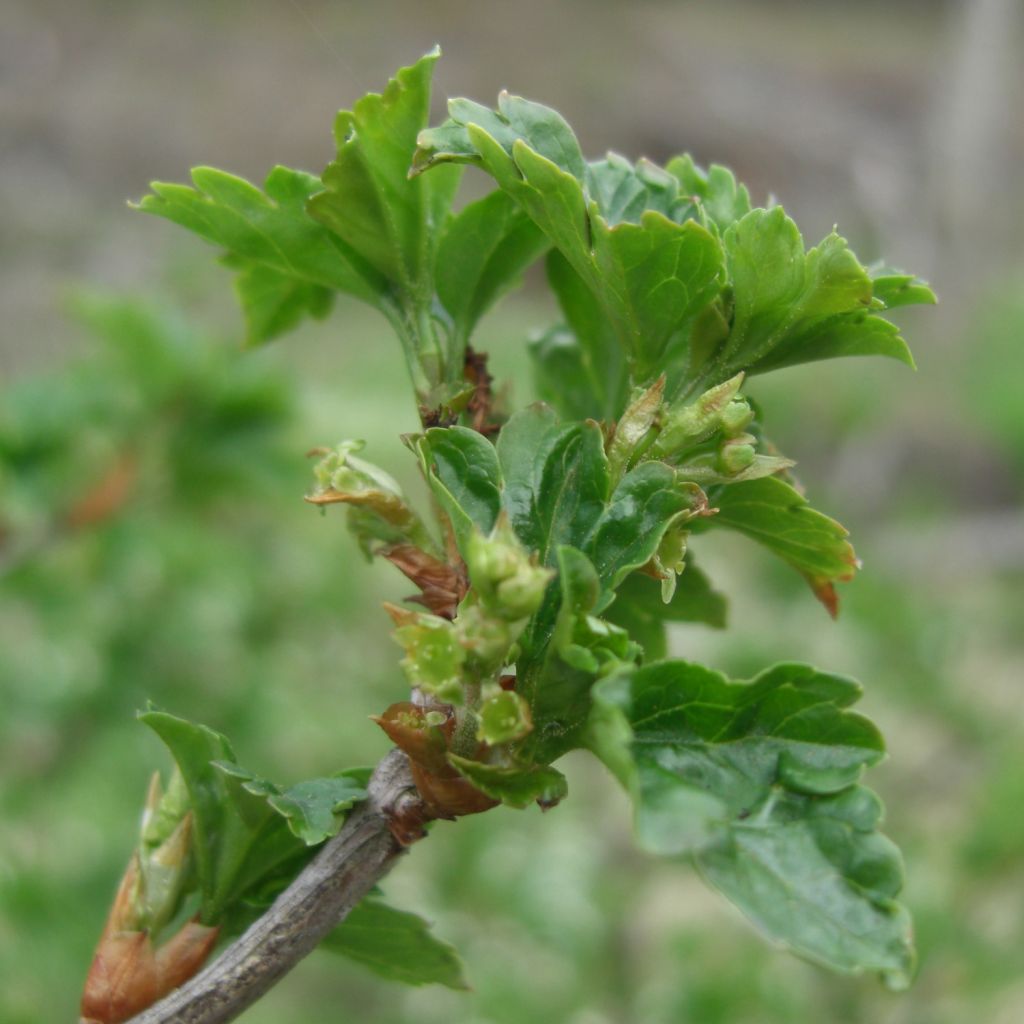
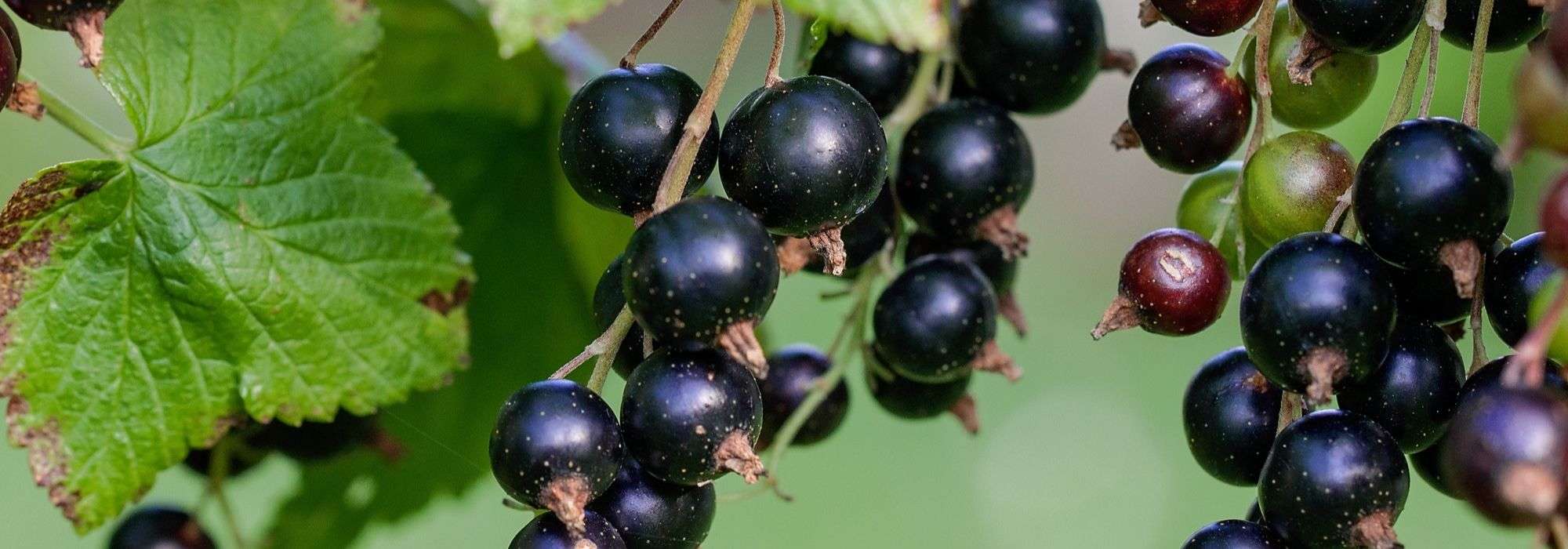
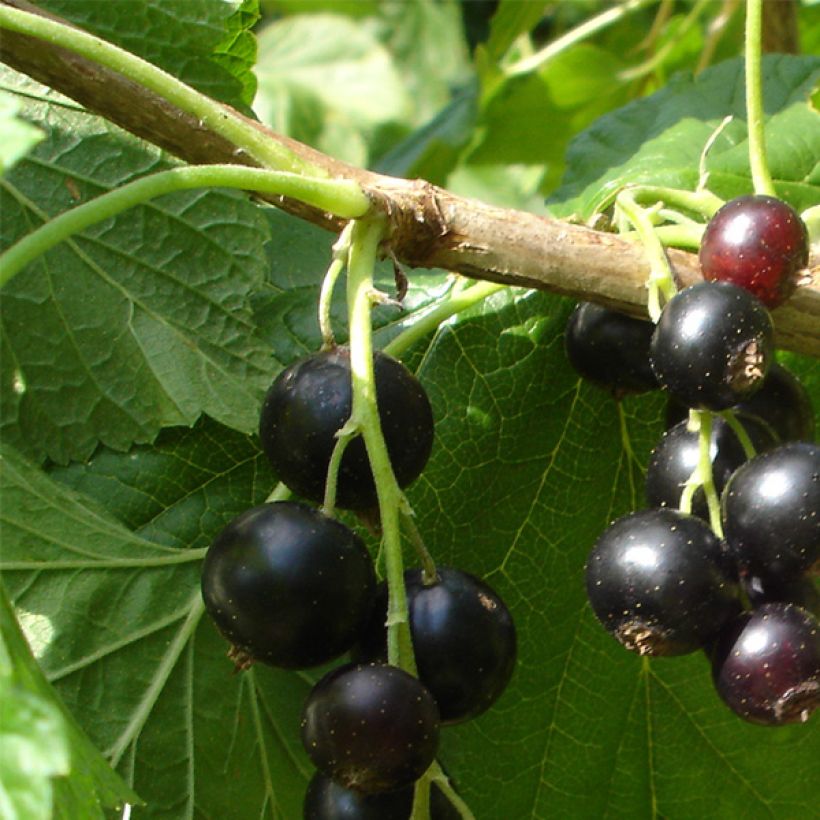
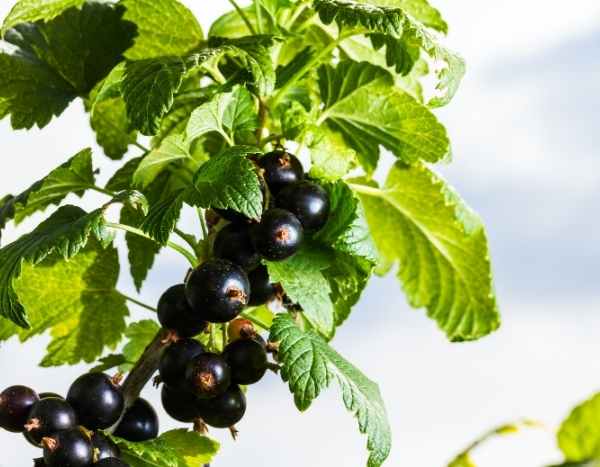
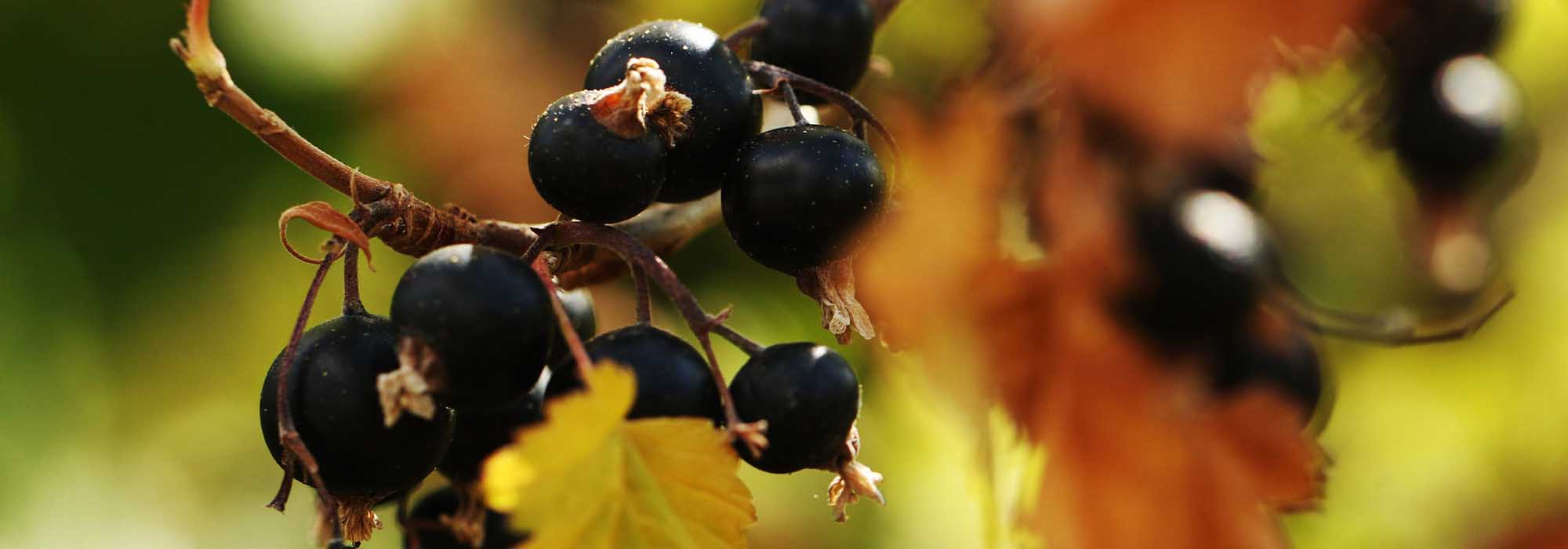
The 'Andega' Blackcurrant forms a medium-vigour bushy shrub. This variety is very productive, self-fertile, and resistant to powdery mildew. Its yellow bark forms a beautiful contrast with the black berries, nuanced with pink. Flowering occurs in late April. Fruit harvesting begins in early July. The bush produces beautiful clusters of tasty and fleshy, tart, aromatic, and flavourful berries. The flesh is pulpy and contains few seeds. The fruits keep well when refrigerated and make delicious jams. Easy to grow in heavy, fresh, deep soil, in non-scorching sun, protected from spring frosts.
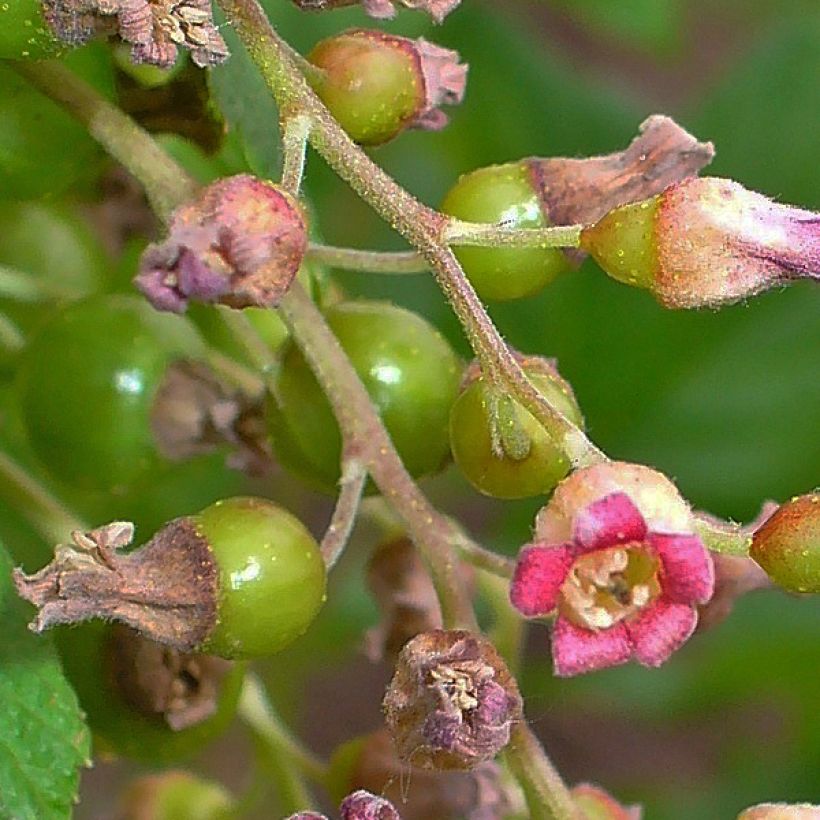
Ribes nigrum belongs to the Grossulariaceae family, it is a deciduous shrub related to currants, native to regions ranging from the Pyrenees to Central Asia. The blackcurrant grows naturally in cool woodlands in northeastern Europe. It has been cultivated since the 16th century. The 'Andega' cultivar is a French creation (developed by INRA in 1987: hybrid 'Noir de Bourgogne' x 'Öjebyn'), self-fertile. It forms a medium-vigour bush with upright tufted growth, semi-erect, reaching a height of 1.50 m (5ft) with a spread of 1 m (3ft). The plant becomes mature in three years. The leaves, deciduous, are large, measuring from 6 to 10 cm (2 to 4in), flat, with three to five lobes with toothed edges, bright green and pleasantly fragrant when crushed. The fragrance is strong and distinctive in the fruit, bud, and leaf, due to the presence of glands containing essential oils, which are extracted from the buds for perfumery. The bark is smooth and yellow on sturdy branches. Flowering occurs in April-May, in the form of small flowers arranged in pendulous clusters, often not very visible. It is followed by the formation of medium-sized berries, ripening in late June-early July, with black skin and pink highlights. The clusters are numerous and dense, the fruit is uniform, colourful, and firm. The pulp is light green and contains few seeds. It bears fruit quickly, with the first harvest expected one year after planting, on two-year-old branches. The fruits have an acidic, strongly aromatic, and delicious flavour. The yield is excellent, about 5 kg per plant. The fruits keep well for 5 to 6 days when refrigerated.
Plant the 'Andega' blackcurrant in the vegetable garden, along the main pathway, or mixed in flower shrub beds. Blackcurrants are rich in tannins, aromas, vitamin C, and C2. 'Andega' produces particularly delicious jams. It can also be consumed fresh in a mixed-berry salad, as juice, syrup, in pastries (pies, clafoutis), sorbets, and in cooking (puree, coulis). Blackcurrants are used in the production of liqueurs. They can be dried or frozen, providing a reserve of fruits for the winter. In a blackcurrant plantation, as in any plantation, it is important to alternate varieties and species, when space allows: pollination will be enhanced, even if the variety is self-fertile.
According to some authors, the name "cassis" is of Arabic origin, derived from the word "Ribas". Today, blackcurrants are increasingly recognised in the world of phytotherapy. Diuretic, analgesic, and antibiotic, it is increasingly proposed as an alternative solution to allopathy for the treatment of many pathologies.
Blackcurrant Andega - Ribes nigrum in pictures
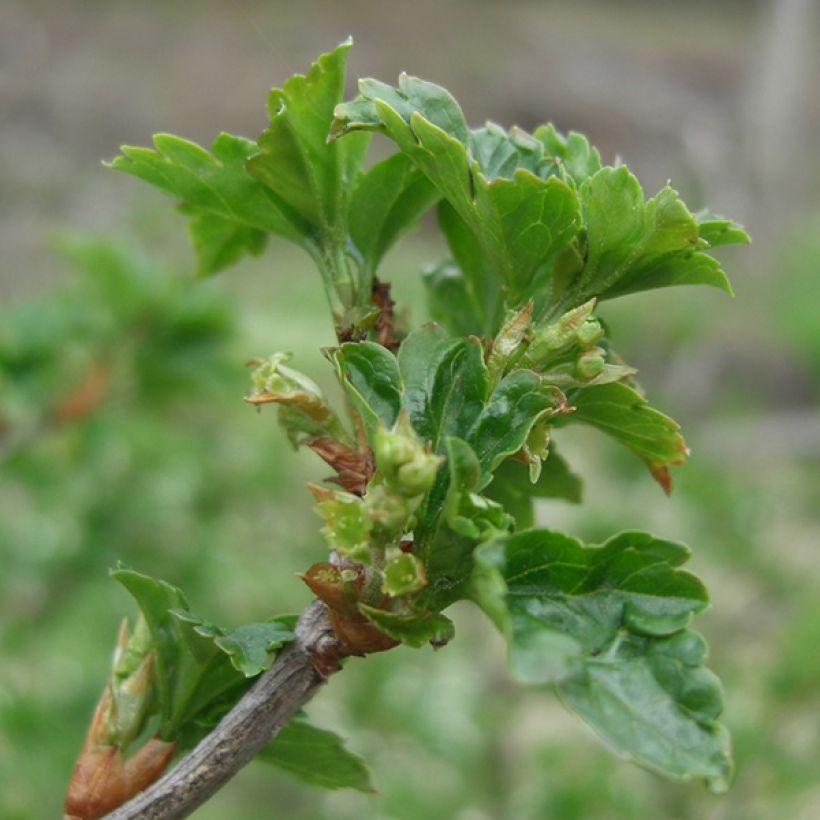
Plant habit
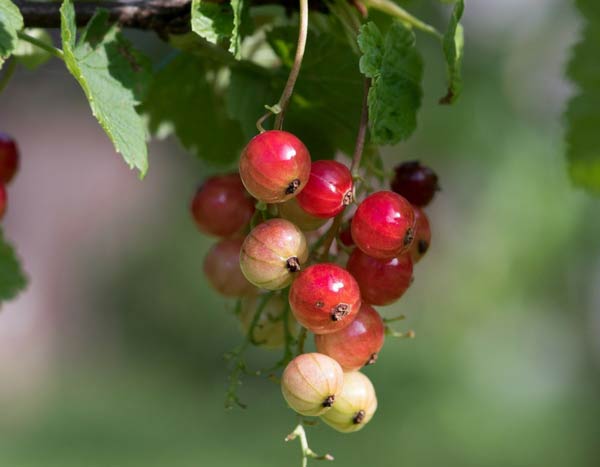
Fruit
Flowering
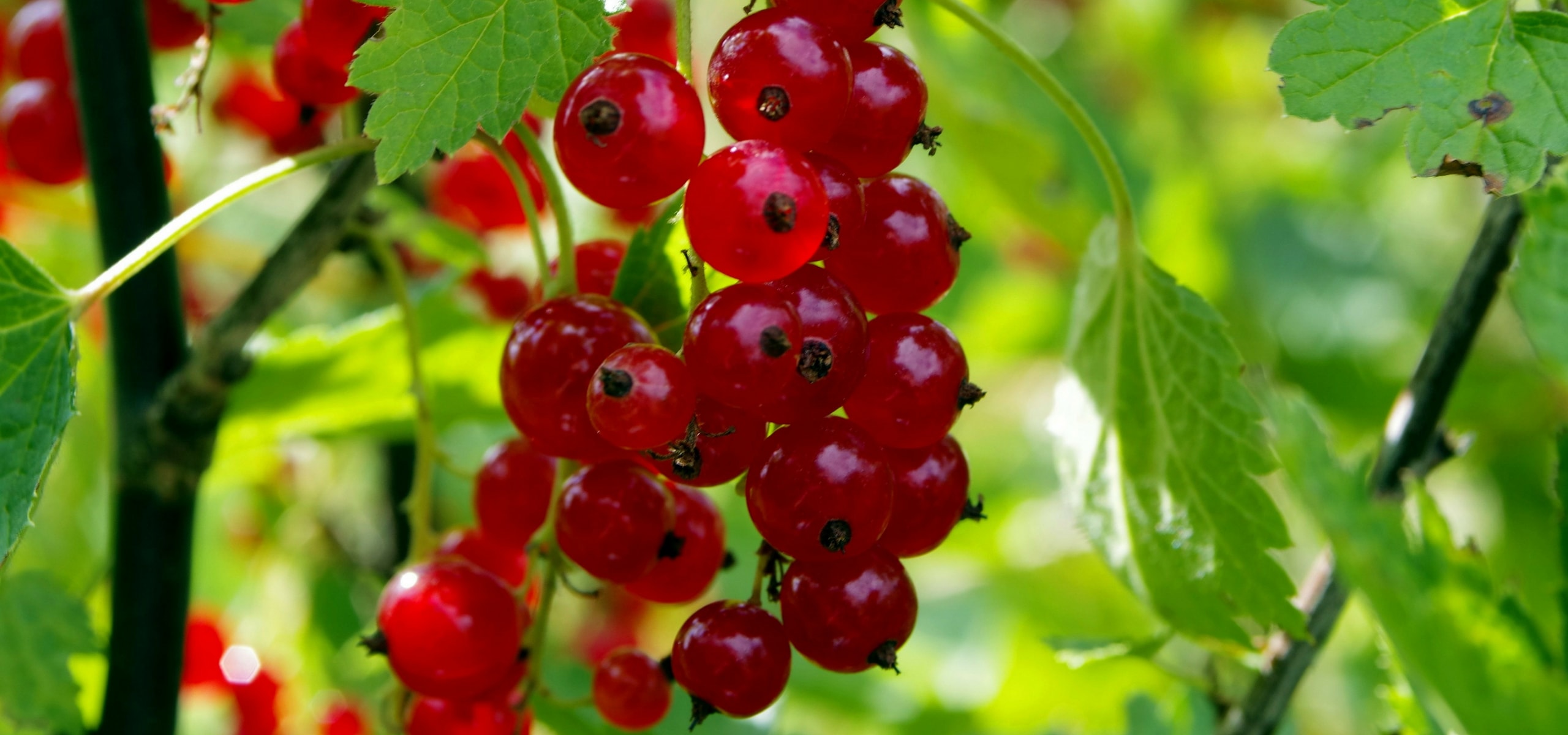
Foliage
Botanical data
Ribes
nigrum
Andega
Grossulariaceae
Blackcurrant, European Blackcurrat, gazels, quinsy berry, squinancy berry
Cultivar or hybrid
Planting and care
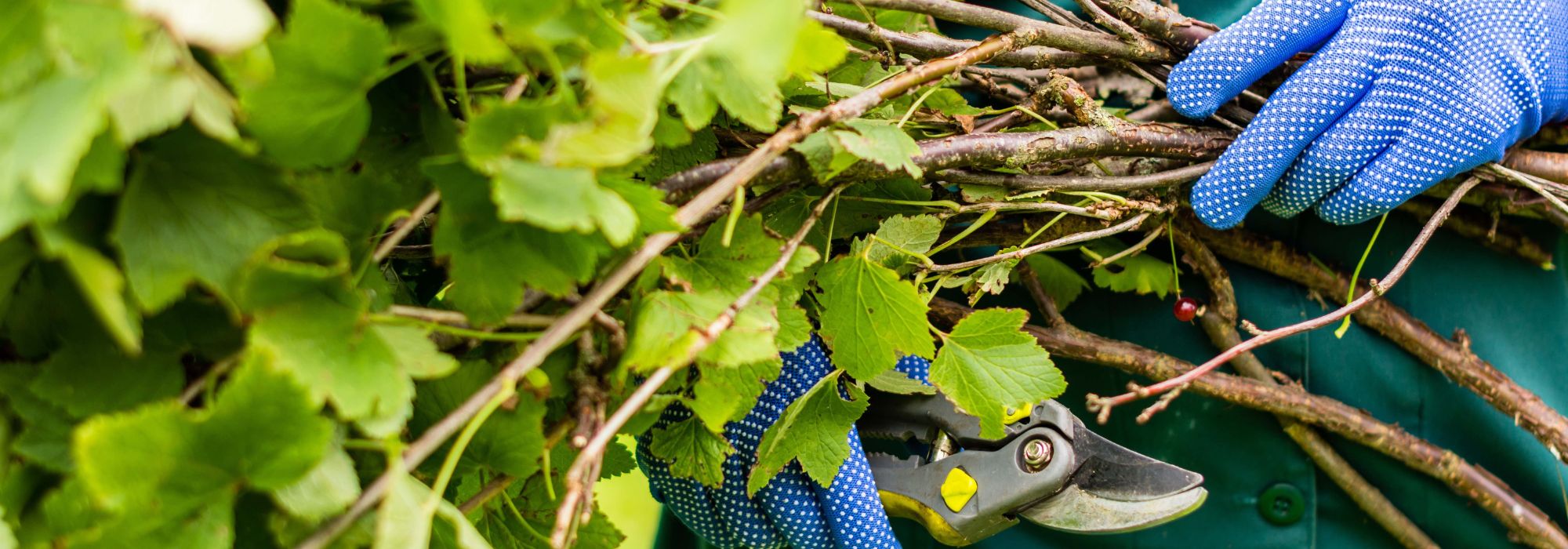
Plant the 'Andega' blackcurrant from October to March in an ordinary, deep soil, even heavy and clayey, without too much limestone, fresh but not constantly wet. A non-direct sun exposure, or partial shade, in a place sheltered from strong winds, will give good results. The blackcurrant bush fears heat and drought, it is said to be better adapted to northern regions. An organic fertiliser application at the start of vegetation will support fruit production and plant health. It is an accommodating bush, not very sensitive to diseases. It has a few enemies, such as scale insects and mites, which can be destroyed by a winter treatment. In March-April, before flowering, a fungicide can be sprayed. In June-July, the harvest can be protected with nets to counter the greediness of birds. It is important in a blackcurrant plantation to alternate varieties, when space allows: pollination will be favoured, even for self-fertile varieties, as soon as two different varieties are present. Count one pollinator for every four plants.
Planting period
Intended location
Care
Planting & care advice
-
-
-
-
-
-
-
-

-
, onOrder confirmed
Reply from on Promesse de fleurs
Recently viewed products
Haven't found what you were looking for?
Hardiness is the lowest winter temperature a plant can endure without suffering serious damage or even dying. However, hardiness is affected by location (a sheltered area, such as a patio), protection (winter cover) and soil type (hardiness is improved by well-drained soil).

The flowering period indicated on our website applies to countries and regions located in USDA zone 8 (France, the United Kingdom, Ireland, the Netherlands, etc.)
It will vary according to where you live:- In zones 9 to 10 (Italy, Spain, Greece, etc.), flowering will occur about 2 to 4 weeks earlier.
- In zones 6 to 7 (Germany, Poland, Slovenia, and lower mountainous regions), flowering will be delayed by 2 to 3 weeks.
- In zone 5 (Central Europe, Scandinavia), blooming will be delayed by 3 to 5 weeks.
In temperate climates, pruning of spring-flowering shrubs (forsythia, spireas, etc.) should be done just after flowering.
Pruning of summer-flowering shrubs (Indian Lilac, Perovskia, etc.) can be done in winter or spring.
In cold regions as well as with frost-sensitive plants, avoid pruning too early when severe frosts may still occur.
The planting period indicated on our website applies to countries and regions located in USDA zone 8 (France, United Kingdom, Ireland, Netherlands).
It will vary according to where you live:
- In Mediterranean zones (Marseille, Madrid, Milan, etc.), autumn and winter are the best planting periods.
- In continental zones (Strasbourg, Munich, Vienna, etc.), delay planting by 2 to 3 weeks in spring and bring it forward by 2 to 4 weeks in autumn.
- In mountainous regions (the Alps, Pyrenees, Carpathians, etc.), it is best to plant in late spring (May-June) or late summer (August-September).
The harvesting period indicated on our website applies to countries and regions in USDA zone 8 (France, England, Ireland, the Netherlands).
In colder areas (Scandinavia, Poland, Austria...) fruit and vegetable harvests are likely to be delayed by 3-4 weeks.
In warmer areas (Italy, Spain, Greece, etc.), harvesting will probably take place earlier, depending on weather conditions.
The sowing periods indicated on our website apply to countries and regions within USDA Zone 8 (France, UK, Ireland, Netherlands).
In colder areas (Scandinavia, Poland, Austria...), delay any outdoor sowing by 3-4 weeks, or sow under glass.
In warmer climes (Italy, Spain, Greece, etc.), bring outdoor sowing forward by a few weeks.
Shipping country and language
Your country of residence may be:
Your country of residence is:
For a better user experience on our website, you can select:
Your shipping country:
-
 Austria
-
 Belgium
-
 Bosnia & Herzegovina
-
 Bulgaria
-
 Croatia
-
 Cyprus
-
 Czechia
-
 Denmark
-
 Estonia
-
 Finland
-
 France
-
 Germany
-
 Greece
-
 Hungary
-
 Iceland
-
 Ireland
-
 Italy
Italy
-
 Latvia
-
 Liechtenstein
-
 Lithuania
-
 Luxembourg
-
 Malta
Malta
-
 Netherlands
-
 Poland
-
 Portugal
-
 Romania
-
 Serbia
-
 Slovakia
-
 Slovenia
-
 Spain
Spain
-
 Sweden
-
 Switzerland
Language:
-
French
-
 English
-
Spanish
-
Italian
-
German
-
Portuguese
-
Dutch
-
Finnish
My Account
Hello
My wish lists
My cart
Log in / Register
Existing customer?
This form is protected by reCAPTCHA - the Google Privacy Policy and Terms of Service apply.
New customer?
Create an account to track your orders, access our customer service and, if you wish, make the most of our upcoming offers.