Further reading…
Fancy strong contrasts in garden? Against pastel harmonies of Unicorn, saturated crimsons of Dark Acadomia, or teal blues of Transformative Teal, primary colour trend plays with cyan, magenta and yellow, a striking trio of the three base colours of the colour wheel. Elementary, almost childish, this colour mix divides opinion, but can fit into different styles. Judge for yourself with these pairing ideas!
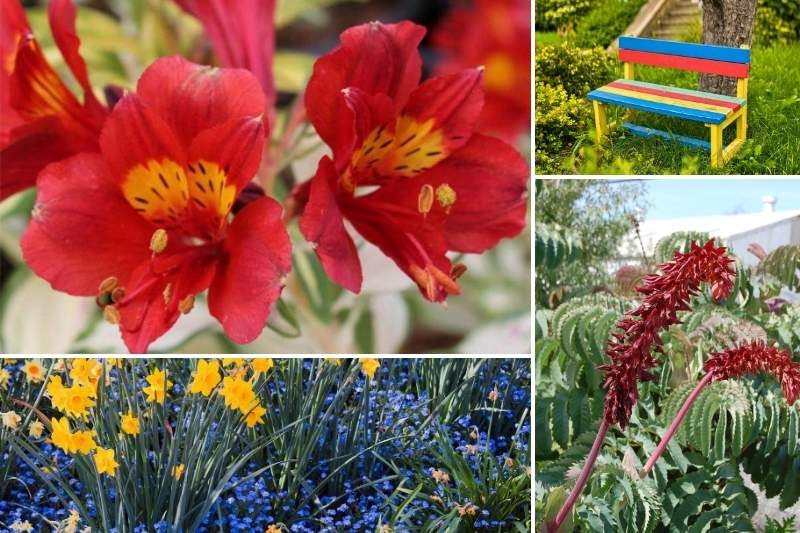
Primary colours: how to use them well ?
Red, blue and yellow flowerings are among most common in garden. Combining them is quite rare, most gardeners preferring harmonies, tonal ranges or colour gradients, or complementary pairings between two colours.
To avoid gaudy, unflattering and slightly cold combinations, finesse is required, pairing vermilion to crimson reds, very pale yellows to more orangey golds, gentian blues to periwinkle blues.
Surround these vivid colours with golden, bluish or purplish foliage. All variegated foliage or bicolour flowerings will help diffuse these strong-contrast tones. Finally, <strong:white, added in small touches in flowers or on foliage also helps attenuate this primary trio, as does play of green flowerings…
Freshness in the country garden
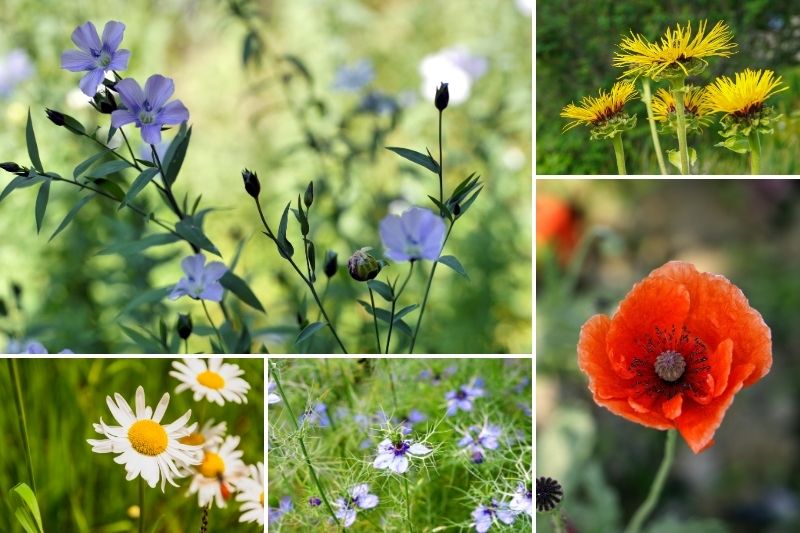
A cottage garden is a place where all colours often meet in a joyful jumble.
In this example, we bring together simple plants that will produce a very natural, refreshing effect in a country border. We will combine wildflowers, grandmother’s garden plants and cottage-garden plants.
For blues, try cornflower, flax, nigella, chicory, forget-me-nots, campanulas, heliotropic for its fragrance, and China aster 'King Size Mid Blue' for late season. All these plants are delightful and very effective.
Yellows here are provided by generous perennials such as Leucanthemum (large daisy) combining whiteness, mullein with grey‑green foliage, and inulas with more golden tones. One can equally seek paler yellows from charming hollyhocks, or bicolours with Anthemis.
For the red wave, opt for poppies and oriental poppies, spring tulips, sweet williams, peonies and cosmos.
Surround them with a few plants of wild fennel, very airy with greenish flowers, and a few white thalictrums to blur the effect.
A surprising trio in an exotic garden
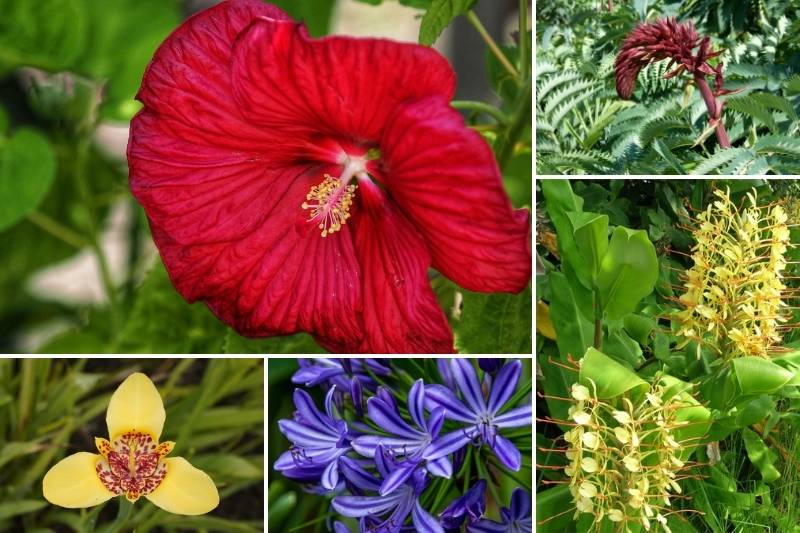
Yellow and red, warm colours, are musts in exotic or tropical gardens. Putting them near blue tempers them, while keeping spirit of that foreign garden alive.
Think of Protea 'Clark's Red' or Leucadendron 'Devil's Bush' for magenta notes in mild‑winter regions, elsewhere yellow or red Alstroemerias and Kniphofias for the yellow.
Plant together, as in example illustrated below, a common Rose mallow, agapanthus, a fine Hedychium gardenarium, yellow and red Tigridia, a Melianthus with strange reddish‑brown inflorescences. Blue will be represented, besides agapanthus, by a beautiful passion flower, an Abutilon vitifolium or some Canary viper's buglosses with giant spikes.
To avoid leaving area bare once summer season has passed, plant among these exotic beauties some evergreen foliage, perennials, grasses and a few shrubs: Taiwan Schefflera, evergreen ferns, and a Daphniphyllum, perfect in semi‑shade. A Pennisetum setaceum 'Rubrum' or an Uncinia rubra 'Everflame' are best placed in full sun.
Colour explosion in the cutting garden
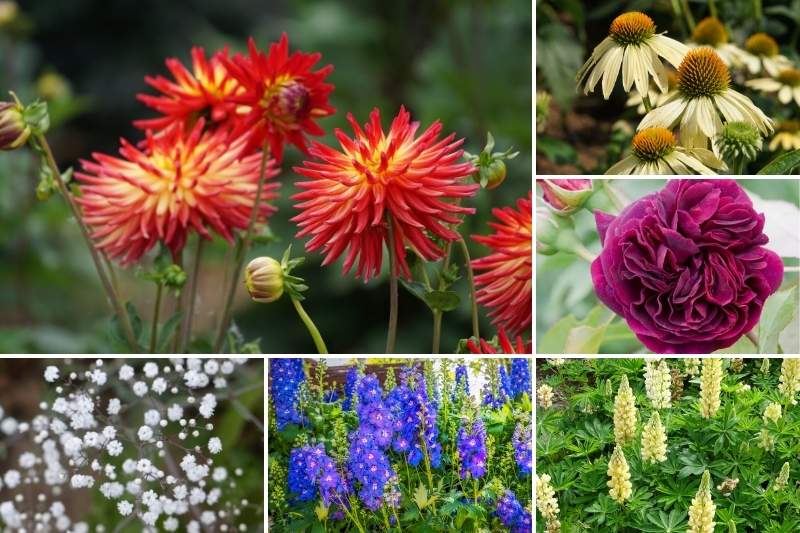
It’s easy to compose a cutting garden with countless plants in blue, yellow and red shades.
Depending on bouquet preferences, place summer perennials side by side with dahlias, blue delphiniums and yellow lupins. Don’t hesitate to combine very different plants here: old roses, eccentric love lies bleeding, capge gooseberry, a few annuals such as zinnias and antirrhinums, all‑yellow solidagos and greenish alchemillas, graceful sweet peas, thistles, narcissi and tulips for spring bouquets, Cosmos 'Lemonade' and 'Rubenza'… choices are endless!
A joyfully colourful area around the play zone
Blue, red, yellow… a little like Rubik’s Cube or building blocks, don’t you think?
Near swing, pétanque pitch, children’s den or tipi, the play area can be designed around these three colours they love. Recreate their naïve, playful world, again based on yellow, red and blue as ultra‑cheerful emblems.
Choose robust plants able to withstand children’s rough play… and of course that won’t hurt or tempt them (avoid ornamental red berries that are toxic, such as those of heavenly bamboo or holly).
Physocarpus, blue hibiscus like Hibiscus syriacus 'Azurii', plumbago as climbing, herbaceous salvias, rosemary… Brooms and St John’s wort are also tough and will resist occasional ball throws. Some sunny achilleas with flat flowerheads, such as 'Golden Plate' or paler 'Desert Eve Yellow' are musts to bring cheer to the play area.
Finally add a few fluffy plants so children can play safely during summer such as Lagurus ovatus, those soft childhood ears, or simply lavender they will enjoy touching and smelling!
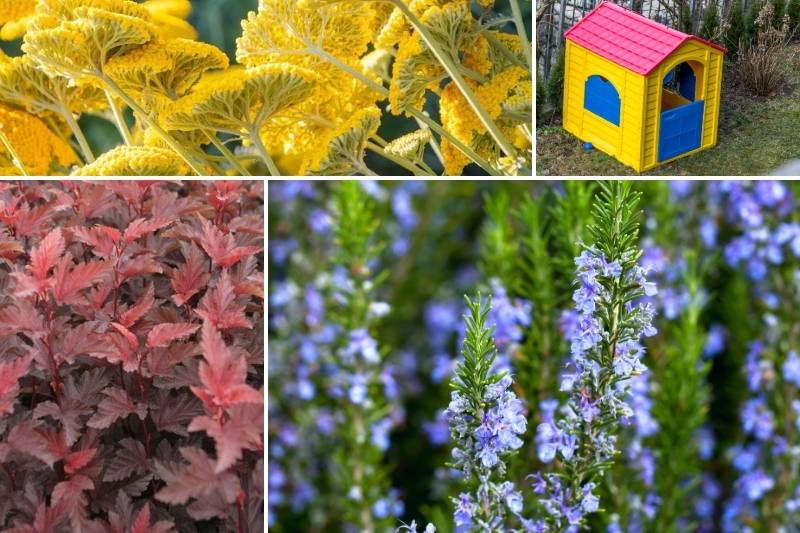
Find inspiration on the "Primary Shock" in our trend booklet!
All major garden trends for 2026 are here: Garden: What are five major trends for 2026?
See our tips on Colour Inspiration page for many more pairing ideas.
Attracted to yellow, blue and red flowers? Here are some of our articles on the finest representatives:
- Red hydrangea: best varieties
- Most beautiful passion flowers with red blooms
- 6 red‑flowered peonies
- 10 essential spring bulbs with yellow flowers
- 5 yellow‑flowered oleanders for bright garden
- 7 yellow‑flowered Alstroemerias
- Blue Ceanothus: most beautiful varieties
- 7 blue salvias to adopt in garden
- 8 climbing flowers you must have in garden
Fancy strong contrasts in garden? Against pastel harmonies of Unicorn, saturated crimsons of Dark Acadomia, or teal blues of Transformative Teal, primary colour trend plays with cyan, magenta and yellow, a striking trio of the three base colours of the colour wheel. Elementary, almost childish, this colour mix divides opinion, but can fit into different […]
Making a garden resilient, stronger in the face of the repeated heatwaves our countries now suffer, is one of the challenges of the Chaparral garden, which draws on flora from extreme climates, such as those found in New Mexico or California. The multiple heatwaves of summer 2026 confirm this reality and will certainly steer us towards undemanding plants that are also hardy in our winters. Discover this new type of garden, inherently waterwise, low-maintenance and very promising.
What is a chaparral?
Chaparro is a Spanish word referring to several oak species (Quercus ilex, holm oak, but also Quercus coccifera and sometimes cork oak). The term also covers less well-known species such as Castela tortuosa, a shrub native to arid areas of Mexico and southern United States.
Chaparral is nothing more than an area of scrub and shrubs, forming a specific ecosystem in Mediterranean climates. It generally resembles a stand of holm oaks, in other words a garrigue or maquis, terms and landscapes more familiar to us. The name in Spanish denotes a biome found mainly from Mexico to California, and in Europe around the Mediterranean such as Andalusia or Sardinia. These areas are wooded, populated by shrubs and undershrubs able to withstand very hot conditions.
Plants able to grow in chaparral are often sclerophyllous (small, leathery leaves covered by a protective cuticle), sharing unique adaptations to this dry environment: deep roots, grey-green leaves that reflect light, and essential oils that limit evaporation.
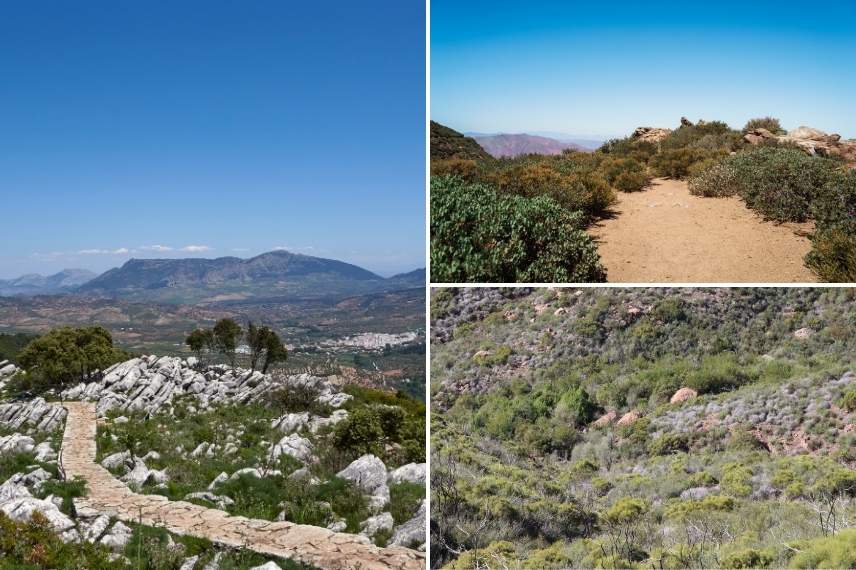
We imagined three scenes to reproduce, in spirit, this ultra-resilient type of landscape. You can create a single area of the garden that receives particularly strong summer sun, or treat the whole garden in this style, provided you live in temperate valleys or mild zones of the country.
Adapting the chaparral to a dry exotic garden
A dry garden can create a sublime scene with exceptional plants.
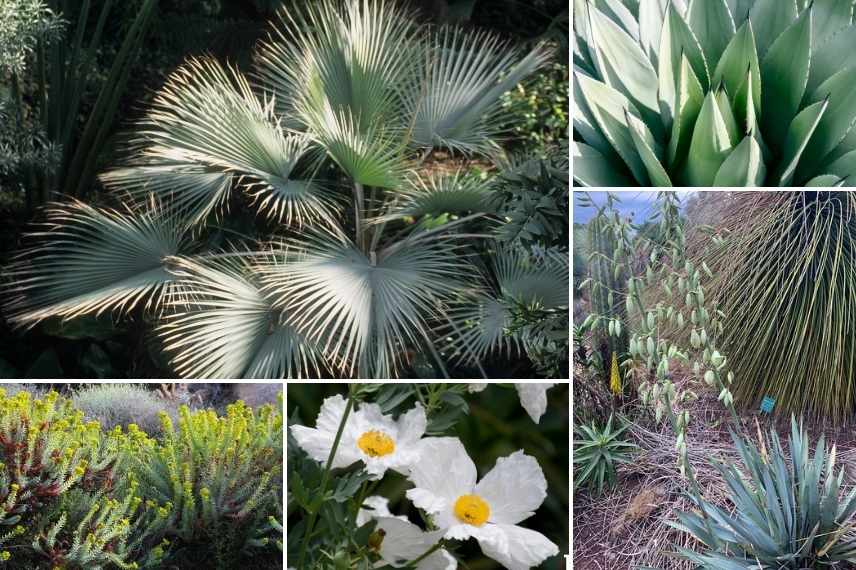
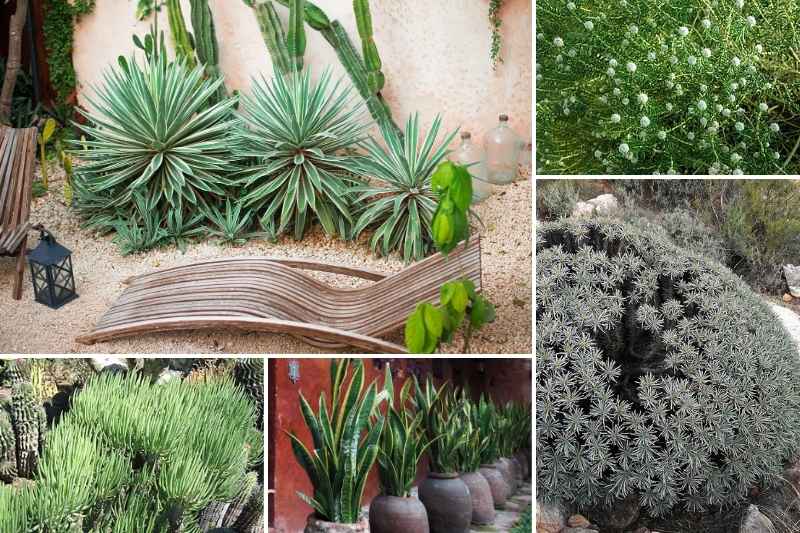
Here we play with a palette of blue-tinged foliage using plants surprisingly resistant to short frosts in winter, not exceeding −10°C. The tree poppy, a Californian and Mexican plant with wonderful white flowers, and the Mexican blue palm for an original backdrop, have proven able to withstand very dry summers. Once well established, Romneya poses no real hardiness issues. A Yucca pallida joins them to form that superb silvery-blue base, accompanied by an agave hardy enough such as Agave parryi or Agave montana.
A Mediterranean perennial, Euphorbia pithyusa, a Balearic spurge that stays low, and a Mexican-origin plant, Mathiasella bupleuroides 'Green Dream' with jade-green flowers, naturally fit among these plants. We bring in chartreuse and blue-green tones for a duet of colours evoking Mediterranean aridity.
NB: this blue planting can easily be part of a blue garden, located in the sunniest, driest part of the garden!
Transport yourself to Lanzarote
Lanzarote's cactus gardens are exceptionally photogenic. On this volcanic archipelago grow sclerophyllous plants with small leathery leaves adapted to drought, and spiny cacti. Drawing inspiration from them, while carefully selecting cacti cold-hardy enough for our winters, allows creation of a unique area within a dry garden, ready to face repeated summer heat spikes. Ensure perfect drainage, as this type of garden cannot tolerate any standing moisture in winter.
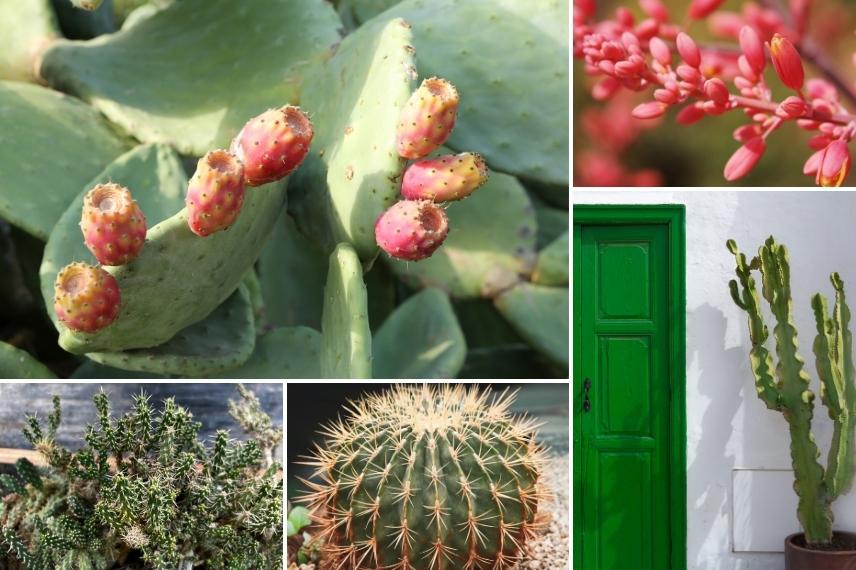
A prickly pear, well adapted to sea spray, is interesting for its slightly greater hardiness (down to around −15°C for some) and its unique habit with large spiny pads. Plant them liberally; choices include Opuntia scheeri or Opuntia engelmannii var. rastrera, among many others. In this distinctive setting, succumb to oddity of Cylindropuntia kleiniae, a cousin of opuntias, quite cold-hardy and producing a beautiful magenta summer bloom. Complement the area with a Hesperaloe parviflora and an Echinocactus grusonii, the golden barrel cactus often seen on the island.
This type of garden is intended for warm, mild regions of the country with less severe winters and dry summers.
Use pumice or black volcanic stones to simulate island soils and to ensure drainage. Finishing touch? a whitewashed house with green shutters to reproduce another characteristic of this island close to African coasts.
... or to landscape a poor, unproductive slope
A south-facing, dry and unproductive slope can also be transformed into a resilient space by imitating the chaparral, an ecosystem adapted to extreme conditions.
To turn poor soil into a semi-desert rockery, favour low, hardy shrubs such as cistus (Cistus), a California lilac like the ceanothus ' Pacific Wave' or its groundcover form (C. thyrsiflorus 'Repens'), a prostrate rosemary and some sempervivums. These plants, with deep roots and leathery or fleshy leaves, tolerate drought and poor soils perfectly. Add a golden thyme, and some sages (such as Canary Island sage 'Lancelot'), aromatic plants that will scent the garden while attracting pollinators.
Once established, these plants require little watering and maintenance. Their dense foliage will protect soil from erosion and limit growth of weeds that are unwanted on the slope. A mineral mulch will help conserve moisture and enhance the slope's natural appearance. A few ochre or orange boulders placed here and there will also help evoke Californian or Andalusian maquis while enhancing the area.
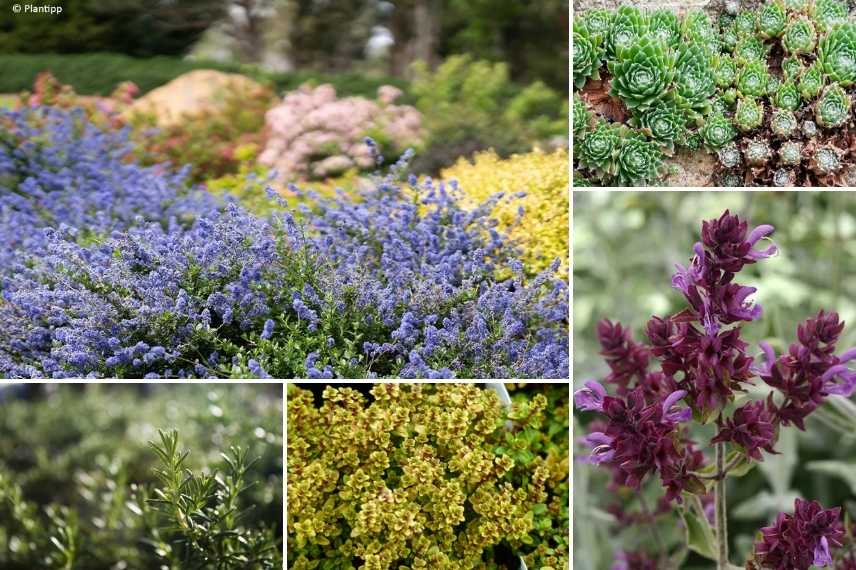
Discover our selection of succulents and perennials on our "Dry garden" page online, and our inspiration in the trend booklet 2026!
Since Beth Chatto, the dry garden movement has increasingly been seen among landscapers and in gardening magazines and books. We cover it in detail in Designing a dry exotic garden, Laying out a gravel garden, the Californian-style garden and the garrigue garden, as well as strong trends recently seen at the Chelsea Flower Show in London, such as the antipodal garden and the sand garden.
Find all garden trends for 2026 in: What are the five major trends for 2026?
Making a garden resilient, stronger in the face of the repeated heatwaves our countries now suffer, is one of the challenges of the Chaparral garden, which draws on flora from extreme climates, such as those found in New Mexico or California. The multiple heatwaves of summer 2026 confirm this reality and will certainly steer us […]
The idea for this personal take came to me from a thought I had at a recent plant swap. While a charming lady was offering some perennial plants, I asked her straight out: 'What colour are the flowers?' — 'Yellow,' she replied. And I retorted, rather bluntly: 'Oh no, no yellow for me.' I immediately felt bad, finding myself oddly rude and not very respectful. If she reads this article, may she forgive me, because yellow is one of the most radiant colours there is! Proof in pictures…
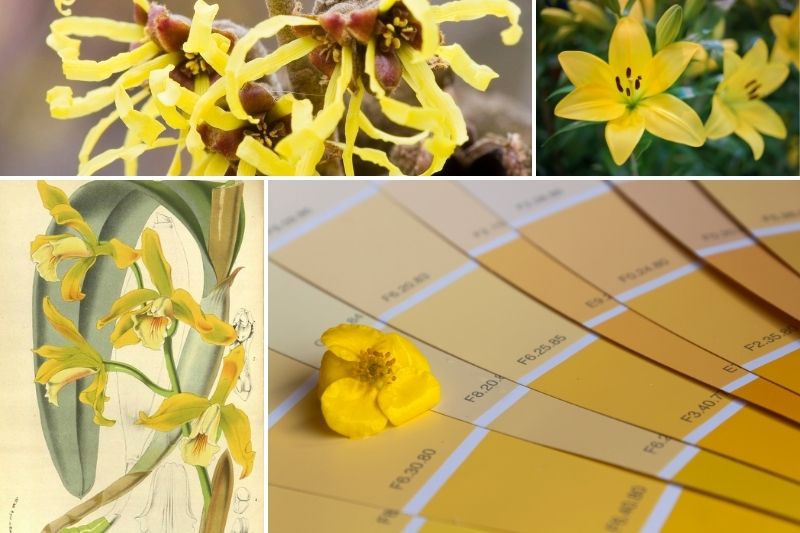
Yellow in the garden: why such hostility?
One could almost speak of a divisive colour in the garden, so much does yellow provoke either rejection or genuine passion. Even though it evokes the image of the sun and is a symbol of cheerfulness and dynamism, it is one of the colours gardeners often shun. Yet yellow is the colour of wonderful shrubs and blooms such as winter-flowering mimosa or Laburnum, those delightful yellow laburnum arches in spring that usually win unanimous praise.
This lack of enthusiasm even shows up, I find when looking into the subject, in our articles at Promesse de fleurs, where we address yellow flowering far less than the popular themes of blue, pink or white gardens.
Yellow has a bad reputation in many fields. It is rarely chosen as a dominant colour in décor. A primary colour with blue and red, yellow stands apart in our plant choices, and some refuse even to have a single yellow flower in their beds. Is that because it is associated with certain weeds (dandelion, sow-thistle, buttercup, celandine and others) or because it is said to be hard to pair? I would lean towards the latter reason, to which I return below.
In art, it was one of the major colours of the Fauvist movement, brought to its height by Vincent Van Gogh with his vivid yellow blocks on sunflowers or by Klimt.
But, once associated with the sacred, yellow declined from the Middle Ages, gradually evolving into a negative symbol, until it became the colour of the yellow Star of David. Even language turned on it with a few unflattering expressions, such as a forced laugh or the "Yellow Peril". In the West, offering yellow roses long signified infidelity and, more broadly, separation. Yellow therefore evokes deceit and betrayal, whereas it carries a very positive connotation in the East.
Yellow and yellows
Yet there is not one yellow but many yellows, just like the gradients in all colours.
From very pale, almost white yellow to saffron yellow, it is a wide spectrum! Let us set aside yellow or golden foliage here, which is generally better accepted by many gardeners.
St John's-wort, forsythia, mahonia: the vivid yellow of these shrubs, often considered mundane, may be one reason for the contempt shown towards yellow. Or is it still too closely associated in our minds with 1970s gardens that featured rather unnatural yellow roses, almost artificial chrysanthemums and overly gilded conifers? Finally, some summer bedding displays seen in parks or roundabouts, at times almost garish, put many people off…
Unless the lemon-yellow of the few adventitious weeds mentioned earlier puts us off this delightful colour. But it is more likely the difficulty of combining yellow flowers well with other garden blooms that makes us hesitate to use it. In short: people often fear that saturated yellow will jar with other plants in the garden.
My favourite yellow flowers
I am one of those who do not plant too many yellow flowers in the garden. My view has nevertheless evolved with my wanderings through English gardens that dare, in some cases, a monochrome yellow garden, less common than the famous white garden at Sissinghurst. Marvels can be found there, as at Burton Agnes Hall.
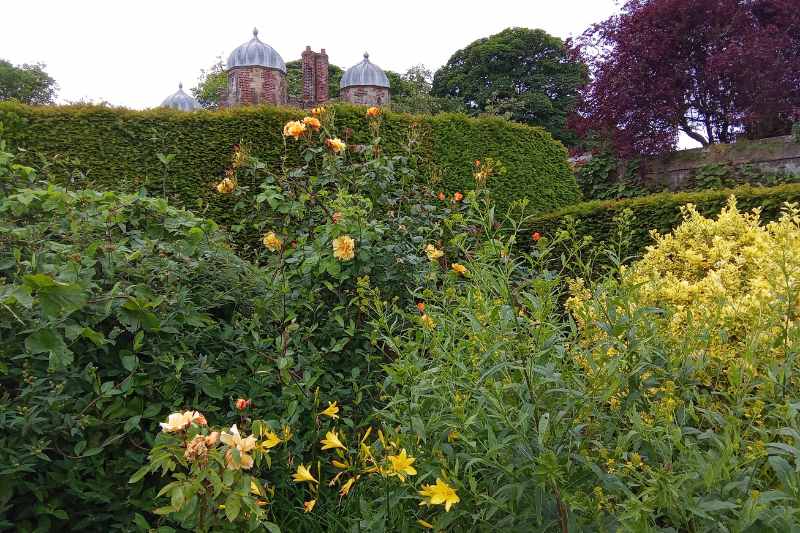
For my part, special mention goes to pale and pastel yellow blooms that are so easy to pair. Light, creamy, butter, anise, straw or slightly apricot yellows actually harmonise with many garden flowers: all blues, pinks and oranges, mauves and purples, from pale lavender to plum. They are found in some old or species roses like 'Mermaid', many honeysuckles, oleander luteum 'Plenum', Liriodendron, some magnolias and exquisite Michelia, of great delicacy, and many other shrubs and perennial plants.
I admit that brilliant yellow is also the colour of spring! Daffodils are its true ambassadors. And if you do not want to incorporate yellow elsewhere in the garden throughout the year, spring is a real opportunity to punctuate the early fine days with a Banks' rose, some sunlit tulips and other bulbs or chartreuse-flowered euphorbias, or an azalea 'Harvest Moon' that pair wonderfully with the many blue and white spring blooms.
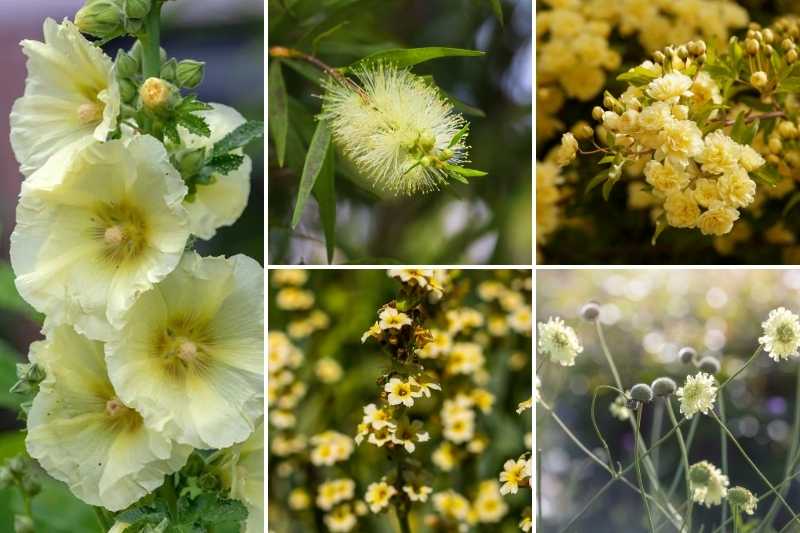
Using yellow: how not to go wrong?
I also like to see brighter yellow blooms parade through summer beds, in a naturalistic planting with rudbeckias or sunlit achilleas, in English hot borders that blend all warm colours of the colour wheel. It is also perfect in exotic gardens, alongside orange blooms, with which it creates a beautiful gradient. Finally, many marginal or aquatic plants flower in yellow, making them excellent choices for water gardens or pond edges, enhanced by yellow-flag iris, ligularias, yellow water lilies and a few touches of purple foliage. Last option for this much-maligned yellow: it is a standout colour in dry gardens, appearing alongside senecios, Helychrisum and other succulent plants paired with greyed and silvery foliage and some blue or orange blooms.
My final tip: avoid adding yellow blooms to beds that are already richly coloured (except in a naturalistic context). The result can be a garish effect not in the best taste. It's better to stick to a successful two-colour combination, or three colours, and play with contrasting foliage or work in gradients. Introduce it in small doses, unless aiming for a monochrome garden — to me, that is the best way to exalt it!
Not convinced? Still hesitating? Do you tend to use yellow mainly in handsome winter-flowering shrubs? What are your experiences with yellow in the garden? Tell us how you use it, and feel free to comment to continue this age-old debate about yellow in the garden.
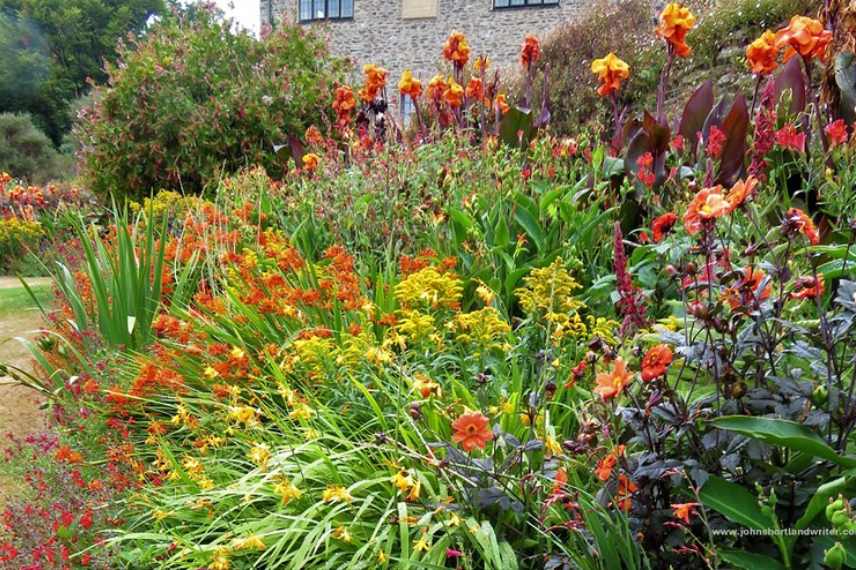
a successful trilogy of yellow, orange and purple
Further reading…
Top up your ideas with tips and inspiration from the editorial team in our dedicated section on the Yellow garden. On our online shop, discover our wide range of yellow-flowering shrubs, as well as our yellow roses, and our yellow-flowering bulbs.
Leïla tackled this subject in How to pair yellow flowers in the garden? and Michaël in Toning down yellow flowers in the garden.
And if, like me, you enjoy history and the symbolism of colours, add French author Michel Pastoureau's work on the colour yellow to your summer reading: Yellow: A History of a Colour, published by Points in France.
The idea for this personal take came to me from a thought I had at a recent plant swap. While a charming lady was offering some perennial plants, I asked her straight out: ‘What colour are the flowers?’ — ‘Yellow,’ she replied. And I retorted, rather bluntly: ‘Oh no, no yellow for me.’ I immediately […]
There are materials that do us good. Cork, from the tree that bears its name, is one of them, and it has been making a notable comeback in our lives for several years now. A renewable, 100% natural, ecological material, cork is not used only to seal our best vintages.
The possibilities offered by this natural material are many and its recycling concerns us all.

Cork: a bio-based, ancestral and innovative material
Cork comes from the bark of the cork oak (Quercus suber), a tree growing around the Mediterranean, mainly in Portugal, and also in Spain, Italy, France, Algeria and Morocco. It has been exploited primarily in Europe since the 17th century, but its qualities were known to the Romans and Greeks, who began making cork stoppers to better preserve wine or oil in amphorae (clay or resin stoppers having proved limited). It was Dom Pierre Pérignon, a Benedictine monk well known in the Champagne world, who is said to have popularised the use of cork.
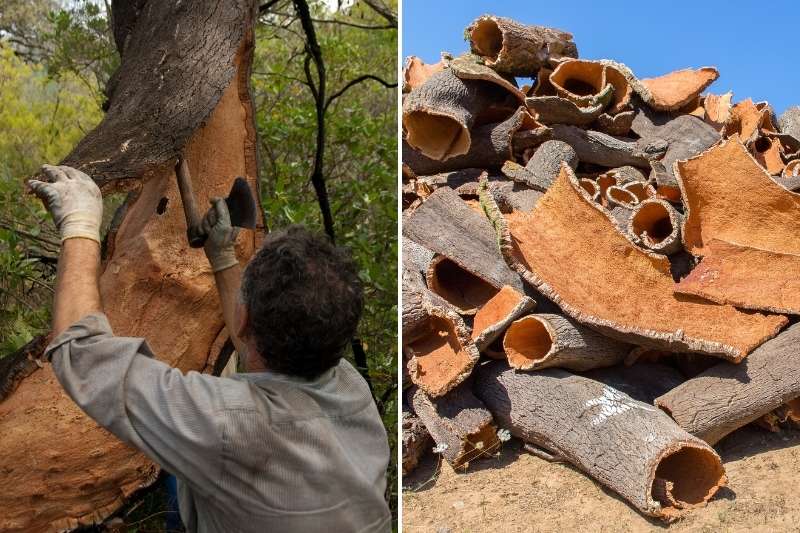
Only the bark – referred to as suberified bark – is harvested. The tree is not cut down; only its very thick cork bark, up to 25 cm thick, is removed using a special axe, without damaging the cambium (living tissue beneath the cork).
The tree therefore remains alive. The cork oak is able to regenerate its bark after each harvest, allowing sustainable exploitation over decades. It is also fire-resistant: after each fire, frequent in these Mediterranean regions, it reconstitutes its bark… like a vegetal phoenix or a Terminator of the forests!
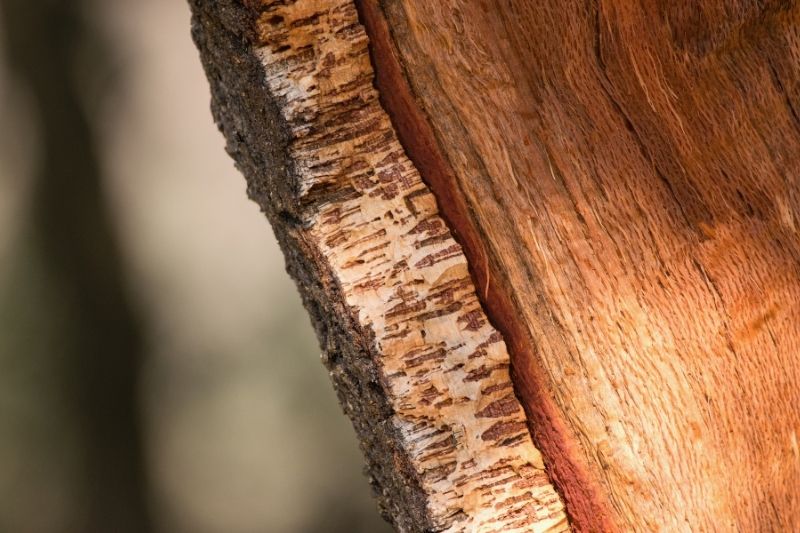
Properties and uses of cork
Given all its qualities, cork has many uses beyond making stoppers. It is a technical material widely used in the marine sector for boat decks because of its rot-resistant properties, in leather goods to make soles, shoes and small items, and as an accessory for numerous decorative items, jewellery and furniture. Light yet flexible, impermeable and insulating, attractive and watertight, it has also become a material of choice for thermal and acoustic insulation. The construction industry also uses it as an effective moisture barrier, accounting for 14% of its use. The wine industry remains its main outlet, representing 69% of consumption. It uses the protective and breathable qualities of cork as well as its density to produce high-quality stoppers.
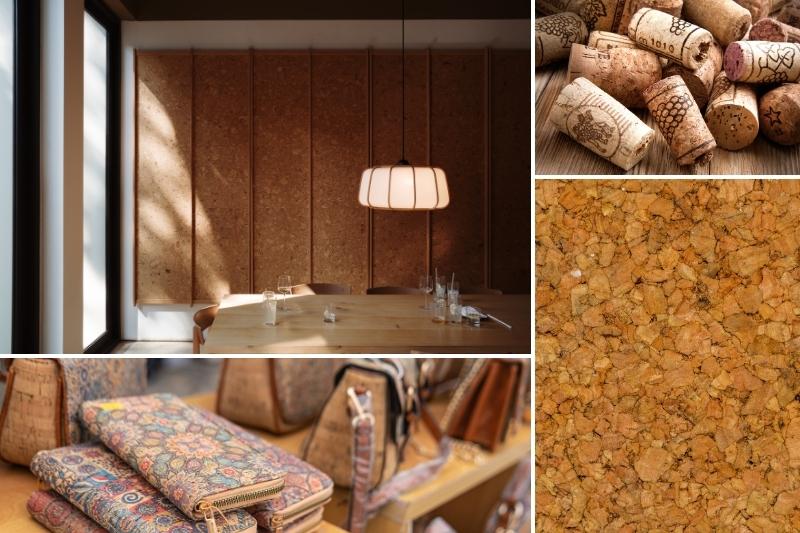
Production and extraction
Portugal, the world’s leading cork exporter, is the undisputed leader in production (50% of the total). Suberaies, the name given to cork oak forests, account for nearly a quarter of the country’s woodlands, with a strong concentration in the Alentejo region. Portuguese cork represents 50% of world production. Portugal and Spain alone cover more than half of the exploited areas.
France produces a smaller but high-quality quantity, in specific areas (Corsica, Pyrénées-Orientales, Var and Landes). The cork sector in France produces 3 billion cork stoppers per year, out of 14 billion worldwide.
It must be understood that cork forests and plantations in Portugal and other Mediterranean countries are ecosystems in their own right. Cork cultivation relies on patient, extensive management of natural areas.
Furthermore, knowing that one tonne of cork absorbs 2 tonnes of CO2, and that global production is 300,000 tonnes per year, there is no need to do the maths to grasp the ecological value of this resource.
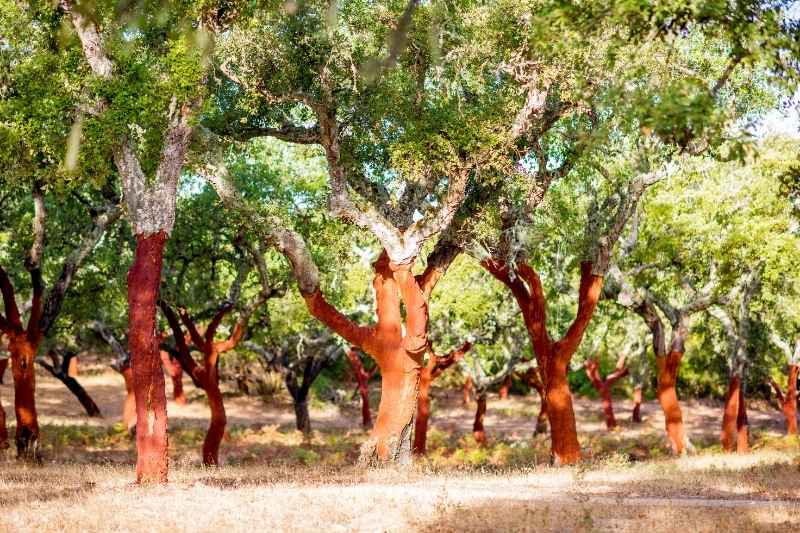
Extraction is done manually on the trunk when the tree is mature, at least 25 years old, by cutting or "lifting" the bark in large slabs. This is known as the debarking or lifting operation, carried out during the sap-rise period, from May to August. The first harvest produces so-called "male" cork, of lower quality, very thick and too hard, which will be sent for grinding. The bark renews naturally every 12 years approximately, on trees living on average 200 years. Each cork oak can thus be "scalped" around fifteen times in its life, producing so-called "female" cork, a noble, excellent-quality material. The cork slabs are air-dried for six months. Harvested cork has a very long shelf life, close to 100 years!
Cork recycling: an eco-friendly civic act within everyone's reach
France, as the world’s second-largest wine consumer, has a role to play.
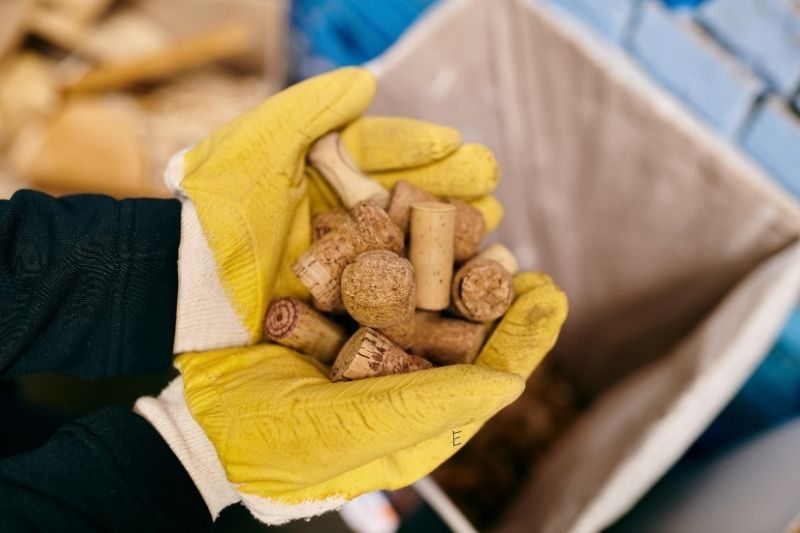
A 100% plant-based product, cork stoppers can be recycled, but they are not classed as packaging. They therefore cannot be put in the yellow recycling bin. They must be dropped off at a local collection point. Household waste centres, town halls, supermarkets, organic shops, wine merchants and sometimes schools are all places where precious stoppers can be returned.
Fewer people know that many local, regional and national associations take part in collections to support charitable causes.
Options in France include Recycliege France, Planetliege (site of the French Cork Federation), and regional waste management organisations such as Smitcom.
Once collected, stoppers are sent to specialised recycling plants where they receive specific treatment. Ground, they become granules, which are then turned into boards or blocks to make other objects, including new stoppers, or used for energy recovery.
Avoid putting cork stoppers in the compost. Although biodegradable, they decompose rather slowly and, in that case, should not be bonded with glue or plastic, as some new commercial stoppers are. These must be thrown in the household refuse bin.
Sorting cork: a well-established process
Each year more than 60 million cork stoppers are recycled in France out of a consumption of 3 billion cork-sealed bottles.
In this area, prevention and information are major issues for this circular economy in order to promote a reflex in our daily habits: collect cork stoppers together at home rather than throwing them one by one in the bin.
At European level, there is a recycling code for cork, FOR51. It identifies products made from natural cork without any agglomerate or synthetic substitute.
Be careful not to confuse 100% cork stoppers with cork-look stoppers, which are agglomerates of synthetic materials and glue: these must not go in the yellow recycling bin!
Cork in the garden: why not consider it?
An insulating material in summer and winter, therefore thermoregulating… Now, doesn't that sound good for our plants? Cork stoppers are indeed one of the original but proven recycling options for our potted plants. For drainage or insulation against the cold, once cut into small pieces (yes, you have to get your hands a little dirty), 100% cork stoppers prove to be precious and economical allies, replacing clay pebbles. Placed under pots, they protect those left on terraces and balconies in winter.
Our cork stoppers can also find a second life and be upcycled very prettily and easily for Christmas. The natural material and colour of cork pair perfectly with pine cones and wood to decorate the home for the festive season. Keep it in mind!

Further reading…
Cork is venturing into the space industry! Discover this surprising article on the aeronautical potential of cork from a small French company.
Two websites to consult: Planète Liège and the Mediterranean Cork Institute (IML), which provide much more information on their comprehensive sites.
This video shows the cork stopper manufacturing process in a Portuguese factory.
There are materials that do us good. Cork, from the tree that bears its name, is one of them, and it has been making a notable comeback in our lives for several years now. A renewable, 100% natural, ecological material, cork is not used only to seal our best vintages.The possibilities offered by this natural […]
In recent years, as our planet warms inexorably, many of us have been looking for ways to adapt our gardens gradually to a new era. The Antipodean garden is one answer for gardeners, encouraging a turn towards the remarkable potential of plants from extreme climates, such as southern plants.
Let’s see how to use certain succulent plants formerly thought suitable only for southern regions, and integrate them into different garden types, from dry rockeries to Mexican-style settings.
Origin of the Antipodean garden
Last year, one of the stands at the RHS Chelsea Flower Show surprised many: right in central London, this temporary garden staged a landscape straight out of the South African bush. The Karoo Succulent Garden, conceived by landscape designer Katie Lewis and botanist Ernst van Jaarsveld, offered a sublime scene of exceptional succulents, remarkable spiny shrubby plants, Aloes, collections of Haworthia and Gasteria amid mineral chaos… A genuine plea and reflection on the garden of the future, this Antipodean garden showcased only plants native to South Africa, resilient, capable of surviving severe droughts and adapted to the region’s grand yet arid and hostile Karoo environment.
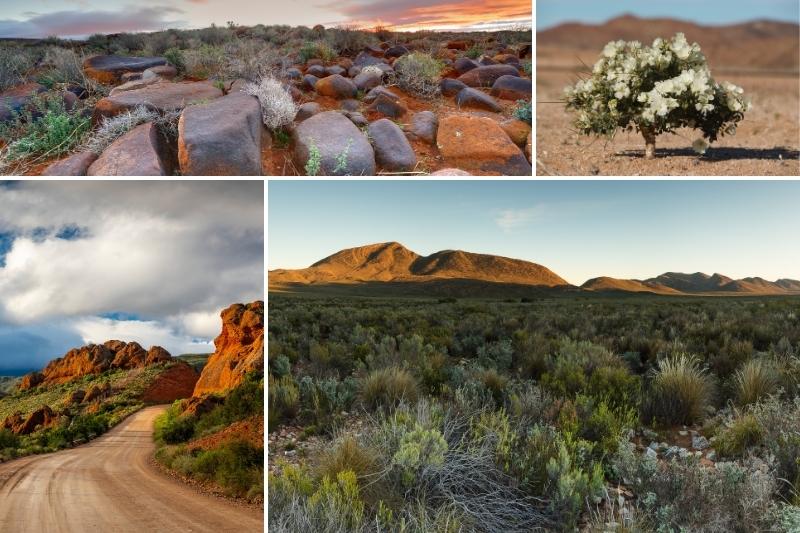
Top right, Sarcocolon crassicaule grows in the Little Karoo
On a dry rockery by the sea
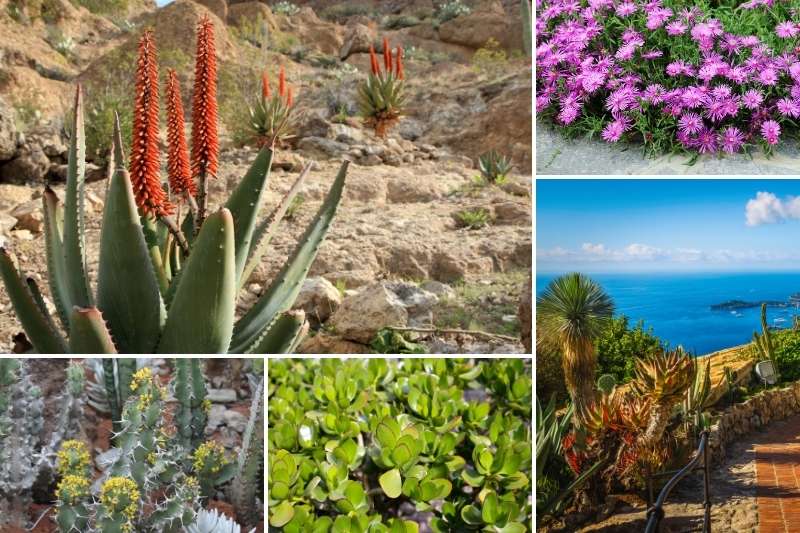
Our coasts, from the Channel to the Atlantic and of course the Mediterranean, offer an ideal climate for these plants from the Cape. Take inspiration from the sublime jardin d'Èze near Nice. Many plants from Mexico are grown there, but also South African plants such as Aloes and various types of euphorbias.
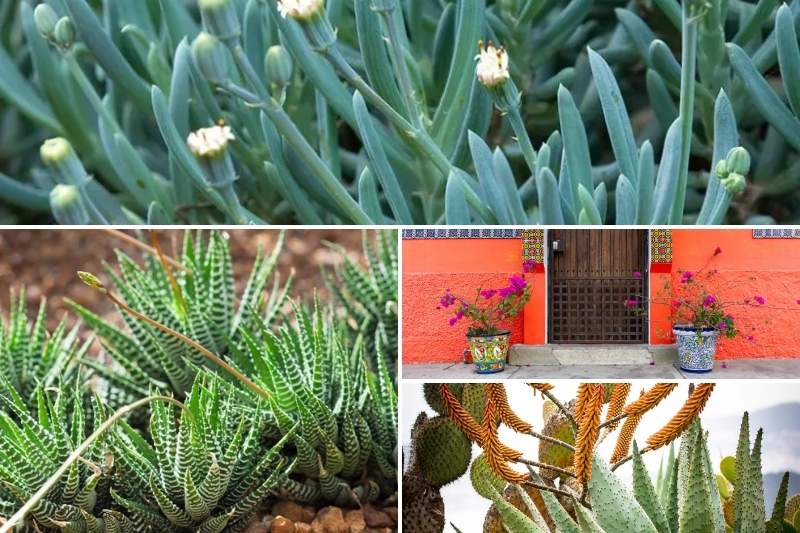
For example, you can group in very warm exposure, without them complaining, Cape-origin plants such as Aloe ferox, Delosperma cooperi and an Euphorbia caerulescens. Aloe remains very architectural even after flowering, its orange flower spikes enhancing the garden in winter and spring. The spreading Delosperma will flower mauve continuously all summer. The euphorbia brings a lovely green, succulent touch to a rockery. Add other perennials that tolerate strong light, very free-draining soil and have sufficient hardiness in this coastal context: Euryops pectinatus or Euryops evansii, Protea, trailing Plumbago, for a blue, unexpected late-summer display, etc.
In a Mediterranean garden or a dry garden without watering
The dry garden, arguably one of the gardens of the future, is precisely the type suited to these South African plants that grow locally in poor, arid soils. Inviting these Antipodean plants into our gardens in the Mediterranean or in regions with mild winters is a great way to refresh the plant palette of gardens designed without watering.
Ramified shrubs such as the Tylecodon wallichii, a superb plant related to crassulas, which eventually forms a small trunk bearing leaves clustered at the top, a South African heather, Erica arborea, or the Cape heather Phylica ericoides make perfect companions in this Mediterranean yet wild setting. A very striking aloe with a dragon-like appearance, Aloe dichotoma (quiver tree), will make a sensation once its trunk has developed. All these plants appreciate a perfectly free-draining, poor and light substrate. Better-known plants such as Sansevieria (snake plant), also native to South Africa, can be grown in pots to bring their incomparable architectural form.
Flowering of the various South African shrubs and undershrubs, southern‑hemisphere timing aside, tends to occur in winter or spring. So add a few summer-interest plants to bring colourful touches to this unusual world, such as diascias (annual or perennial) and the shrubby Cape mallow (Anisodontea capensis) which can flower until frosts and will require, unlike the other plants, a little watering while it establishes.
In a sheltered patio, like in Mexico, or on a sunny balcony!
Although unaffected by scorching sun, succulent plants and other South African natives lack hardiness in our hemisphere. They must therefore be potted in some regions where they might suffer, especially from winter damp.
So why not evoke a South American patio to dream of distant horizons from a sheltered, very sunny patio, courtyard or terrace? Then simply bring them indoors to a warm living room for winter months.
Think again of easy-care plants, provided their low watering needs and a warm exposure are respected. Here we plant in attractive glazed pots a Senecio serpens 'Blue Chalk', or 'Dwarf Blue', a Haworthia fasciata 'Big Band', also called zebra plant, delightful for its ultra-compact habit and characteristic stripes on its fleshy foliage.
Consider bright paints applied to walls or to pots, such as orange, terracotta, turquoise and green to accompany your plants in this decidedly colourful patio and reinforce the South American vibe. The plants mentioned can just as easily be placed on a small south- or west-facing balcony in town, provided you remember to overwinter them at home from late autumn to spring.
Discover our selection of succulents on our "Jardin des antipodes" page online, and our inspiration in the trendbook 2026!
Southern atmospheres are popular: we have covered this theme in several articles: Alexandra talks about her botanical trip to South Africa, our advice on planting and growing southern plants, and our inspiration sequence Exotisme austral.
To keep up with the trends for 2026, also check our topic Garden: what are the five major trends for 2026?
In recent years, as our planet warms inexorably, many of us have been looking for ways to adapt our gardens gradually to a new era. The Antipodean garden is one answer for gardeners, encouraging a turn towards the remarkable potential of plants from extreme climates, such as southern plants.Let’s see how to use certain succulent […]
From 19 to 23 May 2026, the Chelsea Flower Show once again set the tone for tomorrow's garden trends in the grounds of the Royal Hospital Chelsea in London. The event organised by the Royal Horticultural Society (RHS) unveiled an edition centred on calm and wellbeing. Far from spectacular displays, the award-winning gardens favoured enveloping atmospheres, soft planting palettes, the omnipresence of water and shelter spaces. Health, biodiversity, knowledge transfer and adaptation to climate change were the guiding themes of the 2026 edition. Discover the gardens that impressed judges and public alike this year!
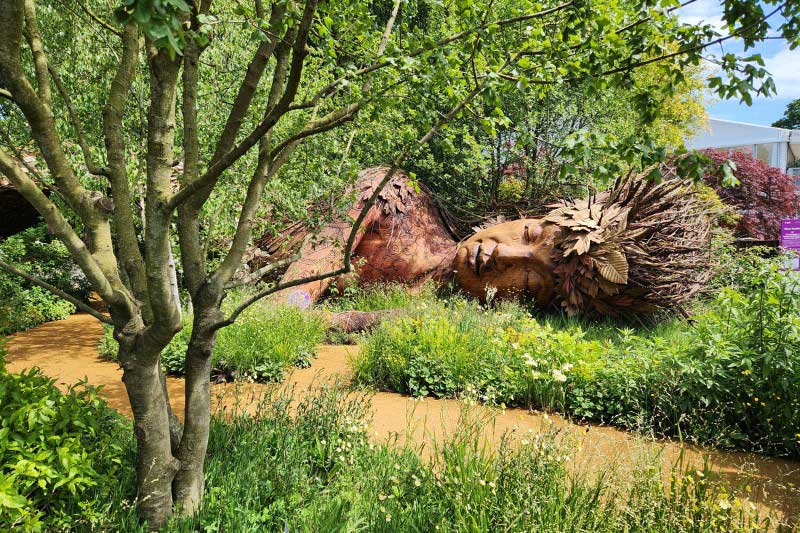
Gold medal and Chelsea Garden of the Year: The CPRE Garden: On the Edge
Overall winner of the 2026 edition, The Campaign to Protect Rural England Garden: 'On the Edge', created by Sarah Eberle, highlights neglected spaces on city fringes that are nonetheless vital for biodiversity. The emerges from planting, her hand touching a pool while her willow hair extends into a dry-stone wall. Around her spreads planting inspired by the British countryside, mixing hornbeam (Carpinus betulus), blackthorn (Prunus spinosa), dogwood (Cornus sanguinea) and holly (Ilex aquifolium). A poetic garden that recalls value of ordinary spaces often threatened by urbanisation.
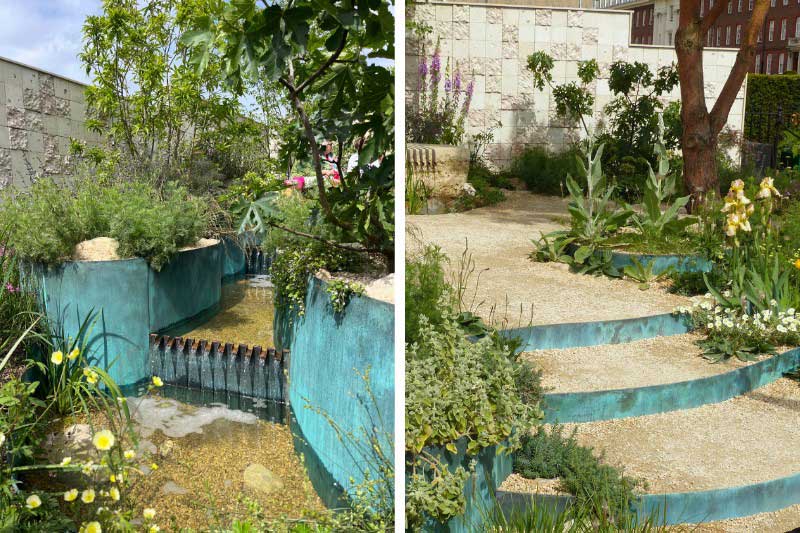
Gold medal and Best Small Show Garden: Addleshaw Goddard: Flourish in the City
With Addleshaw Goddard: Flourish in the City, Joe and Laura Carey celebrate hidden green oases at heart of London. Inspired by #Humanise movement and capital's status as a "National Park City", this garden combines water features, Portland stone and recycled materials to imagine a more welcoming city. Planting mixes Saxifraga × urbium (London Pride), pines, plantains and mulleins in shades of purple, pink and lemon yellow. A concentrated set of ideas to reintroduce nature into urban landscape.
Silver medal and People's Choice Show Garden: Parkinson's UK - A Garden for Every Parkinson's Journey
Designed by Arit Anderson as place of respite for people with Parkinson's and their loved ones, Parkinson's UK - A Garden for Every Parkinson's Journey won visitors' hearts. A sculptural stream accompanies the route and provides sensory landmarks through movement and sound of water. Tulips, peonies, roses and white foxgloves (Digitalis purpurea 'Alba') mark different sequences of garden, designed around energy, rest and night.
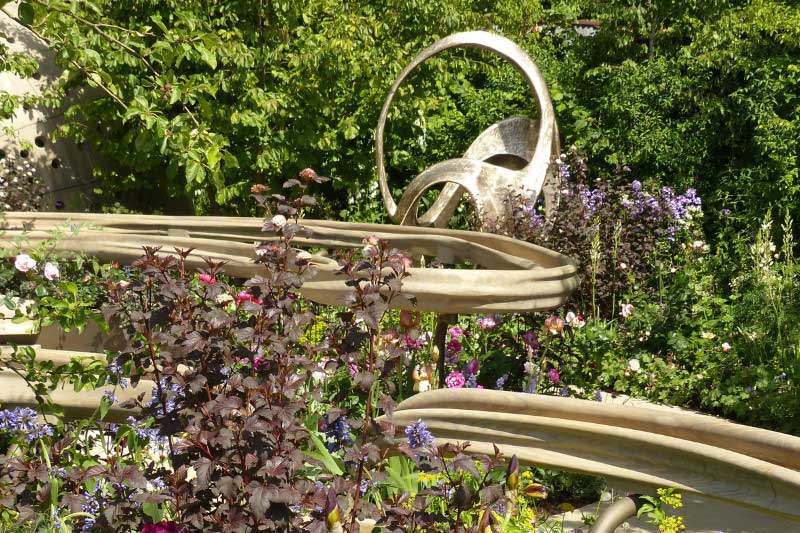
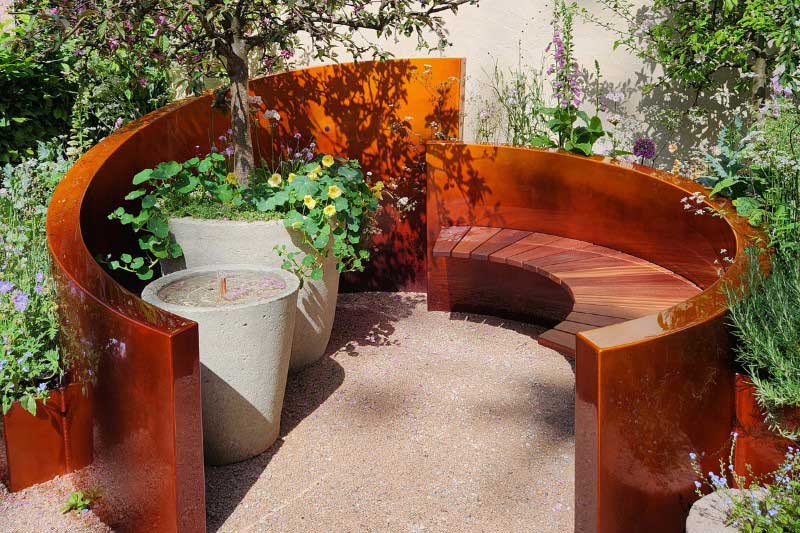
Silver medal and People's Choice Balcony Garden: Alzheimer's Society - Microbes and Minds Garden
Exploring links between gut microbiome and brain health: that is Tina Worboys' challenge with Alzheimer's Society's: Microbes and Minds Garden. Inspired by traditional English orchards, garden is organised around a central apple tree symbolising fermentation of cider vinegar. Forget-me-nots (Myosotis sylvatica), Roman chamomile (Chamaemelum nobile), cow parsley (Anthriscus sylvestris) and chives (Allium schoenoprasum) reinforce this gentle, natural atmosphere.
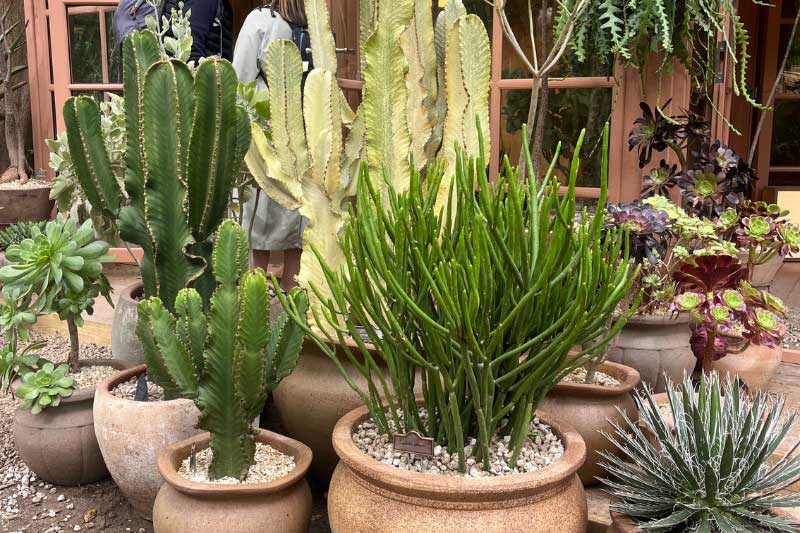
Gold medal and Best Houseplant Display: An Ode To Endurance
Impossible to ignore success of houseplants at Chelsea this year. With An Ode To Endurance, Natalia Drezek and Jinhyun Ahn pay tribute to species that survive in most hostile environments. Staged in discomfort of living room, Brachychiton rupestris, monkey tail cactus (Cleistocactus colademononis), Kalanchoe beharensis, Euphorbia ingens and Aeonium arboreum reveal sculptural beauty of arid-climate plants.
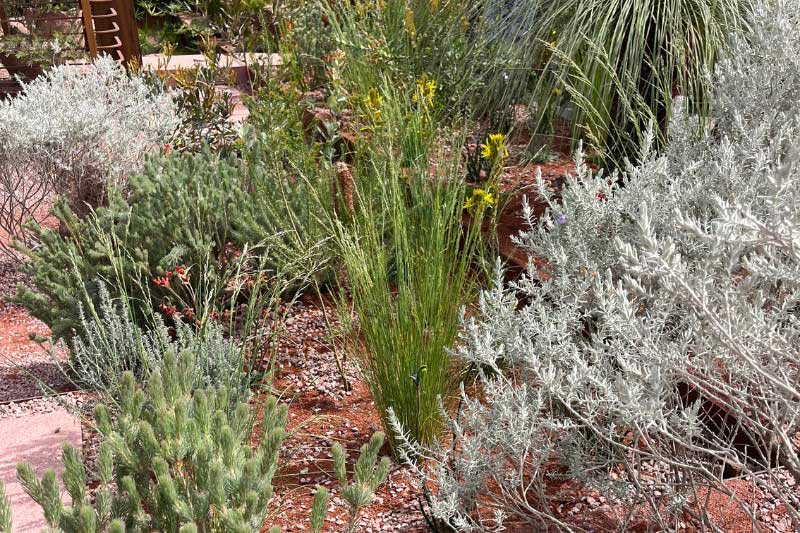
Our team's favourites
Heading to Australia with Journey Beyond the Tracks: From Adelaide to Perth, a small garden by Max Parker-Smith awarded a silver-gilt medal. Inspired by famous Indian Pacific train, it celebrates dramatic landscapes of South and Western Australia through planting of eucalypts, grevilleas, callistemons, hakeas and anigozanthos (kangaroo paws).
From 19 to 23 May 2026, the Chelsea Flower Show once again set the tone for tomorrow’s garden trends in the grounds of the Royal Hospital Chelsea in London. The event organised by the Royal Horticultural Society (RHS) unveiled an edition centred on calm and wellbeing. Far from spectacular displays, the award-winning gardens favoured enveloping […]
Every spring, Royal Horticultural Society grounds in heart of London become stage for finest horticultural innovations at Royal Horticultural Society, during the Chelsea Flower Show. Among event highlights, "Plant of the Year" prize recognises most remarkable new plants, selected for originality, garden merits and appeal to gardeners. Our team visited the show to see finalists and winners of the 2026 edition. Let’s discover the results!
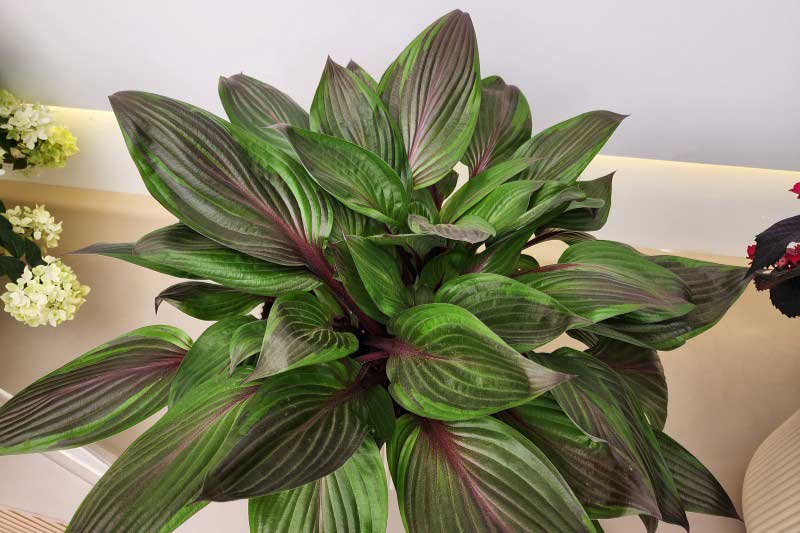
Plant of the Year 2026: Hosta 'Red Ninja'
This is a genuine little revolution in world of hostas! World's first red-variegated hosta, Hosta 'Red Ninja' was one of stars of Chelsea Flower Show 2026. Its large leaves show an intense crimson-red centre edged with dark green, a colouring unprecedented in this genus until now dominated by shades of green, blue and cream. Even more surprising, this spectacular hue does not fade after spring but persists through much of season. In late summer, delicate lavender flowers rise above foliage, adding to elegance of this compact perennial (35 cm height, about 50 cm spread) yet exceptional plant.
Another trait appreciated by judges: unlike many hostas, its colouring intensifies with a few hours of gentle sun.
Red hostas have long been breeder's dream and, for first time, a true red hosta whose colouring appears durable has been achieved. Jury was right: this is a genetic advance visible at a glance.
Our view: a bold creation likely to quickly win over collectors and enthusiasts of unusual foliage.
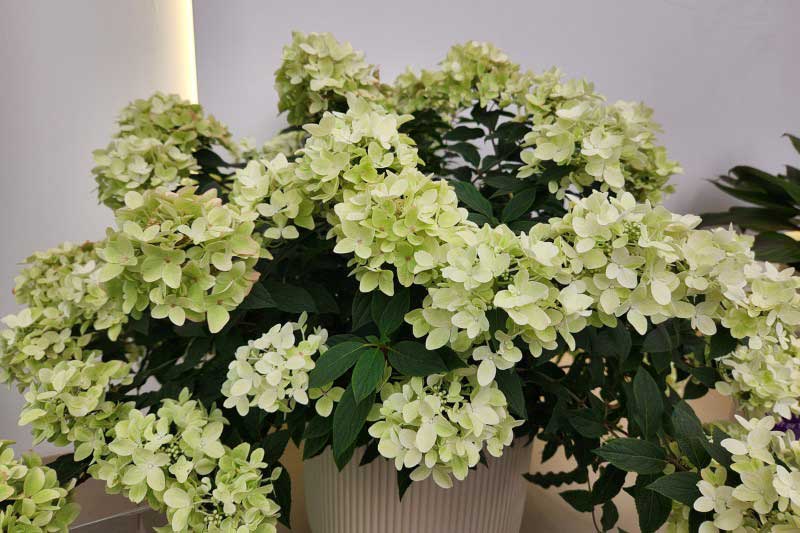
Second place: Hydrangea paniculata 'Groundbreaker Ruby'
Innovation also features in this hydrangea that breaks the mould. 'Groundbreaker Ruby' belongs to first series of Hydrangea paniculata that are truly groundcover. An unprecedented trait for panicle hydrangeas, usually upright. Its low, spreading habit forms a dense carpet about 40 cm high, covered for nearly 100 days with flowers that develop from white through pink to ruby red.
Easy to grow, undemanding in maintenance and particularly suited to small gardens, borders, banks or pot culture, it opens new uses for panicle hydrangeas. Our view: a plant set for a long-lasting career!
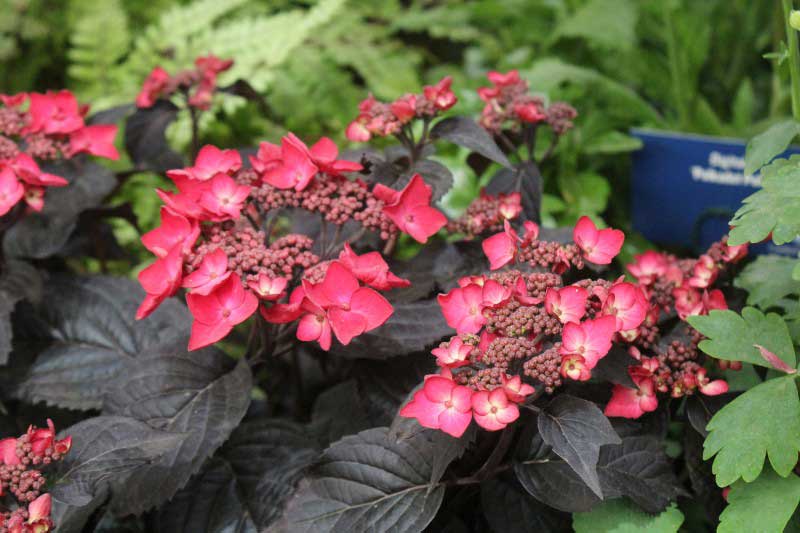
Third place: Hydrangea 'Velvet Night Red Lace'
A true drama queen of Chelsea Flower Show 2026, Hydrangea 'Velvet Night Red Lace' pairs almost velvety, near-black red foliage with lacy, bright carmine-red flowers. Result of long breeding work on more than 12,000 seedlings, 'Velvet Night Red Lace' stands out for a striking contrast rarely seen among hydrangeas. Its flat, delicately sculpted inflorescences shine against a dark, glossy foliage mass, offering a novel play of contrasts in hydrangeas.
Even out of flower, its dark foliage retains strong ornamental interest, providing presence in borders as well as in containers. A variety that perfectly illustrates current enthusiasm for coloured foliage and plants with high visual impact.
Our view: it has immediate theatrical appeal that makes stars on social media as well as in show gardens.
Team favourites
Beyond official winners, several new plants particularly caught our eye under the Grand Pavilion.
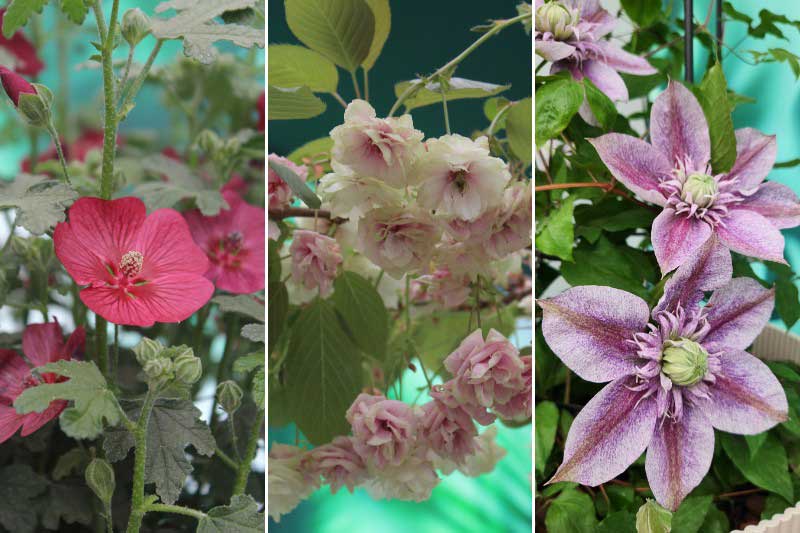
Anisodontea 'Carnival Lights Candy Apple' lit up the Grand Pavilion with its bright raspberry-red flowering, a colour still rare in anisodonteas. Its large, satiny flowers, finely veined, stand out against soft green, slightly velvety foliage. Its relaxed, bushy habit, covered in buds and blooms, promises a very long flowering season.
Prunus 'Sumaura Fugenzo' impressed with its absolutely irresistible display! We were won over by its pendulous clusters of very double flowers, with delicately crumpled petals. Initially cream with greenish tint, they develop to soft pink then deeper tones, evoking little pom-poms suspended from the branches. A variety both romantic and refined.
Clematis 'Minamo-no-Yousei' ranks among most beautiful new introductions seen this year. Its large star-shaped flowers, dusted with lavender, pink and silver, are enhanced by an untidy, almost anemone-like centre. A delicate, sophisticated bloom of great elegance. Japanese breeders continue to produce clematis of incredible finesse!
Antirrhinum 'Shiryu Kiss' reinvents snapdragon with generous flowering in a gradient of bright pinks. On the same spikes mix candy-pink, bubblegum-pink and fuchsia, all lit by a cream-white throat. A fresh, luminous variety that brings lightness to borders.
Other finalists
Among other new introductions noted by the jury were Dicentra 'Passion Hearts', clematis 'Nurse Queen', Euphorbia × martini 'Walberton's Little Treasure', Pittosporum 'Green Mound', as well as several promising roses such as 'Amirose' or 'Watford Forever'.
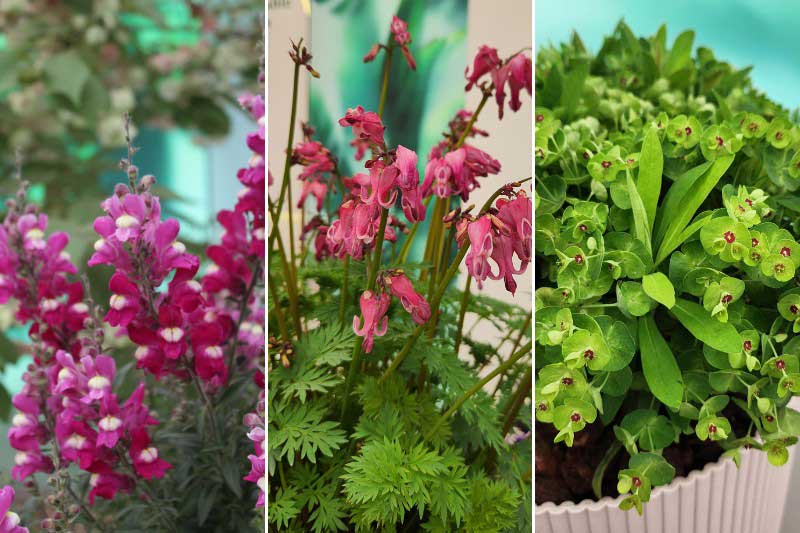
What the 2026 shortlist reveals
As every year, these selections reflect dynamism of international horticultural innovation and offer a good preview of plants likely to make an impact in gardens over coming seasons. According to our promesse de fleurs experts, there is some distancing from race for ever-bigger or more spectacular flowers. Breeders now seem to seek plants distinguished by foliage colour or novel habits, more versatile and interesting over extended periods. This is a trend observed for several years at Chelsea Flower Show and fits well with evolution of contemporary gardens.
Every spring, Royal Horticultural Society grounds in heart of London become stage for finest horticultural innovations at Royal Horticultural Society, during the Chelsea Flower Show. Among event highlights, “Plant of the Year” prize recognises most remarkable new plants, selected for originality, garden merits and appeal to gardeners. Our team visited the show to see finalists […]
Are you watching colour trends, and do you like to experiment not only indoors but also in your garden or on your terrace?
The very latest is Transformative Teal, often described as teal or turquoise. Some plants naturally display this colour, mainly in their foliage and more rarely in their flowers. This <strong shade that sits between blue and green can be used in the garden with a few colourful pots set against a more neutral palette.
See how to introduce this teal outside the home!
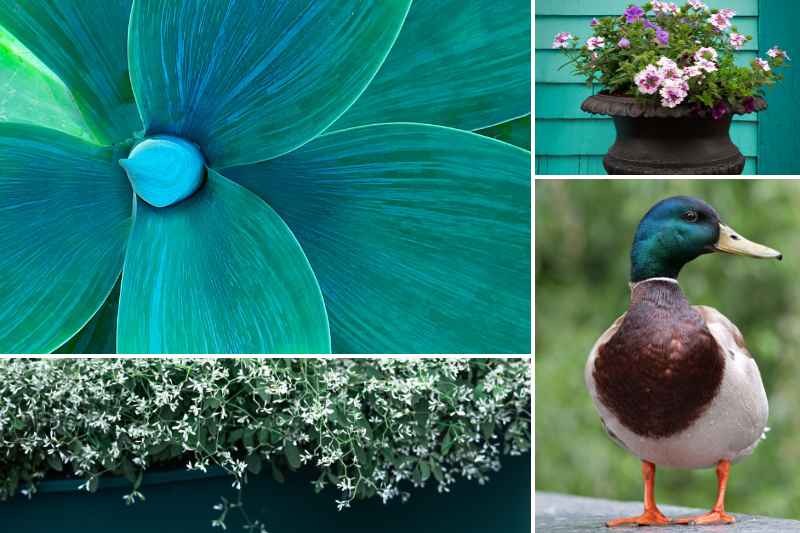
What is this new trend? How to use it in the garden?
Blue and green are cool colours on the colour wheel. Combining the two gives a very aquatic note, which can almost seem artificial in a garden setting. The English term 'teal' appears from the 1950s in interior design, where it is most often seen. This blue‑green is the colour that highlights the eyes of teals, the small freshwater ducks. Here, the expression 'bleu canard' seems best to express this intense shade.
It is mainly foliage that approaches this colour, described in botany as a glaucous blue: it is often found in hostas, many blue‑tinged conifers or some perennials, and in the pruinose leaves of certain shrubs. Among the rare flowers, look to distant beauties such as the Chilean Puya or the Asian Strongylodon macrobotrys.
The most flattering combinations for flowers or pots are white, very soft yellows and orange or brick tones, as well as all shades flirting with chartreuse green (see green flowers).
Avoid saturating the scene with overly cool tones like grey or silver; instead, enliven it with neighbouring colours on the colour wheel such as sulphur yellow, acid green or jade green.
Finally, rely on accessories: choose glazed pots in matching hues to reflect the light effectively, or furniture and seating in aniseed tones.
In an exotic‑style garden
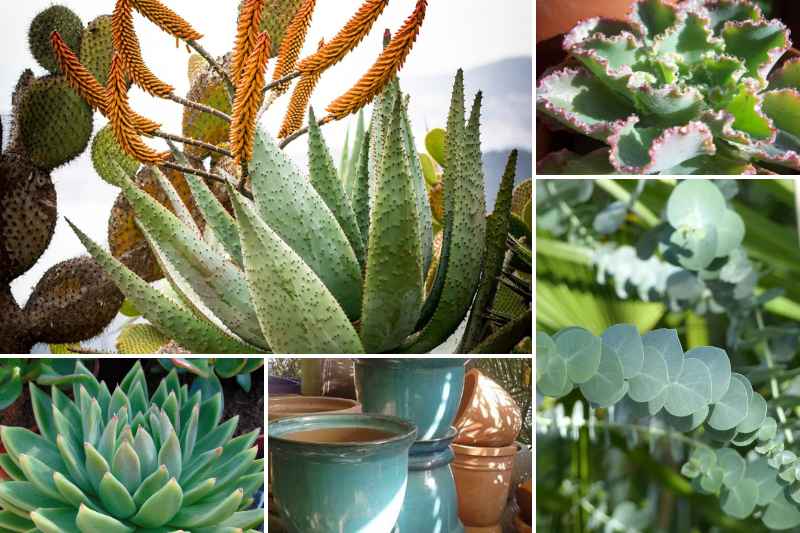
This is perhaps the easiest way to reveal the subtleties of teal, since the exotic plant palette – tropical or dry exotic – offers several options for sunny areas. With centre stage given to the extraordinary flowers of Puya berteroniana, Puya alpestris or the jade vine in the least frost‑prone gardens, and the white spikes on glaucous foliage of some Yucca (notably Yucca aloifolia or Yucca rostrata), count on the striking blue‑green foliage of Melianthus major and the bluer, greyer leaves of Eucalyptus and Pinus parviflora. A bicolour arum, white and green, Zantedeschia 'Green Goddess' planted in sufficiently cool soil will wrap the scene in its refreshing trumpets.
In a dry exotic garden, an unusually blue senecio, Senecio serpens 'Dwarf Blue', can take pride of place and nearly steal the show from Dasylirion, such as Dasylirion glaucophyllum.
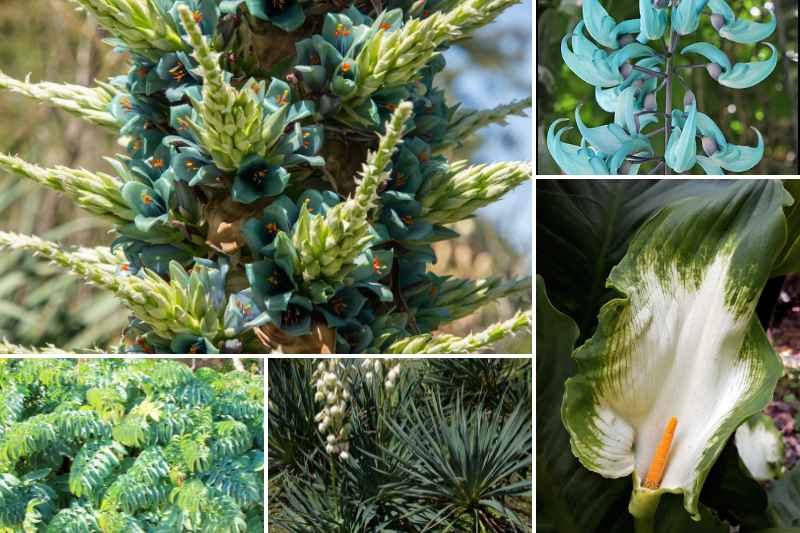
In a mixed border or English garden
Different mood, different style: a cottage‑style garden planted with large borders is also well suited to playing the teal note, as several attractive perennials carry this almost turquoise shade, often in a lighter tone. Representative plants include Mertensia maritima (also called oysterleaf), Crambe beloved in cottage gardens, rue (Ruta graveolens) and Cerinthe major.
A few selected flowers in soft tones, from white to mauve‑pink, will provide the necessary link so the planting does not slip into a dull bluish monochrome: catananche for a rustic touch, Erigeron karvinskianus, mauve or white hosta spikes, etc.
Bring in almond‑green and yellow‑greens such as the downy Ballota pseudodictamnus or the inflorescences of giant Cephalaria. A graceful grass such as Sesleria nitida will add the lightness suited to this ambience.
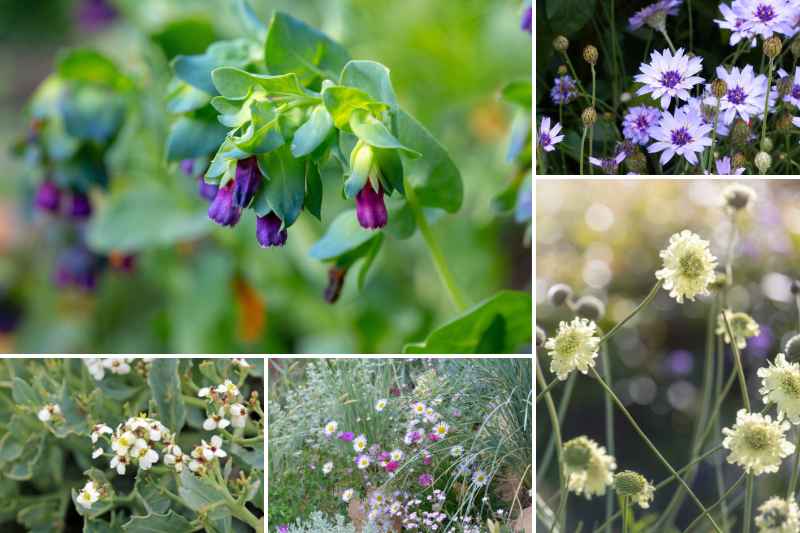
In a pot garden of succulents
Here, opt for tone‑on‑tone plants in matching pots. The result is perfect on a south‑facing balcony or a terrace that basks in hot summer sun. Many cacti and succulents have that characteristic pruinose blue that protects them from heat. Start with agaves and some handsome echeverias, such as Echeveria 'Miranda', Echeveria peacockii 'Urban Orange' and Echeveria 'Blue Curls'. Don't forget Euphorbia x pseudovirgata 'Redwing' 'Charam' with its bluish young shoots.
An aloe completes this mini dry garden perfectly, for example Aloe marlothii, or, for small spaces, a dwarf aloe such as 'Aloe nain' (Aloe aristata).
Terracotta pots, raw or glazed, will provide either a flattering orange contrast or a very chic monochrome. In this small world, adding a few orange blooms is perfect: Bulbine or dwarf day‑lilies, for example.
In shade for an aquatic feel
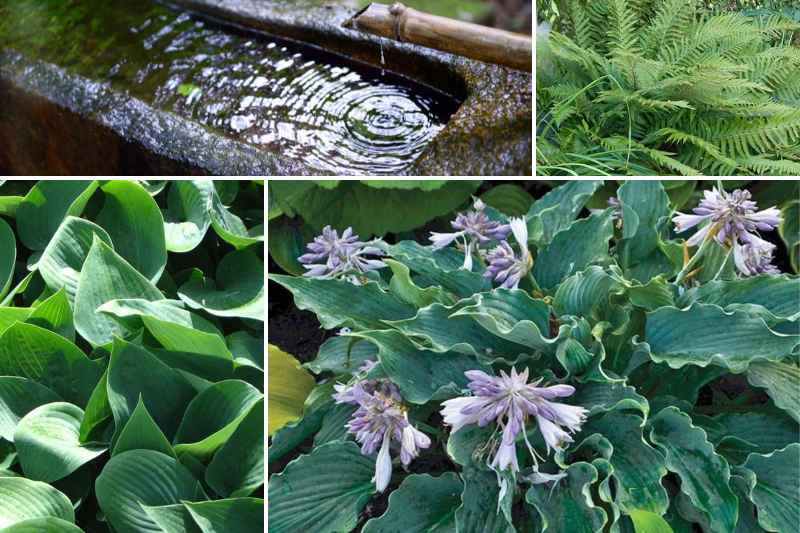
It is in shade or partial shade that glaucous green holds up best against heat in certain perennials such as hostas. There they show colours whose subtle nuances are especially highlighted in standout varieties like Hosta 'Canadian Blue', Hosta 'Drinking Gourd' and Hosta 'Waterslide' with greyer tones. Add some equally bluish sedges (Carex 'Bunny Blue'), evergreen ferns (Polystichum polyblepharum), white flower spikes to pair ideally with astilbes, a water trough used as a drinking bowl or fountain… and enjoy this very relaxing atmosphere.
Discover many more plants to achieve this turquoise palette in our "Transformative Teal" selection online, and in our 2026 trend booklet!
Do you love blue and green in the garden? Great — we explain everything you need to know about designing a blue garden and using blue in Elevate your garden with indigo blue. Marion also shares useful tips in How to create the illusion of water with plants?
Are you watching colour trends, and do you like to experiment not only indoors but also in your garden or on your terrace?The very latest is Transformative Teal, often described as teal or turquoise. Some plants naturally display this colour, mainly in their foliage and more rarely in their flowers. This <strong shade that sits […]
Had enough of that crystal-clear water that reveals pond bottom? Find the ballet of your fish in healthy water painfully lacking in dramatic suspense? This guide is for you. Here is the foolproof method to sabotage your aquatic ecosystem, encourage filamentous algae proliferation and turn your garden into a disaster zone even dragonflies will carefully avoid.
Location: choose worst possible spot
To ruin your pond from the start, location is crucial. Insist on a spot exposed to full sun from morning till night, with no shade whatsoever. Excessive heat will reduce oxygen levels and turn pond into a boiling pea soup where only algae will thrive. To perfect the disaster, place pond directly under a weeping willow or an old resinous tree. Massive build-up of fallen leaves and acidic needles will create a layer of toxic sediment at the bottom, ideal for acidifying water and clogging pump in record time.
Also make sure to dig perfectly vertical, smooth banks, with no depth shelves. That guarantees marginal plants will never take root and any creature falling in will stay trapped on the bottom.
Filtration: be minimalist (or completely absent)
Filtration is often considered the lungs of a pond; so atrophy it as much as possible. Opt for a grossly undersized filter, rated for a volume half of yours, to ensure water remains perpetually loaded with suspended particles. To save a few pennies on electricity, feel free to switch the system off every night. This fatal gesture will annihilate beneficial bacteria colonies that need a constant oxygen flow to convert ammonia into nitrates. Finally, if you must clean filter sponges, use chlorinated tap water rather than pond water, to be sure of obliterating every trace of biological life in the filter.
For fauna and flora: aim for chaos!
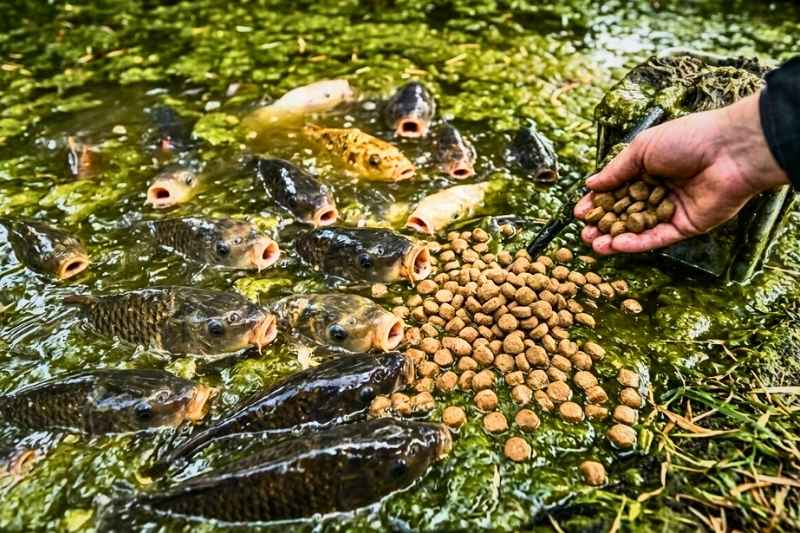
An overstocked pond is a doomed pond, so do not hesitate: introduce twenty Koi carp where wisdom would suggest only two. These magnificent fish are genuine waste factories that will saturate water with organic matter faster than you can say “eutrophication”. On feeding, be generous and overfeed them several times a day, even if food floats uneaten. These decaying pellets are perfect fertiliser for feeding algae. As for oxygenating plants, ignore them completely, since they might have the audacity to purify water and compete with your beloved green algae.
To perfect this chaos, do not hesitate to add invasive exotic species to your pond (EEE – species classified as invasive). These newcomers will choke your pond in fifteen days while eradicating local biodiversity for a complete ecological disaster.
Maintenance: procrastinate with passion
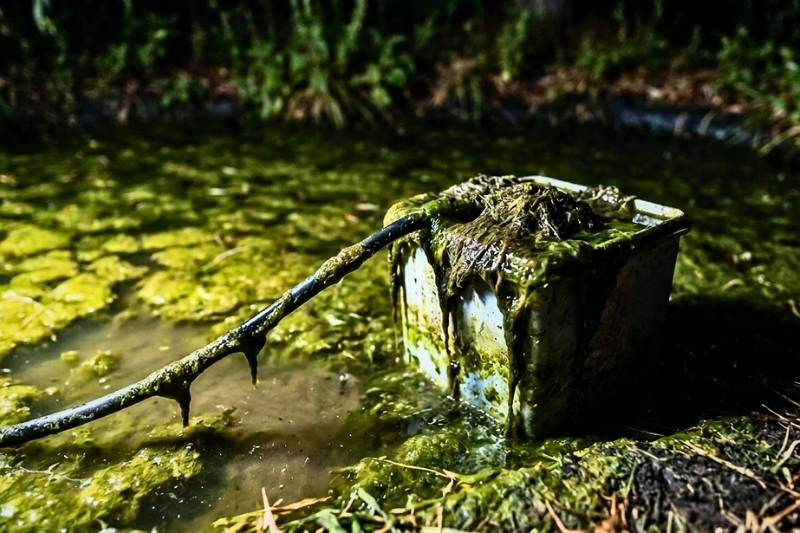
Secret of a failed pond lies in total ignorance of water's chemical parameters. Never use a test kit: pH, GH (water hardness) or nitrites are abstract concepts to you? Good. When water level falls in summer, top up abruptly with icy, chlorine-rich tap water, ideally in mid-afternoon to provoke a memorable thermal shock for your charges. Let muck accumulate at pond bottom for years without ever using a vacuum or natural products. This black sludge, seat of anaerobic fermentations, will eventually release foul-smelling gases that give your garden that much-sought-after marsh aroma.
Winter: art of the finishing blow
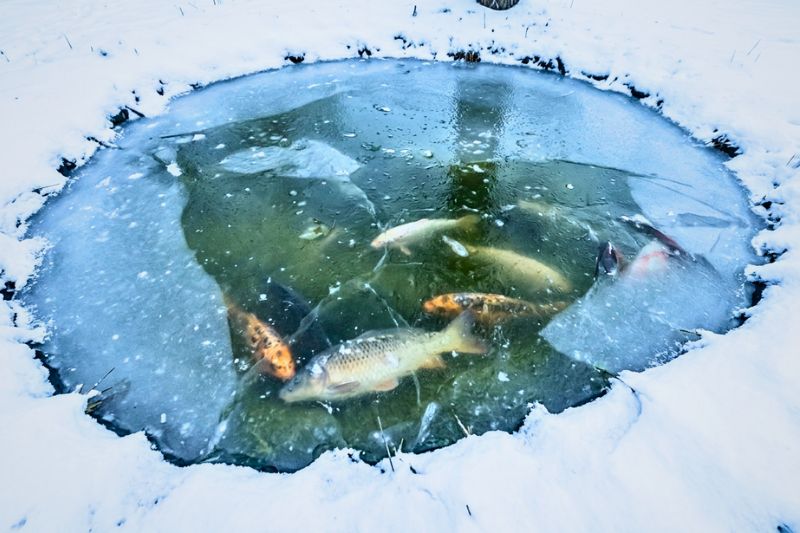
When frost sets in, let pond surface seal airtight under a thick layer of ice without ever installing an anti-freeze dome or an aerator. This method is radical: it prevents gas exchanges, trapping decomposition gases beneath the surface while depriving what little life remained of oxygen. And if you see fish struggling under the ice, do not resist temptation to give heavy blows to the frozen surface. The shock waves thus created are extremely effective at bursting fish swim bladders.
Real advice for serious readers
If you read this article in horror, you have grasped the essential! For a successful pond, simply do the exact opposite of everything just mentioned! A good location, robust filtration, sensible stocking of fish and regular maintenance will turn your pond, pool or water garden into an inexhaustible source of joy and a major boon for biodiversity.
For more genuine advice, read these articles and fact sheets:
- Creating my garden pond by Virginie Douce
- Create a natural pond
- Maintaining a garden pond through the seasons
- Find all our aquatic and marginal plants on our site.
- And all our books on pond and water garden design
Had enough of that crystal-clear water that reveals pond bottom? Find the ballet of your fish in healthy water painfully lacking in dramatic suspense? This guide is for you. Here is the foolproof method to sabotage your aquatic ecosystem, encourage filamentous algae proliferation and turn your garden into a disaster zone even dragonflies will carefully […]
Beeches, oaks, but also hornbeams and chestnuts are already losing their leaves in summer well before autumn arrives, in August, but sometimes as early as mid‑July. This unusual phenomenon gives forests an early autumn appearance… and our gardens a prematurely autumnal look, with a carpet of dead leaves already covering the ground. Two heatwaves, a significant water deficit and parched soil have weakened these trees, causing premature leaf drop. A visible symptom of water stress and climate disruption, browning is now observed each summer with increasing frequency. Which species are most sensitive? Sun‑scorched leaves on trees, leaf yellowing in summer — does this early browning mean the tree will die? And above all, what can be done to mitigate these effects? We explain.
Why do tree leaves turn yellow in the middle of August?
August 2025 spared little vegetation. In many regions, notably Nouvelle‑Aquitaine, trees began to defoliate well ahead of time. This phenomenon is not due to an early season but to physiological stress caused by extreme climatic conditions.
In summer, foliage would normally display a deep green, fuelled by chlorophyll that captures solar energy and enables the tree to build reserves via photosynthesis. But repeated heatwaves, combined with ever drier soils, deeply disrupt this cycle.
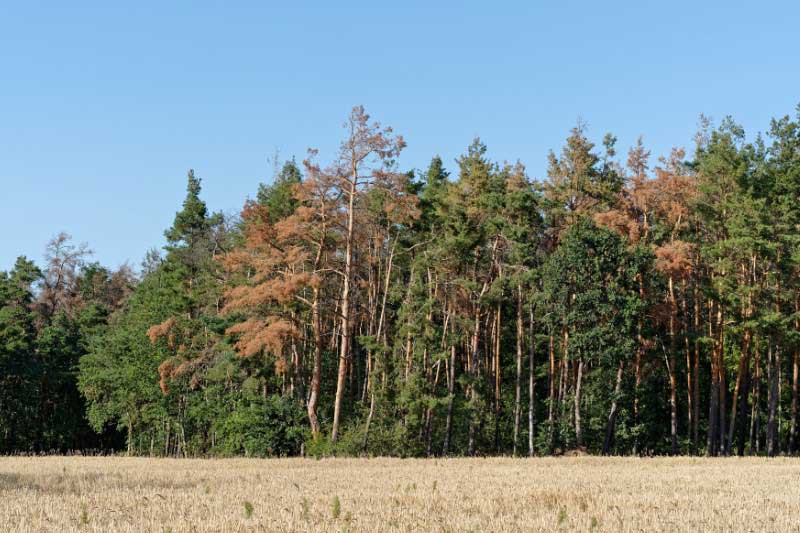
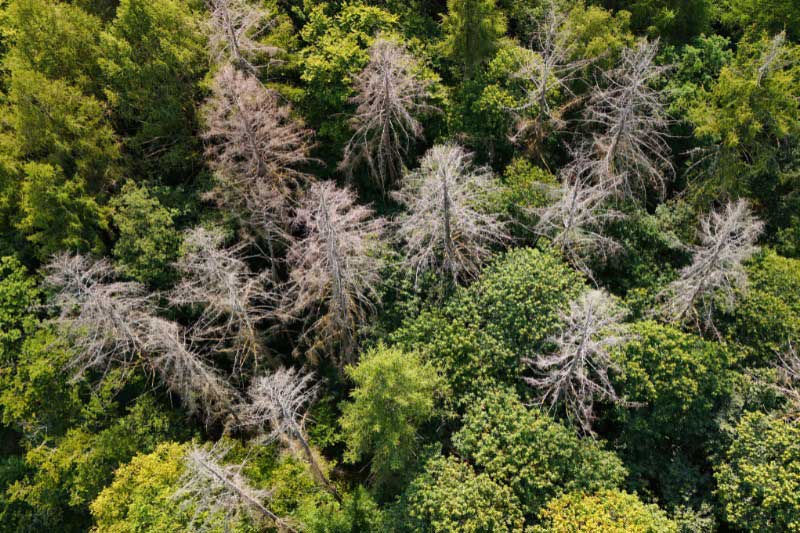
The figures are telling: over the 2021–2023 period, an estimated 8% of trees in French forests (living or standing dead for less than five years) were physiologically affected — some 186 million trees out of 2,270 million. This is not an isolated incident: IGN (National Institute of Geographic and Forest Information) also reports a 54% increase in tree mortality between 2012 and 2022.
And this is only the beginning. Projections indicate that by 2050, summer droughts will last on average two to four months, compared with two months currently, having more lasting effects on soils. If warming continues, some regions could face up to 39 additional drought days per year, and in the south soils could remain dry for seven to eight consecutive months.
In France, native species, adapted for millennia to a temperate climate, struggle to keep pace with this disruption. Some adapt partially, others show clear signs of exhaustion.
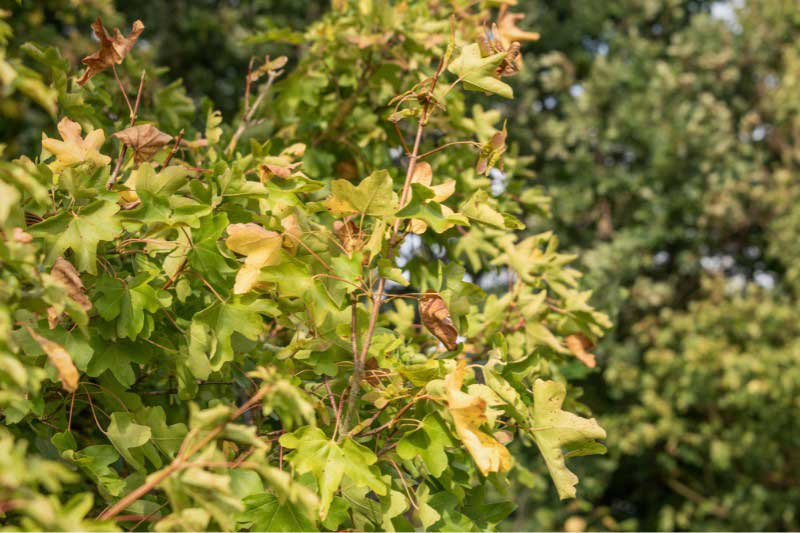
Lack of water, combined with very high temperatures, forces trees to close their stomata to limit water loss. This survival reflex halts photosynthesis and leads to a rapid loss of vigour. Leaves deprived of water and nutrients brown, dry out and fall. The phenomenon of leaves yellowing in summer is not natural: it is a defence mechanism to reduce evaporative surface area. This is known as water stress.
Certain species, such as beech, are particularly vulnerable: they suffer leaf scorch, bark lesions and even micro‑cracks that block sap rise or cause embolisms (air bubbles). All these troubles interrupt water functioning, compromise photosynthesis — and weaken the tree in the long term.
What happens after premature leaf drop?
When a tree loses its leaves as early as summer, it enters a kind of early dormancy, as if self‑protecting in a critical situation. This defence mechanism reduces its water and energy needs, but has medium‑ and long‑term consequences.
1. Photosynthesis stopped = reserves not replenished
Normally, leaves remain active until autumn to produce sugars via photosynthesis. These sugars reinforce root reserves, essential to survive winter and restart in spring. Summer defoliation prevents this process. The tree therefore enters the cold season with insufficient reserves, making it more vulnerable to disease, frost or pest attacks.
2. Growth halted
Without leaves, the tree can no longer grow in height or diameter. Over several successive seasons this results in slowed development, a thinner crown and a progressive decline in vitality.
3. Risk of long‑term weakening
If the stress episode is isolated, the tree can recover, especially if well established. But if stress recurs (as increasingly happens), the tree has no time to rebuild its reserves and weakens progressively. This process can take several years before leading to total decline.
4. Delayed consequences visible in spring
A tree that lost its leaves in August may appear alive in winter but fail to leaf out in the following spring, or do so only partially. This lack of foliage then reflects internal exhaustion, often irreversible.
Does this mean the tree will die?
Not necessarily, but it is worrying. Early browning and defoliation are signs of acute stress, not an irreversible sentence. However, if these episodes repeat year after year, they can cause lasting weakening, loss of carbon reserves, reduced resistance to pests and an increased risk of mortality.
Most sensitive species
Not all species respond the same way to these extreme climatic episodes. Some are more vulnerable than others:
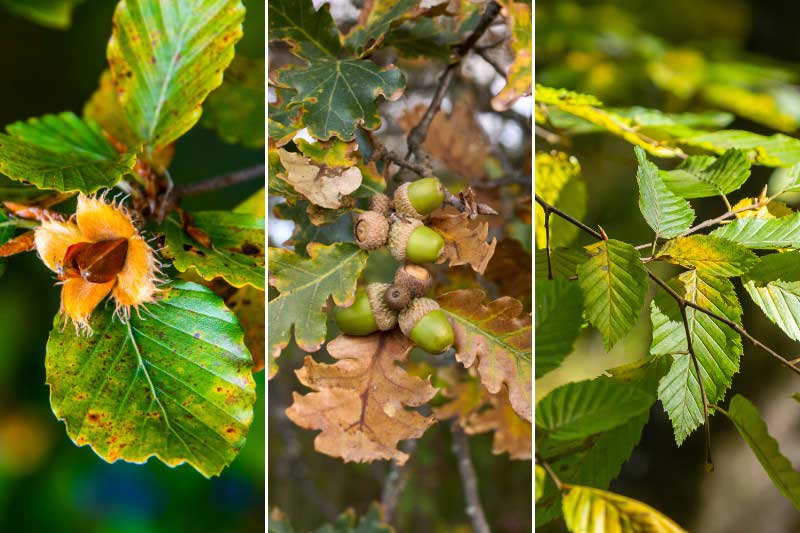
- The beech (Fagus sylvatica): one of the most affected species. Native to humid, temperate climates, it quickly suffers from lack of water and heat stress. Browning of its foliage is common in summer, even in dense forest. Leaf deficit — the proportion of missing foliage compared with normal — rose from about 15% between 1997 and 2003 to nearly 35% between 2017 and 2023. This increase illustrates a worrying trend, even if the species sometimes shows the ability to recover when conditions improve.
- Oaks (Quercus robur, Q. petraea): among them, the pedunculate oak (Quercus robur) proves more sensitive to summer water stress, while the sessile oak and downy oak display better resistance. However, repeated weakening makes them more vulnerable to pests such as jewel beetles or certain pathogenic fungi. They account for nearly 25% of France’s forest area — a significant share.
- The hornbeam (Carpinus betulus) and the chestnut (Castanea sativa): these too show weakness from the end of summer, with premature leaf drop during prolonged drought.
- Conifers such as spruce: poorly adapted to dry summers, they suffer marked weakening, often exploited by pests such as bark beetles.
This reflects a general deterioration affecting all tree categories. It is estimated that one third of oaks (sessile and pedunculate), two thirds of beeches, 60% of firs at low and mid altitudes, and 90% of spruces may no longer be able to develop in their current zones by 2050.
What can be done?
Faced with this situation, several actions can be considered:
- Plant species better adapted to conditions
In the current context, it makes sense to rethink species choices without abandoning local vegetation. Some species show better tolerance to repeated summer droughts. It is advisable to favour resilient but diverse species, and adapt plantings to local pedoclimatic conditions: soil type, aspect, water‑holding capacity, altitude…
Among species better suited to dry conditions are downy oak, the Atlas cedar, and the European nettle tree, as well as Mediterranean species such as Aleppo pine or the holm oak. These species can resist heat when planted in suitable exposures and climates. Species such as Japanese pagoda tree (Styphnolobium japonicum) or the Siberian elm (Ulmus pumila) also show good adaptive capacity.
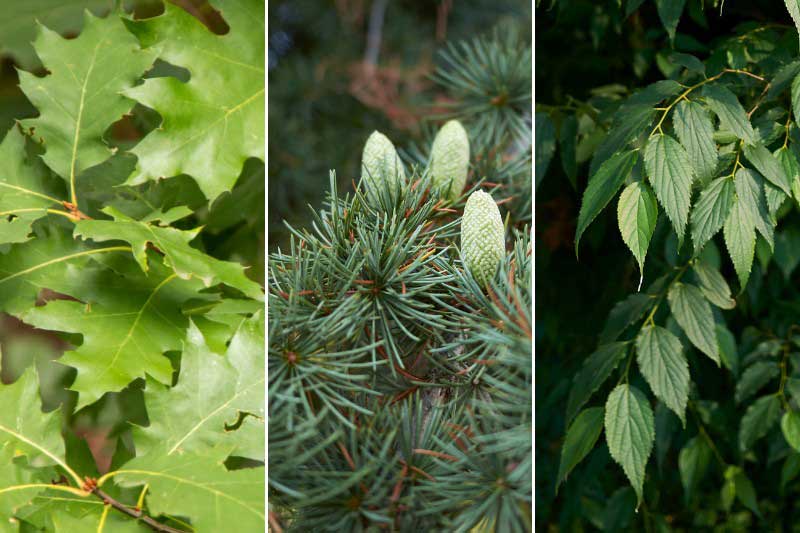
- Encourage plant biodiversity: diversifying species is an effective strategy to strengthen overall resilience. Mixed stands (species with different root systems and needs) cope better with climatic hazards.
- Preserve the soil: living soil rich in organic matter retains water better. Mulch, leave dead leaves in place and avoid soil compaction — simple but effective measures.
- Limit interventions during stress periods: avoid heavy pruning, transplanting or applications of nitrogenous fertilisers in mid‑summer. Do not rush to prune or fell a stressed tree: with time and improved conditions it can sometimes recover.
Beeches, oaks, but also hornbeams and chestnuts are already losing their leaves in summer well before autumn arrives, in August, but sometimes as early as mid‑July. This unusual phenomenon gives forests an early autumn appearance… and our gardens a prematurely autumnal look, with a carpet of dead leaves already covering the ground. Two heatwaves, a […]