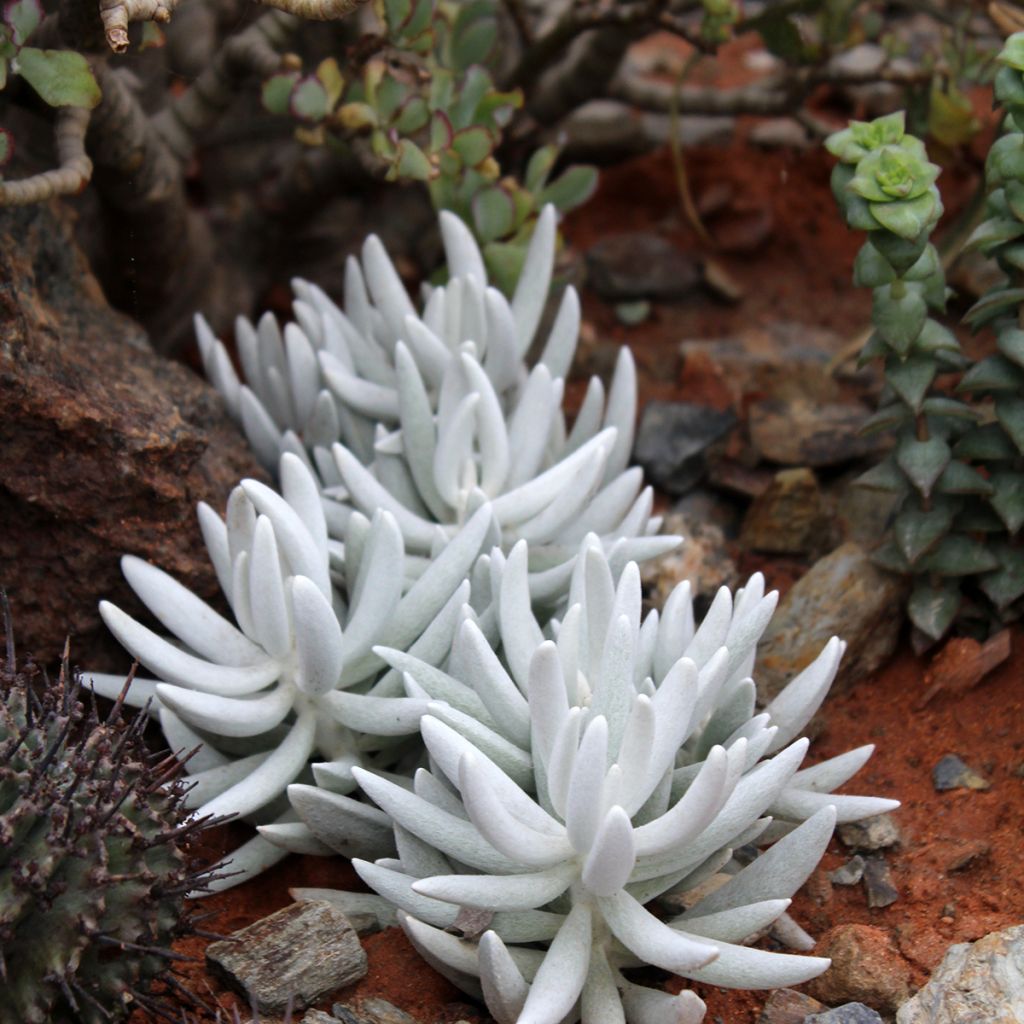
Senecio hawortii - Cocoon plant
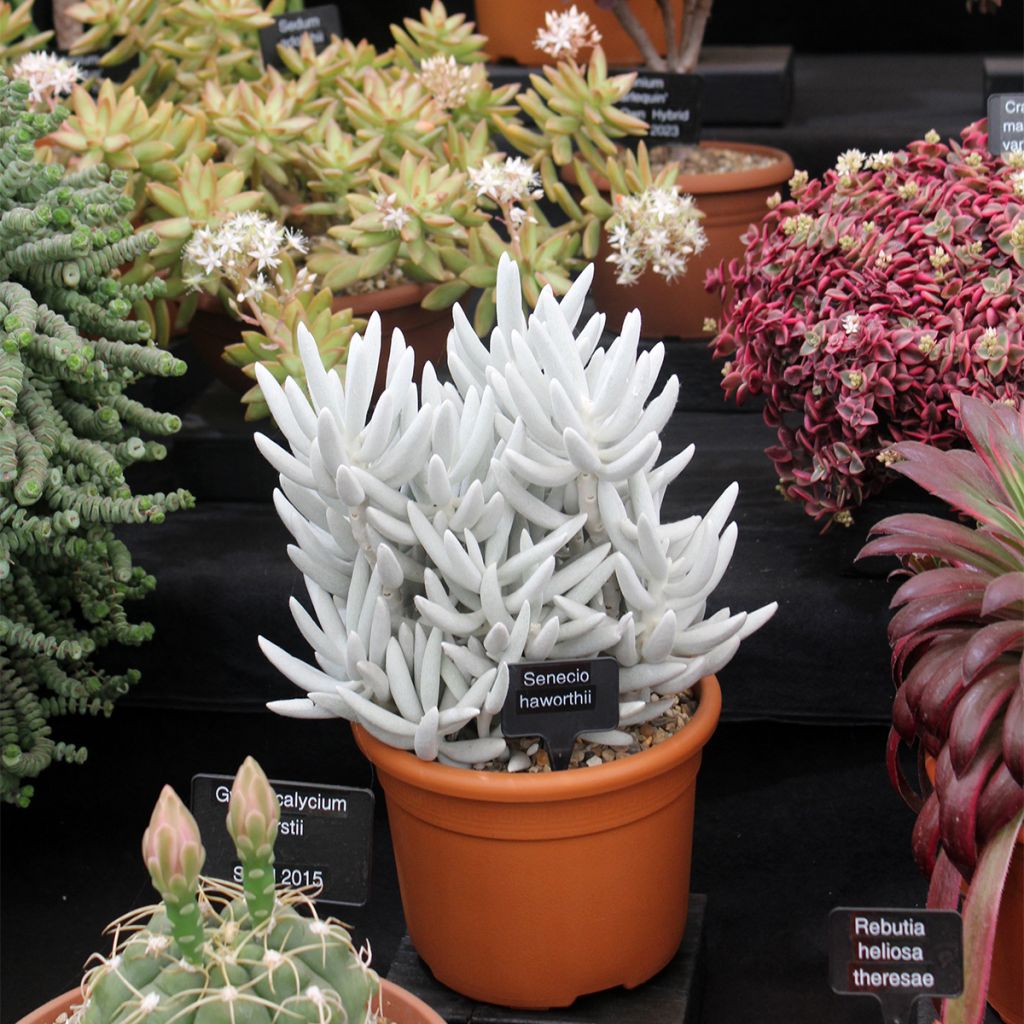
Senecio hawortii - Cocoon plant
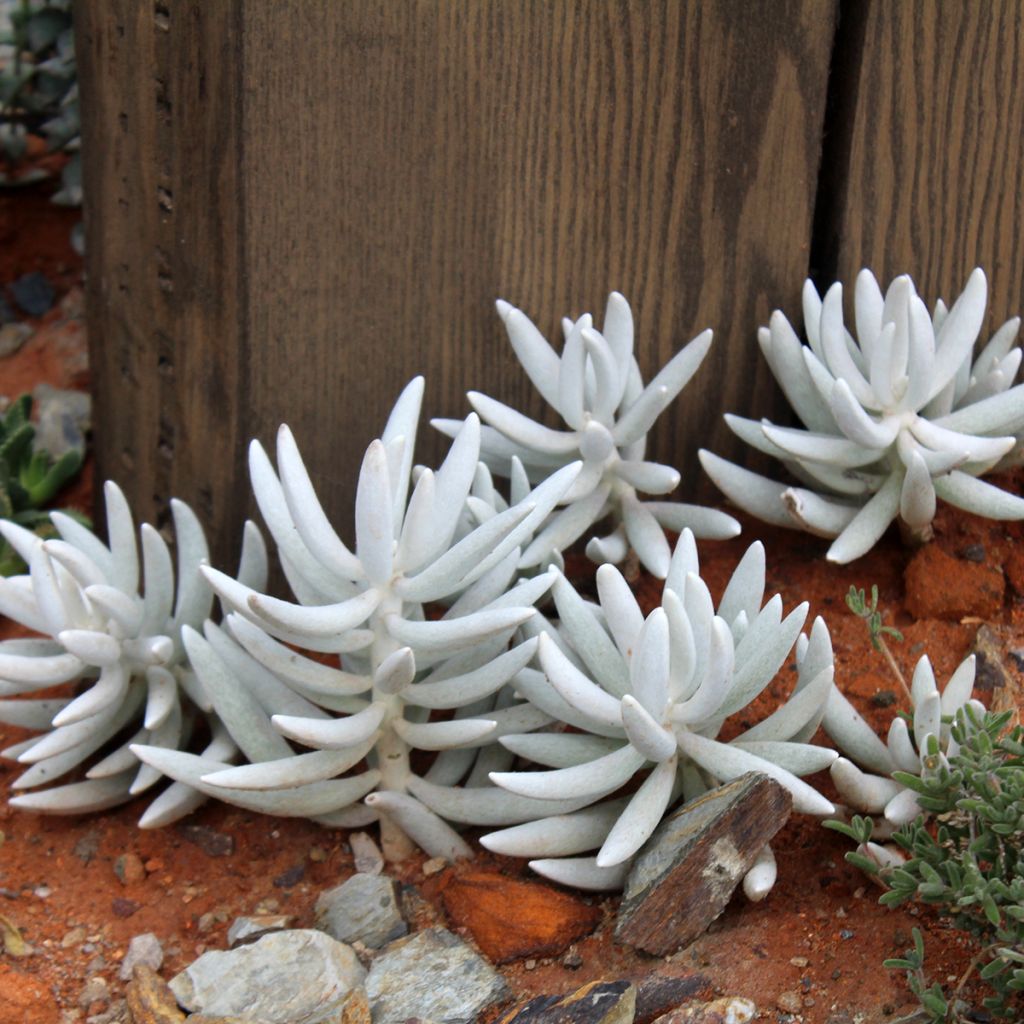
Senecio hawortii - Cocoon plant
Senecio hawortii - Cocoon plant
Senecio hawortii
Back-to-school special offer!
Get €10 off for every €50 you spend! And get up to €40 off on a single order.
How does it work?
1. Shop your favourites
Add your favourite plants to your basket. For every €50 you spend (excluding delivery charges, store credit and the plastic-free option), you’ll receive a €10 voucher.
€50 spent = €10 voucher
€100 spent = €20 voucher
€150 spent = €30 voucher
€200 spent = €40 voucher
2. Place your order
Once your basket reaches one of the spending thresholds, place your order. You can even choose your delivery date!
3. Receive your voucher
As soon as your order has been shipped, you’ll receive an email containing your personal voucher code and its value.
4. Use it on your next order
Your voucher is valid for 90 days from the date you receive it. It can be used once only, on a new order worth at least the value of the voucher, excluding delivery charges.
Please note: Vouchers can be combined with other offers, but cannot be split or refunded.
This plant carries a 30 days recovery warranty
More information
We guarantee the quality of our plants for a full growing cycle, and will replace at our expense any plant that fails to recover under normal climatic and planting conditions.
Description
Senecio haworthii is an indoor succulent plant valued for its silvery-white, woolly-looking foliage. It is affectionately nicknamed the cocoon plant, woolly senecio, or "ghost plant". It is a compact, upright bush that truly brightens up a windowsill, a bright desk, or a conservatory. Very drought-resistant and almost maintenance-free, it is perfectly suited for lovers of succulent plants adapted to the dry atmospheres of heated homes.
This succulent plant is now classified in the genus Caputia under the name Caputia tomentosa. It belongs to the Asteraceae family. Older synonyms exist, such as Cacalia tomentosa and Kleinia tomentosa. Its native range is in the Cape provinces of South Africa, particularly in the Richtersveld, the Great and Little Karoo, on rocky, very sunny slopes between 900 and 1,200 m altitude, in an arid to semi-arid climate.
Senecio haworthii / Caputia tomentosa takes the form of a small, branching succulent bush, typically reaching 20 to 30 cm tall in a pot, sometimes up to 40–50 cm in height and about 30–40 cm wide for older specimens. The stems become woody over time, enhancing its miniature shrub appearance. The leaves are sessile (without a petiole), cylindrical to spindle-shaped, pointed at both ends and arranged in a tight spiral along the stems. They measure 2 to 4 cm long and 0.6 to 1.5 cm in diameter, are very fleshy and entirely covered with a thick, white, felt-like down (tomentum) that reflects sunlight and limits water loss. This woolly coat can be very dense.
The flowering, mainly observed in greenhouses or outdoors under good conditions, occurs in summer or late in the season. It takes the form of long, upright, 10-15 cm tall flower stalks, bearing a terminal yellow to yellow-orange head. Flowers may appear in a very bright conservatory or a well-exposed winter garden. The fruits are small achenes, dispersed by the wind in the wild.
To grow Senecio haworthii indoors, place it in a spot with very bright light, with at least 4 to 6 hours of direct sun per day, behind a south or west-facing window to maintain a compact habit and very white leaves.
By combining several succulent plants in the same container or in a series of coordinated pots, you can easily create a sculptural and contemporary scene, ideal for a very bright living room, a sunny workspace, or a conservatory filled with succulent plants. Choose, for example, Echeveria agavoides ‘Ebony’, Crassula radicans ‘Small Red’, and Sedum spathulifolium ‘Cape Blanco’.
Report an error about the product description
Senecio hawortii - Cocoon plant in pictures
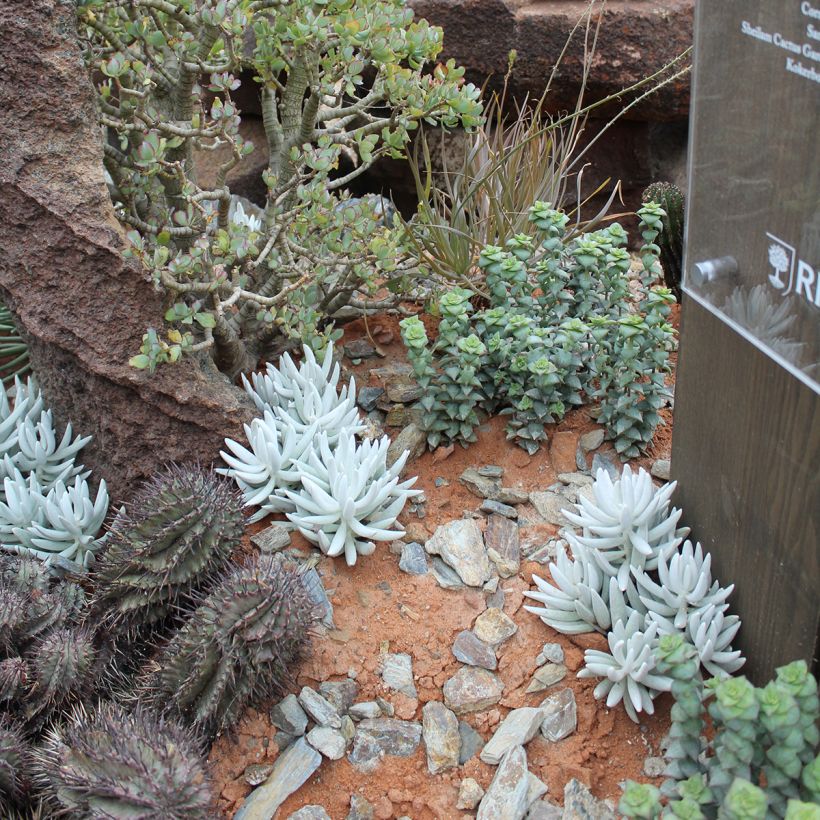
Foliage
Plant habit
Flowering
Botanical data
Senecio
hawortii
Asteraceae
South Africa
Safety measures
Location
Location
Maintenance & care
Watering tips
Potting advice, substrates and fertilisers
Houseplant care
Disease and pest advice
Maintenance & care
Planting & care advice
-
-
-
-

-

-

-
-

This item has not been reviewed yet - be the first to leave a review about it.
Recently viewed products
Haven't found what you were looking for?
Hardiness is the lowest winter temperature a plant can endure without suffering serious damage or even dying. However, hardiness is affected by location (a sheltered area, such as a patio), protection (winter cover) and soil type (hardiness is improved by well-drained soil).

The flowering period indicated on our website applies to countries and regions located in USDA zone 8 (France, the United Kingdom, Ireland, the Netherlands, etc.)
It will vary according to where you live:- In zones 9 to 10 (Italy, Spain, Greece, etc.), flowering will occur about 2 to 4 weeks earlier.
- In zones 6 to 7 (Germany, Poland, Slovenia, and lower mountainous regions), flowering will be delayed by 2 to 3 weeks.
- In zone 5 (Central Europe, Scandinavia), blooming will be delayed by 3 to 5 weeks.
In temperate climates, pruning of spring-flowering shrubs (forsythia, spireas, etc.) should be done just after flowering.
Pruning of summer-flowering shrubs (Indian Lilac, Perovskia, etc.) can be done in winter or spring.
In cold regions as well as with frost-sensitive plants, avoid pruning too early when severe frosts may still occur.
The planting period indicated on our website applies to countries and regions located in USDA zone 8 (France, United Kingdom, Ireland, Netherlands).
It will vary according to where you live:
- In Mediterranean zones (Marseille, Madrid, Milan, etc.), autumn and winter are the best planting periods.
- In continental zones (Strasbourg, Munich, Vienna, etc.), delay planting by 2 to 3 weeks in spring and bring it forward by 2 to 4 weeks in autumn.
- In mountainous regions (the Alps, Pyrenees, Carpathians, etc.), it is best to plant in late spring (May-June) or late summer (August-September).
The harvesting period indicated on our website applies to countries and regions in USDA zone 8 (France, England, Ireland, the Netherlands).
In colder areas (Scandinavia, Poland, Austria...) fruit and vegetable harvests are likely to be delayed by 3-4 weeks.
In warmer areas (Italy, Spain, Greece, etc.), harvesting will probably take place earlier, depending on weather conditions.
The sowing periods indicated on our website apply to countries and regions within USDA Zone 8 (France, UK, Ireland, Netherlands).
In colder areas (Scandinavia, Poland, Austria...), delay any outdoor sowing by 3-4 weeks, or sow under glass.
In warmer climes (Italy, Spain, Greece, etc.), bring outdoor sowing forward by a few weeks.
Shipping country and language
Your country of residence may be:
Your country of residence is:
For a better user experience on our website, you can select:
Your shipping country:
-
 Austria
-
 Belgium
-
 Bosnia & Herzegovina
-
 Bulgaria
-
 Croatia
-
 Cyprus
-
 Czechia
-
 Denmark
-
 Estonia
-
 Finland
-
 France
-
 Germany
-
 Greece
-
 Hungary
-
 Iceland
-
 Ireland
-
 Italy
Italy
-
 Latvia
-
 Liechtenstein
-
 Lithuania
-
 Luxembourg
-
 Malta
Malta
-
 Netherlands
-
 Poland
-
 Portugal
-
 Romania
-
 Serbia
-
 Slovakia
-
 Slovenia
-
 Spain
Spain
-
 Sweden
-
 Switzerland
Language:
-
French
-
 English
-
Spanish
-
Italian
-
German
-
Portuguese
-
Dutch
-
Finnish
My Account
Hello
My wish lists
My cart
Log in / Register
Existing customer?
This form is protected by reCAPTCHA - the Google Privacy Policy and Terms of Service apply.
New customer?
Create an account to track your orders, access our customer service and, if you wish, make the most of our upcoming offers.