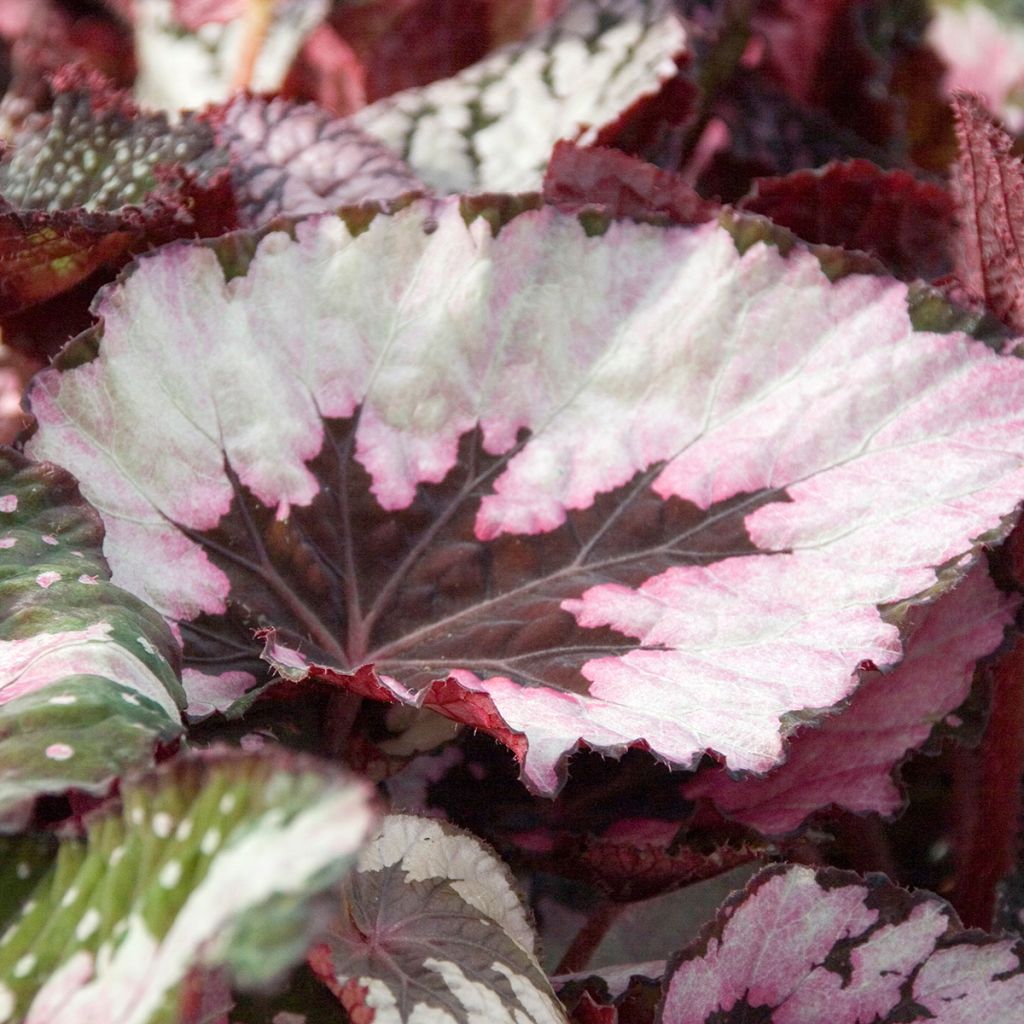
Begonia 'Spirit of Kwale' - Bégonia royal Spirit of Kwale
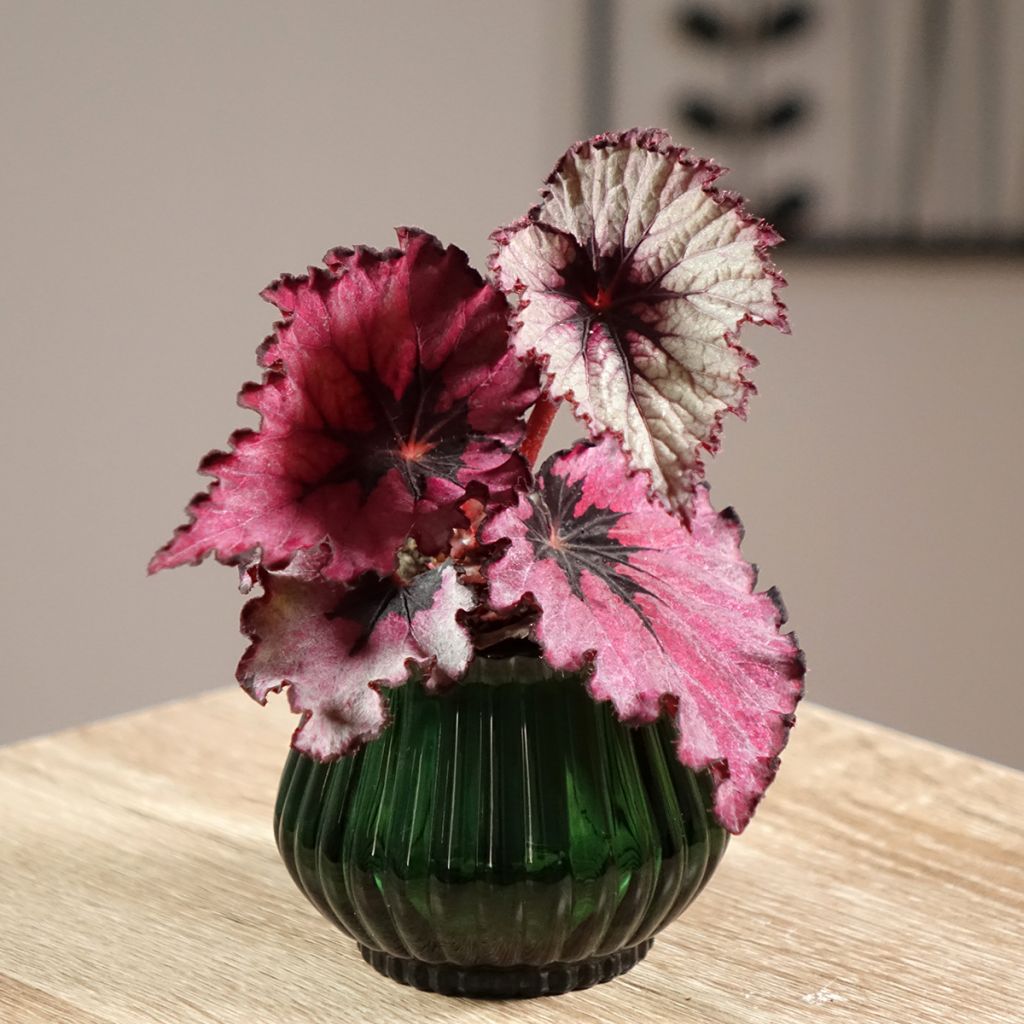
Begonia 'Spirit of Kwale' - Bégonia royal Spirit of Kwale
Begonia 'Spirit of Kwale' - Bégonia royal Spirit of Kwale
Begonia 'Spirit of Kwale'
Back-to-school special offer!
Get €10 off for every €50 you spend! And get up to €40 off on a single order.
How does it work?
1. Shop your favourites
Add your favourite plants to your basket. For every €50 you spend (excluding delivery charges, store credit and the plastic-free option), you’ll receive a €10 voucher.
€50 spent = €10 voucher
€100 spent = €20 voucher
€150 spent = €30 voucher
€200 spent = €40 voucher
2. Place your order
Once your basket reaches one of the spending thresholds, place your order. You can even choose your delivery date!
3. Receive your voucher
As soon as your order has been shipped, you’ll receive an email containing your personal voucher code and its value.
4. Use it on your next order
Your voucher is valid for 90 days from the date you receive it. It can be used once only, on a new order worth at least the value of the voucher, excluding delivery charges.
Please note: Vouchers can be combined with other offers, but cannot be split or refunded.
Why not try an alternative variety in stock?
View all →
Available in 1 sizes

Available in 1 sizes
Available in 1 sizes
This plant carries a 30 days recovery warranty
More information
We guarantee the quality of our plants for a full growing cycle, and will replace at our expense any plant that fails to recover under normal climatic and planting conditions.
Description
The Begonia rex ‘Spirit of Kwale’ is a collector's houseplant with superb silvery foliage maculate with a dark blotch, tinged with green and purplish pink. This cultivar remains compact, allowing it to be placed on a windowsill, shelf, or in a terrarium. Its large leaves with metallic sheen, slightly spiralled, create truly decorative foliage. It is best placed in bright rooms, temperate conservatories, or well-lit bathrooms where the air remains naturally more humid.
The Begonia 'Spirit of Kwale’ belongs to the Begonia Rex-Cultorum group, hybrids derived from the species Begonia rex. It is a plant from the Begoniaceae family. Royal begonias originate from populations native to the humid forests of northeastern India, the foothills of the Himalayas, as well as southern China and Vietnam. The name ‘Spirit of Kwale’ refers to the coastal county of Kwale in Kenya, where the plant was selected. This cultivar belongs to a series of Rex begonias “Spirit of” inspired by names of tropical regions (Kwale in Kenya, Flores, Java, Sumatra, Laccadives, Seychelles, etc.)
The plant has a thickened, creeping rootstock on the surface of the substrate, from which upright, often reddish-tinted petioles emerge, forming a tight clump. It reaches between 25 and 35 cm in height, with a comparable width. The leaves, 10 to 15 cm wide, are asymmetrical, slightly spiraled, and finely undulate at the margins. The lamina features a silvery base with metallic reflections, traversed by dark green to burgundy veins that radiate from the petiole. The centre is coloured purplish pink to almost black, while the edges are shaded with darker green or wine-red. The texture of this foliage is velvety to the touch, with a more reddish underside. The flowering, composed of small pale pink flowers borne above the foliage, remains quite discreet and appears mainly in warm, bright conditions; the plant is primarily grown for its extremely decorative foliage. Rex begonias contain calcium oxalates and are toxic to dogs and cats if ingested; it is best placed out of reach of young children and pets.
Indoors, it appreciates bright light without direct sun, a rather humid atmosphere, and stable temperatures between 18 and 22°C, with a minimum of around 15°C. The plant is somewhat demanding, yet accessible, and particularly sensitive to overwatering and overly dry air. It will suit attentive beginners or enthusiasts already familiar with houseplants.
This begonia feels particularly at home in north or east-facing rooms, bright bathrooms, light kitchens, a temperate conservatory, or a humid terrarium.
In a bright room, the Begonia rex ‘Spirit of Kwale’ recreates a little corner of tropical woodland. Place it on a shelf or near a bathroom mirror. Its silvery and pink foliage combines very well with the Fittonia 'Mini White' and with Peperomia caperata 'Quito', with its metallic-looking burgundy leaves. Add a holly fern (Cyrtomium falcatum) to bring volume and a lighter texture, then place Calathea warscewiczii nearby. Together, they create a radically tropical yet refined scene.
Report an error about the product description
Begonia 'Spirit of Kwale' - Bégonia royal Spirit of Kwale in pictures
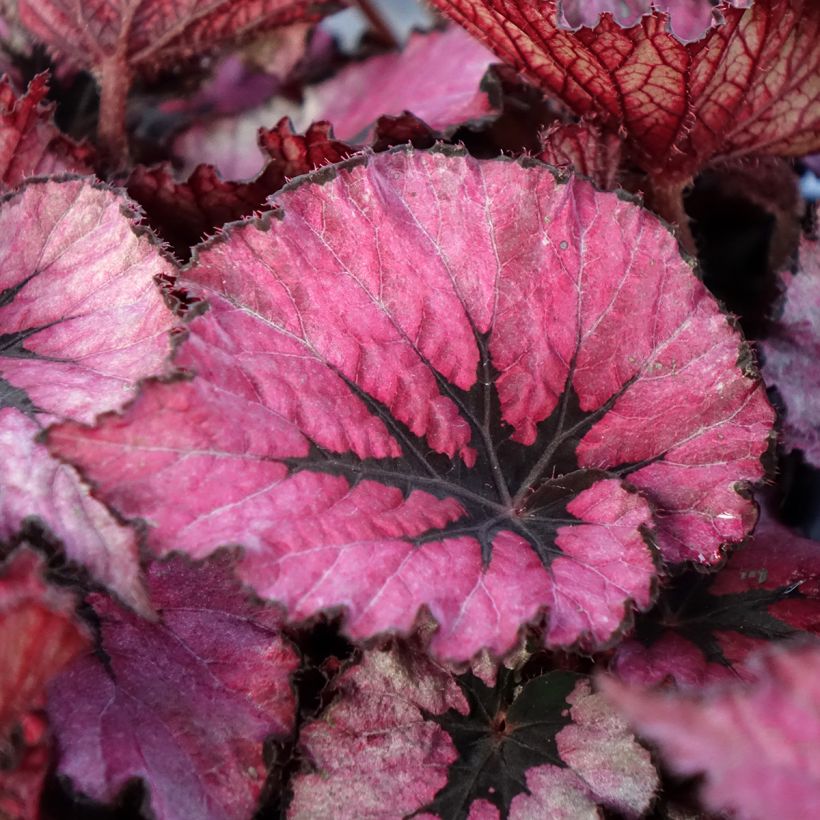
Foliage
Plant habit
Flowering
Botanical data
Begonia
'Spirit of Kwale'
Begoniaceae
Cultivar or hybrid, Southeast Asia
Safety measures
Location
Location
Maintenance & care
Watering tips
Potting advice, substrates and fertilisers
Houseplant care
Disease and pest advice
Maintenance & care
This item has not been reviewed yet - be the first to leave a review about it.
Recently viewed products
Haven't found what you were looking for?
Hardiness is the lowest winter temperature a plant can endure without suffering serious damage or even dying. However, hardiness is affected by location (a sheltered area, such as a patio), protection (winter cover) and soil type (hardiness is improved by well-drained soil).

The flowering period indicated on our website applies to countries and regions located in USDA zone 8 (France, the United Kingdom, Ireland, the Netherlands, etc.)
It will vary according to where you live:- In zones 9 to 10 (Italy, Spain, Greece, etc.), flowering will occur about 2 to 4 weeks earlier.
- In zones 6 to 7 (Germany, Poland, Slovenia, and lower mountainous regions), flowering will be delayed by 2 to 3 weeks.
- In zone 5 (Central Europe, Scandinavia), blooming will be delayed by 3 to 5 weeks.
In temperate climates, pruning of spring-flowering shrubs (forsythia, spireas, etc.) should be done just after flowering.
Pruning of summer-flowering shrubs (Indian Lilac, Perovskia, etc.) can be done in winter or spring.
In cold regions as well as with frost-sensitive plants, avoid pruning too early when severe frosts may still occur.
The planting period indicated on our website applies to countries and regions located in USDA zone 8 (France, United Kingdom, Ireland, Netherlands).
It will vary according to where you live:
- In Mediterranean zones (Marseille, Madrid, Milan, etc.), autumn and winter are the best planting periods.
- In continental zones (Strasbourg, Munich, Vienna, etc.), delay planting by 2 to 3 weeks in spring and bring it forward by 2 to 4 weeks in autumn.
- In mountainous regions (the Alps, Pyrenees, Carpathians, etc.), it is best to plant in late spring (May-June) or late summer (August-September).
The harvesting period indicated on our website applies to countries and regions in USDA zone 8 (France, England, Ireland, the Netherlands).
In colder areas (Scandinavia, Poland, Austria...) fruit and vegetable harvests are likely to be delayed by 3-4 weeks.
In warmer areas (Italy, Spain, Greece, etc.), harvesting will probably take place earlier, depending on weather conditions.
The sowing periods indicated on our website apply to countries and regions within USDA Zone 8 (France, UK, Ireland, Netherlands).
In colder areas (Scandinavia, Poland, Austria...), delay any outdoor sowing by 3-4 weeks, or sow under glass.
In warmer climes (Italy, Spain, Greece, etc.), bring outdoor sowing forward by a few weeks.
Shipping country and language
Your country of residence may be:
Your country of residence is:
For a better user experience on our website, you can select:
Your shipping country:
-
 Austria
-
 Belgium
-
 Bosnia & Herzegovina
-
 Bulgaria
-
 Croatia
-
 Cyprus
-
 Czechia
-
 Denmark
-
 Estonia
-
 Finland
-
 France
-
 Germany
-
 Greece
-
 Hungary
-
 Iceland
-
 Ireland
-
 Italy
Italy
-
 Latvia
-
 Liechtenstein
-
 Lithuania
-
 Luxembourg
-
 Malta
Malta
-
 Netherlands
-
 Poland
-
 Portugal
-
 Romania
-
 Serbia
-
 Slovakia
-
 Slovenia
-
 Spain
Spain
-
 Sweden
-
 Switzerland
Language:
-
French
-
 English
-
Spanish
-
Italian
-
German
-
Portuguese
-
Dutch
-
Finnish
My Account
Hello
My wish lists
My cart
Log in / Register
Existing customer?
This form is protected by reCAPTCHA - the Google Privacy Policy and Terms of Service apply.
New customer?
Create an account to track your orders, access our customer service and, if you wish, make the most of our upcoming offers.